


Cleaner-tasting water starts with the right under-sink system
A sharp chlorine note or stale odor can make a glass from the kitchen tap less appealing. The right under-sink filtration system can help improve taste, but tankless designs differ in what they reduce, how they operate, and what your kitchen needs for installation. This guide to the best tankless under sink water filters compares three options by their listed filtration methods, maintenance schedules, and practical fit beneath the sink.
One key distinction is whether you want ultrafiltration or reverse osmosis. The Waterdrop TSU uses a 0.01-micron membrane and is designed for municipal cold water, but it does not reduce TDS. The two RO options are described as reducing TDS, and each has its own tradeoffs: one needs electricity and countertop drilling for its faucet, while the other is non-electric and uses a faucet replacement design. Product claims and certifications are not interchangeable, so check the details against your water report and installation setup.
Weigh filter life, water use, cabinet clearance, and replacement ease before buying. For another perspective on home filtration that does not use RO, see this non-RO water purifier guide. If you’re comparing filtration for a different setup, this overview of installing an inline RV water filter covers a separate use case.

Pros
- Requires zero electricity for water flow, operating seamlessly on existing RV or cabin water pump pressure
- Produces no wastewater, protecting grey tank capacity during extended camper trips
- Retains beneficial naturally occurring minerals for refreshing, great-tasting camp hydration
- Integrated waterway construction minimizes connection points to help prevent leaks during vehicle travel
- Electronic smart indicator panel provides clear visual reminders when cartridge changes are due
Cons
- Does not lower Total Dissolved Solids (TDS), making it unsuitable for campers needing demineralized water
- Requires an existing hole or new drilling in countertops to mount the dedicated secondary faucet
- Designed for potable municipal or pre-filtered water sources rather than raw, silty backcountry surface water
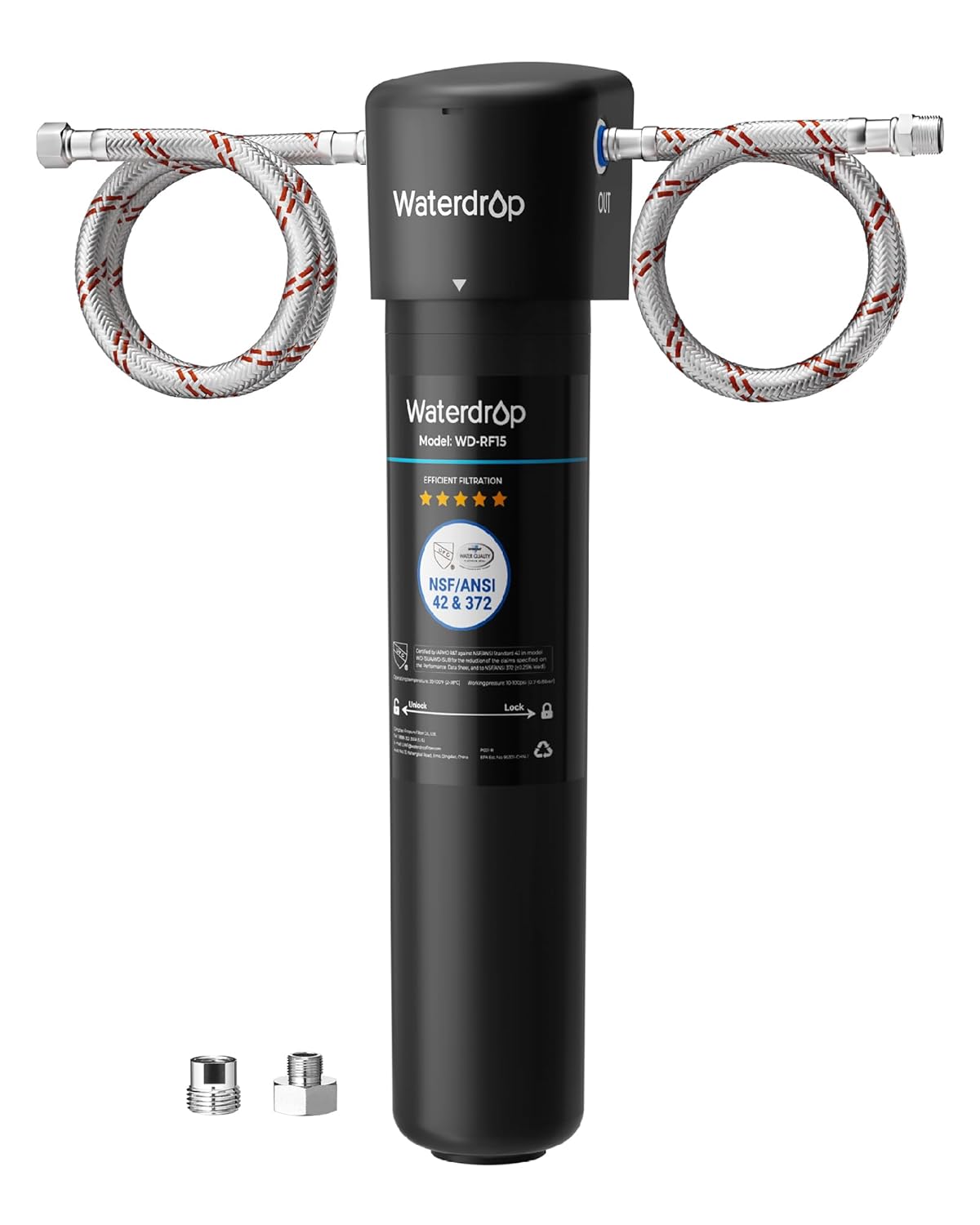
The Waterdrop TSU 0.01 Micron Ultra Filtration System is a tankless, three-stage under-sink filtration station engineered for fixed camper setups, overland travel trailers, off-grid cabins, and basecamp kitchen galleys. Built for RV campers, vanlifers, and outdoor families who want dependable hydration without packing dozens of plastic gallon jugs into their vehicle, this system brings point-of-use water purification straight to the counter. Its tankless profile eliminates bulky pressure tanks, freeing up crucial storage space under the sink for camp cookware, dish tubs, and pantry staples.
Operating purely on line pressure, this system fits the practical demands of off-grid mobile living. The filtration sequence runs incoming water through an initial polypropylene sediment layer, an advanced 0.01-micron hollow-fiber ultrafiltration membrane, and an activated carbon block. This combination effectively traps rust, sand, suspended particles, unpleasant chemical tastes, and common contaminants like PFAS. Unlike traditional reverse osmosis units that flush multiple gallons down the drain line for every gallon purified, this ultrafiltration unit creates zero wastewater, keeping RV holding tanks from filling prematurely while boondocking.
The build quality emphasizes compact utility, measuring under five inches wide to slide smoothly alongside onboard plumbing, drain hoses, and slide-out bins. A heavy-duty brushed nickel faucet is included in the box, providing a dedicated outlet specifically for drinking and cooking water. The front of the chassis features a battery-operated monitor powered by three standard AA batteries, which means you never need an inverter or 110-volt shore power plug just to check filter status. With an unrestricted flow rate of up to 0.6 gallons per minute, topping off trail hydration bladders, camp coffee pots, and high-capacity water jugs takes mere moments.
Routine maintenance and setup remain simple for regular travelers and weekend warriors. The push-fit connectors match standard plumbing runs, while the twist-and-lock filter cartridges pull free without tools or messy line bleeding. When winterizing an RV or seasonal hunt cabin, draining the unit takes far less effort than dealing with standard multi-gallon reservoir systems. User feedback indicates that securing the cold-water feed line tightly with a wrench prevents vibrations from loosening fittings while traveling rough washboard roads.
While this filtration system is exceptional for improving taste and eliminating fine physical impurities, prospective buyers should understand its operating limits. Ultrafiltration retains dissolved mineral content, so TDS meter readings will remain relatively unchanged after filtering. It is also meant for municipal water supplies or pre-treated cabin cisterns rather than untreated, algae-filled pond water. For campers, road-trippers, and cabin caretakers seeking reliable, fresh-tasting water at the turn of a handle, this Waterdrop system delivers dependable, low-maintenance filtration for life on the go.
Installing plumbing gear in an overland rig or travel trailer demands hardware that maximizes every square inch, and this system is well tailored for tight galley cabinetry. With a slender 4.68-inch depth, the unit mounts cleanly against cabinet walls without obstructing water lines or greywater traps. The included hardware accommodates both 3/8-inch and 1/2-inch cold feed lines, making it compatible with standard residential fittings and common RV PEX connections.
Because the unit uses standard mechanical water pressure from an onboard RV 12-volt pump or campground shore connection, no auxiliary AC power is needed. The front LED life indicators run entirely on three included AA alkaline batteries. When setting up in a mobile rig, securing the housing with a simple strap or bracket helps prevent shifting during rugged off-road travel.
The core filtration mechanism utilizes a microscopic 0.01-micron barrier, significantly tighter than standard single-stage carbon blocks. This ultra-fine pore structure intercepts tiny sediments, pipe scale, and suspended particulates, yielding crystal-clear water ideal for preparing camp meals and morning coffee.
Because the filtration process leaves healthy minerals like calcium and magnesium intact, the resulting water retains a crisp, natural mountain-spring flavor rather than the flat taste often associated with total demineralization. Campers relying on chlorinated campground spigots will notice immediate improvements in both odor and clarity.
Long-term maintenance is structured across three staggered filter schedules, helping keep operating costs manageable. The outer polypropylene sediment filter requires replacement roughly every six months, the activated carbon block lasts approximately twelve months, and the primary ultrafiltration membrane offers an extended lifespan of up to twenty-four months depending on incoming water quality.
To change out a spent cartridge, twist the housing a quarter turn and pull straight down. For winter storage in cold-climate campers, the filters should be removed and the system cleared of standing water to prevent internal freezing damage when temperatures drop below freezing.

Pros
- Slim, tankless profile fits neatly into crowded RV cabinets and compact cabin galleys
- High 2:1 pure-to-drain efficiency minimizes wasted water compared to bulky tanked systems
- Simple quarter-turn cartridge replacement requires zero tools or messy teardowns
- Solid 450 GPD flow rate quickly fills large camp cookware and hydration bladders
- Smart alerts provide clear reminders so you never forget filter maintenance
Cons
- Requires an electrical outlet or portable power station connection for operation
- Countertop installation requires an open faucet hole or drilling through the sink deck
- Internal electric booster pump produces a mild hum during active water dispensing
The Waterdrop WD-T3-C is a high-performance, tankless under-sink reverse osmosis system designed to bring residential-grade water purification to fixed campsites, off-grid hunting cabins, RV trailers, and home basecamps. Unlike traditional reverse osmosis setups that rely on massive, pressurized reservoir tanks, this unit utilizes an on-demand internal electric booster pump and a multi-stage cartridge layout. This configuration makes it an attractive upgrade for RV campers, overlanding trailer owners, seasonal cabin caretakers, and emergency preparedness planners who require pristine water without sacrificing valuable storage space.
Filtration capability is where this system stands out for outdoor enthusiasts and travelers dealing with questionable campground spigots or rural well lines. The 8-stage filtration process incorporates a dense 0.0001-micron reverse osmosis membrane, a composite pre-filter, and a activated carbon block. Based on product specifications and user feedback, this setup significantly reduces chlorine, heavy metals, volatile organic compounds, and total dissolved solids. Outdoorsmen will appreciate the improvement in clarity and taste when brewing morning camp coffee, rehydrating freeze-dried meals, or filling clean water reservoirs for medical equipment like CPAP devices.
From a spatial standpoint, the tankless profile is exceptionally practical for mobile and small-footprint living. The unit measures just over six inches wide, freeing up roughly 70 percent of the under-sink cavity that traditional RO tanks usually consume. This extra room allows road trippers and RVers to store emergency gear, camp cookware, or sanitation supplies right alongside their water system. Furthermore, the 450 gallon-per-day rating delivers a steady stream, allowing campers to top off hydration bladders and five-gallon overland jugs without having to wait around for a small holding tank to slowly replenish.
Routine maintenance is tailored for hassle-free living. The front-facing twist-and-lock cartridges swap out in seconds with a quarter-turn, eliminating the need to shut down extensive pipe networks or wrestle with filter wrenches. An integrated smart notification system alerts users via clear LED indicators when the individual composite, carbon, or reverse osmosis stages near the end of their service lives. Additionally, the unit runs an automatic flush cycle upon startup to clear out standing water and protect the membrane against rapid mineral fouling.
There are a few operational considerations to keep in mind before integrating this filter into a camp kitchen or overland setup. The system requires a dedicated 110-volt electrical connection to run its internal motor, meaning off-grid travelers will need access to shore power, an inverter, or a portable solar generator. Countertop installation also requires an open knockout hole or custom drilling for the included dedicated faucet. For RVers, cabin owners, and emergency preparedness coordinators looking for a reliable, low-waste purification platform that delivers mountain-fresh water on tap, this unit represents a practical and dependable investment.
Installing the Waterdrop WD-T3-C in an RV, travel trailer, or cabin galley is relatively straightforward for anyone familiar with basic plumbing connections. The unit includes push-to-connect tubing and standard fittings, though travelers with customized RV pex plumbing may want to keep a few spare quick-connect adapters on hand. Because it requires no cumbersome pressure tank, the system can either stand flat on a cabinet floor or mount securely to a reinforced interior wall partition.
Power consumption is modest enough that many users run the system seamlessly through portable power stations or onboard lithium battery banks paired with pure sine wave inverters. The 2:1 pure-to-drain ratio is especially advantageous for campers conscious of gray-tank capacities, as it produces far less waste runoff than conventional residential RO filters. Connecting the waste line into your standard sink drain pipe ensures hassle-free disposal during extended campground stays.
Maintaining the system in basecamp environments centers on timely filter replacements and winterization care. The composite pre-filter generally lasts up to six months, the carbon block up to twelve months, and the core reverse osmosis membrane up to twenty-four months, depending on source water quality. Replacing any cartridge takes roughly three seconds: simply twist the expired filter counterclockwise, pull it free, slide in the replacement, and lock it into position.
For seasonal cabin owners and RV enthusiasts, winterizing the unit before freezing temperatures hit is crucial. Water trapped inside the membrane or internal booster pump will expand if frozen, causing permanent housing damage. Users should disconnect the quick-connect lines, purge remaining moisture from the system, and store the filter unit in a climate-controlled space during harsh winter months to ensure smooth operation when spring camping season arrives.

Pros
- Completely power-free design eliminates electrical draw and dangerous circuit hazards in damp RV or camp kitchen cabinets.
- Whisper-quiet operation keeps your living space peaceful without vibrating motors or humming pumps.
- Favorable 3:1 pure-to-drain ratio conserves water during dry camping, RV trips, or water rationing scenarios.
- Fast 800 GPD flow rate dispenses clean water without the lag typical of traditional small-capacity RO setups.
Cons
- Requires standard water pressure between 0.25 MPa and 0.7 MPa (approx. 36 to 101 PSI), meaning off-grid gravity feeds need a pressure pump.
- Weighs 22.4 pounds and measures over 16 inches tall, making it suited strictly for RVs, camper vans, or cabins rather than portable tent camping.
- Minimum operating temperature of 41 degrees Fahrenheit requires winterization and protection from freezing in unheated winter rigs.
The GLACIER FRESH GFU03 represents a specialized water purification solution engineered for indoor kitchens, off-grid cabins, travel trailers, and RV campers who demand high-tier filtration without relying on electrical hookups. Unlike standard reverse osmosis machines that rely on electric booster pumps, this tankless system operates entirely on incoming water line pressure. That makes it an attractive upgrade for mobile living spaces, overland camper builds with pressurized plumbing, and emergency preparedness setups where blackouts or generator limitations can disrupt basic utilities.
For RV travelers, conversion van owners, and off-grid homesteaders, managing power consumption is a daily calculation. Because this filtration setup draws zero watts, it preserves precious auxiliary battery banks for refrigeration, lighting, and camp ventilation. It also suits family campers operating out of long-term basecamps or seasonal cabins connected to well water or questionable municipal lines. At the same time, survivalists and preppers looking to fortify home water security will appreciate the ability to purify water during local utility disruptions as long as standard line pressure remains steady.
Out on the road or at a remote campsite, water conservation is just as critical as power conservation. Traditional under-sink reverse osmosis units often dump several gallons of wastewater down the drain for every single gallon of pure water produced. The GFU03 improves on this dramatically with an efficient 3:1 pure-to-drain ratio, wasting only one cup of water for every three cups of purified drinking water delivered. With an 800 GPD capacity rating and an estimated flow rate of 0.6 gallons per minute, filling hydration bladders, camp kettles, and large stockpots takes minimal time at the galley sink.
Under-counter space is premium real estate in any mobile kitchen or camper galley. The tankless housing measures 13.58 inches wide by 8.27 inches deep by 16.54 inches high, reclaiming up to 70 percent of the under-sink volume typically lost to bulky water holding bladders. The construction incorporates a durable exterior shell, a liquid-dampened pressure gauge to resist travel vibration, and high-grade internal composite carbon and reverse osmosis membranes. The included stainless steel faucet offers a clean, punch-free installation that helps preserve original countertops in rental cabins or custom camper vans.
Routine upkeep is streamlined through quick-change filter cartridges that twist in and out within seconds without wrenches or plumbing disassembly. However, campers must note the mechanical requirements before installation. The system operates best within a pressure window of 0.25 MPa to 0.7 MPa, which means gravity-fed mountain systems will require an inline booster pump to function properly. Additionally, because the lower temperature limit is 41 degrees Fahrenheit, travelers heading into sub-freezing mountain climates must drain and winterize the unit to protect the membrane from structural frost damage.
For outdoor enthusiasts outfitting an RV, building an expedition trailer, or establishing a reliable backcountry cabin kitchen, the GLACIER FRESH GFU03 offers an exceptional blend of high-volume water purity and power-free independence. It transforms dubious campground spigots or rustic plumbing lines into clean, contaminant-reduced hydration without adding noise or battery drain to your outdoor lifestyle.
Installing the system in an RV, camper van, or remote camp cabin is straightforward thanks to the included feed water adapters and push-to-connect PE tubing. Because it eliminates the traditional multi-gallon holding tank, it slides easily into tight storage compartments beneath the sink while leaving ample space for cookware and supplies.
The power-free design means you do not have to tap into an inverter, solar array, or 12V DC auxiliary fuse block. As long as your RV on-demand water pump or campground hookup supplies between 36 and 101 PSI (0.25 to 0.7 MPa), the system functions automatically whenever the dedicated tap is turned on.
For camper van builders concerned with travel wear, the liquid-dampened pressure gauge helps cushion internal needle movement against bumpy gravel roads, washboard trails, and highway vibrations, ensuring reliable system monitoring wherever your adventures take you.
Maintenance on the road is simplified by the tool-free cartridge interface. Replacing the PPC composite filter or the RO membrane takes only seconds by twisting the old core out and seating the new one, requiring no heavy wrenches, spilled drain pans, or complete unit disassembly.
Winterization is critical for seasonal outdoor use. If your camper trailer, motorhome, or cabin is parked in areas where temperatures drop below 41 degrees Fahrenheit, the water lines and internal filter housings must be thoroughly drained to avoid membrane cracking from freezing water expansion.
Periodic sanitization of the dedicated faucet and wiping down the outer casing with a damp cloth will keep your camp kitchen drinking station clean, hygienic, and ready for long-haul travels.
FAQs
Does the Waterdrop TSU reduce TDS?
No, the Waterdrop TSU is specifically described as not reducing TDS. Its 0.01-micron ultrafiltration membrane is listed for reducing chlorine, PFAS, taste, odor, and heavy metals while retaining essential minerals. Choose an RO system if TDS reduction is a priority.
Can these tankless filters be used with well water?
The Waterdrop TSU is not suitable for well water, according to its product information, and is intended for municipal cold water. The RO listings describe treatment of tap water, but they do not establish suitability for every private well. Have well water tested and confirm the system’s approved source and pretreatment needs before purchase.
Which system reduces TDS?
The two reverse osmosis models are listed as reducing TDS; the Waterdrop TSU is not. The Waterdrop WD-T3-C uses an 8-stage design and lists a 2:1 pure-to-drain ratio. GLACIER FRESH lists a 5-stage system and a 3:1 pure-to-drain ratio, along with NSF/ANSI 58 compliance.
Do tankless reverse osmosis filters need electricity?
It depends on the model. The Waterdrop WD-T3-C requires an electrical connection for operation, while GLACIER FRESH describes its GFU03 as non-electric. Check for an outlet under your sink and account for the space needed to connect the unit.
How often do the filters need replacement?
Replacement schedules vary by system and cartridge. Waterdrop TSU lists service lives of 6 months for its PP filter, 12 months for its CT filter, and 24 months for its UF filter. WD-T3-C lists 6-, 12-, and 24-month intervals for its CF, CB, and RO filters; follow the model’s instructions and alerts.
Does installation require drilling or a power outlet?
Installation requirements differ. WD-T3-C needs power and drilling for its faucet, while the GFU03 is listed as non-electric and designed to replace an existing faucet without drilling. The TSU includes a separate faucet, so check your counter and sink configuration before ordering.




Write Your Review
No reviews yet. Be the first to share your experience!