

Cleaner-tasting water, with fewer compromises
A sharp chlorine note or lingering metallic taste can make a glass from the tap less appealing. Reverse osmosis can reduce a range of dissolved substances, while an alkaline remineralization stage adds minerals back for a different taste profile. The best alkaline water filter systems for home vary in setup, filtration claims, and upkeep, so it pays to match the system to your kitchen and water supply rather than shop by stage count alone.
This comparison covers a countertop RO unit and two under-sink systems, including options with UV treatment or mineral enhancement. Product descriptions and listed certification details help clarify what each claims to reduce, but local water quality still matters: a private well and treated municipal supply can present different concerns. Check your water report and confirm compatibility before buying. For a non-RO alternative, see this guide to non-RO water purifiers for home, or review practical water filter replacement steps for simpler pitcher systems.
The DREO is install-free and includes two autofill pitchers, while iSpring and APEC are plumbed under-sink systems. That difference affects counter space, installation effort, and how you access filtered water. Pay attention to cartridge schedules and replacement availability too; routine maintenance is part of keeping an RO system useful. The product details below support a practical comparison, without assuming every household needs the same filtration approach.

Pros
- Superior contaminant removal with UV and remineralization for healthier, better-tasting water
- Whole system NSF certified – trusted by campers and RVers for safe water
- Excellent customer support from a U.S.-based team
- Durable construction with easy-to-replace filters and clear maintenance instructions
Cons
- Requires minimum 45 psi water pressure; a booster pump may be needed for low-pressure homes or RVs
- Under-sink design not portable for backcountry or tent camping
- Initial setup takes 2-3 hours and some DIY skill; not instant out of the box
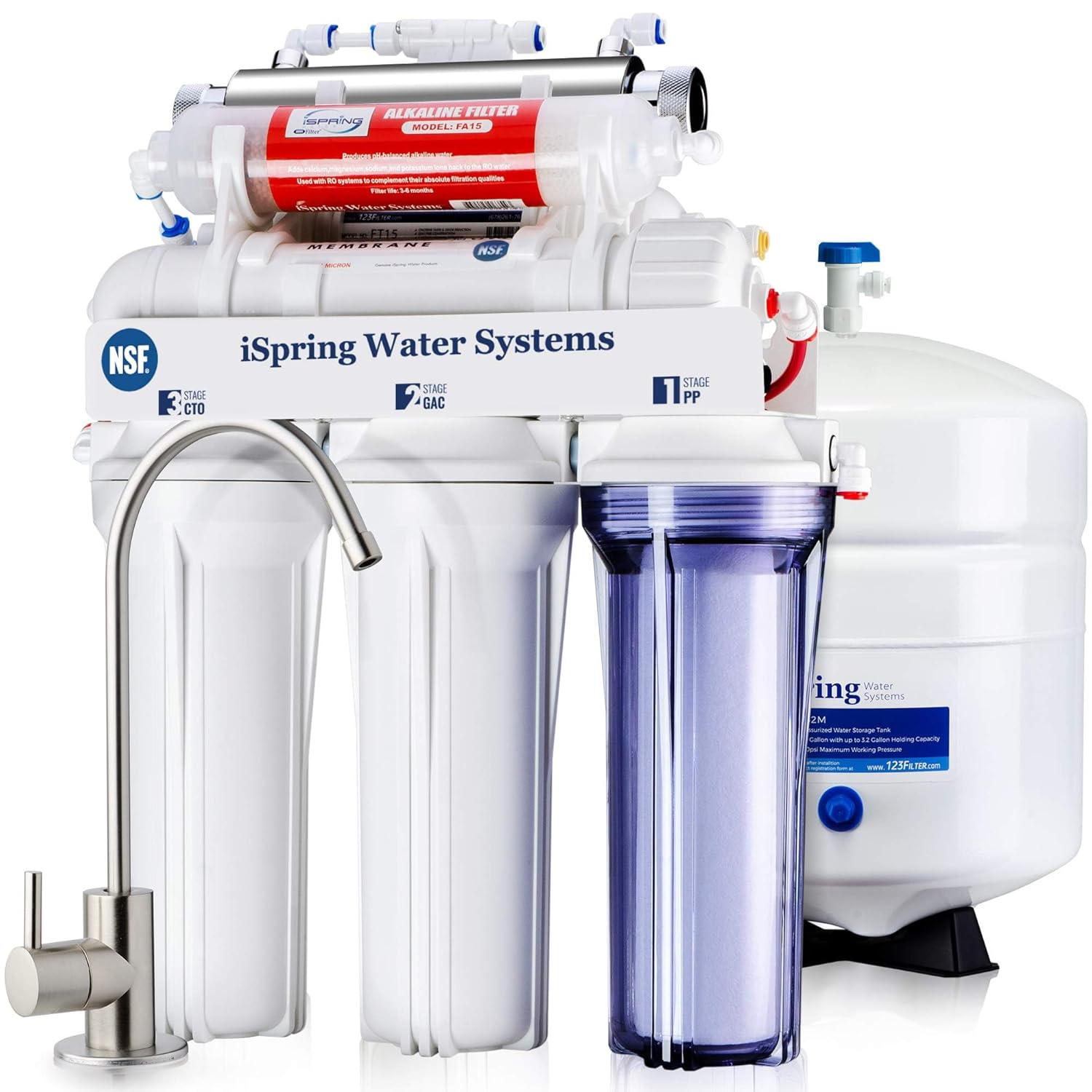
The iSpring RCC7AK-UV is a 7-stage under-sink reverse osmosis water filtration system that delivers exceptionally clean, great-tasting water. While it is designed for home or RV installation, outdoor enthusiasts, campers, and anyone who values water quality will appreciate the peace of mind it provides. This system removes up to 99% of over 1,000 contaminants including lead, chlorine, fluoride, arsenic, and many more, while the built-in UV sterilization lamp kills 99% of bacteria and viruses. The alkaline remineralization stage then adds back healthy minerals like calcium and magnesium, giving the water a crisp, natural spring-like taste that beats bottled water.
Best suited for RV campers, overlanders, and families who want reliable clean water at home or in their rig, this system is a long-term investment in health. For car campers who fill up water jugs or for anyone tired of buying plastic bottles, having an RO system at home reduces waste and ensures every drink is pure. The 75-gallon-per-day RO membrane can handle the needs of a large family, and the 3.2-gallon storage tank keeps water ready on demand.
When it comes to performance, this system is a workhorse. The combination of sediment filter, GAC and CTO carbon filters, high-rejection RO membrane, inline carbon, alkaline filter, and UV lamp provides multiple layers of protection. The UV filter uses a smart flow sensor to activate only when water is flowing, saving energy and extending lamp life. The filtration is so thorough that users report zero limescale buildup in kettles even after weeks of use. For those concerned about water pressure, the system works best between 45-70 psi; if your pressure is lower, a booster pump model is available.
Build quality is top-notch. iSpring uses high-grade components including a stainless steel UV housing, push-to-connect fittings, and a durable manifold. The transparent first-stage housing lets you visually inspect the sediment filter and see when it needs replacement – a practical feature for maintenance. The system is NSF/ANSI 58 certified for the entire system, not just individual components, which is a strong testament to its reliability. Replacement filters are easy to source and come in convenient multi-year bundles (6-month, 1-year, 2-year, or 3-year sets).
Setup does require some effort. The system comes with clear instructions and a QR code linking to an installation video. Most DIY-minded users can complete the installation in 2-3 hours using basic tools like a drill and channel locks. The color-coded tubing and push-to-connect fittings simplify the process, but you will need to drill a hole for the faucet (or use an existing one) and mount the filter bracket securely. The leak-stop valve adds peace of mind, especially for those worried about water damage under the sink or in an RV cabinet.
A realistic limitation is that this is not a portable unit – it is designed for permanent under-sink installation, so it won't work for backpacking or tent camping. Additionally, homes with water pressure below 45 psi will need the booster pump version to achieve optimal performance. The initial cost is higher than a basic countertop filter, but considering the level of filtration and the cost savings over bottled water, many campers and families find it a worthwhile upgrade. Overall, the iSpring RCC7AK-UV is an excellent choice for anyone who wants safe, delicious water at home or in their RV, and it earns a strong recommendation from outdoor water quality enthusiasts.
The iSpring RCC7AK-UV delivers exceptional contaminant reduction. The 7-stage process includes a 5-micron sediment filter, GAC and CTO carbon filters, a high-rejection TFC RO membrane (75 GPD), a post-inline carbon filter, an alkaline remineralization filter, and an 11W UV sterilization lamp. Together, they remove up to 99% of over 1,000 contaminants including lead (98.9%), arsenic, chlorine, fluoride (97.4%), barium, cadmium, copper, selenium, asbestos, and more. The UV stage kills 99% of bacteria and viruses, providing an extra layer of protection for those using well water or uncertain municipal supplies.
The alkaline filter restores essential minerals like calcium, magnesium, and potassium, balancing the pH and improving taste. Many users report that the water tastes better than bottled spring water, with no plastic aftertaste. The system is certified by NSF International to NSF/ANSI 58 for TDS reduction, meaning it meets strict standards for performance and safety.
For RV campers and overlanders, this system can be installed under a kitchen sink and connected to the RV's fresh water system, providing clean drinking water on the road. The 3.2-gallon pressurized storage tank ensures a steady supply, and the system refills automatically. Water pressure between 45-70 psi is recommended for optimal operation; if your RV or home pressure is lower, iSpring offers a model with a built-in booster pump.
Installation is designed for DIY enthusiasts. The package includes all necessary parts: filter housings, filters, tubing, faucet with mounting bracket, drain saddle, and a leak-stop valve. The push-to-connect fittings and color-coded 1/4-inch and 3/8-inch tubing make connections straightforward. A drill is needed to mount the bracket and faucet. The system can be installed under a standard kitchen sink or in an RV cabinet. Some users choose to mount the filters in a basement or utility area for easier access, running tubing up to the sink.
Maintenance is simple. The sediment and carbon filters should be replaced every 6-12 months, the RO membrane every 2-3 years, the alkaline filter yearly, and the UV lamp every 12 months. iSpring offers convenient multi-year replacement filter sets (F4AK, F10KU, F21KU75, F31KU75). The first-stage housing is transparent, so you can see when the sediment filter needs changing. The system also includes a leak-stop valve that automatically shuts off the water if a leak is detected, providing peace of mind.
Before installation, measure your water pressure and TDS. If pressure is below 45 psi, consider the booster pump model (RCC1UP-AK). iSpring’s customer support team is based in Atlanta, GA, and can help you choose the right system for your specific water conditions.
Pros
- Restores beneficial minerals and elevates pH for crisp, non-flat tasting drinking water.
- No electrical power required, functioning reliably on standard 40-85 PSI line pressure.
- Includes a bonus replacement set of stages 1 to 3 pre-filters for extended maintenance cycles.
- High 75 gallon per day production easily handles the hydration needs of entire families and groups.
- Standard 10-inch filter housings allow easy sourcing of generic replacement cartridges in rural areas.
Cons
- Requires a pressurized water line between 40 and 85 PSI, so it cannot draw directly from unpressurized backcountry streams without a separate pump.
- Stationary under-sink installation makes it better suited for RVs, camper conversions, and cabins rather than lightweight backpacking or tent camping.
- Generates standard reverse osmosis wastewater discharge during the purification process.
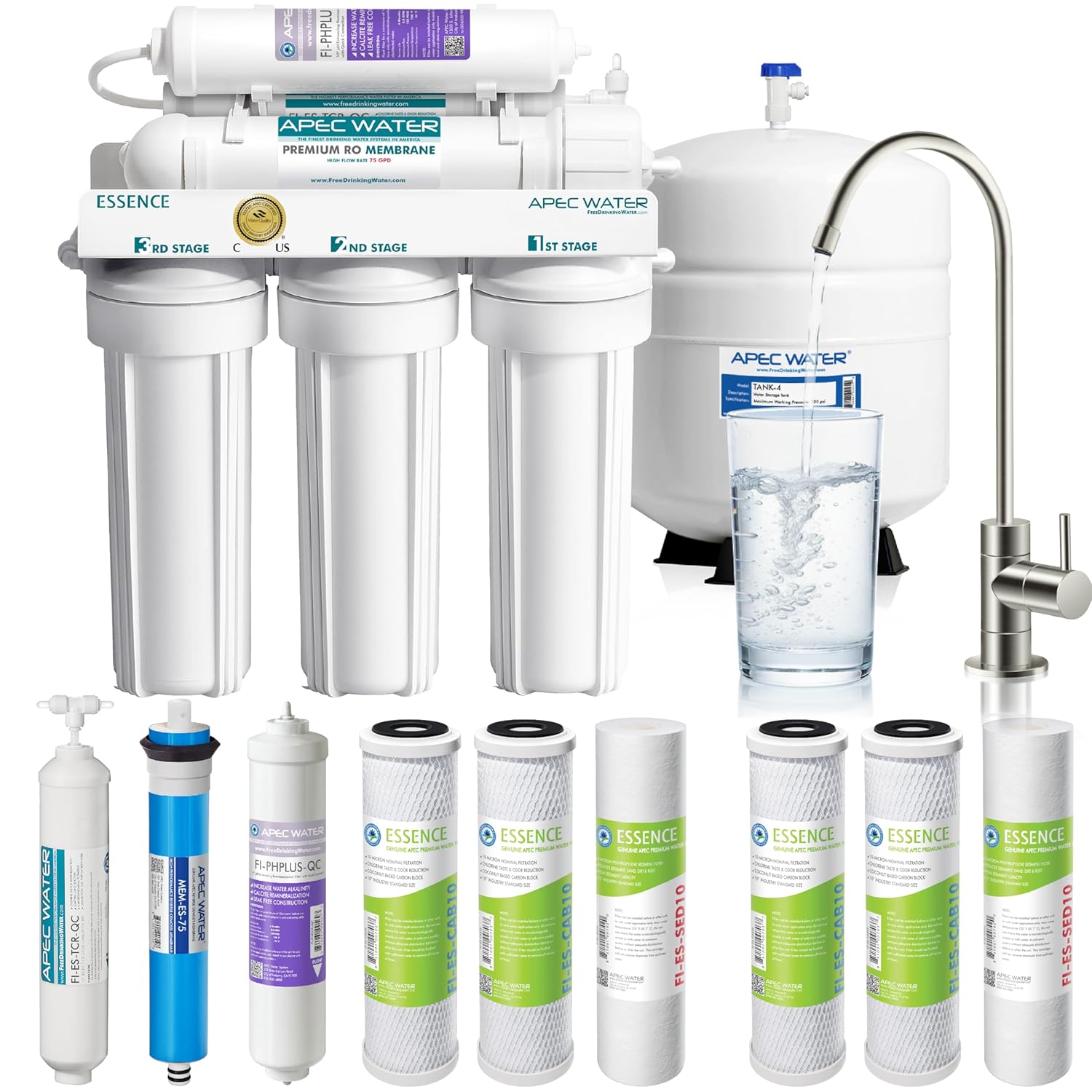
The APEC ROES-PH75 Essence Series is a comprehensive 6-stage under-sink reverse osmosis water filtration system engineered to produce bottled-quality drinking water right from the tap. While traditional backpackers rely on squeeze filters or gravity bags on the trail, large-scale outdoor adventurers, RV campers, cabin owners, overlanders with plumbed rigs, and emergency preppers require a heavy-duty, high-capacity purification solution. This system is designed to treat municipal or pressurized well water, making it a reliable water hub for filling canteens, camp cook pots, and hydration bladders before heading into the backcountry.
Hydration is critical during long days of hiking, chopping firewood, or setting up camp in warm weather. The ROES-PH75 tackles water quality by pushing water through a semi-permeable membrane that strips away up to 99 percent of contaminants, including chlorine, lead, fluoride, heavy metals, and arsenic, while handling up to 2000 ppm total dissolved solids. Because pure reverse osmosis water can sometimes taste flat or acidic, this unit features a dedicated sixth-stage remineralization cartridge that reintroduces food-grade calcium. Based on user feedback, this stage raises the pH to a slightly alkaline level, delivering crisp, refreshing water that dramatically improves morning camp coffee, freeze-dried meal prep, and daily electrolyte replenishment.
Reliability matters when you are staying in remote campsites or relying on gear during severe weather emergencies. The system relies purely on existing water line pressure between 40 and 85 PSI, meaning it requires no electrical hookup to operate. The heavy-duty polypropylene housings and quick-connect fittings are built to prevent leaks under continuous pressure, and the entire assembly carries WQA Gold Seal certification for material safety and structural integrity. The package also includes a dedicated metal storage tank, a lead-free faucet, color-coded tubing, and a bonus set of stages 1 through 3 pre-filters, providing extra consumables for remote cabins where hardware stores are miles away.
Maintaining clean water systems in an RV, hunting camp, or family cabin is straightforward thanks to standard 10-inch cartridge sizes. The pre-filters generally require swapping every 6 to 12 months, while the core RO membrane lasts between two to four years depending on feed water clarity. When prepping an RV or unheated seasonal shelter for freezing winter temperatures, users should note that the system, storage tank, and housings must be fully drained to prevent frost damage. The quick-connect fittings allow for fast detachment, enabling owners to unhook the system in minutes and store it in a temperature-controlled space during harsh winter months.
Despite its high filtration capability, the ROES-PH75 has distinct operational boundaries that campers must plan around. It is not a portable field filter for scooping lake water into a canteen on the trail; it demands a pressurized plumbing line to force water through the microscopic membrane. In situations where well or RV tank pressure drops below 40 PSI, the system may run slowly or continuously, which some users resolve by pairing it with an auxiliary booster pump. Additionally, like all reverse osmosis systems, it discharges reject water through a drain line, which should be considered by anyone monitoring tight greywater holding tank capacities.
For overlanders outfitting a camper van, families maintaining an off-grid vacation cabin, and survivalists building a reliable home emergency water cache, the APEC ROES-PH75 delivers exceptional water purity and taste. Its generous 75-gallon daily production capacity easily keeps a campsite full of water bottles, hydration reservoirs, and cooking kettles topped off with pristine alkaline water. If your outdoor lifestyle includes a stationary basecamp, travel trailer, or emergency storm bunker with a pressurized supply, this value bundle offers lasting peace of mind and delicious drinking water.
Installing the APEC ROES-PH75 in an RV, travel trailer, or basecamp kitchen requires dedicated space under the counter for both the filter manifold and the water storage tank. The main manifold measures approximately 17.5 inches tall by 15.5 inches wide by 5.25 inches deep, while the storage tank stands 15 inches high with an 11-inch diameter. Securing the tank and filter bracket firmly to cabinet walls helps protect the connections from vibration during travel over bumpy washboard dirt roads.
Campers operating on private wells or 12-volt RV water pumps should ensure their plumbing can consistently sustain at least 40 PSI of water pressure. In setups where pressure fluctuates or runs low, pairing the system with a mechanical permeate pump or electric booster pump will maintain an efficient 75 gallon per day production rate and minimize wastewater generation.
The six-stage filtration architecture begins with a high-capacity sediment filter to capture dirt, rust, and silt, followed by two extruded carbon blocks that eliminate chlorine, odors, and chemical tastes. The water then passes through the advanced 0.00000004-inch reverse osmosis membrane to filter heavy metals and microscopic impurities, followed by an alkaline remineralization cartridge and a final refining coconut shell carbon filter.
For optimal performance at remote camps or cabins, pre-filters should be replaced every 6 to 12 months, especially when processing high-mineral well water. Using the included housing wrench makes filter swaps quick and tool-free. Seasonal camp owners must thoroughly drain all water housings and the storage tank prior to the first hard freeze to safeguard the membrane and housing from expanding ice.
FAQs
Does an alkaline RO system remove contaminants and add minerals?
Yes, some systems combine reverse osmosis with a mineral stage. The iSpring and APEC descriptions specify mineral enhancement after RO filtration, but mineral content and taste can differ by system. Review the listed reduction claims and certification scope before purchase.
Is countertop RO easier to install than under-sink RO?
Yes, the DREO is described as install-free, while the iSpring and APEC models are under-sink systems. Countertop placement avoids plumbing work but uses counter space; under-sink units require room and setup. Compare the product instructions with your kitchen layout.
Does the iSpring system have whole-system NSF/ANSI 58 certification?
Yes, the product information says the complete iSpring system is NSF/ANSI 58 certified. It also lists reduction results for several contaminants, including lead, fluoride, and TDS. Confirm current documentation and the certification scope for your intended use.
Can these RO systems treat private well water?
They may be suitable for some well supplies, but test the water first. The APEC listing identifies tap and well water use, while iSpring specifies feed-water pressure and temperature ranges. Neither detail replaces testing for local concerns such as sediment, iron, or bacteria.
How often do RO replacement filters need changing?
It depends on the system and the filter stage. iSpring lists replacement sets with different service intervals, and APEC says its included pre-filters should be changed every six months. Follow the manufacturer schedule and check replacement cartridge availability; this inline RV filter installation guide covers a different filter type and setup.
Does a higher RO stage count guarantee better water?
No, stage count alone does not establish performance. Compare the specific membrane and treatment stages, contaminant claims, certification details, maintenance needs, and water compatibility. The listed product features provide a more useful basis for comparing these Best Alkaline Water Filter Systems For Home options.




Write Your Review
No reviews yet. Be the first to share your experience!