


Grit, metallic taste, and water quality concerns at home
Rust flakes and fine sediment can collect in plumbing fixtures, while chlorine or metallic tastes can make tap water less appealing. A whole-house system treats water at the point it enters your home, so filtration can serve multiple faucets and appliances rather than just one drinking-water tap. The best water filters for heavy metals depend on your source water, the contaminants you need to address, and the maintenance you can keep up with.
These two three-stage systems use different combinations of media and have different replacement schedules. ExpressWater lists KDF media for heavy-metal reduction and says its filters should be changed every 6 to 12 months, depending on use and inlet water quality. iSpring lists a 5-micron sediment stage and a 30,000-gallon capacity, with service life stated as up to six months. Those manufacturer details are useful starting points, not a substitute for checking your water report or testing private well water. For a separate look at home treatment, see this guide to a non-RO water purifier for home use.
Compare the listed contaminant claims with your specific needs before buying, and confirm fittings, installation space, and replacement cartridge availability. ExpressWater states that its system does not reduce total dissolved solids, so it isn’t a replacement for reverse osmosis if TDS reduction is your goal. The whole-house filtration benefits may include treating water at several points of use, but actual results depend on incoming water and proper upkeep. If you need guidance on a different inline setup, this inline RV water filter installation guide covers another filtration format.

Pros
- Delivers exceptional flow rates suitable for running multiple camp showers, sinks, and spigots simultaneously
- Durable stainless steel frame and food-grade housings stand up well in humid pump houses or cabin utility sheds
- Eliminates strong sulfur, well-water smells, and harsh municipal chlorine odors instantly
- Independent pressure gauges remove the guesswork when tracking cartridge lifespan
Cons
- Large physical footprint is designed for stationary cabin or RV hookup installations rather than mobile packing
- Does not lower Total Dissolved Solids (TDS) if absolute demineralization is required
- Requires basic plumbing know-how and standard 1-inch NPT fittings to install
The Express Water 3-Stage Heavy Metal Water Filtration System is a high-capacity point-of-entry purification setup engineered to clean every drop of water entering a property. While backpackers rely on pocket-sized squeeze filters on the trail, outdoor enthusiasts operating remote hunting cabins, vacation camp outposts, overland homesteads, and full-time RV basecamps need commercial-grade volume. This unit is built to treat water right at the source, ensuring that showers, camp sinks, and drinking spigots deliver refreshing, odorless water after a long day in the backcountry.
Filtration performance is where this system stands out for rugged basecamp living. The three-stage process starts with a high-density sediment filter that catches silt, rust, and dirt from well lines or municipal sources. Next, a specialized KDF media filter utilizes a catalytic redox process to target heavy metals such as lead, mercury, arsenic, and iron. Finally, an activated carbon block filter absorbs lingering chlorine, chemical contaminants, and unpleasant odors. According to user feedback, the improvement in water clarity and taste is immediate, eliminating foul well smells and sulfur notes that often plague rural camp outposts.
Outdoor utility rooms, pump sheds, and barn installations demand durable hardware. Express Water constructed this system on a heavy-duty stainless steel freestanding frame, allowing you to mount it directly to a wall or let it stand unsupported on a flat floor. The filter housings are crafted from heavy-duty, food-grade ABS and PCE plastic to withstand line pressures between 20 and 80 PSI. Three top-mounted pressure gauges let you monitor each individual stage, so you know exactly which filter is loaded with sediment without taking the canisters apart.
Routine maintenance is straightforward thanks to thoughtful design features. The system is rated to handle up to 100,000 gallons per cartridge set, which translates to roughly 6 to 12 months of dependable service depending on raw water quality. When it comes time for routine maintenance, built-in red pressure relief buttons depressurize each canister to ensure smooth, mess-free canister removal with the included housing wrench. For remote cabin owners or off-grid preppers, stocking replacement filter sets ensures continuous, clean water for months on end.
Before installing, it is helpful to keep a few practical realities in mind. This system uses 1-inch NPT connections and is designed to filter out particulate matter, chemicals, and heavy metals, but it does not reduce Total Dissolved Solids (TDS). Campers needing zero-mineral water for specialized laboratory use or pure descaling may want to pair this with a secondary reverse osmosis unit. For hunting basecamps, rural RV stations, family camp compounds, and emergency water preppers, this 3-stage setup represents an exceptional, durable investment in reliable hydration.
Treating high volumes of water at a remote camp or cabin requires a balance of flow speed and contaminant capture. This system delivers an impressive flow rate of up to 17 gallons per minute (0.25 gallons per second), meaning you can run a camp shower, kitchen sink, and outdoor hose simultaneously without noticing a drop in pressure.
The combination of sediment, KDF, and carbon block filtration ensures that challenging water sources with high iron, dirt, or municipal chlorine become clean and drinkable straight from the tap. It serves as an ideal primary line defense for rural off-grid water setups and basecamp plumbing networks.
Installing the freestanding stainless steel bracket is relatively straightforward using standard 1-inch plumbing lines such as PEX, copper, or PVC. Placing a bypass valve loop around the system during setup allows for easy filter swaps without shutting off the main water line completely.
To maintain peak performance, monitor the three built-in pressure gauges periodically. A noticeable drop in pressure between the inlet and outlet gauges indicates that a cartridge has reached capacity and should be replaced to keep your basecamp water running clean.
Pros
- Transparent first-stage canister lets you inspect filter life at a glance without shutting off water
- Supplies a brisk 12 GPM flow rate with minimal pressure drop for multi-tap basecamps and cabins
- Tackles heavy metals, chlorine, and sulfur smells from questionable rural or campground hookups
- Standard 3/4-inch NPT ports allow straightforward integration into PEX, copper, or PVC camp plumbing
Cons
- Does not reduce Total Dissolved Solids (TDS) or soften extremely hard mineral water
- Weighs over 21 pounds and requires a solid wall stud or backer board for secure mounting
- Plastic housings must be drained and protected from freezing temperatures in unheated winter cabins
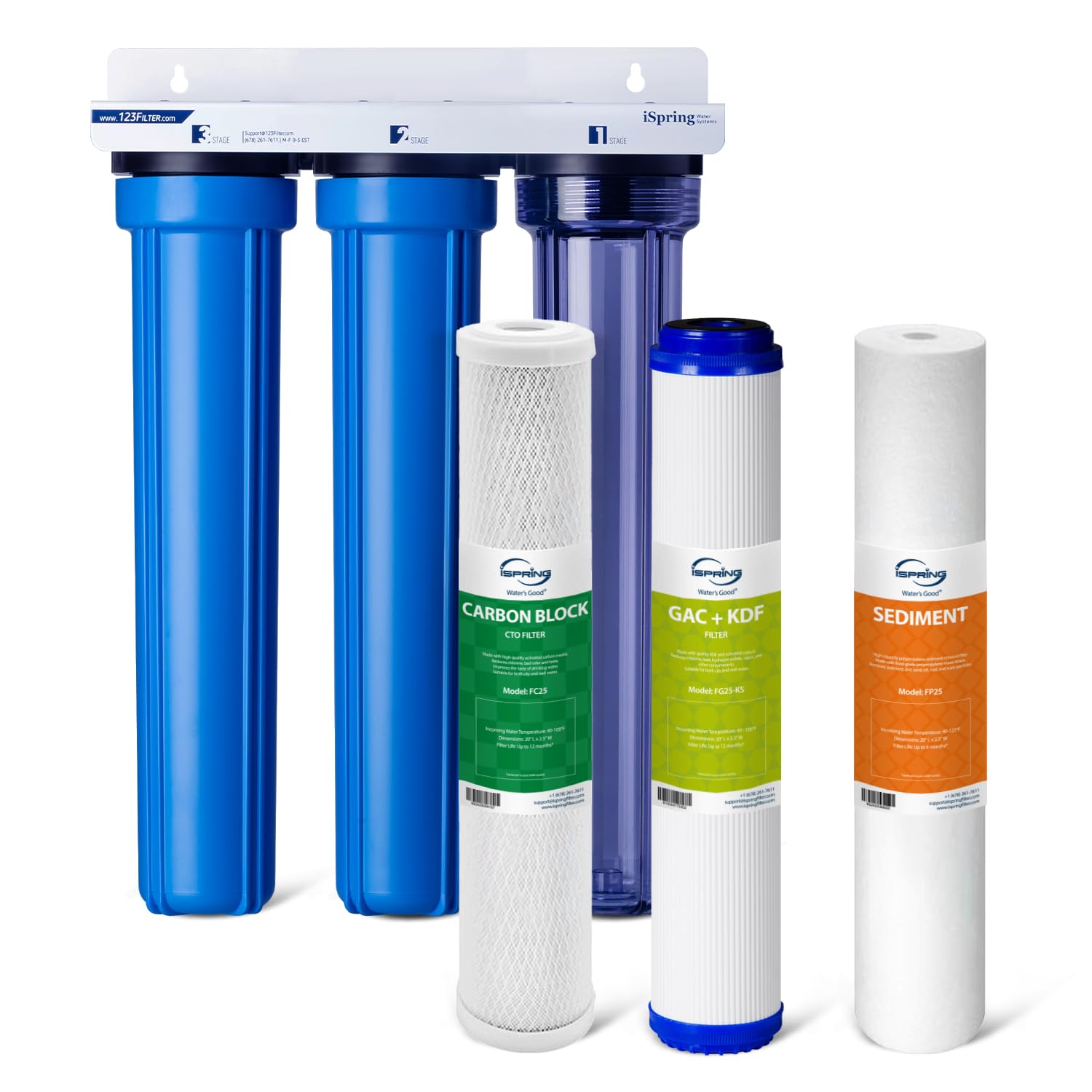
The iSpring WCB32C-KS is a heavy-duty three-stage whole-house filtration system designed to clean incoming water lines for seasonal cabins, off-grid homesteads, stationary RV setups, and rural basecamps. Engineered with a rigid steel mounting bracket and standard 3/4-inch NPT plumbing connections, this filtration station handles up to 30,000 gallons per cartridge set. It acts as a dependable utility upgrade when you need reliable, clean water for cooking campfire meals, running outdoor showers, and hydrating after a long trail hike.
This filtration system serves rural cabin owners, hunting camp operators, RV travelers hooked up to questionable well spigots, and emergency preparedness planners building out home resilience systems. Outdoor enthusiasts spending weeks at remote cabins often face murky water packed with sand, silt, and iron rust, while private campgrounds frequently feature high chlorine levels or sulfur odors. Plumbed directly into your primary supply line, this setup ensures every faucet, wash station, and shower head delivers clear, fresh-tasting water without chemical stink.
Filtration performance remains strong across daily camp chores thanks to a peak flow rate of 12 gallons per minute, which minimizes annoying pressure drops when multiple taps run simultaneously. The filtration path starts with a 5-micron polypropylene sediment filter in a transparent housing to intercept rust, dirt, and grit. Water then passes through an FG25-KS compound cartridge packed with granular activated carbon and KDF media to bind heavy metals, lead, PFAS, and hydrogen sulfide before hitting a dense coconut shell carbon block that captures remaining chlorine and foul tastes.
The build quality is tailored for utility environments, incorporating reinforced housings secured to a powder-coated steel bracket that supports the 21.5-pound dry weight. Having a clear first-stage housing is a huge practical advantage in rustic settings, as you can visibly inspect sediment accumulation after heavy rainstorms without unscrewing the canister. Setting up the system calls for basic DIY plumbing skills, and many campers find that installing isolation shutoff valves and a simple bypass loop makes seasonal filter swaps clean and effortless.
A realistic limitation of this system is that it does not soften hard water or lower total dissolved solids. If your basecamp well draws from limestone-heavy aquifers, pairing this unit with an ion-exchange water softener will yield better lathering and prevent scaling in camp water heaters. Furthermore, freeze protection is non-negotiable for off-grid mountain cabins and unheated utility sheds, requiring complete line drainage and canister removal before the first deep winter freeze to protect the housings from cracking.
For outdoorsmen maintaining a family getaway cabin, a rustic hunting lodge, or a permanent camper setup, the iSpring WCB32C-KS offers a durable and cost-effective shield against compromised water supplies. It keeps sediment from clogging delicate plumbing valves, eliminates sulfur and chemical odors, and produces dependable, clean drinking water directly from the tap so you can stop hauling cumbersome disposable plastic water jugs out to camp.
Installing the system requires standard 3/4-inch NPT male adapters compatible with your existing camp plumbing materials, such as PEX crimp fittings or schedule 40 PVC. Because pipe threads can bind against the bracket if over-tightened, wrapping the male threads thoroughly with quality plumbing tape or pairing them with pipe thread sealant ensures leak-free joints without straining the female ports.
Regular maintenance is straightforward thanks to the included heavy-duty housing wrench, which provides the leverage needed to loosen canisters during seasonal swaps. Keep replacement O-rings clean and lightly lubricated with food-grade silicone grease to guarantee a watertight seal every time you service the cartridges.
When closing down a summer camp or hunting cabin for the winter, always depressurize the system, spin off each filter housing, discard spent cartridges, and drain all standing water. Storing empty filter housings dry over freezing winter months prevents ice expansion from damaging the plastic sumps or threading.
The first-stage sediment filter acts as the primary barrier, trapping particulate matter down to 5 microns to prevent gravel, sand, and pipe rust from reaching appliances or choking downstream carbon stages. The transparent sump lets you quickly identify when heavy silt runoff from mountain springs or shallow wells necessitates an early cartridge swap.
Stage two utilizes a specialized KDF and granular activated carbon blend designed to reduce dissolved heavy metals like lead and mercury alongside troublesome volatile organic compounds and PFAS chemicals. This stage also helps neutralize sulfur-based hydrogen sulfide, which frequently causes well water to smell like rotten eggs around remote campsites.
The third-stage carbon block filter is manufactured from dense coconut shell carbon, polishing water clarity and capturing fine lingering chemicals, chloramines, and chlorine. The resulting outflow retains natural calcium and magnesium minerals while eliminating cloudiness and foul off-flavors, giving you refreshing water for morning coffee and campsite cooking.
FAQs
Which whole-house system lists heavy-metal filtration media?
ExpressWater specifically lists KDF media for heavy-metal reduction. iSpring lists a GAC and KDF composite stage and names lead among the contaminants it targets. Check each manufacturer’s claims against your water test results before selecting a system.
Does either system reduce total dissolved solids?
No, ExpressWater states that its three-stage whole-house system does not reduce TDS. Whole-house filtration and reverse osmosis serve different purposes, so consider an RO system if TDS reduction is a priority.
How often do the replacement filters need changing?
ExpressWater recommends replacing its filters every 6 to 12 months or by its stated gallon limit, depending on household use and inlet water quality. iSpring lists a capacity of 30,000 gallons and service life of up to six months. Follow the current manual and account for your water conditions.
What does the iSpring sediment pre-filter capture?
The iSpring first stage is a 5-micron polypropylene sediment filter. Its listed purpose is trapping particles such as dust, sand, silt, dirt, and rust before water reaches later stages. That stage addresses particles, while the GAC and KDF stage targets other listed contaminants.
Can a whole-house filter preserve water pressure?
Neither product listing provides a comparable flow-rate figure in gallons per minute, so pressure performance cannot be predicted from the available specifications alone. Confirm the system’s fittings and rated flow with the manufacturer, especially for a multi-bathroom home. A clogged sediment cartridge can also affect flow, making timely replacement important.
Should well water be tested before buying a filter?
Yes, testing private well water helps identify which contaminants need treatment. These products list reduction claims, but the appropriate system depends on the actual water profile. Use results to check whether a listed filter addresses your specific concerns, then follow the manufacturer’s maintenance instructions.




Write Your Review
No reviews yet. Be the first to share your experience!