


Metallic taste, grit, and stubborn odors call for the right filter
A sharp tap-water taste or rust-colored sediment can make ordinary kitchen and shower use frustrating. The best water filter for heavy metals depends on which contaminants are present, where you need treatment, and how much maintenance fits your household routine. A sediment stage catches particles, while carbon and KDF media address different water-quality concerns; neither should be treated as a universal fix for every supply.
This lineup includes whole-house systems, replacement cartridges, a shower filter, and an under-sink reverse osmosis option. Product specifications list details such as a 5-micron sediment stage on the iSpring system, up to 100,000 gallons for certain Express Water products, and a 75 GPD rating for the APEC RO system. Those figures come from product information, not independent water analysis, and actual results depend on incoming water and upkeep. For a broader look at treatment approaches, see this guide to non-RO water purifiers for home use.
Before buying, match the system to a current water report or suitable contaminant test, then check its replacement schedule, installation connections, and stated claims. Whole-house filtration treats water at the entry point, while reverse osmosis focuses on drinking water at a dedicated faucet. The options below help you compare heavy-metal reduction media, sediment control, chlorine taste reduction, and cartridge upkeep without assuming every system performs the same job.

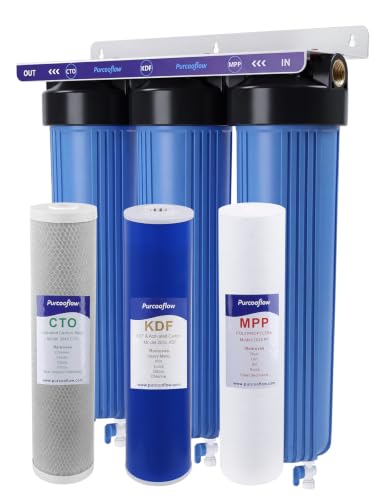

Pros
- Delivers exceptional flow rates suitable for running multiple camp showers, sinks, and spigots simultaneously
- Durable stainless steel frame and food-grade housings stand up well in humid pump houses or cabin utility sheds
- Eliminates strong sulfur, well-water smells, and harsh municipal chlorine odors instantly
- Independent pressure gauges remove the guesswork when tracking cartridge lifespan
Cons
- Large physical footprint is designed for stationary cabin or RV hookup installations rather than mobile packing
- Does not lower Total Dissolved Solids (TDS) if absolute demineralization is required
- Requires basic plumbing know-how and standard 1-inch NPT fittings to install
The Express Water 3-Stage Heavy Metal Water Filtration System is a high-capacity point-of-entry purification setup engineered to clean every drop of water entering a property. While backpackers rely on pocket-sized squeeze filters on the trail, outdoor enthusiasts operating remote hunting cabins, vacation camp outposts, overland homesteads, and full-time RV basecamps need commercial-grade volume. This unit is built to treat water right at the source, ensuring that showers, camp sinks, and drinking spigots deliver refreshing, odorless water after a long day in the backcountry.
Filtration performance is where this system stands out for rugged basecamp living. The three-stage process starts with a high-density sediment filter that catches silt, rust, and dirt from well lines or municipal sources. Next, a specialized KDF media filter utilizes a catalytic redox process to target heavy metals such as lead, mercury, arsenic, and iron. Finally, an activated carbon block filter absorbs lingering chlorine, chemical contaminants, and unpleasant odors. According to user feedback, the improvement in water clarity and taste is immediate, eliminating foul well smells and sulfur notes that often plague rural camp outposts.
Outdoor utility rooms, pump sheds, and barn installations demand durable hardware. Express Water constructed this system on a heavy-duty stainless steel freestanding frame, allowing you to mount it directly to a wall or let it stand unsupported on a flat floor. The filter housings are crafted from heavy-duty, food-grade ABS and PCE plastic to withstand line pressures between 20 and 80 PSI. Three top-mounted pressure gauges let you monitor each individual stage, so you know exactly which filter is loaded with sediment without taking the canisters apart.
Routine maintenance is straightforward thanks to thoughtful design features. The system is rated to handle up to 100,000 gallons per cartridge set, which translates to roughly 6 to 12 months of dependable service depending on raw water quality. When it comes time for routine maintenance, built-in red pressure relief buttons depressurize each canister to ensure smooth, mess-free canister removal with the included housing wrench. For remote cabin owners or off-grid preppers, stocking replacement filter sets ensures continuous, clean water for months on end.
Before installing, it is helpful to keep a few practical realities in mind. This system uses 1-inch NPT connections and is designed to filter out particulate matter, chemicals, and heavy metals, but it does not reduce Total Dissolved Solids (TDS). Campers needing zero-mineral water for specialized laboratory use or pure descaling may want to pair this with a secondary reverse osmosis unit. For hunting basecamps, rural RV stations, family camp compounds, and emergency water preppers, this 3-stage setup represents an exceptional, durable investment in reliable hydration.
Treating high volumes of water at a remote camp or cabin requires a balance of flow speed and contaminant capture. This system delivers an impressive flow rate of up to 17 gallons per minute (0.25 gallons per second), meaning you can run a camp shower, kitchen sink, and outdoor hose simultaneously without noticing a drop in pressure.
The combination of sediment, KDF, and carbon block filtration ensures that challenging water sources with high iron, dirt, or municipal chlorine become clean and drinkable straight from the tap. It serves as an ideal primary line defense for rural off-grid water setups and basecamp plumbing networks.
Installing the freestanding stainless steel bracket is relatively straightforward using standard 1-inch plumbing lines such as PEX, copper, or PVC. Placing a bypass valve loop around the system during setup allows for easy filter swaps without shutting off the main water line completely.
To maintain peak performance, monitor the three built-in pressure gauges periodically. A noticeable drop in pressure between the inlet and outlet gauges indicates that a cartridge has reached capacity and should be replaced to keep your basecamp water running clean.


Pros
- Transparent first-stage canister lets you inspect filter life at a glance without shutting off water
- Supplies a brisk 12 GPM flow rate with minimal pressure drop for multi-tap basecamps and cabins
- Tackles heavy metals, chlorine, and sulfur smells from questionable rural or campground hookups
- Standard 3/4-inch NPT ports allow straightforward integration into PEX, copper, or PVC camp plumbing
Cons
- Does not reduce Total Dissolved Solids (TDS) or soften extremely hard mineral water
- Weighs over 21 pounds and requires a solid wall stud or backer board for secure mounting
- Plastic housings must be drained and protected from freezing temperatures in unheated winter cabins
The iSpring WCB32C-KS is a heavy-duty three-stage whole-house filtration system designed to clean incoming water lines for seasonal cabins, off-grid homesteads, stationary RV setups, and rural basecamps. Engineered with a rigid steel mounting bracket and standard 3/4-inch NPT plumbing connections, this filtration station handles up to 30,000 gallons per cartridge set. It acts as a dependable utility upgrade when you need reliable, clean water for cooking campfire meals, running outdoor showers, and hydrating after a long trail hike.
This filtration system serves rural cabin owners, hunting camp operators, RV travelers hooked up to questionable well spigots, and emergency preparedness planners building out home resilience systems. Outdoor enthusiasts spending weeks at remote cabins often face murky water packed with sand, silt, and iron rust, while private campgrounds frequently feature high chlorine levels or sulfur odors. Plumbed directly into your primary supply line, this setup ensures every faucet, wash station, and shower head delivers clear, fresh-tasting water without chemical stink.
Filtration performance remains strong across daily camp chores thanks to a peak flow rate of 12 gallons per minute, which minimizes annoying pressure drops when multiple taps run simultaneously. The filtration path starts with a 5-micron polypropylene sediment filter in a transparent housing to intercept rust, dirt, and grit. Water then passes through an FG25-KS compound cartridge packed with granular activated carbon and KDF media to bind heavy metals, lead, PFAS, and hydrogen sulfide before hitting a dense coconut shell carbon block that captures remaining chlorine and foul tastes.
The build quality is tailored for utility environments, incorporating reinforced housings secured to a powder-coated steel bracket that supports the 21.5-pound dry weight. Having a clear first-stage housing is a huge practical advantage in rustic settings, as you can visibly inspect sediment accumulation after heavy rainstorms without unscrewing the canister. Setting up the system calls for basic DIY plumbing skills, and many campers find that installing isolation shutoff valves and a simple bypass loop makes seasonal filter swaps clean and effortless.
A realistic limitation of this system is that it does not soften hard water or lower total dissolved solids. If your basecamp well draws from limestone-heavy aquifers, pairing this unit with an ion-exchange water softener will yield better lathering and prevent scaling in camp water heaters. Furthermore, freeze protection is non-negotiable for off-grid mountain cabins and unheated utility sheds, requiring complete line drainage and canister removal before the first deep winter freeze to protect the housings from cracking.
For outdoorsmen maintaining a family getaway cabin, a rustic hunting lodge, or a permanent camper setup, the iSpring WCB32C-KS offers a durable and cost-effective shield against compromised water supplies. It keeps sediment from clogging delicate plumbing valves, eliminates sulfur and chemical odors, and produces dependable, clean drinking water directly from the tap so you can stop hauling cumbersome disposable plastic water jugs out to camp.
Installing the system requires standard 3/4-inch NPT male adapters compatible with your existing camp plumbing materials, such as PEX crimp fittings or schedule 40 PVC. Because pipe threads can bind against the bracket if over-tightened, wrapping the male threads thoroughly with quality plumbing tape or pairing them with pipe thread sealant ensures leak-free joints without straining the female ports.
Regular maintenance is straightforward thanks to the included heavy-duty housing wrench, which provides the leverage needed to loosen canisters during seasonal swaps. Keep replacement O-rings clean and lightly lubricated with food-grade silicone grease to guarantee a watertight seal every time you service the cartridges.
When closing down a summer camp or hunting cabin for the winter, always depressurize the system, spin off each filter housing, discard spent cartridges, and drain all standing water. Storing empty filter housings dry over freezing winter months prevents ice expansion from damaging the plastic sumps or threading.
The first-stage sediment filter acts as the primary barrier, trapping particulate matter down to 5 microns to prevent gravel, sand, and pipe rust from reaching appliances or choking downstream carbon stages. The transparent sump lets you quickly identify when heavy silt runoff from mountain springs or shallow wells necessitates an early cartridge swap.
Stage two utilizes a specialized KDF and granular activated carbon blend designed to reduce dissolved heavy metals like lead and mercury alongside troublesome volatile organic compounds and PFAS chemicals. This stage also helps neutralize sulfur-based hydrogen sulfide, which frequently causes well water to smell like rotten eggs around remote campsites.
The third-stage carbon block filter is manufactured from dense coconut shell carbon, polishing water clarity and capturing fine lingering chemicals, chloramines, and chlorine. The resulting outflow retains natural calcium and magnesium minerals while eliminating cloudiness and foul off-flavors, giving you refreshing water for morning coffee and campsite cooking.

Pros
- Restores beneficial minerals and elevates pH for crisp, non-flat tasting drinking water.
- No electrical power required, functioning reliably on standard 40-85 PSI line pressure.
- Includes a bonus replacement set of stages 1 to 3 pre-filters for extended maintenance cycles.
- High 75 gallon per day production easily handles the hydration needs of entire families and groups.
- Standard 10-inch filter housings allow easy sourcing of generic replacement cartridges in rural areas.
Cons
- Requires a pressurized water line between 40 and 85 PSI, so it cannot draw directly from unpressurized backcountry streams without a separate pump.
- Stationary under-sink installation makes it better suited for RVs, camper conversions, and cabins rather than lightweight backpacking or tent camping.
- Generates standard reverse osmosis wastewater discharge during the purification process.
The APEC ROES-PH75 Essence Series is a comprehensive 6-stage under-sink reverse osmosis water filtration system engineered to produce bottled-quality drinking water right from the tap. While traditional backpackers rely on squeeze filters or gravity bags on the trail, large-scale outdoor adventurers, RV campers, cabin owners, overlanders with plumbed rigs, and emergency preppers require a heavy-duty, high-capacity purification solution. This system is designed to treat municipal or pressurized well water, making it a reliable water hub for filling canteens, camp cook pots, and hydration bladders before heading into the backcountry.
Hydration is critical during long days of hiking, chopping firewood, or setting up camp in warm weather. The ROES-PH75 tackles water quality by pushing water through a semi-permeable membrane that strips away up to 99 percent of contaminants, including chlorine, lead, fluoride, heavy metals, and arsenic, while handling up to 2000 ppm total dissolved solids. Because pure reverse osmosis water can sometimes taste flat or acidic, this unit features a dedicated sixth-stage remineralization cartridge that reintroduces food-grade calcium. Based on user feedback, this stage raises the pH to a slightly alkaline level, delivering crisp, refreshing water that dramatically improves morning camp coffee, freeze-dried meal prep, and daily electrolyte replenishment.
Reliability matters when you are staying in remote campsites or relying on gear during severe weather emergencies. The system relies purely on existing water line pressure between 40 and 85 PSI, meaning it requires no electrical hookup to operate. The heavy-duty polypropylene housings and quick-connect fittings are built to prevent leaks under continuous pressure, and the entire assembly carries WQA Gold Seal certification for material safety and structural integrity. The package also includes a dedicated metal storage tank, a lead-free faucet, color-coded tubing, and a bonus set of stages 1 through 3 pre-filters, providing extra consumables for remote cabins where hardware stores are miles away.
Maintaining clean water systems in an RV, hunting camp, or family cabin is straightforward thanks to standard 10-inch cartridge sizes. The pre-filters generally require swapping every 6 to 12 months, while the core RO membrane lasts between two to four years depending on feed water clarity. When prepping an RV or unheated seasonal shelter for freezing winter temperatures, users should note that the system, storage tank, and housings must be fully drained to prevent frost damage. The quick-connect fittings allow for fast detachment, enabling owners to unhook the system in minutes and store it in a temperature-controlled space during harsh winter months.
Despite its high filtration capability, the ROES-PH75 has distinct operational boundaries that campers must plan around. It is not a portable field filter for scooping lake water into a canteen on the trail; it demands a pressurized plumbing line to force water through the microscopic membrane. In situations where well or RV tank pressure drops below 40 PSI, the system may run slowly or continuously, which some users resolve by pairing it with an auxiliary booster pump. Additionally, like all reverse osmosis systems, it discharges reject water through a drain line, which should be considered by anyone monitoring tight greywater holding tank capacities.
For overlanders outfitting a camper van, families maintaining an off-grid vacation cabin, and survivalists building a reliable home emergency water cache, the APEC ROES-PH75 delivers exceptional water purity and taste. Its generous 75-gallon daily production capacity easily keeps a campsite full of water bottles, hydration reservoirs, and cooking kettles topped off with pristine alkaline water. If your outdoor lifestyle includes a stationary basecamp, travel trailer, or emergency storm bunker with a pressurized supply, this value bundle offers lasting peace of mind and delicious drinking water.
Installing the APEC ROES-PH75 in an RV, travel trailer, or basecamp kitchen requires dedicated space under the counter for both the filter manifold and the water storage tank. The main manifold measures approximately 17.5 inches tall by 15.5 inches wide by 5.25 inches deep, while the storage tank stands 15 inches high with an 11-inch diameter. Securing the tank and filter bracket firmly to cabinet walls helps protect the connections from vibration during travel over bumpy washboard dirt roads.
Campers operating on private wells or 12-volt RV water pumps should ensure their plumbing can consistently sustain at least 40 PSI of water pressure. In setups where pressure fluctuates or runs low, pairing the system with a mechanical permeate pump or electric booster pump will maintain an efficient 75 gallon per day production rate and minimize wastewater generation.
The six-stage filtration architecture begins with a high-capacity sediment filter to capture dirt, rust, and silt, followed by two extruded carbon blocks that eliminate chlorine, odors, and chemical tastes. The water then passes through the advanced 0.00000004-inch reverse osmosis membrane to filter heavy metals and microscopic impurities, followed by an alkaline remineralization cartridge and a final refining coconut shell carbon filter.
For optimal performance at remote camps or cabins, pre-filters should be replaced every 6 to 12 months, especially when processing high-mineral well water. Using the included housing wrench makes filter swaps quick and tool-free. Seasonal camp owners must thoroughly drain all water housings and the storage tank prior to the first hard freeze to safeguard the membrane and housing from expanding ice.
FAQs
Does a sediment filter remove dissolved heavy metals?
No, a sediment pre-filter mainly traps particles such as sand, rust, and dirt. KDF or other media may target certain dissolved contaminants, but performance depends on the specific product and source water. Check the manufacturer’s claims and confirm treatment needs with a water test.
Can a whole-house filter reduce lead and chlorine taste?
Some systems are designed to reduce both, but their listed media and claims vary. The Express Water three-stage system uses KDF media and carbon, while its product information says it does not reduce total dissolved solids. For drinking-water-focused treatment, compare it with a guide to replacing a pitcher water filter or an RO system.
How often should whole-house filter cartridges be replaced?
Follow the model’s instructions and consider both gallons used and incoming water quality. The listed Express Water system specifies replacement every 6 to 12 months or around 100,000 gallons, while iSpring lists up to six months and 30,000 gallons. These are product specifications, not guarantees for every home.
Does reverse osmosis remove more dissolved contaminants?
Reverse osmosis uses a membrane designed to reduce many dissolved substances, and the APEC listing describes a six-stage system rated at 75 GPD. Its stated removal claims are manufacturer information; feed pressure, water conditions, and filter maintenance matter. This approach serves a drinking-water tap rather than every fixture in the house.
Will a whole-house filter keep water pressure steady?
Not necessarily. Pressure depends on system design, plumbing, cartridge condition, and household demand, and the supplied product details do not provide comparable flow-rate figures for all options. Check connection size and flow specifications before selecting a system for a multi-bathroom home.
Are shower filters a substitute for drinking-water filtration?
No, a shower filter treats water at the shower and is not a replacement for a certified drinking-water treatment setup. The weAQUA listing describes sediment, carbon, KDF, and calcium sulfite media, with a stated six-month filter life. Confirm the exact claims and replacement requirements for your intended use.


Write Your Review
No reviews yet. Be the first to share your experience!