
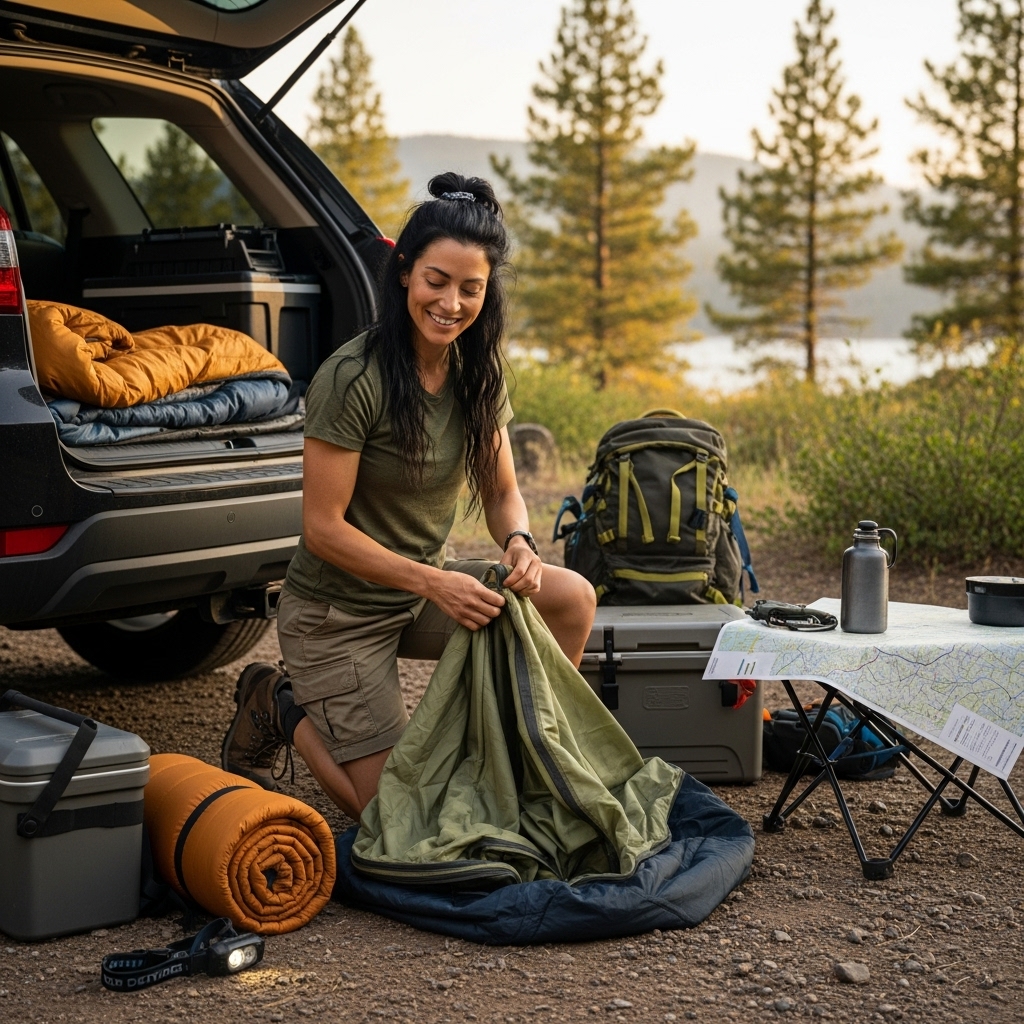

Selecting Shelters for Coastal and Beach Camping
Unforgiving ocean breezes and open sun can quickly turn a relaxing afternoon by the water into an uncomfortable sweatbox. Standard tents often trap heat, while flimsy sunshades risk collapsing the moment coastal winds pick up across the shoreline. Evaluating fabric coatings, ventilation mesh, and reliable tie-down points helps you locate the best naturehike beach tent that matches your specific shoreline environment. A quality sun shelter or well-ventilated camping tent must balance dense UV protection with open airflow so you can rest comfortably without baking in trapped heat.
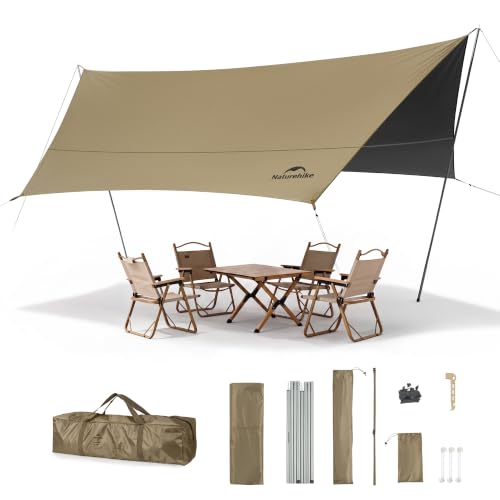
Fabric density and frame stability matter even more on open sand than they do at sheltered woodland campsites. While some beachgoers need lightweight, packable setups for coastal treks, others want expansive sunshades or blackout fabrics like Naturehike Ti-Black technology to keep family groups cool. Exploring dedicated canopy tent options provides an easy reference for how overhead shade differs from fully enclosed camping designs. By matching proper anchors to your preferred coastal activities, you can build a stable camp that shields against midday glare and sudden seaside gusts.
Pros
- Very low listed weight of 2.76 pounds for a double-wall two-person shelter
- Compact packed dimensions of 17.7 by 5.1 inches reduce pack volume
- Full mesh inner body promotes generous cross-ventilation in warm weather
- Listing notes an included footprint sharing the floor's PU3000mm rating
- Inner peak height of 39.3 inches provides adequate clearance for sitting upright
Cons
- Ultralight 10D nylon rainfly fabric demands gentle handling around sharp brush and rocks
- Modest PU1500mm fly rating requires a taut pitch during sustained rainfall
- Interior width of 51.2 inches provides snug shoulder space when occupied by two adults
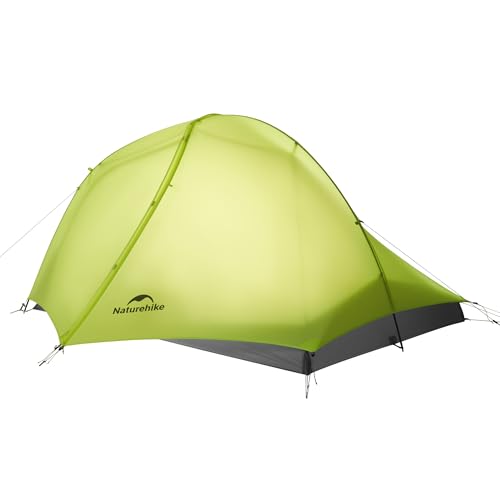
The Naturehike Star Trail is an ultralight double-wall backpacking tent built for outdoor enthusiasts who prioritize minimal pack burden. With a listed weight of 2.76 pounds for the two-person model, it targets long-distance backpackers, bikepackers, mountaineers, cycle tourers, and minimalist campers. By combining thin technical fabrics with a compact structural profile, it caters to hikers who want a portable shelter for multi-day backcountry treks without taking up excessive volume in their pack.
According to the product specifications, the inner sleeping quarters measure 82.7 inches long, 51.2 inches wide, and 39.3 inches high at the center peak, while outer dimensions are listed at 86.6 by 86.6 by 41.3 inches. While designated as a two-person shelter, the 51.2-inch inner width accommodates two standard-width sleeping pads with little margin to spare. Solo hikers will find generous floor room for themselves and internal pack storage, whereas two adult campers should expect an intimate fit with minimal leftover interior space for bulky equipment.
The inner canopy consists of a full-coverage mesh body engineered with elevated clearance to encourage continuous airflow while blocking insects. This open-air structure designates the tent primarily for three-season and warm-weather use, helping mitigate interior condensation on humid nights. Setup is streamlined, with the manufacturer listing an estimated pitching time of roughly three minutes, making it practical for fast camp arrivals after long days on the trail.
For packability, the Star Trail compacts down to 17.7 by 5.1 inches, making it easy to store inside a pack or strap beneath a bike handlebar harness. Weight savings come largely from its lightweight textiles, featuring a 10D nylon outer fly treated with a PU1500mm+ waterproof coating, alongside a 20D nylon floor and footprint with a PU3000mm rating. Campers should keep in mind that ultralight fabrics demand careful clearing of sticks, sharp stones, and rough ground before pitching.
Buyers should balance the tent's low carry weight against practical backcountry realities. The 10D nylon fly and modest PU1500mm waterproof coating require a taut pitch and attentive care in prolonged downpours, and the listing does not detail specific pole materials or internal pocket layouts. For backpackers and bikepackers seeking an ultralight setup that does not break pack limits, the Star Trail serves as a compelling option, provided users treat the ultralight materials with proper care and ensure dry storage between trips.
The Naturehike Star Trail utilizes ultralight technical fabrics to keep total carry weight low. The outer rainfly is constructed from 10D nylon with a listed PU1500mm+ waterproof coating, designed to shed rain while minimizing pack weight.
For ground protection, the inner floor and accompanying footprint use 20D nylon rated at PU3000mm. Because 10D and 20D fabrics are notably lightweight compared to traditional camping materials, campers should pitch on smooth surfaces and avoid sharp debris to preserve fabric longevity.
Weighing a listed 2.76 pounds, the two-person Star Trail ranks among the lighter double-wall shelters in its class. This weight profile makes it a viable option for weight-conscious backpackers, bikepackers, cycle tourers, and minimalist campers.
Its packed dimensions measure 17.7 by 5.1 inches, creating a slim cylindrical shape that slips easily into multi-day packs or lashes securely to bike cages. The reduced bulk helps free up interior volume for essential trail gear and food supplies.
Ventilation is a focal point of the Star Trail design, highlighted by a full-coverage mesh inner tent body. This mesh barrier allows ambient breezes to flow through the cabin freely while keeping insects outside.
The elevated clearance design supports natural airflow between the inner tent and outer fly. This open architecture makes the shelter particularly well-suited for warm-weather and three-season summer outings where moisture dissipation is essential.
Pros
- Includes a matching ground footprint, carry bag, and 14 stakes without requiring separate purchases
- Compact packed dimensions of 15.7 by 5.1 by 5.1 inches fit easily inside backpacks or bike panniers
- Durable 7001 aluminum alloy frame offers structural strength compared to standard fiberglass poles
- Listed PU3000mm+ waterproof rating with factory-taped seams and corners for rain protection
- Upgraded ventilation window positioned above the front door helps promote air exchange
Cons
- Single front door design means occupants must share one entry and exit point
- Listed 4.25-pound base weight excludes the footprint, so total carry weight will be higher with all included gear
- Minor discrepancy in documented interior width between the description (49.2 inches) and specification table (51.2 inches)
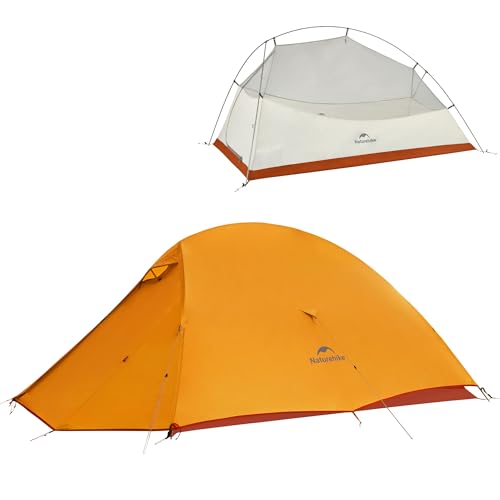
The Naturehike Cloud up Base is a double-layer, two-person backpacking tent engineered for outdoor enthusiasts who need a compact, transport-friendly shelter. As an upgraded version of the standard Cloud up 2, this model is built for backpackers, cycle tourists, and hikers looking to keep weight manageable without moving to complex or ultra-expensive ultralight setups. Its design focuses on lightweight construction, double-wall condensation mitigation, and all-in-one packability.
Regarding interior space, the manufacturer lists dimensions of 82.7 inches long, 41.3 inches high, and an interior width specified as 49.2 inches in the product description and 51.2 inches in the specifications table. The stated capacity accommodates two people, but comfortable usable space depends heavily on individual sleeping pad widths and body sizes. While two standard sleeping pads can fit side by side, personal backpacks and bulkier items are best stashed outside the sleeping compartment in the covered front vestibule area.
The structural layout features a 7001 aluminum alloy pole assembly, providing a durable skeletal frame that supports the inner tent and rainfly. The inner canopy is built predominantly from high-density B3 mesh to encourage cross-breeze airflow, while the outer rainfly utilizes 210T polyester with a PU3000mm+ waterproof coating and taped seams. Notable upgrades on the Base model include an enlarged, higher front door for easier access and a dedicated ventilation window placed directly above the entrance to assist in expelling moisture before condensation accumulates.
For transport and camp routines, the tent packs down into an included carry bag measuring 15.7 by 5.1 by 5.1 inches. The base weight is listed at 4.25 pounds, though users should account for the footprint, 14 included stakes, and 5 wind ropes when calculating total pack weight. Pitching involves laying out the groundsheet, securing the inner tent, seating the pole structure, clipping the canopy, and guying out the rainfly. To maintain longevity, the tent and footprint should be completely dried and cleared of debris before long-term storage.
A practical limitation of this design is its single front entrance. With only one door, the occupant sleeping further from the opening must climb over sleeping gear to exit, which can be inconvenient during night trips outside. In addition, while the PU3000mm+ coating and aluminum poles are geared toward wind and rain resistance, stability in severe weather remains dependent on proper tensioning with the supplied guy ropes and stakes. Shoppers should also keep the slight width measurement ambiguity in mind when sizing wider sleeping mattresses.
Overall, the Naturehike Cloud up Base offers solid utility for solo hikers desiring extra interior room or pairs who prioritize low packed volume on budget-conscious backpacking trips. When comparing it against alternative two-person shelters, buyers should weigh the convenience of the included footprint and aluminum hardware against the practical trade-offs of a single front door layout.
The Cloud up Base utilizes a double-layer design engineered to manage airflow and precipitation. Its outer rainfly is made from 210T polyester treated with a waterproof coating rated at PU3000mm+, paired with factory-taped seams and reinforced corners to mitigate water seepage during rain.
For ventilation, the inner body incorporates high-density B3 mesh that allows interior air to circulate outward toward the rainfly. The upgraded vent window positioned above the front door provides an additional escape channel for warm, humid air, which assists in managing overnight condensation.
The framework consists of a 7001 aluminum alloy pole set, accompanied by 14 ground stakes and 5 wind ropes. Securing all guylines ensures the rainfly remains taut and separated from the inner tent mesh, maintaining proper weather coverage and airflow in breezy conditions.
With a packed size of 15.7 by 5.1 by 5.1 inches, this tent is designed to fit inside most internal-frame backpacks, bicycle panniers, or bikepacking fork mounts without occupying excessive cargo volume.
The manufacturer states a base weight of 4.25 pounds, explicitly noting that this figure excludes the ground footprint. Campers who choose to carry the full kit, including the footprint, 14 stakes, and guylines, should expect a slightly higher trail carry weight.
For pairs traveling together, the packed bundle can easily be divided between two packs, with one person carrying the fabric inner tent and fly while the other carries the poles, footprint, and stake sack.



Pros
- Symmetrical two-door, two-vestibule layout prevents occupants from climbing over one another.
- Includes a matching groundsheet at no extra cost to help protect the tent floor from abrasion.
- Stated 3,000 mm waterproof rating on both the 210T polyester rainfly and tent floor.
- Lightweight 7001 aluminum alloy frame offers freestanding stability with a simple Y-pole hub.
- Compact packed size of under 20 inches in length fits easily onto bike racks or inside backpacks.
Cons
- Listing indicates a 5.3-pound total set weight with a 4.2-pound base tent listing, which may feel heavy for solo ultralight trekking.
- At 53.2 inches wide, interior space will feel snug for two full-width sleeping pads and interior gear storage.
The Naturehike Mongar 2 Person Backpacking Tent is a freestanding, double-layer shelter tailored for three-season outdoor trips including backpacking, hiking, and cycle touring. Built with a unified pole system and dual vestibules, it is designed for campers who want a balance of straightforward assembly, weather coverage, and manageable packability without spending top-tier outdoor brand money.
When looking at interior dimensions, the tent floor measures 82.7 inches long by 53.2 inches wide, yielding slightly over 30 square feet of floor space beneath a 41.3-inch peak height. While the manufacturer rates this as a two-person shelter, usable interior room is best evaluated by your choice of sleeping gear. At roughly 53 inches across, two standard 20-inch sleeping pads will fit side by side with room to spare, but wider 25-inch pads will occupy virtually the entire floor. Fortunately, the dual-door layout ensures neither camper has to crawl over the other, while twin exterior vestibules provide dedicated, covered space outside the sleeping compartment for muddy boots and backpacks.
Structurally, the shelter relies on a freestanding Y-frame design made from 7001 aluminum alloy, engineered for intuitive pitch and reliable stability. The inner canopy is constructed from high-density B3 mesh to promote airflow and keep insects out, making it well suited for warmer spring and summer nights. For rain protection, both the outer rainfly and the bathtub floor utilize 210T polyester coated to achieve a manufacturer-stated 3,000 mm waterproof rating. The rainfly vestibules can be staked out completely shut to block wind and precipitation, or partially rolled back when extra shade and cross-ventilation are needed.
Transport and handling are straightforward thanks to the included stuff sack, which packs down to approximately 19.7 inches long by 5.9 inches in diameter. The total set weight is listed at 5.3 pounds when carrying all components, including the free matching groundsheet, though the base tent weight is listed separately near 4.2 pounds. Pitching instructions are sewn directly into the storage bag so they cannot be misplaced at camp. As with any coated polyester shelter, routine care involves clearing debris from the floor, allowing the fabric and groundsheet to dry thoroughly before long-term storage, and following the manufacturer-provided pitching directions to protect the pole joints.
Potential buyers should keep a few realistic considerations in mind before purchasing. A 5.3-pound total packed weight is reasonable for weekend backpacking, bike tours, or car camping, but dedicated ultralight thru-hikers carrying gear solo may find it on the heavier side. Additionally, while the 3,000 mm rating and aluminum framework provide solid three-season design parameters, performance in severe weather depends heavily on proper staking, taut guylines, and campsite selection.
For couples, solo backpackers wanting extra elbow room, or bike packers seeking a reliable freestanding shelter with two private access points, the Naturehike Mongar 2 presents a well-rounded package. The inclusion of a custom-fit groundsheet adds upfront value, helping protect the tent floor against rough terrain from day one. When comparing it to alternatives, weigh its 5.3-pound packed weight and 53.2-inch floor width against your trail distance and gear dimensions.
The Naturehike Mongar 2 features a symmetrical dual-door layout, allowing each camper to enter and exit without disturbing the other. Outside each door, a dedicated vestibule extends the rainfly outward to create covered exterior storage for backpacks, boots, and wet gear.
These vestibules can be secured fully closed during rainy conditions to safeguard equipment, or adjusted to a partially open configuration to encourage cross-ventilation and provide sun shade during mild weather.
The Mongar 2 utilizes 210T polyester for both the outer rainfly and the floor, each treated with a manufacturer-stated 3,000 mm waterproof polyurethane coating. The inner tent body incorporates high-density B3 mesh to maintain airflow and provide an insect barrier during warmer outings.
The structural skeleton is supported by 7001 aluminum alloy poles joined in a freestanding Y-frame configuration. This setup balances frame rigidity with light weight, while the included matching groundsheet provides an extra layer of protection against abrasive ground surfaces.
Frequently Asked Questions
Can you use a standard backpacking tent on a sandy beach?
Yes, you can pitch a backpacking tent on sand if you secure it with proper stakes or sandbags. Standard metal pegs easily pull out of loose coastal soil, so you need specialized sand stakes or rocks to anchor your guylines. Lightweight models like the Cloud-Up or Star Trail offer high-density mesh bodies that ventilate well against shore humidity while keeping sand out.
What makes a tent or tarp effective for beach sun protection?
High UPF ratings and specialized heat-blocking fabric treatments determine how well a shelter performs under direct sun. The Cloud Skies Lite tarp and Village Instant Tent feature Ti-Black coatings with UPF 50+ or higher ratings designed to reduce heat penetration. These specialized coatings block harmful ultraviolet rays much more effectively than standard untreated tent polyester.
How do you prevent condensation in coastal tents?
Maximizing cross-ventilation through dual doors and rainfly vents is the most reliable way to prevent condensation in damp coastal environments. Ocean humidity naturally collects on tent walls when interior temperatures fluctuate overnight. Pairing a double-layer tent with rechargeable camping fans helps maintain continuous airflow across the mesh canopy during warm coastal outings.
Is an open canopy tarp better than an enclosed tent for beach day trips?
An open tarp canopy usually works better for daytime beach shade because it allows sea breezes to flow freely from all sides. A hexagonal shelter like the Cloud Skies Lite provides 107 square feet of open shade with 6.9-foot steel poles for standing headroom. Fully enclosed tents work better if you need wind protection, insect defense, or overnight sleeping quarters.
How does a blackout tent improve comfort in sunny conditions?
Blackout fabrics block visible light and reflect solar radiation to keep the interior noticeably darker and cooler during peak daylight hours. Shelters with heavy-duty blackout technology can help you nap or relax during bright afternoons without suffering from greenhouse heat buildup. This feature makes tents like the Village Instant model particularly convenient for family beach gatherings or daytime festival rest.
What should you look for when picking the Best Naturehike Beach Tent in 2026?
Focus on effective sun ratings, versatile anchoring options, and generous airflow when selecting the best naturehike beach tent for 2026. Choose an open canopy if daytime sun relief and chair clearance are your primary goals. If you plan on camping overnight near the water, pick a stable double-layer tent with aluminum poles and a matching footprint to protect the floor from abrasive beach sand.


Write Your Review
No reviews yet. Be the first to share your experience!