
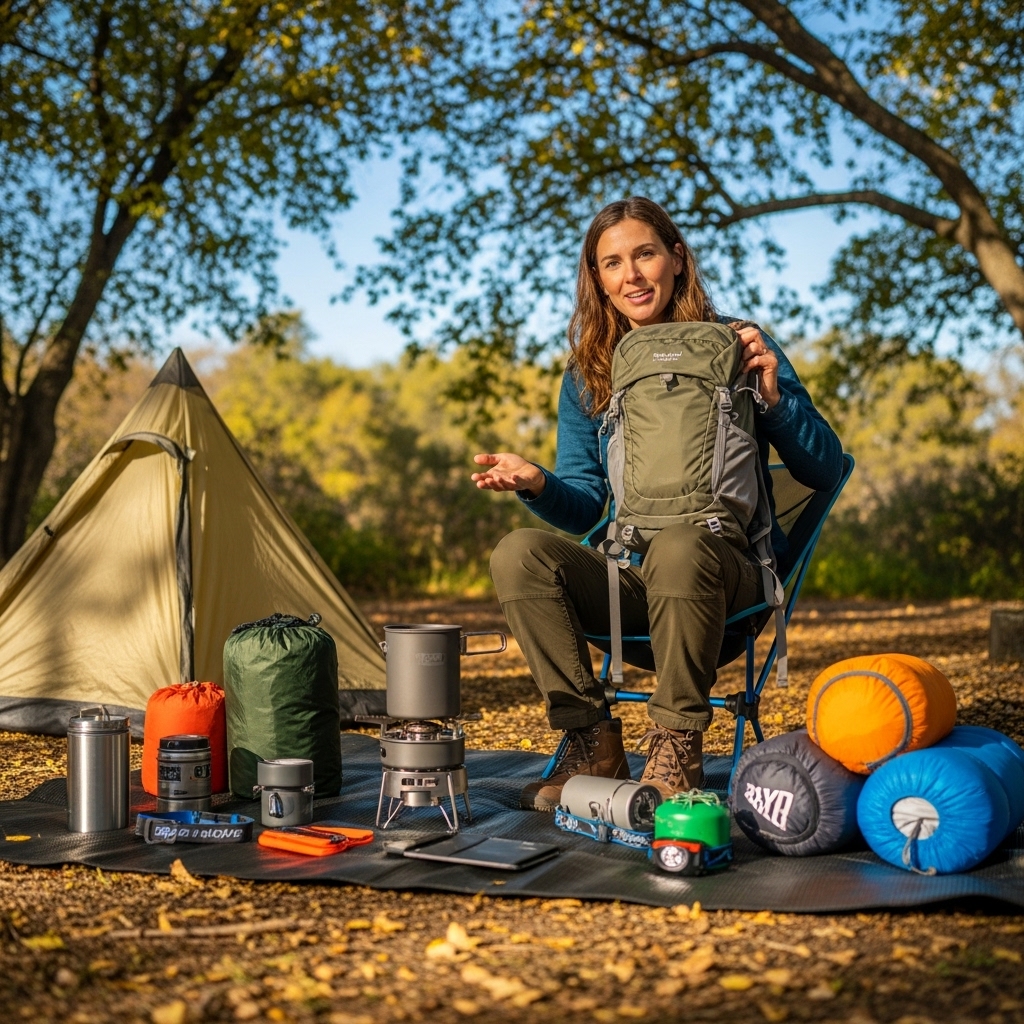

Planning a flight to an iconic hiking trail or distant campground brings unique gear logistics that catch many outdoor travelers off guard. Backpackers frequently ask whether can tent stakes go in carry on luggage when boarding an airplane. The straightforward answer from aviation security authorities is that tent stakes are strictly prohibited in carry-on bags and must be placed in checked luggage. Airport security screeners classify ground pegs as pointed instruments and potential bludgeoning hazards, meaning carrying them into the aircraft passenger cabin will almost certainly lead to confiscation at the checkpoint.
A failed security screening can derail a camping itinerary before the plane even leaves the runway. Arriving at a remote wilderness campsite without stakes leaves your shelter vulnerable to collapse during gusty mountain winds or sudden storms. Travelers who invest in heavy-duty water-resistant camping tents know that maintaining proper structural tension with dependable guylines and solid ground anchors is critical for keeping weather out. Understanding airline packing rules, material restrictions, and alternative anchoring solutions ensures your shelter arrives intact and ready to pitch.
Pros
- Galvanized steel construction offers reliable rigidity and protection against rust in wet ground
- Substantial 10-inch length provides deeper ground penetration than standard wire pegs
- Includes four pre-measured 10-foot ropes ready for immediate guying out
- High-visibility orange stopper helps mark stake placement near high-traffic paths
Cons
- Individual and total pack weight are not specified, making pack-weight calculations difficult for backpackers
- Package includes only one visibility stopper for ten stakes, leaving the remaining nine unmarked
- Listing does not detail holding performance across specific soil conditions such as loose sand or solid rock
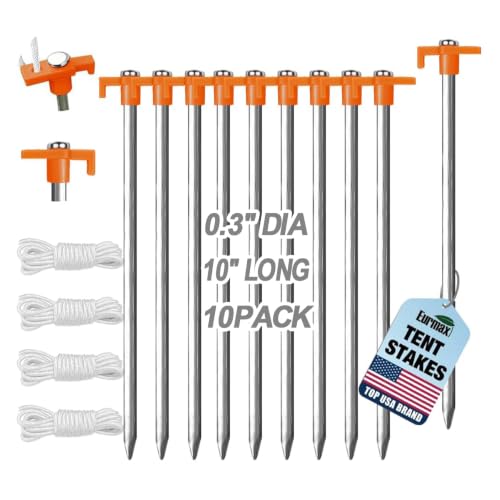
The Eurmax 10-Pack Secure Protection Galvanized Tent Stakes set is a specialized anchoring accessory designed for campers, canopy owners, and outdoor event setups. Built for securing camping tents, pop-up shelters, and gazebos, this kit targets campers who need more durable ground pegs than the thin wire stakes typically bundled with entry-level tents. With heavy-duty galvanized steel construction, it caters to car campers, backyard gazebo owners, and recreational shelter users seeking reliable tie-down support.
Each stake measures 10 inches in length, 2 inches in width, and 0.1 inches in thickness, providing a deep profile intended to anchor shelters against shifting winds. The listing highlights steel canopy anchors geared toward high winds, offering greater structural rigidity than lightweight aluminum or plastic pegs. Because of their length, these anchors penetrate deep into turf and packed dirt, helping prevent guyline slippage when guyed out properly.
Setup is straightforward thanks to the pre-cut lines and ready-to-drive design. The package provides ten commercial-grade ground pegs alongside four 10-foot ropes, eliminating the need to measure and cut auxiliary guylines at the campsite. Eurmax also includes a single high-visibility orange stopper designed to help campers spot stake placement and minimize foot-traffic tripping hazards around the perimeter of the shelter.
At 10 inches long, these steel stakes fit easily into standard gear totes, duffels, or car-camping bins. While the product listing mentions hiking along with camping and beach use, steel stakes are generally heavier than ultralight alternatives, making them most practical for drive-up campsites and vehicle transport. Routine care involves cleaning off damp soil after use and wiping the stakes dry before storage, maintaining the integrity of the galvanized rust-proof coating over multiple seasons.
Buyers should evaluate a few practical limitations and missing details. The manufacturer does not state the individual or total pack weight, which leaves backpackers uncertain about pack suitability. Additionally, while the listing includes an orange stopper for enhanced visibility, it provides only one stopper for ten stakes, meaning most anchor points will not have the bright marker. Soil compatibility is also not detailed, so shoppers pitching on rocky riverbeds or very loose beach sand may need specialized stakes suited for those surfaces.
For car campers, popup canopy owners, and family campers wanting to reinforce their shelter setup, this Eurmax 10-pack delivers practical durability and helpful accessories at an accessible price point. When evaluating ground anchors, campers should consider whether they have enough tie-down ropes for their shelter configuration and verify that 10-inch steel pegs match the soil conditions of their planned campsite.
The Eurmax anchoring set includes ten 10-inch galvanized steel stakes paired with four pre-cut 10-foot ropes. These steel pegs are engineered with a 2-inch wide hook design and 0.1-inch thickness to firmly hold guy lines under tension. The package also features an orange visibility stopper designed to reduce tripping hazards near tent corners and canopy legs.
Campers should note that securing a tent or gazebo depends heavily on proper stake angle and soil conditions. While these stakes offer rigid steel construction suitable for dirt and grass campgrounds, hardpacked gravel or loose beach sand may require specialized driving tools or sand-specific anchors.
These ground anchors are constructed from solid steel treated with a galvanized finish. This galvanized coating helps prevent rust and corrosion resulting from wet soil, morning dew, and rainfall, extending the service life of the hardware across varying weather conditions.
The rigid steel design resists bending and breaking under pressure when driven into standard campsite turf. To maintain the protective finish, users should clean away dirt and allow the stakes to dry before packing them into gear bags.
The package contains ten galvanized steel stakes, four 10-foot ropes, and one high-visibility orange stopper. The pre-cut ropes provide immediate tie-down capability for four canopy or tent guyout points without requiring additional cordage.
Because the set includes only one orange stopper across ten stakes, campers needing full-perimeter visibility markers may need to supply additional reflective tape or stoppers. A driving mallet and dedicated stake carry bag are not listed as included items.

Pros
- Ultralight weight at under half an ounce per stake suits weight-conscious backpacking and trekking setups
- Y-beam geometry offers superior holding power in standard dirt and grass compared to basic round wire stakes
- Reflective cords enhance nighttime campsite visibility and offer a practical grip for quick extraction
- High-visibility red anodized aluminum resists corrosion while reducing the risk of left-behind gear
- Includes 12 stakes and a compact storage bag, sufficient to secure most standard tents and guy lines
Cons
- Aluminum construction is susceptible to bending if struck sideways or forced into heavily rocky soil
- Holding power is limited in loose sand or deep snow, which require specialized wide-profile anchors
The Keovoker 12-Pack Tent Stakes are lightweight replacement ground pegs designed for securing camping tents, rain tarps, hammocks, and sun canopies. These accessories cater to backpackers, hikers, and car campers who need reliable ground anchors without adding excessive bulk or weight to their packs. Because factory-supplied tent stakes are often heavy steel or easily bent wire, an aftermarket set of aluminum pegs offers a practical alternative for everyday campsite pitching.
In terms of weight and dimensions, each stake measures 7 inches in length with a profile of 0.47 by 0.1 inches. Weighing approximately 12 to 13 grams (0.46 ounces) per peg, the full set of 12 stakes adds roughly 0.34 pounds to a loadout. This low weight makes them particularly appealing for backpackers managing trail weight, while providing enough length to achieve solid purchase in standard campsite turf and dirt.
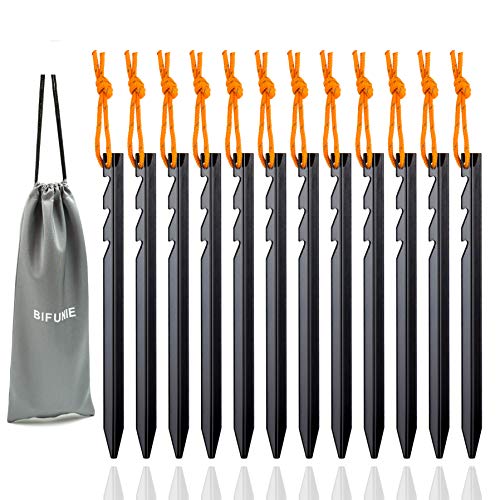
The pegs utilize an extruded Y-shaped design that increases surface contact within the dirt, allowing them to resist pulling forces from wind-loaded tent guy lines. Made from aluminum with an anodized red finish, the stakes resist rust while remaining clearly visible against soil, leaves, and grass. Each stake is equipped with a reflective pull cord attached to the head, making the pegs easier to spot at dusk to avoid tripping, while also providing a practical grip point for hands or stake extractors during strike-down.
Pitching and strike-down require proper technique to protect the aluminum structure. The manufacturer advises driving the pegs straight into the ground using a mallet or firm pressure from the palm of your hand. Striking the stakes at an angle or hitting them sideways can deform or bend the metal, especially if you encounter hidden rocks or dense clay. Once camp is broken, all 12 stakes fit into the included storage bag, keeping sharp tips contained and preventing damage to tent fabrics or backpacks.
Buyers should be aware of clear terrain limitations. While these 7-inch Y-pegs perform well in standard forest loam, packed soil, and grass, they do not provide specialized holding power in loose beach sand or packed snow. Similarly, pitching in heavily rocky ground requires caution, as forceful pounding against subterranean stones can bend aluminum. Campers visiting beaches or alpine scree fields will need purpose-built sand anchors or hardened titanium or steel spikes instead.
For general three-season camping, weekend shelter pitching, and ultralight backpacking, the Keovoker stake pack represents a dependable, functional upgrade. Shoppers should assess the typical soil conditions of their favorite campsites and verify how many guy-out points their shelter requires before purchasing, ensuring a 12-pack covers both primary corners and auxiliary vestibule lines.
Driving these aluminum stakes effectively requires straight downward force. The manufacturer recommends pressing the stake firmly using the palm of your hand or tapping it lightly with a camping mallet. Angled hits or off-center strikes should be avoided, as aluminum can bend under lateral impact when encountering hard subsurface resistance.
Take-down is made easier by the integrated pull cords. Tugging on the cords allows campers to work the stakes out of firm ground without needing specialized tools or damaging the stake heads. Storing them directly in the included carry pouch protects tent fabrics and sleeping bags from dirt and sharp pointed tips.
Constructed from lightweight aluminum, each peg is treated with an anodized red coating that prevents oxidation and rust from ground moisture. The anodization also provides a bright contrast against soil and grass, helping prevent misplaced pegs during packing.
The structural strength comes from the three-sided Y-beam profile. This geometry maximizes ground resistance along multiple axes compared to simple round wire pegs, offering improved hold in regular soil while maintaining a light weight of under half an ounce per piece.
The package includes 12 identical 7-inch red aluminum ground stakes, each pre-strung with a reflective nylon pull cord.
A dedicated storage carry bag is also provided, allowing campers to keep the entire set organized and separated from delicate tent bodies, tarps, or sleeping gear.

Pros
- Galvanized steel construction resists bending and breaking during ground insertion
- Hot-dip galvanized coating protects against rust and outdoor moisture exposure
- High-visibility orange tops improve perimeter safety and help prevent campsite tripping
- Sharp pointed tip allows driving by hand, foot, or camping mallet into grass and dirt
- Convenient 10-pack quantity provides enough anchors for standard tents and tarps
Cons
- Listing does not provide product weight specifications, leaving total pack weight unclear for weight-sensitive packing
- Manufacturer notes they are not optimized for rocky ground without pre-softening the soil
- Seven-inch length may offer limited holding security in loose sand or deep snow compared to specialized anchors
The FEED GARDEN Heavy Duty Tent Stakes are a dedicated camping accessory pack designed to anchor outdoor shelters, tarps, and canopies. Sold in a 10-pack, these 7-inch ground pegs serve as a practical upgrade or replacement for the thin wire stakes often bundled with entry-level camping tents. They are well-suited for car campers, weekend campground visitors, and backyard canopy setups where reliable ground holding power is necessary to secure guy lines and tent corners against normal breezes.
Constructed from thick galvanized steel, these stakes feature a hot-dip galvanized finish engineered to resist rust and corrosion across wet ground and humid weather conditions. Each stake measures 7 inches long by 1.6 inches wide, with a 0.1-inch profile that tapers into a sharp pointed tip. This design allows campers to drive the pegs into grass, dirt, and packed earth using a standard camping hammer, the heel of a boot, or direct hand pressure when ground conditions allow.
A prominent functional element of these stakes is the molded, high-visibility orange head. In busy campsites, guy lines and ground anchors often create tripping hazards, particularly during dawn, dusk, or nighttime walks around the shelter. The bright orange tops make each peg easier to spot in turf or soil. The head design also creates an effective hook and anchor point for securing tent guy ropes, while offering sufficient surface area to grip and pull the stakes when striking camp.
While versatile for general camping, these stakes have specific terrain considerations noted by the manufacturer. They are designed primarily for turf, standard soil, and packed earth. If you encounter rocky or dense campsite surfaces, the manufacturer advises pre-softening the ground or choosing specialized longer or heavy-duty rock stakes to prevent damage. Furthermore, the listing does not state the exact weight per stake or the total bundle weight, so backpackers tracking base pack weight will need to weigh that missing specification against the durability of solid steel.
For car campers, festival attendees, and backyard organizers needing an affordable set of dependable replacement anchors, this 10-pack delivers practical utility. Ten stakes are typically enough to secure the four base corners and essential guy lines of a standard two- to four-person dome tent. If you pitch large family cabin tents, extensive tarps, or screen houses requiring extensive anchoring, verifying your total stake count before departure will ensure you have enough pegs for a secure pitch.
The FEED GARDEN tent stakes are manufactured from solid galvanized steel to resist bending under moderate mallet impact and lateral guy line tension. The steel core provides structural rigidity compared to lightweight aluminum wire stakes.
To protect against the elements, each stake features a hot-dip galvanized coating that shields the metal from rust and moisture damage during damp ground contact or prolonged rain exposure. The top of each stake is fitted with a durable, high-visibility orange cap designed for rope retention and pulling leverage.
These 7-inch stakes are engineered primarily for common campsite ground surfaces including manicured lawn grass, natural dirt, and moderately packed earth. The sharp point eases ground penetration whether driven by foot or a camping mallet.
Campers pitching in rocky or gravel-heavy pitches should take note of manufacturer guidance to soften the ground beforehand or switch to specialized stakes. The bright orange heads serve a dual role at camp by providing an obvious visual marker to reduce tripping accidents near tent perimeter lines.

Pros
- Noticeably lighter than standard iron stakes at approximately 0.07 pounds each
- High-visibility orange color makes stakes easy to spot in tall grass, dirt, and dim lighting
- Included storage bag keeps dirty or pointed stakes safely contained away from tent fabric
- Crafted from rust-resistant metal for extended outdoor service in damp conditions
- Generous 12-pack quantity provides enough anchors for a complete family tent or multiple tarps
Cons
- The product listing does not state the exact metal alloy or grade used in construction
- At 7.1 inches with a straight profile, these pegs may offer limited hold in loose sand or deep snow compared to specialized anchors
The AVOFOREST 12-pack of 7.1-inch metal tent stakes serves as an anchoring accessory for outdoor camping shelters. It is suited for campers, hikers, festival attendees, and canopy owners looking to replace lost or flimsy stock wire pegs with more visible and durable metal alternatives. Because these are standalone ground stakes, they function as a universal accessory rather than a complete shelter system.
In terms of practical dimensions and weight, each stake measures approximately 7.09 inches in length by roughly 0.39 inches square and weighs 0.07 pounds. The manufacturer emphasizes this low weight compared to heavier iron utility stakes, which often weigh around 0.3 pounds each. This compact profile allows a camper to carry all twelve stakes in a backpack or duffel without adding unnecessary bulk to their gear kit.
Constructed from rust-resistant metal, these pegs are designed to resist bending in typical outdoor ground conditions better than thin plastic or low-grade wire stakes. A key design element is the bright orange coating, which provides strong visual contrast against grass, dirt, and sand. This visibility helps campers avoid tripping over guyout points around camp and makes finding stakes during morning pack-down much easier.
Using these stakes involves driving the 7.1-inch shaft into the ground at an angle to anchor tent base loops, guyline cordage, or tarp corners. The set includes a dedicated storage bag, which keeps pointed tips and residual campsite dirt from puncturing tent fabrics or dirtying other gear in transit. For routine care, wiping away excess dirt and allowing the stakes to dry before packing them into the storage bag is good practice.
While the manufacturer highlights high-strength and anti-rust metal properties, the specific metal alloy (such as an aluminum or steel variant) is not detailed in the product data. Additionally, straight 7.1-inch stakes are best suited for medium-density campground soils. Campers pitching shelters in loose beach sand, powdery snow, or rocky riverbeds will likely require specialized wide snow/sand anchors or heavy-duty steel rock pins instead.
For campers, backpackers, and outdoor enthusiasts seeking an affordable, lightweight backup or upgrade set of high-visibility stakes, this 12-pack provides straightforward utility. Shoppers should assess the typical soil conditions of their planned destinations to verify whether standard 7.1-inch straight metal pegs will provide sufficient anchoring hold for their setup.
The AVOFOREST stake set includes twelve 7.1-inch metal pegs designed to anchor tent corners, vestibule pull-outs, rainfly guylines, tarps, and shade canopies.
With a profile measuring approximately 0.39 by 0.39 inches across and 7.09 inches in length, these stakes are built for standard penetration in common lawn, forest floor, and packed dirt campsite soils. The vibrant orange exterior coating provides clear contrast against soil and turf to aid in campsite safety.
Each package contains twelve individual 7.1-inch orange metal tent pegs.
The set also comes with a dedicated storage bag designed to keep the stakes organized in one place, preventing metal edges from rubbing against delicate shelter fabrics during transport.

Airline Regulations and Packing Strategies for Tent Stakes
Aviation security agencies across the globe treat camping stakes with remarkable consistency. Both the United States Transportation Security Administration (TSA) and international screening authorities classify rigid ground anchors as prohibited carry-on items. While a tent body, mesh canopy, and folded rainfly pass through security checkpoints without issue, the pointed metal pegs designed to anchor those fabrics present a clear issue under sharp-object regulations. Campers must understand the mechanics of these rules before arriving at terminal security lines.
Official Airport Security Classifications for Camping Equipment
Airport security guidelines maintain precise categorizations for sporting goods and outdoor gear. The TSA website explicitly states that tent stakes must travel inside checked baggage. Security personnel evaluate carry-on items based on length, rigidity, and the presence of pointed tips capable of causing bodily harm. Ground stakes inherently possess pointed ends engineered to penetrate compacted dirt, clay, and rocky soil, which immediately triggers sharp-object restrictions during baggage X-ray screening.
International screening bodies, including the Canadian Air Transport Security Authority and European aviation regulators, enforce identical prohibitions. These agencies evaluate cabin safety strictly and grant individual screening officers final operational discretion over any questionable object. Even if an item appears borderline on an official policy page, checkpoint officers retain the authority to reject items that look hazardous. Attempting to debate the fine details of camping peg geometry with a screening agent rarely ends in the traveler’s favor.
Losing your anchoring hardware at a screening checkpoint creates immediate friction at your travel destination. Replacing specialized ultralight pegs or commercial heavy-duty anchors at a rural airport or late in the evening can be impossible. Planning around checked baggage requirements eliminates the risk of an officer confiscating essential structural components right before your flight boards.
Why Stake Materials and Profiles Trigger Cabin Prohibitions
Stake design focuses heavily on strength, penetration, and bending resistance. Heavy-duty anchors, such as galvanized steel pegs with broad striking heads, look identical to large spikes or construction nails under an airport X-ray scanner. Heavy steel anchors designed for high winds, such as Eurmax galvanized canopy stakes or FEED GARDEN steel pegs, feature solid shafts and pointed tips that airport screeners easily identify as potential weapons.
Ultralight backpacking options encounter the same scrutiny despite their minimal weight. Extruded aluminum pegs, including BIFUNIE three-sided ground pegs and Keovoker Y-shaped aluminum stakes, utilize sharp angular fins to bite into packed soil. These three-sided geometric profiles create rigid edges and pointed tips that security screeners flag without hesitation. The anodized aluminum construction gives them exceptional strength against ground pressure, but that exact structural rigidity makes them unacceptable in the passenger cabin.
Plastic and composite stakes often lead to confusion among frequent campers. Some travelers assume that non-metallic nylon or ABS plastic pegs bypass security rules because they do not trigger metal detectors. In reality, carry-on baggage passes through dense X-ray imaging where dense plastic silhouettes remain completely visible. Security personnel evaluate the physical form and piercing capability of plastic pegs just like metal hardware, leading to regular confiscation when packed in carry-on bags.
Safe Methods for Packing Tent Stakes in Checked Luggage
Checked baggage is the designated home for all tent pegs, but packing them requires deliberate care. Sharp metal tips easily puncture thin nylon backpack panels, waterproof stuff sacks, and ultralight down sleeping bags during transit. Airport baggage handling systems subject luggage to severe compression and tumbling inside aircraft cargo holds. Placing unprotected metal stakes loosely inside a duffel bag almost guarantees fabric damage to surrounding outdoor gear.
Durable storage pouches provide the first line of defense when packing stakes for a flight. Many models, such as AVOFOREST metal tent pegs or Keovoker ground pegs, include dedicated fabric storage bags that bundle the set securely. Adding an extra protective wrap around pointed tips with heavy canvas, dense foam, or a lightweight plastic tube prevents sharp edges from punching through the pouch seams. Orienting the pointed ends inward toward a central bundle also minimizes the chance of an external puncture.
Positioning the stake bag in the center of your checked luggage offers the best protection against exterior impacts. Surrounding the wrapped stake roll with soft items like fleece layers, spare socks, or camp towels creates a shock-absorbing buffer. Keep heavy steel pegs, like HORUSDY heavy-duty stakes, away from fragile gear like camp stoves, lanterns, or electronic tracking beacons to avoid crush damage during handling.
Practical Strategies for Flying Without Checked Luggage
Backpackers traveling on fast, budget-conscious trips often prefer carry-on bags to skip baggage claim lines and baggage fees. Navigating the tent stake prohibition on a carry-on-only itinerary requires creative logistical planning before departure. One effective approach involves mailing your stake set ahead of time via postal mail. Sending a padded envelope via general delivery to a local post office, a trail hostel, or your destination hotel ensures your personal stakes await your arrival.
Purchasing budget-friendly replacement pegs upon arrival is another viable strategy for travelers flying into major outdoor hubs. Outdoor retailers and hardware stores near national parks and popular hiking corridors consistently stock standard ground pegs. Grabbing an inexpensive set of aluminum or galvanized steel pegs after landing allows you to keep your main luggage strictly in the aircraft cabin. When your journey concludes, you can either gift the stakes to another hiker or check your pack on the return leg.
Natural anchoring techniques offer an alternative for experienced backpackers visiting forested or rocky landscapes. Campers can secure corner loops and guyline cords around heavy boulders, exposed tree roots, or buried deadman branches instead of using metal pegs. This method requires careful knot tying and thorough site assessment to avoid damaging sensitive flora. Travelers should always confirm that local land management rules permit the use of deadwood anchors before relying exclusively on natural tie-downs.
Navigating Tent Poles and Shelter Hardware at Checkpoints
Shelter components beyond stakes create their own share of airport security questions. TSA regulations officially allow collapsible tent poles inside carry-on luggage, unlike tent stakes. Shock-corded aluminum and fiberglass poles lack the sharp, penetrating points that make stakes an automatic security hazard. Many backpackers routinely slide folded pole sets down the internal frame sleeve of their carry-on packs without experiencing delays.
Checkpoint discretion still introduces a slight element of risk for tent poles. A security officer might inspect long, rigid metal pole segments to verify they do not function as blunt strike weapons. Packing your poles alongside other camp equipment helps provide immediate context to the X-ray technician. If you are packing spacious outdoor family tents with particularly long or thick frame assemblies, checking the pole bag eliminates any lingering ambiguity at the security gate.
Fabric components present zero issues for carry-on screening. Polyester and nylon rainflies, tent bodies, gear lofts, and footprint ground cloths can travel inside cabin luggage freely. Rolling your fabric shelters tightly inside compression sacks saves valuable overhead compartment space while leaving room for clothing and sleeping gear. Keeping the fabric in your carry-on also guarantees that the main shelter body stays in your possession even if checked bags experience airline delays.
Matching Stake Types to Destination Ground Conditions
Choosing which stakes to pack depends directly on the soil conditions you expect at your camping destination. Soil types vary widely from hard-packed desert clay to loose sand, muddy riverbanks, and high-altitude alpine shale. Standard utility pegs that hold firmly in home backyard turf often fail completely when pitched in high winds or loose earth. Selecting the appropriate anchor profile ensures your shelter remains taut and wind-resistant throughout the night.
Tri-blade and Y-shaped aluminum pegs provide versatile holding power across general dirt, forest loam, and grassy meadows. The multi-sided profile increases surface area contact with the surrounding earth, resisting lateral tension from tent guylines. Lightweight options, like BIFUNIE aluminum pegs, feature integrated pull cords and multiple notches that make securing tension cords simple. These extruded designs balance low pack weight with enough lateral resistance to anchor three-season backpacking shelters effectively.
Rocky or compacted ground requires the brute strength of galvanized steel anchors. Standard aluminum pegs tend to bend or buckle when driven into gravel or baked clay with a camp mallet or rock. Heavy-duty options, such as FEED GARDEN galvanized steel pegs or HORUSDY 8-inch steel anchors, easily penetrate stiff soil without deforming. High-visibility orange heads and stoppers, found on Eurmax and AVOFOREST models, prevent tripping hazards around camp and keep dark ground hardware visible during twilight hours.
Essential Tent Pitching and Guyline Anchoring Practices
Securing your shelter properly involves far more than simply pushing a peg into the ground. Ground stakes must be driven into the soil at an approximate 45-degree angle pointing away from the tent body. This angle maximizes the resistance against the pulling force exerted by tensioned guylines. Driving stakes straight down perpendicular to the ground significantly weakens their holding ability, making them prone to pulling loose when wind gusts shake the tent walls.
Reflective pull cords and integrated hooks play an important role in setup efficiency. Modern ground pegs, such as Keovoker ultralight aluminum stakes, incorporate reflective cords that shine under flashlight beams. This prevents campers from stumbling over corner guylines during midnight exits. The cords also provide a solid finger or tool grip, allowing you to pull stubborn pegs out of hard ground without needing a specialized claw hammer.
Regular maintenance ensures your ground hardware stays reliable through multiple flying trips. Wipe soil, mud, and moisture from metal shafts before rolling them back into their storage bag to prevent corrosion and mildew on nearby tent fabrics. Inspect aluminum stakes periodically for micro-cracks or stress bends, replacing damaged units before heading out into high-exposure wilderness areas. Proper care keeps your anchoring system ready for whatever weather rolls across the horizon.
A successful outdoor flying trip comes down to knowing aviation regulations and planning your gear placement ahead of time. Keeping tent stakes securely tucked inside checked baggage protects your equipment from checkpoint confiscation and ensures your shelter setup proceeds without unnecessary surprises. With the right hardware packed safely for the flight, you can pitch your tent with total confidence as soon as you reach the trailhead.


Write Your Review
No reviews yet. Be the first to share your experience!