


Hard water needs more than a standard sediment filter
Chalky deposits around faucets and a crusty water-heater element can point to hard water, but a filter that catches rust or improves chlorine taste won’t necessarily remove dissolved calcium. That distinction matters as you compare the best water filters for removing calcium: some products aim to inhibit scale, while others make specific claims about reducing calcium and magnesium ions. The four options here include both approaches, plus whole-house filters designed for sediment and taste rather than softening.
After carefully analyzing the listed product specifications, I’d match the treatment method to the problem you’re trying to solve. The Waterdrop unit is a scale inhibitor, not a conventional pre-filter, while the GE and iSpring systems highlight sediment and chlorine reduction. H&G states that its resin reduces calcium and magnesium, but its cartridge needs more frequent replacement than the other listed systems. Check your water report and confirm compatibility, connection size, and installation location before buying. For another perspective on home treatment options, see this guide to non-RO water purifiers for home use, or review the steps for installing an inline water filter.

Pros
- NSF certified for peace of mind – reduces chlorine taste, sediment, sand, and rust effectively
- Universal compatibility with most standard whole house filter housings – fits many brands
- Easy to install and replace – simple twist-on design, no special tools needed
- Solid build quality with internal plastic framework prevents collapse under pressure (as noted in user reviews)
- Affordable 2-pack offers great value for regular replacement schedules
Cons
- Only reduces chlorine taste/odor and sediment – does not soften water or remove heavy metals or bacteria
- 5-micron filtration may allow some finer particles through compared to 1-micron filters
- Requires compatible whole house filter housing – not a standalone system
The GE FXWTC whole house water filter replacement is designed for anyone who wants cleaner, better-tasting water at every tap. While not a portable camping filter, it's an excellent choice for RV campers, overlanders with full-size rigs, cabin owners, and those who want quality water at their home base before heading into the backcountry. This 2-pack of cartridges fits most standard 10-inch drop-in filter housings from GE, Culligan, Brita, and more, making it a versatile upgrade for your water system.
In terms of real-world performance, the FXWTC is NSF/ANSI 42 certified to reduce chlorine taste and odor, as well as sediment, sand, and rust. Users consistently report a noticeable improvement in water clarity and flavor, especially those on municipal water supplies. The advanced carbon paper filter media traps particles down to 5 microns, which is sufficient for removing common grit and improving taste. However, it does not address hardness, heavy metals, or microbiological contaminants – so it's best paired with a dedicated system if those are concerns. For RVers, this filter can prolong the life of your water heater and plumbing by reducing sediment buildup.
Build quality is a highlight. The filter cartridge features an internal plastic framework that prevents it from collapsing under normal water pressure – a problem reported with some cheaper alternatives. This design ensures consistent filtration and avoids bypassing unfiltered water. The easy twist-in installation means you can swap filters in minutes without tools, perfect for quick changes during a camping trip or at home. Each filter lasts about 3 months or 15,000 gallons, and the 2-pack gives you a full six months of coverage before needing to reorder.
Care and maintenance are straightforward: simply replace the cartridge every three months or when you notice a drop in water pressure or a return of chlorine taste. No cleaning or special storage is required. Keep a spare on hand so you never run out, especially if you rely on filtered water for drinking, cooking, and coffee during your outdoor adventures. The filter is not designed for freezing temperatures, so winterize your system or remove it when storing your RV in cold months.
A realistic limitation is that the FXWTC is only one part of a whole house filtration system – you need the compatible housing (sold separately). It also doesn't soften water, so if you're dealing with hard water scale, you'll need a water softener. Additionally, the 5-micron rating means some finer particles may pass through, but for most campers on city or well water, this is more than adequate. A few users in areas with very fine sediment preferred a 1-micron filter, but those are less common in universal drop-in sizes.
Overall, the GE FXWTC is a practical buy for RV campers, weekend warriors, and home users who want reliable sediment and chlorine reduction. It's affordable, easy to use, and built to last. If you already have a compatible whole house filter housing, this 2-pack offers great value and ensures you and your family enjoy clean water whether you're parked at a full-hookup campsite or at home prepping for your next trip.
The GE FXWTC filter is constructed with a sturdy plastic outer shell and an internal plastic framework that prevents the filter media from collapsing under pressure. User reviews highlight that cheaper alternatives often lack this internal support, leading to leaks or unfiltered water bypass. The reinforced design ensures consistent performance over the full 3-month lifespan. The filter is made in the USA and meets NSF/ANSI 42 standards, giving campers confidence in its reliability for both home and RV use.
Replacing the GE FXWTC filter is a simple, tool-free process. Just turn off the water supply, depressurize the system, unscrew the housing, swap the old cartridge for the new one, and tighten back. Most users report completing the swap in under 5 minutes. The universal fit means it works with nearly any standard 10-inch drop-in filter housing, so you don't need to worry about brand compatibility. For RVers, this ease of maintenance is a major plus when you're on the road and need a quick fix.

Pros
- Solid 304 stainless steel connector head offers high corrosion resistance in outdoor camp bays and utility sheds
- Generous 10 GPM flow rate ensures minimal drop in line pressure for RVs, camper vans, and off-grid showers
- Compact inline footprint installs neatly upstream of tankless water heaters and camp plumbing rigs
- Direct, budget-friendly alternative for standard AP431 and AP430SS scale prevention systems
Cons
- Stainless steel threads are rigid and typically require heavy application of Teflon thread tape to ensure a watertight seal
- Must be mounted in a strict upright vertical orientation on the cold water feed line to function properly
- Designed specifically for scale inhibition rather than sediment filtering or biological pathogen removal
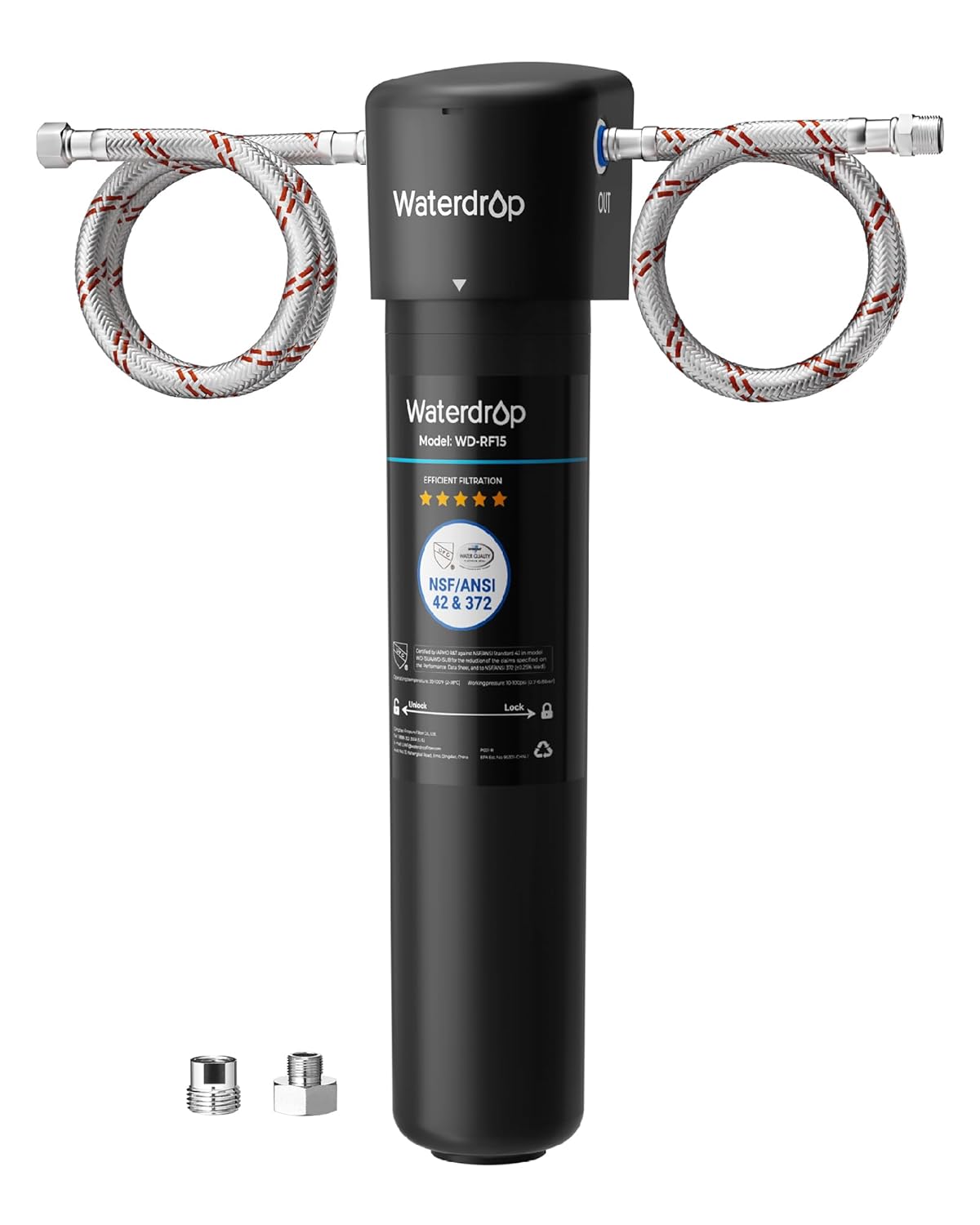
The Waterdrop AP431 AP430SS scale inhibitor system is a dedicated inline water treatment unit built to combat hard water buildup in plumbing lines and heating equipment. Featuring a durable 304 stainless steel adapter head and a food-grade polyphosphate cartridge, this system is engineered to introduce sequestering agents into the cold water feed. For outdoor enthusiasts who rely on camper trailers, converted vans, or remote camp cabins, keeping mineral deposits from choking water lines is vital for long-term comfort and equipment survival.
This scale prevention system is best suited for RV campers, overlanders, tiny home dwellers, and owners of off-grid cabins who frequently tap into hard well water or unpredictable campground hookups. When traveling across varied terrain, water mineral content can shift dramatically from site to site. Campers using portable tankless water heaters for outdoor camp showers or washing camp cookware will find this setup particularly beneficial, as it protects sensitive heating coils from limescale crust that degrades thermal transfer.
In terms of outdoor utility and water flow performance, the system accommodates a flow rate of up to 10 gallons per minute through standard 3/4-inch NPT ports. This generous flow capacity ensures that hot water pressure remains consistent whether you are rinsing dishes at the camp kitchen or running an outdoor shower after a dusty day on the trail. Rather than filtering out every mineral particle mechanically, the polyphosphate media acts chemically by sequestering calcium and magnesium ions. This prevents limescale from adhering to metal pipe walls and heating elements without restricting line pressure.
Build quality centers on a rugged 304 cast stainless steel manifold that offers solid corrosion resistance in damp RV service bays, crawl spaces, and outdoor utility shelters. The transparent cartridge housing allows quick visual checks of the polyphosphate media level, and each cartridge delivers roughly six months of protection under standard household or seasonal camp use. According to user reviews and plumbing feedback, the rigid stainless steel threads demand generous wrapping with quality Teflon tape or thread sealant during installation to avoid nuisance leaks at the inlet and outlet junctions.
While this unit excels at preventing scale buildup in water heaters and pipes, outdoor adventurers should remember that it is not designed to eliminate sediment, silt, bacteria, or giardia from backcountry streams. For off-grid setups drawing from natural sources, pairing this scale inhibitor with a dedicated sediment filter and purifier creates a complete water management station. For family campers and weekend warriors investing in portable propane water heaters or RV plumbing preservation, this system offers a dependable and cost-effective line of defense against hard water damage.
Installing this scale inhibitor requires placement on the cold water supply line directly upstream of your water heater, boiler, or camper distribution block. To achieve optimal performance, the unit must be positioned vertically with the cartridge hanging down. Because cast stainless steel is substantially harder than brass or PVC fittings, multiple thick wraps of Teflon sealing tape are necessary to ensure watertight joints on both 3/4-inch NPT ports.
Maintenance is straightforward throughout the camping season. The cartridge simply unthreads from the stainless steel manifold for replacement every six months, depending on the mineral hardness of your water source. When prepping your camper trailer or off-grid cabin for freezing winter temperatures, be sure to drain the cartridge bowl completely to avoid freeze damage during winterization.
Built with a 304 stainless steel adapter head, this unit resists rust and mechanical stress far better than all-plastic filter brackets commonly found in mobile setups. The heavy metal housing withstands road vibration in RV utility compartments and overland gear boxes without cracking under pressure.
The internal core utilizes certified food-grade, BPA-free polyphosphates that slowly dissolve into the water stream. This design ensures that downstream potable water used for cooking, coffee, and camp cleanup remains clean and safe while maintaining efficient heat transfer across all connected appliances.

Pros
- Preserves heating coils on portable outdoor water heaters and RV boilers
- High flow rate prevents pressure drop during hot showers at camp
- Heavy-duty brass fittings offer leak-resistant connections for rugged camper use
- NSF-certified food-grade cation resin provides safe, polyphosphate-free filtration
Cons
- Requires periodic cartridge replacements every 1,000 to 1,500 gallons depending on water hardness
- At 4.5 pounds and 13 inches tall, it is built for RV or vehicle camping rather than ultralight backpacking
- Does not filter out sediment or bacteria, requiring a pre-filter when sourcing from untreated natural water
Hard water is a notorious hazard for camping gear that relies on hot water, especially portable tankless water heaters, RV plumbing lines, and mobile camp kitchens. The H&G Lifestyles Inline Water Softener and Descaler is an inline ion-exchange filtration canister built to defend your mobile water heating appliances from crippling mineral deposits. By placing this unit directly between a campground water spigot and your camper or portable outdoor shower, outdoor enthusiasts can prevent calcium crust and magnesium scale from choking narrow heat exchanger tubes while traveling across areas with heavily mineralized tap water.
This descaler system is tailored primarily for RV campers, overlanders, travel trailer owners, glampers, and weekend warriors running mobile outdoor camp kitchens or hot shower stations. Campers who frequent state parks, private campgrounds, or remote cabins often hook up to unsoftened well water that can destroy water heater heating elements in just a few trips. This filter serves as an essential line of defense for family campers and road trippers looking to preserve expensive RV appliances without hauling bulky, salt-based residential softeners on the road.
In real-world camping environments, maintaining consistent water flow and reliable pressure is critical for tankless water heaters to ignite and maintain a steady shower temperature. Operating smoothly across a water pressure range of 25 to 90 PSI with a high capacity flow rate of up to 12 GPM, this unit ensures your camp shower delivers ample volume without pressure drop. Inside the canister, food-grade cation resin works to capture up to 99.6 percent of calcium and 99.3 percent of magnesium ions. Unlike traditional polyphosphate filters that merely mask scale, the ion-exchange resin actively removes hard minerals, delivering cleaner water that keeps showerheads flowing freely and prevents white crust around camper sinks.
Build quality matches the rigors of vehicle-based camping and outdoor travel. The filter body is constructed from durable, impact-resistant plastic with solid 3/4-inch brass barb fittings that mate reliably with standard RV PEX plumbing or hose adapters. The robust brass connectors prevent cross-threading and cracking when packing and unpacking your campsite water station. Measuring roughly 5 by 6 by 13 inches and weighing around 4.5 pounds, the unit stores cleanly inside an RV utility bay, camper van cabinet, or outdoor kitchen storage crate without consuming valuable gear space.
Setting up the descaler takes minimal effort, requiring only an inline splice or quick-connect hose assembly directly upstream of your water heater. Maintenance is straightforward, with replaceable filter cartridges providing between 1,000 and 1,500 gallons of treated water, which typically covers an entire season of weekend camping trips or a couple of months of extended RV road trips. While it excels at scale reduction, it is not an all-in-one backcountry purifier, meaning campers drawing from wilderness creeks will still require dedicated sediment and microbiological filtration ahead of this unit. For RVers, overlanders, and cabin campers wanting to prolong the life of their water heating gear, this descaler offers practical protection and peace of mind on the open road.
Integrating this inline descaler into an outdoor camping rig is simple thanks to the included 3/4-inch brass barb connections. For RV campers and travel trailers, the unit can be mounted under the galley sink, plumbed directly inline before a tankless water heater, or mounted inside an exterior water utility compartment using standard PEX fittings.
Campers using portable propane tankless showers at outdoor campsites can easily adapt the inlet with standard brass garden hose quick-connect fittings. Placing the descaler immediately downstream of a sediment pre-filter ensures the cation resin remains free from grit, delivering clean, scale-free water straight to your hot shower burner.
To keep the system running efficiently across camping seasons, the internal ion-exchange resin cartridge should be swapped after treating roughly 1,000 to 1,500 gallons of water, or approximately every two months during heavy seasonal use. If water flow begins to dip or white mineral spotting reappears on camp cookware, it indicates the resin has reached saturation.
Before storing your camper for winter, disconnect the canister and drain all residual water to protect the housing and internal resin from freezing temperatures. Store the unit in a climate-controlled compartment or garage during off-season months so it stays clean and ready for your next outdoor excursion.

Pros
- Transparent first-stage canister lets you inspect filter life at a glance without shutting off water
- Supplies a brisk 12 GPM flow rate with minimal pressure drop for multi-tap basecamps and cabins
- Tackles heavy metals, chlorine, and sulfur smells from questionable rural or campground hookups
- Standard 3/4-inch NPT ports allow straightforward integration into PEX, copper, or PVC camp plumbing
Cons
- Does not reduce Total Dissolved Solids (TDS) or soften extremely hard mineral water
- Weighs over 21 pounds and requires a solid wall stud or backer board for secure mounting
- Plastic housings must be drained and protected from freezing temperatures in unheated winter cabins
The iSpring WCB32C-KS is a heavy-duty three-stage whole-house filtration system designed to clean incoming water lines for seasonal cabins, off-grid homesteads, stationary RV setups, and rural basecamps. Engineered with a rigid steel mounting bracket and standard 3/4-inch NPT plumbing connections, this filtration station handles up to 30,000 gallons per cartridge set. It acts as a dependable utility upgrade when you need reliable, clean water for cooking campfire meals, running outdoor showers, and hydrating after a long trail hike.
This filtration system serves rural cabin owners, hunting camp operators, RV travelers hooked up to questionable well spigots, and emergency preparedness planners building out home resilience systems. Outdoor enthusiasts spending weeks at remote cabins often face murky water packed with sand, silt, and iron rust, while private campgrounds frequently feature high chlorine levels or sulfur odors. Plumbed directly into your primary supply line, this setup ensures every faucet, wash station, and shower head delivers clear, fresh-tasting water without chemical stink.
Filtration performance remains strong across daily camp chores thanks to a peak flow rate of 12 gallons per minute, which minimizes annoying pressure drops when multiple taps run simultaneously. The filtration path starts with a 5-micron polypropylene sediment filter in a transparent housing to intercept rust, dirt, and grit. Water then passes through an FG25-KS compound cartridge packed with granular activated carbon and KDF media to bind heavy metals, lead, PFAS, and hydrogen sulfide before hitting a dense coconut shell carbon block that captures remaining chlorine and foul tastes.
The build quality is tailored for utility environments, incorporating reinforced housings secured to a powder-coated steel bracket that supports the 21.5-pound dry weight. Having a clear first-stage housing is a huge practical advantage in rustic settings, as you can visibly inspect sediment accumulation after heavy rainstorms without unscrewing the canister. Setting up the system calls for basic DIY plumbing skills, and many campers find that installing isolation shutoff valves and a simple bypass loop makes seasonal filter swaps clean and effortless.
A realistic limitation of this system is that it does not soften hard water or lower total dissolved solids. If your basecamp well draws from limestone-heavy aquifers, pairing this unit with an ion-exchange water softener will yield better lathering and prevent scaling in camp water heaters. Furthermore, freeze protection is non-negotiable for off-grid mountain cabins and unheated utility sheds, requiring complete line drainage and canister removal before the first deep winter freeze to protect the housings from cracking.
For outdoorsmen maintaining a family getaway cabin, a rustic hunting lodge, or a permanent camper setup, the iSpring WCB32C-KS offers a durable and cost-effective shield against compromised water supplies. It keeps sediment from clogging delicate plumbing valves, eliminates sulfur and chemical odors, and produces dependable, clean drinking water directly from the tap so you can stop hauling cumbersome disposable plastic water jugs out to camp.
Installing the system requires standard 3/4-inch NPT male adapters compatible with your existing camp plumbing materials, such as PEX crimp fittings or schedule 40 PVC. Because pipe threads can bind against the bracket if over-tightened, wrapping the male threads thoroughly with quality plumbing tape or pairing them with pipe thread sealant ensures leak-free joints without straining the female ports.
Regular maintenance is straightforward thanks to the included heavy-duty housing wrench, which provides the leverage needed to loosen canisters during seasonal swaps. Keep replacement O-rings clean and lightly lubricated with food-grade silicone grease to guarantee a watertight seal every time you service the cartridges.
When closing down a summer camp or hunting cabin for the winter, always depressurize the system, spin off each filter housing, discard spent cartridges, and drain all standing water. Storing empty filter housings dry over freezing winter months prevents ice expansion from damaging the plastic sumps or threading.
The first-stage sediment filter acts as the primary barrier, trapping particulate matter down to 5 microns to prevent gravel, sand, and pipe rust from reaching appliances or choking downstream carbon stages. The transparent sump lets you quickly identify when heavy silt runoff from mountain springs or shallow wells necessitates an early cartridge swap.
Stage two utilizes a specialized KDF and granular activated carbon blend designed to reduce dissolved heavy metals like lead and mercury alongside troublesome volatile organic compounds and PFAS chemicals. This stage also helps neutralize sulfur-based hydrogen sulfide, which frequently causes well water to smell like rotten eggs around remote campsites.
The third-stage carbon block filter is manufactured from dense coconut shell carbon, polishing water clarity and capturing fine lingering chemicals, chloramines, and chlorine. The resulting outflow retains natural calcium and magnesium minerals while eliminating cloudiness and foul off-flavors, giving you refreshing water for morning coffee and campsite cooking.
FAQs
Does a whole-house sediment filter remove dissolved calcium?
No. A sediment filter such as the GE FXWTC is described as reducing sand, soil, rust, and chlorine taste and odor, not dissolved calcium hardness. For mineral scale, look for a system specifically designed for scale control or hardness reduction.
Does the Waterdrop scale inhibitor soften water?
No, it is described as a scale inhibitor rather than a regular pre-filter or conventional softener. Its food-grade polyphosphates are intended to inhibit scale formation, and the product notes that only a portion of source water flows through it. Install it upright on the cold-water line feeding a water heater, as directed.
Which product specifically claims to reduce calcium and magnesium?
The H&G Lifestyles inline unit makes that claim, listing reduction of calcium and magnesium ions using food-grade resin. Those are manufacturer-provided figures, not independent test results in this review. Its stated replacement interval is every two months, with capacity depending on local water quality.
How often do these whole-house cartridges need replacement?
It depends on the model and water conditions. GE recommends replacing its filters every three months or 30,000 gallons, Waterdrop lists about six months, H&G recommends every two months, and iSpring lists up to six months or 30,000 gallons. Follow the product instructions and adjust for actual use and incoming water quality.
Will a scale inhibitor improve water pressure throughout the home?
It is not a repair for low household pressure. Waterdrop lists a 10 GPM flow rate, while H&G lists up to 12 GPM; actual flow depends on plumbing, demand, and installation. Check the system’s connection and flow specifications against your home’s needs, especially if several fixtures may run at once.
Should I choose a whole-house filter or a water softener?
Choose based on the water problem you need to address. A sediment and carbon system targets particles and taste-related concerns, while hardness treatment is intended to manage calcium and magnesium or reduce scale. A safe water-filter replacement guide can also help with routine cartridge upkeep, though whole-house systems may have different instructions.




Write Your Review
No reviews yet. Be the first to share your experience!