


Hard mineral deposits can leave crust on faucets and collect inside water heaters, boilers, and dishwashers. A water filter to remove calcium and lime sounds like a simple fix, but scale inhibitors and descalers work differently from filters that remove particles or dissolved minerals. Knowing that distinction helps you choose a system that suits your plumbing and expectations.
This comparison covers two whole-house approaches: a cartridge-based unit using food-grade polyphosphates and an electronic salt-free conditioner. The Waterdrop model lists a 10 GPM flow rate, 3/4-inch NPT connections, and a cartridge life of about six months under regular use, though local water conditions can change that schedule. The iSpring unit uses electromagnetic waves and is described as maintenance-free, but it does not soften water or change its chemistry. Reviewing these specifications and manufacturer claims is useful before deciding whether your main concern is scale on hot-water equipment or treatment across the household line. For a separate look at non-RO home water purifiers, compare the treatment goal carefully: scale control is not the same as drinking-water contaminant removal.
Installation details matter, too. Waterdrop specifies an upright position on the cold line feeding a water heater, while iSpring says its unit works with PEX and PVC without plumbing modifications. Neither product description supports claims that these systems remove sediment, chlorine, lead, or other contaminants. If you need a standard inline filter for a different purpose, this inline water filter installation guide covers another system type. Use the product specifications, your water conditions, and the scale problem you want to address to make a sensible purchase.

Pros
- Solid 304 stainless steel connector head offers high corrosion resistance in outdoor camp bays and utility sheds
- Generous 10 GPM flow rate ensures minimal drop in line pressure for RVs, camper vans, and off-grid showers
- Compact inline footprint installs neatly upstream of tankless water heaters and camp plumbing rigs
- Direct, budget-friendly alternative for standard AP431 and AP430SS scale prevention systems
Cons
- Stainless steel threads are rigid and typically require heavy application of Teflon thread tape to ensure a watertight seal
- Must be mounted in a strict upright vertical orientation on the cold water feed line to function properly
- Designed specifically for scale inhibition rather than sediment filtering or biological pathogen removal
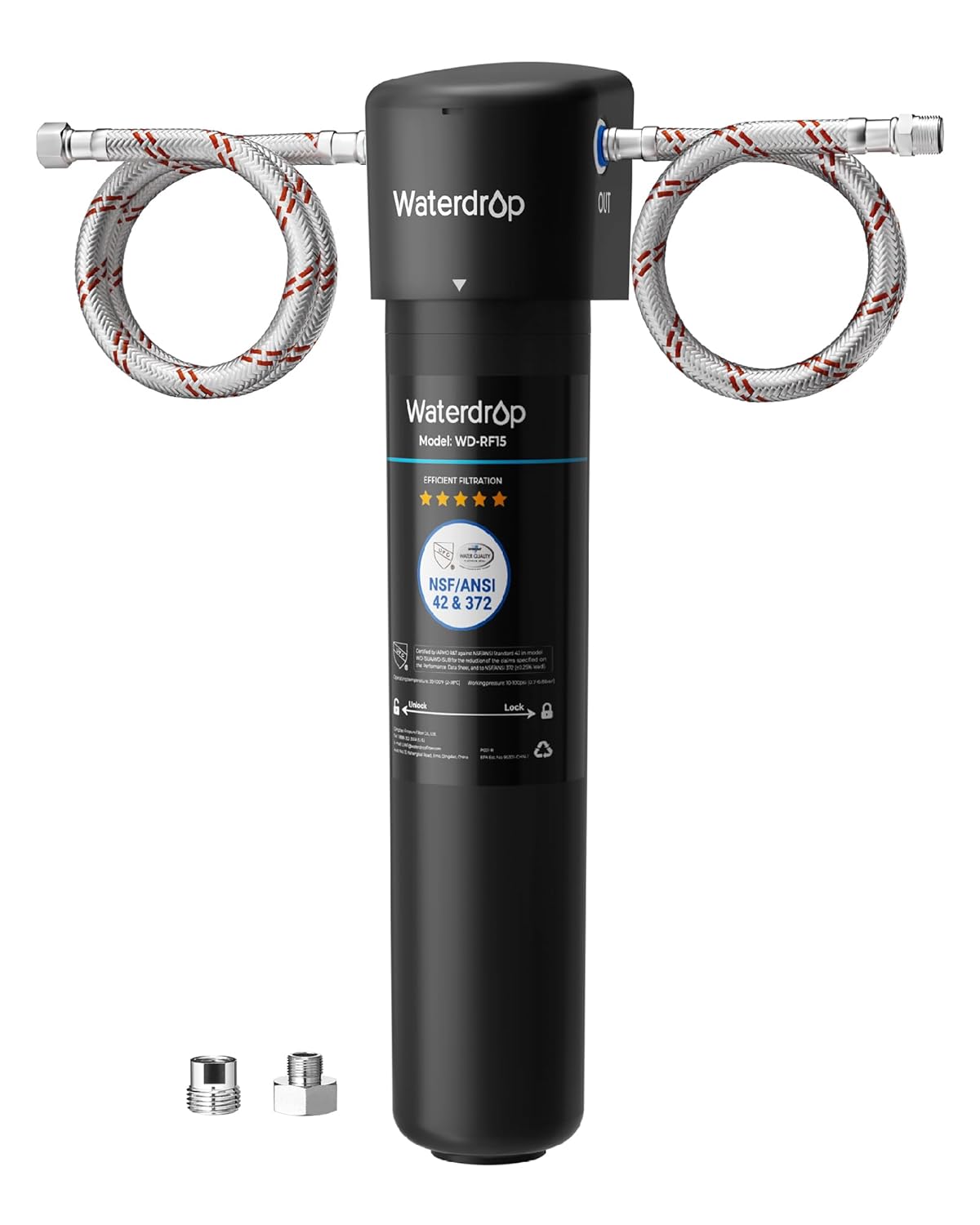
The Waterdrop AP431 AP430SS scale inhibitor system is a dedicated inline water treatment unit built to combat hard water buildup in plumbing lines and heating equipment. Featuring a durable 304 stainless steel adapter head and a food-grade polyphosphate cartridge, this system is engineered to introduce sequestering agents into the cold water feed. For outdoor enthusiasts who rely on camper trailers, converted vans, or remote camp cabins, keeping mineral deposits from choking water lines is vital for long-term comfort and equipment survival.
This scale prevention system is best suited for RV campers, overlanders, tiny home dwellers, and owners of off-grid cabins who frequently tap into hard well water or unpredictable campground hookups. When traveling across varied terrain, water mineral content can shift dramatically from site to site. Campers using portable tankless water heaters for outdoor camp showers or washing camp cookware will find this setup particularly beneficial, as it protects sensitive heating coils from limescale crust that degrades thermal transfer.
In terms of outdoor utility and water flow performance, the system accommodates a flow rate of up to 10 gallons per minute through standard 3/4-inch NPT ports. This generous flow capacity ensures that hot water pressure remains consistent whether you are rinsing dishes at the camp kitchen or running an outdoor shower after a dusty day on the trail. Rather than filtering out every mineral particle mechanically, the polyphosphate media acts chemically by sequestering calcium and magnesium ions. This prevents limescale from adhering to metal pipe walls and heating elements without restricting line pressure.
Build quality centers on a rugged 304 cast stainless steel manifold that offers solid corrosion resistance in damp RV service bays, crawl spaces, and outdoor utility shelters. The transparent cartridge housing allows quick visual checks of the polyphosphate media level, and each cartridge delivers roughly six months of protection under standard household or seasonal camp use. According to user reviews and plumbing feedback, the rigid stainless steel threads demand generous wrapping with quality Teflon tape or thread sealant during installation to avoid nuisance leaks at the inlet and outlet junctions.
While this unit excels at preventing scale buildup in water heaters and pipes, outdoor adventurers should remember that it is not designed to eliminate sediment, silt, bacteria, or giardia from backcountry streams. For off-grid setups drawing from natural sources, pairing this scale inhibitor with a dedicated sediment filter and purifier creates a complete water management station. For family campers and weekend warriors investing in portable propane water heaters or RV plumbing preservation, this system offers a dependable and cost-effective line of defense against hard water damage.
Installing this scale inhibitor requires placement on the cold water supply line directly upstream of your water heater, boiler, or camper distribution block. To achieve optimal performance, the unit must be positioned vertically with the cartridge hanging down. Because cast stainless steel is substantially harder than brass or PVC fittings, multiple thick wraps of Teflon sealing tape are necessary to ensure watertight joints on both 3/4-inch NPT ports.
Maintenance is straightforward throughout the camping season. The cartridge simply unthreads from the stainless steel manifold for replacement every six months, depending on the mineral hardness of your water source. When prepping your camper trailer or off-grid cabin for freezing winter temperatures, be sure to drain the cartridge bowl completely to avoid freeze damage during winterization.
Built with a 304 stainless steel adapter head, this unit resists rust and mechanical stress far better than all-plastic filter brackets commonly found in mobile setups. The heavy metal housing withstands road vibration in RV utility compartments and overland gear boxes without cracking under pressure.
The internal core utilizes certified food-grade, BPA-free polyphosphates that slowly dissolve into the water stream. This design ensures that downstream potable water used for cooking, coffee, and camp cleanup remains clean and safe while maintaining efficient heat transfer across all connected appliances.

Pros
- Zero salt or chemical refills required, saving valuable storage space and ongoing maintenance effort during travel
- Simple wrap-around wire installation works easily on PEX, PVC, and copper pipe systems without cutting lines
- Helps extend the lifespan of RV water heaters and camp shower components by minimizing limescale buildup
- Compact footprint fits conveniently inside cramped travel trailer utility bays or remote cabin setups
Cons
- Requires a continuous 110V electrical power source, which depends on shore power, an inverter, or a generator
- Does not remove physical sediment, iron, or heavy minerals, requiring a separate filter for dirty water sources
- Not suitable for extremely hard water exceeding 19 grains per gallon or high iron levels above 3 ppm
The iSpring ED2000 is an electronic salt-free water descaler designed to condition hard water by breaking down and preventing limescale accumulation in plumbing networks. Unlike traditional salt-based softeners that require bulky tanks and recurring brine refills, this system utilizes high-frequency electromagnetic pulses transmitted through twin antenna wires wrapped directly around the incoming water line. For RV campers, travel trailer owners, cabin dwellers, and overlanders maintaining stationary basecamps, hard water from various campground hookups and rural wells can quickly ruin plumbing fixtures, shower valves, and tankless water heaters. This electronic conditioner addresses mineral scale build-up at the source without altering the underlying mineral balance of drinking supplies.
This setup is particularly suited for full-time RV campers, seasonal campground visitors, glamping retreat managers, and off-grid cabin owners tired of battling mineral crust on plumbing fixtures. Weekend warriors hauling travel trailers across the country often encounter erratic municipal or well water supplies with high calcium carbonate content that leaves chalky deposits on camp cookware, shower walls, and sink aerators. Budget-conscious outdoor enthusiasts seeking an alternative to heavy fifty-pound bags of water softener salt will appreciate the compact footprint. It also benefits outdoor adventurers on low-sodium diets who want to avoid the sodium exchange common in chemical softening setups.
When connected to campground utility posts or remote cabin lines, the system tackles hard water ranging from 10 to 19 grains per gallon without restricting water flow rate. User feedback indicates that mineral deposits on sinks, mirrors, and fixtures become softer and significantly easier to wipe away rather than calcifying into stubborn crusts. Onboard RV water heaters, heating elements, and outdoor shower wands benefit from reduced scale accumulation, which helps maintain heating efficiency and prevents clogged lines. Since it leaves beneficial calcium and magnesium ions intact, water retains its crisp outdoor taste without that slippery or oily feeling common with traditional softeners.
Constructed with durable electronic components housed in a compact two-pound enclosure, the unit is engineered for easy mounting in tight utility compartments. The system features a straightforward DIY setup that requires wrapping two copper antenna cables tightly around an existing pipe section in opposite directions, securing them with zip ties, and plugging the power adapter into a standard wall outlet. Because no pipe cutting, soldering, or plumbing rework is necessary, it works reliably on PEX tubing, PVC pipes, and copper lines commonly used in modern RVs and camper builds. The absence of replacement filters or moving parts ensures low long-term hassle, supported by a manufacturer one-year money-back guarantee and lifetime technical assistance.
There are several practical limitations outdoor adventurers must consider before installing this system. The unit requires corded 110V electric power, meaning off-grid campers will need an active portable power station, inverter, or generator hookup to keep it running continuously. Additionally, this is an electronic conditioner rather than a purifier or mechanical filter; it will not remove sediment, chlorine, bacteria, or dissolved solids from wild water sources, meaning a dedicated particulate or carbon filter remains necessary for well or stream water. User reviews also suggest that water containing high iron levels above 3 ppm can dampen the electromagnetic pulses, making pre-treatment necessary in certain rural regions.
For RV travelers, road trippers, and basecamp owners looking to protect their plumbing investment against aggressive mineral buildup without hauling heavy bags of salt, the iSpring ED2000 offers a sensible and cost-effective approach. While backpackers and tent campers will rely on portable gravity or pump purifiers for backcountry hydration, mobile rig owners and cabin caretakers will find this conditioner preserves water heater efficiency and keeps fixtures looking clean throughout extended seasonal stays. It represents a practical, low-maintenance upgrade for anyone seeking reliable scale reduction across diverse campground hookups.
Mounting the device inside a camper van, travel trailer, or remote cabin requires minimal space and basic hand tools. Position the main control unit near an available electrical outlet and locate a straight section of incoming pipe, ideally before lines split into the water heater and domestic taps.
Wrap the two insulated induction coils tightly around the pipe in opposing directions as directed in the manual, ensuring the turns sit flush against one another. Secure the wire ends firmly with the provided zip ties to prevent vibrations from road travel or water pressure shifts from loosening the contact points.
Because the unit operates entirely through electromagnetic pulses without filters, salt beds, or moving mechanical parts, ongoing maintenance is virtually nonexistent. Users simply need to keep the electronic control module dry and clean, away from standing water or extreme outdoor exposure.
Periodically inspect the coil windings inside your utility compartment to verify the antenna wires remain tightly bound to the plumbing line. For RV owners winterizing their rigs, disconnect the power supply and leave the wiring in place alongside normal system winterization procedures.
FAQs
Do these systems remove calcium from drinking water?
No, neither product is described as removing calcium from water. Waterdrop uses polyphosphates to inhibit scale formation, while iSpring uses electromagnetic waves to address scale deposits without changing water chemistry. Choose reverse osmosis or another treatment specifically rated for dissolved mineral reduction if that is your goal.
Is a scale inhibitor the same as a water softener?
No, scale inhibition is not the same as water softening. These products aim to help limit scale buildup, while a conventional salt-based softener changes water hardness through an ion-exchange process. Check the treatment method against your household needs before buying.
What flow rate does the Waterdrop scale system list?
The Waterdrop system lists a flow rate of 10 GPM and 3/4-inch NPT inlet and outlet connections. Its description also says it is not a regular pre-filter and only a portion of source water flows through the cartridge. Confirm that the connection size and installation location suit your plumbing.
How often should I replace the Waterdrop cartridge?
The product description gives an approximate six-month cartridge life for regular use. Water quality and usage may affect that interval, so follow the manufacturer’s maintenance guidance and inspect the system as directed. The listed package includes a replacement cartridge.
Can the iSpring ED2000 work with PEX or PVC pipe?
Yes, iSpring says the ED2000 works on PEX and PVC and requires no plumbing modifications. The description presents it as a maintenance-free electronic descaler that does not use salt or chemicals. Verify the installation instructions and fit for your specific pipe layout before purchase.
Will either system remove sediment, rust, or chlorine?
No such removal claims are provided for these two scale-control products. They are not described as sediment pre-filters or activated carbon filters, so don’t rely on them to reduce rust particles, chlorine taste, or other contaminants. Match each treatment stage to a specific water-quality concern.



Write Your Review
No reviews yet. Be the first to share your experience!