

Sharp tap flavors can make even a fresh glass of water less appealing
Reverse osmosis can reduce a range of dissolved substances, but the right setup depends on your kitchen, water source, and willingness to handle installation and filter changes. These best home reverse osmosis water filters include countertop models that need no plumbing and under-sink systems that connect to a dedicated faucet. That difference matters: countertop units are easier to move or set up in a rental, while an under-sink system can supply treated water without refilling a reservoir.
We reviewed the listed product specifications and manufacturer claims, including filtration stages, stated contaminant reductions, drain ratios, and maintenance features. Claims vary by model, and they shouldn’t replace a water test or a check of the product’s certification details. If you’re comparing RO with another approach, this overview of non-RO home water purifiers can help clarify the trade-offs. The picks below range from compact plug-in units to systems with an under-sink tank, giving you options for cleaner taste and daily kitchen use.

Pros
- Zero plumbing required for quick setup on RV counters, camp tables, or cabin galleys
- Borosilicate glass carafe eliminates plastic taste and protects purified water quality
- Remineralization stage improves water taste and balances essential minerals
- Digital TDS monitor offers instant visibility into filtration performance
- Efficient 2:1 filtration ratio helps preserve water reserves at dry campgrounds
Cons
- Requires a 120V AC electrical outlet or a capable portable power station with an inverter
- Substantial 23-pound weight makes it best suited for vehicle-based camping rather than trail packing
- Residual wastewater tank must be manually dumped after each filtration batch
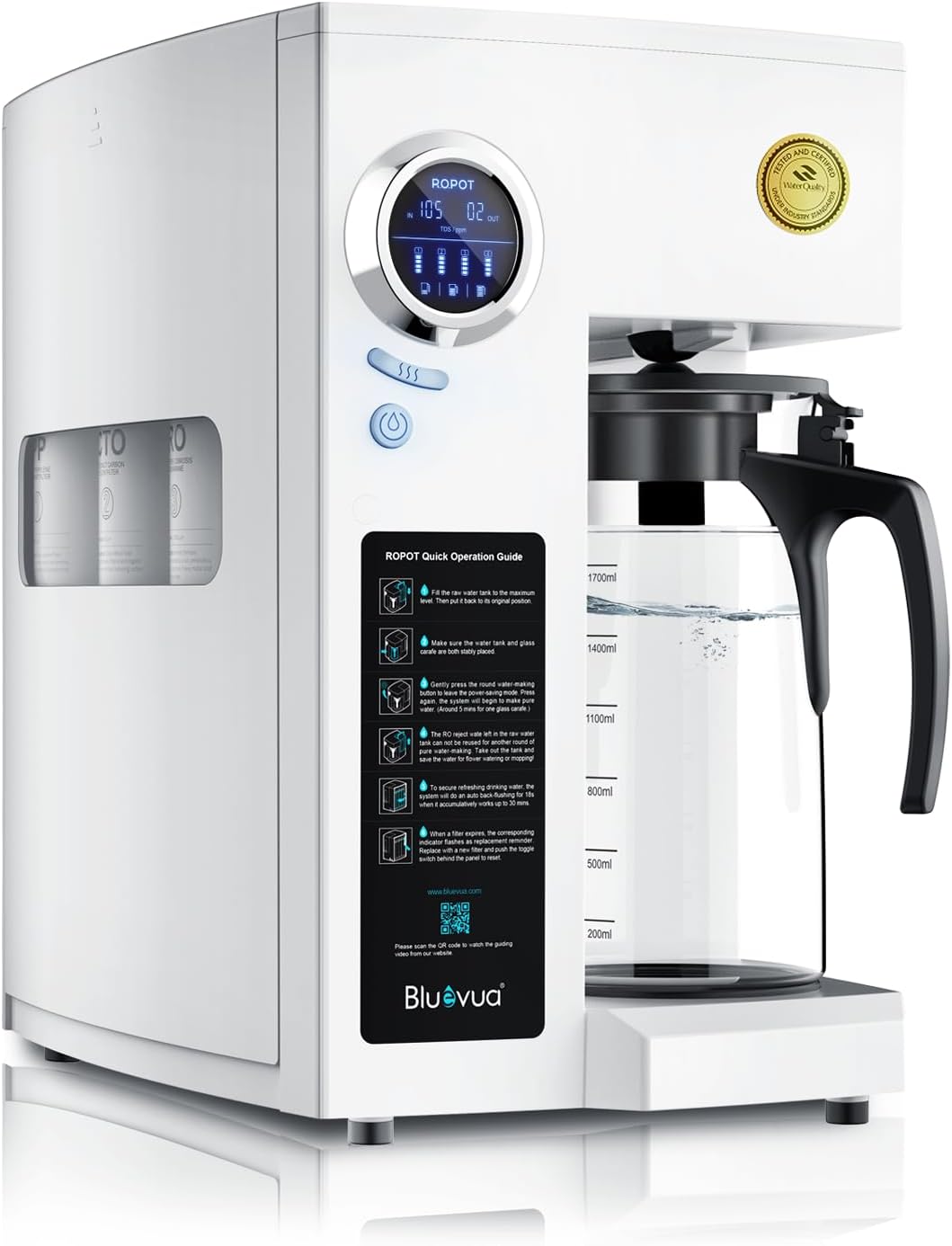
The Bluevua RO100ROPOT is a standalone countertop reverse osmosis water filtration system designed to produce bottled-quality drinking water wherever you have access to electricity. While reverse osmosis is traditionally reserved for under-sink residential plumbing, this self-contained design bridges the gap for vehicle-supported outdoor travel. It functions as a complete multi-stage filtration station without needing a tap splice, drain saddle, or pressurized plumbing line. For outdoor enthusiasts who spend extended periods on the road or at stationary camps, it provides high-level water security without permanent vehicle modifications.
This system is well suited for RV campers, overland trailer travelers, hunt cabin owners, glamping setups, and emergency preparedness planners. Campers who frequent state parks or remote campgrounds often encounter tap water with unpleasant sulfur tastes, heavy chlorine, or high mineral hardness. When connected to campground shore power, an onboard generator, or a high-capacity portable power station, this system easily handles questionable municipal or well spigots. It also serves solo travelers and family campers who want to eliminate single-use plastic water bottles from their packing lists.
Filtration performance is centered around a multi-stage process that includes polypropylene sediment removal, carbon block treatment, a 0.0001-micron reverse osmosis membrane, and an integrated post-carbon remineralization stage. Based on user reviews and technical specifications, incoming total dissolved solids (TDS) levels exceeding 400 to 500 PPM are routinely reduced to well below 30 PPM. The remineralization cartridge restores trace magnesium and other beneficial minerals, which helps eliminate the flat or acidic profile typical of pure distilled water. The result is clean, refreshing hydration for camp morning coffee, hydration bladders, and trail cooking.
The physical build reflects durable materials, highlighted by a 1.7-liter borosilicate glass carafe rather than a typical plastic jug. Glass construction prevents chemical leaching, resists clouding, and keeps water tasting crisp even when sitting in a warm RV galley. The main housing features a compact footprint measuring roughly 11 by 15 inches, fitting neatly on most galley counters or camp kitchen tables. An intelligent LCD interface displays real-time inbound and outbound TDS readings alongside filter life indicators, eliminating guesswork about when to replace internal cartridges.
Day-to-day operation is straightforward. Fill the rear reservoir with tap water, place the carafe on the platform, and press the cycle button. The system operates with an efficient 2:1 pure-to-drain ratio, which is considerably more frugal than older under-sink systems that frequently discard four gallons for every single gallon produced. The leftover concentrated water in the rear tank should be discarded or repurposed for camp cleanup and dishwashing rather than re-filtered. Maintenance involves wiping the holding tank periodically, running occasional descaling flushes, and replacing the twist-and-pull filter stages every 12 to 24 months.
The primary limitations involve weight and power reliance. At over 23 pounds dry, this is strictly a vehicular or basecamp luxury rather than a portable backpacking filter. It requires a standard 120V AC wall plug, so off-grid users must ensure their solar power bank or inverter can handle the wattage during active filtration cycles. For travelers, overlanders, and cabin owners looking for clean, dependable hydration without the recurring expense and environmental toll of store-bought water jugs, the Bluevua RO100ROPOT stands out as a highly practical investment.
Integrating this system into an RV galley or overland trailer is simple because it requires zero plumbing lines. You only need a flat, stable countertop space and access to a standard electrical outlet. Because the unit pulls standard AC power, it runs smoothly when connected to campground shore power, an RV generator, or a modern lithium portable power station paired with an inverter.
To make the most of your camp resources, the 2:1 pure-to-drain ratio leaves behind a small amount of concentrate water in the rear tank after every batch. Instead of pouring this down the gray water tank, many campers collect it in a wash basin. It works well for rinsing muddy camp footwear, washing cookware before sanitizing, or extinguishing evening campfire coals.
Keeping the system clean during seasonal trips requires simple routine maintenance. The borosilicate glass carafe can be hand-washed with mild dish soap and air-dried just like ordinary camp cookware. Wiping down the rear raw-water tank every few days prevents biofilm formation, especially when operating in humid summer environments.
When storing the unit between camping seasons or during winter freezes, the internal filters and reservoir should be drained thoroughly to protect the RO membrane from freezing temperatures. Bluevua replacement cartridges feature a quick-turn mechanism that allows easy swapping without tools when the LCD monitor alerts you that a filter has reached the end of its life.

Pros
- Exceptional water purity – removes heavy metals, chemicals, and VOCs for cleaner drinking and better-tasting coffee
- Easy DIY installation with clear instructions and included brass adapter – most users set up in under an hour
- Excellent value – includes all filters for the first year and a leak-stop safety feature
- Compact footprint fits under most kitchen sinks and RV cabinets without sacrificing storage space
- Reliable performance backed by thousands of positive reviews and NSF certification
Cons
- Wastewater ratio of 1:1 to 1:3 (per gallon produced) – may be a concern for water conservation in dry camping areas
- Requires 40-80 psi water pressure – lower pressure may need a booster pump for optimal performance
- Not portable – designed for permanent installation under a sink, not for backpacking or tent camping
The Express Water RO5DX is a 5-stage reverse osmosis water filtration system that brings bottled-water quality to your tap. While it's primarily designed for home under-sink installation, it's also a fantastic choice for RV campers, overlanders, and anyone with a camper van or trailer who wants great-tasting water without lugging jugs. This system is ideal for family campers who spend weekends at campgrounds with water hookups, as well as full-time RVers who want reliable filtration at the turn of a faucet.
Performance-wise, the RO5DX tackles a wide range of contaminants. Based on product specifications and user feedback, its five stages – sediment, granular activated carbon, carbon block, RO membrane, and post-carbon – reduce up to 99% of lead, chlorine, fluoride, arsenic, and many other impurities. The result is water that tastes noticeably cleaner, which makes a big difference when cooking breakfast at sunrise or brewing coffee after a long hike. Many campers may prefer the convenience of filling their hydration bladders directly from the faucet instead of buying bottled water at every stop.
Build quality is solid for the price point. The system uses a clear manifold with color-coded filter housings, making installation and filter changes straightforward. The included chrome faucet has a brass waterway for durability, and the quick-connect fittings help prevent leaks. A 4-gallon storage tank (3.2 gallons usable) ensures you have water on demand, even during peak use. The system also comes with a leak-stop valve that shuts off water if moisture is detected – a nice safety net for unattended installations in an RV.
Ease of setup is a strong point. The instructions are clear, and most users report completing the install in under an hour. For RV campers, the compact dimensions (14" x 5" x 15") fit well under a standard kitchen sink or in a cabinet. Youll need a cold water line and a drain connection, which is manageable in most RVs. The system requires 40-80 psi water pressure; RVs with low pressure may need a booster pump. Also, the wastewater ratio (1-3 gallons wasted per gallon produced) is worth noting if youre boondocking or dry camping – consider using the wastewater for rinsing dishes or other non-potable needs.
Maintenance is simple: replace the pre- and post-filters every 6 months and the RO membrane annually. Replacement filters are widely available and affordable. One realistic limitation is that this system is not portable – it's meant for permanent under-sink installation, so it won't work for tent camping or backpacking. However, for base camp operations, a cabin, or an RV, it's a game-changer in convenience and water quality. Some users have noted that the system can make a clicking or thumping noise while filling the tank, but this is normal and stops when the tank is full.
Overall, the Express Water RO5DX is a practical investment for any outdoor enthusiast who wants clean, great-tasting water at their home base or in their RV. It saves money over bottled water, reduces plastic waste, and delivers consistently pure water for drinking, cooking, and ice. Whether you're a weekend warrior, a full-time overlander, or a family camper looking for healthier hydration, this system offers excellent value and peace of mind.
The RO5DX is a top pick for RV owners and overlanders who have under-sink space and access to a cold water line and drain. Its compact size (14" x 5" x 15") fits in most RV cabinets, and the included quick-connect fittings and brass adapter make hookup simple. The 4-gallon tank provides plenty of water for drinking, coffee, and cooking during a weekend trip. Keep in mind that the system works best with 40-80 psi water pressure; if your RV has a low-pressure pump, you may need a booster. Also, the wastewater discharge (1-3 gallons per gallon of pure water) means you'll want to be connected to a sewer or collect the waste for other uses when boondocking. Many RV campers find the water quality well worth the minor trade-offs.
Installing the Express Water RO5DX is a straightforward DIY project. The kit includes a brass feed adapter that fits 1/2" and 3/8" supply lines, a leak-stop valve, and all necessary tubing and fittings. Most users can complete the setup in about 45 minutes to an hour. The filters are color-coded and labeled for easy replacement: sediment, GAC, carbon block, and post-carbon should be changed every 6 months, while the RO membrane lasts about a year. Replacement filter sets are affordable and easy to find. The system also comes with a detailed manual and a filter housing wrench. If you run into trouble, Express Water's support team is responsive and knowledgeable.

Pros
- Superior contaminant removal with UV and remineralization for healthier, better-tasting water
- Whole system NSF certified – trusted by campers and RVers for safe water
- Excellent customer support from a U.S.-based team
- Durable construction with easy-to-replace filters and clear maintenance instructions
Cons
- Requires minimum 45 psi water pressure; a booster pump may be needed for low-pressure homes or RVs
- Under-sink design not portable for backcountry or tent camping
- Initial setup takes 2-3 hours and some DIY skill; not instant out of the box
The iSpring RCC7AK-UV is a 7-stage under-sink reverse osmosis water filtration system that delivers exceptionally clean, great-tasting water. While it is designed for home or RV installation, outdoor enthusiasts, campers, and anyone who values water quality will appreciate the peace of mind it provides. This system removes up to 99% of over 1,000 contaminants including lead, chlorine, fluoride, arsenic, and many more, while the built-in UV sterilization lamp kills 99% of bacteria and viruses. The alkaline remineralization stage then adds back healthy minerals like calcium and magnesium, giving the water a crisp, natural spring-like taste that beats bottled water.
Best suited for RV campers, overlanders, and families who want reliable clean water at home or in their rig, this system is a long-term investment in health. For car campers who fill up water jugs or for anyone tired of buying plastic bottles, having an RO system at home reduces waste and ensures every drink is pure. The 75-gallon-per-day RO membrane can handle the needs of a large family, and the 3.2-gallon storage tank keeps water ready on demand.
When it comes to performance, this system is a workhorse. The combination of sediment filter, GAC and CTO carbon filters, high-rejection RO membrane, inline carbon, alkaline filter, and UV lamp provides multiple layers of protection. The UV filter uses a smart flow sensor to activate only when water is flowing, saving energy and extending lamp life. The filtration is so thorough that users report zero limescale buildup in kettles even after weeks of use. For those concerned about water pressure, the system works best between 45-70 psi; if your pressure is lower, a booster pump model is available.
Build quality is top-notch. iSpring uses high-grade components including a stainless steel UV housing, push-to-connect fittings, and a durable manifold. The transparent first-stage housing lets you visually inspect the sediment filter and see when it needs replacement – a practical feature for maintenance. The system is NSF/ANSI 58 certified for the entire system, not just individual components, which is a strong testament to its reliability. Replacement filters are easy to source and come in convenient multi-year bundles (6-month, 1-year, 2-year, or 3-year sets).
Setup does require some effort. The system comes with clear instructions and a QR code linking to an installation video. Most DIY-minded users can complete the installation in 2-3 hours using basic tools like a drill and channel locks. The color-coded tubing and push-to-connect fittings simplify the process, but you will need to drill a hole for the faucet (or use an existing one) and mount the filter bracket securely. The leak-stop valve adds peace of mind, especially for those worried about water damage under the sink or in an RV cabinet.
A realistic limitation is that this is not a portable unit – it is designed for permanent under-sink installation, so it won't work for backpacking or tent camping. Additionally, homes with water pressure below 45 psi will need the booster pump version to achieve optimal performance. The initial cost is higher than a basic countertop filter, but considering the level of filtration and the cost savings over bottled water, many campers and families find it a worthwhile upgrade. Overall, the iSpring RCC7AK-UV is an excellent choice for anyone who wants safe, delicious water at home or in their RV, and it earns a strong recommendation from outdoor water quality enthusiasts.
The iSpring RCC7AK-UV delivers exceptional contaminant reduction. The 7-stage process includes a 5-micron sediment filter, GAC and CTO carbon filters, a high-rejection TFC RO membrane (75 GPD), a post-inline carbon filter, an alkaline remineralization filter, and an 11W UV sterilization lamp. Together, they remove up to 99% of over 1,000 contaminants including lead (98.9%), arsenic, chlorine, fluoride (97.4%), barium, cadmium, copper, selenium, asbestos, and more. The UV stage kills 99% of bacteria and viruses, providing an extra layer of protection for those using well water or uncertain municipal supplies.
The alkaline filter restores essential minerals like calcium, magnesium, and potassium, balancing the pH and improving taste. Many users report that the water tastes better than bottled spring water, with no plastic aftertaste. The system is certified by NSF International to NSF/ANSI 58 for TDS reduction, meaning it meets strict standards for performance and safety.
For RV campers and overlanders, this system can be installed under a kitchen sink and connected to the RV's fresh water system, providing clean drinking water on the road. The 3.2-gallon pressurized storage tank ensures a steady supply, and the system refills automatically. Water pressure between 45-70 psi is recommended for optimal operation; if your RV or home pressure is lower, iSpring offers a model with a built-in booster pump.
Installation is designed for DIY enthusiasts. The package includes all necessary parts: filter housings, filters, tubing, faucet with mounting bracket, drain saddle, and a leak-stop valve. The push-to-connect fittings and color-coded 1/4-inch and 3/8-inch tubing make connections straightforward. A drill is needed to mount the bracket and faucet. The system can be installed under a standard kitchen sink or in an RV cabinet. Some users choose to mount the filters in a basement or utility area for easier access, running tubing up to the sink.
Maintenance is simple. The sediment and carbon filters should be replaced every 6-12 months, the RO membrane every 2-3 years, the alkaline filter yearly, and the UV lamp every 12 months. iSpring offers convenient multi-year replacement filter sets (F4AK, F10KU, F21KU75, F31KU75). The first-stage housing is transparent, so you can see when the sediment filter needs changing. The system also includes a leak-stop valve that automatically shuts off the water if a leak is detected, providing peace of mind.
Before installation, measure your water pressure and TDS. If pressure is below 45 psi, consider the booster pump model (RCC1UP-AK). iSpring’s customer support team is based in Atlanta, GA, and can help you choose the right system for your specific water conditions.

Pros
- Zero installation or plumbing modifications required, making it effortless to deploy in camper vans, travel trailers, cabins, or garage basecamps.
- Borosilicate glass carafe and integrated remineralization produce exceptionally fresh, crisp-tasting water without weird plastic odors.
- Real-time digital TDS monitoring lets you verify filtration performance instantly on every batch.
- Integrated UV light provides a dependable defense against microorganisms in unpredictable water sources.
Cons
- At over 23 pounds, the unit is tailored strictly for vehicle camping, cabins, and RV countertops rather than trail packing.
- Requires a 120V electrical outlet, generator, or high-capacity portable power station with an AC inverter to run.
- The concentrated wastewater left in the bottom of the feed reservoir must be emptied manually after each filtration cycle.
The Bluevua ROPOT-UV Countertop Reverse Osmosis System delivers true multi-stage water purification in a self-contained, countertop-friendly format. Designed without the need for permanent under-sink plumbing, this system provides an outstanding water treatment solution for RV campers, overlanders running camper trailers, cabin owners, and preparedness-minded households. Campground spigots and rural well heads frequently deliver water with high mineral hardness, chlorine smell, or unknown mineral content. Having an autonomous reverse osmosis station turns questionable utility hookups into bottled-quality hydration right on your camp kitchen counter.
Filtration capability is where this system stands out. The six-stage process routes raw water through a 0.0001-micron reverse osmosis membrane, capable of scrubbing out dissolved solids, heavy metals like lead and arsenic, chlorine, fluoride, and lingering chemical residues. A built-in UV light chamber neutralizes biological threats, while a remineralization post-filter adds back beneficial magnesium and alkaline minerals. According to user feedback, this mineral balancing eliminates the flat, chalky taste typical of bare RO units, yielding crisp, mountain-fresh water that significantly improves camp cooking, French press coffee, and hydration bladders.
Build quality and material choices reflect thoughtful design. Instead of routing purified water into a plastic chamber where it might pick up synthetic tastes, Bluevua routes finished water into a durable borosilicate glass carafe. The exterior housing measures 10.9 inches deep by 15.4 inches wide and 14.3 inches high, allowing it to tuck neatly beside an RV sink or inside a portable overland kitchen module. The onboard digital display provides transparent operation, revealing exact parts-per-million (TDS) readings for both incoming source water and finished product water, along with filter life indicators for each internal cylinder.
Operating the purifier is refreshingly simple. Fill the rear reservoir with tap or campground spigot water, place the borosilicate carafe on the collection pad, and select your volume. The unit processes a full carafe in under ten minutes. Its 2:1 pure-to-drain ratio represents solid water conservation, separating pure drinking water while sequestering concentrated wastewater in the removable holding tank. Rather than wasting that runoff, practical campers frequently repurpose the grey reservoir water for scrubbing camp dutch ovens or washing mud off boots.
The primary limitations center on mobility and power. Tipping the scales at 23.2 pounds empty, this is not a piece of gear intended for backpacking or minimalist tent setups. It also relies on standard corded AC power, meaning off-grid overlanders will need a dependable portable power station or vehicle inverter to run filtration cycles. Additionally, users must remember to empty the carafe before starting a new cycle to prevent overflowing, as the machine does not auto-detect water levels already inside the pitcher.
For family campers traveling in an RV, extended vanlifers, seasonal cabin dwellers, and outdoor enthusiasts building a resilient home emergency prep kit, the Bluevua ROPOT-UV represents an exceptional investment. It replaces endless crates of single-use plastic water bottles, handles challenging municipal or campground hookups with ease, and guarantees delicious drinking water wherever you can plug in.
Integrating the Bluevua ROPOT-UV into an RV, travel trailer, or overland galley is straightforward because it requires zero plumbing lines, zero drilling, and zero modifications to your freshwater tanks. You simply position the machine on a stable counter space near a 120-volt AC outlet or plug it directly into a modern lithium battery power station equipped with a pure sine wave inverter.
For travel days, the borosilicate glass carafe and removable water tanks should be stowed securely in padded cabinets to protect them from road vibration and rough back roads. Once parked at your campsite, setting up your personal purification station takes less than a minute: pull the unit out, plug it into shore power, fill the reservoir at the site spigot, and start producing crystal-clear drinking water.
Routine maintenance keeps the Bluevua system operating at peak flow and ensures pure water quality across long road trips. The transparent glass carafe and removable raw water reservoir should be washed periodically with mild soap and warm water, using the included cleaning brush to keep the glass surfaces spotless and free of scale buildup.
The internal filters provide generous operational lifespans ranging from 6 to 12 months for pre-filters and up to 24 months for the reverse osmosis core, depending on source water hardness. The digital display tracks filter longevity automatically, alerting you when individual cartridges need replacement. Descaling kits are also available to flush out hard water mineral deposits from internal tubing after heavy seasonal use.
FAQs
Do countertop reverse osmosis filters need plumbing?
No. The DREO and Bluevua countertop models are described as install-free and plug-in, so you fill their reservoirs rather than connecting them to a water line. Check available counter space and pitcher capacity before buying, since countertop convenience still involves refilling.
What is the difference between an RO membrane and a carbon filter?
An RO membrane is the main separation stage in these systems, while carbon stages can support taste and odor treatment. The listed products combine stages in different ways, and their reduction claims aren’t interchangeable. Review the exact contaminant claims and certification scope for the model you’re considering.
Are countertop reverse osmosis filters suitable for well water?
Not automatically. A countertop RO unit may reduce listed contaminants, but private well water can contain sediment, iron, or other substances that need separate treatment. Get the water tested and compare the results with the model’s stated capabilities before relying on an RO system alone.
How much water does reverse osmosis send to the drain?
It depends on the model and operating conditions. The DREO listing states a 3:1 pure-to-drain ratio, while both Bluevua countertop listings state 2:1. Treat these as manufacturer-provided specifications, and check the current manual for operating guidance and appropriate disposal of drain water.
How often do RO filters need replacement?
Replacement timing varies by system, water quality, and use. Bluevua lists an estimated 12-24 months for its countertop filters and includes a life monitor; iSpring lists replacement sets on different schedules. Follow the model’s manual and indicators, and see this guide to removing an old water filter for general cartridge-handling context.
Should I choose a countertop or under-sink RO system?
Choose a countertop model if you want to avoid plumbing work or need a portable setup. An under-sink option may suit a busy kitchen that benefits from an installed faucet and storage tank, but it needs cabinet space and a water connection. Compare installation requirements, filter costs, and the water-quality claims before deciding.


Write Your Review
No reviews yet. Be the first to share your experience!