

Cleaner-Tasting Water, With Fewer Guesswork Moments
A sharp chlorine flavor can make a glass of tap water less appealing, while grit and sediment may leave you wondering what a filter can actually handle. The best countertop water filter under dollar300 search here includes a mix of countertop reverse osmosis machines and under-sink systems, so check the installation style before buying. These products aren’t interchangeable: some connect to a cold-water line, while others sit on the counter and need power.
Our comparison focuses on listed specifications, including filtration claims, filter schedules, flow details where supplied, and practical limits. For example, the Waterdrop TSU and TSA are specified for municipal cold water and don’t reduce TDS; the DREO and Bluevua countertop options use reverse osmosis. If you want a non-RO approach, see this overview of non-RO water purifiers for home use. Buyers setting up water for travel can also review this guide to installing an inline RV water filter.
Pros
- Noticeable improvement in water taste and smell, clearing out heavy chlorine and sulfur odors at campground hookups
- Fast flow rate fills large camping pots, hydration reservoirs, and water bottles without frustrating delays
- Straightforward DIY installation using included push-connect fittings and multi-size pipe adapters
- Keeps essential minerals like calcium and magnesium in your drinking water for great natural taste
- Dramatically cuts down on single-use plastic water bottles during road trips and extended stays
Cons
- Designed only for treated municipal or safe potable water sources, not for unfiltered backcountry lakes or muddy streams
- Cold water line connection only, so your hot water line remains unfiltered
- Needs about 2 to 3 inches of vertical clearance underneath the canister to twist and pull during filter changes
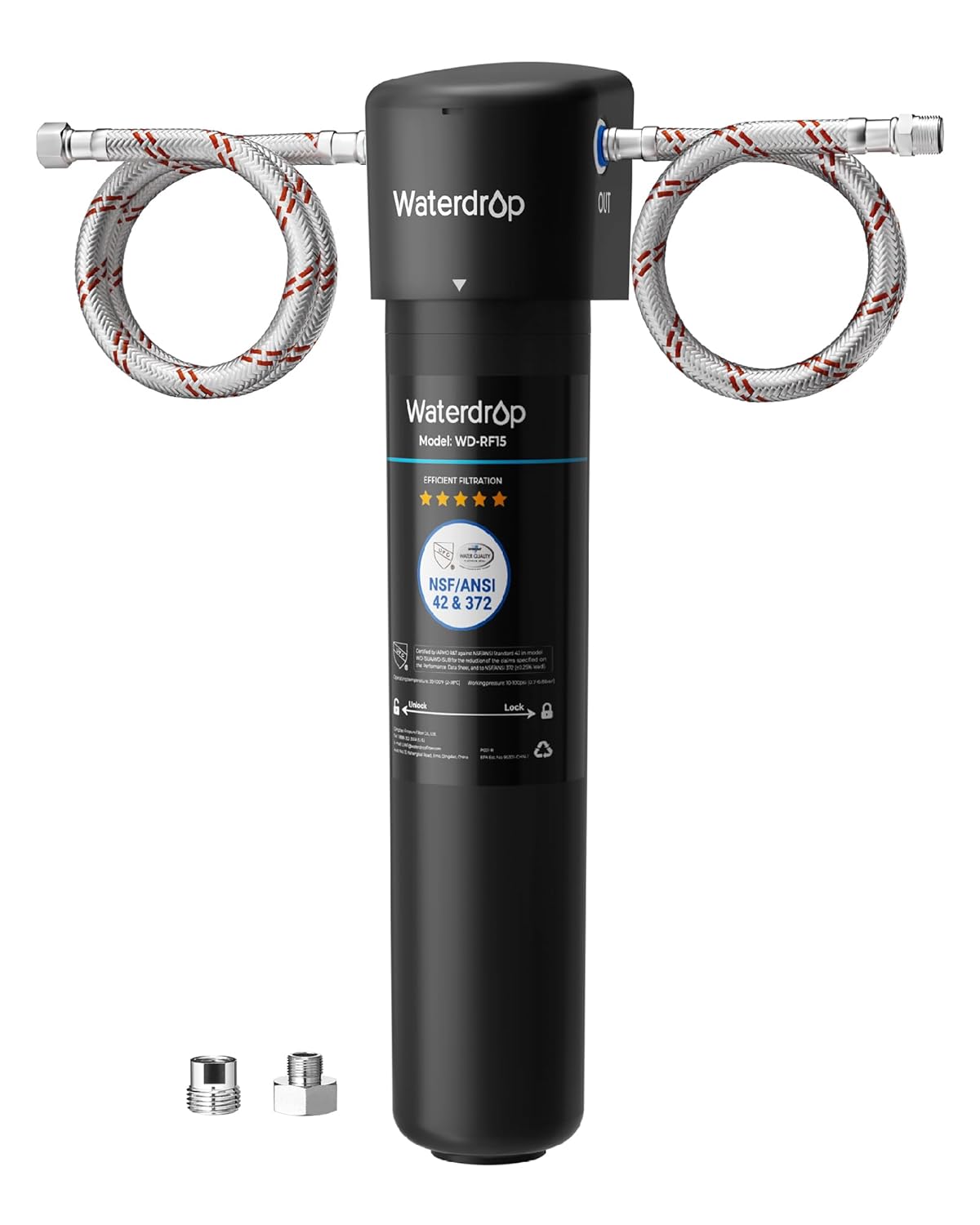
The Waterdrop 15UA is a dedicated under-counter inline filtration system engineered to hook straight into your primary faucet cold water line. While commonly found in home kitchens, it has become an increasingly popular solution for RV campers, vanlife adventurers, overlanders with built-in sinks, and hunting cabin owners. Instead of dealing with slow countertop gravity pitchers or taking up precious vehicle storage with endless cases of plastic water bottles, this system treats your water directly at the source with dependable efficiency.
Campground water hookups are notorious for strong chlorine smells, municipal treatment chemicals, and occasional sediment that ruins morning coffee and drinking water. The multi-stage filter block inside this unit features an advanced 0.5-micron filtration fineness that reduces chlorine, bad taste, odors, heavy metals, and lead. Because it retains beneficial minerals like calcium and magnesium rather than stripping them away, your water tastes naturally crisp and refreshing. At the same time, the fast flow rate of 0.75 GPM at 60 psi (capable of reaching up to 1.33 GPM depending on supply pressure) means you will not be standing around waiting to fill a gallon camp pot for dinner.
Build quality is rugged and dependable, utilizing BPA-free and lead-free housing certified to NSF/ANSI standards. The unit measures just under 17 inches tall with a slim 3.6-inch diameter, making it easy to tuck into the cramped, crowded cabinetry typical of travel trailers, converted camper vans, and small kitchenettes. The included braided hoses and brass converter fittings adapt readily to standard 3/8-inch and 1/2-inch cold lines, providing a solid seal that resists leaks even when subjected to the vibration of highway travel.
Setting up the system is refreshingly hassle-free thanks to push-to-connect plumbing fittings that require no specialized tools. The twist-and-lock filter head allows for 3-second replacements when the cartridge eventually reaches its limit. For seasonal campers, maintaining the system is quite simple. If you are winterizing your rig or leaving your trailer in storage for more than a few weeks, the filter canister easily detaches so you can bag it, store it in a cool spot, and drain your lines to prevent winter freeze damage.
There are a few realistic boundaries to keep in mind before taking this off-grid. This filter is designed specifically for treated municipal water supplies or safe RV holding tanks; it is not a backcountry purifier designed to kill waterborne cysts, bacteria, or viruses found in wild wilderness rivers. Additionally, you will want to mount the bracket with at least 2 to 3 inches of open clearance below the base so you have ample room to slide the canister downward when replacement time comes.
For weekend road trippers, full-time RVers, and off-grid cabin dwellers looking to elevate their camp kitchen setup, the Waterdrop 15UA is an affordable and practical upgrade. It eliminates the hassle of lugging heavy water containers, cleans up foul-tasting campground hookup supplies, and ensures pure hydration straight from your galley faucet.
Installing this filtration system inside an RV, camper van, or mobile field kitchen is remarkably simple. The package comes with pre-attached push-to-connect hoses, mounting brackets, and a versatile 3/8-inch to 1/2-inch adapter set that matches the standard cold water feed lines found in most American travel trailers and manufactured campers.
Because the system connects inline between your existing cold shut-off valve and your standard galley faucet, there is no need to drill an extra hole in your countertop for an auxiliary dispenser tap. As long as your vehicle water pump or campground hookup produces steady pressure, you will enjoy clean water straight from your primary sink faucet with zero extra clutter on your camp counter.
Proper off-season care is essential for campers who store their rigs in cold climates. Since freezing water will expand and crack the internal carbon block, you must remove the filter cartridge before pumping non-toxic RV antifreeze through your plumbing or blowing out lines with compressed air.
If you plan to leave your camper parked for an extended period between summer road trips, simply twist off the filter, seal it in a clean zip-top plastic bag, and keep it in your home refrigerator to preserve the freshness of the coconut shell activated carbon. Reinstalling it takes only seconds when you are ready to hit the road again.

Pros
- Requires zero electricity for water flow, operating seamlessly on existing RV or cabin water pump pressure
- Produces no wastewater, protecting grey tank capacity during extended camper trips
- Retains beneficial naturally occurring minerals for refreshing, great-tasting camp hydration
- Integrated waterway construction minimizes connection points to help prevent leaks during vehicle travel
- Electronic smart indicator panel provides clear visual reminders when cartridge changes are due
Cons
- Does not lower Total Dissolved Solids (TDS), making it unsuitable for campers needing demineralized water
- Requires an existing hole or new drilling in countertops to mount the dedicated secondary faucet
- Designed for potable municipal or pre-filtered water sources rather than raw, silty backcountry surface water
The Waterdrop TSU 0.01 Micron Ultra Filtration System is a tankless, three-stage under-sink filtration station engineered for fixed camper setups, overland travel trailers, off-grid cabins, and basecamp kitchen galleys. Built for RV campers, vanlifers, and outdoor families who want dependable hydration without packing dozens of plastic gallon jugs into their vehicle, this system brings point-of-use water purification straight to the counter. Its tankless profile eliminates bulky pressure tanks, freeing up crucial storage space under the sink for camp cookware, dish tubs, and pantry staples.
Operating purely on line pressure, this system fits the practical demands of off-grid mobile living. The filtration sequence runs incoming water through an initial polypropylene sediment layer, an advanced 0.01-micron hollow-fiber ultrafiltration membrane, and an activated carbon block. This combination effectively traps rust, sand, suspended particles, unpleasant chemical tastes, and common contaminants like PFAS. Unlike traditional reverse osmosis units that flush multiple gallons down the drain line for every gallon purified, this ultrafiltration unit creates zero wastewater, keeping RV holding tanks from filling prematurely while boondocking.
The build quality emphasizes compact utility, measuring under five inches wide to slide smoothly alongside onboard plumbing, drain hoses, and slide-out bins. A heavy-duty brushed nickel faucet is included in the box, providing a dedicated outlet specifically for drinking and cooking water. The front of the chassis features a battery-operated monitor powered by three standard AA batteries, which means you never need an inverter or 110-volt shore power plug just to check filter status. With an unrestricted flow rate of up to 0.6 gallons per minute, topping off trail hydration bladders, camp coffee pots, and high-capacity water jugs takes mere moments.
Routine maintenance and setup remain simple for regular travelers and weekend warriors. The push-fit connectors match standard plumbing runs, while the twist-and-lock filter cartridges pull free without tools or messy line bleeding. When winterizing an RV or seasonal hunt cabin, draining the unit takes far less effort than dealing with standard multi-gallon reservoir systems. User feedback indicates that securing the cold-water feed line tightly with a wrench prevents vibrations from loosening fittings while traveling rough washboard roads.
While this filtration system is exceptional for improving taste and eliminating fine physical impurities, prospective buyers should understand its operating limits. Ultrafiltration retains dissolved mineral content, so TDS meter readings will remain relatively unchanged after filtering. It is also meant for municipal water supplies or pre-treated cabin cisterns rather than untreated, algae-filled pond water. For campers, road-trippers, and cabin caretakers seeking reliable, fresh-tasting water at the turn of a handle, this Waterdrop system delivers dependable, low-maintenance filtration for life on the go.
Installing plumbing gear in an overland rig or travel trailer demands hardware that maximizes every square inch, and this system is well tailored for tight galley cabinetry. With a slender 4.68-inch depth, the unit mounts cleanly against cabinet walls without obstructing water lines or greywater traps. The included hardware accommodates both 3/8-inch and 1/2-inch cold feed lines, making it compatible with standard residential fittings and common RV PEX connections.
Because the unit uses standard mechanical water pressure from an onboard RV 12-volt pump or campground shore connection, no auxiliary AC power is needed. The front LED life indicators run entirely on three included AA alkaline batteries. When setting up in a mobile rig, securing the housing with a simple strap or bracket helps prevent shifting during rugged off-road travel.
The core filtration mechanism utilizes a microscopic 0.01-micron barrier, significantly tighter than standard single-stage carbon blocks. This ultra-fine pore structure intercepts tiny sediments, pipe scale, and suspended particulates, yielding crystal-clear water ideal for preparing camp meals and morning coffee.
Because the filtration process leaves healthy minerals like calcium and magnesium intact, the resulting water retains a crisp, natural mountain-spring flavor rather than the flat taste often associated with total demineralization. Campers relying on chlorinated campground spigots will notice immediate improvements in both odor and clarity.
Long-term maintenance is structured across three staggered filter schedules, helping keep operating costs manageable. The outer polypropylene sediment filter requires replacement roughly every six months, the activated carbon block lasts approximately twelve months, and the primary ultrafiltration membrane offers an extended lifespan of up to twenty-four months depending on incoming water quality.
To change out a spent cartridge, twist the housing a quarter turn and pull straight down. For winter storage in cold-climate campers, the filters should be removed and the system cleared of standing water to prevent internal freezing damage when temperatures drop below freezing.

Pros
- Zero plumbing required for quick setup on RV counters, camp tables, or cabin galleys
- Borosilicate glass carafe eliminates plastic taste and protects purified water quality
- Remineralization stage improves water taste and balances essential minerals
- Digital TDS monitor offers instant visibility into filtration performance
- Efficient 2:1 filtration ratio helps preserve water reserves at dry campgrounds
Cons
- Requires a 120V AC electrical outlet or a capable portable power station with an inverter
- Substantial 23-pound weight makes it best suited for vehicle-based camping rather than trail packing
- Residual wastewater tank must be manually dumped after each filtration batch
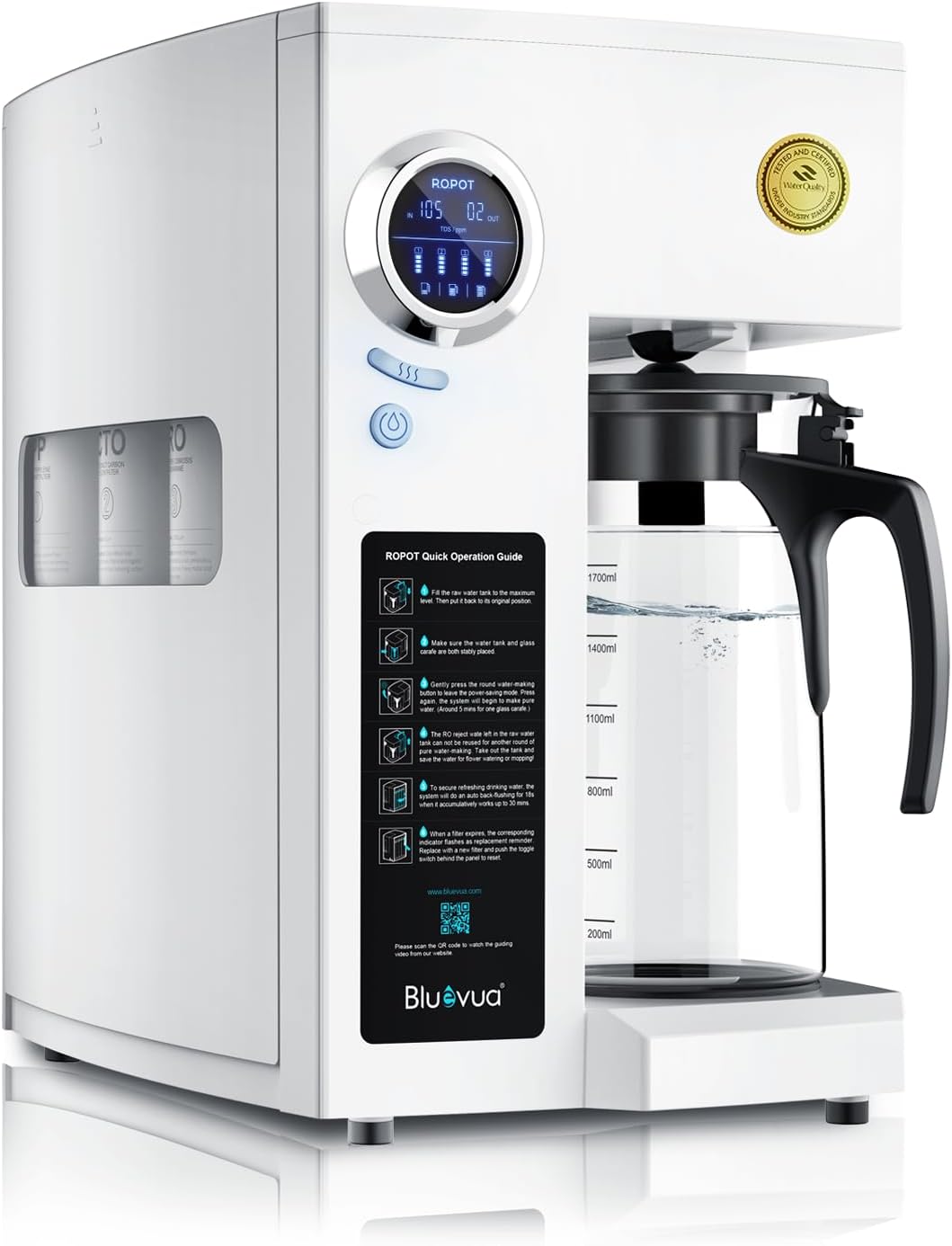
The Bluevua RO100ROPOT is a standalone countertop reverse osmosis water filtration system designed to produce bottled-quality drinking water wherever you have access to electricity. While reverse osmosis is traditionally reserved for under-sink residential plumbing, this self-contained design bridges the gap for vehicle-supported outdoor travel. It functions as a complete multi-stage filtration station without needing a tap splice, drain saddle, or pressurized plumbing line. For outdoor enthusiasts who spend extended periods on the road or at stationary camps, it provides high-level water security without permanent vehicle modifications.
This system is well suited for RV campers, overland trailer travelers, hunt cabin owners, glamping setups, and emergency preparedness planners. Campers who frequent state parks or remote campgrounds often encounter tap water with unpleasant sulfur tastes, heavy chlorine, or high mineral hardness. When connected to campground shore power, an onboard generator, or a high-capacity portable power station, this system easily handles questionable municipal or well spigots. It also serves solo travelers and family campers who want to eliminate single-use plastic water bottles from their packing lists.
Filtration performance is centered around a multi-stage process that includes polypropylene sediment removal, carbon block treatment, a 0.0001-micron reverse osmosis membrane, and an integrated post-carbon remineralization stage. Based on user reviews and technical specifications, incoming total dissolved solids (TDS) levels exceeding 400 to 500 PPM are routinely reduced to well below 30 PPM. The remineralization cartridge restores trace magnesium and other beneficial minerals, which helps eliminate the flat or acidic profile typical of pure distilled water. The result is clean, refreshing hydration for camp morning coffee, hydration bladders, and trail cooking.
The physical build reflects durable materials, highlighted by a 1.7-liter borosilicate glass carafe rather than a typical plastic jug. Glass construction prevents chemical leaching, resists clouding, and keeps water tasting crisp even when sitting in a warm RV galley. The main housing features a compact footprint measuring roughly 11 by 15 inches, fitting neatly on most galley counters or camp kitchen tables. An intelligent LCD interface displays real-time inbound and outbound TDS readings alongside filter life indicators, eliminating guesswork about when to replace internal cartridges.
Day-to-day operation is straightforward. Fill the rear reservoir with tap water, place the carafe on the platform, and press the cycle button. The system operates with an efficient 2:1 pure-to-drain ratio, which is considerably more frugal than older under-sink systems that frequently discard four gallons for every single gallon produced. The leftover concentrated water in the rear tank should be discarded or repurposed for camp cleanup and dishwashing rather than re-filtered. Maintenance involves wiping the holding tank periodically, running occasional descaling flushes, and replacing the twist-and-pull filter stages every 12 to 24 months.
The primary limitations involve weight and power reliance. At over 23 pounds dry, this is strictly a vehicular or basecamp luxury rather than a portable backpacking filter. It requires a standard 120V AC wall plug, so off-grid users must ensure their solar power bank or inverter can handle the wattage during active filtration cycles. For travelers, overlanders, and cabin owners looking for clean, dependable hydration without the recurring expense and environmental toll of store-bought water jugs, the Bluevua RO100ROPOT stands out as a highly practical investment.
Integrating this system into an RV galley or overland trailer is simple because it requires zero plumbing lines. You only need a flat, stable countertop space and access to a standard electrical outlet. Because the unit pulls standard AC power, it runs smoothly when connected to campground shore power, an RV generator, or a modern lithium portable power station paired with an inverter.
To make the most of your camp resources, the 2:1 pure-to-drain ratio leaves behind a small amount of concentrate water in the rear tank after every batch. Instead of pouring this down the gray water tank, many campers collect it in a wash basin. It works well for rinsing muddy camp footwear, washing cookware before sanitizing, or extinguishing evening campfire coals.
Keeping the system clean during seasonal trips requires simple routine maintenance. The borosilicate glass carafe can be hand-washed with mild dish soap and air-dried just like ordinary camp cookware. Wiping down the rear raw-water tank every few days prevents biofilm formation, especially when operating in humid summer environments.
When storing the unit between camping seasons or during winter freezes, the internal filters and reservoir should be drained thoroughly to protect the RO membrane from freezing temperatures. Bluevua replacement cartridges feature a quick-turn mechanism that allows easy swapping without tools when the LCD monitor alerts you that a filter has reached the end of its life.

Pros
- Straightforward push-to-connect installation that hooks up directly to existing RV or kitchen faucets
- Thorough 8-stage media blend noticeably improves campground tap water taste and eliminates chlorine smells
- Maintains natural minerals like calcium and magnesium without requiring wastewater drainage lines
- Rugged, freeze-resistant housing withstands high water pressure and travel vibrations
Cons
- Not designed for untreated backcountry stream water, well water, or hot-water lines without dedicated pre-filtration
- Does not lower total dissolved solids (TDS), which can confuse campers expecting zero-meter readings
- Slightly reduces water flow rate compared to unrestricted direct city water feeds
Clean hydration is the backbone of any functional camp kitchen, whether you are building out a camper van, outfitting a mobile hunting cabin, or outfitting an overland base camp trailer. The Waterdrop TSA 8-Stage Under Sink Water Filter System is an in-line cold-water filtration unit built to turn questionable campground spigots or municipal supply lines into refreshing, odor-free drinking water. Tailored specifically for RV campers, road-tripping families, seasonal cabin owners, and emergency preparedness planners, this compact unit mounts discreetly under your galley sink to clean up your drinking and cooking water on demand.
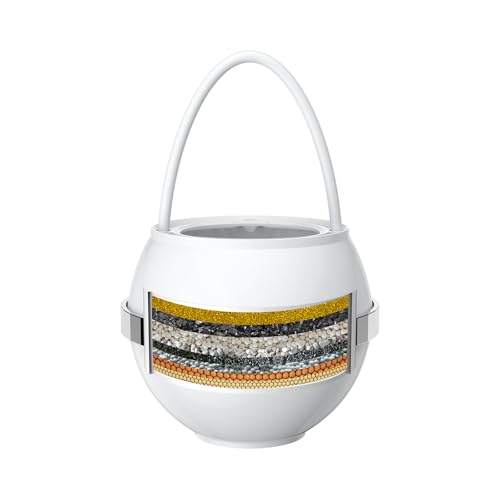
Campground water hookups often carry strong chemical undertones, sulfur scents, or residual chlorine that can ruin morning coffee and campsite meals. Based on product specifications, this system utilizes a triple-cartridge layout delivering eight stages of filtration, combining sediment reduction, KDF media, ion-exchange resin, and premium coconut shell activated carbon. This configuration reduces common municipal contaminants such as PFAS, PFOA/PFOS, heavy metals, silt, and cyst microbes. Because the activated carbon core retains naturally occurring minerals like calcium, potassium, and magnesium, your water keeps a crisp, balanced profile rather than tasting flat or stripped.
Rig life demands gear that tolerates movement, temperature shifts, and rough forest service roads. Waterdrop built the TSA housing with reinforced, age-resistant, and freeze-resistant polymer materials engineered to withstand high-pressure pulses and static loads up to 300 psi. This reinforced build minimizes the danger of sudden leaks or cracked housings when your rig hits washboard tracks on the way to a remote dispersed campsite. The unit measures just 12.4 by 12.9 by 4.3 inches, allowing it to tuck neatly behind galley drainage pipes or beside camp kitchen gear boxes without robbing vital cabinet volume.
Setting up your water supply should never cut into daylight hiking or fire-building time. The TSA system uses push-to-connect hardware compatible with standard 3/8-inch and 1/2-inch cold-water lines, allowing for a fast plumbing hookup directly inline with your primary kitchen faucet without cutting new holes in your countertop. When it comes time for routine maintenance, the twist-and-lock cartridge system lets you pop out old elements and lock in replacements in seconds, requiring zero wrenches or messy housing sumps. The individual filters offer staggered service lifespans spanning 6 to 18 months, offering exceptional runtime over multiple camping seasons.
Campers should keep in mind that this inline unit operates strictly on municipal tap water or pre-filtered water sources. It is not engineered to purify raw backcountry water directly from wilderness rivers, lakes, or sediment-heavy untreated wells without a separate sediment pre-filter. Additionally, because the multi-stage carbon block preserves healthy minerals, a standard TDS meter reading will not drop to zero, which is standard for mineral-retaining carbon systems. Flow rate is calibrated around one gallon per minute to allow sufficient contact time with the filtration media, which provides a steady, reliable stream for filling pots and hydration flasks but will feel slightly slower than an unrestricted spigot.
For weekend warriors, extended road-trippers, and overland travelers who rely on campground hookups or municipal fill stations, the Waterdrop TSA provides a dependable, electricity-free water purifying solution. It effectively solves the problem of chemical tastes and foul plumbing smells, transforming your RV or cabin galley into a reliable hydration hub for seasons of outdoor adventure.
Installing the Waterdrop TSA inside a camper van, travel trailer, or camp kitchen is straightforward thanks to the included 3/8-inch to 1/2-inch adapter fittings and push-to-connect ports. The system runs directly in line with your cold-water supply, removing the need for a secondary drinking faucet on tight countertops.
Because the unit operates entirely on incoming water line pressure from campground hookups or an RV onboard water pump, there is no electrical draw on your camper battery bank or solar setup. The sturdy mounting plate secures firmly against interior cabinet walls, keeping the filter stable during travel over rough terrain.
Routine maintenance is simple thanks to the tool-free twist-and-lock filter design. Replacement cycles are clearly mapped out across the three cartridges: the initial sediment stage requires replacement around 6 months, the middle stage around 8 to 12 months, and the carbon polishing block lasts up to 18 months depending on your camping frequency and source water quality.
When winterizing your travel rig or closing up a seasonal hunting cabin for freezing months, disconnect the filter cartridges, seal them in clean plastic bags, and store them in a climate-controlled area or refrigerator to prevent freezing damage and keep the filtration media fresh for the upcoming season.



FAQs
Are these countertop filters, or do some need plumbing?
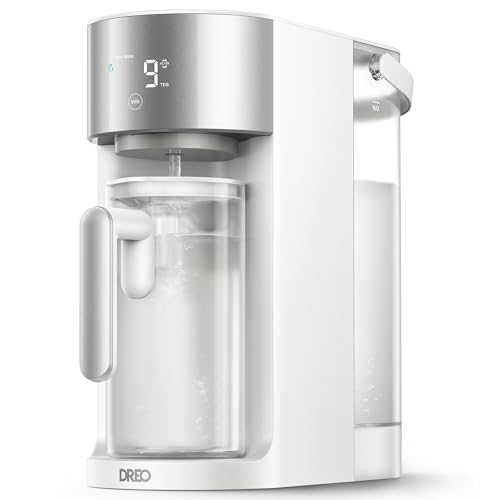
Some sit on the counter, and others connect under the sink. The DREO, Bluevua, and FETIONS listings describe plug-in countertop RO units, while the Waterdrop 15UA, TSU, and TSA connect to a cold-water line. Check cabinet clearance, faucet compatibility, and whether you want a dedicated faucet before ordering.
Will these systems reduce TDS?
No, the Waterdrop TSU and TSA product details state that they do not reduce TDS. The listed DREO and Bluevua units use reverse osmosis and include TDS monitoring on some models, but a TDS reading alone doesn’t identify specific contaminants. Review each model’s stated claims and certification details for your water concerns.
Can I use an under-sink Waterdrop filter with well water?
No, the Waterdrop 15UA, TSU, and TSA are specified for municipal water, not well water. Private wells can contain different contaminants, so get the water analyzed and select treatment for the results rather than relying on a city-water filter. Cartridge schedules and performance depend on incoming water quality and use.
How often do the filters need replacement?
Schedules vary by model and cartridge. The 15UA lists up to 24 months under municipal-water use; the TSU lists 24 months for its UF filter, 12 months for its CT filter, and 6 months for its PP filter. Follow the product instructions and any indicator, and check replacement cartridge availability before purchasing.
Does reverse osmosis remove more than a standard carbon filter?
Reverse osmosis uses a membrane and is designed for a broader set of reduction claims than taste-focused carbon filtration, but exact performance is model-specific. The DREO listings cite SGS testing against NSF/ANSI 58, while Waterdrop lists specific standards for select components or claims. Read the precise certification scope instead of treating a standard reference as proof of every reduction claim.
Do countertop RO units waste water?
They produce a reject-water stream, and listed ratios differ by model. The DREO options specify a 3:1 pure-to-drain ratio, Bluevua lists 2:1, and FETIONS lists 4:1. The product details also describe using leftover water for other household tasks, but check operating and cleaning instructions for your unit.
Are these filters suitable for hot water or every faucet?
No, the Waterdrop under-sink systems are for cold water only, and faucet connections vary. The 15UA includes fittings for specified 3/8-inch and 1/2-inch lines, while the TSA requires compatible female NPT threads or an appropriate adapter. Confirm your plumbing type and the current model instructions before installation; see this guide to removing an old pitcher filter for a different filter format.




Write Your Review
No reviews yet. Be the first to share your experience!