

Cleaner-tasting water starts with the right filter
A sharp chlorine taste can make a glass of tap water less appealing, while grit or sediment may call for a different solution altogether. The best water filter for contaminated water depends on the source and the contaminants you need to address, not just a product’s general promise of cleaner water. A pitcher designed to improve taste is not interchangeable with a purifier intended for untreated outdoor water, and neither should be assumed to solve every water-quality concern.
This selection covers compact trail filters, countertop dispensers, gravity systems, and a countertop reverse osmosis option. Product details include useful distinctions such as the LifeStraw’s stated bacteria and parasite reduction claims, ZeroWater’s TDS meter and listed contaminant certifications, and Waterdrop’s note that its pitcher does not lower TDS. Those differences matter for filtration fit, taste, maintenance, and everyday convenience. Check your local water report or arrange appropriate water testing if you’re unsure what is present; match the treatment method to the identified concern. For more home-focused context, see this guide to non-RO water purifiers for home use, or review this practical guide to removing an old pitcher filter.

Pros
- Weighs only two ounces, making it an ideal choice for ultralight backpacking and compact survival kits
- Impressive 4,000-liter filtration lifespan delivers years of safe drinking water without extra moving parts
- Straightforward operation requires no pumping, chemical wait time, or battery power
- Rigorous 0.2-micron filtration effectively blocks bacteria, protozoan cysts, microplastics, and silt
Cons
- Requires sipping directly from the water source or a cup rather than filtering directly into storage bladders
- Does not eliminate viruses, heavy metals, or agricultural chemicals found in heavily polluted runoff
- Filtering large volumes of water for camp cooking or group hydration can be tedious
The LifeStraw Personal Water Filter is a compact, point-of-use hollow fiber membrane filter engineered for on-the-go hydration during wilderness treks and emergency situations. Designed as an ultralight survival tool, it allows outdoors enthusiasts to drink directly from natural freshwater sources without relying on chemical purification tablets or cumbersome mechanical pumps. This filter caters directly to backpackers, day hikers, trail runners, hunters, scouts, solo adventurers, and emergency preppers assembling bug-out bags.
Filtration performance is centered around a 0.2-micron microfiltration membrane capable of removing 99.999999% of waterborne bacteria, including E. coli and Salmonella, as well as 99.999% of waterborne protozoan parasites such as Giardia lamblia and Cryptosporidium. In practical camping scenarios, such as filling up along an alpine stream or drinking from a backcountry lake, the filter purifies water instantly with a steady flow rate. It also filters out fine sediment and environmental microplastics, significantly improving water clarity without introducing any chemical aftertaste.
Weighing only around two ounces and measuring approximately nine inches in length, the unit delivers high portability. The durable, BPA-free plastic housing withstands being tossed into a packed rucksack, stashed inside a vehicle console, or clipped to a chest harness. Both ends are equipped with protective caps to keep trail dirt and debris away from the mouthpiece and intake zone during rugged hikes through brush or rocky terrain.
Operation and ongoing care remain straightforward. To drink, users simply uncap both ends, place the base into a water source, allow the membrane to saturate for a few seconds, and sip through the top mouthpiece. Clearing the filter requires blowing a quick puff of air back through the straw after drinking, which purges residual moisture and prevents particulate buildup. Because the unit contains no moving parts or batteries, it requires virtually zero mechanical troubleshooting in the field.
A realistic limitation of this straw-style filter is that it is primarily intended for individual, immediate consumption. Gathering gallons of water for camp kitchen cooking, large-scale family hydration, or refilling narrow hydration reservoirs requires transferring water into an intermediate wide-mouth container first. Additionally, like most standard backcountry microfilters, it does not remove viruses or dissolved chemical contaminants, making it best suited for natural wilderness waters rather than heavily industrialized runoff.
For weekend backpackers, trail hikers, overland travelers, and budget-conscious campers seeking peace of mind in the outdoors, the LifeStraw Personal Water Filter represents an exceptional value. Its combination of near-zero pack weight, massive 4,000-liter operational lifespan, and proven microbiological protection makes it a core staple for any outdoor gear loadout or home emergency kit.
For ounce-counting backpackers and thru-hikers, minimizing pack weight is essential. Weighing roughly 2 ounces, the LifeStraw adds virtually no penalty to your base weight while eliminating the need to carry heavy liters of pre-filtered water on trails with frequent water sources.
Its slim profile slips easily into backpack side pockets, hip belt pouches, or running vests. During quick trail stops, hikers can hydrate directly from passing streams in seconds without taking off their packs or assembling multi-piece pump systems.
Maintaining the LifeStraw requires minimal effort on the trail. After each drinking session, simply blow air back through the mouthpiece to clear trapped water and silt from the membrane fibers before snapping the protective caps back into place.
When storing the filter between camping seasons, rinse it thoroughly with clean water, allow it to air dry, and keep it in a cool, dry location. In sub-freezing temperatures, keep wet filters inside a jacket pocket or sleeping bag, as freezing water can damage the internal microfiltration membrane.

Pros
- Massive 200-gallon filter lifespan outlasts standard 40-gallon pitcher cartridges by up to five times.
- Slim profile fits effortlessly inside RV refrigerators, cooler racks, and portable camp storage bins.
- Fast gravity filtration fills camp kettles and hydration bottles without tedious waiting.
- NSF certified activated carbon core effectively eliminates strong chlorine and metallic campsite water tastes.
Cons
- Designed for municipally treated tap water and campground hookups, not raw wilderness river or lake water.
- Top lid can loosen when completely inverted to pour out the last few drops unless held in place.
- Does not reduce total dissolved solids (TDS) for campers seeking complete mineral deionization.
The Waterdrop 7-Cup Water Filter Pitcher is a compact, gravity-fed filtration system designed to elevate everyday drinking water quality without complicated plumbing. While commonly found in home kitchens, its low weight, modest dimensions, and high-capacity cartridge make it a natural fit for car campers, RV road trippers, overlanders, tailgaters, and cabin weekenders. Anyone tired of hauling bulky flats of single-use plastic water bottles to the campsite will appreciate having a self-contained pitcher that can treat tap water right on a picnic table or camper countertop.
Campground spigots and RV holding tanks frequently deliver water with a heavy chlorine smell or mineral tang. Based on manufacturer specifications and customer feedback, the activated carbon fiber (ACF) and silver-loaded carbon core do an impressive job stripping away harsh chlorine odors, chemical aftertastes, and organic compounds. The fast flow rate stands out around camp, as gravity pushes water through the filter in a steady stream rather than a slow drip. That means you can quickly refill your camp kettle for morning pour-over coffee, prep water for dehydrated meals, or top off hiking hydration bladders before hitting the trail.
Durability and packability are crucial when packing gear into a crowded vehicle trunk or overland storage drawer. Built from lightweight, BPA-free food-grade plastic, the pitcher weighs just over two pounds empty. Its 4.1-inch slim profile allows it to slide cleanly between cooler food baskets or wedge into compact RV refrigerator doors. The mechanical dial integrated into the lid eliminates reliance on batteries, making it convenient to track cartridge lifespan during extended summer travel or off-grid camping stints.
A practical limitation to keep in mind is source water compatibility. This pitcher is intended strictly for municipally treated municipal supplies, RV park hookups, and potable campground spigots. It is not an outdoor survival microfilter or UV purifier, so it should not be used to filter untreated backcountry creeks, ponds, or muddy runoff where biological cysts and bacteria may be present. Additionally, users report that tipping the pitcher nearly upside down to pour the final drops can cause the lid to dislodge, so keeping a thumb on the top rim during steep pours is recommended.
For outdoor enthusiasts seeking an affordable way to keep clean, refreshing water on tap at camp, the Waterdrop 7-Cup Pitcher provides outstanding value. It dramatically reduces campsite plastic waste, withstands frequent road trips, and serves as an excellent emergency preparedness asset during home storm outages. It earns an easy recommendation for family campers, road trippers, and weekend warriors who want fresh-tasting drinking water without the expense of disposable bottles.
Managing fresh water inside an RV, camper van, or camp kitchen setup often comes with compromises. Campground hookups can vary wildly in mineral taste, and onboard freshwater holding tanks sometimes develop stale odors over extended trips. Keeping this slim pitcher on your galley counter or in your portable cooler ensures every cup of coffee, tea, or drinking water tastes crisp and clean.
The physical footprint of 9.7 inches long by 4.1 inches wide takes up minimal room on outdoor folding tables and easily fits into standard camp kitchen chuck boxes. Thanks to the fast-flowing ACF filtration media, refilling between breakfast cooking rounds and evening campfire cleanup takes only a couple of minutes, keeping your campsite hydrated with minimal downtime.
Maintaining the Waterdrop pitcher is straightforward whether you are at home or returning from a multi-day trip. To activate a new cartridge, soak it in cold potable tap water for ten minutes, insert it firmly into the reservoir to ensure a tight seal, and discard the first two pitchers of filtered water before regular drinking.
The pitcher body and reservoir should be hand-washed with mild dish soap and warm water. Avoid putting the components through a high-heat dishwasher cycle or using abrasive scrubbing pads that could scratch the clear plastic. When storing the pitcher between camping trips, empty all standing water, allow the parts to air dry completely, and keep the filter in a cool, clean environment to maintain freshness.

Pros
- Generous 7.5-liter capacity minimizes repetitive trips to the campground water spigot.
- Five-stage ion exchange filter removes dissolved solids down to 000 PPM for remarkably crisp camp water taste.
- Built-in digital TDS meter removes the guesswork from cartridge replacement schedules.
- Smooth push-button spigot makes filling camp cups, hydration bladders, and cook pots effortless.
- Compact rectangular footprint fits securely on camp kitchen tables, tailgates, or inside RV refrigerators.
Cons
- Thorough five-stage gravity filtration operates with a slow flow rate that requires patience when refilling the basin.
- Not intended for raw backcountry streams with heavy silt or biological pathogens without prior boiling or micro-filtration.
- At 5.5 pounds empty and over 20 pounds fully filled, it is suited strictly for vehicle-supported camping rather than backpacking.
The ZeroWater 32-Cup Ready-Read 5-Stage Water Filter Dispenser serves as a dependable, high-capacity bulk hydration station tailored for vehicle-based camping setups. Unlike small handheld camp squeeze filters or micro-strainers designed for wilderness trekking, this tabletop unit holds 7.5 liters (32 cups) of liquid, making it a cornerstone for camp kitchens, pop-up campers, overland rigs, and cabin retreats. Whether you are hooking up to questionable water spigots at a crowded state park or drawing from an onboard camper holding tank, this dispenser aims to strip out dissolved solids, chemical aftertastes, and common municipal contaminants before you fill your camp mugs or coffee percolator.
This bulk filtration system is best suited for family campers, RV travelers, overlanders, festival goers, tailgate hosts, and emergency preppers seeking pure drinking water without hauling heavy cases of single-use disposable bottles. If your camp style revolves around a basecamp picnic table or a dedicated camper kitchen counter, the high capacity saves you from making constant runs to the campground water post. It also makes an exceptional choice for budget-conscious road trippers who want to bypass store-bought jugs by purifying campground hookup water directly on site.
In terms of outdoor performance, the core strength lies in its 5-stage ion exchange filtration, which is IAPMO certified to reduce lead, chromium, mercury, and forever chemicals like PFOA and PFOS. The integrated digital TDS (total dissolved solids) meter slides right into the dispenser body, allowing you to sample the water and confirm a 000 PPM readout with a single button press. When cooking breakfast at sunrise or mixing hydration electrolytes for a day on the hiking trail, the water yields a neutral, crisp flavor free from the sulfur, chlorine, or metallic mineral twang often encountered at rural campgrounds.
The dispenser body is molded from sturdy, BPA-free plastic with an ergonomic handle for stable transport from the potable water post back to your picnic table. Measuring 13.13 inches long, 6 inches wide, and 10.38 inches tall, its slim rectangular footprint slots easily into RV refrigerators, camp storage totes, or along the edge of a tailgate. The front-mounted push-button spigot allows one-handed pouring into hydration bladders, camp kettles, and tall water bottles without needing to lift the heavy unit once it is filled.
Realistic limitations are centered on flow rate and raw water source selection. Because the dense 5-stage resin filter removes fine dissolved solids, water drips through slowly, requiring campers to top off the reservoir well before the morning coffee rush. Additionally, user reviews highlight that sediment-heavy water or extremely mineral-rich tap supplies will deplete the filter cartridge faster. Campers should also remember that this unit is engineered for clear, potable tap or pre-filtered water sources; it is not a wilderness purifier meant to eliminate backcountry bacteria, giardia, or silt from muddy riverbeds without proper pre-filtration or boiling.
For car campers, RV owners, weekend warriors, and emergency preparedness kits, the ZeroWater 32-Cup Dispenser offers exceptional value by providing bottled-quality water straight from your campsite base. As long as you pair it with clear tap sources or pre-filtered camp supply tanks, it simplifies meal prep, protects your crew from lingering tap contaminants, and eliminates the waste of plastic water bottles on every outdoor getaway.
Setting up an organized camp kitchen requires gear that operates reliably without constant tending, and this 32-cup dispenser fits right into that routine. Placing the unit at the end of a picnic table or on a tailgate creates a dedicated hydration station where kids and fellow campers can help themselves using the push-button spigot, keeping dirty hands out of main water jugs.
For RVers and van lifers, the dispenser slides directly onto standard camper refrigerator shelves or kitchen counter corners. Purifying campground hookup water through the 5-stage filter noticeably improves the aroma and flavor of camp drip coffee, morning oatmeal, and rehydrated backcountry meals by removing mineral hardness and chlorine odors.
Maintaining the system during an outdoor season is straightforward thanks to the included digital TDS meter. By testing the dispensed water periodically, you receive a definitive measurement of filter life; the manufacturer advises replacing the cartridge once the meter registers 006 PPM or higher.
To protect the unit during camping trips, avoid letting the filtration cartridge dry out completely between weekend outings, and never expose the plastic reservoir to freezing overnight temperatures with water inside. Keeping the basin washed with mild soap between outings prevents scale buildup and ensures clean hydration throughout your camping calendar.

Pros
- Hands-free gravity filtration frees you up to pitch tents or cook meals while filtering water
- Generous 1.5-gallon water capacity reduces repetitive trips down to the creek or water source
- Dual-ended modular straw connects easily to gravity bags, squeeze pouches, and common threaded beverage bottles
- Activated carbon core improves backcountry water flavor compared to plain hollow fiber filters
- Inexpensive maintenance thanks to simple backwash capability using a standard water bottle
Cons
- Requires a sturdy elevated branch or hook to achieve optimal gravity-fed water flow
- Internal hollow fiber membrane must be protected from freezing temperatures once wet to prevent damage
- Hauling a completely full 1.5-gallon bag back to camp adds noticeable temporary weight
The Waterdrop Gravity Water Filter Straw System is an all-in-one outdoor water purification kit engineered to provide high-volume safe hydration in backcountry environments. Built around a 0.1-micron hollow fiber membrane paired with coconut shell activated carbon, this setup purifies water from natural lakes, creeks, and rainwater caches. Unlike standard inline straw filters that require hard manual suction, this system pairs the straw with an expansive 1.5-gallon gravity bag, transforming raw outdoor water into clean drinking water with hands-free operation.
This filtration setup is tailored for backpackers, family campers, solo adventurers, and survivalists who need a steady water supply without carrying heavy plastic bottles. Camp cooks and group leaders will find the high reservoir volume especially useful for boiling pasta, filling hydration bladders, and prepping morning coffee. It also makes an exceptional addition to home emergency preparedness kits, overlanding rigs, and off-grid bug-out bags where municipal water reliability might be suddenly compromised during severe storms.
In field conditions, performance centers on the impressive 700 ml per minute flow rate and multi-stage filtration mechanics. The 0.1-micron ultrafiltration barrier removes common waterborne threats such as sediment, micro-debris, and turbidity, while the activated carbon layer helps neutralize chlorine taste and unpleasant swampy odors. Because the system utilizes gravity pressure, you can string the reservoir up between two trees, attach the hose, and let camp water filter effortlessly into clean canteens while you pitch your tent or start a campfire.
Constructed with durable, BPA-free TPU materials, the collapsible water reservoir withstands trail abrasion while folding down nearly flat when emptied. The complete package weighs under half a pound, making it light enough to slide inside an external backpack mesh pocket without eating into base weight allowances. The filter straw itself offers modular versatility, featuring threaded ends compatible with standard 27.5mm soda bottles and smaller personal squeeze pouches, giving you complete flexibility on long-distance treks.
While the system excels in camp convenience, it has a few natural limitations typical of hollow fiber gravity filters. Freezing temperatures can rupture the internal fibers once wetted, meaning winter hikers must sleep with the filter inside their sleeping bags. Additionally, highly silted glacial runoff or muddy puddles can slow the flow rate, requiring frequent backwashing via clean water flushes to keep the pores clear. Finding a sufficiently high branch or anchor point at dry campsites also requires some forward planning.
For outdoor enthusiasts, weekend backpackers, and emergency preppers seeking a high-capacity, budget-friendly filtration solution, the Waterdrop Gravity System provides outstanding utility. It eliminates the elbow grease of hand pump filters and the frustrating mouth fatigue of solo filter straws. If you want a dependable, multi-functional water purification system that effortlessly hydrates the whole camp, this setup is a dependable companion for your next wilderness outing.
Setting up the Waterdrop gravity system at camp takes just a few moments. Simply scoop raw water from a stream or lake into the wide-mouth 1.5-gallon reservoir, seal the top, and hang the bag from a tree branch, camp lantern pole, or vehicle roof rack using the integrated strap. Connect the filter straw to the tubing at the base, open the valve, and let gravity push clean water into your water bottle or cook pot.
Maintaining optimum flow rate on multi-day trips requires basic filter hygiene. When filtering sediment-heavy water, backflush the straw regularly by pushing clean water in reverse through the mouthpiece using a standard threaded pop bottle or the included squeeze pouch. After returning home from your trip, flush the filter thoroughly with clean tap water, air dry the bag completely to avoid mildew, and store the unit in a climate-controlled space away from freezing conditions.
Weight and pack space are critical factors for any backcountry expedition, and this complete water filtration kit weighs roughly 0.29 to 0.48 pounds. The collapsible TPU water bag rolls up compactly, slipping effortlessly into your pack side pocket or lid without consuming precious interior volume needed for sleeping bags and shelters.
Its modular design also lets you adapt your gear loadout to your itinerary. On ultra-fast solo day hikes, leave the 1.5-gallon bag behind and carry just the lightweight filter straw attached to a flexible water pouch. For group basecamps or dry-camp treks where water sources are miles apart, packing the full gravity kit ensures your crew can haul and filter multiple gallons in a single trip.
Pros
- Removes waterborne viruses in addition to bacteria and protozoa for complete global travel safety
- Extremely fast flow rate purifies 24 ounces in just eight seconds with minimal effort
- SimpleVent cap and RiverFlow spout provide easy venting, fast drinking, and clean transfers
- One-way valve enables the use of electrolyte powders without contaminating the purifier media
Cons
- Dry weight of 15.9 ounces is heavier than minimalist hollow-fiber squeeze filters
- Pressing down through the filter requires firm body weight and can become harder in silty water
- Rated cartridge lifespan of 65 gallons requires more frequent replacement than basic backpacking filters
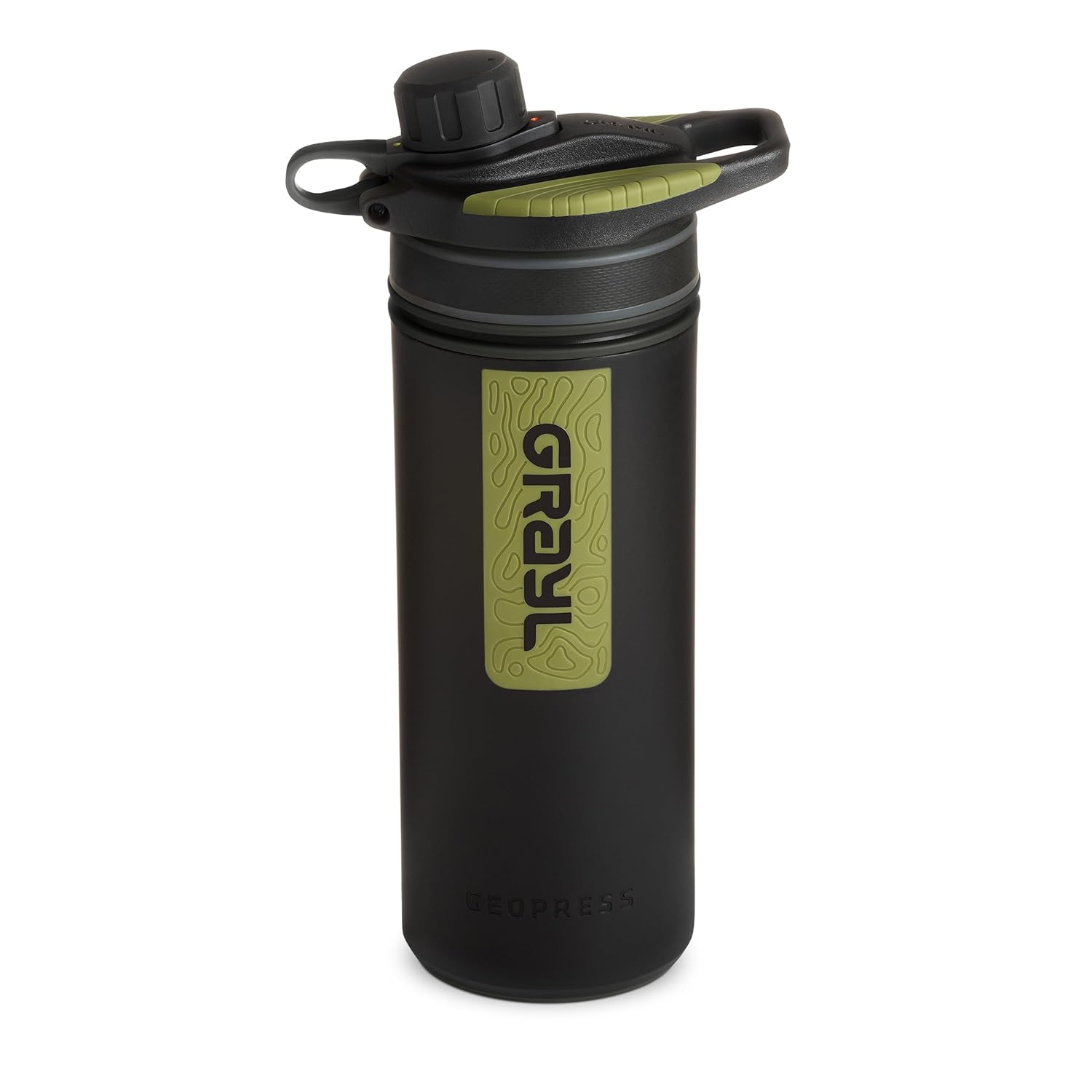
The GRAYL GeoPress 24 oz Water Purifier Bottle is an all-in-one handheld purification system engineered to turn suspect backcountry streams, murky rivers, and questionable tap water into clean drinking water. Designed with versatility in mind, this purifier bottle caters directly to multi-day backpackers, international travelers, car campers, survivalists, overlanders, and emergency preppers. Unlike standard outdoor microfilters that only target bacteria and protozoa, this system provides global protection by also eliminating viruses, making it especially valuable for remote wilderness expeditions or off-grid travel where municipal water treatment cannot be trusted.
On the trail, the primary advantage of this system is speed and simplicity. The GeoPress utilizes an intuitive press-action design that purifies 24 fluid ounces of water in about eight seconds, achieving an effective flow rate of up to five liters per minute. Campers hiking into remote campsites do not have to fuss with tangled hoses, fragile squeeze bags, or battery-powered UV lights when replenishing water. You simply fill the outer cup from a freshwater source, position the inner press, and push downward using steady body weight. The purified water collects immediately in the inner chamber, ready for chugging, cooking breakfast at sunrise, or transferring directly into hydration reservoirs.
Construction quality reflects the demands of rugged outdoor life. The bottle is molded from heavy-duty, BPA-free polypropylene built to survive six-foot drops onto packed soil and rocks. Ergonomic SoftPress pads on the cap distribute pressure comfortably across your palms, while non-slip TPE TopoGrip panels around the body provide a secure hold with wet or gloved hands. Beneath the surface, the replaceable cartridge combines electroadsorptive technology with ultra-powdered activated carbon. This dual-stage barrier captures microscopic pathogens while filtering out sediment, microplastics, PFAS, pesticides, and unwanted odors. A clever one-way drink mix valve also allows you to mix flavored electrolyte drinks inside the bottle without fouling the filter media.
While the filtration speed and viral protection are standout advantages, prospective buyers should balance these perks against trail weight and maintenance requirements. Weighing 15.9 ounces dry, the GeoPress is heavier and bulkier than ultralight squeeze filters favored by thru-hikers. The cartridge is rated for 300 cycles or roughly 65 gallons, meaning users tackling silty runoff or murky pond water will notice pressing resistance increase over time, necessitating cartridge replacement sooner than in clear mountain streams. Thoroughly drying the cartridge between weekend camping trips and washing the bottle parts helps prevent mold buildup and extends overall filter life.
For outdoor enthusiasts prioritizing pathogen safety, clean-tasting water, and zero setup time, the GRAYL GeoPress represents a reliable investment. Solo adventurers, family campers gathering water from campground spigots, hunters, and emergency preparedness planners will appreciate the peace of mind that comes from true viral purification. While ultralight purists counting every ounce might hesitate, anyone seeking dependable, rapid water treatment for rugged backcountry journeys or emergency storm prep will find exceptional value in this durable setup.
The key highlight of the GRAYL GeoPress is its full-spectrum purification capability. While many standard backcountry filters only capture bacteria and protozoa, this cartridge utilizes electroadsorption to trap waterborne viruses such as Norovirus, Rotavirus, and Hepatitis A, alongside familiar backcountry risks like Giardia, Cryptosporidium, and E. Coli.
Beyond biological threats, the internal activated carbon core adsorbs volatile organic compounds, PFAS, chemicals, and heavy metals while neutralizing muddy flavors. This level of filtration provides essential safety for overlanders sourcing water across varied terrains or international travelers relying on questionable local infrastructure.
Operating the GeoPress requires zero assembly or technical calibration out of the box. Users twist the SimpleVent drink cap one-half turn to release air pressure, fill the outer reservoir to the marked line, and apply firm, steady downward body weight against a flat surface such as a rock, log, or firm ground.
The RiverFlow spout facilitates effortless pouring into camp cookware, freeze-dried food pouches, or secondary hydration bladders without cross-contaminating the clean drinking rim with raw water. Once pressed, the bottle seals securely to prevent leaks inside a loaded backpack pocket.


Pros
- Operates completely off-grid relying strictly on gravity, requiring zero electricity or pressurized plumbing hookups
- Durable 304 food-grade stainless steel housing provides exceptional longevity compared to plastic filter pitchers
- Includes both an elevated metal stand and a sturdy stainless steel spigot right out of the box
- Impressive 6,000-gallon dual-element filter lifespan delivers excellent cost efficiency over multiple camping seasons
Cons
- At roughly 8.5 pounds and 20 inches tall, it is sized for basecamps, RVs, and vehicle travel rather than backpacking
- Does not reduce total dissolved solids (TDS) or remove beneficial natural minerals from the water
- Filling the upper chamber while the lower chamber is already full can cause water to overflow the center rim
The Purewell 2.25 Gallon Gravity Water Filter System is a rugged, non-electric countertop filtration station engineered for reliable hydration at basecamp. Built around heavy-duty stainless steel chambers and gravity-fed composite filters, this system is an ideal match for car campers, RV travelers, overlanders, cabin owners, and emergency preparedness planners. If you frequently set up camp at state parks with questionable municipal hookups, boondock off the beaten path, or prepare for severe weather power outages, this self-contained gravity filter delivers dependable hydration without relying on batteries or pressurized water lines.
At the center of the system is a 3-stage composite filtration core featuring a 0.01-micron hollow-fiber ultrafiltration membrane, an activated carbon block, and a silver ion layer. Based on product specifications, this configuration meets NSF/ANSI standards 42 and 372 for chlorine reduction and lead-free construction. In practical campsite use, it excels at removing cloudy sediment, pipe rust, and harsh sulfur or chlorine odors from campground spigots and treated well supplies. Filtering at an estimated rate of up to four gallons per hour, it fills camp kettles and trail bladders quickly enough to keep group breakfasts moving smoothly at sunrise.
Build quality stands out thanks to the 304 food-grade stainless steel upper and lower housings. Unlike plastic filter pitchers that can crack during bumpy transit down washboard forest service roads, these metal canisters resist dents and outdoor wear. Purewell includes a matching 304 stainless steel spigot rather than a cheap plastic valve, eliminating leaks and ensuring smooth pouring. The included non-slip wire stand is an especially thoughtful touch for outdoor use, lifting the spigot high enough off picnic tables or camp kitchen tailgates to fit large insulated bottles and wide-mouth cooking pots directly underneath.
Setting up and maintaining the system around camp requires minimal fuss. Assembly involves installing the spigot, screwing the filter elements into the upper chamber, and filling the top reservoir. Because water flows strictly by gravitational draw, users must remember that adding water to the top while the bottom chamber is full will cause overflow at the seam. For long-term care between camping trips, draining the canisters, allowing the filter elements to dry thoroughly, and wiping down the polished steel surfaces will keep the unit clean and ready for your next outdoor excursion.
While this system excels at stationary campsite hydration, it does carry realistic outdoor limitations. Weighing around 8.5 pounds with a 20-inch standing profile, it is far too bulky for backcountry backpacking and belongs squarely in vehicle-supported camps. Additionally, the composite filters are designed to strip contaminants and foul tastes without stripping natural minerals, meaning they will not lower total dissolved solids (TDS). For family campers, overlanders, hunters, and emergency preparedness enthusiasts seeking a durable, high-capacity gravity system that delivers crisp drinking water without burning through single-use plastic bottles, this Purewell setup offers outstanding long-term value.
Operating a camp kitchen for a family or group requires a steady supply of potable water for coffee, rehydrating freeze-dried meals, and washing produce. This 2.25-gallon gravity system eliminates the tedious chore of constantly pumping hand filters or hauling dozens of disposable plastic jugs into the backcountry. Resting securely on its included stand, it creates an intuitive hydration station where campers can easily dispense clean water straight into camp cookware, tumblers, and hydration packs.
For overlanders and RV boondockers, the non-electric design ensures clean drinking water even when house batteries run low or solar panels face cloudy skies. The nesting chamber design allows the upper bucket to slip inside the lower one for transit, saving valuable cargo space in crowded vehicle trunks or camper van cabinets when packing gear between destinations.
According to manufacturer guidelines, the dual composite carbon filters offer a combined lifespan of up to 6,000 gallons, translating to several seasons of regular weekend camping or long-term household backup use. For the best flow rates and hygiene, rinsing the exterior of the filter cartridges under clean water periodically removes silt buildup that naturally accumulates when processing turbid outdoor water sources.
When packing away your gear at the end of the camping season, disassemble the chambers, empty all standing water, and let the components air-dry completely in a shaded area. Proper drying prevents mildew buildup, while storing the stainless canisters inside an enclosed gear tote protects the polished finish from trail grit until your next family adventure.

Pros
- Substantial 8.4-liter capacity minimizes repetitive trips to the campground water station.
- Fast gravity flow rate filters significantly quicker than conventional pitcher designs.
- Certified to NSF standards for chlorine and odor reduction to improve campground spigot water quality.
- Molded top carry handle makes hauling and repositioning around the camp galley effortless.
Cons
- Too large and heavy for backpacking, lightweight hiking, or mobile trail use.
- Designed for potable tap or campground water and does not remove biological pathogens from backcountry streams.
- Weighs over twenty pounds when full of water, requiring a sturdy, level camp table or counter.
The Waterdrop 35-Cup Slim Water Filter Dispenser is a high-volume gravity filtration system designed to provide crisp, great-tasting drinking water at basecamps, RV galleys, cabin getaways, and tailgates. While backcountry hikers rely on squeeze filters or compact trail pumps, group basecampers and car campers need higher water volume without constant refilling. This dispenser holds up to 8.4 liters (35 cups total capacity), making it an outstanding fit for family campers, road trippers, overlanders with portable kitchens, and anyone staging an emergency home preparedness kit.
Campground water hookups and park spigots frequently carry noticeable chlorine tastes, chemical odors, or lingering pipe sediment that can spoil camp coffee and drinking water. Based on product specifications, this dispenser utilizes an advanced activated carbon fiber (ACF) filter certified against NSF 42 and NSF 372 standards to reduce chlorine taste, odor, heavy metals, and PFOA/PFOS compounds. With a fast flow rate that processes a full reservoir in approximately five minutes, campers do not have to wait around when boiling water for dinner or filling bottles before setting out on the trail.
Build quality is tailored for frequent handling around busy outdoor cook stations and vehicle setups. The unit is molded from durable, BPA-free, food-grade plastic that withstands everyday transport in a packed trunk or camper van. Practical outdoor details include an integrated top push-pull handle that makes carrying the dispenser back from the spigot comfortable. A sliding top lid prevents campsite dust, bugs, and falling leaves from entering the reservoir, while a two-degree sloped base directs every drop toward the spout so you never have to tip a heavy container.
Setup and long-term maintenance are straightforward. The filter installs smoothly without complex tools, and a built-in replacement indicator helps track usage across the generous 200-gallon filter lifespan. Cleaning requires only warm water and mild soap between camping weekends. Campers heading out during cold shoulder seasons will want to prevent the filter from freezing overnight, as freezing temperatures can damage internal carbon blocks.
There are realistic limitations to keep in mind. Weighing over four pounds empty and more than twenty pounds when filled, this dispenser is intended strictly for stationary camp tables, tailgate setups, or RV counters. Additionally, because this system uses an activated carbon filter rather than a microbiological purifier, it is intended solely for municipally treated tap water, RV holding tanks, or potable campground spigots. It should not be used on untreated backcountry lakes or rivers without prior boiling or chemical purification.
For car campers, overlanders, and family outdoor enthusiasts seeking a centralized hydration station, the Waterdrop 35-Cup Dispenser offers remarkable convenience and water clarity. It eliminates the hassle and waste of hauling single-use plastic bottles to camp, streamlines outdoor meal preparation, and provides dependable, clean water for your entire group.
Setting up an efficient camp kitchen requires easy access to clean water for cooking, morning coffee, and general hydration. The slim 5.5-inch width of this dispenser allows it to sit neatly on a standard picnic table, camp kitchen organizer, or tailgate without dominating food prep space. Its push-spigot design allows campers to fill tumblers and pots single-handedly while managing stoves and cookware.
For RVers and campervan travelers, the unit slides cleanly into compact camper refrigerators or stands securely on galley countertops during camp stays. Because it filters municipal and campground water quickly, your crew can refill personal water bottles rapidly before day hikes without creating bottlenecks around camp.
Maintaining the dispenser during active camping seasons is simple. Before your first trip, rinse the reservoir with mild dish soap and flush the filter according to instructions to clear loose carbon dust. For routine care, hand-wash the body and lid regularly to prevent mineral buildup from hard campground water.
If you are camping in near-freezing mountain conditions, bring the dispenser inside your vehicle cabin or insulated camper overnight. Freezing temperatures can cause residual moisture inside the carbon filter media to expand, potentially cracking the filtration structure. When storing the unit between camping seasons, remove and air-dry the filter to keep your gear fresh and ready for the next adventure.

Pros
- Exceptional 5-stage filtration removes more contaminants than standard pitchers
- Built-in TDS meter takes the guesswork out of filter replacement
- BPA-free materials with a reliable, leak-free design for car camping or RV use
- Saves money and reduces plastic waste over time
Cons
- Plastic construction may feel less premium than glass or stainless steel alternatives
- Replacement filters can add up in cost for heavy users
- Not designed for backcountry use - best for tap water or RV water supply
The ZeroWater 10-Cup Ready-Pour Water Filter Pitcher is a practical hydration solution for campers who rely on tap water at RV parks, campgrounds, or festival grounds. Instead of hauling heavy plastic bottles or trusting questionable supply lines, this pitcher gives you control over water quality with its advanced 5-stage ion exchange filter. It removes virtually all total dissolved solids (TDS), including metals, minerals, salts, and even forever chemicals like PFOA/PFOS, so every glass tastes clean and fresh.
This pitcher is best suited for car campers, RV enthusiasts, overlanders, and family campers who have access to a spigot but want better-tasting, safer water. It also works well for festival goers tailgating for a weekend and budget-conscious adventurers looking to save money on bottled water. The included TDS meter lets you test your starting water quality and monitor filter life, so you are never caught off guard with a degraded taste.
In real-world camping scenarios, the ZeroWater pitcher shines when you need to fill water bottles, coffee pots, or hydration bladders. The 10-cup capacity is enough for a small group's daily drinking needs, and the quick-fill spigot makes dispensing easy without tipping the whole pitcher. While it does not filter from a backcountry stream, it is perfect for improving the taste and safety of campground tap water, RV tank water, or even well water at remote cabins. The filtration is certified by IAPMO for reducing lead, chromium, and mercury, adding an extra layer of trust for families.
Build quality is solid: the BPA-free plastic body is sturdy enough for regular handling and the handle is comfortable for pouring. The pitcher is lightweight at just 1 pound, so it won't weigh down your camp kitchen. However, the plastic construction means it could crack if dropped on rocky ground, so handle with care. The included filter is easy to install and replace - just soak, rinse, and snap in. Many users find the TDS meter particularly helpful for seeing the difference before and after filtration.
One realistic limitation is the ongoing cost of replacement filters. Depending on your water quality, a filter may need changing every 20 to 40 gallons, which can add up for heavy users. Also, if you are camping without access to a clean water source, this pitcher won't help - it is strictly for tap water, not murky rivers or lakes. For those who want a no-fuss way to ditch single-use plastic bottles at the campsite, though, the ZeroWater pitcher is a reliable, user-friendly choice that delivers on its promise of pure taste.

Pros
- Brings TDS readings down to 000 for pure-tasting camp coffee, tea, and meal prep
- Integrated digital TDS meter eliminates guesswork on filter cartridge life
- Substantial 5.2-liter capacity reduces the need for constant refilling at the spigot
- Slim, rectangular footprint packs efficiently into camp kitchen bins or camper galleys
Cons
- Not engineered for untreated backcountry streams or wilderness sources lacking pre-filtration for biological pathogens
- Denser 5-stage filter media results in a slower gravity flow rate than basic carbon pitchers
- Heavy when fully filled with water, requiring a stable camp table or solid countertop surface
The ZeroWater 22-Cup Water Filter Dispenser is a high-capacity, gravity-fed filtration station designed to provide clean, crisp drinking water at the campsite, RV park, or cabin. Equipped with a 5-stage ion exchange filter and an integrated digital TDS (Total Dissolved Solids) meter, this dispenser is engineered to strip away metals, chemical contaminants, and dissolved minerals from tap supplies. It serves car campers, RV travelers, overlanders, family campground groups, and emergency preparedness planners who want premium drinking and cooking water without hauling heavy cases of disposable plastic bottles.
In a camp setting, municipal campground spigots and rural RV hookups often yield water with heavy mineral loads, chlorine odor, or lingering sediment. This dispenser tackles those issues by filtering tap supplies down to an impressive 0 TDS, noticeably improving the flavor of campfire coffee, morning oatmeal, and trail canteens. With a 22-cup (5.2-liter) capacity, it supplies plenty of water for multiple campers throughout the day. The built-in push-and-pour spigot allows effortless one-handed dispensing right from the edge of a picnic table or tailgate kitchen.
Built from durable, BPA-free food-grade plastic, the unit balances structural rigidity with a lightweight empty weight of just 2.3 pounds. Its slim profile measures 5.5 inches wide, 10.4 inches long, and 11.3 inches high, allowing it to slide into compact spaces such as an RV counter, a portable camp pantry, or alongside standard camping coolers. The included Ready-Read TDS meter mounts directly into the chassis, giving you instant clarity on water quality before filling your hydration bladders.
Setting up the dispenser at basecamp is straightforward: rinse the filter cartridge, screw it securely into the reservoir base to prevent bypass leaks, and pour in your water supply. Maintenance is made simple by the digital meter, which signals that a replacement cartridge is needed once the reading reaches 006. Hand washing the reservoir with mild soap between camping weekends keeps the components fresh and ready for the next adventure.
Campers must keep in mind its wilderness limitations. The 5-stage filter is not an outdoor wilderness purifier for raw, untreated backcountry lakes or stagnant streams containing bacteria, protozoa, or cysts. Additionally, because the multi-stage filter media is exceptionally dense, water flows more slowly through the top reservoir than through standard single-stage carbon pitchers, so filling the unit ahead of group meal prep is recommended.
For weekend car campers, tailgaters, glampers, and emergency preppers, the ZeroWater 22-Cup Dispenser offers remarkable value and peace of mind. It turns questionable campground tap water into exceptionally pure hydration, cuts plastic waste around the campfire, and neatly fits into your vehicle camp kitchen loadout. If your outdoor adventures revolve around established campgrounds, RV parks, or remote cabin getaways with running water, this dispenser is an outstanding hydration companion.
Organizing a clean hydration hub is one of the most practical upgrades you can make to a family campsite or overland camp kitchen. Setting this dispenser on the corner of a sturdy folding camp table gives the whole group immediate access to pure water without opening and closing coolers to grab plastic bottles.
The push-button spigot makes it easy for kids to fill their own camp mugs, while adults can quickly draw measured amounts of water for Dutch oven cooking or pour-over camp coffee. Because the unit maintains a narrow 5.5-inch width, it takes up minimal table space, leaving plenty of room for camp stoves, cutting boards, and dining essentials.
Proper care ensures your dispenser delivers optimal filtration across many camping seasons. Always check that the O-ring on the filter cartridge sits squarely in place before threading it tightly into the upper reservoir, as an imperfect seal can allow unfiltered tap water to bypass the filtration bed.
During cold-weather trips, avoid leaving water inside the filter cartridge in freezing conditions, as expanding ice can compromise the internal ion exchange membranes. Store the dispenser in an insulated vehicle cabin or tent overnight when temperatures drop. To clean, remove the filter and TDS meter, and gently hand wash the plastic body with mild dish soap and warm water.
FAQs
Does a pitcher filter remove every type of contamination?
No, pitcher filters differ in what they reduce, and none should be treated as universal protection. Waterdrop lists chlorine, taste, odor, and other reductions but says it does not lower TDS; ZeroWater lists IAPMO certification for reducing lead, chromium, and PFOA/PFOS. Match the product’s documented claims to your water report.
Which option is intended for untreated water outdoors?
The LifeStraw Personal Water Filter and GRAYL GeoPress are portable options described for outdoor water use. LifeStraw lists bacteria and parasite reduction claims, while GRAYL describes pathogen, chemical, and particulate removal. Follow each maker’s instructions and limitations; ordinary taste-improving pitchers are not substitutes for a purifier suited to the source.
Does a smaller micron rating always mean better household filtration?
No, micron size alone does not tell you whether a filter addresses your specific contaminant or maintains suitable flow. Purewell lists a 0.01-micron UF membrane and a stated flow rate of 4 gallons per hour, but its filter does not lower TDS. Check the full performance claims and choose a system suited to your water and daily demand.
How often do these products need replacement filters?
Replacement timing varies by model, use, and water conditions. Waterdrop lists its pitcher filter at up to 200 gallons or three months, while Purewell says its filters should be replaced every six months for optimum performance. ZeroWater dispensers include a TDS meter and instruct users to change the filter when the reading reaches 006.
Is reverse osmosis a better choice for every home?
No, reverse osmosis is one treatment approach, not an automatic fit for every household. The DREO countertop unit is described as installation-free and lists a 3:1 pure-to-drain ratio, while pitcher and gravity systems have different setup and maintenance needs. Compare the contaminants addressed, filter costs, water use, and convenience before deciding; this inline RV water filter installation guide covers a separate filtration setup.




Write Your Review
No reviews yet. Be the first to share your experience!