

Grit, chlorine taste, and sluggish faucets can make everyday water a chore
A sharp chemical taste or sediment collecting in faucet aerators can be a sign that your household needs a better filtration setup. The Best 3 Stage Water Filter Systems featured here include whole-house systems for treating water as it enters your plumbing and a countertop gravity option for drinking water. Those approaches serve different needs, so it pays to compare the filter media, micron rating, flow rate, and maintenance expectations rather than assuming every three-stage label means the same thing.
Product specifications describe meaningful differences: iSpring lists a 5-micron sediment stage and up to 15 GPM, while HQUA includes pressure gauges and replacement reminders. Waterdrop specifies a 15 GPM flow rate and NSF/ANSI 372 certification for lead-free materials. Purewell is a non-electric stainless-steel countertop system, not a whole-house installation. These claims and figures come from product information, not independent water testing, so check your water report and the manufacturer’s reduction claims before buying. For another home-treatment perspective, see this guide to non-RO water purifiers for home use.

Pros
- High 15 GPM flow rate maintains strong water pressure without fixture sputtering
- Effectively eliminates sulfur smells, heavy chlorine, rust, and silt from rural water sources
- Sturdy housing certified lead-free and engineered to resist pressure fluctuations
- Long-lasting filter cartridges reduce camp maintenance over extended seasons
Cons
- Heavy 42-pound unit requires a permanent mounting surface or dedicated basecamp frame
- Must be drained and winterized in cold weather as operating temperature is strictly 40 to 100 degrees Fahrenheit
- Requires basic plumbing fittings to adapt standard 1-inch ports to smaller RV or camp hose lines
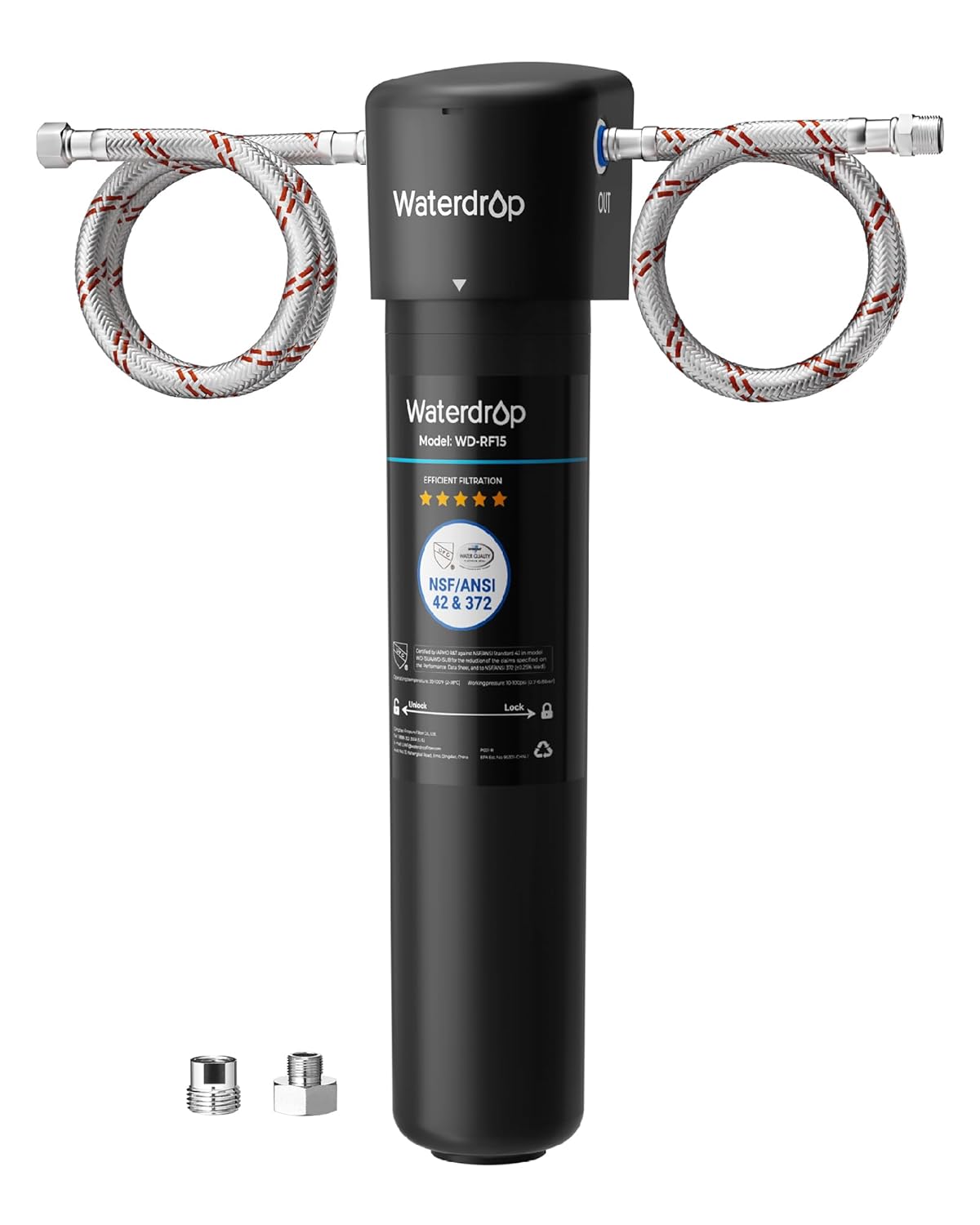
Setting up a reliable basecamp, hunting cabin, or long-term RV station requires clean water you can trust without choking your plumbing pressure. The Waterdrop 3-Stage Whole House Water Filter System (WD-WHF3T-PG) is engineered for high-capacity purification, bridging the gap between heavy municipal treatment and rugged outdoor water sources. This heavy-duty filtration assembly suits RV travelers parked at rural campgrounds, off-grid cabin owners drawing from well supplies, overlanding teams operating basecamp trailers, and survivalists building an emergency water reserve.
Filtration effectiveness stands out thanks to a multi-stage approach capable of cleaning up to 15 gallons per minute without causing a massive line pressure drop. The system pairs a 5-micron sediment pre-filter with a KDF composite cartridge and granular activated carbon to remove rust, grit, chlorine, and foul sulfur odors common to rural wells. For camp cooks washing dishes, outdoor showers after dusty trail runs, and filling hydration bladders for tomorrow's hike, having clean, odor-free water straight from the camp tap saves countless trips hauling single-use water jugs.
The hardware is built to withstand pressure spikes and rough utility hookups. Certified to NSF/ANSI 372 for lead-free materials, the thick filter housings are rated to handle rigorous water hammer conditions that frequently occur on unregulated campground spigots. The 1-inch inlet and outlet ports allow generous flow that prevents fixtures from sputtering, making it practical for feeding multi-fixture setups like an outdoor camp kitchen and an RV bathroom simultaneously.
At 42 pounds and measuring over two feet tall, this is a stationary piece of gear rather than a portable backpacking unit. It requires mounting to a sturdy bulkhead, utility panel, or dedicated outdoor wash station frame. Operating temperatures must remain between 40 and 100 degrees Fahrenheit, which means winter campers and high-altitude adventurers must properly drain and winterize the canisters before freezing weather hits to prevent housing cracks.
Routine maintenance remains straightforward with cartridge lifespans reaching up to twelve months depending on the sediment load of your water source. For outdoor enthusiasts investing in remote cabin retreats, extended RV expeditions across North America, or self-reliant disaster preparedness rigs, this high-volume filter offers reliable peace of mind and fresh hydration for the entire crew.
Installing this system into an RV utility bay, hunting lodge, or camp wash station is straightforward with standard 1-inch plumbing connections. Campers and overlanders running smaller garden hose or PEX lines will need standard brass reducers to plumb the filter inline with their storage tanks or campground city-water inlets.
Because the unit weighs 42 pounds dry and significantly more when full of water, securely bolting the mounting bracket to a solid structural wall or timber post is essential. Always install a shut-off valve on both sides of the unit so you can quickly isolate the canisters during seasonal cartridge changes without draining your entire RV or cabin storage tank.
Protecting the heavy-duty filter housings from freezing temperatures is critical for autumn and winter outdoor use. The system is rated for water temperatures between 40 and 100 degrees Fahrenheit, meaning sub-freezing mountain nights can crack water-filled plastic canisters if left unprotected.
Before the first freeze hits your hunting camp or RV park, shut off the incoming supply, use the pressure-relief buttons, unscrew the sumps, and pull the filter cartridges. Store the damp cartridges in a climate-controlled space and leave the canisters empty to prevent costly freeze damage while your camp is winterized.

Pros
- Heavy-duty brass thread ports prevent leaks and resist pipe torque during rough plumbing setups
- Generous 15 GPM peak flow maintains steady water pressure across multiple cabin or camp fixtures
- Individual oil-filled pressure gauges and countdown timers make maintenance tracking completely straightforward
- Comes equipped with helpful servicing accessories including housing drain valves, a filter wrench, and a cleaning brush
Cons
- Dry weight of 44 pounds requires a sturdy mounting surface or solid support frame at your campsite or cabin
- System reduces sediment, chemicals, and heavy metals but does not soften hard water or remove dissolved limescale
Providing clean, safe running water for a remote outpost requires equipment that handles tough conditions without choking off flow. The HQUA WF3-01 is a heavy-duty three-stage whole-house filtration unit designed to treat high volumes of incoming water. Utilizing three oversized 20-inch by 4.5-inch Big Blue filter housings mounted on a rigid steel bracket, this setup serves as an exceptional centralized water station for off-grid cabins, hunting lodges, overlanding base stations, RV park hookups, and rural homesteaders preparing for grid disruptions.
Filtration performance is centered around progressive contaminant removal. The first stage deploys a high-density polypropylene sediment cartridge that catches suspended sand, silt, and coarse rust. The second stage uses a compound media blending Granular Activated Carbon with Kinetic Degradation Fluxion (KDF), targeted directly at neutralizing chloramines and capturing heavy metals like lead, mercury, copper, nickel, and chromium. The third stage utilizes a dense carbon block to polish the water, stripping out volatile organic compounds (VOCs), residual chlorine, and foul sulfur or swampy tastes. The result is crystal-clear, odorless water for camp cooking, dishwashing, and drinking.
Build quality stands out in critical plumbing areas where lesser filters fail. A primary failure point in remote water systems is cracked plastic female threads under line stress or high water hammer. HQUA integrates 1-inch FNPT brass thread inserts into the inlet and outlet ports, providing rugged connections that withstand pipe movement and wrench torque. The package also includes adapters to step down to 3/4-inch plumbing lines if needed. Built for operating pressures between 25 and 116 PSI and handling water flow up to 15 gallons per minute, the system easily keeps pace with multiple camp faucets running at once.
Field maintenance is streamlined through several thoughtful features. Individual oil-filled pressure gauges monitor each stage, making it simple to see which cartridge is loading up with debris before water flow slows to a trickle. Built-in bottom drain valves allow users to drain accumulated sediment and empty the heavy canisters before unscrewing them, preventing messy indoor floods or slippery cabin floors. Red pressure relief buttons on top bleed trapped air after servicing, while the included oversized housing wrench and dedicated scrub brush keep routine cartridge changes swift and painless.
While this system excels at clearing sediment, rust, chemicals, and heavy metals, outdoor enthusiasts should understand its practical boundaries. At roughly 44 pounds dry and requiring a space envelope of at least 22 inches wide by 30 inches tall, this is not portable gear for lightweight car trunk camping. It also does not soften hard water or strip out dissolved mineral scale. For those establishing an off-grid cabin retreat, seasonal hunting basecamp, or dependable rural emergency water reserve, the HQUA WF3-01 offers rugged hardware, high-volume capacity, and dependable multi-stage purification.
The core structural strength of this system comes from its heavy gauge mounting bracket, designed to support the significant weight of three fully flooded 20-inch filter housings. Brass connection ports resist cross-threading and cracking under vibration or seasonal pipe movement, making the system far more durable than all-plastic alternatives often used in temporary setups.
With an operating pressure tolerance ranging from 25 to 116 PSI and temperature ratings spanning 40 to 125 degrees Fahrenheit, the system is well-suited for varied outdoor climates. The housings are built from impact-resistant materials that can handle the rigors of off-grid utility rooms, sheltered outdoor pump houses, or dedicated utility trailers.
Regular upkeep is straightforward thanks to the visual pressure gauges and included 180-day countdown timers. When a pressure differential between the inlet and outlet gauges indicates restriction, the bottom drain ports allow you to purge suspended grit or drain the canister before using the supplied wrench to spin off the housing.
For seasonal cabin or basecamp use, winterizing the unit is essential to protect against freezing temperatures. Open the bottom drain valves completely and vent the top air buttons to evacuate all standing water before cold mountain weather sets in. The provided housing brush makes it quick to scrub out algae or fine silt deposits during cartridge changeouts.

Pros
- Saves money over bottled water for campers who want great taste on the road.
- High flow rate means no annoying pressure drop when filling your RV tank or washing dishes.
- Easy filter changes every 6-12 months with the included wrench.
- Customer support is responsive and the brand has a strong reputation among U.S. homeowners and RVers.
Cons
- Not portable – requires permanent mounting near your main water line, best for home or a dedicated RV setup.
- Does not soften hard water – you may need a separate water softener if your TDS is above 300 ppm.
- Initial installation can be challenging if you’re not handy with plumbing – may require extra fittings and a bypass loop.
The iSpring WGB32B whole house water filter system is a three-stage filtration unit designed to reduce sediment, chlorine, taste, and odor from your incoming water supply. While it’s primarily marketed for residential use, it also makes a solid upgrade for RV campers, overlanders, and anyone who takes water quality seriously – whether at home or on the road. With a 100,000-gallon capacity and filters that last up to a year, this system can handle a family’s worth of clean drinking, cooking, and washing water through multiple camping seasons.
For campers, the biggest benefit is the improvement in water taste and smell. Many municipal water supplies contain enough chlorine to give tap water an unpleasant chemical flavor – not what you want when filling your hydration bladder for a hike or brewing morning coffee at the campsite. The iSpring’s carbon block filters tackle up to 99% of chlorine, along with sediment, rust, and cloudiness. According to user reviews, the difference is immediately noticeable: clearer toilet tanks, better-tasting water, and less scale buildup in appliances like your RV’s water heater.
Installation is designed for DIY folks, though it does require some plumbing know-how. The unit mounts to a wall near your main water line, and the 1-inch NPT inlet/outlet keep water flowing at up to 15 GPM – enough to run multiple faucets or fill an RV tank without significant pressure loss. Many users recommend adding a bypass loop for easy filter changes, and the included wrench makes swapping out the three 20-inch cartridges simple. If you’re setting up in an RV, you’ll need to ensure the unit is sheltered from freezing temperatures and direct sunlight, as the manual advises indoor or protected installation.
Build quality feels substantial. The polypropylene sediment filter catches particles down to 5 microns, while the two coconut-shell carbon block filters provide deep chemical reduction. The filter housings are sturdy, though some reviews note the threads can be damaged during shipping, so inspect them on arrival. iSpring offers a one-year warranty and lifetime tech support, and customers report responsive service. Replacement filters are readily available on Amazon, and the total cost of ownership is reasonable given the long lifespan.
That said, this isn’t a portable solution. You won’t be tossing it in a backpack or even strapping it into a truck bed for a weekend trip. It’s best suited for a permanent installation at your home base, your RV’s utility bay, or a cabin. Also, note that it does not soften water – if you have hard well water (TDS over 300 ppm), you’ll want to add a softener before the filter. Some users also recommend installing a spin‑down pre-filter to extend the life of the sediment cartridge in especially dirty water conditions.
Overall, the iSpring WGB32B is a practical investment for anyone who drinks, cooks, or showers with tap water – especially campers who want that same crisp quality whether they’re prepping gear at home or rinsing off after a dusty trail. It’s not a backpacking item, but for RVers, overlanders, and weekend warriors who value great water, this system delivers reliable performance and solid value.
Installing the iSpring WGB32B is a one-time project best done in a basement, garage, or RV utility compartment. The kit includes the manifold, three filter housings, a housing wrench, and a manual with QR codes for video guides. You’ll need basic plumbing skills and tools like pipe cutters, Teflon tape, and PVC or PEX fittings.
Many users recommend mounting a sturdy plywood or 2x10 board into wall studs first, then bolting the manifold to it – the unit weighs about 45 pounds dry. Create a bypass loop with shutoff valves so you can still have water while changing filters. Use plenty of Teflon tape and a quality pipe sealant on all threaded connections to prevent leaks. For first-time installers, plan a full afternoon; experienced DIYers can finish in a couple of hours.
If you’re installing in an RV, be mindful of space constraints and ensure the unit is protected from freezing. The manual specifies operating temperatures between 40°F and 100°F, so avoid unheated compartments in winter. A leak detector add-on (sold separately) provides extra peace of mind.
The iSpring WGB32B uses three 20x4.5-inch filters: one sediment (FP25B) and two carbon block (FC25B). iSpring recommends replacing them every 6-12 months or up to 100,000 gallons, whichever comes first. Heavy sediment or chlorine levels may shorten that interval.
To change filters, close the inlet and outlet valves, open a faucet to depressurize, then unscrew the blue housings with the included wrench. Replace the cartridges, lubricate the O-rings with a food-grade silicone grease (not included), and hand-tighten the housings snugly – no need to overtighten. Run water for 10 minutes to flush any carbon fines. Users note that marking which housing holds which filter helps avoid mix-ups.
Maintenance is minimal: just quarterly checks for leaks and annual filter swaps. The housings are translucent enough to see sediment buildup, so you can gauge when the sediment filter is nearing its limit. Replacement filter bundles are available on Amazon, making it easy to stock up.

Pros
- Operates completely off-grid relying strictly on gravity, requiring zero electricity or pressurized plumbing hookups
- Durable 304 food-grade stainless steel housing provides exceptional longevity compared to plastic filter pitchers
- Includes both an elevated metal stand and a sturdy stainless steel spigot right out of the box
- Impressive 6,000-gallon dual-element filter lifespan delivers excellent cost efficiency over multiple camping seasons
Cons
- At roughly 8.5 pounds and 20 inches tall, it is sized for basecamps, RVs, and vehicle travel rather than backpacking
- Does not reduce total dissolved solids (TDS) or remove beneficial natural minerals from the water
- Filling the upper chamber while the lower chamber is already full can cause water to overflow the center rim
The Purewell 2.25 Gallon Gravity Water Filter System is a rugged, non-electric countertop filtration station engineered for reliable hydration at basecamp. Built around heavy-duty stainless steel chambers and gravity-fed composite filters, this system is an ideal match for car campers, RV travelers, overlanders, cabin owners, and emergency preparedness planners. If you frequently set up camp at state parks with questionable municipal hookups, boondock off the beaten path, or prepare for severe weather power outages, this self-contained gravity filter delivers dependable hydration without relying on batteries or pressurized water lines.
At the center of the system is a 3-stage composite filtration core featuring a 0.01-micron hollow-fiber ultrafiltration membrane, an activated carbon block, and a silver ion layer. Based on product specifications, this configuration meets NSF/ANSI standards 42 and 372 for chlorine reduction and lead-free construction. In practical campsite use, it excels at removing cloudy sediment, pipe rust, and harsh sulfur or chlorine odors from campground spigots and treated well supplies. Filtering at an estimated rate of up to four gallons per hour, it fills camp kettles and trail bladders quickly enough to keep group breakfasts moving smoothly at sunrise.
Build quality stands out thanks to the 304 food-grade stainless steel upper and lower housings. Unlike plastic filter pitchers that can crack during bumpy transit down washboard forest service roads, these metal canisters resist dents and outdoor wear. Purewell includes a matching 304 stainless steel spigot rather than a cheap plastic valve, eliminating leaks and ensuring smooth pouring. The included non-slip wire stand is an especially thoughtful touch for outdoor use, lifting the spigot high enough off picnic tables or camp kitchen tailgates to fit large insulated bottles and wide-mouth cooking pots directly underneath.
Setting up and maintaining the system around camp requires minimal fuss. Assembly involves installing the spigot, screwing the filter elements into the upper chamber, and filling the top reservoir. Because water flows strictly by gravitational draw, users must remember that adding water to the top while the bottom chamber is full will cause overflow at the seam. For long-term care between camping trips, draining the canisters, allowing the filter elements to dry thoroughly, and wiping down the polished steel surfaces will keep the unit clean and ready for your next outdoor excursion.
While this system excels at stationary campsite hydration, it does carry realistic outdoor limitations. Weighing around 8.5 pounds with a 20-inch standing profile, it is far too bulky for backcountry backpacking and belongs squarely in vehicle-supported camps. Additionally, the composite filters are designed to strip contaminants and foul tastes without stripping natural minerals, meaning they will not lower total dissolved solids (TDS). For family campers, overlanders, hunters, and emergency preparedness enthusiasts seeking a durable, high-capacity gravity system that delivers crisp drinking water without burning through single-use plastic bottles, this Purewell setup offers outstanding long-term value.
Operating a camp kitchen for a family or group requires a steady supply of potable water for coffee, rehydrating freeze-dried meals, and washing produce. This 2.25-gallon gravity system eliminates the tedious chore of constantly pumping hand filters or hauling dozens of disposable plastic jugs into the backcountry. Resting securely on its included stand, it creates an intuitive hydration station where campers can easily dispense clean water straight into camp cookware, tumblers, and hydration packs.
For overlanders and RV boondockers, the non-electric design ensures clean drinking water even when house batteries run low or solar panels face cloudy skies. The nesting chamber design allows the upper bucket to slip inside the lower one for transit, saving valuable cargo space in crowded vehicle trunks or camper van cabinets when packing gear between destinations.
According to manufacturer guidelines, the dual composite carbon filters offer a combined lifespan of up to 6,000 gallons, translating to several seasons of regular weekend camping or long-term household backup use. For the best flow rates and hygiene, rinsing the exterior of the filter cartridges under clean water periodically removes silt buildup that naturally accumulates when processing turbid outdoor water sources.
When packing away your gear at the end of the camping season, disassemble the chambers, empty all standing water, and let the components air-dry completely in a shaded area. Proper drying prevents mildew buildup, while storing the stainless canisters inside an enclosed gear tote protects the polished finish from trail grit until your next family adventure.
FAQs
What does each stage do in a whole-house water filter?
A sediment pre-filter captures particles such as sand and rust, while carbon media can reduce chlorine taste and odor. A third stage may add another carbon block or a different medium, depending on the system. Check the specific cartridge claims, since stage count alone doesn’t identify which contaminants a filter reduces.
Will a 5-micron filter reduce water pressure?
A 5-micron rating describes particle size filtration, not a guaranteed pressure loss. Flow depends on the system, household demand, incoming pressure, and how much sediment has collected in the cartridge. The iSpring lists up to 15 GPM and the Waterdrop lists 15 GPM; size a whole-house filter for your home’s peak use and replace clogged cartridges as directed.
Can these systems treat private well water as well as city water?
Some are described for both municipal and well sources, but no general three-stage filter addresses every well-water issue. Waterdrop lists support for both sources, while HQUA describes reduction of several metals and chloramine. Get a water test to identify specific concerns such as iron, sulfur, or bacteria, then confirm the chosen cartridge is rated for them.
How often should whole-house filter cartridges be replaced?
Follow the product schedule and adjust for water quality and usage. HQUA describes replacement at six months or up to 100,000 gallons and includes 180-day timers; iSpring lists a 100,000-gallon system capacity, and Waterdrop describes a 12-month filter life. Those are manufacturer specifications, not a promise that every cartridge lasts that long in every home.
Does the Purewell countertop filter remove total dissolved solids?
No, the product information states that its filter element does not lower TDS. Purewell uses gravity filtration with a 0.01-micron hollow-fiber UF membrane and activated carbon, and its stainless-steel housing does not require electricity. If dissolved solids are your concern, compare systems designed for that purpose and review this guide to replacing a water filter for general cartridge-handling context.



Write Your Review
No reviews yet. Be the first to share your experience!