

Clearer taste starts with the right filtration setup
A sharp chlorine flavor or sluggish faucet can make everyday water less enjoyable. The best commercial water filters in this roundup range from direct-connect under-sink units to a whole-house system and a higher-output reverse osmosis option, so the right fit depends on where you need filtered water and what you want it to reduce.
We reviewed the listed specifications, including filter capacity, service life, flow rate, filtration stages, and stated certifications. Those details help separate a compact option for a kitchen faucet from equipment designed to serve multiple points or support a business. Keep in mind that manufacturer reduction claims depend on the model and conditions; check the product documentation and your water report before buying, especially for private well water.
The Waterdrop and ICEPURE models connect to cold-water lines, while the iSpring WGB32B is designed for whole-house filtration. The CRO1000 uses a four-stage RO process and has specific pressure requirements, so it calls for a different installation plan. For a related look at non-RO home treatment, see this home water purifier guide.
Pros
- Noticeable improvement in water taste and smell, clearing out heavy chlorine and sulfur odors at campground hookups
- Fast flow rate fills large camping pots, hydration reservoirs, and water bottles without frustrating delays
- Straightforward DIY installation using included push-connect fittings and multi-size pipe adapters
- Keeps essential minerals like calcium and magnesium in your drinking water for great natural taste
- Dramatically cuts down on single-use plastic water bottles during road trips and extended stays
Cons
- Designed only for treated municipal or safe potable water sources, not for unfiltered backcountry lakes or muddy streams
- Cold water line connection only, so your hot water line remains unfiltered
- Needs about 2 to 3 inches of vertical clearance underneath the canister to twist and pull during filter changes
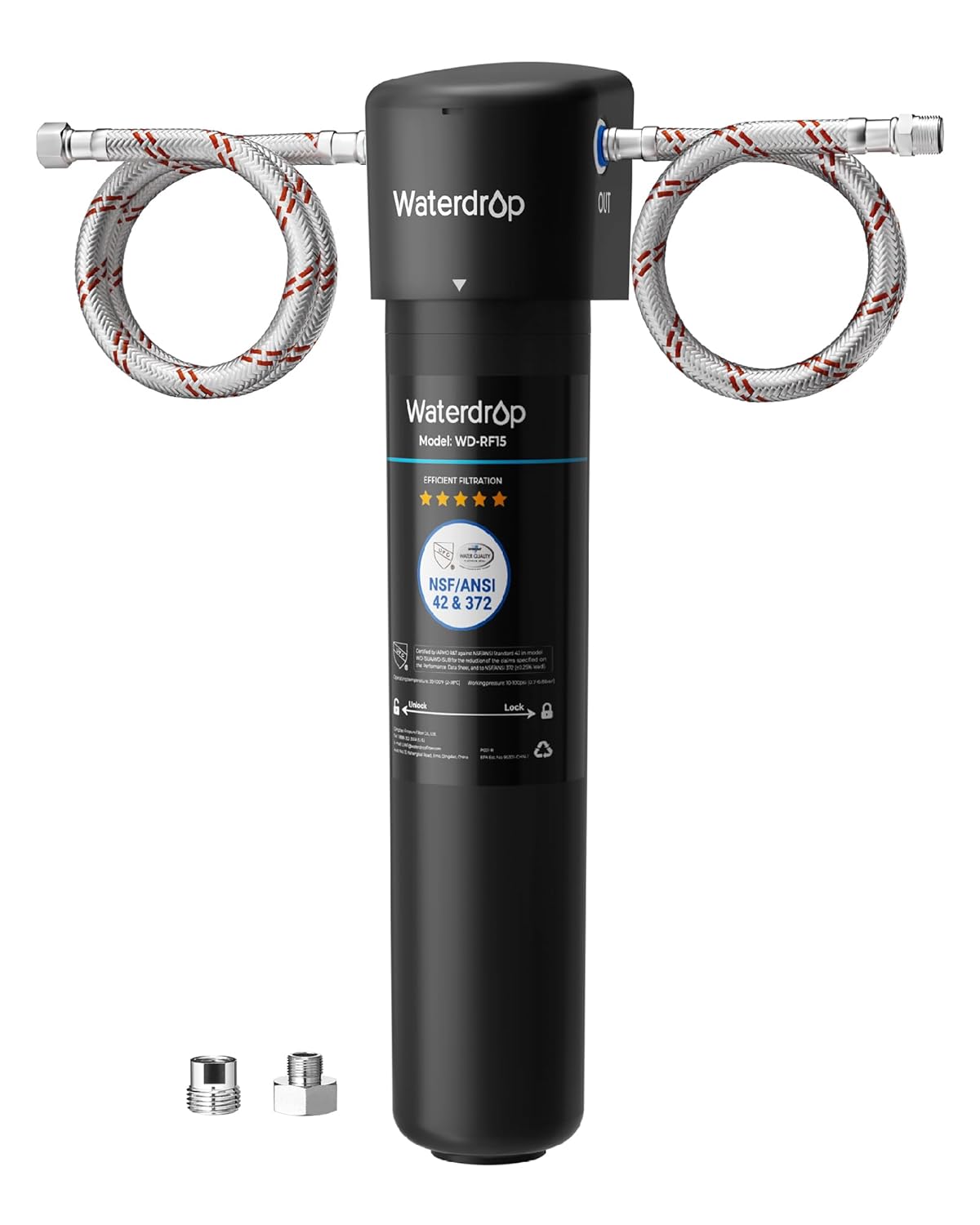
The Waterdrop 15UA is a dedicated under-counter inline filtration system engineered to hook straight into your primary faucet cold water line. While commonly found in home kitchens, it has become an increasingly popular solution for RV campers, vanlife adventurers, overlanders with built-in sinks, and hunting cabin owners. Instead of dealing with slow countertop gravity pitchers or taking up precious vehicle storage with endless cases of plastic water bottles, this system treats your water directly at the source with dependable efficiency.
Campground water hookups are notorious for strong chlorine smells, municipal treatment chemicals, and occasional sediment that ruins morning coffee and drinking water. The multi-stage filter block inside this unit features an advanced 0.5-micron filtration fineness that reduces chlorine, bad taste, odors, heavy metals, and lead. Because it retains beneficial minerals like calcium and magnesium rather than stripping them away, your water tastes naturally crisp and refreshing. At the same time, the fast flow rate of 0.75 GPM at 60 psi (capable of reaching up to 1.33 GPM depending on supply pressure) means you will not be standing around waiting to fill a gallon camp pot for dinner.
Build quality is rugged and dependable, utilizing BPA-free and lead-free housing certified to NSF/ANSI standards. The unit measures just under 17 inches tall with a slim 3.6-inch diameter, making it easy to tuck into the cramped, crowded cabinetry typical of travel trailers, converted camper vans, and small kitchenettes. The included braided hoses and brass converter fittings adapt readily to standard 3/8-inch and 1/2-inch cold lines, providing a solid seal that resists leaks even when subjected to the vibration of highway travel.
Setting up the system is refreshingly hassle-free thanks to push-to-connect plumbing fittings that require no specialized tools. The twist-and-lock filter head allows for 3-second replacements when the cartridge eventually reaches its limit. For seasonal campers, maintaining the system is quite simple. If you are winterizing your rig or leaving your trailer in storage for more than a few weeks, the filter canister easily detaches so you can bag it, store it in a cool spot, and drain your lines to prevent winter freeze damage.
There are a few realistic boundaries to keep in mind before taking this off-grid. This filter is designed specifically for treated municipal water supplies or safe RV holding tanks; it is not a backcountry purifier designed to kill waterborne cysts, bacteria, or viruses found in wild wilderness rivers. Additionally, you will want to mount the bracket with at least 2 to 3 inches of open clearance below the base so you have ample room to slide the canister downward when replacement time comes.
For weekend road trippers, full-time RVers, and off-grid cabin dwellers looking to elevate their camp kitchen setup, the Waterdrop 15UA is an affordable and practical upgrade. It eliminates the hassle of lugging heavy water containers, cleans up foul-tasting campground hookup supplies, and ensures pure hydration straight from your galley faucet.
Installing this filtration system inside an RV, camper van, or mobile field kitchen is remarkably simple. The package comes with pre-attached push-to-connect hoses, mounting brackets, and a versatile 3/8-inch to 1/2-inch adapter set that matches the standard cold water feed lines found in most American travel trailers and manufactured campers.
Because the system connects inline between your existing cold shut-off valve and your standard galley faucet, there is no need to drill an extra hole in your countertop for an auxiliary dispenser tap. As long as your vehicle water pump or campground hookup produces steady pressure, you will enjoy clean water straight from your primary sink faucet with zero extra clutter on your camp counter.
Proper off-season care is essential for campers who store their rigs in cold climates. Since freezing water will expand and crack the internal carbon block, you must remove the filter cartridge before pumping non-toxic RV antifreeze through your plumbing or blowing out lines with compressed air.
If you plan to leave your camper parked for an extended period between summer road trips, simply twist off the filter, seal it in a clean zip-top plastic bag, and keep it in your home refrigerator to preserve the freshness of the coconut shell activated carbon. Reinstalling it takes only seconds when you are ready to hit the road again.

Pros
- Massive capacity means fewer filter changes during cross-country camper travel or extended road trips.
- Simple plug-and-play installation fits standard RV and residential cold water plumbing lines without drilling.
- High 2.5 GPM flow rate delivers robust stream pressure for camp dishwashing and cooking pot fills.
- Certified lead-free construction with food-grade, BPA-free coconut shell carbon block media.
Cons
- Designed strictly for treated municipal or pre-filtered potable water lines, not for raw backcountry creek water with biological pathogens.
- Cold water supply line connection only; cannot be plumbed to hot water feeds.
- Does not reduce Total Dissolved Solids (TDS), as it intentionally retains dissolved minerals.
Clean drinking water is the backbone of any successful outdoor journey, whether you are staging an overland rig for an off-grid excursion, outfitting a camper van, or keeping an RV galley functional for extended road trips. The ICEPURE WFS5300A Under Sink Water Filter System is a high-capacity, direct-connect inline filtration unit engineered to supply crisp, refreshing water straight from your primary sink faucet. Designed to plumb directly into standard cold water feeds, it eliminates the need to carry bulky flats of disposable plastic water bottles into the backcountry or crowd your camp cooler with water jugs.
For RV campers, travel trailer owners, conversion van builders, and cabin retreat caretakers, water quality can vary wildly from campground spigots to municipal fill stations. This system tackles that unpredictability with authoritative NSF/ANSI 42 and 372 certifications. Its 0.5-micron outer layer paired with an advanced coconut shell carbon block filter captures particulate sediment, sand, and rust while significantly reducing chlorine, disagreeable odors, and harsh tastes. At the same time, it preserves beneficial minerals in the water, giving you refreshing hydration for filling camp kettles at dawn or topping off daypacks before hitting the trail.
Camp kitchen efficiency depends on good water pressure, and this unit delivers a generous full flow rate of 2.5 gallons per minute at 60 PSI. Many compact filters throttle flow down to a frustrating dribble, but this setup allows you to scrub camp cookware, wash fresh vegetables, and fill multi-gallon hydration bladders without delay. With an ultra-long service rating of 22,000 gallons or roughly three years under normal municipal conditions, it offers incredible endurance for seasonal travelers and full-time road trippers who want minimal maintenance between adventures.
Build quality and spatial practicality are paramount when outfitting mobile living quarters. Measuring just 6.81 inches long, 5.39 inches wide, and 15.55 inches tall, the cylindrical filter housing slides into tight spaces beside RV drainage pipes or under narrow van sink cabinets. The kit includes hardware compatible with both 3/8-inch and 1/2-inch female NPT cold water lines. Once the head assembly is anchored to a cabinet wall, future filter cartridge swaps take only a couple of seconds using a simple twist-and-lock mechanism, requiring no specialty tools or messy plumbing disassembly.
Prospective buyers should keep in mind that this unit is engineered strictly for municipal tap water, RV park utility hookups, or potable holding tanks. It is not designed to purify untreated raw surface water from streams, lakes, or stagnant puddles that might harbor cysts, viruses, or bacteria. For weekend warriors, overland vehicle builders, emergency preparedness organizers, and camper families looking for reliable, odor-free, high-flow water right at the galley sink, this inline system represents an exceptional, hassle-free upgrade.
Installing this filter inside a camper van or recreational vehicle is straightforward thanks to the included inline fittings that link directly into standard 1/2-inch or 3/8-inch cold water connections. Because it runs inline with your existing galley faucet, you avoid drilling additional holes in your countertop for an auxiliary dispenser.
When running off a 12-volt RV diaphragm pump, the system maintains steady output with minimal pressure drop, ensuring quick fills for coffee carafes and cookware. Ensure that the mounting bracket is securely fastened to a sturdy cabinet partition so the filter stays firmly upright during bumpy gravel road travel and trail washboards.
Taking proper care of your inline water filter ensures optimal performance throughout the camping season. If you are winterizing an RV, travel trailer, or unheated mountain cabin, always remove the filter cartridge before pumping non-toxic RV antifreeze through your plumbing lines, as antifreeze can ruin the carbon block media.
Store the detached cartridge in a cool, clean spot above freezing temperatures during the off-season. When de-winterizing your camp rig in the spring, flush your water lines completely with fresh potable water before twisting the filter cartridge back into the mounting head.

Pros
- Saves money over bottled water for campers who want great taste on the road.
- High flow rate means no annoying pressure drop when filling your RV tank or washing dishes.
- Easy filter changes every 6-12 months with the included wrench.
- Customer support is responsive and the brand has a strong reputation among U.S. homeowners and RVers.
Cons
- Not portable – requires permanent mounting near your main water line, best for home or a dedicated RV setup.
- Does not soften hard water – you may need a separate water softener if your TDS is above 300 ppm.
- Initial installation can be challenging if you’re not handy with plumbing – may require extra fittings and a bypass loop.
The iSpring WGB32B whole house water filter system is a three-stage filtration unit designed to reduce sediment, chlorine, taste, and odor from your incoming water supply. While it’s primarily marketed for residential use, it also makes a solid upgrade for RV campers, overlanders, and anyone who takes water quality seriously – whether at home or on the road. With a 100,000-gallon capacity and filters that last up to a year, this system can handle a family’s worth of clean drinking, cooking, and washing water through multiple camping seasons.
For campers, the biggest benefit is the improvement in water taste and smell. Many municipal water supplies contain enough chlorine to give tap water an unpleasant chemical flavor – not what you want when filling your hydration bladder for a hike or brewing morning coffee at the campsite. The iSpring’s carbon block filters tackle up to 99% of chlorine, along with sediment, rust, and cloudiness. According to user reviews, the difference is immediately noticeable: clearer toilet tanks, better-tasting water, and less scale buildup in appliances like your RV’s water heater.
Installation is designed for DIY folks, though it does require some plumbing know-how. The unit mounts to a wall near your main water line, and the 1-inch NPT inlet/outlet keep water flowing at up to 15 GPM – enough to run multiple faucets or fill an RV tank without significant pressure loss. Many users recommend adding a bypass loop for easy filter changes, and the included wrench makes swapping out the three 20-inch cartridges simple. If you’re setting up in an RV, you’ll need to ensure the unit is sheltered from freezing temperatures and direct sunlight, as the manual advises indoor or protected installation.
Build quality feels substantial. The polypropylene sediment filter catches particles down to 5 microns, while the two coconut-shell carbon block filters provide deep chemical reduction. The filter housings are sturdy, though some reviews note the threads can be damaged during shipping, so inspect them on arrival. iSpring offers a one-year warranty and lifetime tech support, and customers report responsive service. Replacement filters are readily available on Amazon, and the total cost of ownership is reasonable given the long lifespan.
That said, this isn’t a portable solution. You won’t be tossing it in a backpack or even strapping it into a truck bed for a weekend trip. It’s best suited for a permanent installation at your home base, your RV’s utility bay, or a cabin. Also, note that it does not soften water – if you have hard well water (TDS over 300 ppm), you’ll want to add a softener before the filter. Some users also recommend installing a spin‑down pre-filter to extend the life of the sediment cartridge in especially dirty water conditions.
Overall, the iSpring WGB32B is a practical investment for anyone who drinks, cooks, or showers with tap water – especially campers who want that same crisp quality whether they’re prepping gear at home or rinsing off after a dusty trail. It’s not a backpacking item, but for RVers, overlanders, and weekend warriors who value great water, this system delivers reliable performance and solid value.
Installing the iSpring WGB32B is a one-time project best done in a basement, garage, or RV utility compartment. The kit includes the manifold, three filter housings, a housing wrench, and a manual with QR codes for video guides. You’ll need basic plumbing skills and tools like pipe cutters, Teflon tape, and PVC or PEX fittings.
Many users recommend mounting a sturdy plywood or 2x10 board into wall studs first, then bolting the manifold to it – the unit weighs about 45 pounds dry. Create a bypass loop with shutoff valves so you can still have water while changing filters. Use plenty of Teflon tape and a quality pipe sealant on all threaded connections to prevent leaks. For first-time installers, plan a full afternoon; experienced DIYers can finish in a couple of hours.
If you’re installing in an RV, be mindful of space constraints and ensure the unit is protected from freezing. The manual specifies operating temperatures between 40°F and 100°F, so avoid unheated compartments in winter. A leak detector add-on (sold separately) provides extra peace of mind.
The iSpring WGB32B uses three 20x4.5-inch filters: one sediment (FP25B) and two carbon block (FC25B). iSpring recommends replacing them every 6-12 months or up to 100,000 gallons, whichever comes first. Heavy sediment or chlorine levels may shorten that interval.
To change filters, close the inlet and outlet valves, open a faucet to depressurize, then unscrew the blue housings with the included wrench. Replace the cartridges, lubricate the O-rings with a food-grade silicone grease (not included), and hand-tighten the housings snugly – no need to overtighten. Run water for 10 minutes to flush any carbon fines. Users note that marking which housing holds which filter helps avoid mix-ups.
Maintenance is minimal: just quarterly checks for leaks and annual filter swaps. The housings are translucent enough to see sediment buildup, so you can gauge when the sediment filter is nearing its limit. Replacement filter bundles are available on Amazon, making it easy to stock up.

Pros
- Massive 1,000 GPD tankless output provides constant clean water without waiting on a storage tank
- Rugged wheeled cart design makes transport and positioning around off-grid basecamps and cabins straightforward
- Commercial 4-stage filtration effectively reduces high TDS and harsh well minerals down to 0.0001 microns
- Clear first-stage housing allows quick visual checks of sediment buildup from outdoor water sources
Cons
- Substantial footprint and weight make it better suited for vehicle basecamps, cabins, and RVs than mobile tent camping
- Requires high water pressure (80 to 130 psi), meaning an auxiliary booster pump may be required for low-pressure off-grid lines
- Higher upfront investment and replacement filter costs compared to standard portable gravity filters
The iSpring CRO1000 is a heavy-duty, tankless commercial reverse osmosis filtration station designed to process high volumes of clean drinking water. While typical backpacking purifiers handle a couple of liters at a time, this system caters to large-scale outdoor operations such as RV basecamps, remote hunting lodges, overland outposts, and family homestead retreats. For campers who maintain a fixed camp trailer, manage group expeditions, or need dependable emergency water storage prep, having a system capable of outputting up to 1,000 gallons per day ensures that nobody in camp runs low on pure water.
When operating out in rural campgrounds or relying on untamed well lines, water quality can vary wildly from heavy sediment to unpalatable mineral flavors. This unit tackles those challenges with a four-stage process, starting with a large 20-inch polypropylene sediment filter that captures dirt, sand, and rust. Two subsequent carbon block cartridges scrub out chlorine, lingering odors, and organic chemicals, while the commercial-grade reverse osmosis membrane filters contaminants down to 0.0001 microns. Based on user experiences and manufacturer specs, the system substantially lowers total dissolved solids, turning brackish or mineral-heavy water into clean, crisp hydration for camp cooking and morning coffee.
Build quality reflects its commercial background, featuring a rigid metal cart with locking caster wheels and a sturdy stainless steel housing for the primary membrane. The freestanding framework allows campers and off-grid builders to roll the filtration station directly into utility sheds, outdoor kitchens, or RV garage bays without needing complicated wall mounts. Built-in pressure gauges for both inlet and outlet lines make it simple to monitor operational flow at a glance, which is particularly helpful when managing fluctuating pressure from backcountry pumps or campground spigots.
Managing this system in an outdoor or off-grid setting does require attention to incoming line pressure. The CRO1000 functions best with incoming pressure between 80 and 130 psi, which means anyone drawing from standard 40 to 50 psi RV regulators or low-pressure camp well systems will want to add an auxiliary booster pump. Setup involves standard plumbing connections, and while adapting lines to existing mobile setups may take an extra hardware trip, the tankless design eliminates the bulk of separate holding tanks and delivers continuous water at 0.7 gallons per minute directly to your camp faucet, beverage station, or storage jugs.
Filter upkeep remains manageable thanks to standard 4.5 by 20 inch replacement cartridges and a clear first-stage housing that lets you monitor sediment buildup before performance dips. For weekend warriors packing light tents into the backcountry, this system is clearly overkill. However, for long-term overland basecamps, extended RV glamping setups, remote cabins, and serious emergency preparedness planners, the reliable output and rugged cart construction make the iSpring CRO1000 a dependable high-volume water station.
Deploying the CRO1000 in an outdoor basecamp or RV outpost requires planning your water supply line and power setup for proper pressure. Because reverse osmosis relies on steady pressure to push water through the microscopic membrane, pairing this unit with a reliable booster pump helps ensure you achieve the full 0.7 gallon per minute flow rate even when drawing from modest camp well lines or solar-backed pressure systems.
The locking caster wheels provide practical utility in mobile situations, letting you wheel the station into position for camp operations and lock it securely during use. Regular maintenance in outdoor environments mainly involves monitoring the transparent sediment stage to catch particulate before it reaches the carbon blocks and membrane, keeping your high-volume water station running smoothly across multiple camping seasons.
FAQs
Can an under-sink carbon filter treat well water?
No, the Waterdrop 15UA is specified for municipal tap water and is not suitable for well water. The ICEPURE listing also describes connection to a cold-water line, but does not establish it as a complete well-water treatment system. Test well water and match treatment to the contaminants identified.
What is the difference between a sediment filter and a carbon block?
A sediment filter traps particles such as sand, rust, and dirt, while a carbon block is used to reduce chlorine taste and odor. The iSpring WGB32B combines a 5-micron sediment stage with two carbon block stages. This distinction matters if you need to address both visible grit and unpleasant municipal-water taste.
How long do these filter cartridges last?
Service life varies by model and water use. Waterdrop lists a maximum of 24 months on municipal water, ICEPURE recommends replacement at 22,000 gallons or three years, and the WGB32B lists a 100,000-gallon capacity. Follow the model’s maintenance instructions and account for local water conditions.
Which system has the highest stated flow rate?
The ICEPURE listing gives a tested full flow rate of 2.5 GPM at 60 PSI. Waterdrop lists 0.75 GPM at 60 PSI, and the iSpring CRO1000 provides 0.7 GPM. These figures are product specifications, not a guarantee of the flow you will get in your home, where supply pressure and plumbing affect performance.
Does the iSpring CRO1000 remove total dissolved solids?
Yes, reverse osmosis is the listed treatment approach for reducing dissolved contaminants, and the CRO1000 product description claims reduction of substances including fluoride, arsenic, and sodium. It specifies a working range of 80 to 130 PSI, with an optional booster pump recommended below 80 PSI. Compare that RO approach with this guide to installing an inline RV water filter if your need is portable water treatment.
Are the under-sink systems suitable for hot water?
No, the Waterdrop and ICEPURE systems are specified for cold-water lines only. Check faucet and feed-line compatibility before installation; Waterdrop includes fittings for listed 3/8-inch and 1/2-inch connections, while ICEPURE lists compatibility with certain 3/8-inch or 1/2-inch female NPT threads.


Write Your Review
No reviews yet. Be the first to share your experience!