


Chlorine bite in a glass or rust flecks at a faucet can make everyday water less pleasant, while a restrictive filter may leave taps feeling sluggish. The best eco friendly water filters for home should match your water source and the problem you want to address, not simply promise broad contaminant removal. This lineup ranges from whole-house systems with sediment and carbon stages to replacement cartridges for compatible housings, so check the fit and maintenance needs before ordering.
Product specifications provide useful distinctions: the XINSHUO system lists a 0.5-micron rating and 15 GPM flow, while iSpring combines a 5-micron sediment stage with a carbon filter. These systems can improve taste and trap particles, but they are not all-purpose treatment for every contaminant; match claims to your water report and the filter’s stated capabilities. For another household treatment approach, see this guide to non-RO water purifiers for home. If you’re planning a point-of-entry installation, this inline water filter installation guide offers related setup context, though RV plumbing differs from home plumbing.


Pros
- Significantly improves tap water taste and eliminates chlorine smells at RV parks and campgrounds
- Tight 1-micron pore size effectively captures fine silt from remote well water and holding tanks
- Universal 10 x 2.5 inch profile fits standard external RV filter canisters and camper van systems
- Durable coconut shell carbon construction resists channel cracking under typical camp water pressure
Cons
- Tight 1-micron rating can restrict water flow faster if connected to heavily silted or muddy water sources
- Requires a mandatory five-minute water flush before initial use to rinse away loose carbon fines
- Requires a compatible standalone 10-inch canister housing rather than connecting directly to standard hose threads
The PUREPLUS 1-Micron CTO Carbon Block Filter is a universal replacement cartridge designed for standard 10-inch by 2.5-inch water filtration canisters. For RV travelers, van lifers, overlanders with pressurized onboard water systems, and owners of off-grid camp cabins, keeping potable water fresh and pleasant to drink can be a persistent challenge. Hooking up to unknown campground spigots or filling tanks from rural wells often introduces unpleasant tastes, strong chlorine scents, and fine silt that ruin morning camp coffee and foul up camper plumbing fixtures.
This multi-pack cartridge set is well suited for RV campers, overland adventurers, seasonal cabin owners, and emergency preparedness planners who rely on canister filtration systems. Whether you are outfitting an exterior dual-canister setup mounted to your travel trailer bumper, maintaining an under-sink filtration tap in your van conversion, or filtering bulk water for a remote base camp, these carbon blocks deliver broad utility. Budget-conscious outdoor enthusiasts also benefit from the 4-pack format, which keeps maintenance costs low across multiple camping seasons.
In real-world camp settings, water quality varies dramatically from one campsite to the next. Based on product specifications and user feedback, these filters utilize dense coconut shell activated carbon sintered into a 1-micron block structure. This fine porosity traps microscopic silt, sand, and rust flakes while actively neutralizing sulfur odors and municipal chlorine treatments. Campers often notice an immediate improvement in the clarity and flavor of their drinking and cooking water. The solid carbon matrix maintains structural integrity under normal campground water pressure, providing a steady flow for washing dishes and filling hydration bladders.
Each cartridge is manufactured to standard 9 7/8-inch by 2.5-inch dimensions, ensuring drop-in compatibility with widely used 10-inch housings from brands like Pentek, Culligan, and standard camper canister assemblies. Rather than relying on separate loose gaskets that can be misplaced during quick swaps in cramped RV utility bays, the cartridge features soft molded end caps that create a watertight compression seal when the housing is tightened. Certified against NSF/ANSI 42 standards by IAPMO, each unit offers up to a 13,000-gallon capacity depending on source water clarity, translating to months of dependable outdoor use.
Potential buyers should consider that a 1-micron rating provides very tight filtration, which can slow down water flow noticeably when dealing with heavily clouded or sediment-laden rural well supplies. In those environments, pairing this carbon block with an inexpensive 5-micron sediment pre-filter in a dual-stage housing prevents premature clogging. Additionally, each new cartridge requires a brief five-minute flush prior to consumption to clear out harmless loose carbon dust. It is also vital to drain the canister before freezing winter weather, as trapped water can freeze and crack the carbon core inside an unheated camper compartment.
For extended road trips, weekend RV getaways, off-grid base camps, and general emergency preparedness, the PUREPLUS 4-pack represents a dependable, cost-effective water filtration solution. It turns uncertain campground hookups and storage tank supplies into crisp, odor-free water for cooking meals, brewing hot drinks, and staying hydrated throughout any adventure.
Installing the cartridge into an RV or camp canister takes only a few minutes. Shut off the primary water supply valve, relieve water pressure by opening a camp faucet, and unscrew the standard 10-inch filter housing using a filter wrench. Remove the old cartridge, wipe down the inside of the canister bowl, and insert the fresh PUREPLUS block with the soft end caps aligned vertically.
Thread the housing back onto the cap securely by hand and snug it gently with your wrench to ensure the soft ends seat properly against the internal stops without over-tightening. Turn the campsite water supply back on slowly while checking for leaks around the housing threads. Run the camp tap or hose for about five minutes to flush any initial carbon fines before routing the water into your drinking tank or galley sink.
To maximize cartridge longevity when traveling through areas with high sediment or well silt, consider running a coarse sediment filter upstream in a two-stage filter canister bracket. This keeps the carbon block surface free from mud, allowing the active carbon pores to focus on removing chlorine, chemicals, and unwanted tastes.
When winterizing your travel trailer or packing down camp for the off-season, always remove the cartridge from the filter canister. Shake out excess moisture and allow it to dry thoroughly, or replace it with a fresh cartridge at the start of the next season. Leaving a wet filter cartridge in an unheated RV during freezing weather can cause structural cracking and bypass leaks inside the filter housing.

Pros
- Effective two-stage filtration removes sediment, chlorine, and common contaminants – noticeably improves taste and clarity for drinking and cooking
- Large filter capacity (50,000 gallons) reduces replacement frequency – great for full-time RVers or cabin dwellers
- Easy to install with clear instructions and video guides – most DIYers can set it up in under an hour with basic plumbing tools
- Retains healthy minerals that RO systems strip out – keeps water natural and beneficial
- Solid build quality with high-strength housings and included installation kit – feels durable and leak-proof when properly assembled
Cons
- Not a portable solution – requires permanent installation at a water main, best suited for RVs with built-in plumbing, cabins, or homes, not for backpacking or car camping
- Does not reduce TDS – if you need to remove dissolved solids, you'll need to pair it with an RO system, adding cost and complexity
- Installation requires basic plumbing skills and tools – some users may still prefer hiring a plumber for optimal results
When you’re living the outdoor lifestyle full-time in an RV, off-grid cabin, or base camp, water quality can make or break your experience. The iSpring WGB21B 2-Stage Whole House Water Filtration System steps in to handle exactly that. It’s not a portable backpacking filter – it’s a whole-house solution designed to be installed at the point where water enters your RV, cabin, or home. For overlanders and weekend warriors with a permanent outdoor setup, this system delivers consistently clean, fresh-tasting water for drinking, cooking, showering, and washing dishes.
This system is best suited for RV campers, overlanders with large rigs, cabin owners, and anyone who glamps in comfort. It’s also a smart choice for families who spend extended time at a campsite with city or well water. The two-stage process starts with a 5-micron polypropylene sediment filter that catches sand, silt, rust, and dirt, then passes water through a coconut shell carbon block that removes over 90% of chlorine, plus unpleasant tastes, odors, and volatile organic compounds (VOCs). The result is water that tastes like it came from a spring – without stripping out healthy minerals.
In terms of real-world performance, the iSpring WGB21B shines on flow rate and capacity. With 1-inch inlet and outlet ports, it maintains up to 15 gallons per minute – enough to run a shower, kitchen faucet, and washing machine simultaneously without a noticeable pressure drop. The filters last up to 50,000 gallons or roughly one year for a family of four, which means fewer trips to the store for replacements. The operating range (40-100°F and 25-80 psi) covers typical RV and cabin water systems, though you’ll want to keep the unit indoors or in a climate-controlled compartment.
Build quality is solid. The blue housings are made from high-strength materials, and the included installation kit (with standard 1-inch female NPT fittings) makes DIY setup accessible. The system comes pre-assembled on a mounting bracket, and a detailed manual plus step-by-step YouTube videos guide you through connecting it to your main water line. Using plumber’s tape and tightening evenly helps prevent seepage. Filter changes are straightforward thanks to the included wrench and pressure release valve – something you’ll do about once a year depending on usage and water quality.
One realistic limitation is that this system does not reduce Total Dissolved Solids (TDS). If your water source has high TDS from minerals, heavy metals, or other dissolved substances, you’ll need to pair it with an iSpring reverse osmosis system. Also, because it’s a whole-house filter, it’s not something you can toss into a backpack for a weekend trip – it requires permanent installation. But for those with an RV, travel trailer, or cabin as their home base, that permanent setup is exactly what you want.
Overall, the iSpring WGB21B offers excellent value for outdoor enthusiasts who have a fixed water source. It’s durable, easy to install, and delivers great-tasting water that protects your plumbing and appliances from sediment and scale buildup. For RV campers, overlanders, and cabin dwellers who prioritize clean water without the hassle of bottled water or complex RO systems, this is a practical, long-term investment. Backed by a 30-day money-back guarantee, one-year warranty, and lifetime tech support from Atlanta, you’ve got reliable backup if anything goes wrong.
Setting up the iSpring WGB21B is designed for DIYers, but a little plumbing know-how helps. The system arrives pre-assembled on a mounting bracket – you just need to connect it to your main water supply. The 1-inch female NPT inlets/outlets are standard for most RV and home plumbing. The included manual walks you through each step, and iSpring’s YouTube channel has video guides. Apply plumber’s tape on all threaded connections and tighten the fittings evenly to avoid leaks. The pressure release valve lets you safely depressurize the system when it’s time to change filters. The whole process takes most people 30 minutes to an hour. For best results, install in a well-ventilated area away from direct sunlight and freezing temperatures. If you’re mounting it in an RV compartment, ensure good insulation during winter.

Pros
- Substantially improves taste and removes unpleasant sulfur and chlorine smells from campground water hookups
- Universal drop-in fit for standard 2.5 x 10 inch water filter canisters found in RVs and campers
- Maintains impressive water pressure and flow despite the fine 1-micron sediment and carbon filtration
- Convenient 4-pack provides enough filter changes for multiple long seasons of outdoor travel
Cons
- Dense 1-micron pores can clog quickly on heavy silt or muddy well water without an external pre-sediment filter
- Requires proper canister gasket alignment to ensure a snug seal and prevent internal water bypass
- Designed for municipal or potable spigot hookups and does not eliminate biological cysts or bacteria from wild backcountry water
The ICEPURE 1 Micron 2.5-inch by 10-inch CTO Carbon Sediment Filter Cartridge is a solid-block replacement element engineered to purify pressurized water supplies. While commonly used in residential under-sink housings, this universal cartridge is an excellent drop-in solution for exterior RV canisters, overland camper rigs, hunting cabins, and off-grid basecamp setups. RVers, overlanders, weekend road trippers, and family campers who frequently connect to varied campground spigots will find these cartridges indispensable for refreshing their onboard water supply.
Campground water supplies are notoriously unpredictable, ranging from heavily chlorinated municipal taps to sulfur-tainted park well water. This cartridge combines mechanical sediment filtration with sintered coconut shell activated carbon to adsorb chemical tastes and foul smells while catching rust flakes and fine debris down to 1 micron. User feedback highlights that despite its tight 1-micron pore rating, it maintains a generous water flow rate, keeping camp kitchen prep, coffee brewing, and outdoor showers running smoothly without drastic pressure drops.
In terms of build quality, each cartridge features a dense carbon block core protected by outer netting and durable end caps with rubber gaskets designed to seat tightly in universal 10-inch canisters. Certified to NSF/ANSI 42 standards for chlorine and odor reduction, the build holds up well under constant campsite water pressure. It acts as an easy replacement for standard cartridges from brands like DuPont, GE, Whirlpool, and Culligan, making maintenance straightforward whether you are prepping in your driveway or restocking at a remote campsite.
When using these filters around camp, keep realistic limitations in mind. Because the 1-micron rating traps exceptionally fine particles, connecting directly to unfiltered, silty well water or glacial streams can clog the block prematurely. Campers pulling from heavy sediment sources should place a coarse 5-micron sediment or string-wound cartridge upstream. Furthermore, while this block excels at removing chemical off-flavors, rust, and odors, it is not a microbiological purifier, so primitive backcountry water still requires boiling or dedicated purification.
For travel trailer owners, van lifers, overlanders, and basecamp coordinators seeking dependable water filtration at a sensible price, this 4-pack offers outstanding utility. Tucking a few spare cartridges into your camp storage tote guarantees that poor water quality at a campground hookup will never spoil a weekend outdoors.
Integrating this filter into your mobile camping system is straightforward if you run a standard 10-inch by 2.5-inch filter housing on your RV water hose line or built-in trailer bay. Simply shut off the water supply at the campground spigot, relieve line pressure at a camp sink faucet, and use a filter wrench to spin off the housing canister.
Drop the ICEPURE cartridge into the housing bowl, ensuring it centers properly over the bottom standpipe. Hand-tighten the housing until the rubber O-ring makes a firm seal, then gently snug it with your wrench without overtightening. After turning the campground spigot back on, run your outdoor spigot or camp kitchen faucet for two to three minutes to flush out any harmless carbon fines before drinking or filling onboard holding tanks.
Between camping trips, proper care ensures your filtration system stays fresh and hygienic. If your RV or trailer will sit in storage for more than a couple of weeks, remove the used cartridge from the housing, discard any standing water, and allow the canister to dry thoroughly to avoid stagnant odor development.
Unopened replacement filters should be stored in a cool, dry gear container away from chemical fuels, solvents, or damp outdoor sheds. Keeping the protective wrap intact protects the coconut carbon pores from absorbing airborne odors before the filter ever contacts water, ensuring fresh performance whenever your next road trip begins.
FAQs
Do whole-house carbon filters remove sediment too?
Yes, some systems pair sediment media with carbon, but each stage has a different job. The iSpring WGB21B uses a 5-micron polypropylene sediment filter for particles, followed by a CTO carbon filter aimed at chlorine taste and odor. Check the model’s specifications rather than assuming every carbon cartridge traps the same particles.
Does a finer micron rating reduce household water pressure?
It can affect flow, but the impact depends on the system, water demand, and cartridge condition. The XINSHUO listing specifies 0.5 microns and 15 GPM, while iSpring lists 5 microns and 1-inch ports. Compare rated flow with household demand, and replace clogged cartridges on schedule.
Are these filters suitable for private well water?
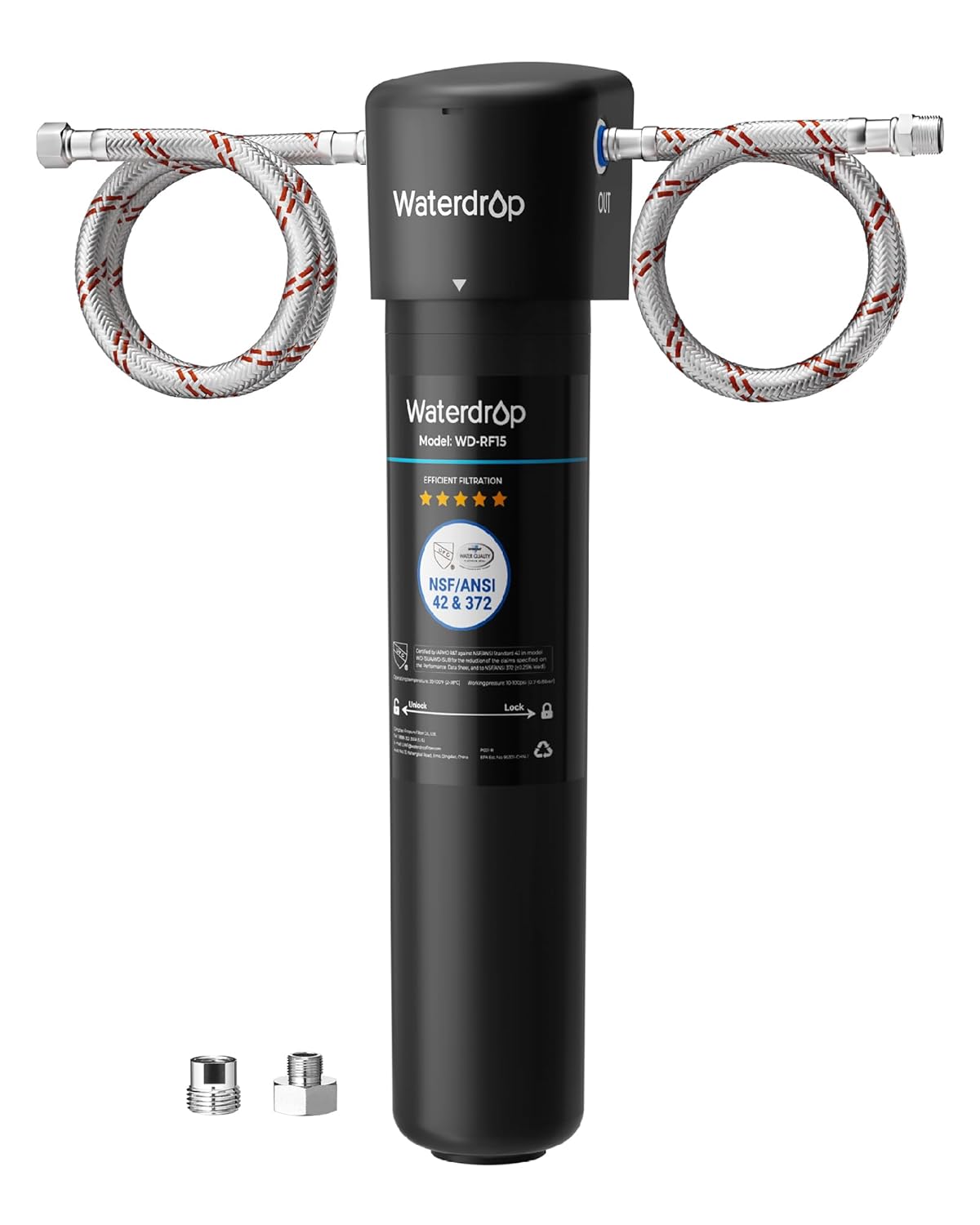
Some are listed for well use, but suitability depends on the well’s specific water quality. Waterdrop’s WHF3T-FG is designed to reduce iron and manganese, while the ICEPURE cartridge listing cautions that well-water sediment may clog it sooner. Review a water test and the manufacturer’s contaminant claims before selecting treatment.
How often should replacement cartridges be changed?
Follow the cartridge maker’s schedule and adjust for water quality and use. PUREPLUS suggests replacement every 3 to 6 months and lists capacity up to 13,000 gallons; ICEPURE recommends about 6 months, also depending on source water. Flush the PUREPLUS cartridge for 5 minutes before use, as its instructions specify.
Will a whole-house filter lower TDS?
No, the listed XINSHUO and iSpring systems state that they retain minerals and do not reduce TDS. Carbon and sediment filtration targets taste, odor, and particles rather than dissolved solids. If reducing TDS is your goal, compare a reverse osmosis system and its specific product claims.
How do I confirm a replacement cartridge will fit?
Match the cartridge dimensions and compatibility list to your existing housing before buying. The PUREPLUS and ICEPURE options are 2.5 by 10 inches and list several compatible models, but a similar size alone does not guarantee a proper fit. For cartridge handling basics, see this guide on removing an old pitcher filter; pitcher cartridges differ from whole-house cartridges.




Write Your Review
No reviews yet. Be the first to share your experience!