


Cleaner-tasting water starts with the right filter
A sharp chlorine taste can make a glass of tap water less appealing, while fluoride reduction often calls for a filter designed specifically for that purpose. The best water filter for fluoride and chlorine removal depends on your water source, preferred setup, and how much maintenance you’re willing to take on. This lineup includes pitcher cartridges, gravity-fed countertop systems, and a reverse osmosis unit, so the filtration approach and replacement schedule matter as much as the product format.
Product specifications describe different media and claims: carbon block, ceramic, fluoride-reduction materials, ultrafiltration, and reverse osmosis. Those approaches aren’t interchangeable, and a filter’s stated lifespan can vary with water quality and use. Check the manufacturer’s performance information for the contaminants you want to reduce, and don’t assume that a taste improvement proves a particular contaminant has been removed. If you’re comparing gravity-fed options, this overview of non-RO water purifiers for home use offers another useful point of reference.
For a pitcher cartridge, also confirm it fits your existing vessel before ordering. This guide to removing an old pitcher filter can help you plan the swap. The product descriptions and listed standards provide a starting point, but households with specific water concerns should review current performance data and consider a water test before settling on a treatment method.



Pros
- Significantly improves the taste and smell of municipal campground hookup and RV tank water
- Tough ABS plastic construction holds up better around camp than fragile acrylic pitchers
- Threaded filter housing prevents untreated reservoir water from leaking into the clean pitcher
- Adds beneficial calcium, magnesium, and potassium for smooth hydration and camp cooking
Cons
- Designed strictly for potable tap, RV, or well water, not for raw backcountry streams or murky lake water
- Pouring can feel clunky and slow if the pitcher is tilted too quickly while the upper reservoir is full
- Filtration speed may slow down over extended use, occasionally requiring a gentle shake to clear trapped air
The Reshape Water 10-Cup Pitcher is a durable countertop water filtration system well suited for camp kitchens, RV galleys, and overland basecamps. While ultralight backpackers depend on hollow-fiber squeeze filters for mountain streams, car campers and road trippers face a distinct problem: heavy chlorine smells, sulfur notes, and metallic tastes from campground spigots and municipal hookups. This pitcher bridges the gap by offering multi-stage purification in a portable container that sits conveniently on an outdoor picnic table or tucks into an RV refrigerator.
This system is ideal for family campers, weekend warriors, overlanders, and camper van enthusiasts who prepare group meals and need steady hydration. It also serves emergency preparedness kits and cabin kitchens dealing with mineral-heavy well water. Budget-conscious outdoor lovers will appreciate the 79-gallon filter lifespan, which saves money and prevents waste by eliminating the need to haul dozens of single-use plastic water bottles to the campsite.
In practical outdoor kitchen use, having 3.5 liters of treated water on hand makes camp chores effortless. Whether you are brewing fresh morning coffee over a dual-burner camp stove or boiling water for campfire pasta, the six-stage filter strips away chemical aftertastes while boosting alkalinity and replenishing trace minerals like magnesium and calcium. Operating entirely on gravity, it needs no campsite electrical hookups or power stations. The digital lid timer operates on an internal cell to track filter duration across seasonal adventures.
Build quality is a strong point for outdoor use where gear often shifts in transport. Made from thick, high-impact ABS plastic that is completely BPA-free, this pitcher resists cracks far better than delicate glass or brittle acrylic carafes. The reservoir features a screw-in cartridge connection, preventing unpurified water from slipping past the seal during bumpy road trips or quick pours. The lid also incorporates a broad thumb rest to help hold the top firmly in place while serving.
Campers should keep a few realistic operational boundaries in mind. This unit is intended for pre-treated municipal taps, RV hookups, and tested well water with a TDS level under 300 PPM. It is not designed to treat raw backcountry water containing giardia or cryptosporidium cysts. User feedback also notes that pouring can feel somewhat heavy and awkward with a single hand when filled to the 3.5-liter brim, making a steady two-handed pour advisable on uneven camp tables.
For car camping weekends, road trips, festival setups, and mobile chuck boxes, the Reshape Water 10-Cup Pitcher is a dependable and practical investment. It turns harsh-tasting campground water into clean, crisp drinking water for the entire crew without cluttering your camp with disposable plastics. If you want dependable hydration and better coffee on your campground getaways, this rugged filter pitcher is a great addition to your camp kitchen bin.
Campground water hookups often vary wildly in taste and mineral quality from park to park. Keeping this pitcher on your camp kitchen prep table ensures your cooking water, coffee, and powdered electrolyte mixes always taste fresh and clean.
The pitcher fits easily into standard RV door shelves, camp cooler corners, and tailgate storage totes. Because it requires zero power or plumbing modifications, it provides an immediate water quality upgrade for camper vans, teardrop trailers, and pop-up campers.
Using a large-capacity pitcher eliminates the bulk and environmental waste of buying disposable plastic gallon jugs at every gas station stop along your road trip.
Before heading out on a trip, prime the filter cartridge by running water through the reservoir twice to clear any loose activated carbon dust.
If water flow slows down during extended trips, remove the cartridge, shake it gently under running tap water to dislodge trapped air bubbles, and thread it firmly back into the reservoir base.
Hand wash the ABS plastic pitcher and reservoir with mild camp soap and warm water between trips. Avoid harsh scrub pads or boiling water to keep the housing in prime condition for your next outdoor excursion.

Pros
- Targets up to 99.9% of difficult contaminants like fluoride, lead, and PFAS from rural or RV park water sources.
- Medical-grade Tritan construction is tough, shatter-resistant, and non-leaching in warm camp kitchens.
- Leaves healthy hydration minerals intact for better-tasting camp coffee and cooking water.
- Long 100-gallon filter life reduces replacement frequency during extended travel seasons.
Cons
- Filtration flow rate is slower than basic carbon pitchers due to dense contaminant-trapping media.
- Requires a priming process with the included flush bag before initial use or after extended storage.
- At 80 ounces full, the pitcher is relatively heavy and best suited for RV, trailer, or basecamp counters rather than mobile trail use.
The Clearly Filtered Water Pitcher is a heavy-duty countertop filtration system built to transform questionable water sources into pure, crisp drinking water. While ultralight backpackers rely on squeeze filters on the trail, family car campers, RV travelers, overlanders, and cabin vacationers often struggle with the heavy chemical smell, chlorine taste, or aging pipe contamination found at public campground hookups and rural spigots. This pitcher provides a reliable camp kitchen solution that targets up to 99.9 percent of over 365 identified tap water contaminants without requiring plumbing modifications or electrical power.
Performance around the campsite centers on the proprietary Affinity Filtration technology. Unlike standard filters that only tackle chlorine odor, this system targets heavy metals such as lead, toxic forever chemicals like PFAS and PFOA, microplastics, arsenic, and fluoride. At the same time, it is engineered to leave behind naturally occurring electrolytes and minerals like calcium and magnesium. For outdoor enthusiasts prepping meals on a camping stove or brewing fresh coffee at sunrise, the difference in water clarity and taste is immediate and noticeable.
Build quality is another crucial factor when gear travels in the back of a truck, camper van, or storage bin. The body is molded from medical-grade Tritan plastic, which is completely free of BPA, BPS, and endocrine-disrupting chemicals. This material resists clouding and withstands the bumps and jolts of mobile camp setups far better than brittle household plastic. The August 2024 update introduces an ergonomic handle designed to balance the pitcher safely when it is filled to its 80-ounce capacity, alongside a secure hinged lid that prevents spills when serving around busy camp tables.
Managing the pitcher in an outdoor or RV setting does require attention to setup details. The filter core requires priming with the included flush bag prior to first use to saturate the media and clear air pockets. Based on product specifications and user feedback, the dense filtration barrier means water trickles through at a slower pace than budget carbon pitchers, often taking twenty to thirty minutes to filter a full reservoir. Campers who plan ahead by keeping the pitcher topped off after dinner will have plenty of clean water ready for morning hydration packs.
For long-term travelers and weekend warriors, the 100-gallon filter lifespan offers substantial convenience, translating to roughly 200 refills before a swap is needed. While the bulk and 2.8-pound dry weight keep it out of backpacking packs, it shines as an essential fixture for overland rigs, teardrop trailers, deer camps, and residential emergency prep kits. It delivers peace of mind whenever you hook up to unfamiliar campground municipal lines, ensuring clean hydration for the whole family without relying on endless packs of disposable plastic bottles.
Integrating a high-capacity filter into your camp kitchen or RV setup eliminates reliance on disposable single-use plastic jugs. Public campground spigots and dump station fresh-water fills frequently carry residual rust, sulfur odors, or heavy chlorine treatments that affect cooking and drinking. Placing this pitcher on your outdoor prep table or trailer countertop allows you to filter water as you need it for rehydrating meals, filling hydration bladders, and washing fresh produce.
Because it operates entirely via gravity without water pressure or electrical pumps, it serves as a dependable backup during off-grid stays and boondocking trips. The compact footprint fits neatly into camper refrigerators or cooler racks, while the sturdy Tritan housing handles temperature swings and regular transport in gear totes without cracking.
Proper priming is essential to ensure a smooth flow rate and full filtration efficacy. The included threaded priming bag attaches directly to the filter cartridge, allowing you to force water through the media using hand pressure to displace trapped air before installing it into the reservoir. If the water flow slows down during extended camping trips, repeating this quick priming process often restores steady filtration.
To maintain peak hygiene in outdoor environments, wash the Tritan pitcher and reservoir by hand with warm water and mild dish soap between trips. The filter cartridge should be kept moist if in regular use, or thoroughly drained and stored in a clean, airtight bag if packed away between camping seasons. Avoid filtering muddy backcountry lake water or silt-heavy creek water, as high particulate matter will prematurely clog the fine affinity matrix.

Pros
- Noticeably improves the taste and odor of municipal campground tap water
- Infuses magnesium rather than dumping sodium into your drinking water
- Fast gravity flow rate keeps camp meal prep moving without long waits
- Certified non-leaching plastic housing withstands life in an overland galley or camp kitchen box
- Comes equipped with a bonus travel water bottle for active day hikes
Cons
- Designed strictly for potable or municipal water sources, not for unfiltered backcountry mud holes or raw wilderness streams
- Modest 1.4-liter capacity requires frequent top-offs when cooking for a large family camp
- Replacement filter cartridges must be ordered ahead before heading out on long overland road trips
The Alkanatur Drops Pitcher serves a distinct purpose in the camp kitchen setup, bridging the gap between wilderness survival gear and full-comfort outdoor living. While ultralight backpackers rely on squeeze filters for remote mountain creeks, car campers, RV road trippers, and overlanders face a completely different hydration hurdle: campground spigots and park hookups that smell strongly of chlorine, sulfur, or old galvanized pipes. This remineralizing pitcher takes tap-grade campground water and refines it into crisp, clear, mineral-balanced drinking water right at your picnic table.
This filtration system is best suited for travel trailer owners, camper van builders, overlanders, cabin travelers, festival campers, and family car campers who want to eliminate pallets of single-use plastic bottles from their packing list. If you find yourself staging a full camp kitchen on tailgates or under awnings, having reliable, fresh-tasting water on hand elevates your morning coffee, rehydrated camp meals, and daily hydration without relying on town water runs.
Filtration performance is centered around high-density activated coconut carbon paired with bioceramic alkalizing media. Operating without standard ion-exchange resins that typically trade water hardness for sodium, this system removes impurities like chlorine, microplastics, and heavy metals while actively releasing bioavailable magnesium and preserving potassium. The water emerges with an alkaline pH between 8.5 and 9.5 and a clean, light profile that encourages steady fluid intake during hot afternoons on the trail.
Built from heavy-duty, food-grade plastic certified free of BPA, phthalates, and endocrine disruptors, the pitcher measures roughly 9 by 5 by 12 inches and weighs under two pounds empty. The slender profile slips easily into compact 12-volt overland refrigerators, standard RV door shelves, or alongside ice blocks in a heavy-duty cooler. Its separate reservoir engineering ensures that you can pour filtered water immediately without waiting for the top chamber to finish dripping, a practical detail when boiling a quick kettle at sunrise.
A realistic limitation is that this system is engineered for biologically safe potable water with total dissolved solids under 500 PPM. It is not an outdoor survival purifier for murky standing ponds or backcountry streams laden with giardia or cryptosporidium cysts. Furthermore, with a 1.4-liter lower chamber, large camp crews will need to refill it multiple times when prepping large pots of pasta or filling several bladders at once.
For weekend warriors, cross-country RV travelers, and campsite cooks wanting restaurant-quality drinking water on the road, the Alkanatur Drops Pitcher delivers dependable filtration and exceptional mineral flavor. It is a smart, low-waste addition to your vehicle camping checklist that makes campsite spigot water truly refreshing to drink.
Water quality impacts every aspect of camp cooking, from the aroma of your morning pour-over coffee to the flavor of simmering stews on your dual-burner stove. Standard campground spigots often deliver water with strong chemical treatment odors, heavy mineral deposits, or stale pipe taste that carries over into your food. Passing that water through the Alkanatur pitcher strips away unwanted chlorine and lingering odors, leaving a neutral, mineral-rich base that lets your camp meals taste their best.
The flow rate through the activated coconut charcoal is notably rapid compared to dense ceramic survival filters, meaning you will not be stuck waiting around when refilling cookware. Thanks to the independent dual-basin design, you can tilt and pour water for your skillet while the top chamber is still actively filtering another batch. This saves valuable time during busy camp breakfast prep or quick dinner wind-downs after sunset.
Maintaining the Alkanatur Drops Pitcher around camp requires minimal effort to ensure long filter life and fresh water. When packing for a trip, keep the pitcher nestled upright inside a padded camp kitchen tote or vehicle bin to prevent heavy cast iron or fuel canisters from scratching the clear plastic housing. Wash the pitcher body with mild camp soap and warm water between journeys, taking care not to expose the filter cartridge itself to soapy dishwater.
Each cartridge is rated for approximately 106 gallons (400 liters), which comfortably spans several months of weekend camping trips or long seasonal RV travel. If storing the unit between camping seasons, remove the filter cartridge, allow it to dry thoroughly, and store the pitcher in a clean, dry location out of direct sunlight to protect the plastic from unnecessary UV exposure.

Pros
- Restores beneficial minerals and elevates pH for crisp, non-flat tasting drinking water.
- No electrical power required, functioning reliably on standard 40-85 PSI line pressure.
- Includes a bonus replacement set of stages 1 to 3 pre-filters for extended maintenance cycles.
- High 75 gallon per day production easily handles the hydration needs of entire families and groups.
- Standard 10-inch filter housings allow easy sourcing of generic replacement cartridges in rural areas.
Cons
- Requires a pressurized water line between 40 and 85 PSI, so it cannot draw directly from unpressurized backcountry streams without a separate pump.
- Stationary under-sink installation makes it better suited for RVs, camper conversions, and cabins rather than lightweight backpacking or tent camping.
- Generates standard reverse osmosis wastewater discharge during the purification process.
The APEC ROES-PH75 Essence Series is a comprehensive 6-stage under-sink reverse osmosis water filtration system engineered to produce bottled-quality drinking water right from the tap. While traditional backpackers rely on squeeze filters or gravity bags on the trail, large-scale outdoor adventurers, RV campers, cabin owners, overlanders with plumbed rigs, and emergency preppers require a heavy-duty, high-capacity purification solution. This system is designed to treat municipal or pressurized well water, making it a reliable water hub for filling canteens, camp cook pots, and hydration bladders before heading into the backcountry.
Hydration is critical during long days of hiking, chopping firewood, or setting up camp in warm weather. The ROES-PH75 tackles water quality by pushing water through a semi-permeable membrane that strips away up to 99 percent of contaminants, including chlorine, lead, fluoride, heavy metals, and arsenic, while handling up to 2000 ppm total dissolved solids. Because pure reverse osmosis water can sometimes taste flat or acidic, this unit features a dedicated sixth-stage remineralization cartridge that reintroduces food-grade calcium. Based on user feedback, this stage raises the pH to a slightly alkaline level, delivering crisp, refreshing water that dramatically improves morning camp coffee, freeze-dried meal prep, and daily electrolyte replenishment.
Reliability matters when you are staying in remote campsites or relying on gear during severe weather emergencies. The system relies purely on existing water line pressure between 40 and 85 PSI, meaning it requires no electrical hookup to operate. The heavy-duty polypropylene housings and quick-connect fittings are built to prevent leaks under continuous pressure, and the entire assembly carries WQA Gold Seal certification for material safety and structural integrity. The package also includes a dedicated metal storage tank, a lead-free faucet, color-coded tubing, and a bonus set of stages 1 through 3 pre-filters, providing extra consumables for remote cabins where hardware stores are miles away.
Maintaining clean water systems in an RV, hunting camp, or family cabin is straightforward thanks to standard 10-inch cartridge sizes. The pre-filters generally require swapping every 6 to 12 months, while the core RO membrane lasts between two to four years depending on feed water clarity. When prepping an RV or unheated seasonal shelter for freezing winter temperatures, users should note that the system, storage tank, and housings must be fully drained to prevent frost damage. The quick-connect fittings allow for fast detachment, enabling owners to unhook the system in minutes and store it in a temperature-controlled space during harsh winter months.
Despite its high filtration capability, the ROES-PH75 has distinct operational boundaries that campers must plan around. It is not a portable field filter for scooping lake water into a canteen on the trail; it demands a pressurized plumbing line to force water through the microscopic membrane. In situations where well or RV tank pressure drops below 40 PSI, the system may run slowly or continuously, which some users resolve by pairing it with an auxiliary booster pump. Additionally, like all reverse osmosis systems, it discharges reject water through a drain line, which should be considered by anyone monitoring tight greywater holding tank capacities.
For overlanders outfitting a camper van, families maintaining an off-grid vacation cabin, and survivalists building a reliable home emergency water cache, the APEC ROES-PH75 delivers exceptional water purity and taste. Its generous 75-gallon daily production capacity easily keeps a campsite full of water bottles, hydration reservoirs, and cooking kettles topped off with pristine alkaline water. If your outdoor lifestyle includes a stationary basecamp, travel trailer, or emergency storm bunker with a pressurized supply, this value bundle offers lasting peace of mind and delicious drinking water.
Installing the APEC ROES-PH75 in an RV, travel trailer, or basecamp kitchen requires dedicated space under the counter for both the filter manifold and the water storage tank. The main manifold measures approximately 17.5 inches tall by 15.5 inches wide by 5.25 inches deep, while the storage tank stands 15 inches high with an 11-inch diameter. Securing the tank and filter bracket firmly to cabinet walls helps protect the connections from vibration during travel over bumpy washboard dirt roads.
Campers operating on private wells or 12-volt RV water pumps should ensure their plumbing can consistently sustain at least 40 PSI of water pressure. In setups where pressure fluctuates or runs low, pairing the system with a mechanical permeate pump or electric booster pump will maintain an efficient 75 gallon per day production rate and minimize wastewater generation.
The six-stage filtration architecture begins with a high-capacity sediment filter to capture dirt, rust, and silt, followed by two extruded carbon blocks that eliminate chlorine, odors, and chemical tastes. The water then passes through the advanced 0.00000004-inch reverse osmosis membrane to filter heavy metals and microscopic impurities, followed by an alkaline remineralization cartridge and a final refining coconut shell carbon filter.
For optimal performance at remote camps or cabins, pre-filters should be replaced every 6 to 12 months, especially when processing high-mineral well water. Using the included housing wrench makes filter swaps quick and tool-free. Seasonal camp owners must thoroughly drain all water housings and the storage tank prior to the first hard freeze to safeguard the membrane and housing from expanding ice.
FAQs
Can a carbon block filter reduce both fluoride and chlorine?
Some products are designed to address both, but the media and performance claims differ by model. The Epic Pure replacement uses a carbon block and lists fluoride and chlorine reduction; check its published data for the specific claims relevant to your water. A standard carbon filter shouldn’t be assumed to reduce fluoride unless the manufacturer explicitly says so.
Which option lists a specific fluoride reduction rate?
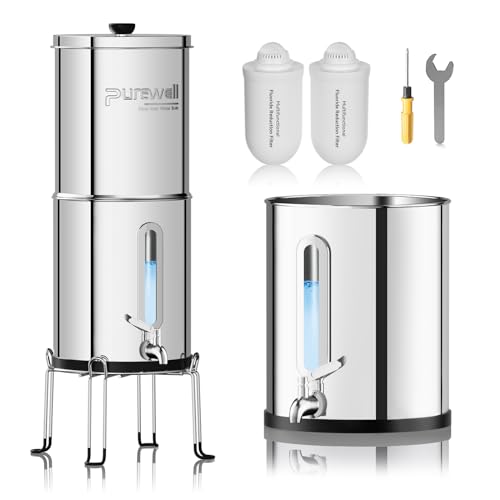
The Purewell Upgraded 9-Stage Gravity Water Filter and Purewell 8-Stage PF-4&FL-2 Purification Elements list up to 90% fluoride reduction. Treat that as a manufacturer claim, and consult the product’s supporting performance information for conditions and test details. The Purewell gravity system also states that it does not lower TDS.
How often do these filters need replacement?
Schedules depend on the product and its rated capacity. Listed examples include 100 gallons for Epic Pure, up to 100 gallons for Clearly Filtered, and up to 79 gallons or 75 days for the Reshape pitcher filter. Follow the product’s instructions, since water quality and household use can affect service life.
Does a gravity filter need an electrical connection?
No, the listed countertop systems use gravity-fed filtration rather than an electrical pump. Purewell includes a water-level window and 0.01μm hollow fiber ultrafiltration membrane, while Filteroo lists a 16-liter capacity and a 304 stainless steel body. Allow time for gravity filtration, and avoid refilling the upper chamber when the lower container is full if the product instructions warn against it.
Is reverse osmosis a suitable choice for fluoride and chlorine?
The APEC ROES-PH75 is a six-stage reverse osmosis system that lists fluoride and chlorine among the impurities it is designed to reduce. It also includes a calcium mineral stage, and its listing specifies a 75 GPD rating. Confirm installation needs, feed-water conditions, and replacement schedules before buying.
Do these filters remove sediment as well as chemical tastes?
Some listed systems address both, but their designs vary. Purewell describes mesh and PP cotton layers for intercepting rust and sediment alongside its other media; its description also lists chlorine and fluoride reduction. A sediment stage alone does not establish reduction of dissolved contaminants, so check each product’s stated performance claims.
Should I pick a pitcher, countertop system, or under-sink filter?
Choose a pitcher for a compact, manually refilled setup, a gravity countertop unit for larger stored capacity without plumbing, or an RO system if you’re prepared for an under-sink installation. Compare filter life, replacement availability, claimed contaminant reductions, and space requirements. For additional context on this category, see our inline RV water filter installation guide.




Write Your Review
No reviews yet. Be the first to share your experience!