

Backcountry trails and remote campsites often promise crisp, untouched nature, but clear stream water can quietly hide synthetic residues. Filtering water pumped from mountain streams or primitive campground spigots demands more than catching floating silt and leaves. Grabbing the best water filtration system to remove microplastics gives you peace of mind when settling in for a long weekend off the grid. Clean hydration keeps morale high, whether you are boiling water for freeze-dried trail meals or filling hydration reservoirs before a grueling morning ascent. Learning how does portable water purifier work helps campers understand how ultrafiltration membranes trap suspended particulates down to sub-micron dimensions.
Settling into camp after a long trek with heavy pack fatigue makes reliable, low-maintenance gear an absolute necessity. Nobody wants to wrestle with finicky pump handles or watch flow rates stall while dinner sits waiting. Modern gravity systems and portable reverse osmosis units deliver pure water without hogging critical trunk space or adding unnecessary pack weight. For campers who also use pitchers in their camper vans or cabins, understanding how to install water filter pitcher cartridge easily ensures smooth, leak-free operation. Careful analysis of product specifications and manufacturer micron ratings shows that reliable microplastic filtration technology makes all the difference for outdoor health.

Pros
- Fast 600 GPD continuous flow dispenses purified water quickly without waiting on a bulky storage tank
- Ultra-slim 5-inch width fits neatly alongside plumbing inside tight RV galley cabinets or tiny home kitchens
- Excellent 2.5:1 pure-to-drain efficiency significantly cuts down on wastewater production
- Smart monitoring faucet provides clear visual alerts before filter cartridges require replacement
Cons
- Requires an active 110V power source under the sink, which may necessitate an inverter for off-grid camper vans
- Demands dedicated countertop and drain pipe drill holes during initial setup
- Weighs roughly 20 pounds, making it suited strictly for vehicle, cabin, or home basecamp installations
The ECOVIVAWATER E6 600 GPD System is an under-sink tankless reverse osmosis water filter engineered to provide high-purity drinking water on demand. Designed with a streamlined, self-contained cabinet, this unit eliminates the bulky pressurized storage bladder typical of older reverse osmosis designs. For outdoor enthusiasts who maintain a basecamp cabin, a mobile RV galley, or a dedicated overland rig, having a dependable water purification system is essential when tapping into unpredictable rural well systems or unfamiliar campground hookups.
This filtration system is particularly well suited for RV campers, full-time travelers, weekend warriors with lake cabins, and family campers who prefer filling high-capacity water jugs at home before setting off on extended trips. It also serves as a robust emergency preparedness asset for homeowners seeking reliable home water filtration during municipal boil-water advisories or severe storm events. Outdoor cooks and campers who prioritize clean-tasting water for brewing trailside coffee and cooking campfire meals will appreciate the consistent mineral and contaminant reduction.
In real-world performance terms, the 600 GPD rating translates to filling an average drinking glass in about six seconds. This rapid flow rate eliminates the tedious downtime usually associated with under-sink purifiers, making quick work of topping off multi-liter hydration bladders and camp cook pots. The 9-stage filtration process incorporates a dense 0.0001-micron RO membrane tested against NSF and ANSI 42 and 58 standards, effectively targeting heavy metals, fluoride, chlorine taste, and high total dissolved solids. Furthermore, the unit features an exceptional 2.5:1 pure-to-drain ratio, producing far less wastewater than traditional RO filters, which is a major benefit when monitoring RV gray water holding capacity.
Build quality is clean and durable, housed in a sealed composite shell measuring 16.5 inches long, 5 inches wide, and 12.2 inches high. Its slim footprint allows it to slide cleanly against an RV vanity or kitchen cabinet wall while leaving ample space for cookware, cleaning supplies, and greywater pipes. The included smart faucet is finished neatly, swivels a full 360 degrees for versatile sink clearance, and features an integrated LED indicator that lights up to signal filter status before you take off on a long road expedition.
Installation is straightforward for anyone comfortable with basic DIY plumbing, though it does require standard connections including a 1.14-inch countertop hole for the faucet, a drain line hookup, and access to a standard electrical outlet. Maintenance is simple thanks to quick-twist filter housings that can be swapped out in seconds without tools. The unit is supported by a 5-year manufacturer warranty, offering solid peace of mind for long-term ownership.
For RV owners, overlanders with shore power setups, cabin owners, and preparedness-minded campers, the ECOVIVAWATER E6 offers an efficient, space-conscious solution to drinking water safety. While it requires 110V power and permanent plumbing placement, its fast flow rate, high filtration standard, and minimal wastewater output make it a worthy investment for reliable hydration both at home and on the road.
Installing a tankless reverse osmosis system in a mobile living space requires careful attention to footprint and power needs. The ECOVIVAWATER E6 excels in compact environments due to its slender 5-inch profile, fitting into galley cabinetry where standard bulky expansion tanks cannot go. This preserves valuable under-counter space for camp cooking equipment, dry food bins, and greywater plumbing runs.
Campers operating in travel trailers or camper vans should verify that a 110V AC power outlet is accessible near the plumbing bay. For off-grid camping off solar or lithium batteries, running the unit through a small inverter provides effortless on-demand filtration at the turn of the faucet. The 2.5:1 pure-to-drain efficiency is especially beneficial for mobile rigs, minimizing the speed at which your wastewater holding tanks fill up during extended stays at dry campsites.
Campground spigots and rural well lines often carry heavy sediment, chlorine, rust, and elevated dissolved mineral counts that spoil taste and pose long-term health concerns. The E6 employs a 9-stage filtration architecture anchored by a 0.0001-micron reverse osmosis membrane to strip out lead, arsenic, fluoride, and microscopic impurities, producing crystal-clear drinking water.
With a fast delivery speed of 600 gallons per day, you get immediate water pressure without the pressure loss common in traditional tank-based systems as they deplete. The smart LED faucet provides an active monitor on your filter life, ensuring you never leave for an extended wilderness getaway with expired filter cartridges.

Pros
- Extremely lightweight and compact at just two ounces for minimalist packing
- Versatile connection threads onto standard 28mm disposable water bottles and hydration bladders
- Huge 100,000-gallon capacity ensures years of reliable outdoor hydration
- High-level 0.1 micron absolute filtration eliminates bacteria, protozoa, and microplastics
- Straightforward field maintenance with the included backflush cleaning syringe
Cons
- Slower flow rate compared to full-sized squeeze filters, requiring extra patience and hand pressure
- Must be protected from freezing weather once wet to avoid damaging the internal hollow fibers
- Does not filter out viruses, heavy metals, or chemical pollutants
The Sawyer MINI Water Filtration System is a staple in the backcountry community, designed to turn freshwater streams, alpine lakes, and questionable tap sources into clean, safe drinking water. Weighing roughly two ounces, this palm-sized hollow fiber filter serves as an essential companion for ultralight backpackers, day hikers, scouts, solo trekkers, and emergency preppers assembling bug-out bags. Its diminutive size makes it easy to stow away in a trail vest pocket or a vehicle console without sacrificing pack space.
At the core of the Sawyer MINI is a 0.1-micron absolute hollow fiber membrane that utilizes technology similar to medical dialysis. As untreated water passes through the porous walls of the micro-tubes, physical contaminants including bacteria such as E. coli and Salmonella, protozoan cysts like Giardia and Cryptosporidium, and microplastics are physically barred from passing through. While this mechanical filtration excels against backcountry biological threats, outdoor adventurers should keep in mind that hollow fiber filters do not remove heavy metals, dissolved chemicals, or viruses, which generally require secondary chemical treatment or specialized purifiers for international travel in high-risk regions.
Versatility is one of the filter's strongest suits. Built with standard 28mm threads, the Sawyer MINI screws directly onto common plastic disposable water bottles, collapsible squeeze pouches, and inline bladder hoses. You can also attach the included drinking straw to sip directly from a wilderness creek or lake. This adaptable design allows solo hikers to scoop water into a bottle on the move and drink immediately without waiting for chemical tablets to dissolve, streamlining hydration along extended trails.
Maintaining the Sawyer MINI in the field is straightforward using the included cleaning syringe. When filtering silty or tannin-rich water, the flow rate can slow down, but backflushing clean water in reverse through the nozzle dislodges trapped debris and restores water flow up to 98% of its original rate. Because the filter uses water-filled microscopic fibers, it is critical during cold shoulder-season or winter camping trips to store the wet filter inside a jacket pocket or sleeping bag footbox overnight, as freezing temperatures can expand the water inside and compromise the fiber structure.
For weekend warriors, thru-hikers covering hundreds of trail miles, and family campers building a reliable emergency preparedness kit, the Sawyer MINI offers exceptional reliability in a compact package. Its remarkable 100,000-gallon lifespan and simple mechanical operation provide peace of mind across rugged mountain routes, scenic forest trails, and unexpected weather emergencies.
Tipping the scales at a mere two ounces, the Sawyer MINI is engineered for hikers and travelers who prioritize low base weight. Its compact footprint tucks effortlessly into running vests, hip belts, first aid kits, or everyday carry pouches.
Because it operates without heavy batteries, moving parts, or bulky pump mechanisms, it drastically cuts pack weight compared to traditional camp pump systems while still providing reliable point-of-use filtration.
Regular backflushing with the included cleaning plunger is key to maintaining steady flow rates and prolonging filter performance over time. Always flush the unit with clean, filtered water after returning from muddy or sediment-heavy water sources.
Before long-term home storage, sanitize the filter with a light bleach solution, allow it to air dry thoroughly, and store it in a temperature-controlled area to protect the internal hollow fibers from physical or thermal damage.

Pros
- Removes biological threats including bacteria and parasites alongside heavy metals and microplastics
- Large 18-cup volume minimizes constant refilling during group meals and family campouts
- Smooth, one-handed dispensing spigot makes filling camp cookware and hydration bladders hassle-free
- Durable BPA-free housing is lightweight at just 2.6 pounds when empty for straightforward vehicle packing
Cons
- Activated carbon core requires regular replacement every 40 gallons to maintain peak chemical reduction
- Rigid body requires dedicated packing space inside vehicle trunks or gear totes
- Microfilter pore size results in a slower gravity flow rate compared to standard non-purifying pitchers
The LifeStraw Home 18-Cup Water Filter Dispenser is a high-capacity basecamp filtration system designed to supply clean, crisp water wherever you pitch your tent or park your camper. While engineered for household countertops and refrigerator shelves, its generous 1.1-gallon volume and advanced multi-stage purification make it a versatile asset for car campers, RVers, and outdoor cooking enthusiasts. Instead of buying and packing multiple plastic water jugs for a weekend trip, this dispenser allows groups to convert campground spigots or rustic park taps into safe, clean drinking water.
This hydration unit is best suited for family campers, RV travelers, overland adventurers, tailgate hosts, and emergency preparedness planners. Solo backpackers and lightweight hikers will find this rigid dispenser too bulky for a trail pack, but for anyone running a fixed camp kitchen, it shines. Having 18 cups of purified water on tap at your campsite picnic table simplifies boiling water for morning coffee, prepping backcountry freeze-dried meals, and keeping kids hydrated throughout hot outdoor afternoons.
Filtration performance is where the LifeStraw Home outclasses conventional gravity pitchers. It utilizes a dual-stage filtration approach: an advanced membrane microfilter that blocks bacteria, parasites, and microplastics, paired with an activated carbon and ion-exchange filter that reduces lead, mercury, chlorine, and synthetic PFAS chemicals. When camping at public recreation sites where well water or aging campground plumbing can leave an unpleasant sulfurous or chlorinated taste, this system notably improves water clarity and flavor while keeping beneficial natural minerals intact.
Built from lightweight, BPA-free plastic, the dispenser weighs only 2.6 pounds when empty and measures 14.44 inches wide by 6.44 inches deep by 9.44 inches tall. This streamlined, low-profile footprint fits comfortably into camp coolers, RV mini-fridges, or along the corner of a folding camp kitchen table. The smooth-action dispensing tap can be operated with one hand, allowing you to fill a camp kettle or hiking flask with ease, while the top lid pulls off cleanly for refills from campground hydrants or fresh water containers.
Care and routine maintenance are practical for regular campers. The primary microfilter membrane is rated for up to 264 gallons, providing roughly a full year of safe drinking, while the carbon and ion exchange filter lasts approximately 40 gallons, or around two months of frequent use. Campers should protect the unit from freezing temperatures, as ice expansion can compromise the delicate microporous membrane. In addition, because the filtration pores are dense enough to trap microplastics and bacteria, the flow rate is measured and deliberate rather than instant.
For outdoor families, overland travelers, and weekend campers seeking reliable water filtration without recurring plastic bottle waste, the LifeStraw Home 18-Cup Dispenser offers exceptional value. It delivers the same protective standards trusted by backcountry explorers in a convenient, high-capacity format that effortlessly elevates any camp kitchen setup.
Setting up an organized camp kitchen requires gear that balances capacity with compact space efficiency. The LifeStraw Home 18-Cup Dispenser measures under seven inches wide, allowing it to slide into narrow RV galleys, tailgate slide-outs, or camper van storage nooks without claiming valuable prep space.
The push spigot design works smoothly on elevated surfaces, meaning you can place the dispenser on the end of a picnic table or tailgating bench for easy self-serve hydration. Whether you need clean water for washing fresh vegetables, filling pet dishes, or brewing campfire percolator coffee, having safe water readily accessible enhances outdoor food prep and comfort.
Maintaining the LifeStraw Home Dispenser between camping trips ensures long filter life and optimal water flow. The plastic reservoir should be hand-washed with mild soapy water, taking care not to expose the microfilter cartridge directly to harsh detergents or scalding water.
When packing gear away between camping seasons, remove the filter components and let the dispenser dry thoroughly. To avoid microscopic damage to the filter fibers, never allow the internal membrane to freeze while wet, especially when camping during late autumn or winter mountain trips.

Pros
- Exceptional contaminant removal certified by third-party testing
- Long filter life reduces maintenance during long camping trips
- Retains beneficial minerals for great taste
- Eco-friendly filter recycling program
- Fits well in most RV refrigerators and camp kitchens
Cons
- Pitcher design can be bulky for backpacking – better for car camping or RV
- Some users report slow filtration rate after initial use
- Plastic construction may not be as durable as stainless steel alternatives
The Aquagear Water Filter Pitcher is a water filtration system designed for home use but equally suited for camping and RV adventures. Unlike portable straw or pump filters, this pitcher serves as a reliable source of clean water at base camp, in your RV kitchen, or on the picnic table at a family campsite. With a 10-cup capacity, it's perfect for cooking, drinking, and filling hydration bladders for day hikes.
This pitcher is best suited for family campers, car campers, RV campers, overlanders, and weekend warriors who have access to tap water or a large water reservoir at camp. It's not designed for backpacking due to its weight and size, but for stationary camp setups, it's a game-changer. The filter life of 120 gallons means you can go six months without a replacement filter, making it ideal for extended seasonal camping trips.
According to product specifications and user feedback, the Aquagear removes 99.9% of chlorine, 99.35% of lead, 99.95% of PFOA, 99.98% of PFOS, and 99.99% of microplastics – all contaminants that can be found in municipal or well water at campgrounds. It also reduces trace pharmaceuticals and VOCs. Unlike many filters, it retains essential minerals like calcium and magnesium, so your water doesn't taste flat. Users consistently report a noticeable improvement in taste and odor.
Build quality is solid: the pitcher is made of BPA-free plastic with a durable construction, and the filter media is manufactured in an ISO 9000 facility in the USA. The company also includes a postage-paid label to recycle used filters, which is a nice touch for eco-conscious campers. The auto-closing lid helps keep dust and bugs out when the pitcher is on the camp table.
Some realistic limitations to consider: the pitcher is not lightweight – it weighs 2.3 pounds empty, so it's not ideal for backpacking. A few users mention that filtration slows down after a few weeks, requiring occasional cleaning. The spout design can cause water to dribble if you pour too aggressively, so a steady hand is needed. Also, the plastic flap around the fill hole may develop mold if not cleaned regularly, especially in humid camping environments.
Overall, the Aquagear Water Filter Pitcher is a smart investment for campers who prioritize water quality. If you're car camping, RVing, or setting up a semi-permanent camp, this pitcher will provide consistently clean water that tastes better than bottled water. Combined with the long filter life and recycling program, it's a practical, eco-friendly choice for outdoor enthusiasts who want to stay hydrated without the waste.
The Aquagear uses a multi-stage activated carbon and ion exchange resin filter to target a wide range of contaminants. It is certified under NSF 42, 53, 401, and P473, meaning it reduces chlorine taste and odor, lead, emerging contaminants, and PFOA/PFOS. Lab testing shows it removes 99.96% of chlorine, 99.35% of lead, 99.95% PFOA, 99.98% PFOS, and 99.99% microplastics. Importantly, it keeps beneficial minerals like calcium and magnesium in your water, so you get healthy, great-tasting water. This makes it especially valuable for campers who rely on treated campground water or suspect their RV's fresh tank has off-flavors.
At 11 x 6 x 11 inches and 2.3 pounds, the Aquagear pitcher is compact enough to store in an RV cabinet or on a camp table. It's not for backpacking – it's too heavy and bulky – but for car camping, glamping, or RV life, it's very convenient. The manual winding power source is just the pour – no batteries or electricity needed. The 10-cup capacity is ideal for a family of four for a day of drinking and cooking. Just fill the top reservoir, let it filter (about 10-15 minutes per full pitcher), and enjoy. The included sticker helps you avoid overfilling.
Each filter lasts 120 gallons, which is about three times longer than standard pitcher filters. At $69.95 for the pitcher (one filter included), the cost per gallon is very low over time. Replacement filters are reasonably priced, and the company offers a subscription that saves an additional $10 per filter. Plus, the filter recycling program included with every purchase means you're not adding to landfill waste. For campers who want to reduce plastic bottle use and enjoy clean water on every trip, the Aquagear offers excellent long-term value.
Pros
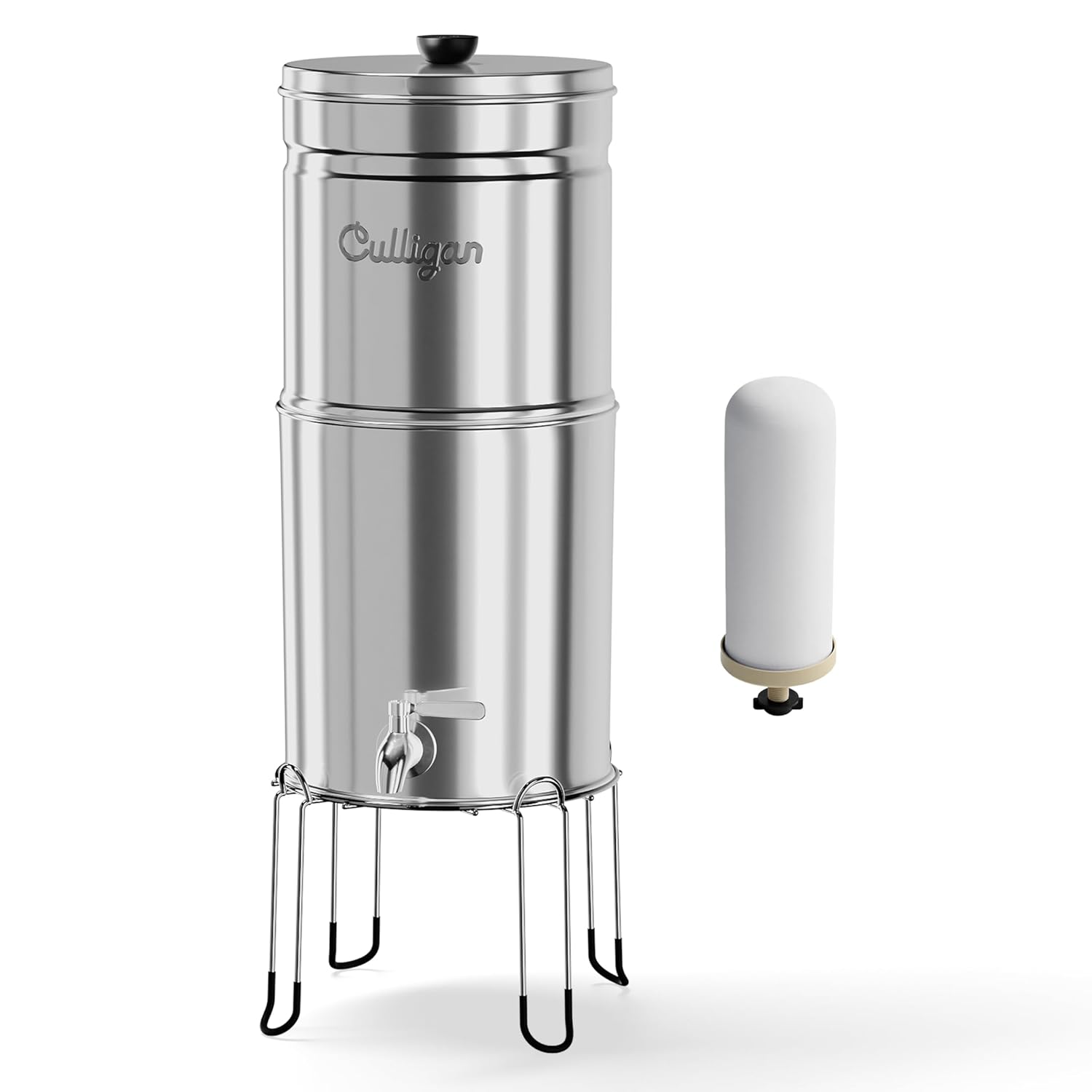
- Rugged stainless steel chambers nest down to under 12 inches for convenient packing in car trunks and camper storage bins
- Completely gravity-powered operation requires zero electricity, hand pumping, or municipal water pressure
- Universal chamber sizing works with Culligan, Berkey, and multiple third-party replacement gravity filters
- Ships complete with a matching stainless steel stand and durable metal spigot right in the box
Cons
- Single-filter flow rate requires patience and is best suited for slow, overnight filling sessions
- Packed weight near ten pounds restricts this system strictly to vehicle-supported camping rather than backpacking
- Does not reduce total dissolved solids (TDS), which can leave harmless mineral scale when boiling hard water
The Culligan MaxClear 2.25 Gallon Gravity Water Filter System is a rugged, countertop-style filtration station tailored for family basecamps, overlanders, RV boondockers, cabin weekends, and emergency preparedness. Operating entirely without electricity, water pumps, or plumbing connections, this gravity-fed setup turns suspect municipal hookups, campground spigots, or hauled water supplies into clean, crisp drinking water. For outdoor cooks gathering around the camp kitchen at sunrise, having over two gallons of ready-to-pour water on tap eliminates the constant chore of buying single-use plastic jugs or hiking back and forth to the park pump.
Performance hinges on its combination of a porous ceramic outer shell and an activated granular carbon core. Certified to NSF/ANSI standards for reducing lead, microplastics, and total PFAS forever chemicals, the system tackles both chemical runoff and fine physical impurities. Because gravity filtration relies on natural water weight pushing down through dense ceramic pores, filtration takes patience. Filling the full 2.25-gallon capacity with a single filter installed can take several hours, making an overnight fill standard operating procedure for basecamp crews. It is worth remembering that ceramic filters do not strip dissolved minerals like calcium or magnesium, so total dissolved solids (TDS) meter readings will remain steady even while harmful contaminants are successfully filtered out.
Build quality is anchored by polished stainless steel upper and lower reservoirs that easily handle the bumps and scrapes of outdoor living. Unlike plastic dispensers that turn brittle in cold weather or degrade under intense sun exposure, this steel housing resists corrosion and shields stored water from UV rays. Culligan includes a solid stainless steel spigot rather than a fragile plastic push-button valve, minimizing leaks on camp tables. The included matching stand elevates the spigot just high enough to slip a wide-mouth water bottle, camp mug, or coffee kettle underneath without teetering over the edge of a picnic table.
Transporting large water dispensers can be awkward in a packed rig, but this system utilizes a smart nesting design where the upper tank slides directly into the lower chamber. Packed down, the entire unit stands under 12 inches tall, allowing it to slide into overland storage drawers, vehicle trunks, or gear bins alongside camp stoves and cookware. The system is also broadly compatible with standard 9-inch gravity elements, including Berkey Black and Boroux replacement filters. When mineral buildup or silt slows down the flow rate, cleaning requires nothing more than wiping the stainless chambers and lightly scrubbing the ceramic filter exterior with a clean scouring pad under running water.
While this setup shines around established camps and off-grid retreats, weight and size represent clear boundaries. Tipping the scales near ten pounds empty, this is strictly a vehicle-based solution, completely unsuited for backpacking treks or remote hiking shelters. Basecamp cooks should also consider adding extra filter elements into the secondary ports if their crew requires high-volume throughput for frequent meal prep. For car campers, off-grid homesteaders, cabin enthusiasts, and families wanting a reliable gravity filtration station that does not rely on power grids, the MaxClear offers a sturdy, dependable solution that earns its keep in any extended camp kitchen.
In an active camp kitchen, having clean water on tap is just as important as having fuel for the stove. The 2.25-gallon volume holds enough purified water to handle morning coffee rounds, oatmeal prep, hydration bladder refills, and basic camp dishwashing without constant refilling trips to the campground spigot. Setting up the unit on the corner of a folding camp table turns it into an intuitive self-serve hydration station for the whole family.
Because the system operates entirely off gravity, it functions flawlessly during remote dry camping trips, off-grid overland journeys, or severe weather power outages at home. Campers simply pour untreated water into the top reservoir and let gravity slowly pull it through the ceramic media into the lower holding chamber. For groups wanting faster turnaround times during heavy meal prep, utilizing the additional chamber ports to run two or three filters simultaneously significantly boosts the drip rate.
Despite standing 26 inches tall when fully assembled on its wire stand, the MaxClear packs down remarkably small for travel. Inverting the upper reservoir allows it to nest completely inside the lower body, collapsing the overall height down to under a foot. This compact profile fits easily into plastic gear totes or beneath sleeping platforms in converted camper vans. To protect the ceramic filter element from jarring vibrations on rough gravel backroads, packing the filter separately inside a padded cloth or pouch is recommended.
Routine maintenance out in the field is straightforward and requires no specialty chemicals. The polished stainless steel surfaces wipe clean with a camp towel, resisting grease and outdoor dust. If filtering silty water causes the drip rate to slow down over time, taking out the ceramic element and gently scrubbing the outer surface under clean water removes trapped particulates and restores proper flow.

Pros
- True plug-and-play design requires zero plumbing connections or faucet modifications
- Advanced 0.0001-micron RO filtration paired with UV sterilization provides reliable purification
- High 4:1 pure-to-drain ratio conserves water significantly better than standard under-sink systems
- Convenient preset dispensing sizes easily fill standard camp cups, water bottles, and cook pots
Cons
- Requires access to standard electric power or a heavy-duty portable power station
- At 18 pounds empty, it is designed for vehicle transport rather than backcountry backpacking
- Internal booster pump creates noticeable operating vibration and hum during filtration cycles
The SimPure Y7P-BW represents a major upgrade for camp kitchen setups, RV travelers, and cabin retreats where tap or well water quality is uncertain. Unlike complex under-sink reverse osmosis rigs that demand custom plumbing, this countertop unit works right out of the box with zero installation required. It operates via an independent 1.3-gallon water reservoir and a corded electric pump, making it a reliable hydration centerpiece for basecamps, travel trailers, and off-grid cabins equipped with AC power sources or high-capacity portable power stations.
This filtration system is particularly well-suited for RV campers, overlanders, family campground vacationers, and emergency preparedness enthusiasts who want bottled-quality drinking water without hauling heavy plastic crates to the campsite. Because it handles incoming water with TDS levels up to 500 PPM, it is equally valuable for weekend warriors visiting rural campgrounds with mineral-heavy well water and hunters staying at rustic cabins. However, weighing around 18 pounds empty, it is firmly tailored for vehicle-supported adventures rather than backcountry hikers or lightweight backpackers.
Outdoor performance centers on its multi-stage filtration prowess. Combining a composite sediment and carbon filter with an ultra-fine 0.0001-micron reverse osmosis membrane and a chemical-free UV sterilization stage, the unit effectively purifies challenging water sources. Feedback from users highlights drastic drops in total dissolved solids, successfully transforming murky or metallic well water into crisp, odor-free hydration. With a high 4:1 pure-to-drain efficiency ratio, it produces significantly less wastewater than conventional systems, an essential conservation benefit when water supplies at your campsite are limited.
Build quality and physical design reflect everyday outdoor practicality. Constructed from BPA-free food-grade materials, the housing measures 18 inches long by 8 inches wide and 17 inches tall, sliding comfortably onto camper van counters, outdoor camp kitchen tables, or cabin sideboards. The top lid requires about 22 inches of vertical clearance to refill the reservoir easily. Front-facing digital touch controls allow you to dispense precise 6-ounce, 12-ounce, or 15-ounce volumes, or lock in continuous flow to fill camp coffee pots, insulated growlers, and hydration reservoirs in seconds.
Operating considerations are straightforward, though outdoor users should plan ahead for its mechanical realities. The internal booster pump produces a noticeable vibration and low hum during filtration cycles, which may surprise anyone used to silent gravity bags. Furthermore, the unit requires a steady 110-volt power feed, meaning off-grid campers must budget sufficient wattage from a solar generator or camper battery inverter. It also dispenses water exclusively at ambient room temperature, so chilling your drinking water requires a camp cooler or refrigerator ice.
For outdoor enthusiasts tired of spending money on single-use plastic jugs or worrying about sulfur-heavy campground spigots, the SimPure Y7P-BW provides exceptional utility and dependable purification. The quick-twist cartridge replacements require no tools, making routine maintenance simple between road trips and hunting seasons. If you have vehicle trunk space and a dependable power supply, adding this desktop purifier to your camp kitchen setup guarantees fresh, crystal-clear hydration wherever your adventures take you.
Setting up the SimPure Y7P-BW in an RV galley, toy hauler, or camp kitchen shelter is remarkably fast. Because there are no waterline hookups or drain taps to plumb, you simply place the unit on a flat, stable surface, fill the 1.3-gallon rear tank with campground or well water, and plug the power cord into a standard wall outlet or solar generator inverter.
Managing hydration around camp becomes effortless with the unit's preset dispensing buttons. Campers can quickly dispense standard water bottle measures or engage continuous flow mode to prep large pots for morning coffee, campsite stews, and breakfast oatmeal without standing over a manual hand pump.
Maintaining peak filtration performance throughout the camping season involves simple, periodic cartridge swaps. The composite filter and reverse osmosis membrane feature quick-change twist mechanisms that unlock effortlessly by hand, requiring zero wrenches or special tools at the campsite.
When prepping the unit for winter storage or closing up a seasonal cabin, draining both the raw water tank and internal filtration pathways prevents freeze damage. Regular wipe-downs of the removable drip tray and fresh water flushes after dusty overland expeditions keep the system operating smoothly year after year.

Pros
- Filters biological bacteria and parasites that ordinary kitchen filter pitchers completely miss
- Durable borosilicate glass body paired with a non-slip silicone base provides a premium, plastic-free taste
- Noticeably improves the flavor and clarity of questionable campground tap water and well water
- Long-lasting primary membrane filter requires replacement only once per year under typical use
Cons
- Noticeably slow gravity filtration speed due to the dense, high-protection microfiltration pores
- Glass construction is heavier and more fragile than plastic alternatives, requiring careful transport
- Top reservoir requires multiple refills to achieve a fully topped-off 7-cup pitcher
The LifeStraw Home 7-Cup Glass Water Pitcher is a premium countertop and galley filtration vessel designed for RV campers, glamping setups, off-grid cabin owners, overlanders, and emergency preparedness kits. Unlike standard grocery store water filter pitchers that merely focus on aesthetic chlorine reduction, this unit features a robust dual-stage system capable of removing bacteria, parasites, and microplastics. For campers who split their time between developed campgrounds, remote cabins, and home, it offers an elevated drinking experience that eliminates the need to haul heavy cases of single-use plastic water bottles to camp.
When filling up from state park spigots, private well lines, or rural RV hookups, water quality can vary wildly in both clarity and safety. This pitcher addresses both concerns simultaneously. The integrated membrane microfilter physically blocks out microscopic contaminants, while the secondary activated carbon and ion exchange core absorbs chemical pollutants like PFAS, lead, mercury, and lingering chlorine. The resulting drinking water tastes exceptionally crisp and clean, making it a reliable foundation for brewing morning camp coffee, cooking campsite meals, or staying hydrated after a long day on the hiking trail.
Crafted from hand-blown borosilicate glass, the pitcher avoids the lingering plastic odors and microplastic degradation that often plague synthetic car camping carafes. A fitted non-slip silicone base wraps the bottom, providing cushioning when setting the pitcher down on wooden picnic tables, stainless steel camp kitchen counters, or slippery RV shelving. Inside, the filter assembly fits securely into the upper reservoir. The membrane microfilter provides long service intervals up to 264 gallons, while the carbon and ion replacement cartridge handles roughly 40 gallons before needing renewal.
Using the pitcher in an outdoor or mobile environment requires understanding its operational flow. Before your first camping trip, both filters must be properly soaked and primed to establish a steady gravity flow. Because the upper hopper holds less volume than the main glass carafe, users need to fill the top chamber several times to yield a full 7-cup batch. Routine upkeep is straightforward, as the glass container and silicone boot can be washed with mild soap and warm water between trips, ensuring your camp galley stays fresh and sanitary.
There are practical limitations to keep in mind before taking this unit into the outdoors. This is not an ultralight backcountry filter meant for backpacking trails or rugged portages. Weighing over one and a half pounds empty and significantly more when full, the glass structure demands dedicated padding inside camp totes or RV cabinets during transit over bumpy dirt roads. Additionally, because the microfilter targets microscopic organisms, water drips through slowly compared to low-efficiency filters, meaning camp cooks should plan ahead and keep the carafe filled between meals.
For family campers, overlanders with dedicated mobile kitchen setups, and cabin retreaters seeking safe, pristine drinking water, the LifeStraw Home 7-Cup Glass Pitcher is a worthwhile upgrade. It bridges the gap between rugged outdoor biological protection and refined basecamp hospitality, providing peace of mind whether you are hooked up at a lakeside campground or stocking up for domestic storm contingencies.
In an RV, campervan, or off-grid cabin kitchen, space and water safety are constant priorities. The slender profile of this 7-cup pitcher fits comfortably inside compact recreational vehicle refrigerators and sits securely on small galley countertops. The included silicone boot prevents the glass bottom from sliding across slick surfaces while parked at an angle or while preparing camp dinners.
Campground water supplies frequently suffer from mineral hardness, chemical odors, or seasonal boil-water notices. Having an onboard pitcher that removes biological pathogens alongside heavy metals means you can confidently tap into park hookups without carrying gallons of bulky store-bought water jugs inside a crowded camper.
Proper priming is essential to ensure consistent filtration performance. Before heading out to camp, soak the carbon filter and flush the membrane filter according to manufacturer directions to establish proper water flow and eliminate initial air pockets. If water flow slows down after filtering sediment-heavy tap water, backwashing the membrane cartridge helps restore drip speed.
When storing the pitcher between weekend camping trips or over the winter off-season, wash the glass body and silicone base thoroughly. Keep the filters in a sealed container with a small amount of moisture if pausing use for a few weeks, or allow components to fully dry for long-term storage to prevent mold and preserve filter integrity for future adventures.

Pros
- Targets up to 99.9% of difficult contaminants like fluoride, lead, and PFAS from rural or RV park water sources.
- Medical-grade Tritan construction is tough, shatter-resistant, and non-leaching in warm camp kitchens.
- Leaves healthy hydration minerals intact for better-tasting camp coffee and cooking water.
- Long 100-gallon filter life reduces replacement frequency during extended travel seasons.
Cons
- Filtration flow rate is slower than basic carbon pitchers due to dense contaminant-trapping media.
- Requires a priming process with the included flush bag before initial use or after extended storage.
- At 80 ounces full, the pitcher is relatively heavy and best suited for RV, trailer, or basecamp counters rather than mobile trail use.
The Clearly Filtered Water Pitcher is a heavy-duty countertop filtration system built to transform questionable water sources into pure, crisp drinking water. While ultralight backpackers rely on squeeze filters on the trail, family car campers, RV travelers, overlanders, and cabin vacationers often struggle with the heavy chemical smell, chlorine taste, or aging pipe contamination found at public campground hookups and rural spigots. This pitcher provides a reliable camp kitchen solution that targets up to 99.9 percent of over 365 identified tap water contaminants without requiring plumbing modifications or electrical power.
Performance around the campsite centers on the proprietary Affinity Filtration technology. Unlike standard filters that only tackle chlorine odor, this system targets heavy metals such as lead, toxic forever chemicals like PFAS and PFOA, microplastics, arsenic, and fluoride. At the same time, it is engineered to leave behind naturally occurring electrolytes and minerals like calcium and magnesium. For outdoor enthusiasts prepping meals on a camping stove or brewing fresh coffee at sunrise, the difference in water clarity and taste is immediate and noticeable.
Build quality is another crucial factor when gear travels in the back of a truck, camper van, or storage bin. The body is molded from medical-grade Tritan plastic, which is completely free of BPA, BPS, and endocrine-disrupting chemicals. This material resists clouding and withstands the bumps and jolts of mobile camp setups far better than brittle household plastic. The August 2024 update introduces an ergonomic handle designed to balance the pitcher safely when it is filled to its 80-ounce capacity, alongside a secure hinged lid that prevents spills when serving around busy camp tables.
Managing the pitcher in an outdoor or RV setting does require attention to setup details. The filter core requires priming with the included flush bag prior to first use to saturate the media and clear air pockets. Based on product specifications and user feedback, the dense filtration barrier means water trickles through at a slower pace than budget carbon pitchers, often taking twenty to thirty minutes to filter a full reservoir. Campers who plan ahead by keeping the pitcher topped off after dinner will have plenty of clean water ready for morning hydration packs.
For long-term travelers and weekend warriors, the 100-gallon filter lifespan offers substantial convenience, translating to roughly 200 refills before a swap is needed. While the bulk and 2.8-pound dry weight keep it out of backpacking packs, it shines as an essential fixture for overland rigs, teardrop trailers, deer camps, and residential emergency prep kits. It delivers peace of mind whenever you hook up to unfamiliar campground municipal lines, ensuring clean hydration for the whole family without relying on endless packs of disposable plastic bottles.
Integrating a high-capacity filter into your camp kitchen or RV setup eliminates reliance on disposable single-use plastic jugs. Public campground spigots and dump station fresh-water fills frequently carry residual rust, sulfur odors, or heavy chlorine treatments that affect cooking and drinking. Placing this pitcher on your outdoor prep table or trailer countertop allows you to filter water as you need it for rehydrating meals, filling hydration bladders, and washing fresh produce.
Because it operates entirely via gravity without water pressure or electrical pumps, it serves as a dependable backup during off-grid stays and boondocking trips. The compact footprint fits neatly into camper refrigerators or cooler racks, while the sturdy Tritan housing handles temperature swings and regular transport in gear totes without cracking.
Proper priming is essential to ensure a smooth flow rate and full filtration efficacy. The included threaded priming bag attaches directly to the filter cartridge, allowing you to force water through the media using hand pressure to displace trapped air before installing it into the reservoir. If the water flow slows down during extended camping trips, repeating this quick priming process often restores steady filtration.
To maintain peak hygiene in outdoor environments, wash the Tritan pitcher and reservoir by hand with warm water and mild dish soap between trips. The filter cartridge should be kept moist if in regular use, or thoroughly drained and stored in a clean, airtight bag if packed away between camping seasons. Avoid filtering muddy backcountry lake water or silt-heavy creek water, as high particulate matter will prematurely clog the fine affinity matrix.
Common Questions on Outdoor Microplastic Filtration
What micron rating is necessary to stop microplastics in camp water?
Filters with a pore size of 0.1 to 1 micron effectively trap microplastics. Most synthetic debris and broken plastic fibers measure between 1 and 5 microns, though sub-micron particles also occur. The 0.1-micron absolute hollow fiber membrane found in units like the Sawyer Mini physically blocks synthetic particles and typical backcountry cysts. Choosing a certified system ensures microscopic debris stays out of your trail water bottle during 2026 adventures.
Can a gravity filter remove synthetic microfibers at a campsite?
Yes, high-performance gravity filters featuring ceramic shells or dense carbon blocks capture microplastics reliably. Gravity units like the Culligan MaxClear use NSF-certified ceramic and carbon media to catch synthetic fibers without needing electrical power. Campers simply fill the top reservoir and let natural hydrostatic pressure push purified water into the lower chamber. This hands-off setup saves time while setting up tents or prepping meals.
Why does carbon dust or dark flecks appear in newly installed water filters?
Loose activated carbon fines often rinse out during the initial setup and are harmless. Knowing why is there black stuff in my water filter helps campers troubleshoot normal media settling versus real filter damage. Flushing the cartridge with clean water before your outdoor trip quickly eliminates loose carbon particles. Once primed, the media maintains steady flow and reliable particle retention.
Is reverse osmosis practical for camper vans and basecamps?
Compact tankless and countertop reverse osmosis systems work exceptionally well for RVs and powered basecamps. Models like the SimPure Y7P plug directly into camp electrical outlets and deliver high pure-to-drain efficiency without permanent plumbing. The 0.0001-micron membrane strips dissolved solids, microplastics, and heavy metals with complete consistency. This provides municipal-grade purity even when drawing water from questionable campground utility hookups.
Does the best water filtration system to remove microplastics also eliminate bacteria and protozoa?
Yes, dedicated outdoor microfiltration systems remove bacteria, protozoan cysts, and microplastics simultaneously. Hollow fiber membrane filters with a 0.1-micron rating stop 99.99999% of bacteria like Salmonella and E. coli alongside 100% of microplastics. However, standard home pitchers might only focus on chemicals and taste unless specifically certified for biological cyst removal. Backcountry hikers should always verify that their selected best water filtration system to remove microplastics provides dual biological and particulate protection.
How does whole-home UV treatment compare to portable microplastic filtration?
Ultraviolet light disinfects bacteria and viruses but does not physically trap microplastic particles. Reviewing the best whole house water filter with uv highlights how UV lamps sterilize pathogens while mechanical sediment filters handle physical solids. For outdoor trips, physical barrier filtration remains essential for catching microplastic beads and nylon fibers. Combining physical media with purification ensures broad-spectrum water safety.




Write Your Review
No reviews yet. Be the first to share your experience!