


A refrigerator filter that is overdue or difficult to remove can make routine water and ice maintenance feel more complicated than it needs to be. The key is identifying the correct filter for the exact appliance before handling the old cartridge, since KitchenAid refrigerators can use different filter numbers and installation styles. This guide to how to change kitchenaid water filter explains how to identify a replacement, work through the swap cautiously, and check the result without assuming every model uses the same design.
Some products listed here are refrigerator cartridges, while others are intended for KitchenAid espresso machines, so they are not interchangeable just because they share the brand name. Filter life also differs by appliance: refrigerator product information generally calls for replacement every six months or 200 gallons, while the fully automatic espresso machine filter is listed for about two months or 50 liters. Check the appliance manual and the number on the cartridge already installed before ordering. For a broader look at replacing a different kind of cartridge, see our guide to removing a pitcher filter.
Compatibility matters more than choosing a cartridge based on a general claim about contaminant reduction. The supplied EveryDrop product details describe multiple filter numbers, colors, and reduction claims, but those specifications apply to their respective cartridges and do not identify which one fits an unknown refrigerator. If you are also planning water treatment for recreational travel, our inline RV filter installation guide covers a separate setup with different components and instructions.
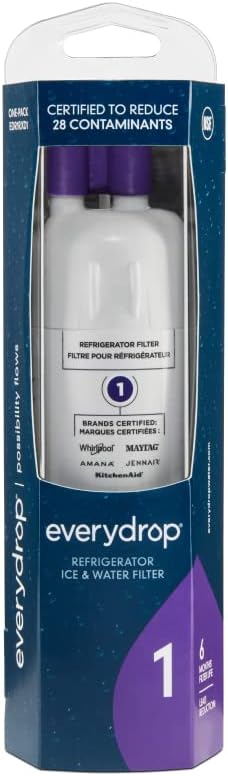
Pros
- NSF 401 certification reduces emerging contaminants, ideal for families concerned about water quality
- Designed specifically for Whirlpool, Maytag, KitchenAid, Jenn-Air, and Amana refrigerators - fits perfectly
- Easy to install and replace in minutes with no tools required
- Provides clean, fresh-tasting water for drinking, cooking, and ice - excellent for filling camp water jugs
- Reliable 6-month lifespan helps plan filter changes around camping season
Cons
- Only compatible with specific refrigerator models - check compatibility before purchase
- Not a portable water filter for backcountry use; strictly a home/RV refrigerator filter
- Premium pricing compared to generic alternatives, though genuine filters maintain warranty coverage
If you're an RV camper, weekend warrior, or family camper who likes to hit the road with clean water, the everydrop by Whirlpool Ice and Water Refrigerator Filter 1 (EDR1RXD1) is a smart addition to your home or rig. While it's not a backpacking water filter, it plays a key role in prepping for trips: you can fill your hydration bladders, water jugs, and ice chests with filtered water right from your refrigerator dispenser.
According to the product specifications, this filter is NSF certified to reduce 28 contaminants, including 99% of lead, pesticides, and pharmaceuticals. For RV owners with a compatible Whirlpool, Maytag, KitchenAid, Jenn-Air, or Amana refrigerator, this means you can enjoy clean water and ice while on the road without worrying about off-flavors or sediment. Many campers appreciate the convenience of having filtered water available for cooking breakfast or making coffee at the campsite.
Build quality is solid: the filter is made from durable plastic and is designed for easy twist-and-lock installation. Replacement is recommended every 6 months or 200 gallons, which aligns nicely with seasonal camping schedules. Simply mark your calendar before your first spring trip or fall adventure. The package includes a single filter, and the UPC is clearly labeled for easy reordering.
One of the biggest practical benefits is the ice quality. If you use a cooler for your camping trips, starting with clean ice from a filtered supply can help keep food and drinks fresh for longer. The filter also reduces sediment and chlorine taste, so the water you pour into your CamelBak or Nalgene just tastes better. For families with kids, knowing that the water is free from common contaminants adds peace of mind.
That said, this filter is not designed for backcountry use. It requires a refrigerator with a compatible water line, so it won't work for tent campers or hikers who need a portable solution. Additionally, you must check your refrigerator model number to ensure fit. Some users note that the cost is higher than third-party options, but using a genuine everydrop filter keeps your refrigerator's warranty intact and ensures certified performance.
Overall, the everydrop EDR1RXD1 is a practical choice for RV campers, overlanders with refrigerator-equipped rigs, and families who want clean water at home before heading outdoors. It's not a camping water filter per se, but it's a great tool for pre-trip water preparation. If you're looking to upgrade your home or RV water quality and you have a compatible fridge, this filter delivers reliable, certified performance for your outdoor lifestyle.


Pros
- Reduces a wide range of contaminants – lead, pharmaceuticals, pesticides – giving campers confidence in their base-camp water quality.
- Easy 6‑month replacement schedule aligns with seasonal camping routines – install at the start of summer and again before winter trips.
- Backed by major appliance brands – genuine part means reliable performance and warranty protection for RV refrigerators and home fridges.
- Simple twist‑lock installation – no plumber needed, perfect for quick swaps before a family camping week.
- Compact design fits in tight fridge spaces – won't take up room needed for food and beverages.
Cons
- Only compatible with specific Whirlpool‑brand refrigerator models – check your model number before buying; not universal for all campers’ fridges.
- Higher upfront cost than generic filters – but the warranty protection and certified reduction may justify the price for long‑term use.
- Not a portable solution – designed for installed refrigerators, not for inline camping water filters or gravity systems.
Whether you're loading up the RV for a cross‑country overland trip or just filling your hydration bladder before a weekend hike, the quality of the water you start with matters. The EveryDrop by Whirlpool Ice and Water Refrigerator Filter 3 (EDR3RXD1) is a genuine replacement filter that brings NSF‑certified contaminant reduction right to your refrigerator. While it's not a backcountry water filter, it excels at giving you a clean, great‑tasting base supply for all your camping hydration needs.
This filter is best suited for family campers, RV owners, overlanders, and weekend warriors who rely on their home or RV refrigerator for drinking water. If you fill your camp water jugs, coffee maker, or reusable bottles before heading out, you want that water free of the 73 contaminants this filter tackles – including lead, pesticides, and pharmaceuticals. The ease of a six‑month replacement cycle means you can sync changes with your camping season: install in spring and replace before fall trips.
In real‑world camping performance, the filter's NSF certification provides peace of mind that the water flowing through your fridge isn't carrying unwanted chemicals. Many campers also appreciate the improved taste, which encourages them to drink more water during hot summer outings. While you wouldn't rely on this filter in the backcountry – it's not a portable or field‑serviceable unit – it's an excellent first line of defense at your home base or in your RV's refrigerator.
Build quality is top‑notch because this is an OEM (original equipment manufacturer) part designed for Whirlpool, Maytag, Amana, KitchenAid, and JennAir brands. The white plastic housing is sturdy, and the twist‑and‑lock installation takes just seconds – no tools, no mess. Using a non‑genuine filter could void your appliance warranty, so sticking with EveryDrop protects your investment. The compact dimensions (2.6 x 3 x 13.5 inches) allow it to fit neatly in side‑by‑side and bottom‑freezer refrigerators without sacrificing shelf space.
Care and maintenance are straightforward: just note the date you installed it and plan to swap every six months. No cleaning or flushing required beyond the initial water purging (typically a few gallons). It's a set‑it‑and‑forget‑it solution that fits naturally into a family's camping prep routine. However, be sure to check your refrigerator's filter compatibility – this model works with specific Whirlpool‑based systems, not all brands.
For practical camping use, the EveryDrop filter shines as a home or RV water source. It's a smart addition for gift buyers shopping for outdoor enthusiasts who want cleaner water without extra gear. While the price is higher than off‑brand alternatives, the warranty protection and certified performance make it a reliable choice for campers who value long‑term value over short‑term savings. If you want to start every adventure with the best possible water, this filter is a solid investment.
The EveryDrop filter 3 is NSF certified to reduce 73 contaminants, including lead, pesticides, pharmaceuticals, mercury, and volatile organic compounds. This certification means it meets strict standards for material safety and contaminant reduction – something generic filters may not guarantee. For campers who fill their hydration bladders, coolers, and RV fresh tanks, this level of filtration provides confidence that the water you're drinking at the campsite started clean. The filter also improves taste and odor by reducing chlorine and other common municipal water additives.
This filter is the only one approved by Whirlpool, Maytag, Amana, KitchenAid, and JennAir for use in compatible refrigerators. Before ordering, check your fridge's model number and current filter type – many side‑by‑side and bottom‑freezer models from these brands accept the EDR3RXD1. Installation is a simple twist‑and‑lock procedure: remove the old filter, insert the new one, and run a few gallons of water to clear any air and carbon fines. No tools are required, making it a quick swap even for first‑time campers. Always use a genuine EveryDrop filter to keep your appliance warranty intact.


Pros
- NSF certified to reduce 31 contaminants for peace of mind during extended camping trips
- Specifically approved for major brands, protecting your refrigerator warranty
- Simple replacement process that takes just minutes, no tools required
- Provides clean, fresh-tasting water for drinking, ice, and cooking at your campsite
Cons
- Not designed for portable or backpacking use, only for compatible refrigerators
- Requires a refrigerator with a water line, limiting its use to RVs, campers, or cabins with that setup
- Replacement every 6 months adds ongoing cost compared to some pitcher filters
If you own an RV, camper, or cabin with a Whirlpool, Maytag, Amana, KitchenAid, or Jenn Air refrigerator that has a built-in ice or water dispenser, the EveryDrop by Whirlpool Water Filter 4 (EDR4RXD1) is a practical choice for keeping your drinking water clean and fresh while camping. This NSF-certified filter reduces 31 contaminants, including lead, pesticides, and pharmaceuticals, which is especially valuable when you're relying on campground water sources or filling your tank from unfamiliar spigots. Many overlanders and RV campers appreciate the convenience of having filtered water directly from the fridge, whether for a quick drink, making coffee at sunrise, or filling a hydration bladder for a day hike.
The filter is designed to fit seamlessly into compatible refrigerators, and installation takes just a few minutes with no special tools. According to product details, it should be replaced every six months to maintain optimal performance. For full-time RVers or frequent campers, this is a simple maintenance step that ensures your water stays safe and tastes great. The compact dimensions (2.52 x 2.5 x 8 inches) and light weight (0.6 pounds) make it easy to store a spare in your camping gear or pantry.
In terms of build quality, EveryDrop is a subsidiary of Whirlpool, and this filter meets OEM specifications. Using a non-genuine filter may void your refrigerator's warranty, so sticking with the EveryDrop brand gives you peace of mind. Many campers report that the filter reduces common off-flavors from chlorine or minerals, making water from RV tanks more palatable. However, it's important to note that this filter is not a substitute for a portable backcountry water filter, pump, or UV purifier. It's specifically designed for stationary use in a refrigerator.
The biggest limitation is that it only works with compatible fridges – so if you're tent camping, backpacking, or using a cooler without a water line, this product isn't for you. But for RV campers, overlanders with built-in refrigerators, or those using a camper van with a water dispenser, it's a solid upgrade from unfiltered tap water. The NSF certification adds credibility, and the brand recognition means you're getting a reliable product that's trusted in millions of homes.
For maintenance, simply twist out the old filter and twist in the new one. Some users recommend running a few gallons through the dispenser after replacement to clear any carbon fines. The filter doesn't require cleaning or special storage – just keep it in a dry place until installation. If you're a weekend warrior or full-time RVer who values clean water without carrying extra filtration gear, the EveryDrop EDR4RXD1 is a convenient and effective solution for your home-on-wheels.
Overall, while this isn't a typical camping tent or stove, it's an essential accessory for RV camping and overlanding where a compatible fridge is present. It scores high on convenience, water quality, and warranty protection. If you have the right refrigerator, this filter will serve you well for many camping seasons to come.
Changing a KitchenAid Filter Without Guesswork
Replacing a KitchenAid water filter is usually a cartridge-identification and careful-seating task, but the exact release and installation motions depend on the appliance. Refrigerator filters and espresso-machine filters are distinct categories in the options listed here. Start by matching the appliance model and existing cartridge number, then follow the manual for that appliance rather than forcing a cartridge or copying directions meant for another product.
Identify the Appliance and Filter Before Buying
First determine whether the filter belongs to a KitchenAid refrigerator or a KitchenAid fully automatic or semi-automatic espresso machine. The refrigerator cartridges in this list include EveryDrop Filter 1, Filter 2, Filter 3, Filter 4, and Filter A. Their product information names different filter numbers and colors, and says to confirm compatibility using the previous filter number. A shared brand name does not establish that one cartridge fits every refrigerator.
For a refrigerator, check the existing cartridge label and the appliance documentation for the approved replacement designation. If the old cartridge is missing, use the refrigerator model number and the manufacturer’s compatibility information rather than guessing from appearance. The supplied descriptions identify Filter 1 as purple, Filter 2 as orange, and Filter A as blue, but color alone should not replace checking the part number and appliance fit. Packages can resemble one another, while the stated filter number is the more useful identifier.
Espresso machine filters require a different match. The KitchenAid KESWF is listed for fully automatic KitchenAid KF6, KF7, and KF8 machines, while the Wangenbro activated-carbon replacement is described for specific KES6551 series semi-automatic machines. These are not refrigerator cartridges, and the product descriptions do not establish cross-compatibility between the two espresso filter types. Confirm the exact machine model and consult its instructions before purchasing.
Prepare for the Cartridge Change
Read the refrigerator or machine manual before opening the filter compartment. It should identify the location, release method, and any model-specific precautions, which cannot be determined from the product names alone. Keep the replacement package nearby so you can confirm its filter number, and avoid using tools or applying force unless the manufacturer’s directions call for them.
For a refrigerator, clear access to the filter area and place a cloth or container where small drips can be caught. Some refrigerator cartridges are twist-in designs, while other appliances may use a different arrangement; the provided data specifically describes twist-in installation for Filter A and the EveryDrop Filter 2. Do not assume that this release method applies to every KitchenAid refrigerator. If the cartridge will not move as directed, stop and recheck the appliance instructions rather than twisting harder.
Before changing an espresso-machine filter, check the machine’s instructions for preparation and installation. The KESWF product information says to replace the filter approximately every two months or 50 liters, and the Wangenbro product information recommends soaking its replacement filter for five to ten minutes, rinsing it, and inserting it into the holder. Those directions are specific to the products described and should not be applied to a different cartridge without confirmation. If instructions conflict, use the directions for the exact replacement and machine.
Remove the Old Refrigerator Cartridge Gently
Follow the manual’s release sequence and support the old cartridge as it comes free. A small amount of residual water may escape, so keep the cloth or container in place. If the filter is a twist-in type, turn it only in the direction and manner specified by the appliance instructions. A cartridge that resists movement may be misaligned, locked, or a different design than expected; forcing it can damage the compartment.
Once removed, note the number printed on the cartridge and compare it with the replacement before installation. This simple check helps catch a wrong-number purchase before the new cartridge is seated. Inspect the compartment for visible debris or water, but do not use cleaners or lubricants unless the appliance documentation specifically permits them. Keep the removed filter available until you have verified that the replacement is installed and working.
Install and Flush According to the Manual
Remove protective packaging from the new cartridge as directed, align it with the filter opening, and use the appliance’s specified insertion or locking motion. The supplied information describes Filter A and Filter 2 as twist-in designs, with removal of the old filter followed by installation of the new one. That description does not provide a universal turn angle or apply automatically to every KitchenAid model. The cartridge should engage as intended; do not use extra force to compensate for a mismatch.
After installation, check that the filter is seated and that the compartment closes normally. Follow the refrigerator manual for flushing or dispensing water after a cartridge change, including any specified amount or sequence. The provided product descriptions do not state a single flush volume for all listed filters, so avoid relying on a generic volume from another model. Initial flow can sputter if air is present, but persistent leaking, unusual resistance, or failure to dispense calls for checking the installation instructions and compatibility.
For an espresso machine, follow the machine’s own priming or filter-activation procedure if one is specified. The supplied product details do not give a common priming procedure for all the listed espresso filters, so do not infer one from refrigerator directions. The KESWF information gives a replacement interval, while the Wangenbro product instructions include soaking and rinsing; these are separate product-specific directions. Confirm the right procedure before running the machine.
Use the Correct Replacement Schedule
Refrigerator filter schedules in the supplied information are generally every six months or 200 gallons for EveryDrop cartridges. Treat that as the listed recommendation for those products, not as a rule for every refrigerator filter or every KitchenAid appliance. Your refrigerator may track filter status or show a reminder, but the owner’s manual explains how that indicator works and whether it needs resetting after a replacement.
The espresso-machine intervals are notably different. KitchenAid’s KESWF is listed for replacement about every two months or 50 liters, while the Wangenbro replacement for KES6551 series machines is recommended every 60 days, or sooner in hard-water areas, according to its product information. These schedules should not be transferred to refrigerator cartridges. Use whichever applicable limit arrives first when the product specifies both time and throughput, and check the machine manual for its maintenance prompts.
Replacement timing is also a practical ownership cost, even when a cartridge’s purchase price is not the only consideration. Compare the interval, pack size, and exact compatibility before choosing a product. The Wangenbro option is sold as a six-pack, while the KESWF listing describes one filter; those package formats do not establish equivalent performance or compatibility. A pack that appears convenient is useful only if its cartridge matches the machine and its replacement schedule suits your use.
Understand What the Filter Claims Do and Do Not Mean
EveryDrop refrigerator filters in the supplied information have different stated contaminant-reduction claims. Filter 1 is described as NSF-certified to reduce 28 contaminants, including lead, pesticides, and pharmaceuticals; Filter 3 is listed for 73 contaminants; Filter 4 for 31. Filter 2 and Filter A have separate descriptions that state certification to NSF standards 42, 53, and 401 and give specific contaminant claims. These distinctions belong to the individual product descriptions and should not be generalized across every filter number.
Filter A’s listing states reduction of 75 contaminants, including microplastics, and Filter 2’s states reduction of 70, including microplastics. Those are manufacturer-provided product claims in the supplied data, not a guarantee that a cartridge addresses every substance in every household’s water. Check the exact package and certification details for the model you are considering, especially if your concern is a specific contaminant. A general statement that a filter improves taste is not proof that it reduces a particular health-related contaminant.
Espresso filters have their own stated purpose. The KitchenAid KESWF listing says it helps prevent limescale buildup and reduces contaminants including carbon, chlorine, particulates, and lead that can affect beverage taste. The Wangenbro description highlights activated charcoal and says it is designed to reduce chlorine, odors, and impurities. Those statements do not mean either cartridge is a substitute for a refrigerator filter, or that it removes every contaminant. For drinking-water concerns beyond the listed claims, check local water information and seek appropriate testing rather than relying on an appliance cartridge alone.
Troubleshoot a Filter That Will Not Seat or Dispense
If a replacement will not lock into place, first stop and compare its part number with the filter removed and the appliance manual. A mismatch is more likely to be solved by selecting the correct cartridge than by applying additional torque. Check whether packaging remains on a connection point and whether the cartridge is aligned as instructed, without prying at the housing. If the manual’s method does not resolve the issue, contact the appliance manufacturer or a qualified service provider.
If water leaks after replacement, inspect the seating and repeat the manual’s installation steps only if the appliance guidance permits it. Confirm that the compartment is fully closed and that the cartridge is the designated type. Do not keep dispensing water through a visibly leaking connection. If the leak continues, remove the cartridge only as instructed and seek service; a damaged housing or seal may need attention beyond a routine filter change.
Weak or intermittent water flow after installation may reflect air, an incorrectly seated cartridge, or a compatibility problem, but the available product information cannot diagnose a specific refrigerator. Follow the manual’s flushing directions and observe whether flow settles. If the problem remains, compare the installed filter number with the appliance requirement and consult the manufacturer’s troubleshooting guidance. Avoid assuming that a new cartridge is defective or that the refrigerator itself has failed until those basic checks are complete.
Choose a Replacement Based on a Verified Match
The listed refrigerator choices are not a ranked set of interchangeable cartridges. EveryDrop Filter 1, Filter 2, Filter 3, Filter 4, and Filter A are distinct options, and their listed contaminant claims, colors, and model identifiers vary. The safest purchase decision begins with the number on the installed filter or the replacement specified in the refrigerator manual. Only then does it make sense to compare product-specific claims and replacement cadence.
The supplied information identifies EveryDrop as approved by Whirlpool, Maytag, Amana, KitchenAid, and JennAir for certain product descriptions, and warns that damage caused by a non-genuine EveryDrop filter is not covered under Whirlpool Corporation’s warranty. That warning is relevant to the listed products, but it does not establish that every non-genuine filter will cause damage. Buyers weighing a third-party cartridge should verify compatibility and warranty terms directly with the appliance manufacturer rather than relying on a broad assumption.
Brand names can also obscure differences between appliance categories. KitchenAid’s KESWF is a branded filter for specified fully automatic espresso machines, whereas the Wangenbro product is a third-party replacement described for particular KES6551 models. The refrigerator EveryDrop cartridges are a separate family. Match the exact model and product designation first, and treat package quantity, material claims, and contaminant statements as secondary checks.
Make the Next Change Easier to Verify
Keep a record of the date, filter number, and appliance model after replacing the cartridge. This helps distinguish a refrigerator’s six-month reminder from an espresso machine’s shorter listed interval and makes it easier to reorder the correct part. Save the packaging or take a clear photo of the label before discarding it. A small record can prevent repeat guesswork when several appliances use different filters.
After the change, confirm normal operation using the appliance’s own indicators and instructions. For a refrigerator, check the compartment and surrounding area for leaks after dispensing; for an espresso machine, verify the filter is installed as the machine directs and monitor its maintenance prompt. If water taste or flow remains unusual, do not assume that repeated cartridge swaps will resolve an unrelated appliance or water-supply issue. Persistent symptoms deserve model-specific troubleshooting.
The reliable sequence is simple: identify the appliance, verify its exact filter number, install using that model’s directions, and follow the matching flush or activation steps. Among the options here, refrigerator and espresso cartridges have different compatibility and replacement schedules, so check the label before buying or changing one. That verification is the best way to avoid forcing the wrong cartridge and to keep the next maintenance interval clear.





Write Your Review
No reviews yet. Be the first to share your experience!