


Clearer-tasting fridge water starts at the supply line
A sharp chlorine note can linger in a cold glass, and grit in a supply line may affect the water and ice your refrigerator dispenses. The best inline water filters for refrigerators offer a practical way to target specific taste or contaminant concerns without assuming every cartridge does the same job. This roundup compares listed certification claims, filtration media, connection types, and service-life estimates so you can match a filter to your water line and maintenance preferences.
Some models focus on chlorine taste and odor, while others list reductions for substances such as lead, PFAS, or fluoride. Those claims have different scopes, so check the product’s exact certification and performance information rather than treating all carbon filters as equivalent. Also confirm tubing size and material before buying: a quick-connect kit may suit one setup, while another filter may require existing fittings. For installation context, see this guide to installing an inline RV water filter, and compare broader treatment approaches in this non-RO home water purifier overview.

Pros
- Certified against NSF and ANSI standards 42 and 53 for dependable lead and chlorine reduction
- Rugged brass fittings resist trail vibrations and eliminate common plastic fitting leaks
- Fast flow rate prevents waiting around when filling large camp pots or water jugs
- Economical cartridge design reduces long-term maintenance costs and plastic waste
Cons
- Requires separate adapters if connecting to older non-standard half-inch water lines
- Not engineered for raw backcountry river water without prior microbiological treatment
- Tight under-sink cabinet spaces can require patience during initial bracket mounting
The Frizzlife MS99 is a heavy-duty inline water filtration system engineered to deliver crisp, fresh drinking water directly through refrigerator lines, dedicated dispenser faucets, and custom camper galleys. For outdoor enthusiasts who spend weekends in travel trailers, overland camper vans, or rustic basecamp cabins, water quality often dictates the enjoyment of morning coffee, trail hydration, and campsite cooking. Featuring a 0.5-micron compound carbon block filter, this unit targets lead, heavy metals, chlorine, sediment, and foul chemical odors to produce clean and refreshing water straight from the tap.
This filtration system is particularly well suited for RV campers, overlanders, conversion van owners, and family campers preparing gear at their home basecamp. If you routinely fill large hydration reservoirs, rotomolded camp coolers, and five-gallon drinking jugs before heading out to public campgrounds or off-grid trailheads, having a dependable inline system saves time and eliminates the cost of disposable bottled water. It also ensures that mobile ice makers in camper vans churn out clear, clean-tasting ice for cold drinks around the evening campfire.
Based on product specifications and user feedback, the MS99 delivers a robust flow rate of up to 2 gallons per minute, depending on your incoming supply pressure. This swift delivery means you will not spend several minutes waiting to top off camp stockpots or hydration bladders before starting an early morning hike. The cartridge holds IAPMO certification against NSF and ANSI standards 42 and 53, validating its capability to strip out chlorine and lead while keeping beneficial natural minerals intact. User reviews frequently note that crystal clear ice and fresh water taste remain consistent throughout long road trips.
Build quality is rugged and practical for mobile living, highlighted by solid brass compression fittings rather than fragile plastic connectors that might crack from road vibrations. The system accommodates standard PEX tubing as well as flexible copper tubing, giving trailer builders plenty of installation flexibility. Swapping out the cartridge requires minimal effort thanks to a built-in auto shut-off valve within the filter head. You can twist off the housing and swap the inner core without crawling underneath the sink to locate and shut off the main water valve.
Some realistic limitations should be considered before installation. The MS99 is designed for treated municipal water or pre-filtered potable water hookups commonly found at developed campgrounds. It is not a backcountry purifier designed to remove waterborne parasites, viruses, or bacteria from wild mountain streams or muddy rivers. Additionally, older camper plumbing or residential hookups that utilize half-inch lines will require an inexpensive brass thread adapter, as the included hardware is tailored for standard 3/8-inch connections.
For RV owners, overlanders, and outdoor enthusiasts wanting high-capacity water filtration at an accessible price point, the Frizzlife MS99 is an outstanding upgrade. Because only the inner filter core gets replaced every one to two years, it reduces long-term maintenance costs and cuts down on plastic bottle trash at public parks. It stands as a reliable, durable option for fresh camp drinking water, quick cooking prep, and clear ice on any road journey.
Installing the Frizzlife MS99 in an RV, teardrop camper, or custom overland vehicle is straightforward thanks to its compact profile and included brass hardware. The unit measures just 13.5 inches in length and 5 inches in diameter, making it easy to mount against an interior cabinet wall, under a galley sink, or adjacent to a slide-out kitchen drawer. Because it supports both PEX and copper lines, retrofitting it into existing recreational vehicle plumbing requires minimal extra parts.
To avoid leaks while traveling down bumpy gravel roads or backcountry trails, always wrap the included thread seal tape snugly around fittings and tighten connections securely. Mounting the bracket with solid screws ensures the filter body stays steady during transit. Setting up a dedicated shut-off line or tee valve ahead of the unit also allows for simple seasonal winterization when draining water lines before freezing temperatures arrive.
Routine maintenance on the Frizzlife MS99 is simple and clean thanks to the twist-in housing design. When it is time to replace the filter core, the integrated shut-off valve prevents pressurized water from spraying across your galley floor. Using the included housing wrench, you simply unscrew the outer casing, discard the spent carbon core, rinse out the canister, and insert a fresh FZ-2 replacement cartridge.
Depending on incoming water quality and usage volume, each cartridge delivers reliable filtration for up to two years. For RV owners who store their rigs during freezing winter months, remember to remove the cartridge and drain the housing thoroughly during winterization to prevent freeze expansion from cracking the filter body. With basic seasonal care, the durable brass housing assembly will provide years of reliable service.


Pros
- Compact and lightweight at under one pound, making it easy to stow or tuck into tight camper cabinets.
- NSF certified coconut shell carbon media significantly improves tap water taste and eliminates foul sulfur or chlorine odors.
- Includes 1/4-inch push-fit hardware and tubing for fast, hassle-free plumbing into camper water lines.
- Extended 1,400-gallon lifespan provides plenty of capacity for a full season of road trips and outdoor getaways.
Cons
- Does not reduce Total Dissolved Solids (TDS) or filter out biological pathogens from raw backcountry streams.
- Requires a pressurized water line or RV water pump, so it cannot be used as a standalone gravity camp filter.
- Initial installation requires a five-minute water flush to clear harmless loose carbon fines.
The Waterdrop Inline Water Filter is a compact, high-capacity carbon block filtration unit engineered for direct-line plumbed systems. While widely chosen for home refrigerators and ice makers, this inline filter is equally valuable for RV campers, campervan builders, overlanders, and off-grid cabin dwellers who want clean-tasting drinking water on the road. Whether tapping into unpredictable municipal campground spigots or pulling supply from an onboard freshwater tank, this inline cartridge targets common campsite water issues such as sulfur odor, heavy chlorination, and gritty pipe sediment.
Inside the slender housing sits a dense coconut shell activated carbon block rated down to 0.5 microns. According to manufacturer specifications, the unit holds NSF 42 certification for removing up to 97.6 percent of chlorine, bad taste, and foul odors, alongside NSF 372 certification for lead-free construction. For camp kitchen galleys, this filtration level transforms harsh campground tap water into crisp, clean water suitable for morning pour-over coffee, cooking pots, and filling daily hydration bladders without taking up valuable counter space.
Installing the filter into an RV or mobile rig is straightforward thanks to the included 1/4-inch quick-connect fittings and poly tubing. Outdoor adventurers can mount the 10.8-inch cylinder vertically or horizontally inside an under-sink cabinet or behind an exterior utility bay. The push-fit mechanism allows for rapid, tool-free line splicing, though users must push the tubing a full 20 millimeters into the collar to ensure a secure, leak-free seal that withstands travel vibrations on rough dirt roads.
Based on product specifications, this filter does not reduce Total Dissolved Solids (TDS) and is not intended to purify untreated water from backcountry wilderness rivers or stagnant ponds. Backpackers and survivalists should recognize that this is an inline chemical and sediment filter designed for pressurized systems, not a microbiological purifier for eliminating Giardia or Cryptosporidium. Additionally, brand-new cartridges require an initial five-minute flush to purge loose coconut carbon dust before drinking.
For RV travelers, weekend road warriors, seasonal camp hosts, and trailer owners looking for an affordable plumbing upgrade, the Waterdrop inline system offers outstanding value. With a generous 1,400-gallon service life that comfortably covers an entire camping season, it keeps freshwater flowing smoothly without the bulk, complexity, or expense of multi-stage canister systems.
Setting up the Waterdrop inline filter in a camper or mobile rig takes only a few minutes with basic utility shears. The unit uses direct-connect 1/4-inch push-fit collars that grip standard copper or plastic lines without the need for specialized wrenches or thread seal tape. Slicing cleanly through your cold water supply line and seating the tubing firmly into each end creates a dependable inline connection.
Routine maintenance during the camping season is virtually non-existent once the initial five-minute carbon flush is completed. For winterization, RVers should disconnect and drain the cartridge before storing the vehicle in sub-freezing temperatures, as trapped water can expand and crack the plastic housing during hard winter freezes.
A clean water source is essential for meal preparation and hot drinks around the camp kitchen. Campground hookups often carry distinct chemical or metallic notes that spoil delicate camp recipes and morning coffee. Placing this inline carbon block directly before your dedicated drinking faucet or ice maker eliminates chemical odors and leaves clear, neutral water.
Because it operates inline with minimal drop in water flow, this filter allows quick filling of large hydration packs, stockpots, and camp wash basins. It delivers dependable, restaurant-grade water quality straight from your camper sink faucet without cluttering up limited meal prep surfaces.

Pros
- Noticeably improves the taste and smell of sulfurous or heavily chlorinated campground tap water
- Tool-free push-fit connections make installation fast and straightforward in tight RV storage areas
- Generous hardware assortment accommodates both copper lines and flexible plastic tubing
- Much more affordable than proprietary brand-name refrigerator and RV replacement cartridges
Cons
- Does not reduce Total Dissolved Solids (TDS) and will not soften hard mineral water
- High-sediment rural campground wells can clog the fine 0.5-micron pores before reaching maximum rated gallon capacity
- Not designed to purify raw, untreated backcountry lake or river water containing biological pathogens
The AQUA CREST Inline Water Filter is a high-capacity filtration cartridge engineered to splice directly into 1/4-inch cold water supply lines, making it a reliable hydration upgrade for RV campers, vanlifers, overland rig builders, and travel trailer owners. Whether you are outfitting a mobile camp kitchen sink, feeding an on-board ice machine, or configuring an off-grid trailer water system, having dependable access to clean-tasting drinking water is a top priority. This inline system serves as an effective barrier against the odd odors and chemical tastes frequently encountered at municipal RV parks, state park fill stations, and rustic campground hookups across the country.
At the core of the filtration cartridge is a dense 0.5-micron coconut shell activated carbon block paired with an integrated sediment barrier. Based on manufacturer specifications and customer feedback, this setup effectively reduces common municipal additives like chlorine, along with unpleasant tastes, sulfur odors, rust flakes, suspended silt, and emerging contaminants such as PFAS and PFOA. For campers pulling water from variable campground spigots, this filtration noticeably improves the clarity and crispness of morning camp coffee, cooking broths, and drinking cups. It maintains steady water line pressure without choking galley faucet output, ensuring that washing produce or filling hydration reservoirs at the camp sink remains fast and hassle-free.
Build quality centers around a rigid, crack-resistant canister built to withstand typical line pressure fluctuations found in mobile water systems. The unit comes outfitted with an all-inclusive hardware package, including 1/4-inch push-to-connect adapters, compression fittings, and mounting clips that make securing the canister inside a cramped camper cabinet or behind an appliance straightforward. Because it requires no specialized plumbing tools or torch work, installation can be completed in just a few minutes using standard hand tools. Its slim profile tucks neatly alongside existing RV plumbing lines, leaving plenty of valuable under-sink storage space for dry goods, camp cookware, and cleaning supplies.
While the filter provides reliable taste and sediment control, outdoor enthusiasts should understand its functional boundaries. Like most carbon block inline filters, it is not engineered to reduce Total Dissolved Solids (TDS), meaning naturally occurring beneficial minerals remain in the water. Furthermore, this unit is designed for potable municipal or treated campground water supplies and should not be relied upon as a solo wilderness purifier for untreated backcountry streams or stagnant lakes containing biological cysts. Users also note that while the cartridge carries a high theoretical gallon rating, heavy sediment loads from rural campground wells can shorten operational life, requiring a seasonal changeout to maintain ideal flow.
For RV travelers, weekend road-trippers, seasonal campground visitors, and emergency preparedness planners, this inline filter delivers practical convenience and peace of mind. It eliminates the hassle of hauling heavy plastic water jugs or constantly buying expensive branded proprietary replacement cartridges for RV refrigerators. If your travel trailer, camper van, or overland setup features a plumbed 1/4-inch cold water line, adding this compact filtration unit is an affordable, practical step toward cleaner, fresher hydration on every outdoor adventure.
Getting the best performance from your inline filter during camping season begins with proper initial flushing. When installing a fresh cartridge in your RV or camper galley line, allow approximately three to five gallons of water to run through the system into a bucket or drain before consuming. This initial flush clears any harmless loose carbon fines from manufacturing and primes the dense coconut shell media for optimal water flow and clarity.
Proper winterization is essential for RV campers and seasonal travelers. If your rig is stored in freezing climates, never leave water sitting inside the filter canister, as frozen water can expand and crack the housing or damage the internal carbon block. Simply disconnect the push-fit fittings before pumping non-toxic RV antifreeze through your camper lines, store the filter in a climate-controlled space if still within its useful life, or plan to install a fresh unit at the start of your spring camping adventures.

Pros
- Huge 5,250-gallon capacity easily covers years of seasonal campground trips
- Noticeably improves the taste and smell of municipal campground hookup water
- Slender footprint takes up minimal storage space behind cabinets or under sinks
- Straightforward plumbing installation using standard quarter-inch lines
Cons
- Intended for potable water and does not eliminate biological cysts or bacteria from wilderness streams
- Requires plumbed quarter-inch tubing, making it unsuitable for backpackers or unplumbed camp setups
- Must be drained or removed during rig winterization to prevent freeze damage
The GE Appliances GXRTLL is an inline water filtration system engineered to deliver clear, fresh-tasting water directly through plumbed quarter-inch lines. While designed primarily for domestic refrigerators and icemakers, its compact two-inch diameter and rugged sealed construction make it a favorite for RV campers, travel trailer owners, van lifers, and overlanders. Built around a carbon-spun fiber filtration core, this filter targets common water quality complaints like sulfur smells, chemical chlorine aftertaste, and gritty sediment frequently found at public campground hookups.
This filtration system is best suited for family campers, full-time RVers, weekend warriors, overlanders, and hunting cabin owners who manage an onboard freshwater tank or direct city water connection. If you frequently connect your camper at private campgrounds, state parks, or fairgrounds, this filter helps ensure that morning coffee, camp cooking water, and drinking water remain crisp and clean. It serves as an affordable, high-capacity taste filter for mobile galleys rather than a wilderness purifier, meaning it should always be used on municipally treated or biologically safe water supplies.
In practical campground use, water quality varies significantly from site to site. The GXRTLL holds IAPMO certification to NSF/ANSI Standard 42, filtering sediment down to 1 to 5 microns while reducing chlorine taste and odor by roughly 74 percent. It operates comfortably within a standard pressure window of 25 to 125 PSI and handles water temperatures from 33 to 100 degrees Fahrenheit. The 5,250-gallon rating allows seasonal road trippers to enjoy fresh drinking water for years without worrying about recurring cartridge swaps halfway through a cross-country adventure.
Build quality focuses on practical utility, featuring a sealed white plastic body that weighs just half a pound and measures under ten inches in length. Standard quarter-inch connections allow RV owners and conversion van builders to splice the unit directly into cold-water supply lines feeding an auxiliary drinking spout or an integrated refrigerator icemaker. Maintenance during the season is virtually nonexistent since the unit remains fully sealed until replacement time.
Campers should keep two limitations in mind before purchasing. First, this cartridge is not rated for protozoan cysts, giardia, or bacteria, so it cannot turn backcountry lake water into safe drinking water without separate purification methods. Second, cold-weather RVers must remember to disconnect and drain the cartridge before freezing temperatures hit, as residual trapped water can freeze and crack the plastic housing. For travelers seeking great-tasting water on hookups, it provides outstanding longevity and reliable performance for mobile living.
Installing the GXRTLL into an RV galley or overland trailer water system takes minimal time using basic tools. The cartridge splices inline with standard 1/4-inch plastic or copper tubing, allowing you to position it horizontally or vertically behind access panels, inside sink cabinets, or alongside your camper freshwater pump.
Before connecting the output line to your camper faucet or ice maker, it is best practice to run several gallons of water through the filter into a camp bucket. This quick flush clears loose carbon fines and primes the spun fiber media. For cold-season storage, make sure to bypass or unthread the filter during your routine winterization process to keep the housing safe from freezing damage.

Pros
- Noticeable improvement in water taste and ice clarity by removing chlorine flavors
- Simple DIY install with color-coded quick-connect tubing and mounting hardware
- Extended 1,500-gallon filter life reduces replacement frequency on long travel seasons
- Compact folding footprint stows away easily inside tight RV and camp galley cabinetry
Cons
- Physical footprint is larger than standard internal pencil-style fridge filters
- Occasional fitting leaks reported if tubing is not pushed fully into quick-connect collars
- Initial system investment is higher than basic single-stage carbon replacements
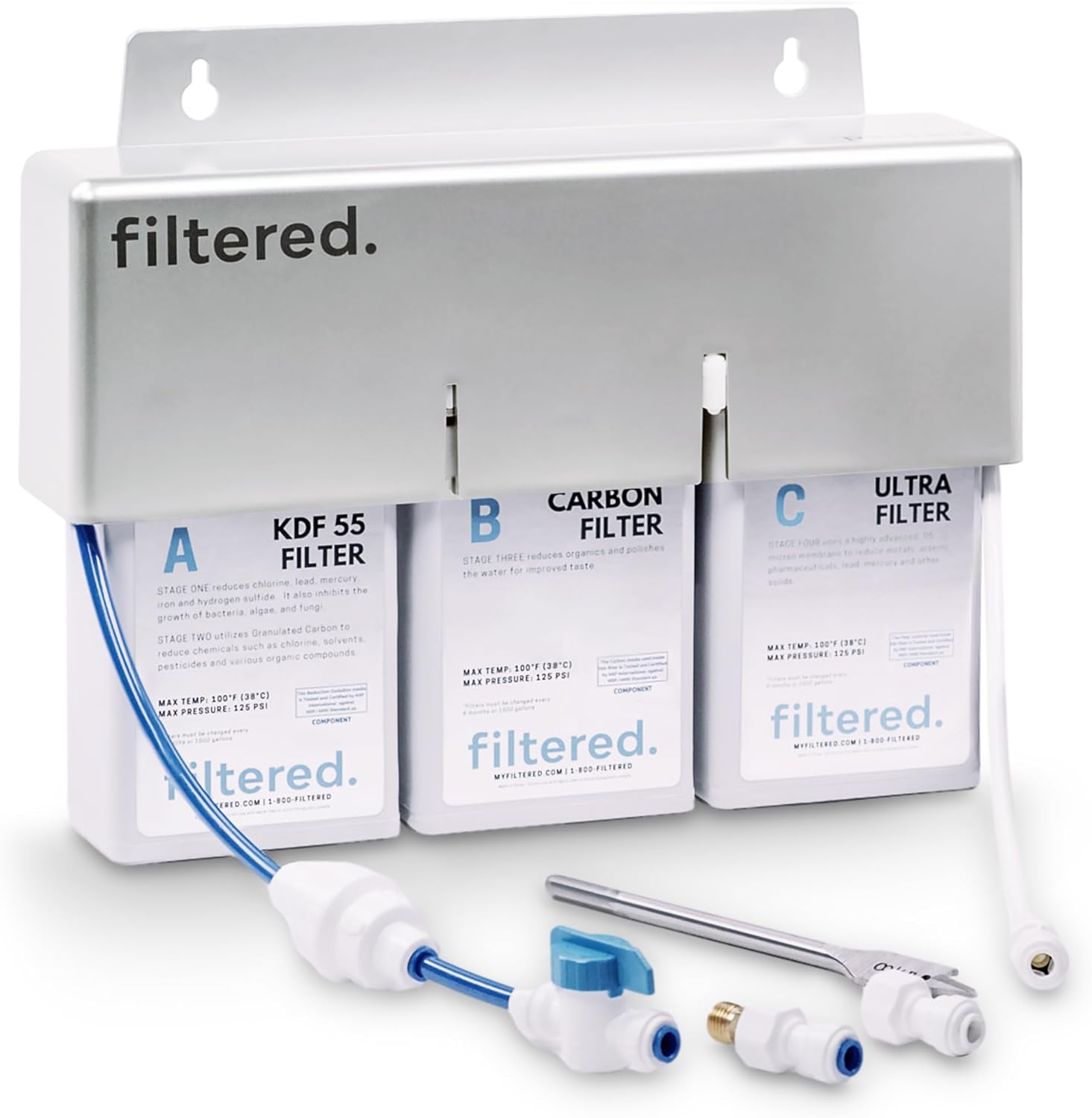
The filtered. Universal Inline Water Filter is a high-capacity multi-stage filtration system engineered to supply clean, great-tasting water directly to refrigerators, ice makers, and mobile galleys. While originally intended for residential kitchens, this inline unit has quickly become a valuable addition for RV campers, travel trailer owners, overlanders with built-in camper refrigeration, and hunting cabin caretakers. Anyone looking to upgrade their off-grid basecamp or home hydration setup without hauling flats of single-use plastic bottles will appreciate its high-volume output.
Real-world water quality can vary wildly when filling freshwater tanks at state parks, public dump stations, or well-supplied rural campgrounds. This filter addresses that challenge through a 4-stage ultrafiltration core utilizing both KDF media and granular activated carbon. The KDF layer strips out heavy metals and neutralizes chlorine before it reaches the carbon, preserving the carbon bed for deeper contaminant reduction and long-term odor control. As a result, camp coffee tastes fresher, drinking water lacks chemical aftertastes, and ice cubes freeze significantly clearer even when sourced from questionable hookups.
Constructed from durable molded plastics with a rigid mounting bracket, the unit measures 2.5 inches deep by 11.5 inches wide and 10 inches tall. Weighing roughly six pounds, it features a patented folding configuration that slips neatly into narrow gaps, such as the utility compartment behind an RV fridge or adjacent camp cabinetry. The filtration housing feels sturdy enough to withstand the vibrations of bumpy washboard backroads, while the pre-drilled bracket provides secure anchoring points to prevent bouncing while towing.
Installation is refreshingly straightforward thanks to clearly labeled color-coded tubing and standard push-connect fittings. Most users find that mounting the unit and splicing into existing 1/4-inch water lines takes fifteen minutes or less with basic household tools. The system is rated for up to 1,500 gallons or six months of regular use, which easily covers a full season of cross-country touring or weekend camping trips. When replacement time arrives, swapping the media canisters is clean and self-contained without drenching galley flooring.
There are a few considerations to keep in mind before purchasing. At nearly a foot across, it demands more clearance than skinny inline disposable cartridges, meaning tight camper van galleys need careful measurement before mounting. Additionally, users must ensure the plastic tubing is cut completely square and seated firmly to avoid slow drip leaks at the connectors under pump pressure. For RVers, weekend warriors, and cabin enthusiasts seeking reliable bottled-quality hydration right from their dispenser, this inline system represents a durable and cost-effective upgrade.
Setting up this inline filtration kit in a camper, trailer, or home kitchen requires minimal mechanical skill. The package supplies pre-drilled bracket mounting holes and color-coded push-fit lines that guide the water supply smoothly into and out of the multi-stage manifold. Splicing the kit into standard cold-water lines takes just a few minutes without soldering or specialty pipe wrenches.
For travel trailer and camper van owners, securing the system inside a neighboring cabinet or behind the refrigerator panel keeps the unit safely anchored across bumpy forest service roads. Ensuring clean, 90-degree cuts on your supply tubing and pressing each line past the inner O-ring will prevent any nuisance drips inside your living space.

FAQs
Do inline refrigerator filters reduce chlorine taste?
Yes, several listed models claim to reduce chlorine, taste, and odor. Waterdrop and AQUA CREST FF35C5J list NSF/ANSI 42 claims, while exact contaminant coverage varies by model. Check the product documentation for the specific reduction claim you need.
Will these filters remove lead or PFAS?
Some models list lead or PFAS reduction, but not all do. Frizzlife lists lead reduction and NSF/ANSI 42 and 53 certification by IAPMO R&T; AQUA CREST’s five-year filter lists PFAS/PFOA/PFOS reduction. Verify the exact certified claims and performance data before relying on a filter for a particular contaminant.
Do inline carbon filters lower water TDS?
No, several listed inline carbon filters explicitly state they do not reduce total dissolved solids. Carbon media primarily addresses listed taste, odor, and other specified contaminants, not broad dissolved-mineral removal. A reverse osmosis system is a different treatment type; see this comparison of non-RO home filtration for related options.
How often should I replace an inline refrigerator filter?
Follow the model’s stated capacity or time limit, and account for water quality and usage. Listed schedules range from about six months or 1,400 gallons for AQUA CREST FF35C5J used independently to one year for Waterdrop, while other products claim longer service life. A long-life estimate is not a reason to exceed the manufacturer’s replacement guidance.
Can I install an inline filter on copper or plastic tubing?
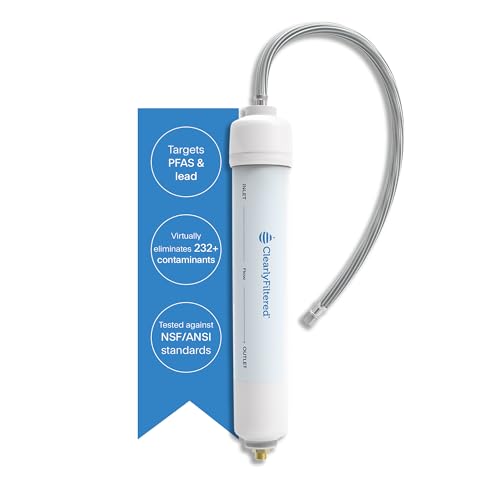
It depends on the filter and included fittings. AQUA CREST and Waterdrop list fittings for plastic or copper lines, while Clearly Filtered specifies stainless-steel lines only and says it is not compatible with vinyl or plastic. Check the line material, diameter, fitting style, and insertion instructions before installation.
Will an inline filter slow refrigerator water flow?
Product listings describe flow differently, and the supplied specifications don’t provide a comparable GPM figure across these models. A clogged or overdue cartridge, incorrect tubing connection, or incompatible fitting can affect dispensing. Check the refrigerator and filter instructions, and replace cartridges on schedule to support normal operation.
Do replacement filters include installation fittings?
Not always. AQUA CREST FF35C5J is sold without fittings, so it suits buyers who can reuse compatible existing connections. Several complete kits list tubing and compression or push-to-connect fittings; confirm the package contents and fit before ordering. For pitcher cartridge upkeep, this water filter replacement guide covers a related maintenance task.



Write Your Review
No reviews yet. Be the first to share your experience!