

A clear-looking stream or well can still contain disease-causing microbes, so appearance alone cannot confirm that water is safe to drink. The answer to do water filters remove e coli depends on the specific filter, its condition, and whether it is designed and verified to reduce bacteria. The portable options here list E. coli reduction, but they are not interchangeable with every pitcher, refrigerator, or household carbon filter.
For outdoor or emergency use, check the product’s stated target organisms, operating directions, capacity, and maintenance requirements before relying on it. A filter intended for personal use also differs from a treatment system designed for an entire home. If you are comparing broader water treatment approaches, our guide to inline RV water filters covers a separate filtration use case, while the distinctions below focus on bacteria and drinking-water safety.
Top Products

Pros
- Extremely lightweight and compact at just two ounces for minimalist packing
- Versatile connection threads onto standard 28mm disposable water bottles and hydration bladders
- Huge 100,000-gallon capacity ensures years of reliable outdoor hydration
- High-level 0.1 micron absolute filtration eliminates bacteria, protozoa, and microplastics
- Straightforward field maintenance with the included backflush cleaning syringe
Cons
- Slower flow rate compared to full-sized squeeze filters, requiring extra patience and hand pressure
- Must be protected from freezing weather once wet to avoid damaging the internal hollow fibers
- Does not filter out viruses, heavy metals, or chemical pollutants
The Sawyer MINI Water Filtration System is a staple in the backcountry community, designed to turn freshwater streams, alpine lakes, and questionable tap sources into clean, safe drinking water. Weighing roughly two ounces, this palm-sized hollow fiber filter serves as an essential companion for ultralight backpackers, day hikers, scouts, solo trekkers, and emergency preppers assembling bug-out bags. Its diminutive size makes it easy to stow away in a trail vest pocket or a vehicle console without sacrificing pack space.
At the core of the Sawyer MINI is a 0.1-micron absolute hollow fiber membrane that utilizes technology similar to medical dialysis. As untreated water passes through the porous walls of the micro-tubes, physical contaminants including bacteria such as E. coli and Salmonella, protozoan cysts like Giardia and Cryptosporidium, and microplastics are physically barred from passing through. While this mechanical filtration excels against backcountry biological threats, outdoor adventurers should keep in mind that hollow fiber filters do not remove heavy metals, dissolved chemicals, or viruses, which generally require secondary chemical treatment or specialized purifiers for international travel in high-risk regions.
Versatility is one of the filter's strongest suits. Built with standard 28mm threads, the Sawyer MINI screws directly onto common plastic disposable water bottles, collapsible squeeze pouches, and inline bladder hoses. You can also attach the included drinking straw to sip directly from a wilderness creek or lake. This adaptable design allows solo hikers to scoop water into a bottle on the move and drink immediately without waiting for chemical tablets to dissolve, streamlining hydration along extended trails.
Maintaining the Sawyer MINI in the field is straightforward using the included cleaning syringe. When filtering silty or tannin-rich water, the flow rate can slow down, but backflushing clean water in reverse through the nozzle dislodges trapped debris and restores water flow up to 98% of its original rate. Because the filter uses water-filled microscopic fibers, it is critical during cold shoulder-season or winter camping trips to store the wet filter inside a jacket pocket or sleeping bag footbox overnight, as freezing temperatures can expand the water inside and compromise the fiber structure.
For weekend warriors, thru-hikers covering hundreds of trail miles, and family campers building a reliable emergency preparedness kit, the Sawyer MINI offers exceptional reliability in a compact package. Its remarkable 100,000-gallon lifespan and simple mechanical operation provide peace of mind across rugged mountain routes, scenic forest trails, and unexpected weather emergencies.
Tipping the scales at a mere two ounces, the Sawyer MINI is engineered for hikers and travelers who prioritize low base weight. Its compact footprint tucks effortlessly into running vests, hip belts, first aid kits, or everyday carry pouches.
Because it operates without heavy batteries, moving parts, or bulky pump mechanisms, it drastically cuts pack weight compared to traditional camp pump systems while still providing reliable point-of-use filtration.
Regular backflushing with the included cleaning plunger is key to maintaining steady flow rates and prolonging filter performance over time. Always flush the unit with clean, filtered water after returning from muddy or sediment-heavy water sources.
Before long-term home storage, sanitize the filter with a light bleach solution, allow it to air dry thoroughly, and store it in a temperature-controlled area to protect the internal hollow fibers from physical or thermal damage.

Pros
- Weighs only 2 ounces per straw, making it exceptionally packable for ultralight hikers and multi-day trekkers
- Standard 28mm base threading attaches to disposable soda bottles and gravity tubing for flexible drinking options
- Comes with an individual backflushing syringe for each filter to clear silt clogs and maintain flow rates
- Long shelf life without chemical degradation allows for years of peace-of-mind vehicle and disaster kit storage
Cons
- Internal hollow fiber membranes can permanently crack and fail if exposed to freezing weather while still wet inside
- Designed for biological contaminants and does not remove dissolved chemicals, heavy metals, or high levels of dissolved solids
- Direct straw sipping requires steady suction effort that can feel tiring after long days on steep hiking trails
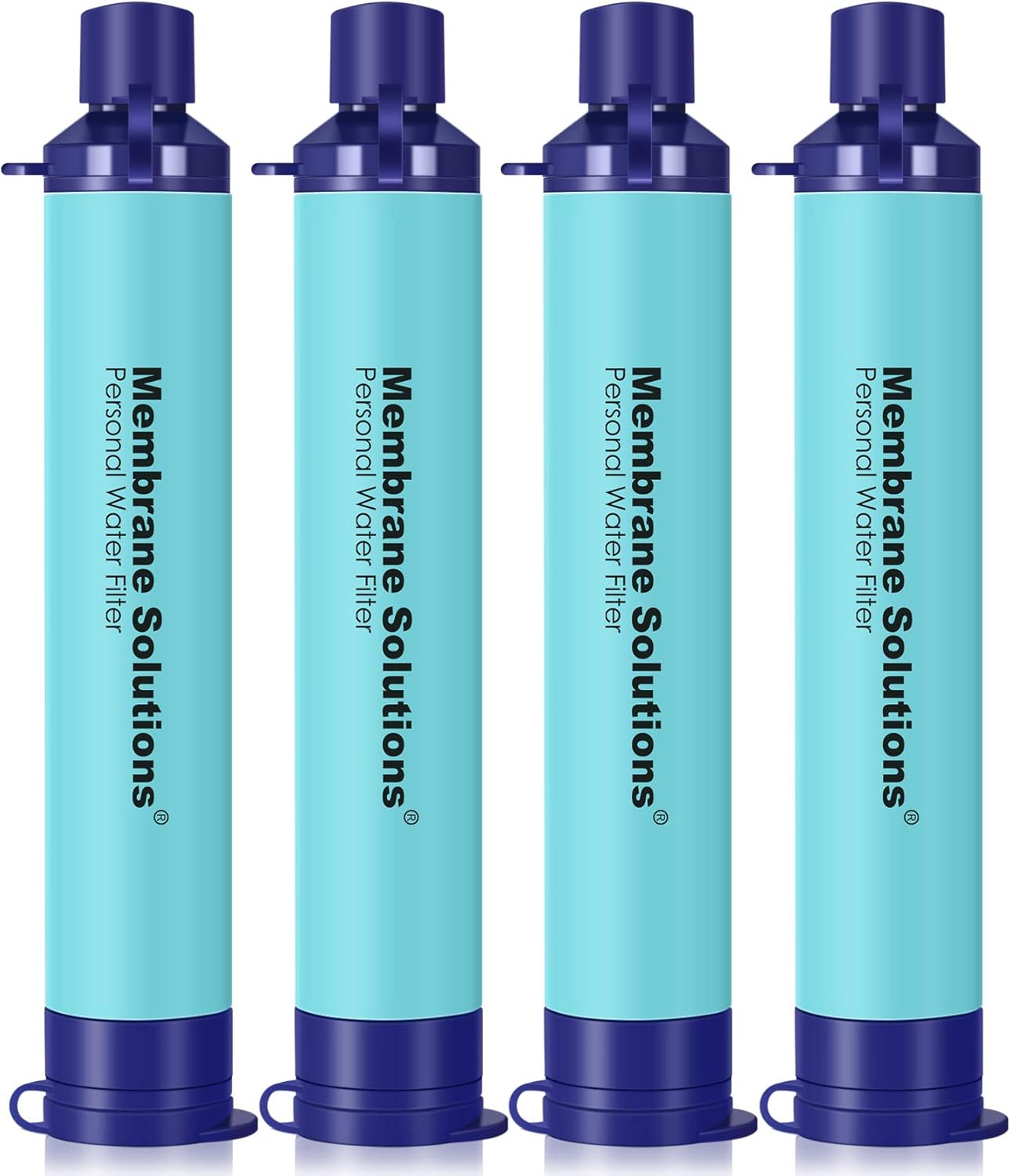
The Practical Survival Emergency Water Straw 2-Pack is a compact, hollow-fiber membrane personal filtration system designed for backcountry hydration and disaster preparedness. Weighing roughly 2 ounces per straw, this portable setup is engineered to strip contaminants directly out of freshwater streams, remote alpine lakes, and municipal lines compromised during severe weather events. Outdoor enthusiasts such as backpackers, day hikers, canoe campers, solo explorers, and family emergency planners will find this gear particularly practical. Having two individually sealed filters in a single pack allows outdoor partners to carry individual backups or lets a family keep one unit in a hiking daypack and the other in a vehicle roadside kit.
In real-world trail conditions, getting clean water quickly is vital to prevent dehydration and fatigue. Based on product specifications, each straw utilizes a 0.1-micron hollow-fiber membrane that effectively captures over 99.99 percent of waterborne bacteria, such as E. coli, alongside protozoan parasites like giardia and cryptosporidium. Filtering water from a backcountry creek can be done directly by removing the protective end caps, submerging the base for roughly 20 seconds to prime the internal fibers, and sipping directly through the mouthpiece. For campers who prefer not to crouch along muddy riverbanks, the 28mm base threading screws directly onto standard plastic soda or water bottles, turning a simple disposable bottle into an efficient squeeze-filtration bottle on the go.
Build quality centers around durable, BPA-free plastic construction that meets FDA standards for food contact. Measuring 8 inches long with a slim 1.5-inch diameter, the cylindrical casing fits neatly into exterior pack sleeves, fishing tackle boxes, or deep jacket pockets. The inclusion of an individual backflushing plunger for each straw is a major practical advantage over basic survival straws that rely solely on blow-back pressure. Backflushing with clean water under syringe pressure dislodges built-up silt, organic sediment, and particulate matter, which keeps the flow rate steady across extended camping trips and helps achieve the impressive 1,800-gallon filter lifespan.
Ease of maintenance and long-term care are straightforward but require attention to environmental factors. Because hollow-fiber filters retain moisture inside their fine capillary tubes after use, campers venturing out in sub-freezing conditions must keep the filter warm, such as inside an internal jacket pocket or within the footbox of a sleeping bag at night. If wet fibers freeze, the ice expansion can rupture the internal membrane and compromise filtration without visible external damage. For post-trip storage, thoroughly flushing the unit with clear water, pushing air through with the cleaning plunger, and allowing the unit to air-dry completely before replacing the protective caps prevents musty odors and keeps the straw ready for the next adventure.
While this personal filtration straw handles biological threats and microplastics with ease, users should remember its operational boundaries. It does not treat chemical runoff, industrial pollutants, salt water, or heavy metals, so campers should still choose clear, running mountain water whenever possible. For weekend backpackers seeking a reliable primary or secondary filter, overlanders packing lightweight redundancies, and homeowners preparing for unexpected municipal water disruptions, this two-pack represents a sensible, high-value investment in outdoor safety and emergency readiness.
Proper maintenance is essential to keep the Practical Survival Water Straw flowing freely throughout extended backcountry excursions. Before your first sip from a natural water source, always submerge the bottom intake for 15 to 20 seconds so the internal hollow-fiber membranes can prime. After drinking, blow a quick burst of air back through the mouthpiece to clear excess water and dislodge large sediment particles from the intake screen.
Whenever you return to camp or complete a trek, utilize the included cleaning plunger to backflush the filter with clean, treated water. Forcing clean water backward through the mouthpiece pushes out trapped debris and silt that ordinary mouth-blowing cannot dislodge. Continue backflushing until the output water runs completely clear, then use the empty syringe to push air through the filter to evacuate remaining moisture.
Long-term storage requires complete air drying before sealing the protective rubber end caps. Store the dry straws in a cool, dark cabinet away from direct sunlight. Most importantly, never allow a damp or wet filter to freeze during cold-weather outings, as ice crystals can permanently tear the microscopic hollow fibers and destroy the filter membrane.
Ultralight hikers and long-distance backpackers will appreciate the minimal footprint of this filtration straw. Weighing a mere 2 ounces and measuring 8 inches by 1.5 inches, it adds virtually zero noticeable bulk to a multi-day base weight. It fits snugly into trail runner vest pockets, backpack side stretch pockets, or compact medical pouches.
The versatility of the 28mm threaded base enhances portability by eliminating the need to pack proprietary plastic water pouches. Campers can simply repurpose standard lightweight plastic bottles found at any convenience store. This compatibility allows you to scoop dirty water on the move, seal the bottle, and filter your drinking water as you hike down the trail.
For group basecamps or hunting shelters, the straw can also integrate into DIY gravity-fed hanging systems using compatible hoses and bags. This multi-use capability means you can leave heavy, complicated mechanical pump filters behind on weekend trips without sacrificing hydration safety.

Pros
- Featherlight 2-ounce weight makes it effortless to pack on long-distance backpacking treks or day hikes.
- Versatile use options include sipping directly from natural streams, screwing onto 28mm bottles, or running a gravity setup.
- Includes individual cleaning plungers for each filter, simplifying field maintenance and extending lifespan.
- Five-pack configuration offers tremendous value for families, outdoor groups, or multi-vehicle emergency kits.
Cons
- Hollow fiber membranes can be damaged if frozen after first use, requiring careful cold-weather storage inside a sleeping bag or jacket.
- Does not remove dissolved chemical contaminants, heavy metals, or water odors without an activated carbon stage.
- Not compatible with modern thin-walled disposable water bottles that feature ultra-short neck threading.
The Practical Survival Emergency Water Straw 5-Pack is a versatile hollow-fiber personal filtration system engineered for backcountry trekking, dispersed car camping, and comprehensive disaster readiness. Tailored for backpackers, family campers, overland travelers, and budget-conscious preppers, this multi-pack equips an entire household or outdoor group with reliable water purification tools. Each individual filter tips the scales at just two ounces, making it effortless to distribute across bugout bags, daypacks, glove boxes, and hunting vests without adding noticeable trail weight.
Filtering water from a backcountry stream or pond requires thorough protection, and these straws utilize a 0.1-micron hollow fiber membrane that stops 99.99 percent of waterborne bacteria, cysts, and protozoan parasites like Giardia and Cryptosporidium. With a rated capacity of up to 1,800 gallons per straw, a single filter provides years of hydration capability when properly maintained. Whether you are gathering water while hiking into a remote campsite, weathering a surprise municipal boil-water notice, or cooking breakfast at sunrise along a high-country trail, this system reliably produces clear, palatable drinking water from murky wilderness sources.
One of the most practical aspects highlighted in user reviews is the threaded base, which connects directly to standard 28mm bottle necks. Campers do not need to rely solely on lying flat on a muddy bank to sip from a stream; you can scoop dirty water into a standard soda bottle or compatible soft flask, screw the filter onto the top, and drink directly or squeeze clean water into a camp cookware pot. The straw also integrates cleanly with gravity feed tubing, allowing solo adventurers or family groups to hang a dirty water reservoir from a tree branch for hands-free camp hydration.
Built with durable, BPA-free plastic bodies, these straws are engineered to withstand the jostling and dropping associated with rugged trail life. Unlike many compact filters that require separate maintenance kits, each filter in this five-pack includes its own dedicated backflushing syringe. Backflushing with clean water clears out trapped sediment and organic matter, restoring flow rate after filtering silty river water. Campers should keep in mind that, like all hollow-fiber filters, freezing conditions can compromise wet internal fibers, so keeping wet filters inside a jacket or sleeping bag during cold mountain nights is essential.
While these filters excel at eliminating biological hazards and microplastics, they do not neutralize chemical runoff, heavy metals, or viruses, which means backcountry travelers should always select the cleanest available moving water source. For outdoor enthusiasts seeking an affordable, shelf-stable, and highly portable water filtration solution, this five-pack delivers unmatched versatility and peace of mind. It stands as a top-tier recommendation for family campers stocking their supplies, weekend warriors assembling bugout bags, and backpackers looking for dependable backcountry hydration.
Proper maintenance is the key to preserving the high flow rate and extended lifespan of these survival water straws. After filtering cloudy or sediment-heavy water from backcountry streams, use the included backflushing plunger to push clean, filtered water backward through the mouthpiece. This reverse pressure dislodges silt and biological matter trapped against the outer surface of the hollow fibers, preventing premature clogging and slow sips.
Before packing the straws away for long-term storage in a home emergency kit or vehicle trunk, flush them with clean tap water and push air through the filter using the plunger to expel residual moisture. Allow the units to dry completely before replacing the protective end caps. Always protect wet filters from freezing temperatures during cold-weather expeditions, as expanding ice crystals can crack the internal microscopic pores and render the filtration membrane ineffective.
Weighing only two ounces per unit and measuring eight inches in length, these water filter straws represent one of the most space-efficient hydration tools available for outdoor enthusiasts. Their slender, cylindrical profile slides effortlessly into exterior backpack bottle sleeves, hydration pack pockets, tactical pouches, and fishing vests without crowding out other essential trail gear.
Because the straws require no batteries, pumping mechanisms, or chemical treatment tablets to operate, they eliminate the mechanical weight often associated with bulky camp water purifiers. The lightweight five-pack format makes it simple to store individual filters across multiple vehicles, family camping bags, and bugout supplies, ensuring that dependable, clean drinking water is always within arm's reach during unexpected situations.
Pros
- Ultralight and compact design saves pack space and weight for backpackers and hikers
- Highly effective filtration removes bacteria, protozoa, and microplastics, meeting EPA standards
- Multiple usage modes (squeeze, straw, inline) adapt to different water sources and setups
- Long filter life of up to 100,000 gallons reduces long-term costs
- Easy to clean and maintain with the included syringe, keeping flow rates consistent
Cons
- Included 16-ounce pouch is small; many users prefer upgrading to a larger bladder or using Smartwater bottles
- Flow rate is slower than larger pump filters, especially when filtering from silty or murky water
- Does not remove viruses, heavy metals, or chemicals, so not suitable for all water sources without additional treatment
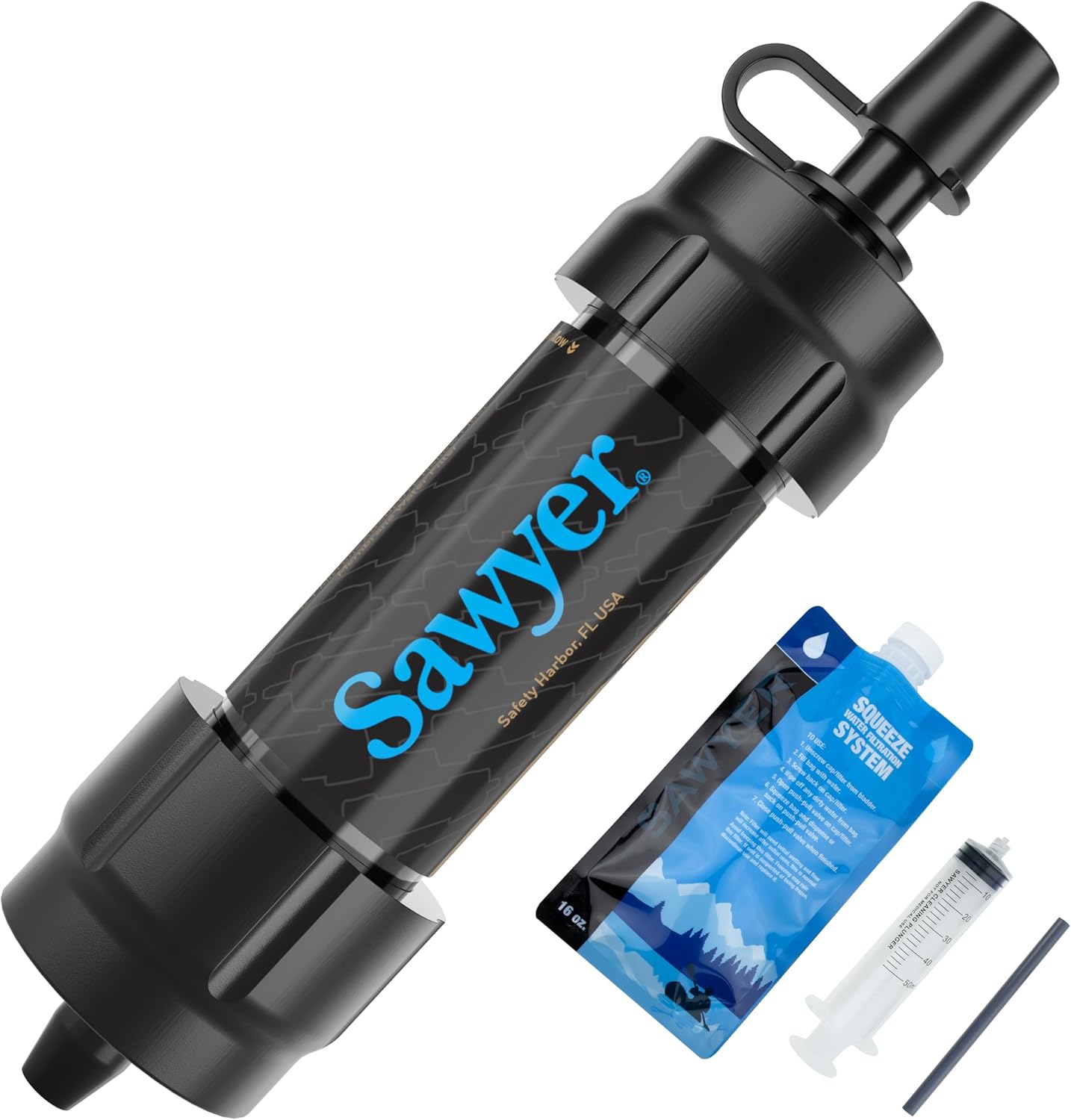
The Sawyer Mini Water Filtration System is a compact personal water filter designed for outdoor enthusiasts who need reliable hydration without the bulk. Weighing just 2 ounces and small enough to fit in your palm, it is a favorite among backpackers, hikers, and campers looking to reduce pack weight while ensuring safe drinking water from natural sources. The filter uses a hollow fiber membrane with 0.1 micron absolute filtration, capable of removing 99.99999% of bacteria like E. coli and Salmonella, as well as 99.9999% of protozoa such as Giardia and Cryptosporidium, plus all microplastics. This level of performance makes it suitable for use in backcountry streams, lakes, and even questionable tap water while traveling.
In real-world camping scenarios, the Mini shines in its versatility. Users report attaching it directly to standard 28mm disposable water bottles, such as Smartwater bottles, for a lightweight gravity-fed or squeeze setup. It can also be used inline with hydration packs or as a straw to drink directly from a water source. While the included 16-ounce pouch is functional, many experienced campers suggest replacing it with a larger bladder like the CNOC Vecto or a 32-ounce collapsible canteen for more efficient water collection. The flow rate is adequate for personal use, typically taking a minute or two to fill a 32-ounce bottle when the water is clean, but it slows down with sediment-heavy water. Backflushing with the included syringe quickly restores the original flow rate.
Build quality is notable for its price point. The filter element is encased in a protective housing that withstands drops and rough handling. Sawyer tests each filter three times during manufacturing for consistency. The membrane fibers are thicker than many competitors, allowing for repeated forceful backwashing without damage. However, the filter does not remove viruses, heavy metals, or chemical pollutants, so it is best for freshwater sources that are microbiologically contaminated but not chemically polluted. For treks in areas with potential virus risk, pairing with a chemical treatment or UV purifier may be wise.
Setup is straightforward: just connect the filter to a clean bottle or pouch, fill the source container with untreated water, and squeeze or hang it. Takedown and storage are equally simple; the filter can be stored wet indefinitely as long as it is not allowed to freeze. Cleaning involves backflushing after each use or when flow decreases. The included syringe makes this quick and mess-free. Some users note that the straw mode requires lying close to the water source, but it works well for shallow streams.
The main limitations come down to flow rate and the small included pouch. Additionally, the filter's output is best for personal or small group use; if you need to filter several liters quickly for a family, a larger gravity system may be more convenient. Despite these points, the Sawyer Mini remains an excellent value for its price. It is a favorite among ultralight backpackers, thru-hikers, and emergency preppers who prioritize weight and reliability. For weekend warriors, solo adventurers, and anyone building a compact survival kit, this filter offers dependable performance that is hard to beat.

Pros
- Rapid gravity-fed flow rate delivers up to 1.75 liters per minute with zero manual pumping effort
- Generous four-liter clean and four-liter dirty reservoir capacity easily supports group basecamp demands
- Lightweight 11.5-ounce trail weight stows compactly into included zippered storage sack
- Field backflushing takes just seconds to clear sediment and maintain steady flow rates
Cons
- Hollow fiber filter requires freeze protection in sub-freezing temperatures to avoid membrane damage
- Requires a suitable tree limb or elevated hanging spot to achieve maximum gravitational flow
- Does not remove viruses or dissolved chemical contaminants without supplemental purification tablets
The Platypus GravityWorks 4L Filter System is a dedicated high-capacity gravity water filter designed to supply clean water for group treks, scouting troops, family campgrounds, and remote basecamps. Unlike traditional hand-operated pump filters that demand repetitive physical effort after a long day on the trail, this system utilizes natural gravity to do the heavy lifting. Delivering an impressive eight liters of total capacity (four liters dirty and four liters clean), it eliminates the standard bottleneck at the camp water source.
In terms of backcountry performance, the system delivers an exceptional flow rate of up to 1.75 liters per minute under optimal conditions, filling the entire four-liter clean reservoir in roughly two and a half minutes. Its hollow-fiber microfilter meets all EPA and NSF guidelines by removing 99.9999% of bacteria and 99.9% of protozoa, including Giardia, Cryptosporidium, E. coli, and Salmonella. Whether filtering from clear mountain streams or silty alpine lakes, it provides safe, clear drinking water for rehydrating meals, filling morning coffee pots, and replenishing multiple hydration bladders simultaneously.
Build quality reflects Cascade Designs' outdoor engineering standards, featuring rugged, BPA-free polyurethane reservoirs that resist punctures and abrasion against rough granite and bark. The hoses attach securely with color-coded quick-disconnect fittings, minimizing the risk of cross-contaminating clean lines with dirty water. At an overall trail weight of just 11.5 ounces, the complete setup rolls down into a compact package smaller than most one-liter water bottles, making it remarkably lightweight for the volume of water it produces.
Ease of use in the field is a major highlight. Filling the dirty reservoir is straightforward thanks to its wide-mouth zip-top opening, allowing quick scooping directly from calm lake surfaces or shallow creeks. Once hung from a tree branch or camp shelter beam, the system starts running automatically. Maintaining peak performance in silty conditions is equally simple: lifting the clean bag above the dirty bag backflushes the hollow fibers in four seconds flat, promptly clearing trapped particulates without needing special syringes or tools.
As with all hollow-fiber microfilters, there are practical considerations to keep in mind. The cartridge must be kept warm inside a jacket pocket or sleeping bag during sub-freezing alpine trips, as freezing while damp will permanently damage the microscopic pores. It also requires an elevated hanging point of roughly four to six feet for optimal flow, and it will not eliminate viruses or heavy chemical pollutants. For standard North American wilderness use, however, the Platypus GravityWorks 4L is a standout investment for family campers, weekend warriors, and extended backpacking groups seeking hassle-free camp hydration.
Setting up the Platypus GravityWorks 4L takes less than two minutes at camp. Unroll the dirty reservoir, open the wide top, and scoop water from your source. Seal the secure slider closure, attach the dirty hose to the microfilter cartridge following the directional flow arrow, and hang the reservoir from a sturdy tree branch or campsite post using the integrated strap.
Connect the exit hose from the filter to the four-liter clean reservoir or directly into your personal water bottles. Open the inline hose shutoff clamp to start the gravity-fed flow. When finished, close the clamp to stop the flow instantly, providing an on-demand camp spigot for washing hands, brushing teeth, or filling cookware.
Routine field cleaning is fast and requires no tools. When water flow begins to slow due to silt or organic sediment, simply lift the clean reservoir above the dirty reservoir for four to five seconds. This reverses the water direction through the hollow-fiber membrane, dislodging trapped particles and restoring the standard flow rate.
Before long-term off-season storage, flush the system with a mild bleach solution (two drops of unscented household bleach per liter of water) to inhibit bacterial growth. Allow all components, hoses, and reservoirs to air-dry completely in a shaded area before packing them away. Always prevent the filter cartridge from freezing once wetted to safeguard the microscopic filtration channels.
What E. coli Filtration Claims Mean in Practice
Many water filters are built to improve taste or reduce particles, not to make microbiologically unsafe water safe. A carbon pitcher cartridge, for example, should not be assumed to remove E. coli unless its documentation specifically supports that use. Match the treatment claim to the contaminant rather than relying on a broad label such as “purifies” or “cleans” water.
The listed portable products use filtration approaches intended for outdoor water treatment, and their supplied product information specifically names E. coli. Sawyer lists a 0.1 micron absolute inline filter and states that the MINI removes 99.99999% of bacteria, including E. coli. The PracticalSurvival straw descriptions state removal of more than 99.99% of waterborne bacteria, including E. coli.
Those are manufacturer-provided product claims, not a guarantee that every unit will perform identically under every field condition. They do not establish that the products reduce every possible contaminant, such as dissolved chemicals, fuel, pesticides, or salts. They also do not replace an official public health instruction, a water test, or a treatment method specifically required for a particular contamination event.
Why filtration claims are specific to the device
Filters differ in pore structure, media, construction, and intended use. A pore-size specification can help describe physical filtration, but a buyer should not infer performance against a pathogen from a number alone. The product’s stated reduction claim and its instructions matter, including the source water conditions and any restrictions the manufacturer gives.
Certification language also needs careful reading. The supplied data for the featured products provides manufacturer performance statements, but it does not supply independent certification documentation for these specific models. Do not describe them as NSF-certified or independently verified unless current documentation for the exact product supports that claim.
A filter’s target list is not a universal safety certificate. A device may address bacteria and protozoa yet leave dissolved chemicals or viruses untreated. Conversely, a taste-and-odor cartridge may reduce certain aesthetic compounds without being designed for microbial protection. Separate the questions: what organism is present, what treatment is claimed for it, and what other hazards could be in the water?
Untreated water needs more than a visual check
E. coli contamination cannot reliably be identified by looking at, smelling, or tasting water. Clear water may still carry microbes, and unpleasant taste does not identify a specific organism. Risk can arise from sewage, animal waste, flooding, damaged wells, or other contamination pathways, but the source alone cannot confirm which pathogen is present.
Private well owners should use a qualified laboratory and follow local public health guidance when microbial contamination is suspected or confirmed. A household filter should not be selected as a substitute for understanding the test result. Public water users should follow their utility’s notices and local advisories, particularly during a boil-water advisory or after a disruption.
Do not assume a portable straw filter overrides an official boil-water notice. Use the treatment method specified by public health authorities, and contact the relevant health department or water utility if instructions are unclear. A portable filter can be useful for its intended outdoor or emergency role, but that does not make it a universal emergency response for every contaminated supply.
What the Listed Portable Filters Specify
The product descriptions make the Sawyer MINI and PracticalSurvival straws the clearest matches for a buyer specifically seeking a stated E. coli reduction claim. The Sawyer MINI is described as a 2-ounce, 0.1 micron absolute inline filter that can connect to a drinking pouch, a standard 28 mm disposable bottle, or a hydration pack, or be used with a straw. Those connections may help with packing and water transfer, but confirm the current package contents and directions before purchase.
Sawyer’s supplied description states that the MINI removes 99.99999% of bacteria, including E. coli, and 99.9999% of protozoa, including Giardia and Cryptosporidium. It also lists a filter rating up to 100,000 gallons and includes a cleaning plunger. These specifications are manufacturer claims; actual service life and performance depend on use and care, so do not treat the rated capacity as a promise that a neglected or damaged filter remains effective.
The PracticalSurvival straw descriptions state that each straw removes more than 99.99% of waterborne bacteria, including E. coli, and more than 99.99% of waterborne parasites. They describe each unit as weighing 2 ounces, measuring 8 inches, and having a potential capacity up to 1,800 gallons depending on sediment load and maintenance. The listings mention an included backflushing plunger, a feature relevant to maintaining flow as the filter is used.
The two-pack and five-pack versions share the described individual straw specifications, while the number of filters in the package differs. A larger pack can provide spares for a group or emergency kit, but the right quantity depends on how many people need equipment and how each person will collect water. Avoid confusing package quantity with the rated capacity of one individual filter.
Gravity-fed group use is a different setup
The Platypus GravityWorks Group Camping Water Filter is described as a gravity-fed system for groups and basecamps. Its listing states that it meets EPA/NSF guidelines for removal of 99.9999% of bacteria and 99.9% of protozoa, including E. coli, and gives a flow description of four liters in 2.5 minutes. It includes separate dirty- and clean-water reservoirs, hoses, a shutoff clamp, and a replaceable cartridge rated up to 1,500 gallons.
That reservoir-based format differs from a personal straw: it can collect and filter water for shared camp use rather than requiring each person to drink directly through an individual device. Its larger kit and group-oriented design may be useful at a basecamp, while a compact personal filter may be easier to carry for solo travel. Neither description establishes suitability for a home plumbing installation or every possible contaminated source.
Two supplied product entries use the Sawyer MINI name but have different ASINs and listed ratings. Buyers should compare the current product page, included accessories, seller, and exact model details instead of assuming that separate marketplace listings are identical in every respect. The product specifications supplied here support the filtration claims noted above, not a conclusion about marketplace listing consistency.
Using a Portable Filter Without Undermining Its Purpose
Follow the instructions supplied with the exact device. Do not force water through a filter in a way the manufacturer does not describe, and do not modify fittings or use an incompatible container. With a personal straw, the source, drinking end, and clean-side connections should be kept distinct to reduce the chance of transferring untreated water onto the side intended for filtered water.
Cross-contamination can defeat otherwise suitable equipment. Keep the mouthpiece, clean reservoir, and any clean bottle opening away from dirty hands, untreated water, and surfaces that have contacted the source. When filling a clean container, avoid dipping its opening into untreated water or setting the cap on a contaminated surface.
Backflushing is specifically mentioned for the PracticalSurvival straws, and the Sawyer MINI listing includes a cleaning plunger. Use only the maintenance method and frequency in the applicable product instructions. Improvised cleaning, excess pressure, or an unsuitable tool could damage a filter or create a false sense of security.
Sediment can affect flow and service life. The PracticalSurvival descriptions explicitly say capacity depends partly on how much sediment is being filtered and how well the unit is maintained. If flow changes noticeably, do not assume that pushing harder or continuing indefinitely is an adequate fix; check the manufacturer’s troubleshooting and replacement guidance.
Storage also matters. The supplied product data describes sealed individual packaging for the PracticalSurvival straws, but does not provide every storage condition or freezing restriction. Keep the product in accordance with its instructions and inspect it for damage, missing parts, or compromised packaging before relying on it. If the filter has been exposed to conditions the manufacturer warns against, follow the stated replacement or safety advice.
Know what a bacteria claim does not cover
A stated bacteria reduction claim is not the same as a claim for every pathogen. The Sawyer and PracticalSurvival descriptions also name protozoa, but the supplied information does not state virus reduction for those products. Do not infer virus protection from an E. coli statement, a pore-size number, or a general “water filter” label.
Physical filtration also does not necessarily remove dissolved chemical contaminants. If water may contain industrial chemicals, agricultural runoff, heavy metals, or other non-microbial hazards, check the filter’s exact contaminant claims and seek local guidance. A product intended for bacteria and parasites may not be appropriate for a source with a separate chemical risk.
Cloudiness and sediment create another practical complication. Visible particles do not prove that E. coli is present, and clear water does not prove it is absent. Heavy sediment can also burden a portable filter, so choose a source and follow any manufacturer guidance about water conditions rather than treating the filter as a reason to use visibly contaminated water without judgment.
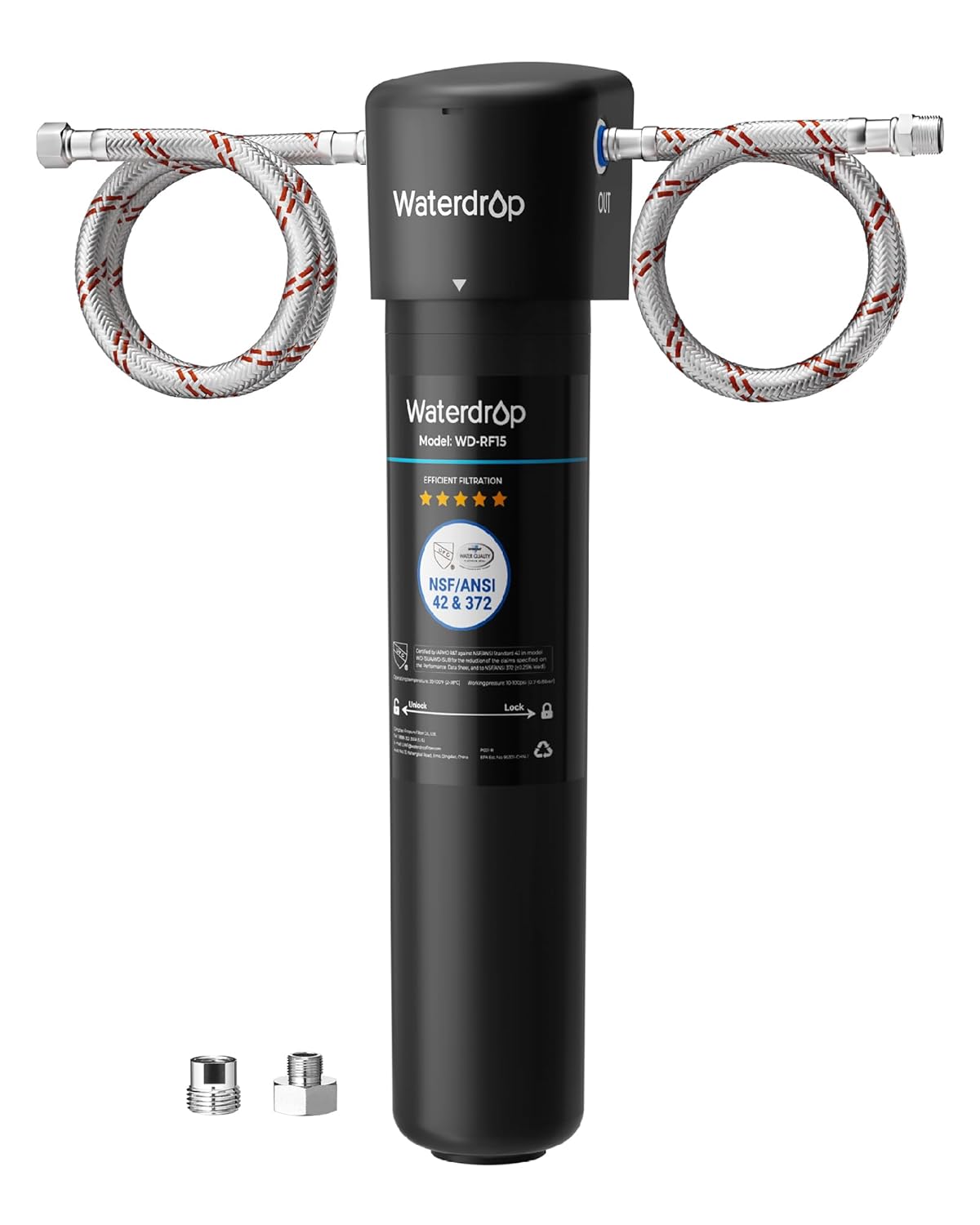
For municipal water, a personal outdoor filter is usually a different purchase decision from a point-of-use household purifier. Buyers comparing household options can consult our overview of non-RO home water purifiers, while checking each system’s documented target contaminants. Do not carry over a portable filter’s bacteria claims to a residential system, or assume a household taste filter handles pathogens.
Choosing Between Personal and Group Filtration
Choose a personal straw when direct drinking from a source is central to the use case and the product directions support that use. The Sawyer MINI’s listed attachment options offer more connection choices than a simple straw, while the PracticalSurvival products emphasize compact, individual filters with backflushing plungers. Buyers should weigh carrying style, included accessories, maintenance, and how water will be stored or shared.
A gravity system may suit a group that wants filtered water collected in a clean reservoir for cooking or drinking. The Platypus listing describes a four-liter clean reservoir and a pump-free gravity design, but that system requires carrying its reservoirs, hoses, and filter. That added setup may be worthwhile for shared camp use but less convenient for someone who only needs a personal drinking filter.
Capacity figures are not interchangeable. Sawyer lists up to 100,000 gallons for the MINI, the PracticalSurvival straws list up to 1,800 gallons per filter, and the Platypus cartridge lists up to 1,500 gallons. These are product-specific manufacturer ratings, not a direct comparison of real-world service life under identical water conditions. Sediment, maintenance, and use patterns can change how long a filter remains practical.
Package contents can matter as much as headline capacity. The Sawyer MINI listing includes one filter and a cleaning plunger, while the PracticalSurvival listings specify individual backflushing plungers for the straws. Platypus includes reservoirs and hoses as part of a group kit. Check the current listing for the exact items included, since package details can influence whether extra containers or accessories are needed.
Brand names and ratings are not substitutes for an exact claim. Read the model-specific description and instructions for E. coli, protozoa, viruses, chemical contaminants, capacity, and maintenance. A high rating or many reviews cannot establish that a filter addresses a contamination issue that the manufacturer does not identify.
When a Portable Filter Is Not the Right Answer
Confirmed contamination in a private well calls for a response based on the laboratory result and local health guidance. A portable device may be useful during travel or as part of emergency preparation, but it does not repair a compromised well or identify the source of contamination. Well owners should address the cause with qualified help and follow instructions for retesting and safe use.
Flooding, sewage releases, or a public advisory can involve hazards beyond the organisms named in a product description. Follow the utility or public health authority’s instructions rather than making a treatment decision from a product listing. If those instructions specify boiling or another treatment, do not substitute a basic carbon filter or portable straw without explicit approval from the authority.
Household systems also require a different evaluation. A residential unit must be selected for the incoming water, targeted contaminants, installation location, and maintenance plan. The product data here does not provide plumbing connections, home flow ratings, or household installation directions for the portable options, so those details should not be assumed.
Health risk can vary by the person exposed and the source conditions. For drinking water with suspected microbial contamination, especially where infants, older adults, or people with weakened immune systems may be affected, seek timely advice from local health authorities or a healthcare professional. This guidance is not a diagnosis or a substitute for official contamination response instructions.
In short, some portable filters do list E. coli reduction, and the supplied Sawyer, PracticalSurvival, and Platypus descriptions provide product-specific claims. The practical choice depends on personal versus group use, exact instructions, water conditions, and the distinction between bacteria treatment and broader water safety. Verify the exact model’s current documentation and follow public health guidance whenever contamination is suspected or confirmed.



Write Your Review
No reviews yet. Be the first to share your experience!