


Keep moisture out of your compressed-air line
Water and oil carried through an air line can leave marks on a finish, affect pneumatic tools, and make routine shop work frustrating. A separator or dryer can help collect moisture and particles, but the right setup depends on your compressor, air demand, connection size, and the level of drying your application needs. That’s why the best air compressor water filter isn’t automatically the biggest or most expensive unit.
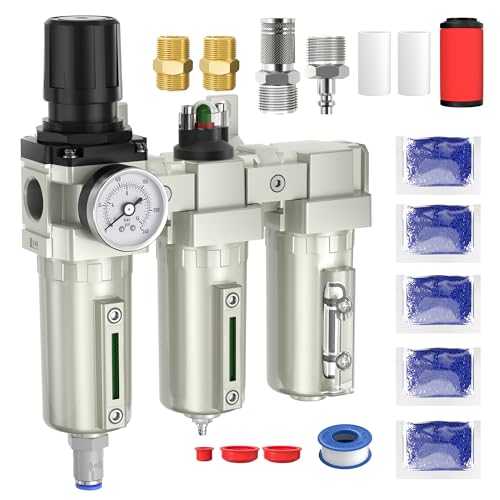
Product descriptions in this selection list options ranging from compact filters with manual drains to three-stage assemblies with regulators, coalescing filters, desiccant dryers, and metal bowls. Some models are designed for standard shop compressors, while others are described for high-pressure PCP, paintball, or tank-filling applications. Check the stated pressure range and connection type against your equipment before ordering, and don’t assume a shop air filter is suitable for breathing air. The listed AIRZOE filter specifies a 5-micron brass element, while several other listings provide no micron rating, so verify the details that matter for your use.
For a wider look at water filtration topics, see this guide to installing an inline RV water filter. Air-line moisture treatment is a different job from drinking-water filtration, but both call for matching the product to the source and following maintenance directions. Compare port size, drain type, bowl construction, and service requirements before settling on a unit. Those practical details can matter more than a broad claim about clean, dry output.




FAQs
What does an air compressor water separator remove?
A water separator is designed to collect moisture from compressed air, and some models also include particulate or coalescing filtration. It won’t make compressed air safe to breathe unless the complete system is specifically designed and rated for that purpose. Check the manufacturer’s claims and required maintenance for your application.
Is a 5-micron air filter suitable for every compressor?
No, suitability depends on your equipment and the air quality your task requires. The AIRZOE 3/8-inch model lists a 5-micron brass element, but micron rating alone doesn’t establish compatibility or guarantee removal of every contaminant. Confirm port size, pressure limits, and the compressor manufacturer’s recommendations.
Should I choose a manual, semi-auto, or auto drain?
Choose a drain style you can maintain consistently. The AIRZOE 1/4-inch filter lists a manual drain, its 3/8-inch model lists a semi-auto drain, and several larger assemblies describe an auto drain. Drain operation and upkeep vary, so read the product instructions and check the bowl regularly.
How do I match NPT port size to my air line?
Match the filter’s listed NPT connection to your line and fittings, or use properly rated adapters if needed. The products here include 1/4-inch, 3/8-inch, 1/2-inch, 3/4-inch, and 1-inch connections. Don’t select by size alone; consider required airflow and pressure limits as well.
Can a shop air filter be used for PCP or paintball tank filling?
Only use a filter that the manufacturer specifies for the relevant high-pressure application. The GX-PUMP and GOYOJO listings describe 5800 PSI PCP filtration, while ordinary shop-line separators have different stated uses and pressure ranges. Confirm the compressor, fittings, and complete filling setup are rated for your application, and follow the equipment instructions.
Does a three-stage dryer eliminate all air-line maintenance?
No, a multi-stage system still needs inspection and upkeep. The listed three-stage units describe particulate filtration, coalescing filtration, and a desiccant dryer, but the product information provided doesn’t specify service intervals or media life. Follow the manufacturer’s directions for checking drains, bowls, and replaceable drying media. For a separate drinking-water topic, this non-RO water purifier overview covers household water treatment options.


Write Your Review
No reviews yet. Be the first to share your experience!