


Carbon options for better-tasting water
A sharp chlorine note can overpower coffee, while sediment and off-odors can make everyday tap water less appealing. The best charcoal water filter depends on where you need filtration: a coffee maker, a countertop distiller, a personal bottle, or a whole-house cartridge housing. These products use different formats, so check the appliance model, cartridge dimensions, and stated replacement schedule before buying.
This roundup draws on listed specifications and product claims, not independent water testing. Carbon media is commonly used to reduce chlorine taste and odor, but these products should not be treated as a universal solution for lead, PFAS, microbes, or unknown well-water contamination. For broader home-treatment context, see this guide to a non-RO water purifier for home use. If you’re replacing a pitcher cartridge, this guide explains how to remove an old water filter safely.
The options range from Cuisinart coffee filters to 1-micron, 10-inch carbon cartridges and loose charcoal sticks. Match the application first, then compare the media, certification claims, capacity, and maintenance steps. That small bit of checking can save you from a filter that fits the housing but doesn’t address your water concern.

Pros
- Excellent value for a 12-pack – much cheaper than Cuisinart brand filters, with same performance according to user reviews.
- Fits a wide range of Cuisinart models, including many older machines, making it a versatile replacement.
- Simple to swap out – no tools needed, and the filter reminder dial helps you keep track of replacement schedule.
- Improves coffee flavor noticeably, especially if you're using tap water at a campground or RV park.
Cons
- Not compatible with Keurig or other single-serve machines – only works with Cuisinart coffeemakers that require a charcoal filter.
- Some users report a slight initial charcoal taste if the filter isn't soaked long enough before first use.
- Each filter lasts about 30-60 days depending on water hardness, so you may need to replace more often with heavy use.
If you enjoy a hot cup of coffee while camping, the water quality can make or break the experience. Many campgrounds and RV parks have hard or chlorinated tap water, which can leave a bitter aftertaste. The BRENSTEN 12 Pack Replacement Charcoal Water Filters are designed for Cuisinart coffee makers, filtering out impurities before brewing so you get a clean, flavorful cup every time.
These filters are best suited for campers who bring a Cuisinart coffeemaker along on car camping trips, RV adventures, or even tailgating. They are not for backpackers because of the weight and need for electricity, but for car campers and RVers who have access to power, these filters are a simple upgrade. The 12-pack gives you enough to last a full season or more, making them a practical choice for budget-conscious outdoor enthusiasts.
The build quality matches the original Cuisinart filters at a fraction of the cost. Each filter uses coconut husk activated charcoal, which is known for its high density and effective absorption of chlorine, odors, and calcium. There is also a micro-mesh outer layer that captures larger sediment. Installation is straightforward: soak the filter in water for 10 minutes, then snap it onto the water intake assembly inside the reservoir. The integrated reminder dial lets you set the date for the next replacement, which is handy when you're on the road.
In terms of real-world performance, user reviews consistently note that the coffee tastes noticeably better with these filters compared to using unfiltered camp water. They help reduce scale buildup, which can prolong the life of your coffeemaker. However, they do require soaking before first use to avoid a slight charcoal taste. Some users also mention that in very hard water areas, you may need to replace the filter every 30 days instead of 60.
One limitation is that these filters are specifically designed for Cuisinart machines that accept a cylindrical charcoal filter. They will not work with Keurig, Mr. Coffee, or other brands. Also, they are not a universal water filter for drinking water – they are only for coffee brewing. But for campers who already own a compatible Cuisinart model, this is a reliable and affordable way to improve your morning brew.
Overall, the BRENSTEN charcoal filters offer excellent value and easy maintenance for car campers and RVers. If you love good coffee and want to save money over the brand-name alternatives, this 12-pack is worth adding to your camping gear list. Just remember to pack them with your coffeemaker and enjoy a superior cup of coffee under the stars.
These filters are compatible with a wide range of Cuisinart coffee makers, including newer models like DCC-1100, DCC-1200, DCC-2000, DCC-2200, DCC-2600, DGB-475, DGB-550, DGB-600, DGB-700, DGB-900BC, Brew Central series, Grind & Brew series, and many older models. Check your machine's manual or look for the indicator that requires a charcoal filter. Each filter measures approximately 1-7/8 x 3/4 x 1 inches.
To install: soak the filter in clean water for 10 minutes to saturate the charcoal. Open your machine's lid, lift out the water reservoir assembly, and turn the reminder dial to the month you want to replace it next. Pull off the old filter and snap the new one onto the mounting post. Reinsert the assembly and press down firmly. It is that simple.
For best results, replace the filter every 30-60 days depending on your water hardness and frequency of use. If you notice a change in coffee taste or slower brewing, it is time for a replacement. The 12-pack gives you a year or more of fresh coffee at home or on the road.

Pros
- Significantly improves tap water taste and eliminates chlorine smells at RV parks and campgrounds
- Tight 1-micron pore size effectively captures fine silt from remote well water and holding tanks
- Universal 10 x 2.5 inch profile fits standard external RV filter canisters and camper van systems
- Durable coconut shell carbon construction resists channel cracking under typical camp water pressure
Cons
- Tight 1-micron rating can restrict water flow faster if connected to heavily silted or muddy water sources
- Requires a mandatory five-minute water flush before initial use to rinse away loose carbon fines
- Requires a compatible standalone 10-inch canister housing rather than connecting directly to standard hose threads
The PUREPLUS 1-Micron CTO Carbon Block Filter is a universal replacement cartridge designed for standard 10-inch by 2.5-inch water filtration canisters. For RV travelers, van lifers, overlanders with pressurized onboard water systems, and owners of off-grid camp cabins, keeping potable water fresh and pleasant to drink can be a persistent challenge. Hooking up to unknown campground spigots or filling tanks from rural wells often introduces unpleasant tastes, strong chlorine scents, and fine silt that ruin morning camp coffee and foul up camper plumbing fixtures.
This multi-pack cartridge set is well suited for RV campers, overland adventurers, seasonal cabin owners, and emergency preparedness planners who rely on canister filtration systems. Whether you are outfitting an exterior dual-canister setup mounted to your travel trailer bumper, maintaining an under-sink filtration tap in your van conversion, or filtering bulk water for a remote base camp, these carbon blocks deliver broad utility. Budget-conscious outdoor enthusiasts also benefit from the 4-pack format, which keeps maintenance costs low across multiple camping seasons.
In real-world camp settings, water quality varies dramatically from one campsite to the next. Based on product specifications and user feedback, these filters utilize dense coconut shell activated carbon sintered into a 1-micron block structure. This fine porosity traps microscopic silt, sand, and rust flakes while actively neutralizing sulfur odors and municipal chlorine treatments. Campers often notice an immediate improvement in the clarity and flavor of their drinking and cooking water. The solid carbon matrix maintains structural integrity under normal campground water pressure, providing a steady flow for washing dishes and filling hydration bladders.
Each cartridge is manufactured to standard 9 7/8-inch by 2.5-inch dimensions, ensuring drop-in compatibility with widely used 10-inch housings from brands like Pentek, Culligan, and standard camper canister assemblies. Rather than relying on separate loose gaskets that can be misplaced during quick swaps in cramped RV utility bays, the cartridge features soft molded end caps that create a watertight compression seal when the housing is tightened. Certified against NSF/ANSI 42 standards by IAPMO, each unit offers up to a 13,000-gallon capacity depending on source water clarity, translating to months of dependable outdoor use.
Potential buyers should consider that a 1-micron rating provides very tight filtration, which can slow down water flow noticeably when dealing with heavily clouded or sediment-laden rural well supplies. In those environments, pairing this carbon block with an inexpensive 5-micron sediment pre-filter in a dual-stage housing prevents premature clogging. Additionally, each new cartridge requires a brief five-minute flush prior to consumption to clear out harmless loose carbon dust. It is also vital to drain the canister before freezing winter weather, as trapped water can freeze and crack the carbon core inside an unheated camper compartment.
For extended road trips, weekend RV getaways, off-grid base camps, and general emergency preparedness, the PUREPLUS 4-pack represents a dependable, cost-effective water filtration solution. It turns uncertain campground hookups and storage tank supplies into crisp, odor-free water for cooking meals, brewing hot drinks, and staying hydrated throughout any adventure.
Installing the cartridge into an RV or camp canister takes only a few minutes. Shut off the primary water supply valve, relieve water pressure by opening a camp faucet, and unscrew the standard 10-inch filter housing using a filter wrench. Remove the old cartridge, wipe down the inside of the canister bowl, and insert the fresh PUREPLUS block with the soft end caps aligned vertically.
Thread the housing back onto the cap securely by hand and snug it gently with your wrench to ensure the soft ends seat properly against the internal stops without over-tightening. Turn the campsite water supply back on slowly while checking for leaks around the housing threads. Run the camp tap or hose for about five minutes to flush any initial carbon fines before routing the water into your drinking tank or galley sink.
To maximize cartridge longevity when traveling through areas with high sediment or well silt, consider running a coarse sediment filter upstream in a two-stage filter canister bracket. This keeps the carbon block surface free from mud, allowing the active carbon pores to focus on removing chlorine, chemicals, and unwanted tastes.
When winterizing your travel trailer or packing down camp for the off-season, always remove the cartridge from the filter canister. Shake out excess moisture and allow it to dry thoroughly, or replace it with a fresh cartridge at the start of the next season. Leaving a wet filter cartridge in an unheated RV during freezing weather can cause structural cracking and bypass leaks inside the filter housing.

Pros
- Budget-friendly 100-pack offers tremendous long-term value for RVers and off-grid setups
- Made from natural coconut shell carbon for clean, chemical-free taste polishing
- Ultralight and compact footprint makes storage effortless in camp kits or dry boxes
- Simple prep process requires only a short rinse before slotting into place
Cons
- Individual sachets are quite compact at 2 grams, often requiring two or more packets stacked together to fit standard distiller spouts
- Requires a preliminary pre-soak and rinse to clear loose carbon dust before use
The Lounsweer 100-Pack Activated Charcoal Water Filter Sachets provide an accessible, high-volume water polishing solution for outdoor enthusiasts who rely on countertop steam distillers and modular camp filtration setups. Each individual sachet contains approximately two grams of natural coconut shell activated carbon, designed specifically to capture residual volatile organic compounds, lingering chlorine, and foul mineral odors. For RV campers, overlanders, and van lifers who travel through diverse municipal and well-water hookups, having a dedicated carbon stage is critical for maintaining fresh, neutral-tasting hydration across the map.
In practical camp life, these filter packs prove especially valuable for campers who distill their own water on the road to supply sensitive CPAP machines or brew clean pour-over coffee at sunrise. Off-grid travel often introduces strange odors and sulfurous undertones into freshwater holding tanks. Running distilled water through these activated carbon sachets eliminates that plastic or mineral aftertaste, leaving water crisp and completely tasteless. Survivalists and emergency preppers will also appreciate how easily these tiny packets integrate into DIY gravity-fed camp filtration systems, serving as an effective secondary polishing stage after coarse ceramic or hollow-fiber membranes.
The build quality is centered on natural coconut shell charcoal, which is recognized for its micro-porous structure and efficient adsorption capacity. The carbon is securely packaged in porous filter paper sachets that allow steady water permeation without leaking carbon grains into your collection carafe. Weighing only 0.2 kilograms for the entire 100-piece carton, the collection takes up minimal space inside a camper van pantry, dry box, or bug-out bag. Furthermore, unused packets store cleanly for extended periods as long as they are kept sealed in dry, airtight storage away from strong camp aromas.
Ease of use is straightforward, even when setting up your gear after a long day on the trail. Preparation requires soaking the carbon sachet in clean water for five minutes, followed by a brief sixty-second rinse under running water to flush any minor carbon dust particles. Once rinsed, the sachet drops directly into the collection spout of compatible countertop distillers. Outside of drinking water systems, campers have also found practical outdoor utility by repurposing dry spare sachets as odor absorbents inside damp hiking boots, cooler corners, and airtight storage totes.
A realistic limitation reported by several users centers on size. Each sachet is relatively small, measuring around one inch square, which is noticeably smaller than standard commercial tea-bag style filters. Depending on the diameter of your distiller nozzle or filtration cup, you may need to stack two to four sachets together to create a snug seal and prevent bypass channeling. However, given the generous quantity included in the package, doubling up still yields an economical filtration lifespan. For budget-conscious road trippers, extended overlanders, and emergency preparedness planners seeking reliable water purification supplies, this bulk pack represents a practical, dependable choice.
Proper preparation ensures optimal performance and prevents black carbon fines from clouding your distilled drinking water. Before placing a new sachet into your distiller spout or filtration chamber, submerge the pouch in clean water for approximately five minutes to saturate the carbon pores. Follow this by rinsing the sachet under running tap water for about sixty seconds until the runoff appears crystal clear.
Store unused filter sachets in a sealed, airtight container or heavy-duty zip-top bag to prevent the activated carbon from prematurely absorbing ambient odors and moisture in your RV or gear locker. Replace the charcoal sachet regularly, typically after every two to four weeks of steady distilling use, or whenever you notice a slight change in the crispness and taste of your purified camp water.
Reliable water treatment is a cornerstone of any wilderness survival or domestic emergency preparedness plan. While primary mechanical filters remove bacteria and protozoa from backcountry sources, activated charcoal is uniquely suited to remove chemical runoff, agricultural odors, and chemical tastes that standard filters leave behind.
Packing several dozen of these lightweight Lounsweer sachets into a bug-out bag or emergency pantry ensures you have ample supplies to build or maintain improvised gravity filtration setups. Their lightweight footprint and long dry shelf life make them an exceptional asset for long-term self-reliance off the grid.

Pros
- Completely plastic-free, natural approach to upgrading campground water flavor
- Extremely lightweight at just 0.07 kg, adding virtually zero weight to camp kits
- Easy reactivation process requires only boiling water on a standard camp stove
- Repurposable after three months as a gear deodorizer or moisture absorber
Cons
- Does not remove bacteria or cysts and cannot make microbiologically unsafe wild water drinkable
- Requires a three to four hour contact time to thoroughly improve water taste
- Charcoal sticks are brittle and can snap if dropped onto hard rocks or campsite gravel
The IPPINKA Tosa Binchotan Charcoal Sticks provide a traditional, plastic-free solution for campers who want fresh, crisp-tasting water at camp without lugging heavy plastic pitchers. Crafted from authentic Japanese oak in the Tosa region of Japan, each stick harnesses natural activated carbon to reduce chemical odors and soften mineral-heavy water. This makes them ideal for car campers, RV road trippers, overland adventurers, and festival goers who regularly fill up water jugs at public campground spigots that carry heavy chlorine smells or metallic well-water tastes.
In practical camp kitchen use, each stick measures roughly four inches long and just under an inch in diameter, making it easy to drop straight into a wide-mouth one-liter water bottle, stainless steel growler, or camp table carafe. Over a three to four hour resting period, the porous carbon network works passively to draw out impurities and smooth out the water profile. For campers who brew morning pour-over coffee at sunrise or like having a refreshing canteen ready after a dusty afternoon hike, having a stick resting in your hydration bottle overnight makes a noticeable difference in flavor quality.
For outdoor enthusiasts heading into the backcountry, understanding proper application is critical. According to product guidelines, binchotan charcoal is designed exclusively for potable water and should not be used with microbiologically unsafe sources. It does not replace a hollow-fiber backpacking filter or UV purifier against Giardia or bacteria found in wilderness streams. Instead, think of it as a flavor conditioner for municipal, RV park, and campground water hookups, or as a secondary stage after boiling backcountry water to remove smoky or earthy aftertastes.
Build quality reflects centuries of traditional Japanese charcoal production, where wood is kilned at ultra-high temperatures and quickly smothered to yield an extremely dense, glass-like carbon stick. While dense, the sticks are naturally brittle. Tossing an unprotected stick into the bottom of a crammed gear tote alongside heavy cast-iron skillets or tent stakes can cause it to crack, so storing it inside a rigid water bottle or padded pouch during transit is recommended.
Maintenance around camp is remarkably straightforward. Before the first drop in your bottle, and every two weeks thereafter, you simply boil the sticks for ten minutes over a two-burner camp stove or backpacking burner and let them air dry. Each stick remains effective for approximately three months. Even when their water-filtering life is finished, zero waste is produced. Campers can repurpose dried sticks inside smelly hiking boots, damp dry bags, or food coolers to soak up odors, or crush them into the soil around the campsite to enrich the ground.
For weekend campers, overland vehicle dwellers, and outdoor lovers looking to kick single-use plastic water jugs to the curb, the IPPINKA Tosa Binchotan Charcoal 2-Pack is a practical, sustainable hydration companion. It transforms harsh campground tap water into clean-tasting drinking water with virtually zero weight penalty in your camp kitchen bin.
Caring for Tosa binchotan charcoal in an outdoor environment requires minimal effort and standard camp kitchen tools. Before using a new stick, rinse it thoroughly under clean tap water without soap and submerge it in boiling water for ten minutes using your camp stove. This initial boil cleanses the micro-pores and primes the charcoal for optimal adsorption.
To keep the sticks functioning effectively across a long camping season, repeat the ten-minute boiling process once every two weeks. Boiling releases accumulated minerals and impurities, reactivating the stick for another fortnight of water conditioning. Always allow the charcoal to air dry thoroughly before packing it away in an airtight container between outdoor excursions.
Never wash binchotan sticks with dish soap, detergents, or chemical cleansers, as the porous carbon will absorb the fragrance and ruin subsequent batches of drinking water. Once a stick reaches the end of its three-month water filtering cycle, break it up to aerate camp soil or keep it intact as a natural moisture and odor absorber for your vehicle glovebox or gear locker.
Pros
- Cost-effective alternative to expensive original brand gravity elements
- NSF/ANSI certified materials ensure safe, lead-free drinking water at camp
- Impressive 6,000-gallon lifespan handles heavy camp kitchen demand
- Simple drop-in installation with secure leak-resistant sealing hardware
Cons
- Requires priming with pressurized water before first use, which can be challenging at primitive campsites
- Does not lower Total Dissolved Solids (TDS) or remove dissolved natural minerals
- Bulkier and heavier than compact trail squeeze filters, making it strictly suitable for basecamps or vehicles
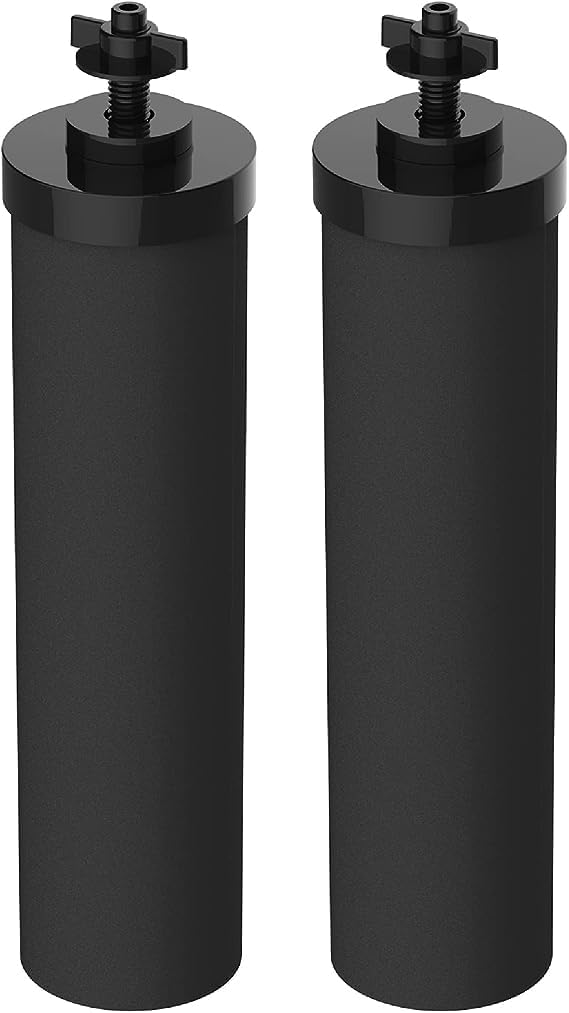
The Filterlogic FL-BF90 Black Water Filter Elements are drop-in replacement purification cartridges engineered for gravity-fed countertop systems. Designed to fit standard stainless steel gravity reservoirs like the Berkey Travel, Big, Royal, Imperial, and Crown series, these elements target the needs of basecamp managers, overlanders, RV boondockers, cabin owners, and families building reliable emergency preparedness stockpiles. While ultralight backpackers rely on pocket-sized squeeze filters, car campers and group adventurers frequently depend on large gravity urns to supply steady gallons of clean water for cooking breakfast, filling hydration packs, and brewing camp coffee.
Filtration performance centers around a dense carbon block formulation combining natural coconut shell activated carbon, granular activated carbon, and activated alumina. According to product specifications, this composite structure reduces up to 99 percent of chlorine alongside heavy metals, rust, silt, sand, and organic odors that commonly plague municipal campground spigots or rustic well sources. The steady gravity flow keeps camp kitchens running smoothly throughout the day without the arm fatigue of manual hand pumps, ensuring a continuous supply of refreshing drinking water right on the camp table.
Build quality is backed by authoritative NSF/ANSI 42 and 372 certifications, verifying that the housing and media are completely lead-free and BPA-free. Each filter element connects via an integrated threaded stem, accompanied by a resilient sealing washer and wing nut. This hardware design maintains an airtight barrier between the upper raw-water basin and the lower clean-water holding tank, preventing contaminated droplets from bypassing the carbon media during filtration cycles.
Handling and setting up these elements requires proper priming before installation. The micro-pores within the dense coconut carbon matrix must be saturated with water to displace trapped air pockets and flush loose carbon fines. Connecting the element to a standard pressurized faucet or using a priming squeeze bulb before departing on a trip makes field setup straightforward. Once installed at the campsite, the pair operates quietly without electricity, solar power, or moving mechanical parts.
Potential buyers should understand realistic field limitations before heading off-grid. These carbon elements are engineered to improve water taste, remove chlorine, and trap particulate matter, but the manufacturer notes they do not reduce Total Dissolved Solids (TDS) or extract dissolved minerals. Additionally, at 1.5 pounds for the pair, they are meant for stationary camp setups rather than multi-day trekking backpacks, and pre-priming at home is highly recommended if you plan to camp far from pressurized plumbing.
For outdoor families, overland travelers, and budget-conscious campers looking to maintain an existing gravity water canister, these replacement filters offer tremendous practical value. The 6,000-gallon rated lifespan per pair delivers reliable hydration across countless weekend outings, extended festival trips, and off-grid seasons without breaking the gear budget.
To maximize the flow rate and service life of your gravity elements, proper priming and periodic maintenance are essential. Before heading into the field, connect each filter stem to a pressurized home faucet using a priming washer to push clean water backward through the carbon block. Continue flushing until water beads uniformly across the entire black exterior and runs completely clear of natural carbon dust.
When using sediment-heavy water at primitive campgrounds or lakefront sites, the outer pores of the carbon blocks can gradually clog. If the drip rate noticeably slows down, simply remove the elements from the reservoir and gently scrub the outer surface with a clean abrasive scouring pad under running water. Avoid using dish soap, chemical cleaners, or detergents, as the carbon will absorb chemical flavors. Allow the filters to air dry completely if storing them away in your gear closet between camping seasons.

Pros
- Noticeably improves morning coffee flavor when hooked up to chlorinated or mineral-heavy campground water
- Extremely lightweight and compact for RV pantries, chuck boxes, or camper storage bins
- Quick and tool-free drop-in installation makes maintenance effortless at camp
- Generous twelve-pack provides enough cartridges for multiple camping seasons
Cons
- Engineered specifically for Cuisinart coffee makers, so it will not fit other brewer brands
- Intended solely for aesthetic filtration of potable tap water, not for backcountry stream purification
- Requires a brief pre-soak before installation to rinse out loose carbon dust
Cooking breakfast at sunrise is one of the greatest pleasures of outdoor life, but bad campground water can ruin an otherwise perfect pot of coffee. The GoodCups 12-Pack Replacement Charcoal Water Filters are practical camp kitchen maintenance accessories designed to restore clean flavor to your morning brew. Whether you travel in a motorhome, pull a travel trailer, or set up a luxury basecamp with an off-grid inverter, these replacement pods keep your coffee machine running smoothly. They are ideal for RV campers, overlanders, cabin weekenders, and seasonal campground regulars who demand great-tasting coffee off the beaten path.
Campground water hookups frequently suffer from heavy chlorination, sulfur smells, or dense mineral hardness that affects coffee flavor and cakes the internal elements of your brewer with limescale. Based on product specifications, these filters utilize activated charcoal with high adsorption capacity to capture chlorine, calcium, and volatile organic compounds. The woven outer casing maintains a steady flow rate, allowing water to pass through the filter holder into the reservoir without causing back-ups or extending brew times while you prepare a campsite meal.
Durability and packability are top considerations when stocking an RV pantry or outdoor chuck box. Weighing under three ounces for the entire twelve-pack, these cartridges take up virtually no space in a gear tote or kitchen drawer. The permeable mesh casing is securely sealed around the charcoal core to prevent leaking granules into your reservoir, and the materials are recyclable to align with low-impact camping principles. Having a multi-pack ready to go means you can swap filters as needed during cross-country road trips without searching for niche replacements in remote camp stores.
Maintenance is straightforward, making it easy to swap cartridges even when setting up camp in a hurry. Before inserting a new cartridge, simply soak it in fresh water for a few minutes and give it a brief rinse to clear residual carbon dust, then slide it into your brewer filter wand. Swapping the filter every sixty days or after a few long weekend outings keeps scale from collecting in your machine lines, which is especially useful when camping in areas known for hard well water.
Users should remember that these cartridges are strictly intended for already-potable municipal or treated campground spigot water. They are aesthetic and mineral filters designed to enhance flavor and protect kitchen equipment; they do not remove bacteria, protozoa, or biological contaminants from wilderness creeks or lakes. For safe backcountry hydration, outdoorsmen should always rely on a dedicated microfilter or purifier before brewing.
For RV owners, overlanders with shore power, glampers, and cabin vacationers who rely on a Cuisinart drip machine, the GoodCups 12-Pack is a reliable, budget-friendly camp kitchen upgrade. It provides a simple way to elevate your morning cup around the picnic table while shielding your investment from stubborn campground mineral scale.
Using these replacement charcoal filters in an RV or camp kitchen setup helps preserve appliance heating efficiency on long journeys. Hard water minerals found at state parks and remote campgrounds often leave thick white scale inside water channels, causing pumps to work harder and slowing down brew cycles. By capturing excess minerals before they reach the boiler, these filters help your brewer run efficiently when powered by generator, inverter, or campground pedestal electricity.
For optimal storage in mobile rigs, keep unused cartridges sealed in an airtight plastic storage bag inside your galley bin to protect the activated charcoal from absorbing ambient odors or campsite moisture. A quick rinse at the camper sink before dropping the cartridge into place ensures clean, clear water and rich coffee flavor with every morning brew.

Pros
- Substantially improves taste and removes unpleasant sulfur and chlorine smells from campground water hookups
- Universal drop-in fit for standard 2.5 x 10 inch water filter canisters found in RVs and campers
- Maintains impressive water pressure and flow despite the fine 1-micron sediment and carbon filtration
- Convenient 4-pack provides enough filter changes for multiple long seasons of outdoor travel
Cons
- Dense 1-micron pores can clog quickly on heavy silt or muddy well water without an external pre-sediment filter
- Requires proper canister gasket alignment to ensure a snug seal and prevent internal water bypass
- Designed for municipal or potable spigot hookups and does not eliminate biological cysts or bacteria from wild backcountry water
The ICEPURE 1 Micron 2.5-inch by 10-inch CTO Carbon Sediment Filter Cartridge is a solid-block replacement element engineered to purify pressurized water supplies. While commonly used in residential under-sink housings, this universal cartridge is an excellent drop-in solution for exterior RV canisters, overland camper rigs, hunting cabins, and off-grid basecamp setups. RVers, overlanders, weekend road trippers, and family campers who frequently connect to varied campground spigots will find these cartridges indispensable for refreshing their onboard water supply.
Campground water supplies are notoriously unpredictable, ranging from heavily chlorinated municipal taps to sulfur-tainted park well water. This cartridge combines mechanical sediment filtration with sintered coconut shell activated carbon to adsorb chemical tastes and foul smells while catching rust flakes and fine debris down to 1 micron. User feedback highlights that despite its tight 1-micron pore rating, it maintains a generous water flow rate, keeping camp kitchen prep, coffee brewing, and outdoor showers running smoothly without drastic pressure drops.
In terms of build quality, each cartridge features a dense carbon block core protected by outer netting and durable end caps with rubber gaskets designed to seat tightly in universal 10-inch canisters. Certified to NSF/ANSI 42 standards for chlorine and odor reduction, the build holds up well under constant campsite water pressure. It acts as an easy replacement for standard cartridges from brands like DuPont, GE, Whirlpool, and Culligan, making maintenance straightforward whether you are prepping in your driveway or restocking at a remote campsite.
When using these filters around camp, keep realistic limitations in mind. Because the 1-micron rating traps exceptionally fine particles, connecting directly to unfiltered, silty well water or glacial streams can clog the block prematurely. Campers pulling from heavy sediment sources should place a coarse 5-micron sediment or string-wound cartridge upstream. Furthermore, while this block excels at removing chemical off-flavors, rust, and odors, it is not a microbiological purifier, so primitive backcountry water still requires boiling or dedicated purification.
For travel trailer owners, van lifers, overlanders, and basecamp coordinators seeking dependable water filtration at a sensible price, this 4-pack offers outstanding utility. Tucking a few spare cartridges into your camp storage tote guarantees that poor water quality at a campground hookup will never spoil a weekend outdoors.
Integrating this filter into your mobile camping system is straightforward if you run a standard 10-inch by 2.5-inch filter housing on your RV water hose line or built-in trailer bay. Simply shut off the water supply at the campground spigot, relieve line pressure at a camp sink faucet, and use a filter wrench to spin off the housing canister.
Drop the ICEPURE cartridge into the housing bowl, ensuring it centers properly over the bottom standpipe. Hand-tighten the housing until the rubber O-ring makes a firm seal, then gently snug it with your wrench without overtightening. After turning the campground spigot back on, run your outdoor spigot or camp kitchen faucet for two to three minutes to flush out any harmless carbon fines before drinking or filling onboard holding tanks.
Between camping trips, proper care ensures your filtration system stays fresh and hygienic. If your RV or trailer will sit in storage for more than a couple of weeks, remove the used cartridge from the housing, discard any standing water, and allow the canister to dry thoroughly to avoid stagnant odor development.
Unopened replacement filters should be stored in a cool, dry gear container away from chemical fuels, solvents, or damp outdoor sheds. Keeping the protective wrap intact protects the coconut carbon pores from absorbing airborne odors before the filter ever contacts water, ensuring fresh performance whenever your next road trip begins.
FAQs
Can charcoal filters make unsafe water safe to drink?
No, not by default. The listed carbon products focus on taste, odor, and certain stated reduction claims; they aren’t a substitute for disinfection or a treatment system certified for a specific health contaminant. Don’t use the Binchotan sticks with microbiologically unsafe or unknown-quality water.
Do 1-micron carbon cartridges remove all sediment?
No, a micron rating describes particle filtration, not removal of every contaminant. The PUREPLUS and ICEPURE cartridges are listed as 1-micron carbon filters, but heavy sediment in well water may clog a cartridge sooner; consider suitable pretreatment and confirm housing compatibility.
How often should I replace these charcoal filters?
Follow the schedule for the exact product and your water conditions. The Cuisinart-compatible pack recommends replacement every 30 days, or more often with hard water; PUREPLUS suggests 3 to 6 months, while ICEPURE recommends up to 6 months depending on water quality. Manufacturer capacity claims are not a guarantee of service life in every home.
Are coffee-maker charcoal filters interchangeable?
No, check that the replacement is made for your coffee-maker brand and model. The BRENSTEN and GoodCups options are described for Cuisinart machines, not Keurig; compare your machine’s instructions and filter holder before ordering.
Do Binchotan sticks require maintenance?
Yes, the product instructions say to boil a stick for 10 minutes every two weeks, then let it dry. One stick is listed for up to 1 liter and needs about 3 to 4 hours to filter, so it suits planned bottle or carafe refills rather than instant filtration.
Will a carbon filter lower TDS or remove lead and PFAS?
No, don’t assume that it will. Filterlogic explicitly says its replacement does not lower TDS, and the provided product details don’t establish lead or PFAS reduction for every option. Verify the exact model’s certification and claims for the contaminant you need to address.
How do I know if a whole-house cartridge will fit?
Check both the cartridge dimensions and the filter housing’s approved models. The PUREPLUS and ICEPURE cartridges are listed as standard 10-inch by 2.5-inch replacements with named compatible systems; flush the PUREPLUS cartridge for five minutes as directed before use. For installation context, consult this guide to installing an inline RV water filter, while following your housing manufacturer’s instructions.




Write Your Review
No reviews yet. Be the first to share your experience!