


Sharp chlorine notes or a flat, mineral-stripped taste can make a glass of tap water less appealing. A countertop reverse osmosis system can reduce certain listed contaminants without connecting to plumbing, but not every RO unit adds minerals back or is specifically marketed as alkaline. This guide to the best countertop alkaline water filter compares those distinctions alongside capacity, monitoring, and upkeep.
Product descriptions and listed specifications are the basis for this comparison, not independent water tests. The AquaTru model is specifically described as an alkaline purifier with added minerals, while the two DREO systems highlight RO filtration and contaminant-reduction claims. Check the exact model’s certification details, replacement-filter cost, and instructions against your water concerns before buying. For another approach, see this overview of non-RO water purifiers for home. If water taste is your main concern, compare the advertised reduction claims with your local water report rather than assuming a TDS reading identifies every contaminant.
Convenience also matters in a busy kitchen: no-plumbing designs avoid a permanent installation, while a pitcher or tank determines how much purified water is ready to pour. The DREO descriptions include TDS and filter-life monitoring; one also lists a 3:1 pure-to-drain ratio and self-cleaning. Those features may suit different routines, but they do not replace scheduled filter changes. For pitcher maintenance tips, see this guide to removing and replacing a pitcher filter.


FAQs
Does every countertop RO filter make water alkaline?
No, not every countertop RO system is described as alkaline. The AquaTru Classic Alkaline Countertop Water Purifier specifically lists added minerals, while the DREO product descriptions focus on reverse osmosis filtration. Check the exact model for remineralization details if alkaline water is a priority.
Do these countertop filters need plumbing or installation?
No, the listed systems are designed for countertop use without plumbing installation. You still need space near a power outlet and room to fill or position the source-water tank. Follow the manufacturer’s setup and cleaning instructions for your selected model.
What contaminants do the listed systems claim to reduce?
The claims vary by model. The product descriptions list reductions that include chlorine and fluoride, while AquaTru also names lead, microplastics, and PFOA/PFOS; DREO lists additional contaminants in its product information. Treat these as manufacturer claims and confirm the certification scope for the specific contaminant you care about.
Does a TDS monitor confirm that water is free of contaminants?
No, a TDS reading alone does not identify or confirm the absence of every contaminant. The DREO system descriptions mention raw-water and purified-water TDS monitoring, which can provide a dissolved-solids reading. Use certification information and appropriate water testing to evaluate specific safety concerns.
How often do countertop RO filters need replacement?
Replacement timing depends on the model and usage. One DREO description lists a filter life of 265 gallons, while AquaTru’s listing gives a broad service interval of six months to two years for its filter set. Check the manual and replacement indicator rather than relying on a general schedule.
Which option suits a small kitchen or one-to-two-person household?
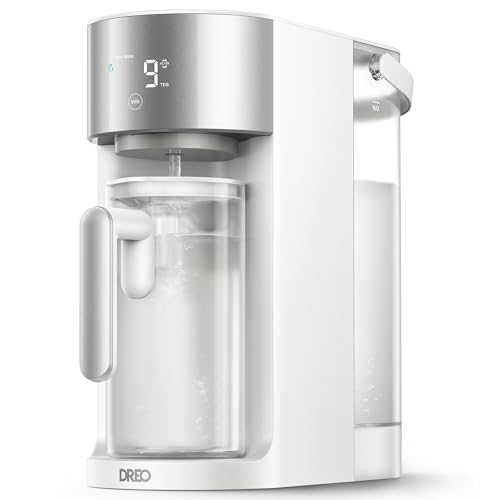
The DREO Reverse Osmosis Water Filter System lists a 3-liter tank, a 1.1-liter pitcher, and compact dimensions, with the description suggesting it is suited to one or two people. Compare those listed dimensions with your available counter space and consider how often you want to refill the unit.


Write Your Review
No reviews yet. Be the first to share your experience!