


Stumbling along a backcountry trail with an empty hydration reservoir and aching shoulders is every hiker’s worst headache, especially when the only water nearby is a cloudy creek. Carrying gallons of heavy bottled water eats up precious pack space and drains your stamina before you even set up camp. Learning How To Use Lifestraw Personal Water Filter helps you drink safely on the move without hauling unnecessary water weight across miles of rugged terrain. Based on manufacturer specifications and outdoor user feedback, personal filtration straws use hollow fiber membrane technology that blocks 99.999999% of bacteria and 99.999% of parasites. Packing a reliable water filter for hiking and camping gives you the peace of mind to pull crisp, clean hydration straight from lakes, rivers, or rain pools.
Operating these compact straw filters requires zero batteries, pumping handles, or chemical tablets, making them remarkably practical for emergency preparedness and fast-and-light backpacking trips. You simply uncap the mouthpiece, place the bottom filter tip into the water source, and take a few quick sips to prime the microfiltration membrane. Clearing the straw after drinking takes just a firm puff of air back through the mouthpiece to purge residual moisture and silt. Knowing the proper technique for your backcountry water filter straw ensures a smooth flow rate and prevents accidental clogs when you need hydration the most.

Pros
- Weighs only two ounces, making it an ideal choice for ultralight backpacking and compact survival kits
- Impressive 4,000-liter filtration lifespan delivers years of safe drinking water without extra moving parts
- Straightforward operation requires no pumping, chemical wait time, or battery power
- Rigorous 0.2-micron filtration effectively blocks bacteria, protozoan cysts, microplastics, and silt
Cons
- Requires sipping directly from the water source or a cup rather than filtering directly into storage bladders
- Does not eliminate viruses, heavy metals, or agricultural chemicals found in heavily polluted runoff
- Filtering large volumes of water for camp cooking or group hydration can be tedious
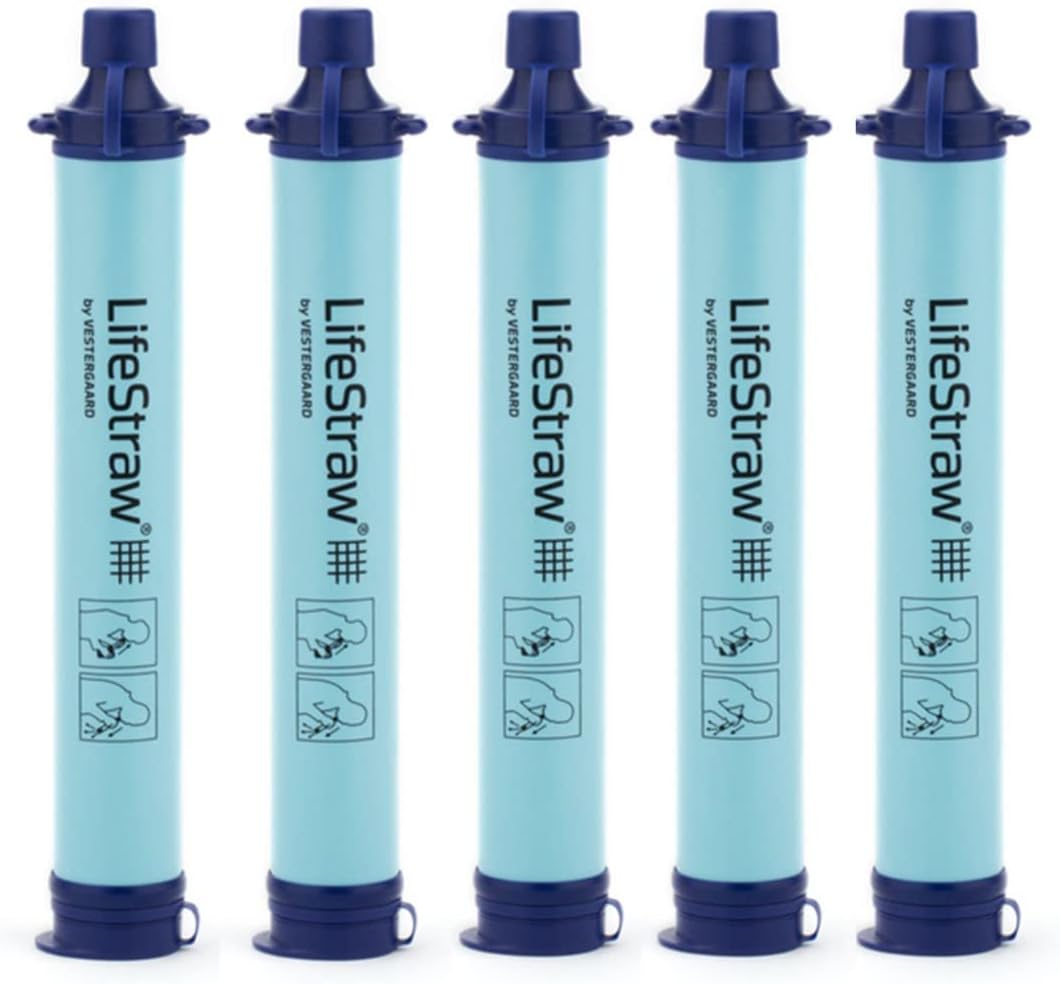
The LifeStraw Personal Water Filter is a compact, point-of-use hollow fiber membrane filter engineered for on-the-go hydration during wilderness treks and emergency situations. Designed as an ultralight survival tool, it allows outdoors enthusiasts to drink directly from natural freshwater sources without relying on chemical purification tablets or cumbersome mechanical pumps. This filter caters directly to backpackers, day hikers, trail runners, hunters, scouts, solo adventurers, and emergency preppers assembling bug-out bags.
Filtration performance is centered around a 0.2-micron microfiltration membrane capable of removing 99.999999% of waterborne bacteria, including E. coli and Salmonella, as well as 99.999% of waterborne protozoan parasites such as Giardia lamblia and Cryptosporidium. In practical camping scenarios, such as filling up along an alpine stream or drinking from a backcountry lake, the filter purifies water instantly with a steady flow rate. It also filters out fine sediment and environmental microplastics, significantly improving water clarity without introducing any chemical aftertaste.
Weighing only around two ounces and measuring approximately nine inches in length, the unit delivers high portability. The durable, BPA-free plastic housing withstands being tossed into a packed rucksack, stashed inside a vehicle console, or clipped to a chest harness. Both ends are equipped with protective caps to keep trail dirt and debris away from the mouthpiece and intake zone during rugged hikes through brush or rocky terrain.
Operation and ongoing care remain straightforward. To drink, users simply uncap both ends, place the base into a water source, allow the membrane to saturate for a few seconds, and sip through the top mouthpiece. Clearing the filter requires blowing a quick puff of air back through the straw after drinking, which purges residual moisture and prevents particulate buildup. Because the unit contains no moving parts or batteries, it requires virtually zero mechanical troubleshooting in the field.
A realistic limitation of this straw-style filter is that it is primarily intended for individual, immediate consumption. Gathering gallons of water for camp kitchen cooking, large-scale family hydration, or refilling narrow hydration reservoirs requires transferring water into an intermediate wide-mouth container first. Additionally, like most standard backcountry microfilters, it does not remove viruses or dissolved chemical contaminants, making it best suited for natural wilderness waters rather than heavily industrialized runoff.
For weekend backpackers, trail hikers, overland travelers, and budget-conscious campers seeking peace of mind in the outdoors, the LifeStraw Personal Water Filter represents an exceptional value. Its combination of near-zero pack weight, massive 4,000-liter operational lifespan, and proven microbiological protection makes it a core staple for any outdoor gear loadout or home emergency kit.
For ounce-counting backpackers and thru-hikers, minimizing pack weight is essential. Weighing roughly 2 ounces, the LifeStraw adds virtually no penalty to your base weight while eliminating the need to carry heavy liters of pre-filtered water on trails with frequent water sources.
Its slim profile slips easily into backpack side pockets, hip belt pouches, or running vests. During quick trail stops, hikers can hydrate directly from passing streams in seconds without taking off their packs or assembling multi-piece pump systems.
Maintaining the LifeStraw requires minimal effort on the trail. After each drinking session, simply blow air back through the mouthpiece to clear trapped water and silt from the membrane fibers before snapping the protective caps back into place.
When storing the filter between camping seasons, rinse it thoroughly with clean water, allow it to air dry, and keep it in a cool, dry location. In sub-freezing temperatures, keep wet filters inside a jacket pocket or sleeping bag, as freezing water can damage the internal microfiltration membrane.

Pros
- Featherlight two-ounce weight makes it effortless to carry on any wilderness hike or trail run
- Exceptional 4,000-liter filtration lifespan offers outstanding longevity for solo travel
- Instant straw design eliminates the need for tedious pumping, squeeze bags, or chemical wait times
- Proven physical barrier blocks bacteria, protozoan cysts, microplastics, and turbidity
Cons
- Requires drinking directly from the source or scooping dirty water into a separate container
- Cannot store clean water or filter bulk batches for family camp cooking
- Does not include an activated carbon core to filter chemical runoff or improve water taste
The LifeStraw Personal Water Filter is an ultralight, hollow-fiber membrane straw engineered to provide fast access to safe drinking water straight from backcountry sources. Weighing only two ounces and measuring under nine inches long, this compact unit relies on physical microfiltration rather than chemical tablets, UV bulbs, or battery power. By utilizing a 0.2-micron pore size, the internal membrane physically blocks 99.999999 percent of waterborne bacteria such as E. coli and Salmonella, alongside 99.999 percent of common protozoan parasites including Giardia and Cryptosporidium.
This personal filter is best suited for day hikers, ultralight backpackers, trail runners, anglers, survivalists, and emergency preparedness planners. Thanks to its tiny footprint, it serves as an effortless insurance policy inside a daypack, fishing vest, vehicle glove box, or 72-hour disaster kit. Solo adventurers venturing onto remote trails appreciate having a secondary purification method that adds virtually no base weight, while budget-conscious campers and scout leaders find it an accessible tool for outdoor safety.
Out on the trail, hydration performance depends on direct suction from natural water sources like mountain creeks, alpine lakes, or clean springs. Users submerge the bottom end into the water source, allow the membrane to moisten for a few seconds, and sip through the top mouthpiece. Once primed, the flow rate provides adequate volume to quench trail thirst without excessive lung effort. In addition to blocking biological pathogens, the filter traps microplastics and significantly reduces silt and cloudiness, delivering visibly clearer water on remote outings.
Constructed from durable, BPA-free plastic, the LifeStraw features tethered end caps that protect both the inlet and mouthpiece from trail grit when packed. The lack of moving parts, batteries, or fragile electronic components means there is very little that can mechanically malfunction in the field. When stored dry in its packaging, the filter offers a prolonged shelf life, making it a reliable staple for bugout bags. Up to 4,000 liters (1,000 gallons) of water can pass through the membrane before the pores eventually clog and flow naturally stops.
While performance is dependable for direct sipping, there are practical limitations outdoorsmen should consider. The straw design does not collect or store clean water, meaning you cannot easily fill a camp cooking pot, hydrate a freeze-dried meal, or share filtered water across a family campsite. Drinking directly from a shoreline often requires kneeling on wet ground or leaning precariously over muddy stream banks, though scooping water into a wide-mouth bottle first resolves this posture challenge. Additionally, the microfiltration membrane does not eliminate viruses, heavy metals, or chemical tastes, which requires caution around agricultural runoff.
For solo hikers, weekend trail explorers, and household emergency kits, the LifeStraw Personal Water Filter remains one of the most reliable and affordable pieces of survival insurance available. It works best as a primary filter for minimalist fastpackers or as a fail-safe backup alongside larger gravity systems on multi-day backcountry treks. Having one stashed within arm reach ensures dependable hydration whenever unexpected trail delays or municipal water disruptions arise.
Proper maintenance ensures the filter maintains a strong flow rate and reaches its full 4,000-liter lifespan. After each drinking session, simply blow a burst of air back through the mouthpiece to clear trapped sediment, silt, and residual water from the hollow-fiber pores. Keeping the inlet clear prevents premature clogging, particularly when drawing from murky ponds or silty alpine streams.
Before packing the unit away for long-term storage, flush the straw thoroughly with clean tap water, shake out excess moisture, and let it uncapped to air dry completely. Storing the membrane dry prevents mold and mildew growth inside the housing. In cold weather camping, keep the filter inside your jacket pocket or sleeping bag, as freezing temperatures can expand residual water and permanently damage the microfiltration fibers.
Weighing approximately two ounces and measuring under nine inches in length, this filtration straw adds almost no detectable heft to your gear list. It tucks effortlessly into the side pocket of a hiking pack, a trail running vest, a tackle box, or a vehicle console without consuming valuable cargo room.
For ultralight hikers and fastpackers counting every ounce, carrying a dedicated straw minimizes the need to haul heavy water between reliable trail streams. Paired with a lightweight collection cup or bottle, it forms a minimalist hydration setup that keeps you moving fast and light in the backcountry.
Pros
- Extremely compact and weighs barely two ounces for effortless trail carry
- Filters an impressive 4,000 liters before needing replacement
- Leaves zero chemical aftertaste and requires no pumping or waiting time
- Exceptional reliability with no electronic or moving mechanical parts
Cons
- Requires leaning down directly over water sources unless you scoop water into a separate wide-mouth bottle
- Cannot easily transfer clean water into hydration bladders or camp cook pots
- Does not filter out viruses, heavy metals, or dissolved chemical contaminants
The LifeStraw Personal Water Filter is a dedicated straw-style membrane microfilter created to deliver instantaneous potable water from questionable freshwater sources. Originally engineered for humanitarian relief in areas with compromised infrastructure, this compact survival device has established itself as an essential safety staple for American day hikers, solo backpackers, canoe trippers, trail runners, and emergency preppers building out bug-out bags. Weighing just two ounces and measuring under nine inches long, it serves as a lightweight personal insurance policy against dehydration in the wild.
Trail performance is centered around a 0.2-micron hollow fiber membrane filter that mechanically removes harmful microscopic threats without chemical treatments or battery power. According to product specifications, it blocks 99.999999% of bacteria such as Salmonella and E. coli, alongside 99.999% of protozoan cysts including Giardia and Cryptosporidium. When you are filtering water from a backcountry creek or alpine lake, the flow rate allows you to draw water up with moderate suction after a brief initial prime, providing crisp, clean hydration free of sand, silt, and environmental microplastics.
Practicality and build quality lean heavily on minimal, fool-proof engineering. Made from durable BPA-free plastic, the cylindrical housing features integrated tethered end caps that protect the mouthpiece and intake from trail dirt, pine needles, and grime. Because there are no internal gaskets, lever pumps, or ceramic elements prone to cracking, the filter handles standard trail knocks and drops without issue. For extended backcountry trips, this mechanical simplicity means there are no delicate electronic switches or batteries that could fail in wet wilderness environments.
Maintenance in the backcountry is straightforward. When you finish drinking, clearing the hollow fibers requires blowing a quick blast of air back through the mouthpiece to expel residual water and dislodge sediment. While the unspent filter boasts an indefinite shelf life when stored dry, campers should keep in mind that hollow fiber filters must be protected from freezing temperatures once wetted. If water freezes inside the microfibers on a cold mountain night, ice expansion can rupture the internal membrane, rendering the filter ineffective. Carrying it inside an inner jacket pocket during sub-freezing hikes protects the internal element from frost damage.
There are some realistic design trade-offs to consider before heading out. Because the unit operates as a direct-draw straw, drinking directly from a water source often forces you onto hands and knees along muddy riverbanks or slippery rocks. It also lacks threading for standard plastic bottles, making it inconvenient if you need to filter water into a camp pot for cooking dehydrated meals or fill a hydration bladder for extended trail sections. Additionally, it does not target viral pathogens or dissolved agricultural runoff, so it is best suited for North American backcountry areas rather than floodwaters or high-pollution zones.
For solo hikers, weekend campers, vehicle emergency kits, and ultralight trekkers, the LifeStraw Personal Water Filter remains one of the simplest and most cost-effective hydration tools available. While it will not replace a high-capacity gravity bag for family camp kitchen duties, its unbeatable reliability and negligible trail weight make it a practical necessity for individual safety in the outdoors.
Caring for your straw filter ensures consistent flow rates and reliable water safety over hundreds of miles. After every drinking session on the trail, campers should immediately blow a steady stream of air back through the mouthpiece to clear silt, algae, and stagnant liquid from the microscopic pores. This quick backwash routine prevents sediment from hardening inside the fibers and keeps draw resistance minimal throughout your trip.
Once you return home from camp, rinse the straw thoroughly with clean tap water and allow both ends to air-dry completely with the protective caps unlatched. Storing the unit sealed while still damp can promote mold or mildew growth inside the plastic housing. Store the filter in a cool, dry gear closet away from extreme temperatures until your next outdoor adventure.
Freezing conditions require extra vigilance. If you camp during late autumn or early spring shoulder seasons, keep the wet filter inside your sleeping bag or an internal coat pocket. Once used, any trapped moisture that freezes solid will compromise the delicate hollow fibers without showing visible exterior damage, ending its ability to filter bacteria.
Ultralight hikers counting every single ounce will appreciate the minimal footprint of this filtration straw. At approximately two ounces, it takes up practically no room inside an exterior stretch pocket, hip-belt pouch, or top lid pocket, ensuring it is always within quick reach when you cross a clean mountain runoff.
Because the unit relies entirely on direct suction from the user, you eliminate the packed weight of hand pumps, hoses, replacement cartridges, and bulky gravity sacks. While long-distance thru-hikers often pair it with a wide-mouth collection vessel to bring water back to camp, its primary advantage remains rapid, on-the-move hydration while crossing streams on rugged trails.

Pros
- Ultralight and compact profile fits easily into pockets or crowded backpack brain compartments
- Threaded connection at the base expands use from a simple straw to squeeze bottles and gravity lines
- Improved hollow fiber design resists silt clogging and increases flow rate compared to older models
- No expiration date before use, making it ideal for long-term home and vehicle emergency storage
Cons
- Does not eliminate chemical pollutants, heavy metals, or waterborne viruses
- Requires sleeping with the filter inside your sleeping bag during sub-freezing nights to prevent freeze damage
- Direct drinking requires crouching low over stream banks when used without an adapter bottle
The LifeStraw Peak Series Personal Water Filter Straw is a lightweight, non-electric membrane microfilter engineered for backcountry hydration, ultralight trekking, and emergency survival. Building upon the classic straw concept, this updated version features an enhanced flow rate, a redesigned ergonomic grip, and improved sand and silt resistance. At roughly three and a half ounces, it slips effortlessly into a hip belt pocket, fishing vest, or vehicle glove compartment, providing immediate access to potable water without the setup complexity of traditional pump systems.
This personal filter is well-suited for solo hikers, fastpackers, trail runners, and weekend warriors who want to shave base weight off their packs. Survivalists, overlanders, and emergency preppers can appreciate its unlimited shelf life, making it a reliable addition to off-grid survival kits, bug-out bags, and home storm supplies. Car campers, scout leaders, and festival attendees can also pack one as an affordable backup against boil-water advisories or questionable campground spigots.
In real-world trail conditions, backcountry water sources often carry sediment and runoff that quickly ruin outdoor excursions. The Peak Series handles silt effectively, filtering down to block 99.999999% of bacteria such as E. coli and Salmonella, alongside 99.999% of protozoan parasites like Giardia and Cryptosporidium. With a flow rate of up to 1.7 liters per minute, taking a quick pull from a mountain brook requires noticeably less suction effort than older straw designs. The redesigned bottom cap also features standard threading, allowing hikers to screw the unit directly onto compatible squeeze pouches or integrate it into camp gravity hose systems.
Crafted from durable, premium BPA-free materials, the outer housing withstands scrapes against granite boulders, accidental drops onto rocky trails, and the rigors of being crammed into packed gear bags. Secure top and bottom caps keep trail dust off the mouthpiece and contain residual moisture after packing up camp. With an operational lifespan of up to 1,000 gallons (4,000 liters), a single unit provides enough drinking water to support an individual outdoors for multiple seasons.
While the Peak Series excels at portable microfiltration, it does have practical wilderness limitations. It is designed to remove biological pathogens and particulate matter, meaning it will not remove dissolved chemicals, heavy metals, or viruses commonly found in developing municipal water grids. Furthermore, once the filter membrane has been wetted, campers must protect the straw from freezing temperatures inside a jacket or sleeping bag, as freezing water will expand and crack the internal fibers. For hikers walking past mountain creeks or homeowners preparing a storm preparedness kit, it stands as an exceptionally practical, reliable hydration tool.
When packing light for a multi-day trek or moving fast on an alpine day hike, every ounce in your backpack matters. The Peak Series filter weighs barely over three ounces, making it light enough that you hardly notice it stashed in a chest harness, daypack mesh sleeve, or running vest.
Its slim cylindrical form factor slides cleanly between tent poles, camp stoves, or extra clothing layers without creating awkward pack bulges. For minimalist hikers who prefer drinking directly on trail rather than carrying multiple heavy liters of water, this filter straw offers unmatched carry convenience.
Maintaining the Peak Series filter on extended trips requires simple field care to keep the flow rate strong. If the membrane begins to slow down from silty lake water, gently backwashing by blowing air or clean water back through the mouthpiece helps dislodge trapped sediment.
Before putting the straw away in long-term storage after a camping trip, flush it with clean tap water and allow it to dry thoroughly with the caps unfastened. During cold-weather autumn or winter trips, always keep a wet filter close to your core inside a jacket or at the foot of your sleeping bag to prevent freezing damage.

Pros
- Meets rigorous EPA and NSF/ANSI drinking water standards for pathogen and cyst removal
- Dual-stage design cleans unsafe water while significantly improving taste and odor
- Massive 1,000-gallon membrane capacity offers outstanding long-term trail value
- Tool-free drop-in installation makes field replacements quick and hassle-free
Cons
- Incompatible with older LifeStraw Go bottles that feature the flip-up mouthpiece and carabiner loop
- Carbon filter requires more frequent replacement at roughly 26 gallons to maintain taste improvement
- Membrane microfilter cannot be exposed to freezing conditions once wetted
Filtering water from backcountry streams, secluded lakes, or rustic campground spigots is a fundamental part of outdoor survival and camping comfort. The LifeStraw Go Series Replacement Filter is a dedicated two-stage water purification cartridge built to revive the filtration performance of your existing LifeStraw Go bottle. Whether you are an extended-trip backpacker tackling remote mountain sections, a family camper setting up beside a lake, or an overland traveler exploring off-grid routes, having a fresh filter ensures access to safe drinking water wherever your adventures lead.
Hydration performance is anchored by a dual-stage filtration process that addresses both microbiological safety and water palatability. The primary hollow fiber membrane microfilter stops 99.999999% of bacteria such as E. coli and Salmonella, along with 99.999% of protozoan parasites like Giardia and Cryptosporidium. It also screens out microplastics, fine sand, and trail silt. Behind the membrane, an activated carbon stage targets chlorine, chemical tastes, and musty odors often found in stagnant backcountry pools or treated municipal supplies, resulting in refreshing, crystal-clear water on the trail.
Longevity is one of the strongest attributes of this replacement unit. The hollow fiber membrane is engineered to filter up to 1,000 gallons (4,000 liters) of water under regular trail conditions. An integrated safety feature naturally stops water from flowing through the straw once the pores become fully saturated and reach end of life, preventing any accidental consumption of untreated water. The carbon filter stage is designed to process approximately 26 gallons (100 liters), giving you ample capacity for multiple weekend outings before odor absorption gradually wanes.
Compatibility is a critical consideration for outdoor enthusiasts buying replacements. This filter is manufactured specifically for LifeStraw Go Series bottles purchased in 2023 or later, recognizable by their twist-off protective cap covering the mouthpiece. It works interchangeably across both BPA-free plastic and vacuum-insulated stainless steel bottles in 22-ounce, 24-ounce, and 1-liter capacities. Campers should note that it will not fit legacy Go bottles with the original flip-top valve and carabiner loop design.
Caring for the filter during extended excursions is straightforward, though basic precautions are necessary in variable outdoor climates. Because moisture remains trapped within the hollow fiber membrane after initial use, the filter must never be allowed to freeze. Sub-freezing temperatures can cause residual water to expand and fracture the internal hollow fibers, compromising the biological barrier. Backpackers and cold-weather campers frequently sleep with their wet filter or bottle inside their sleeping bag on frigid nights to protect the membrane integrity.
For solo hikers, weekend warriors, and emergency preparedness planners, keeping a fresh LifeStraw Go Series Replacement Filter ready to deploy offers total hydration peace of mind. It restores your existing bottle to full trail readiness without the expense of purchasing an entirely new hydration setup. The balance of proven pathogen removal, taste enhancement, and robust service life makes this replacement filter an indispensable piece of gear for any reliable camping kit.
Proper maintenance helps maximize the flow rate and lifespan of both filter stages during camping season. After returning from a trek, rinse the outside of the membrane microfilter with clean, safe tap water to wash away surface silt, organic grime, and sediment before putting the bottle into storage.
To avoid mold, mildew, and stale smells during the off-season, air dry the components completely before reassembling. Remove the carbon capsule, let the membrane microfilter dry in a well-ventilated area, and store the unit in a cool, dry place until your next wilderness outing.
When camping in sub-freezing temperatures or through late-fall shoulder seasons, always protect the damp filter from freezing. Keeping the filter inside your jacket or tucked into the foot of your sleeping bag prevents freezing water from expanding and permanently damaging the microfiltration fibers.
This replacement cartridge is tailored exclusively for the updated LifeStraw Go Series lineup introduced in 2023. You can confirm your bottle compatibility by looking at the top lid: compliant bottles feature an integrated screw cap that completely twists over the silicone mouthpiece for sanitary protection.
The cartridge fits seamlessly into the LifeStraw Go Series 22oz and 1-Liter BPA-free plastic bottles, as well as the 24oz and 1-Liter double-wall vacuum-insulated stainless steel versions. Swapping the filter takes just seconds by unscrewing the lid, pulling out the old filter assembly, and sliding the new cartridge firmly into place.
Please note that earlier vintage LifeStraw Go bottles featuring the exposed flip-up bite valve and metal carabiner attachment point use an older filter format and will not fit this newer twist-cap replacement model.

Pros
- Weighs roughly two ounces per straw, making it virtually unnoticeable in a backpack or trail running vest
- Threaded base allows convenient direct connection to standard water bottles and gravity camp systems
- Upgraded membrane design provides an impressive 2.5-liter-per-minute flow rate with very low draw resistance
- Massive 1,000-gallon filter lifespan offers years of dependable backcountry water treatment
- Indefinite shelf life ensures total readiness for off-grid survival, glove boxes, and emergency preparedness kits
Cons
- Does not filter out dissolved chemicals, heavy metals, or viruses, requiring secondary treatment for certain water sources
- Must be protected from freezing temperatures after initial use to prevent damaging the internal hollow fiber membrane
- Sipping directly from natural water sources requires kneeling down close to streams or muddy banks without an attached bottle
The LifeStraw Peak Series Personal Water Filter Straw 2-Pack represents a thoughtful redesign of an iconic backcountry hydration tool. Designed for backpackers, day hikers, trail runners, and solo adventurers who want reliable clean water without the bulk of heavy pump systems, this compact filter straw weighs roughly two ounces per unit. It is equally well-suited for family campers, car campers, and overland travelers who want an accessible backup filter in their vehicle glove box or camp kitchen gear bins. Survivalists and emergency preparedness planners will also appreciate having two independent units ready for home disaster kits or bug-out bags.
On the trail, water sources range from crystal-clear alpine tarns to sediment-heavy backcountry streams. The re-engineered membrane microfilter effectively removes 99.999999 percent of waterborne bacteria, 99.999 percent of parasites like Giardia and Cryptosporidium, and 99.999 percent of microplastics, sand, and silt. A noticeable upgrade in the Peak Series is the enhanced flow rate, which reaches up to 2.5 liters per minute. Campers and hikers who have struggled with hard-to-draw filter straws in the past will notice significantly less sipping resistance, making it easy to rehydrate quickly after a strenuous uphill climb.
Build quality and versatile connectivity set this version apart from traditional personal filter straws. The housing uses durable, premium materials that resist cracking, drops, and pressure inside a crammed rucksack. The ergonomic grip pattern makes it easy to hold even with wet or cold hands while filtering water from a backcountry stream. Furthermore, the removable bottom cap reveals universal threads that allow campers to screw the straw directly onto standard narrow-mouth water bottles or connect it to gravity hose systems at camp, eliminating the need to lie flat on muddy riverbanks.
While the Peak Series straw is exceptionally practical, outdoor travelers should keep a few realistic limitations in mind. Like all hollow fiber membrane filters, it cannot protect against dissolved chemicals, heavy metals, or waterborne viruses, making chemical purification tablets or UV pens necessary for certain international destinations or agricultural runoff zones. Additionally, once the filter has been used and the membrane is wet, it must be kept from freezing, as expanding ice crystals can compromise the microscopic pore structure. Keeping the filter inside a sleeping bag or interior jacket pocket on cold mountain nights prevents this common backcountry issue.
Routine maintenance remains refreshingly straightforward, requiring simple backwashing with clean water to flush out trapped silt and maintain peak flow efficiency. With an indefinite shelf life prior to first use and an impressive capacity of up to 1,000 gallons per straw, this 2-pack provides outstanding long-term value for outdoor enthusiasts. Whether you are packing light for a multi-day trek through a national forest, assembling an emergency storm kit, or simply keeping an insurance policy tucked into your daypack, the LifeStraw Peak Series provides dependable, lightweight peace of mind for virtually any outdoor adventure.
When packing light for a multi-day trek, every single ounce in your pack counts. At just two ounces each, carrying a Peak Series straw as either a primary filter or an ultralight emergency backup adds virtually no noticeable weight to your trail kit. It slides effortlessly into side mesh pockets, hip belt compartments, or running vests for rapid access at stream crossings.
The integrated bottom threads make trail hydration significantly more practical. Instead of stopping, leaning down, and drinking directly from a murky creek bed, backpackers can quickly scoop water into a standard plastic bottle, thread the Peak Series straw onto the top, and drink while hiking. This setup speeds up trail breaks and keeps your gear dry and clean.
To ensure long-term performance and preserve the maximum flow rate, regular cleaning is essential. After hiking in areas with high silt or glacial runoff, backwash the filter with clean, filtered water to dislodge particulates from the hollow fiber membrane. Never use soap, detergent, or hot water exceeding 100 degrees Celsius, as this can ruin the filtration fibers.
Freezing temperatures are the primary risk factor for hollow fiber filters after their initial wetting. If camping in sub-freezing conditions, keep the filter in an inside coat pocket during the day and place it at the bottom of your sleeping bag at night. For off-season storage, allow the unit to air dry completely with caps open before stowing it away in your gear closet.
Pros
- Ultralight two-ounce weight makes it effortless to stash in pockets, hip belts, or emergency go-bags
- Standard 28mm bottle threading provides flexible drinking options using common disposable bottles or squeeze pouches
- Activated carbon core noticeably improves water odor and taste compared to basic hollow-fiber hollow straws
- Four-filter bundle offers tremendous value for families, hiking groups, and multi-kit emergency staging
Cons
- Initial suction can feel stiff when the internal filter membrane is dry before first use
- Does not remove dissolved minerals, heavy chemicals, or ocean salt, making it unsuitable for seawater
- Wet internal membranes must be protected from freezing winter temperatures to prevent physical damage
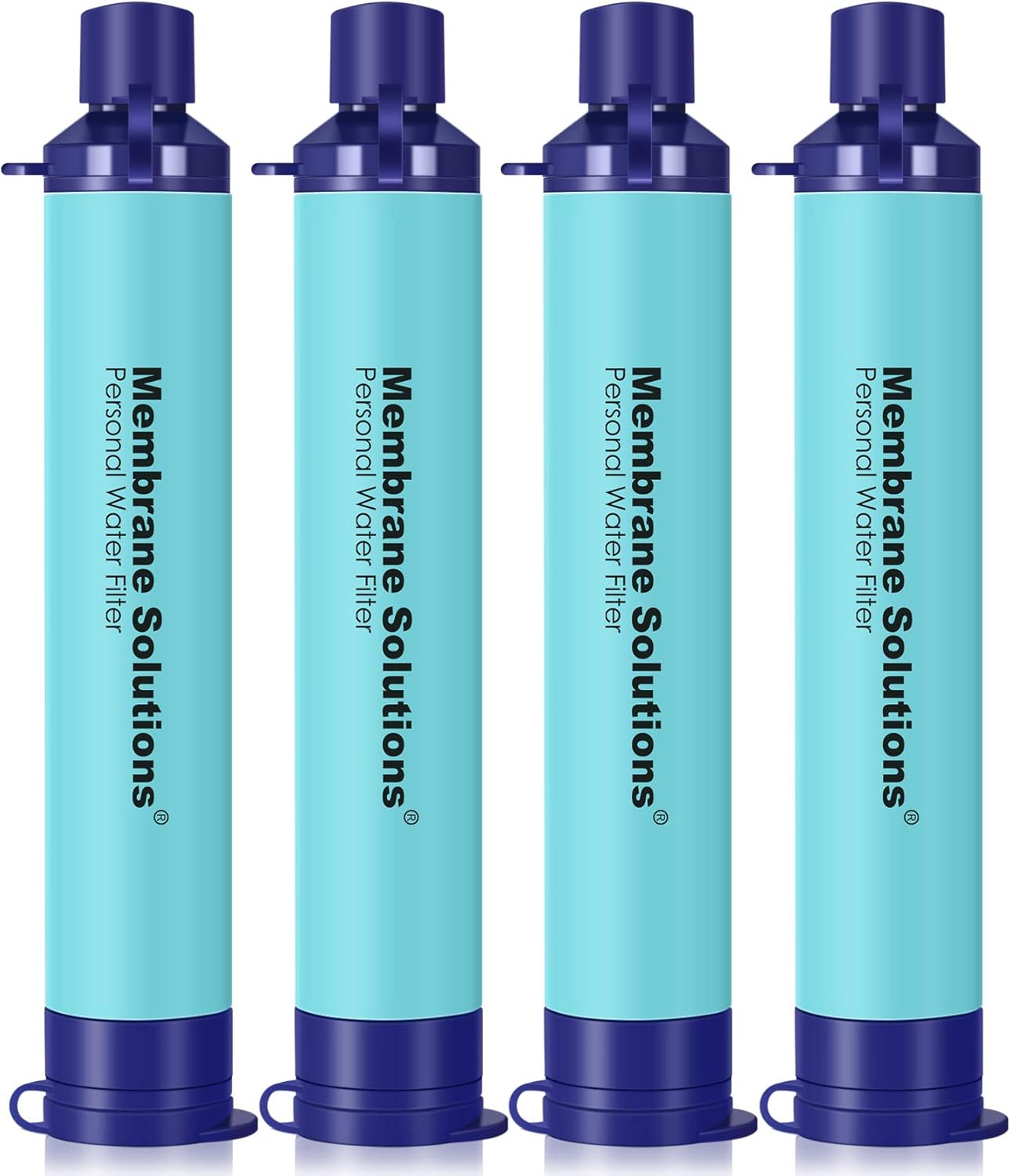
The Membrane Solutions S1 Straw Water Filter is a compact, personal micro-filtration device engineered to provide clean drinking water directly from backcountry sources. Designed as an accessible survival and trail filtration tool, this multi-pack setup caters to a wide spectrum of outdoor enthusiasts. Whether you are a solo backpacker tracking miles on the Appalachian Trail, a parent packing supplies for a family campground outing, or a homeowner assembling emergency hurricane kits, having dependable water purification on hand is a fundamental outdoor necessity.
Filtration performance relies on a 5-stage setup featuring a coarse pre-filter screen, double polypropylene cotton layers, coconut shell activated carbon, and a 0.1-micron hollow fiber ultrafiltration membrane. This layered arrangement efficiently targets suspended dirt, protozoa, and common bacteria like E. coli, while the carbon block helps neutralize swampy smells and bitter organic flavors from still wilderness ponds. The unit yields a balanced flow rate of up to 500 milliliters per minute, giving thirsty hikers a steady stream of water without having to wait on chemical drop treatments.
Versatility is where this small filter really proves its worth around camp. In addition to functioning as a traditional direct-sipping straw for drawing water straight out of a mountain creek, the bottom end features universal 28mm threading. This thoughtful design lets you screw the filter directly onto standard disposable soda or water bottles, converting a basic plastic bottle into an on-the-go squeeze filtration setup. It can also integrate into compatible gravity bags, allowing you to hang a bag from a tree branch and let gravity fill your camp cook pots while you pitch the tent.
Build quality centers on durable, food-grade, BPA-free ABS plastic that holds up well to getting jostled inside crowded rucksacks. Each individual straw measures just over seven inches in length and tips the scales at an unnoticeable two ounces. Removable end caps protect the mouthpiece and intake from dirt, pine needles, and backpack grime when tossed into gear bins. With an upgraded operational lifespan of up to 1,320 gallons per straw, a single filter can comfortably support several seasons of weekend warrior backpacking trips.
Like any micro-filtration system, there are practical outdoor considerations to keep in mind. Because the internal capillary tubes use ultra-fine 0.1-micron pores, pulling water through a bone-dry straw requires patience during the initial priming stage. Allowing the intake to sit submerged for a minute or two before drinking helps saturate the fibers for a smoother flow. Additionally, because the unit relies on physical filtration rather than chemical destruction, campers venturing into sub-freezing mountain climates must carry the damp filter in an inside jacket pocket or sleeping bag to prevent residual water from freezing and cracking the membrane.
For outdoor adventurers seeking an economical, ultra-portable, and reliable clean water safeguard, this 4-pack represents an outstanding investment. It removes the stress of running dry on long summer day hikes and provides ready-to-use peace of mind for family emergency prep. With its versatile bottle threading, lightweight construction, and solid filtration performance, it is an essential addition to any outdoor gear closet or vehicle roadside kit.
Weighing only two ounces per unit, the Membrane Solutions S1 straw filter is virtually unnoticeable whether slipped into a trail running vest, lashed to a backpack shoulder strap, or stored in a glove compartment. Its slim one-inch diameter allows it to fit neatly inside compact first aid kits and emergency bug-out pouches.
Setting up the straw in the field takes only seconds. You can uncap both ends and drink directly from a freshwater stream, or twist the threaded base onto any standard 28mm threaded plastic bottle. When starting with a completely dry filter, letting the base soak in water for a minute or two helps loosen the membrane resistance and ensures a steady drinking flow.
Routine maintenance is essential to keep the hollow fiber membrane running at full speed throughout its 1,320-gallon service life. After trips through silty or murky water, backwashing the straw with clean tap or filtered water from the mouthpiece end flushes trapped dirt particles away from the intake screen.
Before packing the filter away for off-season storage, ensure the unit is thoroughly air-dried in a vertical position to prevent stagnant odors. If hiking in sub-freezing weather, keep the damp filter inside your sleeping bag at night, as expanding ice inside the hollow fibers can permanently compromise the membrane barrier.
Essential Camp Water FAQs: Understanding How To Use Lifestraw Personal Water Filter
Backcountry water sources often look crystal clear while harboring microscopic pathogens that can ruin a wilderness trip in hours. Understanding How To Use Lifestraw Personal Water Filter helps you avoid stomach bugs and stay healthy along remote trails.
Does the straw water filter remove viruses and dissolved chemicals?
No, standard personal hollow fiber straw filters do not remove waterborne viruses, dissolved heavy metals, or chemical pollutants. The 0.2-micron membrane targets 99.999999% of bacteria like E. coli and 99.999% of protozoan parasites like Giardia and Cryptosporidium. For agricultural runoff or industrial waters, models utilizing activated carbon or specialized purifiers are recommended.
How do you unclog a personal straw filter when drinking becomes difficult?
You unclog the filter by blowing a sharp burst of air back through the mouthpiece immediately after sipping. This reverse airflow pushes trapped sediment, silt, and trapped air bubbles back out of the hollow fiber pores. If you frequently use alternative setups, learning how to use platypus water filter systems with dedicated backflush syringes can provide similar maintenance insight for stubborn blockages.
Can you attach personal straw filters to standard water bottles or gravity bags?
Yes, updated designs like the Peak Series and Membrane Solutions S1 feature removable bottom caps with standard 28mm threads. This threading screws directly onto disposable water bottles, collapsible squeeze pouches, or compatible gravity feed hoses. Older original models lack bottom threading and function strictly as direct sipping straws from open water sources.
Does freezing weather damage the hollow fiber microfiltration membrane?
Yes, freezing temperatures will permanently damage the delicate hollow fiber membrane if wet water inside expands into ice. Once frozen, the microscopic pores can tear, allowing harmful bacteria to slip through undetected. Campers sleeping in sub-freezing weather should store their damp filter inside an inner jacket pocket or sleeping bag footbox to keep it warm.
What is the operational lifespan of a personal straw water filter?
A typical personal microfiltration straw provides up to 4,000 liters (1,000 gallons) of safe drinking water before requiring replacement. The unit features a built-in safety cutoff that stops water flow entirely once the pores become fully saturated with trapped particles. For systems incorporating carbon capsules, understanding the role of charcoal in water filtration explains why the carbon component requires swapping every 100 liters.




Write Your Review
No reviews yet. Be the first to share your experience!