

Spacious Shelters for Large Camping Groups
Fitting a large group into a single shelter often reveals how tight standard capacity ratings feel at an actual campground. Sleeping pads and bulky gear quickly eat up floor space, leaving little room to walk around. If you want everyone to sleep under one roof without feeling cramped, investing in the best 810-12 camping tent provides necessary headroom and elbow room. Larger groups with children can also pair a big group shelter with budget-friendly youth shelters to divide sleeping zones across the campsite. Adequate interior volume turns a rainy weekend into an enjoyable retreat.
Floor dimensions and wall geometry dictate how livable an extended shelter feels once cots or air beds are inflated. Straight-wall cabin styles maximize vertical clearance so adults can walk upright, while elongated tunnel profiles add screened zones for bug-free lounging. Waterproof coatings between 1200mm and 1500mm with taped seams offer essential defense against passing rain showers. Color-coded poles allow two people to pitch these frames in about fifteen minutes. Deciding between multi-room dividers and integrated screen porches lets you match your shelter layout directly to your camp setup style.

Pros
- Generous 80-inch interior height allows tall campers to walk upright comfortably.
- Dedicated 6-foot screened porch keeps camping gear organized and insects away from the living area.
- Eight steel leg poles add substantial structural rigidity for drive-in campground setups.
- Color-coded poles streamline assembly for two adults down to roughly 15 minutes.
Cons
- Packed weight of 30 to 32 pounds limits transport strictly to car camping and vehicle-accessible sites.
- The expansive 20x9-foot total footprint requires reserving larger, level tent pads at established campgrounds.
- The 1500mm hydrostatic coating handles typical seasonal rain well but is not intended for extreme mountain downpours.
The UNP 8-Person Tunnel Tent is an extended-footprint family camping shelter designed specifically for drive-in campgrounds, weekend retreats, and extended outdoor vacations. Built with a distinctive tunnel profile, this tent combines a private 14-foot primary sleeping cabin with an attached 6-foot screened front porch. For family campers, car camping groups, and festival attendees who want shelter space that feels less like a crawl-in dome and more like a functional outdoor cabin, this layout provides a practical division between sleeping quarters and daytime lounging space.
Living space and interior headroom represent the standout strengths of this shelter. Measuring 20 feet in total length by 9 feet in width, the floor plan provides ample room to arrange up to two full-sized air mattresses with extra space along the edges for duffel bags and tote boxes, or up to eight sleeping pads laid side by side. The 80-inch peak height is a major convenience for taller campers, eliminating the neck strain of hunching over when changing clothes or checking on kids. Out front, the 6-foot screened porch acts as an insect-free transition zone where you can sit on camp chairs, pull off muddy hiking boots, or sip morning coffee away from mosquitoes.
Weather protection relies on a polyurethane-coated fabric with a 1500mm hydrostatic head rating, which is engineered to shed routine summer rain and passing storm fronts. Stability comes from a hybrid frame structure incorporating eight steel leg poles. These rigid uprights resist crosswinds far better than thin fiberglass-only alternatives, maintaining the structural tunnel form even when winds pick up across open campsites. Condensation management is handled through four oversized mesh wall windows, two large access doors, and a broad mesh roof ceiling that encourages natural cross-ventilation while the rainfly is deployed.
Transportation and site assembly are tailored to vehicle-based outings. The packed tent measures 11.5 by 11.5 by 25.5 inches in its included zippered carry bag and weighs roughly 30 to 32 pounds. While completely out of the question for backpacking or remote trail camping, it drops cleanly into a standard vehicle trunk alongside coolers and camp stoves. Pitching the tent is straightforward thanks to color-coded pole channels and step-by-step documentation, allowing two campers to raise the entire frame and secure the guylines in about 15 minutes once the layout is understood.
Campers should keep a few realistic limitations in mind before heading out. Because the shelter stretches 20 feet from front to back, pitching it requires scouting a spacious, flat campsite pad without protruding roots or rocks. Additionally, while the 1500mm waterproof rating and sturdy steel frame offer dependable performance across spring, summer, and early autumn, it is not built for winter snow loads or torrential multi-day deluges without supplemental tarping. For family car campers and weekend warriors who want an accessible, standing-height basecamp with built-in bug protection, the UNP 8-Person Tunnel Tent delivers outstanding interior room and practical outdoor value.
The UNP 8-Person Tent maximizes livable space through its 20x9-foot footprint and generous 80-inch center height. The floor plan is divided into a 14x9-foot sleeping area and a 6x9-foot screened porch, giving families distinct zones for resting and relaxing. Adult campers can walk throughout the interior without ducking, making daily camp tasks like making cots and changing gear remarkably comfortable.
Sleeping arrangements are versatile enough to handle varied group dynamics. Two full-size queen camping mattresses fit neatly inside the main room with center aisle clearance, while youth groups can line up up to eight standard sleeping pads. The separate screen room keeps dirty gear, packs, and shoes out of the sleeping quarters, preserving a cleaner, more relaxing sleeping environment during multi-day trips.
Rain protection is anchored by a 1500mm polyurethane waterproof coating that repels seasonal rain showers. Combined with a properly guyed rainfly and factory seam sealing, the tent keeps internal living areas dry under regular three-season camping conditions. The eight steel upright leg poles provide firm anchoring against campsite gusts, offering superior resistance against bending compared to all-fiberglass pole frames.
Ventilation is a critical design focus for large-capacity family tents. The UNP design incorporates four large mesh windows, two wide doors, and open mesh ceiling panels. This arrangement promotes continuous chimney-effect airflow, exhausting warm, humid exhaled air through the roof while drawing cooler air in from the side panels to significantly reduce morning condensation on interior walls.
Pros
- Generous 86-inch peak height and near-vertical walls deliver walk-around headroom throughout the shelter.
- Included room divider quickly converts the large open space into a private two-room suite.
- Equipped with H20 Block Technology, taped rainfly seams, and 1200mm water-resistant fabric to help repel rain.
- Spacious 16x11-foot floor plan easily fits four queen airbeds or a mix of cots and family camping gear.
- Supplied steel stakes and guylines provide reliable tie-down support on established campground tent pads.
Cons
- Substantial 16 by 11-foot footprint requires a large, level campsite clearing to pitch correctly.
- The 1200mm water-resistant fabric coating is built for three-season recreation and may require extra seam care during extended severe storms.
- Tall vertical cabin walls and large fabric panels generally require two adults for smooth setup.
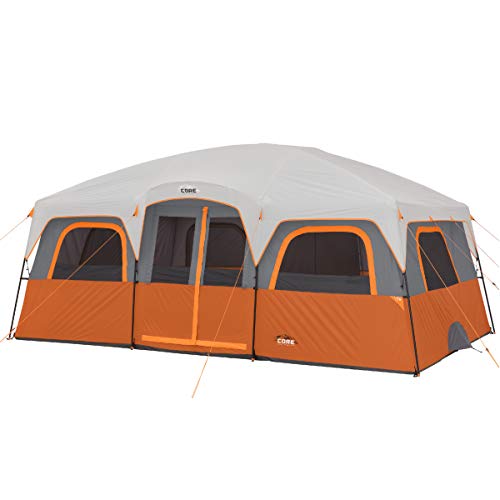
The CORE 12 Person Tent is a large-format multi-room cabin shelter engineered specifically for family car camping, group outings, and extended campground weekends. With an expansive 16 by 11-foot floor plan and a towering 86-inch center peak height, this shelter provides standing-room comfort that appeals directly to family campers, multi-generational groups, and weekend warriors who prioritize liveable interior space over ultralight trail specs. Instead of crouching through low-profile doors, campers can walk upright throughout the center of the structure, making it well-suited for state park campsites, festival camping grounds, and drive-in holiday setups.
Usable interior space represents the defining feature of this cabin tent. The nearly vertical wall profile avoids the sloping sides common to traditional dome designs, allowing the floor to comfortably fit up to four queen-size air mattresses or accommodate six campers alongside duffel bags, storage totes, and personal gear. For groups requiring spatial separation, the included fabric room divider splits the interior into two distinct spaces, functioning effectively as separate sleeping quarters or a combined bedroom and dry staging area. Integrated wall storage pockets keep flashlights, phones, and small camp accessories elevated away from floor clutter.
Weather protection relies on CORE proprietary H20 Block Technology paired with 1200mm water-resistant coated fabric. The tent utilizes a fully taped rainfly to shed incoming precipitation, along with sealed seams and fully zipped window panels that prevent wind-driven moisture from entering during passing rain showers. While 1200mm fabric handles typical three-season rainfall, the high, broad vertical walls naturally catch crosswinds more than aerodynamic backpacking structures. CORE includes sturdy steel stakes and tensioning guylines to anchor the frame into hard-packed campground soil, providing essential stability against gusty conditions.
Managing a cabin tent of this scale requires realistic campsite handling and site selection. Due to the 16 by 11-foot footprint, pitching requires a wide, cleared camping pad free of large roots and sharp rocks. While solo setup is theoretically possible with practice, the upright frame structure and tall center peak make assembly significantly smoother when handled by two adults. An included zippered carry bag simplifies packing the folded tent fabric, poles, and stake bundle into an SUV, crossover, or truck bed, keeping vehicle-based transport organized between camping trips.
For families and outdoor groups seeking a spacious, partitioned camping headquarters, the CORE 12 Person Tent delivers practical floor space and dependable three-season shelter. It is best chosen by car campers, festival crews, and family vacationers who value walk-around standing height, private room separation, and organized gear storage. Backcountry backpackers should opt for compact lightweight shelters, but drive-in campers will appreciate the shelter's residential layout for comfortable outdoor living.
The CORE 12 Person Tent provides a generous 16 by 11-foot footprint that delivers 176 square feet of floor space, comfortably accommodating up to six campers with full gear setups or twelve sleepers using compact sleeping pads. An 86-inch center height combined with straight cabin walls ensures that even tall adults can stand upright and move around freely without stooping.
An included removable room divider allows campers to customize the layout into two separate private suites. This configuration works well for parents wanting privacy from kids, mixed groups sharing camp costs, or campers who prefer a dedicated sleeping area on one side and a dry changing or gear staging room on the other.
Engineered with CORE H20 Block Technology, this tent features 1200mm polyurethane-coated fabric designed to bead and shed moderate rainfall. Factory-taped seams along the rainfly and tent body work in tandem with sealed window seams to prevent leaks at common needle puncture points.
Windows feature full-coverage zippered panels that can be closed tight during blustery rainstorms or unzipped to reveal mesh screens for cross-ventilation during warm summer nights. Steel ground stakes and heavy-duty guylines come standard, giving campers the essential anchor points needed to brace the tall cabin walls against breezy conditions.
Frequently Asked Questions
How many people comfortably fit inside an 8 to 12 person tent with gear?
Most large family shelters comfortably hold about half of their stated maximum capacity when campers bring cots, luggage, and sleeping pads. For example, a 12-person cabin tent measuring 16 by 11 feet accommodates six campers with personal duffels easily, or up to twelve people using tight sleeping bags without extra gear. An 8-person tunnel tent measuring 20 by 9 feet holds two full-sized air mattresses with adequate clearance to walk around. Campers who need maximum comfort should plan on sizing up by two to four person ratings when planning group outings.
Can a single camper set up a large tunnel or cabin tent alone?
Pitching a large 8-person to 12-person shelter usually requires two adults to manage pole tension safely. The UNP tunnel tent features color-coded poles and steel legs designed for a two-person setup in roughly 15 minutes. Trying to erect long roof poles and heavy steel uprights alone can bend the frame or strain corner fabric sleeves. Having a partner hold tension on one side prevents structural damage and speeds up pitch time considerably.
How well do these large family tents handle heavy rainfall?
Both models utilize water-resistant polyester fabrics and factory-taped seams, but they are built primarily for moderate three-season weather. The UNP tunnel tent provides a 1500mm polyurethane hydrostatic rating, while the CORE 12-person cabin utilizes 1200mm fabric with H20 Block technology. Fully zipped window panels and rainflies help block horizontal spray during typical storms. Campers should always stake out every guyline securely to prevent water pooling on broad roof sections.
How can campers reduce condensation inside large multi-room tents?
Maintaining steady airflow through lower wall vents and ceiling mesh is the most effective way to minimize interior moisture buildup. When several people sleep in an enclosed space, breath vapor naturally condenses against cooler tent fabric overnight. Running portable rechargeable camping fans keeps air circulating across sleeping areas and out the roof mesh. Keeping window storm flaps slightly cracked beneath rainfly eaves also prevents humid air from lingering inside.
Do these large group tents provide private interior rooms?
Yes, models such as the CORE 12-person cabin include a removable fabric room divider to split the 16 by 11 foot floor into two private suites. This partition helps separate sleeping quarters from gear storage or creates individual rooms for parents and kids. Dividing walls also help block lantern light between spaces when group members sleep on different schedules. For open layouts, hanging simple fabric screens provides customized personal space inside the main cabin.


Write Your Review
No reviews yet. Be the first to share your experience!