
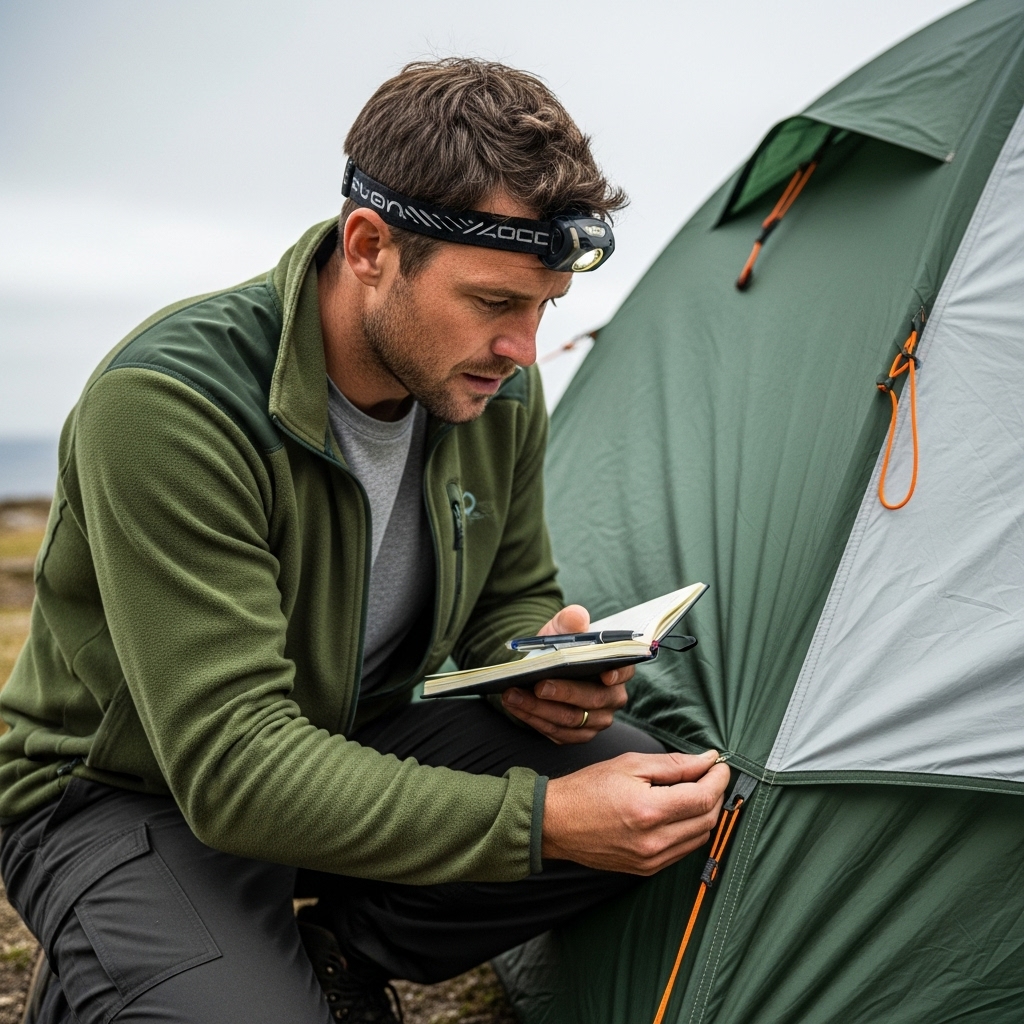

Choosing the Right 4-Person Shelter for Campsite Comfort
Cramped sleeping quarters and wrestling with stubborn poles at dusk can quickly sour a weekend in the woods. Tent capacity ratings often represent maximum shoulder-to-shoulder floor space rather than actual living comfort, leaving little room for duffel bags once pads are laid out. Picking the best 4 person outdoor tent requires looking closely at actual floor dimensions, peak height, and ventilation before packing your vehicle. A shelter featuring a generous nine-by-seven-foot base and smart airflow ports keeps everyone comfortable while preventing stuffy mornings and damp sleeping bags.
Weather resistance also plays a major role when sudden summer storms roll across the campsite. Campers who review specifications often compare floor layouts to a top selling camping tent design and pack extra comforts like rechargeable camping fans to maintain cross-ventilation. Shelters built with sealed seams, durable rainfly coatings, and smooth pole sleeves let you pitch camp fast without wrestling loose parts in windy conditions.

Pros
- Quick setup design with snag-free sleeves and shock-corded poles stated to pitch in under 6 minutes
- Welded seam construction and removable rainfly provide baseline weather protection for three-season camping
- Cool-air port and rear window promote steady air circulation through the lower and upper tent body
- Floor dimensions of 108 by 84 inches offer 63 square feet of floor space for small groups or gear storage
- Includes a compact carry bag along with stakes, poles, and an internal mesh storage pocket
Cons
- A 48-inch peak height does not permit standing and limits headroom for taller occupants
- Packed carry bag dimensions and pole material composition are not specified in the product data
- Fitting four full-sized adults leaves little to no interior floor space for duffel bags or bulky packs
The Amazon Basics 4-Person Camping Tent is an entry-level, three-season dome tent designed primarily for casual outdoor recreation and campground car camping. Featuring a classic dome shape with an orange and grey color scheme, this shelter is aimed at first-time tent buyers, couples wanting room to spread out, and small families seeking straightforward campsite gear without complicated assembly.
In terms of interior space, the shelter provides 108 inches by 84 inches of floor space (9 feet by 7 feet), yielding approximately 63 square feet of floor area. While the manufacturer states that this layout can fit four adults, that rating refers to shoulder-to-shoulder sleeping arrangements. For real-world comfort, fitting four adults leaves virtually no floor area for duffel bags, coolers, or large packs. The design works best for two or three campers with personal gear, or two adults using a larger mattress. The center height is 48 inches, meaning adults will need to sit, kneel, or crawl rather than stand.
Setup and structural hardware utilize shock-corded poles routed through snag-free continuous sleeves. The product specifications list an assembly time of under six minutes, which is helpful when arriving at a campsite late or pitching alone. For ventilation, the shelter integrates a back window and a low-profile cool-air port near the base, designed to draw air through the bottom while venting warm air upward. A removable rainfly sits over the dome to deflect overhead rain, complemented by welded seams along the lower polyester body to reduce moisture seepage.
Transport and site maintenance are practical for vehicle-based campers. The tent weighs roughly 9.26 pounds and packs down into an included carry bag alongside the poles and stakes. This weight makes it convenient to load into a car trunk or carry short distances to walk-in campsites, though it remains too heavy for typical multi-day backpacking treks. Standard maintenance involves ensuring the polyester fabric and seams are completely dry and brushed clean before packing it away into storage to prevent fabric degradation.
There are some practical limitations and missing details to consider. The manufacturer does not provide exact packed dimensions for the storage bag, nor does it list specific fabric denier or hydrostatic head waterproof ratings. Furthermore, the listing does not disclose pole material, such as whether they are fiberglass or aluminum. Because this is a lightweight three-season dome shelter, its ability to withstand wet or windy conditions depends on secure staking, proper tensioning of the rainfly, and avoiding severe storm environments.
For weekend car campers, festival attendees, and beginners seeking an affordable, straightforward shelter, this Amazon Basics dome tent provides a reliable baseline setup. Campers who need full standing height, separate gear vestibules, or specialized weather ratings for harsh mountain conditions should consider larger cabin tents or technical camping models instead.
The tent features a footprint measuring 9 feet by 7 feet (108 x 84 inches), providing roughly 63 square feet of internal floor space. Although the manufacturer rates this tent for four adults, that capacity assumes sleeping side-by-side with minimal belongings inside the shelter. Campers with substantial gear, backpacks, or large sleeping pads will find it much more functional when shared by two or three people.
Vertical clearance is limited to a center peak height of 48 inches (4 feet). Because the dome profile slopes downward from the center apex toward each corner, sitting room is concentrated in the middle of the tent. Campers must kneel or crouch when moving inside, making this shelter best suited for sleeping and relaxing rather than extended daytime lounging.
Pitching is structured around shock-corded poles and snag-free fabric sleeves, with the product data indicating an assembly time of under six minutes. The continuous sleeves help guide poles smoothly across the dome without catching, which simplifies pitching for solo campers or first-time buyers.
Ventilation relies on a multi-point airflow design. The tent features a rear window along with a dedicated cool-air port located near the floor. This positioning draws cooler ground-level air inward, encouraging air circulation upward toward the upper tent mesh and rainfly to help limit morning condensation buildup.
This shelter is constructed with water-resistant polyester fabric and features welded seams at critical stress points to resist ground moisture. A removable rainfly attaches over the dome to provide overhead rain coverage while preserving access to the windows and ventilation ports.
Because specific waterproof ratings (such as hydrostatic head millimeters) are not published, this model is best reserved for fair to moderate three-season conditions. Campers should utilize all included stakes and ensure the fly is guyed out tautly away from the tent body to maximize weather protection in rainy conditions.
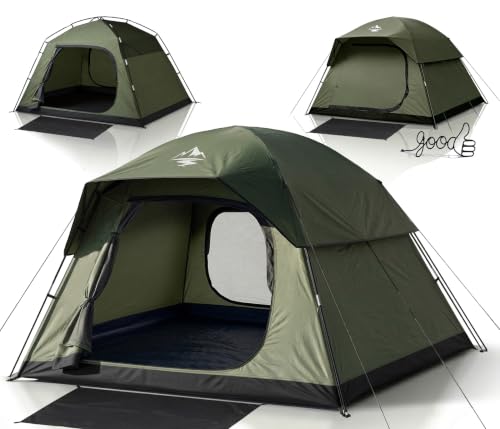
Pros
- Extended 9.02-foot floor length accommodates taller campers and extra gear at the foot of sleeping pads.
- Two full-size doors allow occupants to enter and exit without crawling over fellow campers.
- Dual mesh windows promote consistent airflow to help manage overnight condensation.
- Matching door mat provides a dedicated space to take off muddy camping shoes before stepping inside.
- Budget-friendly dome architecture designed for straightforward two-person setup.
Cons
- At 10.8 pounds, the tent is too heavy for extended backpacking trips despite marketing references to hiking.
- Fiberglass poles require deliberate handling during setup to prevent splintering under tension.
- The manufacturer does not provide a specific millimeter hydrostatic head rating or details on included stakes and guylines.
The Purebox 4-Person Camping Tent is an extended dome-style shelter designed for weekend outdoor recreation, campground stays, and road trips. Built with a traditional cross-pole dome layout, it targets budget-minded campers, pairs, and small families who want an accessible shelter with easy entry and exit. The green fabric shell combines with an exterior rainfly and an extended footprint to offer a relaxed campground basecamp.
In terms of interior space, the manufacturer lists open dimensions of 9.02 feet long by 7.05 feet wide, with a peak center height of 4.92 feet (approximately 59 inches). While marketed for three to four adults, fitting four full-size adults will place sleeping pads shoulder-to-shoulder with minimal leftover floor area. Campers will find the most comfortable balance using this shelter for two adults with gear, or two adults and a child. The 59-inch center clearance offers ample headroom for sitting upright and changing clothes, though standing up fully is limited by the sloping dome walls.
Pitching relies on a classic sleeve-pole system utilizing flexible fiberglass poles. The setup process is most efficiently handled by two people threading the poles through the exterior fabric channels to tension the dome upright. A high-density PU-coated rainfly fits over the canopy to shield against rainfall, supported by factory-taped seams designed to resist moisture seepage during typical three-season conditions. The inclusion of two large doors makes getting in and out seamless, while dual mesh windows facilitate cross-breeze airflow across the sleeping quarters.
For transport and storage, the tent packs down into a carry bag measuring 16 by 9 by 7 inches with a total weight of 10.8 pounds. While listing materials reference hiking, carrying a 10.8-pound package is generally impractical for self-supported backcountry backpacking. It is far better suited for car camping, trunk storage, or short walks to an established walk-in site. Purebox also bundles a matching exterior door mat, which serves as a practical barrier to prevent tracking dirt, pine needles, and mud onto the tent floor.
Campers should keep a few limitations and uncertainties in mind. The product specifications do not disclose the specific fabric denier, floor material thickness, or exact hydrostatic head waterproof rating in millimeters. Furthermore, fiberglass poles are heavier and less resistant to sudden stress than aluminum alternatives, meaning careful handling is required in high winds. The listing does not clarify the exact quantity or quality of included ground stakes, so inspecting or supplementing the stakes prior to a trip is sensible for rocky terrain.
Overall, the Purebox 4-Person Tent serves as a viable, value-conscious shelter for mild three-season getaways, roadside camping, and first-time buyers. Shoppers who prioritize dual-door access, extra legroom, and simple car transport will appreciate the layout, while those seeking rugged foul-weather resilience or trail-weight efficiency will want to compare dedicated backpacking models.
The tent features a footprint measuring 9.02 feet by 7.05 feet, providing more floor length than standard rectangular 4-person dome shelters. This extra length is particularly useful for taller campers who often find their sleeping bags pressing against tent walls in compact models.
Although the manufacturer rates the tent for three to four adults, usable sleeping comfort depends heavily on personal gear and mattress choices. Laying down four standard sleeping pads covers nearly the entire floor, leaving little clearance for duffel bags or backpacks. For optimal comfort, treating this tent as a spacious two-person or three-person shelter allows occupants to keep luggage inside without crowding.
The center peak height reaches 4.92 feet, giving seated campers generous overhead clearance. Because the dome walls curve inward toward the apex, usable standing room is restricted, making this model best suited for sleeping, relaxing, and sitting upright rather than moving around on foot.
The structure utilizes a continuous sleeve-pole design paired with durable fiberglass frame poles. Pitching is straightforward when two campers work together to guide the pole sections through the sleeves and anchor them at the corner grommets.
Weather protection is centered on a high-density PU-coated rainfly and factory-taped seams, intended to protect against moisture during three-season rain showers. While the rainfly adds crucial overhead coverage, the manufacturer does not specify a millimeter hydrostatic head rating, making it advisable to test setup and seam coverage prior to severe weather.
Condensation management is supported by dual mesh windows and two opposing entry doors. When breezes blow through the campsite, opening the solid fabric panels while leaving the inner mesh zipped maintains airflow while helping to keep flying insects outside.

Pros
- Intuitive dome design sets up in roughly 10 minutes without complicated pole configurations
- Ground vent paired with large windows promotes active airflow to minimize stuffiness and moisture
- Convenient E-Port provides exterior electrical cord access without leaving doors unzipped
- Frame integrity is rated to withstand winds exceeding 35 mph when properly guyed out
- Backed by Coleman with a 1-year limited warranty for manufacturer protection
Cons
- Peak center height of 4 feet 11 inches requires stooping and does not allow standing upright
- Floor plan is tight for four full-sized adults, making it better suited for 2 to 3 people with gear
- At 9.1 pounds, the packed weight is too heavy for lightweight backcountry backpacking trips
The Coleman Sundome 4-Person Camping Tent is a classic freestanding dome shelter designed specifically for car campers, weekend warriors, festival attendees, and first-time outdoor enthusiasts. With floor dimensions measuring 9 by 7 feet and a center peak height of 4 feet 11 inches, this shelter provides a practical footprint for state park campgrounds, backyard campouts, and road trip stopovers. While cataloged for four people, practical camping experience indicates it functions best as a roomy retreat for two to three adults, or a couple utilizing a single queen-size air mattress with spare space for duffels.
Setup efficiency is one of the standout advantages highlighted by the manufacturer, allowing campers to pitch the structure in roughly 10 minutes. The simple sleeve-and-clip pole system enables quick assembly even when arriving at camp after sunset. Supported by the included rainfly, the dome profile sheds passing downpours, while the underlying frame is engineered to hold strong in winds exceeding 35 mph when fully staked out with guy ropes.
Airflow management is essential in moderate-weather camping, and the Sundome addresses condensation buildup through a combination of large mesh windows and an integrated ground vent. This ventilation setup draws cooler air in along the base and exhausts warm, humid breath out through the upper mesh, helping keep the interior dry during muggy summer nights. Modern campsite convenience is further enhanced by an integrated E-Port, which lets you feed an electrical cord inside to power phones, fans, or lanterns without keeping the entry zipper cracked open to bugs.
Weighing in at 9.1 pounds and packing down to a manageable 6 by 6 by 23 inches, the shelter travels easily in vehicle trunks without demanding excessive cargo room. The durable fabric shell, factory-taped seams, and classic tub-style floor work in unison to form a protective weather barrier against ground moisture. For additional peace of mind, Coleman covers the tent with a 1-year limited warranty against material and manufacturing defects.
Potential buyers should consider a few natural physical constraints before purchasing. With a maximum ceiling height under 5 feet, taller campers must kneel or sit while changing clothes, as full standing clearance is not possible. Additionally, carrying 9.1 pounds over steep hiking trails makes this model impractical for backcountry backpacking, anchoring its best use squarely in the drive-up car camping and campground category.
For budget-conscious campers, scouting groups, and families seeking a dependable, easy-to-pitch shelter for fair-weather weekend outings, the Coleman Sundome 4-Person Tent remains a reliable outdoor staple. It balances simple assembly, proven wind resistance, and reliable ventilation in an affordable package ready for spontaneous outdoor getaways.
The interior layout of the Coleman Sundome spans 63 square feet across a 9 by 7 foot base, offering ample room for a variety of sleeping arrangements. It easily accommodates one standard queen-size air bed with perimeter clearance remaining for small gear bags, flashlights, and shoes.
When utilized with individual sleeping pads, the tent can house up to four campers shoulder-to-shoulder, though groups desiring dedicated space for larger packs will find two to three occupants optimal. The 4-foot-11-inch center height provides comfortable sitting and lounging headroom for playing cards or escaping rain showers.
The Sundome utilizes Coleman weather-resistant engineering, including an included rainfly that shields the ceiling mesh from seasonal downpours while directing runoff away from seam lines. The frame geometry is specifically designed to remain stable in wind conditions up to 35 mph when securely anchored.
Ventilation is handled via an intelligent dual-zone system featuring a low ground vent and wide side windows. This structure promotes continuous convective airflow, drawing cool air across the tent floor while preventing muggy condensation from settling along interior walls.
Frequently Asked Questions
How much usable space does a 4-person camping tent actually provide?
Most 4-person dome models offer roughly 60 to 65 square feet of floor space, typically measuring nine by seven feet. While this footprint fits four sleeping pads side by side, it leaves minimal room for gear. For group comfort, many campers treat a 4-person shelter as ideal for two or three adults plus bags, or pair it with a mountain canopy tent for outdoor gear storage.
Can a queen-size air mattress fit inside the best 4 person outdoor tent?
Yes, a standard queen air mattress fits inside tents with nine-by-seven-foot floor dimensions. The Coleman Sundome Camping Tent with Rainfly is built to fit one queen-size bed with narrow borders on each side. Keep in mind that an inflated queen bed takes up most available floor space, leaving narrow margins for boots and gear.
How do dual doors and ground vents reduce interior condensation?
Opposing doors and low ground vents promote active cross-ventilation that carries warm, humid breath outside before it condenses on fabric walls. The Purebox Tent 4 Person Tents for Camping with 2 uses dual doors and mesh windows to keep air circulating reliably. Campers pairing ventilated mesh with insect protection sprays can sleep cool without bugs entering, while avoiding open stoves inside to eliminate carbon-monoxide hazards.
What wind speeds can standard dome frames handle in outdoor settings?
Dome frames with flexible fiberglass poles can typically handle winds between 20 and 35 mph when fully staked out. The Coleman Sundome frame is designed to withstand winds of 35 mph or more under proper pitching conditions. Setting guylines tautly into solid soil remains essential for preventing the frame from buckling during sudden gusts.
How quickly can two people set up a typical 2026 4-person dome shelter?
Most 4-person dome shelters set up in under 10 minutes when two campers work together. The Amazon Basics 4-Person Camping Tent with Quick setup system uses snag-free sleeves and shock-corded poles to pitch in roughly 6 minutes. Smooth sleeve channels eliminate catching, making assembly straightforward even in fading daylight.
Are factory water-resistant coatings enough for heavy rainfall?
Factory PU-coated rainflies and welded floor seams offer dependable protection during typical 3-season showers. Guying out the fly sheet so it never touches the inner tent body prevents moisture transfer during persistent rain. Placing a footprint beneath the tent protects the floor fabric against ground moisture and sharp rocks.


Write Your Review
No reviews yet. Be the first to share your experience!