

Keeping young kids healthy around backcountry streams takes active gear planning. Young campers get thirsty quickly on sunny hikes, and their sensitive digestive systems are prone to illness from untreated creek water. Packing the best child safe water filters for family camping ensures that natural water becomes clean drinking water without endless fuss. A steady manual pump or squeeze system lets you refill cups fast before patience runs out. Storing clean reserves in a reliable water storage container for emergencies ensures basecamp always has pure water ready for cooking.
Camp filters need tight pore ratings and durable, BPA-free shells that withstand riverside drops. Cartridges with a 0.1 micron absolute filter eliminate dangerous pathogens like Giardia and E. coli while preserving a workable flow rate. Simple setups prevent kids from bypassing the purification stage accidentally. Evaluating flow rates and lifespan ratings before your trip keeps family outdoor adventures safe and stress-free.
Pros
- Fast 2-liter-per-minute manual flow rate quickly fills hydration bladders and camp cookware.
- 0.01 micron ultrafiltration membrane provides a high level of physical contaminant exclusion.
- Requires no batteries, electrical power, or replacement chemical tablets to operate.
- Versatile design attaches easily to buckets and common water-carrying vessels for group hydration.
Cons
- At 16 x 8 x 4 inches, the packed footprint is bulkier than ultralight personal straw filters.
- Requires a separate bucket or collection vessel that campers must provide separately.
- Because each unit is factory-tested with water before shipping, it may arrive damp inside the packaging.
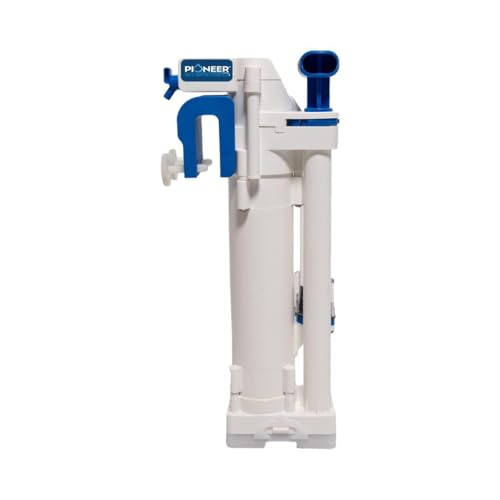
The Pioneer Safe Water Purifier is a manual bucket-pump filtration system designed to process raw water into clean drinking water for backcountry basecamps, family campsites, and emergency survival kits. Unlike compact squeeze filters intended solely for individual hikers, this system pairs with buckets or external water vessels to serve group hydration needs. It caters directly to family campers, overlanders, survivalists, and disaster preparedness planners who require a dependable, high-volume purification option that functions completely independent of electrical infrastructure.
In real-world camp settings, accessing clean water quickly is vital after a long day on the trail or during unexpected severe weather. The Pioneer system addresses this through a manual handheld pump mechanism capable of delivering an impressive flow rate of up to 2 liters per minute. This rate allows campers to rapidly replenish large hydration bladders, stock up basecamp wash stations, and fill deep stockpots for cooking breakfast without lengthy wait times. Because the system relies entirely on manual pumping, it remains fully operational in sub-freezing grid outages, storm shelter environments, and remote wilderness camps.
The core filtration technology centers around a 0.01 micron ultrafiltration membrane engineered to strain out microscopic waterborne pathogens and particulates. According to the manufacturer, this internal membrane mechanism can provide clean water for up to five years without requiring electrical power or chemical additives. To maintain high production standards, every filter is trail-tested before it ships from the factory, which explains why brand-new units may arrive with internal moisture.
In terms of portability and outdoor handling, the unit measures 16 by 8 by 4 inches. While this footprint is slightly larger than minimalist pocket straw filters, it remains packable enough for car trunks, overland gear boxes, hunting sleds, or extended multi-day canoe expeditions. Setting up the pump requires attaching the intake assembly to a clean bucket or suitable carrying vessel filled with untreated freshwater, followed by smooth manual strokes to push water through the ultrafiltration core.
Practical buyers should consider a few design tradeoffs before purchasing. While the system excels at high-volume water production, it does require the camper or homeowner to supply their own bucket or compatible reservoir. Solo ultralight backpackers may also find the 16-inch package dimensions heavier and bulkier than pocket-sized gravity bags. Furthermore, manual pumping does require physical effort, especially when processing dozens of gallons for a large family during an extended power outage.
For overlanders, group campers, cabin owners, and emergency preppers building a resilient off-grid kit, the Pioneer Safe Water Purifier offers substantial utility. Its combination of a 0.01 micron membrane, rapid 2-liter-per-minute throughput, and five-year non-electric operational life makes it a reliable centerpiece for high-demand freshwater security in the outdoors.
Disaster preparedness kits require equipment that remains completely functional when municipal utilities and local power grids collapse. The Pioneer Safe Water Purifier operates without electrical cords, rechargeable batteries, or solar panels, relying entirely on manual mechanical pumping to produce potable water from captured rainwater, natural lakes, or local streams.
With a manufacturer-rated operational lifespan of up to five years and a 0.01 micron filtration membrane, this bucket-style system can serve as a dependable emergency buffer during floods, winter freezes, hurricanes, or prolonged supply disruptions where family hydration security is paramount.
Operating the Pioneer Safe Water Purifier involves securing the intake line into a standard utility bucket or water-carrying reservoir filled with raw water. Pumping the manual handle draws water through the 0.01 micron ultrafiltration core, directing clean, filtered output through the discharge line at rates up to 2 liters per minute.
Because each filter is wet-tested at the factory before sale, moisture inside the unit upon arrival is normal. Between camping seasons or after emergency use, users should flush the system with clean water and store it in a temperature-controlled environment away from hard freezes to protect the ultrafiltration membrane integrity.

Pros
- Weighs only two ounces, making it an ideal choice for ultralight backpacking and compact survival kits
- Impressive 4,000-liter filtration lifespan delivers years of safe drinking water without extra moving parts
- Straightforward operation requires no pumping, chemical wait time, or battery power
- Rigorous 0.2-micron filtration effectively blocks bacteria, protozoan cysts, microplastics, and silt
Cons
- Requires sipping directly from the water source or a cup rather than filtering directly into storage bladders
- Does not eliminate viruses, heavy metals, or agricultural chemicals found in heavily polluted runoff
- Filtering large volumes of water for camp cooking or group hydration can be tedious
The LifeStraw Personal Water Filter is a compact, point-of-use hollow fiber membrane filter engineered for on-the-go hydration during wilderness treks and emergency situations. Designed as an ultralight survival tool, it allows outdoors enthusiasts to drink directly from natural freshwater sources without relying on chemical purification tablets or cumbersome mechanical pumps. This filter caters directly to backpackers, day hikers, trail runners, hunters, scouts, solo adventurers, and emergency preppers assembling bug-out bags.
Filtration performance is centered around a 0.2-micron microfiltration membrane capable of removing 99.999999% of waterborne bacteria, including E. coli and Salmonella, as well as 99.999% of waterborne protozoan parasites such as Giardia lamblia and Cryptosporidium. In practical camping scenarios, such as filling up along an alpine stream or drinking from a backcountry lake, the filter purifies water instantly with a steady flow rate. It also filters out fine sediment and environmental microplastics, significantly improving water clarity without introducing any chemical aftertaste.
Weighing only around two ounces and measuring approximately nine inches in length, the unit delivers high portability. The durable, BPA-free plastic housing withstands being tossed into a packed rucksack, stashed inside a vehicle console, or clipped to a chest harness. Both ends are equipped with protective caps to keep trail dirt and debris away from the mouthpiece and intake zone during rugged hikes through brush or rocky terrain.
Operation and ongoing care remain straightforward. To drink, users simply uncap both ends, place the base into a water source, allow the membrane to saturate for a few seconds, and sip through the top mouthpiece. Clearing the filter requires blowing a quick puff of air back through the straw after drinking, which purges residual moisture and prevents particulate buildup. Because the unit contains no moving parts or batteries, it requires virtually zero mechanical troubleshooting in the field.
A realistic limitation of this straw-style filter is that it is primarily intended for individual, immediate consumption. Gathering gallons of water for camp kitchen cooking, large-scale family hydration, or refilling narrow hydration reservoirs requires transferring water into an intermediate wide-mouth container first. Additionally, like most standard backcountry microfilters, it does not remove viruses or dissolved chemical contaminants, making it best suited for natural wilderness waters rather than heavily industrialized runoff.
For weekend backpackers, trail hikers, overland travelers, and budget-conscious campers seeking peace of mind in the outdoors, the LifeStraw Personal Water Filter represents an exceptional value. Its combination of near-zero pack weight, massive 4,000-liter operational lifespan, and proven microbiological protection makes it a core staple for any outdoor gear loadout or home emergency kit.
For ounce-counting backpackers and thru-hikers, minimizing pack weight is essential. Weighing roughly 2 ounces, the LifeStraw adds virtually no penalty to your base weight while eliminating the need to carry heavy liters of pre-filtered water on trails with frequent water sources.
Its slim profile slips easily into backpack side pockets, hip belt pouches, or running vests. During quick trail stops, hikers can hydrate directly from passing streams in seconds without taking off their packs or assembling multi-piece pump systems.
Maintaining the LifeStraw requires minimal effort on the trail. After each drinking session, simply blow air back through the mouthpiece to clear trapped water and silt from the membrane fibers before snapping the protective caps back into place.
When storing the filter between camping seasons, rinse it thoroughly with clean water, allow it to air dry, and keep it in a cool, dry location. In sub-freezing temperatures, keep wet filters inside a jacket pocket or sleeping bag, as freezing water can damage the internal microfiltration membrane.

Pros
- Extremely lightweight and compact at just two ounces for minimalist packing
- Versatile connection threads onto standard 28mm disposable water bottles and hydration bladders
- Huge 100,000-gallon capacity ensures years of reliable outdoor hydration
- High-level 0.1 micron absolute filtration eliminates bacteria, protozoa, and microplastics
- Straightforward field maintenance with the included backflush cleaning syringe
Cons
- Slower flow rate compared to full-sized squeeze filters, requiring extra patience and hand pressure
- Must be protected from freezing weather once wet to avoid damaging the internal hollow fibers
- Does not filter out viruses, heavy metals, or chemical pollutants
The Sawyer MINI Water Filtration System is a staple in the backcountry community, designed to turn freshwater streams, alpine lakes, and questionable tap sources into clean, safe drinking water. Weighing roughly two ounces, this palm-sized hollow fiber filter serves as an essential companion for ultralight backpackers, day hikers, scouts, solo trekkers, and emergency preppers assembling bug-out bags. Its diminutive size makes it easy to stow away in a trail vest pocket or a vehicle console without sacrificing pack space.
At the core of the Sawyer MINI is a 0.1-micron absolute hollow fiber membrane that utilizes technology similar to medical dialysis. As untreated water passes through the porous walls of the micro-tubes, physical contaminants including bacteria such as E. coli and Salmonella, protozoan cysts like Giardia and Cryptosporidium, and microplastics are physically barred from passing through. While this mechanical filtration excels against backcountry biological threats, outdoor adventurers should keep in mind that hollow fiber filters do not remove heavy metals, dissolved chemicals, or viruses, which generally require secondary chemical treatment or specialized purifiers for international travel in high-risk regions.
Versatility is one of the filter's strongest suits. Built with standard 28mm threads, the Sawyer MINI screws directly onto common plastic disposable water bottles, collapsible squeeze pouches, and inline bladder hoses. You can also attach the included drinking straw to sip directly from a wilderness creek or lake. This adaptable design allows solo hikers to scoop water into a bottle on the move and drink immediately without waiting for chemical tablets to dissolve, streamlining hydration along extended trails.
Maintaining the Sawyer MINI in the field is straightforward using the included cleaning syringe. When filtering silty or tannin-rich water, the flow rate can slow down, but backflushing clean water in reverse through the nozzle dislodges trapped debris and restores water flow up to 98% of its original rate. Because the filter uses water-filled microscopic fibers, it is critical during cold shoulder-season or winter camping trips to store the wet filter inside a jacket pocket or sleeping bag footbox overnight, as freezing temperatures can expand the water inside and compromise the fiber structure.
For weekend warriors, thru-hikers covering hundreds of trail miles, and family campers building a reliable emergency preparedness kit, the Sawyer MINI offers exceptional reliability in a compact package. Its remarkable 100,000-gallon lifespan and simple mechanical operation provide peace of mind across rugged mountain routes, scenic forest trails, and unexpected weather emergencies.
Tipping the scales at a mere two ounces, the Sawyer MINI is engineered for hikers and travelers who prioritize low base weight. Its compact footprint tucks effortlessly into running vests, hip belts, first aid kits, or everyday carry pouches.
Because it operates without heavy batteries, moving parts, or bulky pump mechanisms, it drastically cuts pack weight compared to traditional camp pump systems while still providing reliable point-of-use filtration.
Regular backflushing with the included cleaning plunger is key to maintaining steady flow rates and prolonging filter performance over time. Always flush the unit with clean, filtered water after returning from muddy or sediment-heavy water sources.
Before long-term home storage, sanitize the filter with a light bleach solution, allow it to air dry thoroughly, and store it in a temperature-controlled area to protect the internal hollow fibers from physical or thermal damage.

Pros
- Fast water delivery rate of 1.5 to 3.0 liters per minute quickly hydrates multiple campers without long wait times
- Multi-stage filtration setup includes ultrafiltration membrane and mineral pre-filters for cleaner-tasting backcountry water
- Ceramic core micro-pressure check valve creates an effective seal to prevent cross-contamination
- Built from BPA and BPS-free heavy-duty plastics that hold up to rugged camp use
- Replaceable internal filter cartridges eliminate the expense of discarding the entire pump housing
Cons
- At 4 pounds and 13.5 inches long, this unit is significantly heavier and bulkier than ultralight personal backpacking straw filters
- Manual hand-pump operation requires physical effort to produce continuous high-volume water output
- Multi-stage filter elements require periodic replacement and proper drying between trips to prevent clogging
The P Polerden Emergency Water Filter is a high-capacity manual pump filtration system designed to process drinking water quickly from natural freshwater sources. Measuring 13.5 x 3.5 x 10 inches and weighing 4 pounds, this unit is engineered specifically for family campers, basecamp operators, overland travelers, and emergency preparedness planners who prioritize rapid output over ultralight compactness. Unlike miniature pocket straws, this larger platform addresses the hydration needs of small groups, making it suitable for communal campsites where boiling multiple gallons of water would consume valuable camp stove fuel.
In terms of filtration performance, the system utilizes a multi-stage approach featuring an adsorbent mineral pre-filter, a polypropylene (PP) cotton filter, and an ultrafiltration membrane filter. The manufacturer states that this sequential setup achieves up to 99.999% purification purity while significantly reducing murky odors and suspended particles common in backcountry streams or quiet lakes. Pumping performance is a standout characteristic, delivering a rated flow rate of 1.5 liters per minute with a maximum potential output of 3 liters per minute under optimal conditions, which cuts down the waiting time when filling large hydration reservoirs or camp kettles.
Build quality centers on heavy-duty BPA and BPS-free plastics engineered to endure rough outdoor conditions and storage inside vehicle gear bins. A key mechanical highlight is the high-precision ceramic core micro-pressure check valve. This check valve creates an effective hydraulic seal with strong suction capability, keeping untreated intake water isolated from processed clean water to minimize contamination risks. The robust external housing and stable footprint allow users to steady the pump on riverbank rocks or campsite tables while applying manual leverage.
Setting up and maintaining the system is practical for regular outdoor outings. Pumping requires no electricity or batteries, making it dependable during off-grid excursions or unexpected storm power outages. Maintenance is similarly cost-conscious, as the ultrafiltration membrane and pre-filter components can be replaced individually without discarding the entire pump housing. Between outdoor excursions, users should thoroughly flush and air-dry the internal filter assembly to prevent stagnation and preserve membrane longevity before packing the device into storage.
Prospective buyers should weigh the system's weight and physical dimensions against their typical camping style. At 4 pounds, this filtration station is too heavy and voluminous for solo backpackers or long-distance hikers looking to minimize base pack weight. Additionally, manual hand pumping still requires consistent arm effort, especially when processing murky raw water that gradually coats the pre-filter. Like all membrane-based filters, owners must protect the damp internal elements from freezing temperatures to prevent physical damage to the micro-pores.
For car camping groups, scout troops, remote cabin stays, and home disaster readiness kits, the P Polerden filtration system offers dependable, high-volume water purification. Backcountry travelers seeking an ultralight personal filter should consider smaller squeeze pouches or straw units instead, but those managing water for several people will appreciate the fast 1.5 to 3 liter per minute flow rate and rugged mechanical construction.
The core filtration mechanism relies on a sequential multi-stage design comprising an adsorbent mineral pre-filter, a PP cotton layer, and an ultrafiltration membrane. This staged setup removes silt, sediment, and natural organic odors before the water reaches the final microscopic purification stage. According to product documentation, this multi-tier approach achieves up to 99.999% purity without relying on chemical tablets that can impart unpleasant tastes.
Water output is tailored for multi-person demands, boasting a rated delivery of 1.5 liters per minute and a maximum rate of 3 liters per minute. The high-precision ceramic core check valve ensures continuous suction and prevents backflow. This allows users to fill multi-liter water bladders, cooking pots, and camp washbasins in a fraction of the time required by standard single-stage trail filters.
Routine care for the P Polerden filtration unit ensures consistent flow rates and extends the operational lifespan of internal filter cartridges. Users should periodically inspect and rinse the pre-filter assembly, particularly after drawing from turbid or silt-heavy water sources. Because the ultrafiltration membrane and pre-filters are individually replaceable, long-term maintenance costs remain economical compared to discarding an entire pump body.
Before storing the unit after a camping trip or emergency deployment, flush the system with clean water and allow all components to dry thoroughly in an open environment. Storing a damp filter in an airtight container can promote mildew buildup. In cold-weather camping environments, keep wet filter cartridges insulated inside your sleeping bag or jacket, as frozen residual water can expand and compromise the filtration membrane.

Pros
- Incredibly effective filtration that meets NSF/ANSI standards for viruses, bacteria, and protozoa
- Lightweight and compact design that packs easily for backpacking or emergency kits
- Fast pump rate (500ml/min) saves time when refilling multiple water bottles
- Backwashable pre-filter extends filter life and maintains flow without replacing cartridges
- Lifetime warranty and responsive customer service from a North American company
Cons
- Can be a two-person operation when filling bottles because the outlet hose clip doesn't fit standard wide-mouth bottles
- Inlet hose may float on fast-moving streams, reducing pumping efficiency if not weighted down
- Some users report the internal filter cap can become loose over time with heavy use
The Survivor Filter PRO is a hand-pump water filtration system designed for outdoor enthusiasts who need reliable, portable access to clean drinking water. Whether you are backpacking through the Rockies, car camping at a national park, or prepping for an emergency, this filter turns any fresh water source into safe hydration without batteries, chemicals, or complex setups.
Weighing just 12.8 ounces and packing down to about the size of a large water bottle, it fits easily in a backpack pocket or emergency go-bag. The triple-stage filtration system removes 99.999% of viruses, bacteria, and protozoa down to 0.01 microns, which is more thorough than many competing straw or gravity filters. According to user feedback, the water tastes clean with no plastic aftertaste once you flush the system with two liters of tap water before first use.
In real-world backpacking trips, users report that the pump delivers a steady 500ml per minute, letting you fill a liter bottle in about two minutes. The included outlet hose has a clip meant to hold it in place, but several reviewers note that the clip does not fit Nalgene or Smartwater bottle necks securely, often requiring a second person to hold the hose while pumping. This is a minor ergonomic hiccup, but it does mean you may need a partner for efficient group refills.
Durability is a strong point, with the internal ultra-filter rated for 100,000 liters of water, and the manufacturer backs it with a lifetime warranty against defects. The ABS plastic body feels sturdy, though a few international users have reported the internal cap loosening after repeated use. The pump can be disassembled for cleaning and drying, and the pre-filter should be backwashed every 2-3 liters to maintain flow. After each trip, simply clean, air dry, and store in a low-humidity environment.
For American campers who value peace of mind, the Survivor Filter PRO is a solid investment. It suits backpackers seeking ultralight gear, families doing car camping who want a backup for treated tap water, and preppers building an emergency kit. The lifetime warranty and responsive North American customer support add long-term value. Just be aware that you may need to rig a weight on the intake hose for fast-moving streams, and plan for two hands when filling bottles. Overall, it is a practical, dependable filter that delivers on its promises.
Frequently Asked Questions
Which filter pore size is necessary to protect kids from backcountry microbes?
An absolute pore size of 0.1 microns or smaller is required to remove harmful waterborne bacteria and protozoa. Standard microfiltration membranes in models like the Sawyer MINI physically trap 99.999% of parasites like Giardia and Cryptosporidium. Systems with 0.01 micron membranes provide an even tighter barrier against fine environmental sediment. This mechanical filtration keeps young digestive tracts safe from untreated water.
Can young children drink directly through personal straw water filters?
Younger children often lack the lung power required to pull water through dense straw filters. While lightweight designs like the LifeStraw work well for older kids, manual pump filters like the Survivor Filter PRO prove far easier for toddlers. Pumping water directly into familiar camp cups avoids frustration and ensures children drink enough fluids throughout warm camping days.
Are chemical purification tablets better for family camping than physical filters?
Physical filtration systems are generally preferable to chemical tablets because they work instantly and leave no chemical aftertaste. Tablets require lengthy wait times and can irritate young stomachs sensitive to chlorine or iodine. If you need emergency backup purification, heating stream water in a canteen for boiling water provides a chemical-free fallback that kids will readily accept.
How do campsite water purifiers differ from ordinary home filter pitchers?
Campsite purifiers are designed to block live biological pathogens that home pitchers cannot remove. A residential glass water filter jug focuses on municipal chlorine and heavy metals rather than wilderness microbes. Backcountry filters like the P Polerden pump employ multi-stage ultrafiltration to capture river organisms, ensuring wilderness water is truly safe for family consumption.
How can families prevent cross-contamination while filtering water at camp?
Separating the raw water intake hose from the clean discharge spout is crucial for avoiding contamination. Using floating inlet pre-filters prevents sucking up bottom muck, while dedicated storage bags keep damp hoses away from clean drinking bottles. Designating one adult to manage filter pumps also stops curious little hands from touching sterilized spouts.





Write Your Review
No reviews yet. Be the first to share your experience!