

Packing bulky bedding into a crowded vehicle trunk often drains the fun out of preparing for a weekend getaway. Stacking huge rolls of blankets or heavy winter sacks leaves barely any space for coolers, food crates, or even a comfortable camping chair around the fire ring. Investing in well-designed lightweight travel sleeping bags for family camping eliminates that headache by pairing compact packed dimensions with dependable warmth for cool evenings. Synthetic polyester insulation and water-resistant nylon shells protect against morning condensation while keeping pack weights between two and four pounds per sleeper. That balance allows parents and kids to carry their own gear to the campsite without feeling weighed down.
Careful evaluation of envelope-style dimensions, temperature ratings, and compression sacks reveals how easily a modern sleep system adapts to summer nights and mild shoulder seasons. Envelope cuts offer roomier footboxes than tight mummy silhouettes, which keeps restless children and tall adults sleeping soundly on camping pads. Integrated drawstrings, snag-free zippers, and double-filled stitching ensure consistent ground insulation without trapped dampness. Sizing down your bedding bulk saves vital cargo capacity for other essentials, making vehicle packing straightforward and setting up the family tent entirely stress-free.

Pros
- Spacious 86.6-inch length provides generous legroom for campers up to six feet tall
- Lightweight 3.09-pound footprint packs down neatly in the provided compression sack
- Double-sided zipper and velcro closure stop drafts and prevent unwanted zipper opening
- Machine-washable design allows for easy maintenance after dusty campground use
- Drawstring headrest cinches snug to help preserve body heat in cool breezes
Cons
- Not suitable for sub-50°F or freezing conditions despite the title mentioning cold weather
- Three-pound synthetic pack profile is slightly bulkier than dedicated ultralight backpacking down gear
- Rectangular envelope cut retains less body heat than a tight-fitting technical mummy bag
The Earth Guru Sleeping Bag is an envelope-style sleeping bag featuring an integrated drawstring hood, tailored for mild-weather outdoor adventures and casual campground use. Built around a stated manufacturer temperature rating of 50°F to 77°F, this sleep system is best suited for family campers, first-time weekend warriors, festival goers, and youth campers heading out for scouting trips or summer camp. While the listing title references cold weather, the underlying technical specifications clearly position this bag for late spring, summer, and early autumn evenings rather than alpine or winter conditions.
In terms of real-world camping performance, the bag prioritizes breathable, mild-climate comfort over heavy alpine warmth. The interior uses a 3D synthetic fiber fill held in place by double-layer S-shape stitching, which helps prevent the insulation from clumping or creating uneven cold spots. For slightly brisk nights dipping toward 50°F, the headrest includes an adjustable drawstring that cinches the hood around your head and neck to trap rising body warmth. A dedicated velcro closure strap secures the top of the zipper track, stopping the double-sided zipper from sliding open as you toss and turn on a sleeping pad or camp cot.
The exterior build quality utilizes a water-resistant hex-tech shell designed to shed damp morning tent condensation and light campsite dew. Measuring 86.6 inches in length by 31.5 inches in width, the spacious cut easily fits adults up to six feet tall while giving younger campers generous room to stretch out. Because it adopts a roomy rectangular envelope geometry rather than a restrictive mummy taper, sleepers have adequate foot room to shift positions without feeling constricted inside the tent.
Packability and routine maintenance remain major practical highlights for car campers and gear haulers. At roughly 3.09 pounds, the sleeping bag packs down into an included compression stuff sack outfitted with tensioning straps to reduce bulk in a packed vehicle trunk or oversized pack. Backcountry hikers tracking every ounce will note that three pounds is heavier than premium technical down bags, but the synthetic construction offers significant perks in damp environments and simple upkeep. Minor mud or dirt wipes off easily with a damp washcloth, and the entire unit can be placed in a washing machine for a thorough refresh after an extended campground stay.
For shoppers seeking an accessible, entry-level sleeping bag for mild-weather family campouts, beach trips, scout weekends, or emergency preparedness kits, the Earth Guru Sleeping Bag offers solid practical value. Buyers should take care to note the 50°F lower temperature threshold and pair the bag with an insulated sleeping pad if ground temperatures run cool. As long as your plans remain centered on mild three-season camping rather than freezing conditions, this hooded sleeping bag delivers dependable everyday performance.
The Earth Guru Sleeping Bag is specifically sized at 86.6 inches long by 31.5 inches wide, offering a generous cut that comfortably accommodates campers up to six feet tall. Unlike tight mummy bags that constrict leg movement, the rectangular shape gives your feet and knees freedom to shift throughout the night, making it equally welcoming for adults and growing kids.
Thermal performance is engineered for ambient temperatures between 50°F and 77°F. While the product title mentions cold weather, campers should treat this as a dedicated mild three-season bag for late spring, summer, and early autumn outings. When camping near the 50°F mark, pairing the bag with an insulated sleeping pad and warm base layers will help maximize thermal efficiency and personal comfort.
Keeping your Earth Guru Sleeping Bag in good condition requires minimal effort thanks to its synthetic fill and water-resistant hex-tech outer fabric. For light campsite dust, trail debris, or minor spills, wiping down the exterior with a damp cloth and mild soap is usually sufficient. When a deeper clean is required after a long camping trip, the sleeping bag is safe for machine washing on a gentle cycle with cold water and a mild detergent.
Avoid using harsh bleach or high-heat dryer cycles, as extreme heat can damage synthetic fill fibers and shell coatings. Air-drying on a clothesline or tumbling on low heat helps restore loft to the 3D synthetic insulation. Ensure the sleeping bag is completely dry before placing it back into its compression sack to prevent mildew formation during long-term storage.
Pros
- Roomy rectangular envelope shape gives side sleepers significantly more foot and shoulder freedom than restrictive mummy bags.
- Matching left-zip and right-zip models can connect together, making it an adaptable option for couples and family tents.
- Tough 290T nylon shell repels morning condensation and dampness while maintaining breathability inside the tent.
- Integrated Roll Control design simplifies folding and rolling when packing up camp in the morning.
Cons
- A 4-pound pack weight makes this bag noticeably bulky and heavy for multi-day backcountry backpacking.
- The 32-degree Fahrenheit rating represents an extreme lower limit, requiring supplemental base layers in freezing weather.
- Rectangular envelope collar lacks a contoured cinch hood, allowing some warm air to escape around the shoulders in cold drafts.
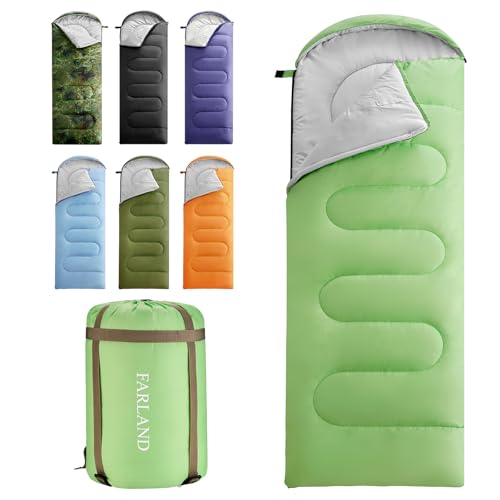
The FARLAND 3-Season Sleeping Bag is an envelope-style synthetic sleep system designed for general outdoor recreation during spring, summer, and autumn. Measuring approximately 86.6 inches long by 29.5 inches wide, the rectangular footprint offers generous shoulder and leg room compared to restrictive, tapered mummy cuts. Based on the manufacturer specifications, this bag features a total weight of 4 pounds and polyester fiber insulation, making it a reliable, accessible option for family campground trips, scout campouts, festival weekends, and casual car camping setups where packed volume is not your top concern.
Thermal performance centers on a comfort temperature window between 41 and 68 degrees Fahrenheit, with a stated lower limit of 32 degrees Fahrenheit. Double-filled polyester fiber batting provides reasonable loft to trap radiant body heat through crisp autumn evenings and brisk spring mornings. However, campers should recognize that the 32-degree threshold serves as a survival limit rather than an indicator of warm, cozy rest. When temperatures drop toward freezing, pairing this bag with an insulated sleeping pad and thermal sleepwear is necessary to prevent cold ground conductivity from depleting your core warmth.
Outer construction relies on a 290T nylon fabric that balances weather-resistant protection with breathable ventilation. This dense weave helps deflect tent wall condensation, damp air, and morning dew, while the synthetic fill maintains its structure far better than untreated natural down in damp environments. Inside, the lining uses a polyester pongee fabric that offers a soft, pleasant hand feel against bare arms and legs. FARLAND also incorporates their Roll Control feature along the borders, which helps keep the sleeping bag straight and orderly when rolling it tight for storage.
Versatility is enhanced through color-coded zipper placements that make it easy to connect two bags together. Units manufactured with left-side zippers can link directly to right-side zipper bags, instantly creating a spacious two-person bedding system for couples in family tents or vehicle sleeping platforms. When not zipped into a sleeping sack, the dual zippers allow the entire bag to open flat for duty as an extra camp quilt, campfire blanket, or cabin bedspread.
While the design is well suited for road trips and established campgrounds, its physical profile presents definite limitations for extended foot travel. Tipping the scales at 4 pounds, this bag takes up considerable pack volume, making it impractical for long-distance backpacking where every ounce and cubic inch counts. Additionally, because the open envelope top lacks an insulated draft collar or contoured mummy hood, sleeping in chilly, windy conditions allows warmth to vent out around your neck if you shift during the night.
For weekend campers, car travelers, budget-conscious outdoor enthusiasts, and families needing durable seasonal bedding, the FARLAND 3-Season Sleeping Bag provides strong practical value. Its combination of easy-rolling storage, roomy interior dimensions, and the flexibility to zip two bags together delivers dependable comfort for campground trips from late spring through crisp fall weekends.
Unlike tapered technical bags that pinch the knees and feet, the open rectangular cut of this sleeping bag provides 29.5 inches of continuous width from shoulders to toes. This envelope geometry allows side sleepers, restless sleepers, and taller individuals to turn freely without fighting constricting fabric.
The interior polyester pongee lining avoids the slick, clammy texture often associated with budget synthetics, creating a comfortable surface for sleeping in light layers. The ability to unzip the footbox independently also allows quick temperature regulation on warmer summer nights.
Built with a 290T nylon shell, this bag helps shed incidental moisture such as morning dew, ground dampness, and moisture dripping off single-wall tent fabrics. Synthetic polyester fiber batting retains its loft even when humidity levels spike, keeping you insulated through damp mountain mornings.
The bag performs most comfortably in ambient temperatures between 41 and 68 degrees Fahrenheit. For cold-weather outings dipping toward the 32-degree boundary, campers should always use a high-R-value sleeping pad underneath to create an effective thermal barrier against ground chill.

Pros
- Weighs only 0.4 pounds and packs down to a tiny 5 x 4 x 3 inches for effortless backpacking.
- Silky, breathable fabric feels soft against bare skin and dries much faster than cotton.
- Integrated pillow sleeve secures your camp pillow and keeps dusty surfaces away from your face.
- Helps preserve high-end sleeping bags by acting as an easily washable barrier against dirt and skin oils.
Cons
- The 27.5-inch width can feel restrictive for broad-shouldered campers or active side sleepers.
- Lacks a side zipper, requiring sleepers to slide in and out through the top opening.
- Adds minimal thermal insulation, meaning it cannot replace a properly rated sleeping bag in cold weather.
The Frelaxy Ultralight Sleeping Bag Liner is an ultra-compact sleep sack and travel sheet engineered to integrate smoothly inside standard outdoor sleep systems. Sized at 27.5 inches wide by 84.6 inches long in this specific variation, it serves solo backpackers, thru-hikers, weekend campers, and hostel travelers who prioritize a clean, hygienic sleep setup without packing heavy bulk. By creating an interior barrier between your skin and your sleeping bag insulation, it reduces the need to frequently wash technical down or synthetic gear.
On the trail, gear utility hinges on packed size and moisture management. Weighing just 0.4 pounds and packing down to roughly 5 x 4 x 3 inches, this liner occupies negligible room in a multiday pack or carry-on duffel. During warm summer evenings, it functions comfortably as an ultralight standalone cover, providing breathable coverage when a full sleeping bag is too warm. In cooler shoulder-season conditions, slipping it inside your mummy or rectangular bag adds a gentle boost in perceived comfort and cuts down direct contact with cold synthetic shell fabrics.
Constructed from an upgraded synthetic fabric, the liner delivers a soft, cotton-like hand feel at a fraction of the weight of traditional cotton sheets. The quick-drying properties help manage overnight perspiration, preventing that damp, clammy feeling inside enclosed tents. A thoughtful design highlight is the integrated pillow sleeve at the top, which holds a camp pillow or stuffed fleece firmly in place while creating a clean resting surface for your face. The gray zipperless construction also ensures that you will never deal with snagged teeth tearing fragile sleeping bag baffles.
Using the liner is straightforward: simply unroll it, slide it into your sleeping bag or onto a camp cot, and tuck your pillow into the dedicated sleeve. Packing up is equally simple, as the pliable fabric easily stuffs back into its pocket-sized carry pouch without meticulous folding. When you return home from a dusty weekend trip, maintenance is hassle-free since the liner is fully machine washable. Because the synthetic weave dries far quicker than cotton, it is ready to repack for the next adventure with minimal downtime.
While the compact dimensions offer great benefits for weight-conscious hikers, the 27.5-inch width may feel constrictive for broad-shouldered campers or restless side sleepers who move frequently. In addition, because this is a zipperless model, getting in and out requires shimmying through the top opening, which can be awkward inside cramped one-person backpacking tents. Campers heading into chilly mountain nights should also remember that a lightweight liner provides minimal thermal insulation and will not compensate for an inadequately insulated sleeping bag.
For budget-conscious backpackers, summer tent campers, and travelers staying in rustic cabins or hostels, the Frelaxy Ultralight Sleeping Bag Liner delivers practical value. It strikes a sensible balance between packability, skin comfort, and sleeping bag protection. If you want a lightweight hygiene layer that prevents dirt buildup in your technical gear without weighing down your pack, this versatile liner makes a dependable addition to any outdoor kit.
Tipping the scale at roughly 0.4 pounds (under 200 grams), this liner is built specifically for minimalists who scrutinize every ounce in their pack. When packed inside its included stuff sack, it measures approximately 5 x 4 x 3 inches, making it roughly the size of an apple.
Its miniature footprint allows backpackers, bikepackers, and international travelers to tuck it into a backpack brain, side water bottle pocket, or the corner of a carry-on bag without sacrificing valuable cargo space.
Washing technical sleeping bags too often can degrade their loft and water-repellent shell coatings over time. Using this liner keeps body oils, sunscreen, and trail grit off your bag interior, significantly extending the intervals between intensive sleeping bag washings.
The liner itself is completely machine washable with mild detergent. Its quick-drying fabric air-dries rapidly on a campsite clothesline or dries on low heat at home, ensuring it stays fresh and ready for regular use.

Pros
- Lightweight design at under three pounds makes it manageable for casual backpacking, scouts, and car camping
- Generous 86-inch length comfortably accommodates adult campers up to six feet tall
- Included compression sack with cinching straps simplifies storage in vehicle trunks and gear packs
- Machine washable fabric makes post-trip campsite cleanup quick and straightforward
Cons
- Thermal rating of 50°F to 77°F makes it unsuitable for freezing nights or late-fall trips despite cold weather naming
- Synthetic 3D insulation does not compress as tightly as higher-end goose or duck down alternatives
The MalloMe Sleeping Bag is an entry-level, rectangular-hooded sleep system designed specifically for mild three-season outdoor use. Engineered to serve budget-conscious family campers, first-time tent campers, summer festival goers, and scout troops, this bag bridges the gap between recreational car camping and light overnight hiking. With a stated manufacturer temperature rating of 50°F to 77°F, it serves primarily as a warm-weather or cool-summer slumber option rather than a specialized alpine or cold-weather bag.
In terms of campsite performance, the bag relies on a proprietary hex-tech outer fabric built to deflect minor moisture, morning tent condensation, and damp ground contact. The interior insulation consists of 3D synthetic fiber fill secured by double-layered S-shape stitching, a construction method intended to keep the loft evenly distributed across the torso and legs without shifting into cold voids. While the title mentions cold weather, buyers should rely on the specific 50°F minimum rating, meaning that pairing this bag with an insulated sleeping pad is advisable when campground temperatures dip toward the lower 50s.
The sleeping bag measures approximately 86.6 inches in length and around 29.5 to 31.5 inches in width, creating a roomy interior envelope that fits campers up to six feet tall without constricting the shoulders or feet. Functional hardware includes double-sided snag-free zippers that allow venting from both the top and bottom, making airflow adjustment simple when warm air lingers inside the tent. An adjustable drawstring in the headrest allows users to pull the collar closer to trap ambient body heat, while an upper Velcro flap prevents the zipper from sliding open unexpectedly during restless sleep.
Packing gear for a weekend campout remains straightforward thanks to a total weight of approximately 2.87 pounds and an included compression stuff sack with cinching straps. After pitching a dome tent or setting up a vehicle basecamp, unrolling the bag takes seconds, allowing the synthetic fill to naturally rebound before bedtime. Maintenance is similarly low-effort: superficial dirt, campfire ash, or mud wipe away easily with a damp cloth, while heavy campsite grime can be cleaned thoroughly in a home washing machine following gentle cycle guidelines.
A primary practical consideration for buyers is verifying seasonal weather forecasts before heading out. Because the bag is engineered around a 50°F lower limit, it lacks the thermal density required for late-fall frost or sub-freezing mountain conditions. For summer sleepovers, mild-weather national park trips, backyard campouts, and weekend backpacking loops where nighttime temperatures stay warm, the MalloMe Sleeping Bag offers practical, accessible comfort and straightforward packability.
Transporting sleeping gear between the trailhead and camp is made easier by this bag's modest weight profile. Tipping the scales at roughly 2.87 pounds, the MalloMe bag balances synthetic fill warmth with a carry burden that will not overload young hikers, scouts, or casual backpackers.
Each sleeping bag includes a dedicated compression stuff sack outfitted with heavy-duty cinch straps. By pulling down evenly on the webbing, campers can squeeze the bulk down to a manageable cylinder, preserving precious volume inside a hiking pack or leaving extra room in a crowded vehicle trunk.
Outdoor equipment inevitably gathers dust, pine needles, and trail dirt, making straightforward cleaning an essential feature for family gear. The smooth hex-tech outer shell is engineered to shed light soil, allowing campers to wipe off minor smudges and spills with a moist rag between uses.
When a deeper refresh is necessary after extended campground trips, the bag can be washed in a home machine. Laundering on a gentle cycle with mild detergent and allowing it to air dry protects the internal 3D synthetic fibers and maintains uniform insulation loft over time.

Pros
- Weighs only 1.68 pounds, making it exceptionally easy to stow in a backpack or travel duffel.
- Spacious 80.7 x 33.5 inch rectangular dimensions provide ample elbow and foot room for active sleepers.
- Included compression sack with adjustable straps packs the bag down to a tidy 5 x 12 inch cylinder.
- Fully unzips to double as a flat camp blanket or picnic throw for warm outdoor gatherings.
Cons
- Thin 80 gsm synthetic fill provides limited insulation, making it unsuitable for freezing weather despite the listed 32°F rating.
- Envelope silhouette lacks an insulated draft collar and contoured hood to trap body heat on chilly nights.
- Requires a high R-value sleeping pad and thermal sleepwear if temperatures drop toward the lower 50s.
The Naturehike Lightweight Compact Sleeping Bag is an ultralight, envelope-style summer sleeping bag engineered specifically for warm-weather outdoor recreation, lightweight backpacking, hostel traveling, and car camping. Tipping the scales at a mere 1.68 pounds (0.76 kg), this portable sleep system caters to budget-conscious backpackers, weekend campers, music festival attendees, and scouts who prioritize minimal pack weight over heavy thermal bulk. Its rectangular envelope cut offers an open alternative to constricting mummy bags, making it an appealing option for warm summer evenings where maximum airflow and unrestricted leg movement are essential.
When evaluating thermal performance in real-world campsite conditions, understanding the insulation specifications is vital. The sleeping bag is insulated with 80 grams per square meter (gsm) of imitation silk cotton, a lightweight synthetic batting tailored for mild conditions. While the manufacturer title lists a 59°F to 32°F range, the thin 80 gsm fill means this bag performs best as a warm-weather sleep system near 59°F rather than an authentic freezing-weather shelter. Campers facing brisk mountain breezes or nights dipping below 50°F will want to pair this bag with a thermal base layer and a sleeping pad featuring an adequate R-value, as ground heat loss will quickly compromise comfort.
Comfort and interior space are standout benefits of this rectangular design. Measuring 80.7 inches long by 33.5 inches wide, the sleeping bag accommodates both adults and teens of average size without cramping the shoulders or feet. Unlike tapered technical mummy sacks that lock campers into a rigid position, this envelope cut allows side and back sleepers to toss, turn, and shift freely through the night. Additionally, the full-length zipper allows the bag to be unzipped completely flat, transforming it into a versatile camp blanket or quilt for lounging around the campfire or sleeping under clear skies on hot summer trips.
Build quality and packability remain well-balanced for the price point. Naturehike constructs this sleeping bag with double-reinforced seams and smooth-running zippers designed to withstand routine family camping and weekend trail outings. The outer fabric provides water-resistant protection against damp tent walls and morning dew, while remaining fully machine washable for simple post-trip care. Transport is virtually effortless thanks to the included compression sack with tightening straps, which cinches the entire bundle down to a neat 5 by 12 inch cylinder that slides easily into a hiking backpack, duffel bag, or tight vehicle trunk.
Practical limitations center primarily on cold-weather boundaries and draft control. Because this is an envelope bag without an insulated hood, draft collar, or drawstring face gasket, cold air can easily circulate around the shoulders during unexpected temperature drops. As long as buyers treat this model as a dedicated two-season summer bag, travel sleep sack, or emergency car blanket, it represents dependable value. For lightweight summer adventures along established trails, backyard sleepovers, or cross-country road trips, the Naturehike Ultralight Sleeping Bag delivers dependable comfort and space-saving convenience.
Weighing only 1.68 pounds (0.76 kg) and measuring approximately 5 inches by 12 inches when compressed, this sleeping bag is built for effortless transport. The included compression stuff sack utilizes heavy-duty cinching straps that reduce dead air space, allowing you to slide the bag into the bottom compartment of a hiking daypack or pack it alongside camp stoves and cookware in a crowded trunk.
This sleeping bag utilizes 80 gsm imitation silk cotton synthetic fill, positioning it firmly as a warm-weather and summer camping option. While product materials cite a 59°F to 32°F threshold, practical campsite experience indicates that comfortable sleeping occurs in mild temperatures around 59°F. Campers planning for unpredictable shoulder-season weather should supplement this sleep system with an insulated sleeping pad and thermal apparel.
Frequently Asked Questions About Travel Sleeping Bags
Can lightweight travel sleeping bags handle chilly spring or autumn nights?
Yes, several compact models handle mild seasonal drops, but users must distinguish between comfort limits and extreme ratings. FARLAND lists a 32-degree Fahrenheit rating, though its documented comfort range sits between 41 and 68 degrees. Bags from Earth Guru and MalloMe target 50 to 77 degrees, making them better suited for warmer summer and late-spring evenings. Pairing these bags with insulated ground pads prevents cold ground temperatures from pulling warmth away from sleepers.
How much space do compact family sleeping bags take up in luggage?
Most compact travel bags compress down to minimal volumes using integrated compression sacks with tightening straps. The Naturehike envelope model weighs only 1.68 pounds and packs into a compact 5 by 12 inch cylinder. Options like the Earth Guru and MalloMe bags weigh around 3 pounds, while the FARLAND model sits at 4 pounds. This modest packed volume allows multiple sleep sacks to slide into duffels alongside camp gear like a reliable water storage container without filling your entire vehicle trunk.
Can two envelope camping bags be zipped together for parents?
Yes, many rectangular envelope bags feature compatible opposing side zippers that connect to create a double-wide sleeping space. FARLAND specifically offers designated left and right zipper colorways designed to zip together smoothly. Bags with standard dual-sided zippers also allow campers to open the foot section for extra ventilation during humid summer outings. Campers should always confirm matching zipper pitch and orientation before attempting to combine two separate bags.
Are synthetic fabric shells truly waterproof or merely water-resistant?
Most exterior sleeping bag shells utilize water-resistant nylon or polyester fabrics treated to shed light dew and condensation rather than full rain exposure. FARLAND features a 290T nylon outer cover, while Earth Guru utilizes a hex-tech protective shell to block ground dampness. These fabrics effectively stop moisture from soaking the inner synthetic fiber fill during standard tent use. They are not intended for open-air rainstorms, meaning campers should always sleep under a secure rainfly or tarp shelter.
What is the benefit of adding a travel sheet liner to a sleep setup?
A dedicated sleeping bag liner adds lightweight thermal flexibility, shields your main bag from dirt, and functions as a standalone sheet during sweltering nights. The Frelaxy ultralight liner weighs under 11 ounces and offers an integrated pillow sleeve for extra comfort on camp cots or in hostels. Using an easily washable liner reduces the need to frequently machine-wash larger insulated bags, extending fabric and seam longevity across repeated camping seasons. It also pairs smoothly with basic hydration gear like a durable canteen for boiling water during light backcountry travels.
How should family sleeping bags be cleaned after a weekend trip?
Most synthetic models can be wiped clean with a damp cloth or run through a gentle machine wash cycle depending on soil levels. Earth Guru and MalloMe specifically list machine-washable synthetic materials with S-shape stitching to keep the 3D fiber fill from clumping. Air drying or using low-heat tumble cycles preserves the outer water-resistant coatings and nylon thread integrity. Storing the bags loosely outside compression sacks between trips also helps the polyester batting maintain its natural loft.






Write Your Review
No reviews yet. Be the first to share your experience!