

Selecting the Right Six-Person Shelter
Packing a group shelter often reveals that nominal capacity ratings leave little elbow room once sleeping pads and duffel bags enter the equation. Standard six-person floor plans generally sleep six people shoulder-to-shoulder, which means groups carrying air mattresses and duffels usually prefer generous cabin-style headroom or wide vestibules. If you want a comfortable weekend trip without feeling crowded, selecting the best camping tent 6 people requires checking usable floor dimensions and peak center height rather than relying purely on the box label. Sturdy pole frames, taped rainflies, and ground ventilation make a significant difference when summer downpours or afternoon heat roll into the campsite.
Modern camping designs range from instant pop-up frames that pitch in a minute to classic dome architectures engineered with durable fiberglass or steel poles. Weather protection remains vital on open campground pitches, where tub floors and inverted seams prevent surface runoff from seeping into bedding areas. Pairing a reliable shelter with gear like the best rechargeable camping fans can keep humid summer breezes moving through broad mesh windows. Checking door placement, ventilation ports, and realistic packing dimensions ensures your selected best camping tent 6 people shelter handles campground conditions effortlessly.
Pros
- Generous 6-foot center clearance lets most campers stand upright without stooping
- WeatherTec welded floor corners provide reliable resistance against wet campsite ground
- Snag-free continuous pole sleeves make pitching fast and manageable even with one person
- Ground vent and large side windows maintain solid airflow in humid conditions
Cons
- Packed weight and bulk make this shelter suitable only for car camping rather than backpacking
- Partial rainfly design lacks an enclosed vestibule for exterior mudroom gear storage
- Standard fiberglass poles require extra care and secure guying in heavy wind conditions
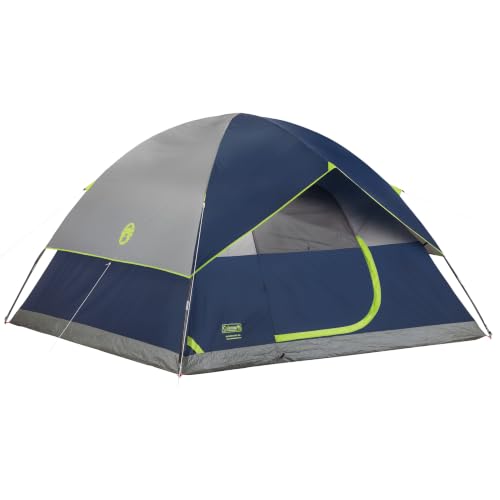
The Coleman Sundome 6-Person Tent is a classic dome-style outdoor shelter engineered specifically for car camping, state park getaways, summer music festivals, and backyard campouts. With ample floor space designed to comfortably fit two queen-size air mattresses, this shelter appeals directly to parents traveling with kids, small groups of friends, and first-time campers who want a reliable, no-nonsense setup without investing in expensive technical mountaineering gear.
Regarding campsite performance, this dome focuses heavily on ventilation and interior comfort in warm to moderate conditions. The layout combines broad mesh roof panels and wide windows with a low-to-the-ground intake vent. As warm air rises inside the canopy, cooler air is pulled inward along the floor, encouraging steady circulation that reduces morning condensation. The protective rainfly covers the mesh roof to block overhead rain while creating protective awnings over the window openings, allowing campers to maintain airflow during mild summer precipitation.
Construction quality centers around Coleman's proprietary WeatherTec system. The design features inverted seams that conceal needle punctures beneath fabric folds, alongside welded bathtub-style floor corners that keep pooled ground runoff from seeping into sleeping bags. The skeleton relies on flexible, shock-corded fiberglass poles anchored by continuous sleeves and quick-attach Insta-Clip hooks. While fiberglass does not offer the featherweight rigidity of high-end aluminum alloy, it provides dependable structural resilience against gentle breezes and moderate gusts when properly staked with sturdy guy lines.
Campers will appreciate how straightforward this shelter is to assemble and pack away. Setup typically takes about 10 minutes, making it easy to pitch even when arriving at the campsite around sunset. Inside, integrated storage pockets keep headlamps, flashlights, pocket knives, and smartphones safely off the floor, while the 6-foot center height eliminates the constant crouching common in smaller domes. Takedown is equally practical, folding down neatly into an included storage bag that unzips smoothly for quick vehicle loading.
Potential buyers should consider a few natural limitations inherent to this style of shelter. Because the rainfly offers partial coverage rather than an extended ground-length vestibule, muddy hiking boots must either stay inside on a mat or remain in the car trunk during storms. Heavy sideways downpours may also challenge the water resistance of exposed lower wall fabric. For extreme mountain expeditions, an all-season backcountry model is preferable, but for casual car camping trips, family summer vacations, and easygoing weekend escapes, this 6-person Sundome provides exceptional interior comfort and practical utility.
Stifling air and damp sleeping bags can quickly ruin a camping trip, which is why the Sundome features a dedicated lower ground vent. By positioning this intake vent near the floor, cooler ground air enters and displaces trapped body heat up through the expansive mesh roof sections.
The large side windows also unzip to reveal insect-proof mesh screens that encourage fresh cross-breezes across the entire cabin. Even with the rainfly secured during a passing summer shower, angled awning flaps allow you to keep window tops cracked open so your living space stays cool and well-ventilated.
Pitching a tent after a long day of driving should never feel like a chore. The Coleman Sundome uses continuous, snag-free pole sleeves running across the peak, which prevents pole sections from getting stuck halfway through insertion.
Insta-Clip attachments along the tent corners quickly snap directly onto the frame, allowing one or two campers to raise the dome in roughly 10 minutes. When packing up Sunday morning, the tent rolls compactly into its dedicated carry case, which includes an expandable bottom strip so you never have to fight to zip the bag closed.

Pros
- Pre-attached instant frame allows setup in roughly one minute, saving time and effort at camp.
- Generous 66-inch peak height and 10x9 foot base comfortably fit a queen mattress and gear for family car camping.
- Extensive B3 mesh coverage across the ceiling and four windows provides cross-breeze airflow while keeping insects out.
- Integrated E-port makes running cords from portable batteries or campsite power hookups straightforward.
Cons
- At roughly 19 pounds packed weight, it is strictly designed for vehicle car camping rather than backpacking treks.
- The inner ceiling is full mesh, requiring proper guy line tensioning and the outer rainfly to prevent water pooling in heavy downpours.
- Tent fabric near the SBS door zippers requires careful two-handed alignment to avoid catching during rapid pulls.
The FanttikOutdoor Zeta C6 Pro is an instant cabin-style camping tent engineered for car campers, family weekend warriors, and casual outdoor enthusiasts seeking straightforward campsite assembly. Measuring 120 inches long by 108 inches wide with a 66-inch peak center height, the shelter eliminates traditional pole-threading hassles by incorporating pre-attached carbon steel poles that extend into position in approximately 60 seconds. This streamlined deployment suits first-time campers and parents wrangling gear at busy state park campgrounds.
In practical camping scenarios, the Zeta C6 Pro delivers versatile interior floor space that bridges the gap between compact dome shelters and massive family cabins. While the industry sleeping-pad metric rates this layout for up to six individuals side-by-side, the manufacturer notes that it comfortably accommodates three people alongside backpacks, duffels, and camp chairs, or one queen-sized air mattress with room to spare. Internal mesh pockets keep camp lanterns, smartphones, and keys off the tent floor, while an integrated E-port cord access slot makes powering devices from a portable power station or campsite hookup clean and organized.
Air circulation is a major asset in warm-weather environments thanks to B3 mesh panels covering all four sides, ground-level floor vents, and an expansive mesh ceiling designed for open-sky stargazing. For inclement weather, the tent relies on water-resistant fabric paired with a tub-style drainage base that elevates seam boundaries above pooling ground moisture to deter leaks and ground bugs. The shelter includes stakes and guy lines capable of managing wind speeds up to 35 mph according to manufacturer specifications. Because the inner roof is entirely breathable mesh, the included outer rainfly must be pitched securely and guyed with adequate tension during rain to avoid water pooling on the fly fabric.
Structural durability comes from a carbon steel frame fitted with protective joint sleeves, supported by smooth-running SBS zippers along the entryway. The manufacturer highlights that the door zipper slider should face forward and be operated with the thumb to ensure smooth tracking without binding the nearby fabric. With an overall product weight of roughly 19 pounds, the Zeta C6 Pro is clearly intended for trunk storage, SUV packing, and drive-up campsites rather than backcountry trails where lightweight gear is paramount.
For weekend car camping, festival trips, beach weekends, and backyard family campouts, the FanttikOutdoor Zeta C6 Pro offers a balanced combination of rapid deployment, functional interior height, and breezy summertime ventilation. As long as campers recognize its car-camping weight envelope and ensure the rainfly is properly staked out when stormy weather rolls in, this instant shelter stands out as a dependable, budget-friendly basecamp.
Pitching the FanttikOutdoor Zeta C6 Pro takes approximately 60 seconds thanks to its pre-assembled carbon steel frame. Campers simply unpack the tent body, unfold the telescoping legs outward, and extend each pole section until the locking pins click firmly into place.
Takedown follows the reverse sequence by releasing the pole joints, collapsing the frame inward toward the central hub, and rolling the fabric tightly around the structure. The included carry bag provides ample room for packing without requiring excessive force, making departures fast and stress-free.
The Zeta C6 Pro incorporates water-resistant coated fabric, reinforced perimeter guy-out points, and a raised tub-style floor that blocks ground moisture and perimeter runoff. A dedicated drainage channel under the entry zipper prevents pooled rainwater from seeping across the threshold.
Because the inner canopy features full-coverage mesh for ventilation, campers must deploy the included outer rainfly when wet weather threatens. Tightening the adjustable guy lines ensures the fly remains taut, preventing water pooling on the fabric and providing stability in wind gusts up to 35 mph.
Pros
- Full 78-inch standing height provides ample vertical clearance to change clothes and move freely
- Abundant airflow from five mesh windows and a broad mesh ceiling minimizes stuffiness
- Four rigid steel leg poles give the cabin structure firm upright side walls
- Manageable packed length under 25 inches fits conveniently in standard vehicle trunks
- Backed by a documented 1-year quality assurance warranty from the manufacturer
Cons
- Total weight of roughly 18 pounds limits practical transport strictly to car camping rather than trail packing
- Product specifications do not provide the exact fabric denier or millimeter hydrostatic rating
- Accommodating six adults leaves virtually no interior space for gear, duffel bags, or foot traffic
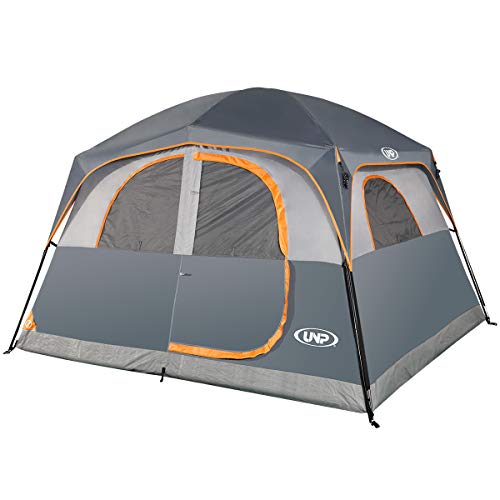
The UNP 6-Person Family Cabin Tent is an upright, multi-person shelter engineered specifically for car camping, state park campsites, and family outdoor getaways. Designed with straight-walled cabin architecture, it prioritizes usable living volume and interior clearance over extreme weather aerodynamics. While manufacturer marketing mentions activities like hiking, the total weight and frame components clearly make this shelter an option for drive-up vehicle camping rather than backpacking or foot travel.
Regarding interior space, the tent features a 10-foot by 9-foot rectangular footprint that delivers 90 square feet of level floor space. The standout dimension is its 78-inch (6.5 feet) peak center height, which allows most campers to stand upright without crouching. The manufacturer states that the floor fits two standard air mattresses or six sleeping bags. Placing six sleeping pads inside leaves no remaining floor space for luggage, so groups seeking comfortable personal space and gear storage will find it best suited for three to four occupants.
The structural design relies on four steel leg poles that support a rectangular roof skeleton, creating near-vertical sidewalls that optimize elbow room. Airflow is heavily emphasized throughout the tent body, which includes one oversized front door, five mesh perimeter windows, and a full mesh ceiling. An included rainfly covers the roof mesh to shield occupants from overhead precipitation while preserving cross-breezes through the wall windows. The fabric is treated with a polyurethane hydrostatic-rated coating for water resistance, though high vertical walls naturally catch more wind than low-profile dome designs.
For transport and storage, the tent packs down into a zippered carry bag measuring 24.6 by 8.26 by 8.26 inches with an assembled weight between 17.8 and 18 pounds. Pitching is straightforward, with the manufacturer estimating roughly five minutes for two people or ten minutes for a solo camper. Maintenance follows standard camping best practices: all fabrics and steel poles should be completely clean and dry before packing to protect against fabric mildew and hardware oxidation during offseason storage.
Prospective buyers should evaluate a few practical limitations. Although the tent listing highlights a polyurethane waterproof coating, specific technical metrics such as the exact millimeter hydrostatic head rating and fabric denier are not stated in the documentation. Furthermore, while the cabin shape maximizes living space, it requires careful staking and guyline placement in windy or exposed campsites. Shoppers should verify that the included components meet their campsite terrain requirements before departing.
The UNP 6-Person Cabin Tent is well matched for families, couples, and casual campers who prioritize standing headroom, breezy ventilation, and an easy trunk-to-campsite setup. When compared to traditional dome tents, its generous height and vertical walls make everyday campsite tasks significantly more comfortable. It serves as an approachable, roomy shelter for fair-weather summer camping and weekend campground trips.
The UNP cabin tent provides 90 square feet of interior floor space across a 120-inch by 108-inch (10 by 9 foot) layout. Its 78-inch peak height allows occupants to walk upright across the center of the tent, facilitating easy changing and gear organization. While the documented layout can fit six individual sleeping bags or two queen-sized air mattresses edge-to-edge, practical comfort is highest when used for three to four campers with personal luggage.
Air circulation is built into the shelter through five perimeter mesh windows, a wide mesh entryway, and an open mesh roof. This multi-window layout facilitates constant cross-ventilation during warm summer afternoons and helps reduce internal moisture accumulation overnight. When the rainfly is installed, the overhead mesh ceiling allows rising warm air to escape while maintaining overhead weather coverage.
Pitching the tent involves assembling the rectangular roof framework and inserting the four rigid steel leg poles to elevate the cabin walls. Manufacturer specifications indicate that two people can complete the assembly process in approximately five minutes, while a single person can pitch it in about ten minutes. Packing the tent involves rolling the fabric tightly to release trapped air so it fits into the included 24.6-inch zippered storage bag.
UNP provides a 1-year quality assurance policy covering manufacturing and material defects. Customer support for product inquiries, component questions, or troubleshooting is backed by a stated 12-hour response commitment from the manufacturer.
Frequently Asked Questions
Does a six-person tent actually fit six adults comfortably?
No, a six-person tent typically fits six sleeping bags touching side by side with minimal gear space. For comfortable family camping with luggage and cots, a six-person model is best suited for three to four people. Models like the Coleman Sundome Camping Tent with Rainfly or the UNP cabin tent accommodate two queen airbeds, leaving enough perimeter room for duffels.
Can one person set up a large six-person tent alone?
Yes, several six-person shelters feature quick-pitch frames or instant pre-assembled poles. The FanttikOutdoor Zeta C6 Pro 6 Person Tent utilizes pre-installed carbon steel poles that extend in under a minute. Traditional cabin frames may require five to ten minutes, but continuous pole sleeves and clip systems make solo assembly straightforward on level ground.
How do six-person tents handle wind and rainy weather?
Weather resistance depends on proper staking, guyline tension, and tub floor construction. Shelters featuring polyurethane coatings, welded floor corners, and inverted seams keep rain from penetrating stitch points. In windy conditions up to 35 mph, securing all perimeter guylines and anchoring sturdy stakes into firm soil prevents frame distortion and fabric flapping. Many campers looking for robust wind resistance compare these models with heavy-duty camping tents built for exposed environments.
What is the average center height for standing up inside?
Peak heights for six-person camping shelters usually range from 66 inches to 78 inches. Cabin-style structures like the UNP 6 Person Tents for Camping Waterproof Family offer up to 78 inches of vertical clearance, allowing most adults to stand fully upright to change clothes. Dome profiles offer lower peak heights near 72 inches, with walls sloping toward the floor.
How can campers prevent interior condensation overnight?
Adequate cross-ventilation through ground vents, ceiling mesh, and window flaps is essential to minimize condensation. Multiple occupants exhale substantial moisture overnight, which collects on single-wall fabrics if airflow is restricted. Keeping ground vents cracked and leaving the rainfly spaced away from mesh roof panels ensures moist air exhausts upward.
Can you safely cook or run a heater inside a six-person tent?
No, you must never operate fuel-burning stoves, heaters, or open flames inside an enclosed tent due to extreme fire hazards and carbon monoxide risks. All meal preparation using compact camping stoves for quick meals should take place outside in a well-ventilated cooking area away from tent fabric. Sticking to battery-powered lights and rated sleeping bags ensures safe warmth.


Write Your Review
No reviews yet. Be the first to share your experience!