

Selecting the Right Tent for Your Next Trek
Waking up to condensation dripping onto your sleeping bag or struggling with bent poles at dusk can quickly ruin a weekend in the woods. Reliable shelter must balance weather protection, simple pitching, and sufficient interior room for both you and your gear. If you are searching for the best exped camping tent style setup, assessing dimensions and waterproof fabrics will save you plenty of trail headaches. Campers needing versatile gear often pair dependable shelters with a mountain canopy shelter during group outings to expand dry living areas. Examining the actual floor space and rainfly coverage ensures your shelter matches the specific demands of your destination.
Solo trekkers and family campers have vastly different needs when packing for a trip. A compact solo shelter like the Night Cat model keeps packed weight down to 4.4 pounds for hikers, while a larger Purebox dome provides 9.02 by 7.05 feet of floor space for small groups. Proper seam sealing and durable pole construction help keep moisture outside during unexpected storms. Matching your shelter to your party size helps you avoid carrying unnecessary bulk on the trail.

Pros
- PU 3000mm waterproof coating and factory-taped seams offer dependable rain protection for a single-layer tent.
- Protective pole casing prevents the painful fiberglass splinters common with budget fiberglass poles.
- Simple two-pole cross sleeve design enables rapid, hassle-free solo setup in under two minutes.
- Generous 7-foot interior length provides ample room for taller campers plus interior gear storage.
Cons
- Single-layer design requires adequate airflow to prevent interior condensation during cold or humid nights.
- At 4.34 pounds, it is heavier than dedicated ultralight backcountry shelters.
- The 3.8-foot width realistically accommodates only one adult with gear rather than two full-sized adults.
The Night Cat Backpacking Tent is a compact, single-layer dome shelter engineered for solo adventurers, scouts, weekend hikers, and first-time campers looking for a practical, low-cost outdoor shelter. With interior floor dimensions measuring 7.0 by 3.8 feet and a peak center height of 3.6 feet, this shelter is proportioned to give a single adult sleeper generous elbow room with dedicated space along the perimeter to stash a trail pack, boots, and clothing. While the listing notes capacity for an adult and a small child, practical trail use makes it primarily an efficient one-person backpacking and camp shelter.
For weather management, the tent utilizes polyester fabric treated with a PU 3000mm waterproof coating, complemented by sealed, taped seams along the structural stitching. This level of waterproof protection is designed to withstand passing rainstorms and prevent moisture penetration from the wet ground. Because this is a single-layer tent without a separate full-coverage rainfly, managing air circulation is critical. Night Cat addresses this through a large mesh front entryway and an integrated mesh roof window, which work together to facilitate fresh air exchange and keep flying pests out of the sleeping quarters.
The frame relies on two foldable fiberglass poles equipped with an upgraded protective casing. Traditional single-layer fiberglass poles can develop micro-splinters over time that irritate hands during assembly, but this dual-layer sleeve construction shields campers during handling. Pitching the shelter requires sliding both poles through the diagonal roof sleeves and anchoring the corners, a straightforward routine that takes approximately one to two minutes even when arriving at camp after dusk. Once staked, the freestanding dome structure holds its shape cleanly in moderate winds.
Portability is a strong attribute for youth groups and weekend travelers, with the tent packing down into an included carry bag measuring 16.5 by 4.7 by 4.7 inches. At an overall weight of roughly 4.34 pounds, it sits between heavier car camping options and premium ultralight shelters. While long-distance thru-hikers counting every ounce may prefer a lighter tarp or trekking-pole tent, this weight and compact packed size fit conveniently into scout gear packs, motorcycle saddlebags, and car trunks for spontaneous overnights.
Before planning an extended trip, campers should account for the functional tradeoffs of a single-wall shelter. In damp, chilly environments, warm breath will create condensation along the interior polyester walls if the mesh vents are kept shut. Additionally, because there is no external vestibule, muddy footwear and wet outerwear must be brought inside the main tent floor. For budget-conscious hikers, motorcycle campers, scouts, and festival goers seeking a simple, waterproof, and easy-to-pitch solo shelter, the Night Cat tent provides a balanced, accessible solution.
Setting up the Night Cat tent requires minimal effort thanks to its streamlined two-pole sleeve structure. The fiberglass poles slide directly into diagonal sleeves across the canopy, allowing a single person to erect the freestanding dome in roughly one to two minutes without complex hub mechanisms.
Takedown is equally quick, rolling neatly into an included 16.5 by 4.7-inch carry sack. At approximately 4.34 pounds, the tent packs down compactly enough to strap onto the bottom of a backpack, secure to a bicycle rack, or store in a vehicle trunk for weekend outings.
Constructed with PU 3000mm coated polyester and heat-sealed taped seams, this shelter is built to keep rain from penetrating the interior cabin during unexpected downpours. The aerodynamic dome geometry also assists in deflecting moderate wind gusts when properly staked to the ground.
To mitigate condensation common to single-wall tents, the layout includes a large mesh door and an upper roof mesh vent. Keeping these openings clear allows continuous airflow across the ceiling, helping warm moisture escape while maintaining dependable insect defense.
Pros
- Extended 9.02-foot floor length accommodates taller campers and extra gear at the foot of sleeping pads.
- Two full-size doors allow occupants to enter and exit without crawling over fellow campers.
- Dual mesh windows promote consistent airflow to help manage overnight condensation.
- Matching door mat provides a dedicated space to take off muddy camping shoes before stepping inside.
- Budget-friendly dome architecture designed for straightforward two-person setup.
Cons
- At 10.8 pounds, the tent is too heavy for extended backpacking trips despite marketing references to hiking.
- Fiberglass poles require deliberate handling during setup to prevent splintering under tension.
- The manufacturer does not provide a specific millimeter hydrostatic head rating or details on included stakes and guylines.
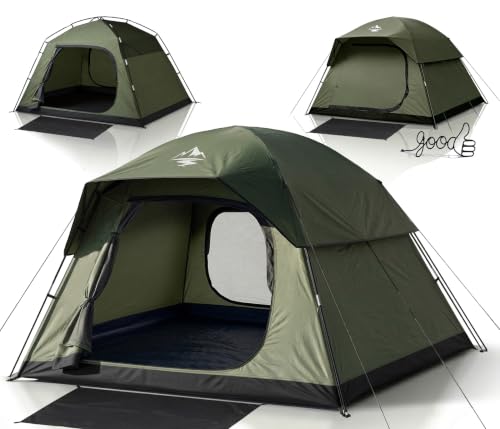
The Purebox 4-Person Camping Tent is an extended dome-style shelter designed for weekend outdoor recreation, campground stays, and road trips. Built with a traditional cross-pole dome layout, it targets budget-minded campers, pairs, and small families who want an accessible shelter with easy entry and exit. The green fabric shell combines with an exterior rainfly and an extended footprint to offer a relaxed campground basecamp.
In terms of interior space, the manufacturer lists open dimensions of 9.02 feet long by 7.05 feet wide, with a peak center height of 4.92 feet (approximately 59 inches). While marketed for three to four adults, fitting four full-size adults will place sleeping pads shoulder-to-shoulder with minimal leftover floor area. Campers will find the most comfortable balance using this shelter for two adults with gear, or two adults and a child. The 59-inch center clearance offers ample headroom for sitting upright and changing clothes, though standing up fully is limited by the sloping dome walls.
Pitching relies on a classic sleeve-pole system utilizing flexible fiberglass poles. The setup process is most efficiently handled by two people threading the poles through the exterior fabric channels to tension the dome upright. A high-density PU-coated rainfly fits over the canopy to shield against rainfall, supported by factory-taped seams designed to resist moisture seepage during typical three-season conditions. The inclusion of two large doors makes getting in and out seamless, while dual mesh windows facilitate cross-breeze airflow across the sleeping quarters.
For transport and storage, the tent packs down into a carry bag measuring 16 by 9 by 7 inches with a total weight of 10.8 pounds. While listing materials reference hiking, carrying a 10.8-pound package is generally impractical for self-supported backcountry backpacking. It is far better suited for car camping, trunk storage, or short walks to an established walk-in site. Purebox also bundles a matching exterior door mat, which serves as a practical barrier to prevent tracking dirt, pine needles, and mud onto the tent floor.
Campers should keep a few limitations and uncertainties in mind. The product specifications do not disclose the specific fabric denier, floor material thickness, or exact hydrostatic head waterproof rating in millimeters. Furthermore, fiberglass poles are heavier and less resistant to sudden stress than aluminum alternatives, meaning careful handling is required in high winds. The listing does not clarify the exact quantity or quality of included ground stakes, so inspecting or supplementing the stakes prior to a trip is sensible for rocky terrain.
Overall, the Purebox 4-Person Tent serves as a viable, value-conscious shelter for mild three-season getaways, roadside camping, and first-time buyers. Shoppers who prioritize dual-door access, extra legroom, and simple car transport will appreciate the layout, while those seeking rugged foul-weather resilience or trail-weight efficiency will want to compare dedicated backpacking models.
The tent features a footprint measuring 9.02 feet by 7.05 feet, providing more floor length than standard rectangular 4-person dome shelters. This extra length is particularly useful for taller campers who often find their sleeping bags pressing against tent walls in compact models.
Although the manufacturer rates the tent for three to four adults, usable sleeping comfort depends heavily on personal gear and mattress choices. Laying down four standard sleeping pads covers nearly the entire floor, leaving little clearance for duffel bags or backpacks. For optimal comfort, treating this tent as a spacious two-person or three-person shelter allows occupants to keep luggage inside without crowding.
The center peak height reaches 4.92 feet, giving seated campers generous overhead clearance. Because the dome walls curve inward toward the apex, usable standing room is restricted, making this model best suited for sleeping, relaxing, and sitting upright rather than moving around on foot.
The structure utilizes a continuous sleeve-pole design paired with durable fiberglass frame poles. Pitching is straightforward when two campers work together to guide the pole sections through the sleeves and anchor them at the corner grommets.
Weather protection is centered on a high-density PU-coated rainfly and factory-taped seams, intended to protect against moisture during three-season rain showers. While the rainfly adds crucial overhead coverage, the manufacturer does not specify a millimeter hydrostatic head rating, making it advisable to test setup and seam coverage prior to severe weather.
Condensation management is supported by dual mesh windows and two opposing entry doors. When breezes blow through the campsite, opening the solid fabric panels while leaving the inner mesh zipped maintains airflow while helping to keep flying insects outside.
Frequently Asked Questions
What should you look for in the Best Exped Camping Tent options for 2026?
Focus on floor dimensions, packed weight, and rainfly waterproof ratings. A model like the Night Cat backpacking tent offers a PU 3000mm rating for wet conditions, while group shelters like the Purebox tent provide dual doors for cross ventilation. Always check forecast conditions and campsite guidelines to ensure your shelter provides adequate protection without risking interior moisture.
Can a 1 to 2 person tent comfortably fit two adults?
Most compact 1 to 2 person designs fit one adult and gear comfortably, or an adult with a small child. The Night Cat tent measures 7.0 by 3.8 feet with a 3.6-foot peak height, which provides ample space for a solo camper and backpack. If two adults plan to share a shelter, stepping up to a larger model prevents cramped sleeping arrangements.
How do dual doors improve tent comfort during summer camping?
Dual doors create direct cross ventilation to reduce interior heat and condensation buildup. In the Purebox 4-person shelter, two large mesh doors allow air to move freely across the sleeping area. Campers can also bring portable cooling gear like rechargeable camping fans to increase airflow on humid nights.
What setup method is easiest for beginners?
Classic sleeve-pole setups with flexible fiberglass poles offer straightforward pitching for new campers. The Night Cat tent utilizes diagonal sleeves that can be pitched in one to two minutes. The Purebox model also relies on a straightforward sleeve-pole frame that two people can assemble quickly at camp.
Is a tent footprint necessary when camping on rough ground?
Yes, using a footprint or ground tarp helps protect the tent floor against sharp rocks and abrasions. While the Purebox tent includes a door mat to keep interior dirt down, an external footprint prolongs the life of any coated polyester base. You can also review kids camping tent options to compare how different budget shelters handle camp wear.
How does packed weight affect backpacking versus car camping?
Backpacking shelters prioritize low pack weight and small folded dimensions, whereas car camping tents focus on headroom and floor area. The Night Cat shelter weighs only 4.4 pounds and packs to 16.5 inches, making it easy to strap to a backpack or bike. In contrast, the Purebox shelter weighs 10.8 pounds, providing a spacious basecamp when vehicle transport is available.



Write Your Review
No reviews yet. Be the first to share your experience!