


Upgrading Your Shelter With a Canopy Side Tent
Standard pop-up shelters provide excellent shade on warm afternoons, but they leave you exposed to wind, rain, and insects once dusk settles across the campsite. Converting a straight-leg frame into an enclosed sleeping room creates comfortable sleeping quarters without the hassle of pitching a separate freestanding dome. If you already bring a 10×10 shelter to outdoor gatherings, tracking down the best kampkeeper canopy tent accessory allows you to transform open sun cover into a functional basecamp retreat. This setup approach gives you a spacious interior while keeping your overall campsite footprint tidy.
Standard dome designs often force campers to crouch or crawl, while a canopy cube design takes advantage of upright vertical poles to deliver substantial vertical clearance. Pairing this attachment with rechargeable camping fans helps move air through the screened windows during muggy summer nights. Instead of cramming gear into smaller budget camping tents for kids, a modular cube system offers plenty of floor area for sleeping pads, duffels, and family lounging.
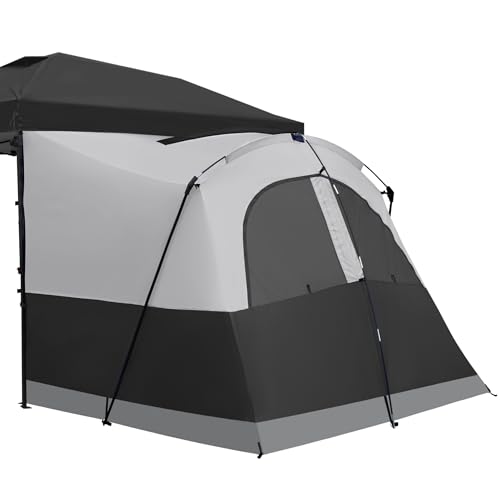
Pros
- Generous 72-inch center height allows most adults to stand completely upright inside
- Fast one-person setup connects directly to existing 10x10 straight-leg canopy frames
- 150D polyester body fabric provides documented waterproof and sun-resistant qualities
- Mesh door and netting windows allow continuous cross-ventilation while keeping bugs out
- Manageable 11.8-pound carry weight with an included storage bag and perimeter stakes
Cons
- Requires a separate 10x10 straight-leg canopy frame and cannot be used as a standalone tent
- The 68.6 square foot interior will feel cramped for 6 adults once sleeping pads and luggage are placed
- No specific hydrostatic head rating, seam tape specifications, or heavy-wind limits are documented
The KAMPKEEPER Canopy Side Tent is an enclosed camping cube shelter designed to attach to an existing 10x10-foot straight-leg pop-up canopy. It is tailored for car campers, festival-goers, and backyard campers seeking to expand their shade canopy into a full sleeping or lounging cabin. Because it relies entirely on the overhead canopy frame for structural suspension, this unit serves as a specialized accessory rather than an independent freestanding tent. Campers who already own a compatible straight-leg pop-up shelter will find it an adaptable option for campsite rest areas.
In terms of interior room, the manufacturer rates this side tent for 4 to 6 people or up to 4 standard sleeping bags across 68.6 square feet of floor space. The footprint measures 117.6 inches long by 84 inches wide, accompanied by a 72-inch center height that allows many adults to stand upright without crouching. While the stated occupant count indicates maximum resting capacity, realistic sleeping comfort will depend on your sleeping gear, personal luggage, and preferred elbow room. Groups planning extended car-camping stays may find it best suited for fewer occupants when factoring in gear storage and mattress footprints.
Setup is engineered for straightforward assembly, with manufacturer documentation noting that one person can handle installation. Pitching involves securing the sidewall hooks and attachments to the uprights and roof trusses of your straight-leg canopy frame. The package includes four dedicated poles to help shape the structure, along with eight ground stakes to anchor the lower perimeter against shifting. The tent body incorporates a mesh screen door alongside mosquito netting windows, which are designed to facilitate cross-ventilation while helping keep outdoor insects away from your sleeping quarters.
The shelter body is fabricated from 150D polyester, which the manufacturer lists as waterproof and sun resistant. While the 150-denier weave offers practical resistance to basic outdoor elements and sun exposure, the listing does not document a specific hydrostatic head millimeter rating or factory seam tape treatment. For this reason, weather performance will largely depend on the condition and coverage of your primary pop-up canopy roof, proper perimeter staking, and campsite wind conditions. As with any fabric camping gear, thoroughly airing out and drying the polyester walls before packing them into the included carry bag will help prevent musty odors and fabric deterioration.
Weighing in at 11.8 pounds, the tent body packs down into an included carry bag, making it simple to transport in a vehicle trunk alongside your existing canopy. The key buying consideration is compatibility: it is explicitly designed for 10x10-foot straight-leg canopies and will not fit slant-leg models or work without an overhead frame. For car campers and outdoor travelers who already rely on a straight-leg canopy and want an accessible, stand-up cube room for bug-free relaxation or overnight sleeping, the KAMPKEEPER canopy side tent offers a functional, space-efficient add-on.
The KAMPKEEPER canopy side tent provides 68.6 square feet of interior floor space, with overall floor dimensions measuring 117.6 inches long by 84 inches wide. It features a peak center height of 72 inches, offering 6 feet of vertical headroom so most adults can walk and stand inside upright without bending over.
While the manufacturer lists resting capacity for 4 to 6 people or space for up to 4 sleeping bags, usable sleeping room will vary based on your camping gear. Setting up thick air mattresses, cots, or large gear bins will occupy significant floor area, making the shelter most comfortable for smaller groups or families who desire dedicated space for bags alongside sleeping pads.
This shelter is an accessory cube designed specifically for 10x10-foot straight-leg pop-up canopy frames. It is not compatible with slant-leg canopy frames and cannot stand on its own without a primary pop-up structure overhead.
The package contains one tent body, four support poles, eight ground stakes, and a dedicated carry bag. The overhead canopy frame itself is not included and must be supplied separately to pitch this shelter.
Frequently Asked Questions
How does the Best Kampkeeper Canopy Tent attach to a canopy frame?
The tent body attaches directly to the legs and roof perimeter of an existing 10×10 straight-leg pop-up canopy. Built-in hooks and ties secure the 150D fabric to the metal canopy posts, while four included poles maintain the tent’s structural shape. You simply slide the wall attachments onto the upright legs and stake the bottom corners into the dirt.
Does the Canopy Side Tent include the canopy frame?
No, the canopy frame and pop-up roof are not included with this accessory. The package contains the tent body, a carry bag, four tent poles, and eight ground stakes. You will need to supply your own straight-leg 10×10 canopy frame to support the shelter.
How many people can sleep inside the KAMPKEEPER canopy cube tent?
The interior provides 68.6 square feet of floor space, which accommodates four sleeping bags comfortably or fits four to six people resting together. With a generous 72-inch center height, adults can stand upright without hunching over. For groups wanting extra division inside basecamp, hanging camping privacy curtains nearby can help create separate changing zones.
What weather protection does the 150D polyester fabric provide?
The listing specifies that the 150D polyester fabric offers waterproof and sun-resistant protection for warm-weather use. While the canopy roof overhead shields the top from direct downpours, the tent walls block light rain and UV rays. Always verify that all eight stakes are firmly anchored to secure the structure against breezy conditions.
Can one person set up this canopy cube tent?
Yes, a single person can complete the installation quickly by securing the sidewalls directly to the canopy legs. After expanding the pop-up frame, you hook the tent corners to the frame uprights and insert the shape-retaining poles. Staking out the perimeter takes just a few extra minutes once the body hangs in place.
How does ventilation work in the 2026 KAMPKEEPER canopy side tent?
Airflow enters through the large mesh screen door and built-in mosquito netting windows. These mesh panels promote steady cross-ventilation to reduce internal condensation while keeping biting pests out. Campers setting up in humid timberlands often combine this shelter netting with mosquito traps for camping around the perimeter for added bug defense.


Write Your Review
No reviews yet. Be the first to share your experience!