

Reliable Beach Shelter for Sun and Coastal Wind
Setting up shade on an open shoreline often turns into a battle against shifting breezes, scorching heat, and stubborn sand that refuses to hold traditional pegs. Ordinary umbrellas flip inside out or drift away with a single gust, cutting your relaxing afternoon short. Securing a best selling reliable beach tent provides the necessary overhead shelter and ground stability without requiring a complicated assembly ritual. A quality canopy keeps everyone out of harmful ultraviolet rays while offering enough interior clearance for chairs, coolers, and beach bags. If you often face damp coastal mist alongside stiff breezes, reviewing options like a beach tent for heavy duty water resistant camping can also help you understand how different fabric coatings handle moisture.
Modern beach shelters balance portable packed dimensions with generous coverage, making them simple to pack into a vehicle trunk before heading out. Whether you pick a framed cabana with deep anchor pockets or an elastic sun canopy that uses heavy sandbags, steady ground anchoring is essential to keep the structure grounded. These popular shelters emphasize high UPF ratings, quick one-person setup, and breathable airflow so you stay cool during peak midday hours. Following manufacturer anchoring instructions and respecting coastal wind forecasts ensures your shelter remains secure, giving you more time to relax near the water.
Pros
- Fabric features 300D polyester with a silver-coated interior to reflect infrared heat and provide UPF 50+ UV protection
- Comes equipped with an integrated sand-anchoring system, including four corner pockets and a dedicated sand shovel
- Setup guide is sewn directly into the carry bag, eliminating the risk of lost paper manuals
- Three-section pole collapse design allows the long cabana frame to pack down into compact vehicle trunks
- Open-sided design delivers unrestricted 360-degree ventilation on hot days
Cons
- Product dimensions show a discrepancy between the 8x8 foot marketing title and the 72 x 72 inch specification listing
- Open cabana style provides no enclosed walls, floor, or rainfly, making it unsuitable for overnight camping or rain
- Anchoring mechanism is designed specifically for sand, requiring separate stakes or weights if used on grass or hard dirt
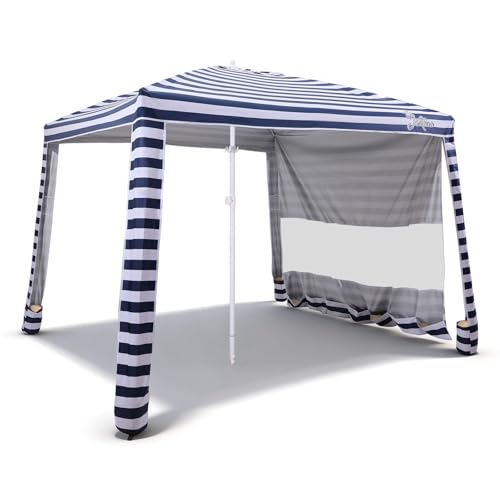
The Jihfmo 8x8 Beach Cabana Tent is an open-sided sun shelter designed for daytime beach excursions, lakeside recreation, park gatherings, and warm-weather campsite shade. Operating as a sun canopy rather than an enclosed overnight tent, this shelter is built for individuals, couples, and family groups needing relief from direct sunlight and overhead heat. Its open architecture prioritizes continuous air circulation, high shade coverage, and straightforward setup over full-weather enclosure.
When assessing usable space, the manufacturer lists the cabana as an 8x8 foot canopy delivering 64 square feet of shade intended for groups of six to eight people. However, the technical specifications also report dimensions of 72 x 72 x 82.8 inches, which reflects a six-foot square base with an overhead clearance near seven feet. Campers and beachgoers should factor this variance into their space planning, as a six-foot footprint comfortably accommodates a couple of low-profile beach chairs, blankets, and a cooler rather than a large group with bulky gear.
Pitching the shelter relies on a central heavy-duty support pole coupled with an overhead frame that uses a three-section folding structure. The manufacturer states that solo setup can be completed in under three minutes without tools. To simplify the pitching sequence, a waterproof setup diagram is permanently stitched directly into the interior of the zippered storage bag. Stability in coastal environments depends on four reinforced corner pockets that campers fill with sand using an included durable shovel, providing ballast against offshore breezes.
Sun protection is the primary functional highlight of the cabana canopy, which utilizes 300D polyester treated with an interior silver glue coating. The fabric carries a certified UPF 50+ rating, designed to block 99.9% of UVA and UVB rays while reflecting infrared heat. Because the structure is completely open on all four sides, ventilation is entirely natural, allowing ambient breezes to flow freely beneath the roof to help reduce stagnant heat.
For transport and campsite logistics, the cabana features a total weight listed between 12 and 12.5 pounds, making it manageable for a single person to carry from a vehicle to the beach. The three-section pole engineering reduces overall packed length, allowing it to fit into standard car trunks or roof boxes alongside other day gear. Routine care involves clearing away sand from the pockets, wiping down salt spray, and ensuring the canopy is thoroughly dry before long-term storage to preserve the silver coating.
Prospective buyers should recognize the functional boundaries of this product. It is strictly a daytime sun shelter and does not provide rain protection, insect screening, or wind-resistant sidewalls for overnight camping. Additionally, because its primary anchoring mechanism relies on sand-filled fabric pockets, pitching on hard campground soil or park turf will necessitate separate stakes or external weights. For day-trippers and beach campers needing dedicated sun defense with quick sand setup, the Jihfmo Cabana provides a functional, resort-styled shade option.
The Jihfmo Cabana is designed around an intuitive single-pole support system that eliminates the complexity of threaded tent pole sleeves. The frame features a three-section collapsible pole configuration that unfolds smoothly and locks into place without requiring assembly tools. The manufacturer notes that one person can complete the assembly process in under three minutes.
A practical usability feature is the waterproof instruction guide sewn directly into the seam of the zippered carry bag, preventing lost or damaged paper manuals. Anchoring the shelter involves spreading out the four corner fabric pockets and filling them with sand. The package includes a sturdy sand shovel to speed up the anchor-filling process, ensuring balanced tension across the canopy before extending the central mast.
The canopy is constructed from 300D polyester fabric treated with an advanced interior silver glue coating. This specialized layer is certified for UPF 50+ sun protection, designed to reflect 99.9% of harmful UVA and UVB radiation while deflecting infrared heat. The manufacturer notes this reflective barrier helps create an interior microclimate that feels up to 10 degrees cooler than ambient direct sun.
Wind resistance is managed through the four weighted sand pockets rather than traditional ground stakes, making it tailored specifically for loose coastal sand. However, because the cabana lacks side walls, a floor, and sealed rainfly coverage, it should not be treated as a rain shelter or used during severe coastal storms. Proper anchoring in loose sand is essential to prevent gusts from lifting the canopy.
The product package includes the 300D silver-coated polyester cabana canopy, the integrated three-section collapsible central pole assembly, and four reinforced corner sand anchor pockets built into the shelter corners.
Also supplied is a heavy-duty sand shovel designed to fill the anchor pockets quickly, along with a zippered carry bag equipped with a permanently stitched waterproof setup guide. Stakes, guylines, and sidewalls are not listed as included components, meaning campers setting up on turf or hard soil will need to provide their own ground-securing equipment.

Pros
- Stated UPF 50+ rating filters harsh glare and blocks over 99 percent of harmful UV rays
- Lightweight 8.8-pound carrying weight is easy to transport compared to traditional steel pop-up frames
- Includes four aluminum poles rather than just two, allowing a flat shade pavilion or an angled canopy layout
- Spacious 79-inch (6-foot-7) center height gives standing clearance underneath
- Machine-washable fabric simplifies sand and dirt cleanup after trips
Cons
- Open-sided design lacks sidewalls, mesh bug screening, and a tent floor, making it strictly a daytime shade shelter rather than an overnight tent
- Fabric coating handles light mist or drizzles only and is explicitly not built for heavy rain or severe storms
- Sandbag stability relies on soft beach sand or manual anchoring; staking hardware for hard campground soil is not explicitly detailed
The Trend Tents 10x10 Pop-Up Sun Shelter is a specialized open-sided canopy designed primarily for daytime sun protection rather than overnight camping. Built with an elastic spandex fabric top and supported by four aluminum upright poles, it serves beach visitors, picnickers, and car campers wanting a portable basecamp shade structure. Because it features no enclosed tent body, floor, or sleeping compartment, outdoor enthusiasts should evaluate it as a companion day shelter for sitting, dining, or resting out of direct sunlight.
When pitched, this shelter covers a 10 by 10 foot area (approximately 9.3 square meters) with a peak height of 6 feet 7 inches (79 inches), allowing most adults to stand comfortably underneath. The manufacturer officially rates the shaded footprint for up to eight occupants, while listing data notes that four to six adults with camp chairs fit comfortably in typical daytime setups. Packing down to an 8.8-pound (4 kg) package inside an included shoulder-strap carry bag, the shade fits readily into vehicle trunks for car-camping weekends or beach outings.
The top tarp is crafted from elastic spandex fabric boasting an official UPF 50+ ultraviolet protection rating, filtering harsh sunlight and blocking over 99 percent of UVA and UVB rays. Support is provided by four lightweight, rust-resistant aluminum poles. Campers can use all four poles to create an open canopy pavilion or use two poles to pitch a semi-open lean-to style shelter that shields against lower sun angles. The fabric incorporates triple overlock stitching for structural durability and features a light water-resistant treatment intended for light ocean mist and passing drizzles.
Pitching the shelter follows a four-step process: lay out the fabric, extend the four corners, fill the corner pouches with sand, and prop up the canopy using the poles. The manufacturer lists an average setup time of roughly five minutes that can be handled by a single person. For beach use, the sandbags provide the primary anchoring mechanism, which users can bury in sand for added grip in moderate coastal breezes. After a beach or camping outing, the fabric can be machine washed to remove salt, sand, and dust, though letting it air dry thoroughly before long-term storage is advisable to protect the coating.
Shoppers should maintain clear expectations regarding the weather capabilities and terrain versatility of this shelter. The listing explicitly states that it is not a heavy-duty rain shelter, meaning campers caught in continuous downpours will experience water penetration. While user testing referenced in the product specifications indicates stability in 15 to 25 MPH coastal winds when properly anchored, gusty inland conditions or hard-packed dirt campsites pose challenges because the listing does not verify included heavy-duty ground stakes. Furthermore, the absence of side walls or mosquito netting means it offers no wind-driven sand protection or insect defense.
For car campers, shoreline day-trippers, and family park outings looking for a breezy, portable canopy that shields against intense sun, this Trend Tents model offers generous square footage at a manageable carry weight. Those needing weatherproofing for inclement weather, a private changing space, or an overnight enclosed sleeping shelter will need to look toward traditional camping tents or full-coverage rain tarps. When comparing options, check whether your typical campsite provides loose sand or if you will need to supply separate ground pegs or weight bags for firm ground.
Setting up this sun shelter involves four straightforward steps: laying the spandex fabric flat on the ground, stretching out the four corners, filling the corner anchor pockets with sand, and inserting the aluminum poles beneath the fabric to raise the canopy. The manufacturer lists an estimated setup time of roughly five minutes, manageable by a single adult.
The standard anchoring configuration relies on filling the four corner sandbags and burying them in deep sand to provide tension. When properly secured in sandy environments, the structure is designed to handle coastal winds between 15 and 25 MPH according to documented testing data. If you intend to use the canopy on turf, hard soil, or gravel campsites, note that the product data focuses on sandbag anchoring, so campers may need to bring auxiliary weights or aftermarket ground stakes to achieve proper tension.
The canopy is constructed from high-elasticity spandex fabric engineered with a UPF 50+ ultraviolet protection rating that blocks more than 99 percent of harmful UVA and UVB rays. The seams are reinforced with triple overlock stitching to withstand tension from stretching and anchoring, and the fabric includes a water-resistant finish capable of shedding light sea mist and faint drizzles.
Four rust-resistant aluminum poles provide the vertical framework, offering a lightweight alternative to traditional steel frame pop-up shelters. Routine maintenance is relatively simple, as the fabric is officially listed as machine washable. Allowing the fabric and poles to dry completely before returning them to the shoulder-strap storage bag will help prevent fabric deterioration and odor buildup over time.
Frequently Asked Questions About Best Selling Reliable Beach Tent
How do beach tents stay stable in strong coastal winds?
Beach shelters rely on sand-filled anchor bags, deep corner pockets, and angled guyline tension rather than slim metal ground pegs. Filling the corner bags completely and burying them beneath damp sand provides solid ballast against gusts. For open campsites or harder ground, pairing your shelter with a versatile canopy tent for campsite shade can provide alternative anchoring points. Always face the lowest profile or sloped side of your shelter into the wind for optimal resistance.
What level of ultraviolet protection does a reliable beach tent offer?
Most trusted beach shelters provide certified UPF 50+ fabric ratings, which block over 98% to 99% of harmful UVA and UVB rays. Some models also incorporate specialized interior silver coatings that actively reflect infrared heat, lowering the temperature beneath the fabric. This thermal barrier helps protect delicate skin and keeps your resting area noticeably cooler throughout long afternoons.
Can one person assemble an 8×8 or 10×10 beach canopy alone?
Yes, modern beach shelters feature straightforward layouts designed for solo assembly in five minutes or less. You simply spread the fabric flat, stretch the corners out, pack the sandbag anchors with beach sand, and raise the support poles beneath the canopy. Cabana-style frames with collapsible three-section poles operate similarly by sliding into sleeves before locking upright.
How does a beach cabana compare to an elastic spandex sun shelter?
Cabanas utilize rigid central and corner poles to create a square, umbrella-style framework with defined side walls and hanging sand pockets. Spandex sun shelters use stretch fabric pulled taut across four corner sandbags and propped up with two to four upright aluminum poles. Spandex models provide adjustable angles and lightweight packing, while structured cabanas offer classic overhead architecture and immediate vertical headroom.
Are beach sun shelters waterproof enough for heavy rain?
Beach tents are primarily engineered for sun defense, ventilation, and wind stability rather than rainstorms. While many fabrics feature water-resistant coatings that shed ocean spray and passing morning mist, they lack the sealed seams and high hydrostatic ratings of stormproof camping tents. If unexpected downpours occur, you should seek enclosed shelter rather than relying on a ventilated sun canopy.
How do you keep the interior cool on hot, windless summer days in 2026?
Maximizing airflow is key to preventing hot air buildup under your sunshade. Open wall canopies allow coastal breezes to circulate freely, and setting up portable rechargeable camping fans under the roof can generate steady air movement when the wind dies down. You can also adjust flexible pole heights to catch whatever slight breeze drifts off the water.


Write Your Review
No reviews yet. Be the first to share your experience!