

Medical emergencies on remote trails or family campgrounds can escalate quickly when professional care sits hours away. Basic adhesive bandages handle minor scrapes around the fire ring, but severe cuts won’t stop without heavy-duty supplies. Investing in the best travel trauma kits for family camping ensures you carry rapid wound-packing solutions, pressure dressings, and tourniquets before heading into the backcountry. Clean hygiene and hydration gear like reliable water storage containers for emergencies help maintain sanitation, yet immediate bleeding management remains critical when outdoor accidents happen.
A well-designed travel trauma kit features organized, water-resistant compartments that let you locate life-saving tools in seconds rather than rummaging through clutter. High-density fabrics like 1000D nylon or 1680D polyester protect delicate bandages from dirt and downpours, while modular pouches simplify rapid deployment during high-stress moments. Many campers balance compact carry weight against total supply volume, choosing specialized bleeding control modules alongside general medical items. Evaluating listed pack dimensions, organized layouts, and practical bleeding control tools helps you secure the right emergency coverage for your entire campsite crew.
Pros
- Formulated to work effectively even for campers and hikers on regular blood thinners.
- Gentle, non-stinging powder avoids aggravating painful cuts on younger family campers.
- Foil pouch format packs flat and takes up minimal space in compact hiking medical kits.
- Powder does not need to be washed out of the wound prior to applying sterile dressing and bandages.
- Adds critical trauma preparedness when using sharp camp cutting tools far from medical facilities.
Cons
- Requires separate sterile gauze pads or pressure wraps to hold over the treated site since dressings are not included.
- Foil pouches are single-use and cannot be resealed once torn open in damp outdoor conditions.
- Severe arterial injuries or uncontrollable blood loss still require urgent emergency medical evacuation.
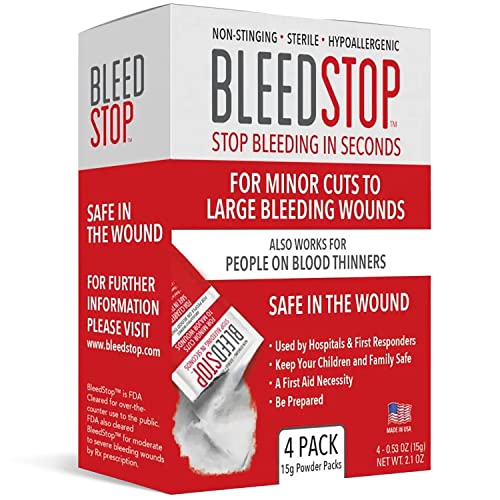
BleedStop First Aid Powder is a specialized blood-clotting coagulant designed to help manage moderate to severe lacerations, cuts, and scrapes. While standard adhesive bandages handle minor kitchen nicks, heading down a remote backcountry trail introduces hazards like slipping camp knives, splitting firewood with a hatchet, or taking a hard spill on rocky scree. Having a dedicated hemostatic agent makes this four-pack of 15g pouches an indispensable safety asset for backpackers, family campers, hunters, overlanders, and outdoor DIYers who need fast bleeding control until further treatment is available.
Outdoor injuries rarely happen in convenient locations, which makes ease of application a priority. The manufacturer highlights that this non-stinging formula works on contact once poured directly over the wound and held under firm pressure with a clean gauze pad or bandage. Because it is non-stinging, parents dealing with frightened children around the campfire can treat scrapes and cuts without causing additional burning pain. The powder is also formulated to work for individuals on prescription blood thinners, addressing a common vulnerability for older hikers and travelers who take longer to clot naturally.
Portability is where these 15g packets shine for outdoor enthusiasts. Each pouch is thin, lightweight, and hermetically sealed, allowing you to slide them into the organizer slots of a standard first aid roll, a lumbar pack, or an ultralight trekking pouch without adding noticeable bulk. Distributing the four pouches across your hiking daypack, camp kitchen tote, hunting vest, and truck center console ensures you have emergency clotting support wherever an accident might strike.
Applying BleedStop in the field is straightforward even under stressful camp circumstances. You simply open the pouch, pour a sufficient layer to cover the entire laceration, and apply direct, continuous pressure using sterile gauze or a clean bandana. A practical advantage during trail emergencies is that the powder does not need to be scrubbed or washed out before dressing the wound, which minimizes tissue disturbance while you prepare the injured camper for transport.
There are realistic limitations to keep in mind when packing this coagulant. BleedStop provides clotting powder only, meaning you must supply your own sterile dressings, medical tape, or elastic compression wraps to maintain proper pressure over the injury. Additionally, once a foil packet is ripped open in rainy or humid conditions, any unused powder can absorb moisture, making each pouch essentially single-use. Users must also recognize that serious arterial bleeding or deep penetrative wounds demand professional emergency evacuation regardless of field treatments applied.
BleedStop First Aid Powder is an easy recommendation for anyone building a thoughtful outdoor emergency kit. Whether you are prepping a family RV first aid station, packing light for an extended backpacking loop, or stocking an overland recovery rig, this four-pack provides an affordable, lightweight layer of wound security that standard bandage tins simply cannot match.
Integrating BleedStop into a camping first aid kit requires pairing it with the proper support gear. Because the powder relies on firm, continuous pressure to create an effective seal over the laceration, it should always be packed alongside sterile gauze sponges, non-stick pads, and a quality cohesive wrap or elastic pressure bandage.
For remote trail runners, hunters, and solo backpackers, creating a mini trauma pouch containing two BleedStop packets, medical shears, and a roll of self-adhering bandage creates a comprehensive bleeding control station that weighs under three ounces. This modular approach keeps essential wound-clotting supplies immediately accessible without rummaging through basic blister and medication supplies.
At roughly 15 grams of active powder per pouch, BleedStop adds virtually no penalty to base pack weight. Ultralight backpackers who monitor every ounce can carry a single packet in their pocket medical kit, while basecamp managers can comfortably store all four pouches in a main camp safety box.
The flat foil packaging slips cleanly behind hydration bladders, inside hip belt zipper pockets, or within waterproof dry sacks. This slim form factor makes the pouches simple to protect from trail moisture while ensuring they stay within arm's reach during unexpected campsite mishaps.
Pros
- Heavy-duty 1000D nylon construction resists tears, moisture, and abrasion during rugged outdoor use
- Tri-fold internal design keeps 250 medical and survival components organized rather than jumbled in a pile
- Supplied survival tools like the tactical flashlight, flint fire starter, and thermal blanket add real wilderness value
- MOLLE compatible attachment straps allow flexible mounting to backpacks or vehicle storage panels
Cons
- At two pounds, the complete kit may feel slightly heavy for ultralight backpackers seeking minimal base weight
- The 1000D nylon material is water-resistant rather than fully submersible, requiring extra dry bag protection in heavy storms
- The densely packed interior leaves minimal spare space for adding bulky personal medications or rigid splints
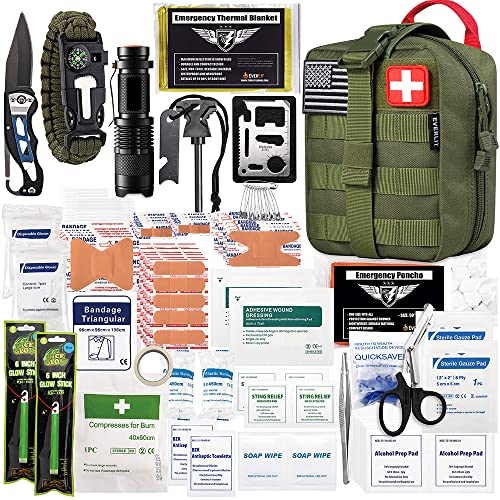
The EVERLIT 250 Pcs Survival First Aid Kit is an all-in-one emergency medical and survival tool pack housed inside an organized, military-style EMT pouch. Designed with input from army veterans and survivalists, this kit caters to family campers, weekend hikers, car campers, overlanders, and emergency preppers who want an organized first aid kit ready for outdoor adventures. Its primary value lies in pairing everyday wound care and minor trauma dressings with multi-purpose survival gear in a single grab-and-go package.
Durability and weather protection are essential for any kit exposed to the outdoor elements. EVERLIT constructs the outer shell from 1000D water-resistant nylon in OD Green, providing strong resistance against abrasion, dirt, and light rain. While the fabric resists damp campsite surfaces, it is water-resistant rather than submersible waterproof, so stowing it inside a waterproof pack liner or dry sack remains smart during severe downpours. The pouch utilizes heavy-duty dual zippers and reinforced stitching alongside MOLLE webbing, allowing campers to lash it directly to a backpack or mount it inside a vehicle.
Beyond standard adhesive bandages and antiseptic prep pads, this kit integrates valuable wilderness survival hardware. Key components include a 3-mode tactical flashlight for emergency trail illumination, a flint fire starter for lighting campfires in wet weather, two 12-hour glow sticks for night signaling, a multi-function paracord bracelet with an integrated compass and whistle, a pocket knife, a multi-use saber card, an emergency poncho, and a heat-reflective mylar thermal blanket to help manage hypothermia risks.
Measuring 8 inches by 6.5 inches by 5 inches and weighing approximately two pounds, the kit balances broad capability with manageable packability. For car camping, basecamp staging, overland storage, or a dedicated bug-out bag, this footprint easily tucks into a vehicle console or backpack main compartment. Ultralight backpackers counting every ounce might prefer a stripped-down medical pouch, but for group hiking or general camp safety, the weight-to-supply ratio remains very practical.
Because the pouch is tightly packed with 250 pieces across three folding compartments, internal space for supplementary gear is limited. Campers wishing to include custom prescription medication, bulky SAM splints, or larger trauma dressings may need to reorganize or selectively swap items. Routine care involves keeping the pouch free of dirt with a damp cloth, air-drying the exterior if it encounters rain, and periodically checking expiration dates on sterile supplies.
Based on product specifications and included equipment, the EVERLIT 250-Piece Survival First Aid Kit delivers dependable organization and comprehensive emergency supplies for family campers, scouts, and outdoor enthusiasts. It removes the hassle of piecing together individual supplies, providing a reliable safety foundation whether stored in your vehicle trunk or packed for a weekend at the campground.
The exterior shell is crafted from 1000D nylon, a high-density tactical fabric known for resisting scuffs, abrasions, and punctures from rocks and brush. This build quality protects internal medical components from getting crushed or abraded when shifting inside a vehicle trunk or packed hiking rucksack.
The bag features reinforced MOLLE straps on the back panel, enabling secure attachment to compatible backpacks, tactical gear, or vehicle mounting panels. Heavy-duty dual zippers open smoothly around the perimeter, granting immediate tri-fold access to internal mesh pockets and elastic retention loops.
Along with medical supplies exceeding standard OSHA guidelines for small families, this kit comes loaded with practical outdoor emergency accessories. Essential signaling and lighting gear includes a 3-mode tactical flashlight and two 12-hour glow sticks for night operations.
For unexpected survival situations, the kit features a multi-function paracord bracelet with an integrated compass and whistle, a reliable flint fire starter, an emergency rain poncho, a pocket knife, a stainless steel saber card tool, and a mylar thermal space blanket designed to retain body heat.

Pros
- Tourniquet features an aluminum alloy windlass instead of plastic, providing dependable rigidity under tension
- Contains dedicated bleeding control essentials like compressed gauze and a 6-inch Israeli pressure bandage
- Compact design packs easily into camping backpacks, vehicle consoles, or outdoor survival packs
- Focused trauma contents eliminate clutter, allowing quick retrieval during urgent camp emergencies
Cons
- Lacks everyday minor camp first aid items such as antiseptic wipes, blister pads, and adhesive bandages
- Specific pouch dimensions, total pack weight, and fabric water-resistance ratings are not provided in the specifications
- Requires prior familiarity and practice to deploy specialized trauma supplies correctly during high-stress situations
The IFAK Trauma First Aid Kit is a specialized outdoor medical kit engineered specifically for severe bleeding management during car camping trips, backcountry hikes, overland expeditions, and highway travel. Unlike broad, general-purpose camp first aid boxes packed with adhesive strips and plastic tweezers, this compact kit focuses strictly on critical bleeding response. It is well suited for solo backpackers navigating remote terrain, overlanders traveling hours away from emergency services, family camp planners, and outdoorsmen who want dedicated trauma gear stowed in a vehicle or backpack.
Based on product specifications, the kit centers on three recognized bleeding control components: an adjustable tactical tourniquet, a 6-inch Israeli bandage, and sterile compressed gauze. The tourniquet stands out due to its high-strength nylon webbing and an aluminum alloy metal torsion bar, which is designed to resist bending or snapping under heavy tension when occluding blood flow. The included 6-inch Israeli bandage pairs a thick dressing pad with a built-in pressure applicator and closure bar, while the compressed gauze provides dense material for direct wound packing.
When organizing camp storage or hiking deep into the woods, rapid accessibility is critical. This trauma kit maintains a compact footprint that slides neatly into backpack lid pockets, glove compartments, or utility pouches on overland rigs. Whether you are chopping kindling with a camp axe, navigating rocky trails, or maintaining a remote campsite after dark, having dedicated bleeding management supplies close at hand helps outdoor enthusiasts react quickly to severe cuts and accidents.
A clear limitation of this kit is its narrow emergency focus. Outdoor enthusiasts will not find burn ointments, blister treatments, pain relievers, or standard adhesive bandages inside, meaning it cannot replace a traditional camp medical kit for everyday scrapes. Furthermore, the product description does not specify pouch denier ratings or water-resistance levels, so backpackers trekking in wet climates may want to store the kit inside a small dry bag to shield the sterile packaging from moisture.
For hikers, overlanders, and car campers seeking to strengthen their outdoor emergency preparedness, this trauma kit provides valuable bleeding control tools in a portable package. It functions best as a supplemental trauma unit paired with a broad campground first aid kit, ensuring you are prepared for minor campfire splinters as well as severe backcountry trail emergencies.
The core structural advantage of this trauma kit is the tourniquet's aluminum alloy metal torsion bar. While budget emergency tourniquets often utilize plastic windlasses that risk flexing or breaking under maximum torque, the metal bar provides rigid leverage to help maintain firm mechanical pressure during emergency application. This windlass is supported by durable, high-strength nylon webbing engineered to withstand abrasive outdoor environments.
The internal medical components, including the 6-inch Israeli compression bandage and the compressed gauze, come factory-sealed in protective packaging to preserve sterility and keep out trail dust. Outdoorsmen should inspect these sealed packages during regular seasonal gear checks to ensure they remain intact and ready for immediate deployment.
Trauma and emergency supplies require routine inspection to remain effective across multiple camping seasons. While the synthetic nylon components are resistant to general wear, prolonged exposure to extreme heat inside a closed vehicle trunk or prolonged moisture in a damp camp tote can weaken packaging seals over time. Storing the kit in a temperate, dry gear bin or inside an airtight storage bag helps prolong shelf life.
Campers, overlanders, and hikers are strongly encouraged to familiarize themselves with tourniquet placement and pressure dressing techniques before venturing outdoors. Reviewing basic bleeding control procedures ensures that these tools can be deployed with speed and precision should an accident happen around the campfire or along a remote trail.

Pros
- Six detachable scenario-specific modules allow quick grab-and-go treatment without moving the entire kit
- Durable waterproof outer casing keeps sterile supplies dry in humid or rainy outdoor environments
- MOLLE compatibility and heavy-duty handles provide versatile mounting options for trucks, RVs, and packs
- Generous 520-piece supply volume easily accommodates multi-person family campouts and extended road trips
Cons
- Substantial pack volume and weight make it better suited for vehicle basecamps than ultralight backpacking
- Supplies focus heavily on minor wound care and need user additions for specialized wilderness trauma needs
- Requires regular seasonal checks to monitor consumable supplies and replace expired ointments or wipes
The Pasenhome 520-Piece Advanced First Aid Kit is a high-capacity emergency medical organizer designed to handle sudden campsite injuries and outdoor mishaps. Packaged in a durable blue waterproof carry case, this kit is tailored for car campers, RV travelers, overlanders, family basecamps, and boaters who need a reliable, high-volume safety station on hand. While ultralight backpackers may find its complete 520-piece inventory too bulky for minimalist trail excursions, vehicle-supported adventurers and weekend warriors will appreciate having a dedicated, organized trauma and wound-care hub ready in the trunk or camper van.
Camp medical emergencies often happen under stress, whether treating a campfire ember burn, a minor slip on slick river rocks, or a blister after a long day hike. The standout asset of this kit is its 6-in-1 modular configuration. Rather than forcing you to sift through a jumbled pile of loose bandages and ointments while holding a flashlight, the kit divides supplies into six detachable pouches dedicated to distinct scenarios like minor cuts, abrasions, joint sprains, and everyday treatments. This allows you to grab just the relevant mini-pouch and take it directly to the injured person at the picnic table or inside the tent.
Build quality and weather defense are essential for any outdoor safety pack, and the Pasenhome kit features a waterproof exterior bag built to shield medical gauze, pads, and adhesive strips from damp ground, morning dew, and sudden downpours. The bag incorporates a tactical MOLLE webbing grid on the exterior, enabling campers to clip it to a daypack, lash it to an overland rack, or mount it securely inside an RV locker. Heavy-duty top and side grab handles make quick deployment straightforward when seconds count.
Despite its extensive 520-piece count, practical limitations should be weighed before hitting the trail. The full kit carries substantial volume, making it much better suited for basecamp staging or vehicle storage than multi-day alpine backpacking where pack volume is at a premium. Additionally, while the kit supplies a broad foundation for general scrapes and everyday minor injuries, backcountry adventurers tackling remote terrain should consider adding specialized wilderness gear such as high-grade trauma shears, advanced pressure dressings, or water-purification backup tablets.
Maintaining this kit across multiple camping seasons is straightforward thanks to its refillable interior and integrated extra storage pockets. These open spaces let campers pack personal prescription medications, insect sting relief, or custom blister remedies alongside the standard supplies. For outdoor families, cabin owners, and road-tripping campers seeking a well-structured safety solution, the Pasenhome modular kit delivers dependable organization and moisture protection that helps keep minor accidents from cutting an outdoor trip short.
Keeping a camping first aid kit ready for action requires routine inspection before each outdoor season. Store the Pasenhome kit in a cool, dry location inside your vehicle or gear closet to preserve adhesive integrity on bandages and medical tape. Periodically open each of the six detachable modules to check expiration dates on antiseptic wipes or ointments, replacing consumed or aged items promptly.
Although the outer carry case is made from waterproof material that resists moisture and dirt, the bag should be wiped down with a damp cloth and mild soap if exposed to mud or grit around the campsite. Allow the exterior to dry thoroughly before storing it long term to prevent mildew from forming on the carry straps and handle stitching.

Pros
- Extensive 400-piece inventory covers broad medical needs for family campgrounds, road trips, and basecamps.
- Durable 1680D polyester fabric exterior resists wear, abrasion, and light outdoor rain.
- Intelligently labeled internal compartments help users quickly locate specific supplies under pressure.
- Compact rectangular form factor stows effortlessly in glove boxes, overland storage drawers, or camper cabinets.
Cons
- At roughly 2.5 pounds, the complete kit is too bulky and heavy for ultralight backpacking treks.
- Water-resistant 1680D fabric repels splashes and rainfall but is not submersible for kayak or canoe use.
- Detailed itemized quantities for all individual medical components are not fully specified in the product data.
The Vriexsd 400-Piece First Aid Kit is an all-in-one medical and emergency preparedness pack engineered for vehicle-based campers, RV owners, family outdoor gatherings, and cabin trips. While ultralight backpackers often count every single ounce on the trail, car campers and overlanders require broad utility to handle everything from campfire splinters to sudden cuts and joint sprains. With 400 categorized components neatly packed inside a compact red case, this kit functions as a dedicated safety hub for busy campsites and road trips across the country.
Protection for sensitive medical gear starts with the outer shell, and this kit utilizes high-density 1680D polyester fabric. This heavyweight ballistic-style textile provides remarkable abrasion resistance against rough picnic tables, rocky ground, and crammed truck beds. The water-resistant finish keeps moisture, morning dew, and sudden downpours from penetrating the seams and compromising sterile bandage wrappers or gauze pads, helping supplies remain clean and dry until they are needed.
Finding critical supplies during a stressful camp accident is made simpler thanks to labeled, divided internal compartments. Rather than forcing users to dig through a chaotic pile of loose bandages in dim lantern light, the clear fold-out layout isolates individual medical categories. The included items cover fundamental basics like adhesive bandages, larger wound dressings, a tourniquet, a reflective emergency blanket, and a quick-reference first aid guide to assist group leaders or first-time campers.
Measuring roughly 9.8 by 7.4 inches and weighing about 2.5 pounds, the pack occupies minimal real estate in an overland drawer system, camper van cabinet, or trunk emergency bin. An integrated carry handle makes it simple to grab from the vehicle or hang from a camp kitchen organizer. Users can also attach the kit to the exterior of a daypack using the durable exterior webbing, making it versatile for trail basecamps or sports events.
Campers should recognize the practical boundary between car camping gear and extended trail medical kits. Carrying two and a half pounds of general medical supplies on a multi-day backcountry hike creates unnecessary pack weight, making a trimmed down personal kit better suited for long foot miles. Additionally, while the 1680D polyester shell repels rain and splashes, it lacks an airtight zipper seal, so boaters or paddlers should house the bag inside a dedicated dry bag for full submersion protection.
For weekend campers, road-tripping families, and overlanders seeking a well-stocked medical kit without building one piece by piece, the Vriexsd 400-Piece Kit offers dependable utility. The combination of structured interior labeling, a tough water-resistant exterior, and a comprehensive assortment of bandages and trauma supplies makes it a practical baseline safety investment for any vehicle-supported outdoor adventure.
Constructed with heavy-gauge 1680D polyester, the external shell of the Vriexsd kit resists tears, scuffs, and punctures common to rugged outdoor environments. This heavyweight weave withstands repeated contact with gravel, dirt, and camp furniture far better than standard thin nylon pouches.
The water-resistant fabric treatment guards internal bandages, gauze, and medical manuals against ambient campsite moisture, ground dampness, and passing rain showers. While not designed for water submersion, the durable exterior maintains the integrity of sterile packaging during rough outdoor transport.
Interior organization relies on transparent and clearly labeled compartments that segment medical supplies by function. This systematic layout speeds up response times during outdoor emergencies, allowing family members or camp companions to pinpoint specific wound care items without dumping out the entire bag.
With dimensions around 5.1 by 9.8 by 7.4 inches, the kit balances high piece volume with practical storage dimensions. It fits comfortably inside automotive glove compartments, RV utility closets, truck center consoles, or gear bins alongside other camp kitchen and safety equipment.
Frequently Asked Questions
How does a trauma kit differ from a standard family first aid kit?
A trauma kit prioritizes critical bleeding control and severe injury stabilization, whereas a standard first aid kit focuses on minor cuts, headaches, and surface scrapes. Trauma kits include specialized items like tourniquets, compressed gauze, hemostatic clotting powders, and pressure bandages designed to manage arterial bleeding or deep lacerations. Standard first aid kits typically feature adhesive strips, antiseptic wipes, and burn creams that lack the stopping power needed for major hemorrhaging. Packing a dedicated trauma pack ensures rapid response when deep cuts or tool accidents happen miles from hospital assistance.
Can BleedStop clotting powder be safely applied to children on camping trips?
Yes, BleedStop first aid powder uses a non-stinging, safe formula that doctors and parents can apply to children for moderate to severe bleeding. The powder pours directly over open wounds, cuts, or severe nosebleeds and works upon contact to accelerate natural clotting without burning sensitive skin. Medical professionals also use it safely on individuals taking blood thinners, making it versatile across multiple age groups at the campsite. Users should always apply steady pressure with sterile gauze after pouring and seek prompt medical attention if severe bleeding persists.
Why are modular compartments essential for family camping medical bags?
Modular compartments organize medical supplies by specific emergency types, allowing parents to retrieve critical gear immediately without dumping the entire bag. In urgent situations, clear labels and detachable pouches separate everyday adhesive bandages from heavy bleeding tools like Israeli bandages or tourniquets. This separation prevents frantic rummaging in low-light conditions and keeps sterile items clean from campfire soot or mud. Modular setups also make inventory checks simple so you can restock individual pouches before your next outing.
What water-resistance rating or fabric should an outdoor trauma pouch feature?
High-denier synthetic fabrics such as 1000D nylon or 1680D polyester provide the best tear resistance and water-resistant protection for outdoor medical kits. These dense weaves protect internal bandages, gauze rolls, and emergency blankets from sudden rain, morning dew, and splash exposure. While water-resistant materials repel wet campsite weather effectively, they do not make the pouch submersible for water crossings without an additional dry bag. Stashing medical gear inside a weatherproof shell ensures sterile wraps remain dry and usable whenever emergencies arise.
Does a trauma kit eliminate the need for safe water when treating wounds?
No, a trauma kit manages bleeding and wound closure, but irrigating dirty campsite wounds requires clean, drinkable water. Flushing trail debris or gravel from an open cut before applying sterile dressings helps prevent stubborn bacterial infections. Carrying a durable canteen for boiling water ensures you always have a heat-sterilized source for basic wound irrigation. Campers learning activated charcoal for water purification also understand that pristine water supports overall hygiene and patient care in remote backcountry locations.
How should families inspect and maintain a camping trauma kit between trips?
Campers should inspect medical kits at the beginning of every season by verifying package expiration dates, restocked supplies, and component integrity. Tourniquet bands and pressure wraps should remain tightly rolled, clean, and free of dirt or grit that could compromise mechanical tension. Replace used bandages, clotting powders, or antiseptic pads immediately after returning from a camping weekend so the kit stays fully operational. Storing the bag in a climate-controlled room away from extreme vehicle heat prolongs the shelf life of medical adhesives and sealed sterile supplies.







Write Your Review
No reviews yet. Be the first to share your experience!