

Solo campers often prioritize pack weight and compact dimensions when planning a backcountry trek or weekend getaway. Finding the right balance between minimal bulk and actual sleeping comfort comes down to understanding exact interior measurements. When evaluating how big is a one person tent, campers quickly realize that floor dimensions tell only part of the story. While larger groups often gravitate toward spacious outdoor tent options, a solo shelter must maximize every square inch of sleeping and storage space without adding unnecessary trail weight.
Manufacturers build single-person shelters with specific goals in mind, ranging from ultralight ridge profiles to freestanding dome designs. Floor layouts typically offer between fifteen and twenty-six square feet of living area, creating an efficient shelter designed primarily for sleeping and staying dry. Interior height, wall slope, and vestibule coverage also influence whether the space feels livable or cramped. Understanding these structural distinctions allows hikers to match their personal height, sleeping pad size, and gear volume to the right shelter profile.

Pros
- Generous 8.2-foot interior floor length comfortably fits tall campers without feet rubbing against tent walls.
- Robust 3500mm to 4000mm waterproof rating with comprehensive factory seam taping across high-stress zones.
- Durable aluminum ridge pole provides greater stability in wind than flexible fiberglass poles.
- Simple single-pole configuration enables quick pitching even in fading daylight or rain.
Cons
- Peak interior height under three feet restricts vertical mobility primarily to sitting or lying down.
- Snug solo footprint provides minimal elbow room for changing clothes inside the shelter.
- Single side door requires careful exit during rainy weather to avoid letting moisture inside.
The camppal 1 Person Tent is a low-profile solo shelter engineered for minimalist backpackers, solo hunters, long-distance hikers, and backcountry adventurers seeking dependable weather protection without hauling unnecessary weight. Featuring an elongated footprint measuring 8.2 feet in length, this tent directly resolves a common issue for tall solo campers by ensuring sleeping bags do not press against damp walls. Designed around a single-pole architecture and weighing under four pounds, it serves as a roomy, weather-resistant alternative to a traditional bivy sack while retaining the compact packability required for fast-moving wilderness trips.
Weather protection is anchored by an outer rainfly providing an impressive 3500mm to 4000mm hydrostatic head rating, which is substantially higher than standard entry-level solo tents. To keep groundwater and driving storms at bay, the design incorporates fully taped seams across the floor corners, zipper tracks, and PVC-reinforced velcro closures. The ripstop outer fabric prevents wind-driven tears, while the contoured, low-slung profile supported by an aluminum ridge pole deflects mountain gales rather than catching them. Product specifications indicate this shelter delivers multi-season resilience against heavy downpours, windstorms, and light snow.
Usable living space inside focuses on practical storage and sleeping comfort. The inner tent provides a floor area of 8.2 feet long by roughly 2.95 feet wide, offering ample room at the head or foot for backpacks, boots, and dry layers alongside a standard sleeping pad. Maximum headroom measures approximately 2.95 feet, meaning campers can sit upright to read or change shirts, though vertical clearance remains snug. Outside the sleeping chamber, the extended rainfly forms a 1.31-foot side vestibule that shields trail footwear and cooking gear from overnight dew and driving rain.
Pitching this tent takes minimal effort thanks to the simple single aluminum ridge pole configuration. Backpackers reaching camp after dark or under threatening skies can complete assembly in approximately three minutes using the straightforward pole grommets and reinforced ground stakes. The aluminum frame delivers reliable structural strength compared to fiberglass poles, which helps prevent buckling during sudden mountain gusts. In addition, the fabric adheres to CPAI-84 fire retardant standards, providing extra reassurance around active camp kitchens.
While this shelter excels in weatherproofing and streamlined packability, buyers should consider the natural limitations of a low-profile solo design. The compact interior requires thoughtful gear organization and adequate venting to manage internal condensation during humid nights. For solo weekend backpacking trips, backcountry hunting scouting, and emergency preparedness kits where weather resistance, weight savings, and sleeping length matter most, this camppal shelter delivers reliable performance and great outdoor value.
Equipped with an outer fly rated at 3500mm to 4000mm water resistance, this tent is built to handle heavy rain, continuous drizzle, and damp mountain fog. Factory seam taping seals critical stress areas along the zippers, floor corners, and velcro anchor points to prevent seam leakage. The aerodynamic single-pole profile sheds crosswinds efficiently, reducing buffeting noise and frame fatigue in stormy conditions.
The inner sleeping quarters measure 8.2 feet long by 2.95 feet wide with a peak center height of 2.95 feet, making it exceptionally friendly for tall outdoor enthusiasts. The outer rainfly extends outward by 1.31 feet along the side to create an exterior gear vestibule. Pitching takes about three minutes by threading the single aluminum ridge pole and staking out the corners, ensuring minimal setup hassle after a demanding hike.

Pros
- PU 3000mm waterproof coating and factory-taped seams offer dependable rain protection for a single-layer tent.
- Protective pole casing prevents the painful fiberglass splinters common with budget fiberglass poles.
- Simple two-pole cross sleeve design enables rapid, hassle-free solo setup in under two minutes.
- Generous 7-foot interior length provides ample room for taller campers plus interior gear storage.
Cons
- Single-layer design requires adequate airflow to prevent interior condensation during cold or humid nights.
- At 4.34 pounds, it is heavier than dedicated ultralight backcountry shelters.
- The 3.8-foot width realistically accommodates only one adult with gear rather than two full-sized adults.
The Night Cat Backpacking Tent is a compact, single-layer dome shelter engineered for solo adventurers, scouts, weekend hikers, and first-time campers looking for a practical, low-cost outdoor shelter. With interior floor dimensions measuring 7.0 by 3.8 feet and a peak center height of 3.6 feet, this shelter is proportioned to give a single adult sleeper generous elbow room with dedicated space along the perimeter to stash a trail pack, boots, and clothing. While the listing notes capacity for an adult and a small child, practical trail use makes it primarily an efficient one-person backpacking and camp shelter.
For weather management, the tent utilizes polyester fabric treated with a PU 3000mm waterproof coating, complemented by sealed, taped seams along the structural stitching. This level of waterproof protection is designed to withstand passing rainstorms and prevent moisture penetration from the wet ground. Because this is a single-layer tent without a separate full-coverage rainfly, managing air circulation is critical. Night Cat addresses this through a large mesh front entryway and an integrated mesh roof window, which work together to facilitate fresh air exchange and keep flying pests out of the sleeping quarters.
The frame relies on two foldable fiberglass poles equipped with an upgraded protective casing. Traditional single-layer fiberglass poles can develop micro-splinters over time that irritate hands during assembly, but this dual-layer sleeve construction shields campers during handling. Pitching the shelter requires sliding both poles through the diagonal roof sleeves and anchoring the corners, a straightforward routine that takes approximately one to two minutes even when arriving at camp after dusk. Once staked, the freestanding dome structure holds its shape cleanly in moderate winds.
Portability is a strong attribute for youth groups and weekend travelers, with the tent packing down into an included carry bag measuring 16.5 by 4.7 by 4.7 inches. At an overall weight of roughly 4.34 pounds, it sits between heavier car camping options and premium ultralight shelters. While long-distance thru-hikers counting every ounce may prefer a lighter tarp or trekking-pole tent, this weight and compact packed size fit conveniently into scout gear packs, motorcycle saddlebags, and car trunks for spontaneous overnights.
Before planning an extended trip, campers should account for the functional tradeoffs of a single-wall shelter. In damp, chilly environments, warm breath will create condensation along the interior polyester walls if the mesh vents are kept shut. Additionally, because there is no external vestibule, muddy footwear and wet outerwear must be brought inside the main tent floor. For budget-conscious hikers, motorcycle campers, scouts, and festival goers seeking a simple, waterproof, and easy-to-pitch solo shelter, the Night Cat tent provides a balanced, accessible solution.
Setting up the Night Cat tent requires minimal effort thanks to its streamlined two-pole sleeve structure. The fiberglass poles slide directly into diagonal sleeves across the canopy, allowing a single person to erect the freestanding dome in roughly one to two minutes without complex hub mechanisms.
Takedown is equally quick, rolling neatly into an included 16.5 by 4.7-inch carry sack. At approximately 4.34 pounds, the tent packs down compactly enough to strap onto the bottom of a backpack, secure to a bicycle rack, or store in a vehicle trunk for weekend outings.
Constructed with PU 3000mm coated polyester and heat-sealed taped seams, this shelter is built to keep rain from penetrating the interior cabin during unexpected downpours. The aerodynamic dome geometry also assists in deflecting moderate wind gusts when properly staked to the ground.
To mitigate condensation common to single-wall tents, the layout includes a large mesh door and an upper roof mesh vent. Keeping these openings clear allows continuous airflow across the ceiling, helping warm moisture escape while maintaining dependable insect defense.

Pros
- Generous solo floor space easily accommodates one tall adult with indoor gear storage.
- Protective casing over fiberglass poles prevents painful splintering during assembly.
- Solid PU 3000mm rainproof rating provides peace of mind during surprise rainstorms.
- Fast and straightforward two-pole sleeve setup takes under two minutes.
- Compact 16.5-inch pack length stows neatly onto bike racks or hiking bags.
Cons
- At 4.4 pounds, it is slightly heavy for ultralight long-distance thru-hiking.
- Fiberglass poles are heavier and less flexible than premium aluminum alternatives.
- Tight fit for two full-grown adults, serving best as a roomy solo shelter or for an adult with a young child.
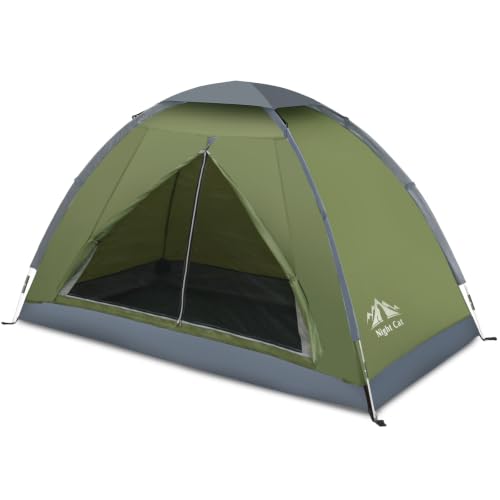
The Night Cat Backpacking Tent is a lightweight, single-to-two-person dome shelter designed to give outdoor adventurers reliable weather protection without complicated assembly. Built with a compact footprint, this shelter caters to solo backpackers, scout troops, motorcycle campers, festival attendees, and first-time campers seeking an approachable shelter for the trail. While marketed for up to two occupants, its interior dimensions of 7.0 by 3.8 feet make it shine brightest as an exceptionally roomy solo shelter with ample room for your sleeping pad, clothing layers, and trail pack.
Campers heading into unpredictable conditions will appreciate the heavy-duty PU 3000mm waterproof coating on the polyester fabric. Factory seam-taped stitching lines the floor and body to stop rainwater from seeping through during extended downpours. Good ventilation is crucial in a compact shelter to prevent stuffiness and internal condensation buildup, and this tent addresses that with a high-mesh roof window and a large zippered mesh entry door. The fine netting keeps pesky mosquitoes and gnats at bay while inviting gentle summer breezes through the cabin on balmy nights.
A distinctive feature of this design is the covered fiberglass pole system. Traditional budget fiberglass poles can splinter over time and leave microscopic shards in your palms, but Night Cat encloses these poles in a smooth protective outer sleeve. The diagonal sleeve channels make sliding the poles across the dome quick and snag-free. You also get a durable bathtub floor that shields against ground moisture and damp campsite mud when you need to pitch on saturated turf after dark.
Ease of use is a highlight for anyone arriving at camp late or trying to beat incoming weather. Pitching the structure takes only one to two minutes by feeding the two flexible poles through the continuous diagonal roof sleeves and anchoring the corners. Pack-down is just as swift, rolling into an included zippered carry pouch measuring just 16.5 by 4.7 inches. At roughly 4.4 pounds, the bundle carries comfortably on motorcycle racks, strapped to the bottom of a hiking pack, or stowed in the trunk of a compact car for spontaneous weekend trips.
There are some natural trade-offs to keep in mind. At 4.4 pounds, dedicated ultralight thru-hikers may find it slightly heavy compared to high-end silnylon trekking pole shelters. The fiberglass frame, while well-protected, lacks the extreme bend strength and ultra-low weight of anodized aircraft aluminum poles. Furthermore, while an adult and small child can sleep side by side comfortably, two grown adults will find shoulder space quite tight.
For weekend trail warriors, boy scout troop outings, motorcycle touring, and budget-conscious hikers, this tent delivers impressive value and dependable shelter. It strikes an effective balance between durable weatherproofing, simple single-person pitching, and compact portability for your next outdoor excursion.
Pitching this dome tent is designed to be straightforward enough for a single camper to handle in two minutes or less. The two-pole continuous sleeve setup eliminates confusing clip patterns. You simply unfold the tent body onto your ground tarp, slip the protected fiberglass poles diagonally through the heavy-duty fabric sleeves, and flex them into the corner grommets to pop the dome into place.
Takedown requires very little effort when breaking camp at dawn. Disconnecting the corner pins allows the frame to collapse smoothly without catching on internal mesh. The fabric folds cleanly along the pole lines, sliding into the compact zippered carry bag alongside the stakes and guylines without excessive squeezing or wrestling.
Equipped with a PU 3000mm polyurethane coating, the polyester canopy handles moderate to severe rainstorms with ease. Reinforced waterproof tape seals every structural seam, preventing moisture penetration around stress points and corner stitching. This barrier keeps your sleeping bag dry even when wet mountain squalls blow in unexpectedly overnight.
The aerodynamic dome profile naturally deflects gusty winds when properly anchored with the included ground stakes and guylines. To manage internal moisture from breathing, the elevated roof vent works alongside the breathable mesh entryway to sustain air circulation, keeping damp condensation from collecting against the inner walls.

Pros
- Fast 3-second pop-up setup saves significant time during late campsite arrivals.
- Factory-taped seams and a PU 2000mm polyurethane coating offer dependable moisture protection against rain.
- Integrated shoulder carry straps make hauling the 3.3-pound pack convenient for walk-in campsites.
- Long 92.5-inch floor length gives taller solo campers plenty of room to stretch out comfortably.
- Dual side windows provide steady cross ventilation to help regulate summer temperatures inside.
Cons
- Circular 21-inch packed disc shape does not fit inside standard hiking backpacks, limiting use to car camping or short carries.
- Folding the flexible frame back into its compact figure-8 layout requires some practice before the first outing.
- Trekking poles or awning support sticks shown for setting up the front porch awning are not included.
The Night Cat Pop-up Camping Tent is a dedicated single-person instant shelter engineered for swift deployment and practical solo outdoor use. Designed primarily for solo car campers, festival goers, beach visitors, and first-time campers, this shelter bypasses the frustration of threading traditional fiberglass or aluminum poles. Instead, it relies on an integrated spring-loaded frame that snaps into place virtually on its own once released, making it an appealing choice for late-night campsite arrivals where setting up under lantern light needs to be fast and simple.
With interior floor dimensions of 92.5 inches in length, 39 inches in width, and a peak height of 35.5 inches (roughly 7.7 by 3.3 by 2.95 feet), the shelter provides ample sleeping clearance for an adult. The floor area easily accommodates a standard single sleeping pad or a twin-size camping air mattress while leaving extra room alongside the sleeper to stash a daypack, boots, and personal gear. While headroom is tailored for sitting rather than standing, the elongated rectangular base ensures that taller campers can stretch out their legs without pressing their sleeping bag against damp tent walls.
Weather protection is supported by a 190T polyester taffeta body treated with a PU 2000mm waterproof coating. The tent features waterproof seam-sealing tape across critical joints to help guard against moisture intrusion during steady rainstorms. Stability is reinforced by an integrated 6mm flexible frame, supported by included ground stakes and guylines to maintain structural shape against moderate campsite winds. Air circulation is handled through one large front door and two wide side windows, which work together to generate cross ventilation and combat overnight condensation buildup in muggy climates.
One thoughtful functional detail is the multi-purpose front entry. When unzipped and extended outward, the door panel can be propped up using trekking poles or found timber sticks to fashion a miniature sunshade awning. While the required support poles are not included in the package, this configuration allows campers to sit protected from direct sun or light drizzle while cooking breakfast or lounging outside the shelter. When used at the beach or a park, opening both windows and the door transforms the tent into an airy sun shelter that captures passing breezes.
Packing the tent relies on an upgraded folding routine that loops the frame into four nested rings rather than the standard three, achieving a packed size of 21 by 21 by 2 inches. At approximately 3.3 pounds (1.5 kg), it is lightweight, and the circular carry bag features both a grab handle and dual shoulder straps for backpack-style transport. Campers should expect a brief learning curve when folding the tent into the figure-8 configuration, making a few practice runs at home advisable before heading out on a trip.
The Night Cat 1-Person Pop-Up Tent stands as a practical, budget-conscious choice for weekend getaways, car camping excursions, music festivals, and emergency preparedness. Its circular disc shape means it is not designed to strap cleanly to a technical multi-day backpacking pack, but for anyone seeking immediate shelter deployment, dependable rain resistance, and low-maintenance campsite operation, this compact solo tent offers remarkable everyday convenience.
Pitching the Night Cat Pop-up Tent takes mere seconds. Campers simply remove the retaining strap and toss the unit onto open ground, allowing the spring-steel frame to open immediately without manual pole assembly. Once deployed, securing the four corners with the included ground stakes and anchoring the guylines ensures the structure remains taut and grounded in open, breezy areas.
Packing the tent down utilizes an upgraded folding method that folds the frame in the shape of a figure-8, repeated twice to generate four concentric rings. This process reduces the packed diameter down to roughly 21 inches across. While mastering the twist-and-fold motion may take two or three attempts, following the manufacturer video instructions makes the breakdown process predictable and fast once muscle memory takes over.
Fabricated from 190T polyester taffeta, the tent body is coated to achieve a PU 2000mm hydrostatic head rating. This level of polyurethane coating provides dependable water resistance for standard rainy weekend camping trips, shedding rain effectively when the fabric is properly tensioned. Factory-applied seam tape over stitching lines helps prevent water seepage through needle perforations.
Wind management relies on the 6mm flexible frame working alongside the provided guylines and steel pegs. The aerodynamic, low-profile dome profile keeps wind resistance manageable, though campers should ensure all guy points are firmly staked into firm ground when camping in exposed coastal or prairie environments.

Pros
- Straightforward pole-clip attachment eliminates fabric snagging during assembly
- True PU 3000mm waterproof coating on both the tent body and the rugged 150D Oxford floor
- Compact 16.5-inch packed length makes transport effortless for solo journeys and bike packing
- Roomy interior height of 45 inches allows comfortable seated movement inside
Cons
- At 4.4 pounds, it is heavier than dedicated ultralight solo shelters
- Fiberglass poles do not provide the weight savings or long-term rigidity of high-end aluminum
- Usable interior space is designed strictly for one adult and trail gear, offering minimal room for anyone else
The Night Cat 1-Person Backpacking Tent is a lightweight, freestanding solo dome shelter built for budget-minded backpackers, scout troops, motorcycle campers, and weekend hikers. Designed to eliminate the frustration of threading slender poles through long, snagging fabric sleeves, this shelter relies on quick-attach pole clips. Solo campers can establish a secure camp quickly, even when arriving at a remote campsite after dusk or pitching during sudden weather changes.
Inside the tent, the floor measures 83 by 45 inches with a center peak height of 45 inches. This generous footprint provides ample space for a full-length camping sleeping pad alongside a multi-day backpack, while the 45-inch peak height allows most adults to sit fully upright without rubbing their head against the canopy. The exterior door configuration forms a compact shoe vestibule, providing a dedicated space to keep muddy boots out of the main sleeping compartment.
Weather protection relies on a 210T polyester taffeta canopy paired with a heavy-duty 150D Oxford bathtub-style floor. Both fabrics are backed by a PU 3000mm waterproof coating, and every structural seam features factory waterproof tape to prevent moisture seepage during prolonged rainstorms. To combat interior condensation, the tent incorporates a wide micro-mesh front door and an elevated roof mesh window, allowing natural airflow to vent warm air while keeping insects out.
The structural frame is constructed from foldable fiberglass sections anchored by included metal stakes and adjustable guylines. While fiberglass poles add a bit more trail weight compared to premium aluminum sets, they keep the shelter accessible and allow the entire kit to pack down to a travel-friendly 16.5 by 4.7 by 4.7 inches. At an overall weight of 4.4 pounds (2 kg), the shelter easily packs inside a hiking pack or straps across motorcycle panniers.
Campers planning multi-week treks should note the inherent balance between cost and weight. While 4.4 pounds is manageable for overnight and weekend hikes, it exceeds the weight threshold preferred by strict ultralight thru-hikers. Additionally, while the product listing notes that an adult could squeeze in with a small child in an emergency, the interior is realistically sized for one camper and their gear.
For solo adventurers, scouts, car campers, and weekend hikers seeking a dependable, budget-friendly three-season shelter, the Night Cat solo tent offers solid value. Its proven PU 3000mm waterproofing, rapid clip assembly, and comfortable interior headroom make it a dependable shelter for exploring state parks, trailheads, and outdoor festivals.
The Night Cat solo tent is engineered with genuine PU 3000mm waterproof coatings applied across both the 210T polyester taffeta upper fabric and the rugged 150D Oxford ground sheet. Factory-applied waterproof seam tape covers all structural stitching to block driving rain and prevent damp ground moisture from soaking through the floor.
In blustery weather, the classic dome profile sheds wind effectively when staked down with the included metal ground stakes and tensioned guylines. The permanently tethered rainfly cap covers the roof mesh vent against straight-down downpours without blowing loose in shifting gusts.
Setting up the Night Cat tent takes only a couple of minutes thanks to its clip-attachment system. Instead of fighting with full-length fabric pole sleeves, you simply assemble the two foldable fiberglass poles, cross them into the corner grommets, and snap the external tent clips directly over the frame.
Packed portability is a standout highlight, collapsing down to 16.5 by 4.7 by 4.7 inches in its included storage sack. At 4.4 pounds, it stows easily inside standard 40-liter to 65-liter backpacking packs, fits across motorcycle racks, and tucks neatly into compact vehicle trunks for spontaneous weekend escapes.

Pros
- Extended 8.2-foot floor length comfortably accommodates taller hikers and provides interior gear storage.
- High waterproof coating of 3500mm paired with taped seams delivers reliable wet-weather performance.
- Single-ridge aluminum pole construction ensures quick, hassle-free pitching in deteriorating weather.
- Durable ripstop fabric and wind-shedding design offer dependable stability in exposed outdoor environments.
Cons
- Low peak height of around 3 feet limits seated headroom when changing clothes or sitting upright.
- Listing details show minor weight discrepancies between 2.7 and 3.75 pounds that weight-sensitive hikers should verify.
- Compact solo footprint offers narrow elbow room strictly tailored for one person.
The Camppal 1-Person Tent is a purpose-built solo shelter engineered for hikers, backpackers, hunters, and solo adventurers who prioritize weather defense and rapid deployment in the backcountry. Designed with an extended 8.2-foot sleeping footprint and a streamlined low-profile silhouette, this shelter serves as a roomy alternative to a cramped bivy sack. Whether you are heading out for a weekend backpacking trek in the mountains or establishing a hunting outpost, its compact footprint fits into tight trail clearings where larger multi-person tents cannot go.
Weather resistance stands out as a core design focus, backed by an outer fly rated at 3500mm to 4000mm of water resistance. The construction incorporates comprehensive seam taping across the four bottom corners, zipper lines, and velcro closures with PVC reinforcement to prevent moisture seepage during persistent storms. Its anti-tearing ripstop fabric and sturdy single aluminum ridge pole work together to deflect wind gusts and manage light snow loads, making it a capable companion for three-season and milder shoulder-season conditions.
Interior space balances a compact trail footprint with extra-long usable sleeping room. At 8.2 feet in length and nearly 3 feet in width, the inner tent gives taller campers plenty of stretch-out room without forcing sleeping bags against wet tent walls. The extra floor space easily houses boots, dry bags, and clothes at the foot of your sleeping pad. An additional 1.3-foot vestibule area sheltered by the outer rainfly provides a protected exterior staging zone for damp footwear and packs, keeping dirt and moisture out of your dry sleeping area.
Pitching the tent is straightforward thanks to its single-ridge aluminum pole architecture. Solo campers can secure the frame and stake down the fly in just a few minutes, which proves invaluable when setting up camp after dark or under an approaching rainstorm. With a listed trail weight between 2.7 and 3.75 pounds, the shelter packs down small enough to strap onto a backpack or stow inside a bike pannier, offering dependable portability for fast-moving trekkers.
The low peak height of approximately 3 feet means seated headroom is limited, so changing clothes requires lying down or hunching over. Campers should also monitor ventilation to avoid interior condensation during damp, cool nights. For solo backpackers, scouts, hunters, and minimalist campers seeking dependable storm protection and extra legroom at an accessible price point, the Camppal 1-Person Tent delivers a balanced blend of weatherproofing, durability, and practical backcountry utility.
The Camppal 1-Person Tent utilizes an outer rainfly with a substantial 3500mm to 4000mm waterproof coating, designed to prevent water ingress during prolonged downpours. Factory-taped seams along the floor corners, zipper paths, and PVC-reinforced velcro closures provide critical barrier protection at common leak points.
Its low-slung, aerodynamic profile and durable aluminum ridge pole help the tent shed brisk winds efficiently. Guyline attachment points and reinforced stakes anchor the shelter firmly in exposed backcountry terrain, offering dependable stability against unpredictable mountain weather.
Real Dimensions and Usable Living Space in a One Person Tent
A one-person shelter generally provides just enough floor space for an adult sleeping pad and a small amount of essential equipment. Most solo designs feature an interior floor length between seven and eight point two feet, with widths ranging from thirty to forty-five inches. Peak heights typically fall between thirty-five and forty-four inches, which creates a low profile that excels at resisting wind. While these dimensions sound compact on paper, the true usability of the shelter depends directly on the wall angles and overall geometric architecture.
Standard Floor Dimensions and Total Square Footage
Floor area in a solo camping shelter typically ranges from fifteen to twenty-six square feet. For instance, compact ridge tents like the camppal single-person models offer an inner floor length of eight point two feet and a width of two point ninety-five feet. That provides approximately twenty-four square feet of dedicated sleeping space, giving taller individuals plenty of headroom and foot clearance. Other common floor plans, such as the dome designs from Night Cat, measure around seven feet long by three point eight feet wide, yielding roughly twenty-six square feet.
These variations in width and length cater to different camper preferences and body types. A tent with an inner width of thirty-six to forty-five inches offers enough extra floor space alongside a standard sleeping pad to place garments, a hydration flask, and a small daypack. Conversely, a narrower floor measuring thirty inches wide hugs a standard sleeping pad closely, leaving minimal room on either side. Choosing between an elongated layout and a wider rectangular base depends on whether you value lengthwise stretch or lateral elbow room.
Campers should also recognize that published floor measurements represent the widest points of the fabric at ground level. In real-world pitching, stakes and pole tension pull the corners taut, but minor ground irregularities can slightly alter the practical footprint. Fabric seams also draw inward when tensioned against guylines. Checking both the published length and the corner-to-corner measurements ensures you select a model that accommodates your full body length without your sleeping bag pressing into the end walls.
Peak Height and Vertical Sitting Space
Peak height determines whether you can sit upright comfortably to change clothes, read, or wait out a rainstorm. Most solo shelters provide an interior peak height between thirty-five and forty-five inches at the highest point of the frame. The camppal ridge design features a maximum inner height of approximately thirty-five point four inches, which provides adequate clearance for reclining and low sitting. Meanwhile, dome-style options like the Night Cat clip-setup shelter reach forty-five point six inches, offering noticeably more overhead freedom.
The location and profile of that peak height dictate how useful the vertical clearance actually feels. In a traditional dome tent with crisscrossing poles, the peak forms a central apex that slopes downward gradually in all directions. Ridge tents and single-hoop bivy-style shelters, by contrast, concentrate their highest clearance along a central spine or over the chest area. If a tent slopes aggressively toward the foot box, sitting upright is only possible near the main doorway.
Camper torso height plays a critical role when evaluating these overhead clearances. A seated adult typically requires thirty-two to thirty-eight inches of clearance from the top of the sleeping pad to the ceiling fabric. Because an inflated sleeping pad can lift your body two to four inches off the ground, a thirty-five-inch peak height leaves very little margin above your head. Backpackers who dislike feeling confined often prioritize dome or hoop structures that maintain vertical space across a broader section of the roof.
Accommodating Modern Sleeping Pads and Mattresses
A tent cannot feel spacious if your sleeping pad overlaps the walls or forces the fabric outward. Standard backpacking sleeping pads typically measure twenty inches wide and seventy-two inches long. In a tent with an interior width of thirty-five to forty-five inches, a standard pad fits comfortably while leaving ten to twenty-five inches of open floor space. This extra margin is valuable for organizing nighttime essentials such as a headlamp, clothing layers, and electronics.
Wider sleeping pads introduce tighter tolerances inside compact solo shelters. Large or extra-wide pads usually measure twenty-five inches wide and seventy-seven inches long, which can dominate the interior of a narrower ridge shelter. For example, placing a twenty-five-inch wide pad into a shelter with an interior width of thirty-five inches leaves only ten inches of total side margin. In shelters with tapering footprints, a wide rectangular pad might even pinch against the corners near the foot end.
Thickness is another factor that campers frequently overlook when calculating interior space. Modern insulated inflatable pads frequently measure three to four inches in depth when fully inflated. This elevation pushes your knees and toes closer to the sloped ceiling and end walls of the tent. Selecting a tapered or mummy-shaped sleeping pad can help preserve crucial floor space around the edges while maintaining insulation directly underneath your body.
Interior Gear Storage Versus Vestibule Protection
Storing equipment inside a solo tent requires careful spatial organization. A typical multiday backpack ranges from fifty to seventy liters in volume, occupying significant physical bulk when fully packed. If a tent offers an extended length of eight point two feet, like the camppal model, an average-height camper can easily place a large pack down at the foot of the bed. In shorter seven-foot tents, however, storing a full backpack inside leaves almost no room to stretch out your legs.
An external vestibule created by the rainfly helps solve this interior crowding problem. Vestibules provide sheltered ground space outside the mesh sleeping compartment, keeping muddy hiking boots and wet packs protected from rain. For instance, the camppal tent includes an extended outer fly that adds roughly one point three feet of covered porch width. Utilizing this exterior alcove prevents damp hiking equipment from transferring moisture onto your sleeping bag or inner living area.
Interior organization features also make a compact footprint feel considerably more functional. Built-in mesh storage pockets, hanging loops, and overhead gear lofts lift small accessories off the floor. Storing items like glasses, phones, and maps along the walls prevents accidental damage while keeping the sleeping pad area completely unobstructed. When shopping for solo shelters, evaluating the layout of internal storage pockets helps identify how easily you can maintain an organized camp.
Architectural Shapes and How Tent Geometry Affects Space
The structural shape of a one-person tent fundamentally governs how spacious the interior feels during actual use. Ridge-pole designs, like those found in the camppal series, rely on a horizontal spine supported by aluminum end poles. This creates a low, aerodynamic tunnel that sheds harsh winds exceptionally well while minimizing total carry weight. However, the walls angle steeply toward the ground along the sides, meaning the usable volume is focused tightly around the center line.
Dome shelters utilize crossed diagonal poles that push the canopy upward and outward in a rounded arch. Models such as the Night Cat fiberglass pole backpacking tent provide steeper wall angles on all four sides. This curved geometry increases usable shoulder room, allowing a camper to turn around or change layers without brushing against the fabric. While dome shapes catch slightly more wind than low-slung ridge tents, they generally deliver superior livability during extended stays inside.
Instant and pop-up configurations present yet another geometric trade-off. The Night Cat pop-up shelter uses flexible sprung steel or composite hoops to establish immediate volume across a seven point seven-foot length. These designs offer convenient pitching and respectable interior space, though their rounded hoops create curved wall profiles that limit headroom near the edges. Campers evaluating different frame geometries must balance the need for steep, upright walls against wind stability and pitching complexity.
Packed Dimensions, Trail Weight, and Portability
A compact physical footprint inside the backpack is one of the main incentives for choosing a one-person tent. Standard solo shelters typically weigh between three point three and four point four pounds when packed with poles, pegs, and guylines. For example, the camppal single-person aluminum pole shelter lists a trail weight of three point seventy-five pounds, making it easy to strap onto a hiking pack. The Night Cat manual dome tents weigh around four point four pounds, maintaining easy portability across various outdoor activities.
Packed dimensions determine how efficiently the shelter stows inside a backpack or motorcycle pannier. The Night Cat backpacking models pack down to approximately sixteen point five inches long by four point seven inches wide thanks to multi-section folding poles. In contrast, circular pop-up shelters fold into flat discs measuring twenty-one inches across, which suit vehicle transport or short walks rather than technical backcountry hiking. Checking packed dimensions ensures the folded shelter fits your specific transit system.
Durable components contribute directly to this packed balance without sacrificing safety. Aluminum poles, such as those included with the camppal tent, offer excellent rigidity and strength-to-weight ratios for mountain conditions. Fiberglass poles with protective sleeves, like those supplied with Night Cat models, offer budget-friendly durability and simple handling. Comparing the combined weight of fabric, poles, and stakes allows you to prioritize either ultralight performance or rugged structural stability.
Weather Protection, Materials, and Interior Comfort
Weather protection in a compact tent relies heavily on fabric coatings and seam construction. Waterproof ratings between two thousand and four thousand millimeters ensure that fabric can withstand driving rain without letting moisture seep through. For campers venturing into severe climates, choosing heavy duty water resistant camping tents provides essential peace of mind. Models like the camppal single tent feature three thousand five hundred to four thousand millimeter ratings with taped zippers and reinforced corners to endure heavy downpours.
Ventilation is especially critical in small solo shelters because your breath quickly saturates the limited air volume. Single-person tents generate condensation rapidly if air circulation is blocked by solid fly fabric. Large mesh doors and roof vents allow humid air to escape while drawing cooler, drier air into the cabin. When pitching in rainy conditions, maintaining adequate separation between the inner mesh wall and the outer rainfly prevents condensation from soaking through your gear.
Fabric choices also affect light transmission and daytime interior comfort. Some campers prefer light-blocking materials, such as those featured in dark room camping tents, to keep morning sunshine from warming the interior too quickly. Polyester taffeta and rip-stop nylon fabrics used across solo tents deliver varying degrees of shade, tear resistance, and breathability. Inspecting the fabric grade and door mesh layout helps ensure the shelter maintains a comfortable microclimate in diverse weather.
When to Choose a Solo Tent Versus Sizing Up to a Two-Person Model
Solo shelters provide unmatched weight savings and compact pitching footprints, making them ideal for minimalist backpackers, bikepackers, and scout trips. When you only need a secure place to rest your head after a long day of hiking, a one-person tent provides optimal efficiency. Its small footprint also makes finding a suitable pitching spot much easier on rocky ridgelines or crowded backcountry sites. If minimal weight and fast pitching are your main priorities, a solo shelter remains the most practical choice.
Sizing up to a two-person tent makes sense when you anticipate extended storms, travel with a canine companion, or carry bulky equipment. A two-person shelter typically provides thirty to thirty-five square feet of floor space and significantly more shoulder room. That extra width allows you to bring full packs, camera bags, and dry clothing inside without crowding your sleeping pad. While a two-person tent adds one to two pounds of extra pack weight, that trade-off is often worthwhile for campers who experience claustrophobia in tight quarters.
Evaluating your personal camping habits helps clarify whether a true solo footprint matches your expectations. If you spend most daylight hours active on the trail and only enter the tent to sleep, a compact one-person design serves you well. However, if you enjoy relaxing inside your shelter during lazy afternoons or frequently camp in wet climates where gear drying is necessary, the extra volume of an upgraded shelter offers noticeable comfort.
Assessing how big a one-person tent is ultimately requires looking beyond raw floor square footage. While an interior length between seven and eight point two feet and a width near three feet accommodates most adults, peak height and wall angles dictate actual livability. Factoring in sleeping pad thickness, pack storage under the vestibule, and effective ventilation ensures you select a shelter that feels comfortable throughout your outdoor adventures. Comparing these structural dimensions against your personal gear setup guarantees a restful and dry night in the backcountry.




Write Your Review
No reviews yet. Be the first to share your experience!