
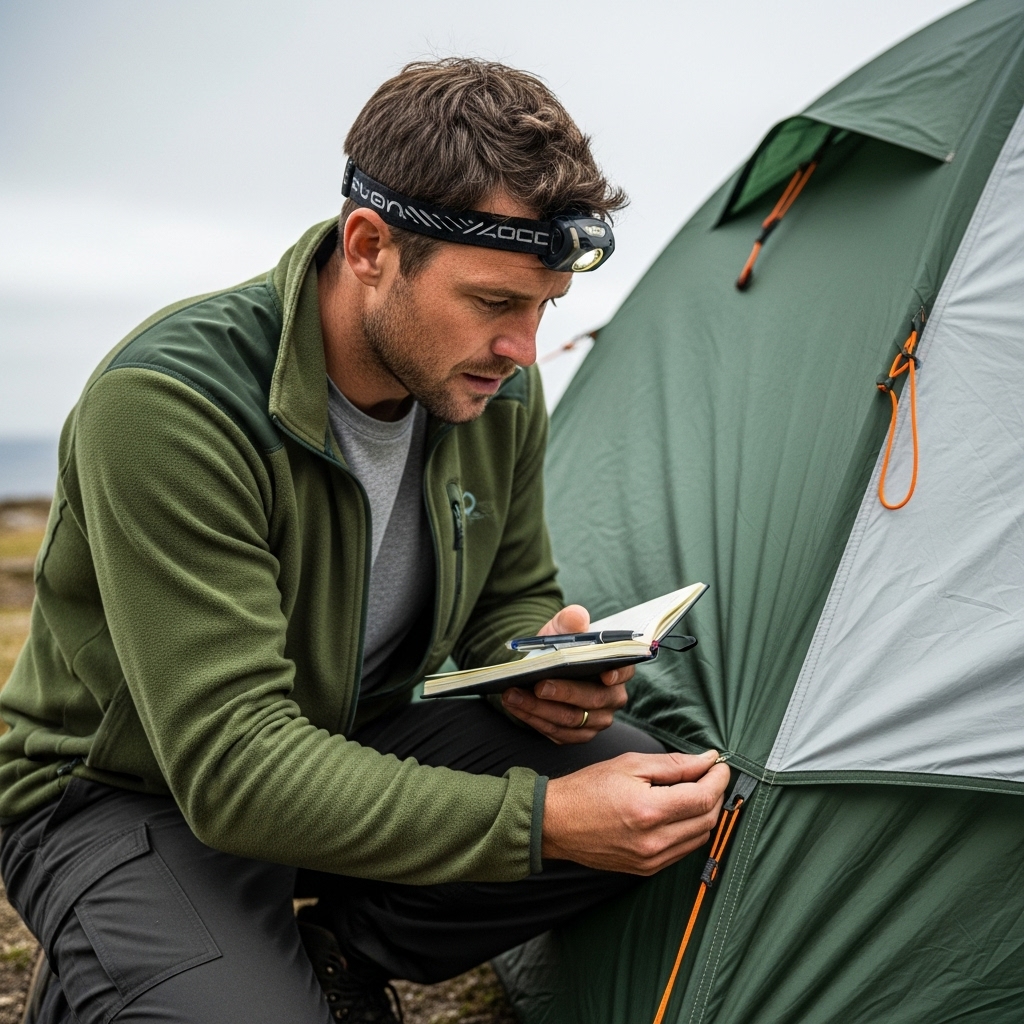

Pitching a reliable campsite shelter requires more than just sliding shock-corded poles through fabric sleeves and throwing on a rainfly. The fundamental anchor between your shelter and the earth is the humble peg, yet many campers struggle with determining how long should tent stakes be for secure anchoring. Using the wrong length can cause your guylines to slacken during an unexpected evening squall or pull out entirely from loose soil. A secure pitch keeps your shelter taut, prevents rain pooling, and protects the structural frame from catastrophic failure in strong winds.
Most stock stakes packaged with recreation shelters measure around seven inches, which works adequately for standard grass lawns and compacted park soil. However, setting up a heavy duty water resistant camping tent in sandy soil, loose gravel, or blustery open ridgelines demands substantially longer hardware. Lengthening your anchors to twelve or even sixteen inches increases underground surface area, boosting mechanical resistance against shifting ground. Selecting the right stake length balances packed gear weight against the holding power needed for your specific destination.
Pros
- Galvanized steel construction offers reliable rigidity and protection against rust in wet ground
- Substantial 10-inch length provides deeper ground penetration than standard wire pegs
- Includes four pre-measured 10-foot ropes ready for immediate guying out
- High-visibility orange stopper helps mark stake placement near high-traffic paths
Cons
- Individual and total pack weight are not specified, making pack-weight calculations difficult for backpackers
- Package includes only one visibility stopper for ten stakes, leaving the remaining nine unmarked
- Listing does not detail holding performance across specific soil conditions such as loose sand or solid rock
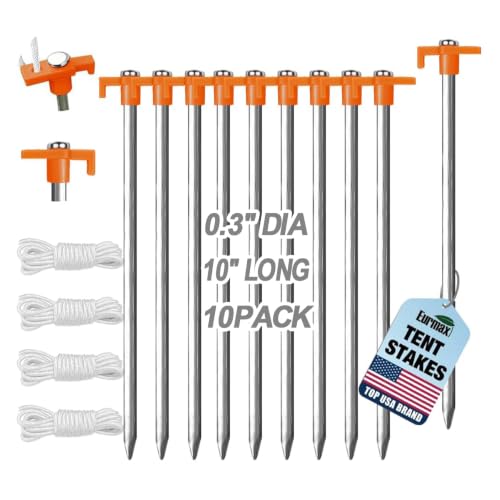
The Eurmax 10-Pack Secure Protection Galvanized Tent Stakes set is a specialized anchoring accessory designed for campers, canopy owners, and outdoor event setups. Built for securing camping tents, pop-up shelters, and gazebos, this kit targets campers who need more durable ground pegs than the thin wire stakes typically bundled with entry-level tents. With heavy-duty galvanized steel construction, it caters to car campers, backyard gazebo owners, and recreational shelter users seeking reliable tie-down support.
Each stake measures 10 inches in length, 2 inches in width, and 0.1 inches in thickness, providing a deep profile intended to anchor shelters against shifting winds. The listing highlights steel canopy anchors geared toward high winds, offering greater structural rigidity than lightweight aluminum or plastic pegs. Because of their length, these anchors penetrate deep into turf and packed dirt, helping prevent guyline slippage when guyed out properly.
Setup is straightforward thanks to the pre-cut lines and ready-to-drive design. The package provides ten commercial-grade ground pegs alongside four 10-foot ropes, eliminating the need to measure and cut auxiliary guylines at the campsite. Eurmax also includes a single high-visibility orange stopper designed to help campers spot stake placement and minimize foot-traffic tripping hazards around the perimeter of the shelter.
At 10 inches long, these steel stakes fit easily into standard gear totes, duffels, or car-camping bins. While the product listing mentions hiking along with camping and beach use, steel stakes are generally heavier than ultralight alternatives, making them most practical for drive-up campsites and vehicle transport. Routine care involves cleaning off damp soil after use and wiping the stakes dry before storage, maintaining the integrity of the galvanized rust-proof coating over multiple seasons.
Buyers should evaluate a few practical limitations and missing details. The manufacturer does not state the individual or total pack weight, which leaves backpackers uncertain about pack suitability. Additionally, while the listing includes an orange stopper for enhanced visibility, it provides only one stopper for ten stakes, meaning most anchor points will not have the bright marker. Soil compatibility is also not detailed, so shoppers pitching on rocky riverbeds or very loose beach sand may need specialized stakes suited for those surfaces.
For car campers, popup canopy owners, and family campers wanting to reinforce their shelter setup, this Eurmax 10-pack delivers practical durability and helpful accessories at an accessible price point. When evaluating ground anchors, campers should consider whether they have enough tie-down ropes for their shelter configuration and verify that 10-inch steel pegs match the soil conditions of their planned campsite.
The Eurmax anchoring set includes ten 10-inch galvanized steel stakes paired with four pre-cut 10-foot ropes. These steel pegs are engineered with a 2-inch wide hook design and 0.1-inch thickness to firmly hold guy lines under tension. The package also features an orange visibility stopper designed to reduce tripping hazards near tent corners and canopy legs.
Campers should note that securing a tent or gazebo depends heavily on proper stake angle and soil conditions. While these stakes offer rigid steel construction suitable for dirt and grass campgrounds, hardpacked gravel or loose beach sand may require specialized driving tools or sand-specific anchors.
These ground anchors are constructed from solid steel treated with a galvanized finish. This galvanized coating helps prevent rust and corrosion resulting from wet soil, morning dew, and rainfall, extending the service life of the hardware across varying weather conditions.
The rigid steel design resists bending and breaking under pressure when driven into standard campsite turf. To maintain the protective finish, users should clean away dirt and allow the stakes to dry before packing them into gear bags.
The package contains ten galvanized steel stakes, four 10-foot ropes, and one high-visibility orange stopper. The pre-cut ropes provide immediate tie-down capability for four canopy or tent guyout points without requiring additional cordage.
Because the set includes only one orange stopper across ten stakes, campers needing full-perimeter visibility markers may need to supply additional reflective tape or stoppers. A driving mallet and dedicated stake carry bag are not listed as included items.


Pros
- Noticeably lighter than standard iron stakes at approximately 0.07 pounds each
- High-visibility orange color makes stakes easy to spot in tall grass, dirt, and dim lighting
- Included storage bag keeps dirty or pointed stakes safely contained away from tent fabric
- Crafted from rust-resistant metal for extended outdoor service in damp conditions
- Generous 12-pack quantity provides enough anchors for a complete family tent or multiple tarps
Cons
- The product listing does not state the exact metal alloy or grade used in construction
- At 7.1 inches with a straight profile, these pegs may offer limited hold in loose sand or deep snow compared to specialized anchors
The AVOFOREST 12-pack of 7.1-inch metal tent stakes serves as an anchoring accessory for outdoor camping shelters. It is suited for campers, hikers, festival attendees, and canopy owners looking to replace lost or flimsy stock wire pegs with more visible and durable metal alternatives. Because these are standalone ground stakes, they function as a universal accessory rather than a complete shelter system.
In terms of practical dimensions and weight, each stake measures approximately 7.09 inches in length by roughly 0.39 inches square and weighs 0.07 pounds. The manufacturer emphasizes this low weight compared to heavier iron utility stakes, which often weigh around 0.3 pounds each. This compact profile allows a camper to carry all twelve stakes in a backpack or duffel without adding unnecessary bulk to their gear kit.
Constructed from rust-resistant metal, these pegs are designed to resist bending in typical outdoor ground conditions better than thin plastic or low-grade wire stakes. A key design element is the bright orange coating, which provides strong visual contrast against grass, dirt, and sand. This visibility helps campers avoid tripping over guyout points around camp and makes finding stakes during morning pack-down much easier.
Using these stakes involves driving the 7.1-inch shaft into the ground at an angle to anchor tent base loops, guyline cordage, or tarp corners. The set includes a dedicated storage bag, which keeps pointed tips and residual campsite dirt from puncturing tent fabrics or dirtying other gear in transit. For routine care, wiping away excess dirt and allowing the stakes to dry before packing them into the storage bag is good practice.
While the manufacturer highlights high-strength and anti-rust metal properties, the specific metal alloy (such as an aluminum or steel variant) is not detailed in the product data. Additionally, straight 7.1-inch stakes are best suited for medium-density campground soils. Campers pitching shelters in loose beach sand, powdery snow, or rocky riverbeds will likely require specialized wide snow/sand anchors or heavy-duty steel rock pins instead.
For campers, backpackers, and outdoor enthusiasts seeking an affordable, lightweight backup or upgrade set of high-visibility stakes, this 12-pack provides straightforward utility. Shoppers should assess the typical soil conditions of their planned destinations to verify whether standard 7.1-inch straight metal pegs will provide sufficient anchoring hold for their setup.
The AVOFOREST stake set includes twelve 7.1-inch metal pegs designed to anchor tent corners, vestibule pull-outs, rainfly guylines, tarps, and shade canopies.
With a profile measuring approximately 0.39 by 0.39 inches across and 7.09 inches in length, these stakes are built for standard penetration in common lawn, forest floor, and packed dirt campsite soils. The vibrant orange exterior coating provides clear contrast against soil and turf to aid in campsite safety.
Each package contains twelve individual 7.1-inch orange metal tent pegs.
The set also comes with a dedicated storage bag designed to keep the stakes organized in one place, preventing metal edges from rubbing against delicate shelter fabrics during transport.
Pros
- Forged S45C steel construction offers high resistance to bending compared to standard wire tent pegs
- Generous 12-inch length provides deep anchoring in loose soil, turf, or rocky campsites
- Broad top head offers an easy target for camp mallets and helps retain guylines
- Corrosion-resistant coating helps defend the metal against damp ground conditions
Cons
- Total set weight of over two pounds makes these pegs impractical for human-powered backpacking
- No storage pouch, pull loops, or stake removal tools are documented as included in the package
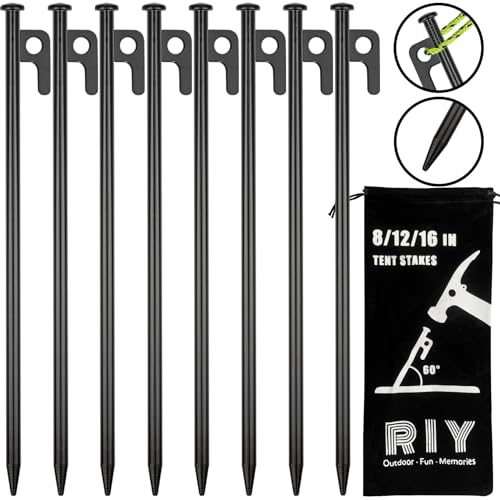
The RIY 12-Inch Heavy Duty Steel Tent Stakes are heavy-duty replacement anchoring accessories designed for campers who need dependable ground holding power. Unlike the thin aluminum or steel wire pegs bundled with many camping tents, these stakes are built specifically to tackle hard, compacted, or rocky ground. They are well-matched for car campers, family campers pitching large cabin or dome tents, and outdoor groups setting up tall shade canopies or screen houses where wind exposure demands firm anchoring.
In terms of practical dimensions, each peg measures 12 inches in length with a 0.31-inch shaft diameter, weighing 4.43 ounces (approximately 0.27 pounds). Across the full eight-pack, the combined weight exceeds two pounds. This substantial heft makes them an excellent addition to a car-camping trunk or gear bin, but it firmly rules them out for ultralight or long-distance backpacking where every ounce counts. The extended length allows the stakes to reach deep into stable soil layers beneath loose surface gravel, sand, or turf.
The structural design relies on forged S45C steel, a medium-carbon steel grade selected to avoid the bending and snapping often caused by aggressive hammering into rocky substrates. Each peg features a broad, flattened head that provides a clear striking target for a camp mallet or hammer, as well as a sharp lower point to help breach hard-packed dirt. A built-in lateral hook and hole near the head provide attachment points for tent guylines, stake loops, or canopy tie-downs.
For campsite care, the manufacturer notes that the steel pegs have corrosion resistance to withstand wet grass, snow, and damp earth. However, metal stakes driven into abrasive soils will experience finish wear over time. To ensure longevity, campers should wipe off residual mud and moisture before packing the stakes away in storage bins. Because the tips are relatively sharp, storing them inside a durable tool roll or heavy-duty bag will help protect tent fabrics and other gear from accidental punctures during transport.
There are a few trade-offs and missing elements to keep in mind. The package contains eight bare stakes, without an included storage pouch, stake extractor tool, or pre-attached pull cords. Pulling a 12-inch stake out of hard soil can require substantial leverage, so campers may want to attach cord loops to the upper eyelets to make removal easier at the end of a trip. Additionally, while the listing mentions suitability across rock, grass, desert sand, and snow, the manufacturer does not provide specific load-bearing limits or pullout force measurements, so holding power will always vary based on local soil density and guyline angle.
For campers planning trips to state parks, forest service campgrounds, or dispersed car-camping spots with unforgiving ground, the RIY 12-inch steel stakes serve as a sturdy, functional upgrade. They solve the common frustration of ruined, bent factory pegs when anchoring large group tents or dining shelters. As long as transport weight is not a limiting factor, this eight-piece set delivers reliable, no-nonsense utility for tough terrain.
These stakes are fabricated from forged S45C steel, a carbon steel formulation known for strength and resistance to mechanical deformation under high impact. The thick 0.31-inch shaft diameter prevents buckling when struck with standard camping mallets or framing hammers.
A protective black coating provides resistance against rust and corrosion from wet ground. The upper head is forged with a wide striking face, a downward-facing hook to catch tent loops, and a pass-through eyelet that can accommodate guylines or secondary pull loops.
The manufacturer identifies these 12-inch pegs as suitable for rocky ground, grasslands, desert environments, and snowfields. The extended length helps reach deeper, more stable ground layers beneath surface debris or loose sand.
Because these stakes are pointed and heavy, users should take care during handling and pack a solid mallet for installation. To ease take-down at the campsite, threading a durable paracord loop through the head eyelet allows for easier leverage during extraction.
Matching Tent Stake Length to Terrain and Shelter Demands
Determining the ideal peg length begins with understanding that holding power comes from ground friction and displacement rather than just peg thickness. In general, standard camping shelters require pegs between seven and eight inches for firm soil, while larger family tents and windy environments benefit from twelve-inch stakes. Extreme environments like sandy shores or loose snowfield camps require deep anchors measuring sixteen inches or more. Matching the peg length to your specific environment prevents the frustration of collapsed vestibules and bent hardware halfway through your trip.
Ground Holding Mechanics and Soil Displacement
Anchor security relies on the volume of compacted earth resting against the subterranean shaft of the stake. When a guyline pulls upward and outward during a wind gust, the stake must resist that lateral force without rotating or slicing through the topsoil. A shallow peg displaces very little soil, meaning moderate tension can easily dislodge it from the turf. Longer stakes penetrate past the loose, organic top layer of soil and engage with denser subterranean strata. This deeper penetration dramatically multiplies the surface contact area, creating the frictional resistance required to hold heavy loads.
Soil density changes dramatically as you drive deeper beneath the surface level of any campsite. The first few inches often consist of loose loam, decaying forest duff, or aerated grass roots that offer minimal resistance against tensile loads. Driving a stake down to eight, twelve, or sixteen inches anchors the tip into compacted clay, dense gravelly subsoil, or firm hardpan. That deeper contact prevents the pivot effect, which occurs when horizontal guyline pull levers the stake out of soft surface ground. Choosing adequate length ensures that mechanical resistance comes from undisturbed geological layers rather than fragile topsoil.
Standard Seven-Inch Pegs for Firm Ground and Backpacking
Most lightweight tents and entry-level shelters ship directly from manufacturers with pegs measuring approximately seven to eight inches. For instance, options like the AVOFOREST 7.1-inch metal stakes offer a practical balance between holding strength and minimal carry weight. These shorter pegs function exceptionally well in established state park campgrounds where previous campers have thoroughly compacted the dirt. The dense soil structure grips the shorter shaft firmly, providing adequate retention for low-profile three-season shelters.
Carrying shorter pegs provides significant benefits for hikers and minimalist campers who count every ounce in their packs. Lightweight 7.1-inch pegs often weigh a mere fraction of heavy steel alternatives, making a full set easy to transport on long trail days. However, shorter stakes struggle when pitched in loose sand, wet mud, or during sudden mountain windstorms. If the ground lacks natural compaction, seven-inch stakes can easily slice forward under tension, slackening the rainfly and exposing seams to incoming rain. They remain the standard benchmark for moderate summer weather, but require firm, predictable soil to stay anchored.
Twelve-Inch Steel Stakes for High Winds and Large Shelters
Stepping up to a twelve-inch peg provides a substantial increase in holding security for larger recreational camping structures. Heavy-duty options, such as the twelve-inch S45C forged steel stakes from RIY or HOLANHING, provide deep penetration that resists strong wind shear. Taller family shelters catch significantly more wind due to their upright wall designs and expansive rainfly panels. When gusts strike broad fabric walls, short stakes can yank loose instantly, making twelve inches the practical baseline for larger structures. Pitching a spacious outdoor camping tent requires substantial holding power to prevent the poles from warping under heavy gusts.
The additional depth on a twelve-inch stake provides access to lower, undisturbed soil layers that resist wind-driven levering. Even if rain saturates the top three inches of camp soil into slick mud, a twelve-inch stake remains anchored in the dry, stable earth underneath. This length is also the standard choice for securing free-standing shade canopies, dining flies, and screen rooms that lack low aerodynamic profiles. While twelve-inch forged steel stakes are heavier to transport than trail pegs, their reliability makes them a staple for drive-in campsites. They offer peace of mind when foul weather rolls in overnight.
Sixteen-Inch Deep-Drive Pegs for Unconsolidated Ground
When camping on ocean beaches, desert dunes, or winter snowfields, standard camping stakes become virtually useless. Loose sand and powdery snow lack the cohesive density needed to grip short metal shafts, requiring extreme length to find stability. Sixteen-inch heavy-duty stakes, such as the large forged S45C steel stakes produced by RIY, provide the extensive reach necessary for loose substrates. Driving a sixteen-inch spike deep into the earth compresses surrounding particles, creating friction along a substantial surface area.
These long anchors also serve as critical insurance when pitching large basecamp shelters in areas prone to seasonal squalls. If you pitch a large shelter or a dark room camping shelter on an exposed ridge, prolonged wind exposure creates continuous cyclic tugging on every guyline. Shorter stakes gradually wiggle loose under continuous cycling, whereas a sixteen-inch peg resists micro-movements due to its subterranean leverage. The primary downside to sixteen-inch stakes is their individual weight and the effort required to drive them completely flush. Despite the extra pack weight, car campers facing loose earth or high winds find this length indispensable.
Soil Types and Matching Depth Requirements
Evaluating the ground substrate before driving your hardware is essential for selecting the correct stake length. Rocky campgrounds with shallow bedrock require shorter, extremely durable stakes that can slip between subterranean stones without bending. Driving a long twelve-inch or sixteen-inch stake into gravelly hardpan or rocky alpine soil often proves impossible once the tip strikes a buried boulder. In these stony environments, a stout seven-inch to eight-inch forged steel nail penetrates effectively without leaving half the shaft exposed above the ground.
Conversely, sandy loams, pine needle duff, and coastal soils require the opposite approach. Soft loam offers little shear strength near the surface, allowing short pegs to pull out easily under modest tension. Campers heading toward beach dunes or damp meadow turf should pack ten-inch to sixteen-inch stakes to ensure the anchor reaches solid sub-strata. If you encounter variable terrain on extended road trips, keeping a mixed set of stake lengths in your gear bin ensures you are never caught unprepared. Adapting your anchor length to the local earth geology is the most reliable way to prevent nighttime shelter collapses.
Shelter Architecture, Peak Height, and Aerodynamic Loads
A tent’s physical shape directly influences the amount of force transmitted down the guylines to the ground stakes. Low-profile, wedge-shaped backpacking tents deflect wind efficiently across their sloped rainflies, placing minimal upward strain on corner anchor points. Because these aerodynamic shelters shed wind smoothly, standard seven-inch stakes typically provide more than enough retention. The low profile prevents wind from getting underneath the rainfly edge, minimizing the risk of sudden uplift forces.
In contrast, cabin-style family tents feature vertical sidewalls and elevated peak heights that act like massive fabric sails in moderate breezes. A sudden strong gust generates enormous dynamic loads against vertical walls, transferring substantial tensile force directly to corner pegs. Using short seven-inch stakes on a tall family shelter invites structural collapse during summer thunderstorms. Equipping tall shelters with twelve-inch or sixteen-inch forged steel pegs keeps the perimeter frame pinned securely to the earth. The taller the peak height and the steeper the walls, the longer your stakes need to be to counterbalance wind loads.
Material Rigidity, Shaft Diameter, and Bending Resistance
The length of a stake is intimately linked to its material composition and overall shaft diameter. When you increase the length of a metal peg to twelve or sixteen inches, the leverage exerted against the shaft increases exponentially. Flimsy aluminum wire or cheap extruded plastic will bend or snap instantly when driven deeply into rocky ground. Heavy-duty options utilize high-grade materials like S45C forged steel or galvanized carbon steel, as seen in commercial Eurmax ground pegs.
Shaft diameter also plays a critical structural role in preventing bending under heavy hammer strikes. Heavy-duty twelve-inch steel stakes frequently feature a shaft diameter around 0.31 to 0.35 inches, ensuring they withstand direct blows from camping mallets. Galvanized coatings protect steel shafts from rusting when left buried in moist, acidic dirt for days at a time. Lightweight aluminum stakes provide excellent stiffness at shorter lengths of seven inches, but steel remains best for longer profiles. Balancing material strength with overall length guarantees that your stakes penetrate tough dirt rather than crumpling on impact.
Driving Angles, Depth Placement, and Guyline Tension
Selecting the correct stake length only succeeds if you drive the hardware into the ground at the proper mechanical angle. A widespread mistake among beginner campers is driving stakes straight down at a ninety-degree perpendicular angle to the earth. Instead, stakes should always be driven at roughly a forty-five to sixty-degree angle tilted away from the tent body. This angled orientation forces the guyline to pull perpendicular to the buried shaft, maximizing friction against the surrounding earth.
Furthermore, stakes must be driven almost completely flush with the ground surface, leaving only the head and attachment hook exposed. Leaving several inches of a long stake exposed above ground creates unwanted leverage that helps wind pull the peg loose. If you drive a twelve-inch stake only six inches into rocky ground, the exposed portion acts as a crowbar against the soil. In situations where hard bedrock prevents full penetration, it is safer to switch to a shorter stake or weigh the guyline down with heavy rocks. Driving stakes flush ensures that tension pulls against the earth rather than bending the exposed steel.
Visibility Features and Nighttime Camp Safety
Longer, heavy-duty steel stakes present a serious tripping hazard around the perimeter of your campsite if left unmonitored. Because steel pegs feature large driving heads and robust metal hooks, catching a toe on one can cause painful injuries or rip tent webbing. Manufacturers address this hazard by integrating high-visibility safety coatings, such as bright orange paint on AVOFOREST and RIY models. Bright safety colors stand out sharply against green grass, dark forest loam, and pale sand during daytime camp activities.
Nighttime visibility requires additional design considerations, especially in busy family campsites where children run between tents. Several modern stake sets include luminous or fluorescent rubber rings placed directly beneath the striking head, such as those supplied with HOLANHING stakes. These rings absorb ambient sunlight during the day and emit a subtle glow in the dark, marking guyline perimeters clearly. Eurmax sets often include high-visibility stopper caps that cap the top of the stake while securing rope lines. Utilizing visible stakes keeps your perimeter safe and ensures you do not abandon valuable hardware in the turf when packing up camp.
Stake Extraction, Field Cleaning, and Storage Care
Extracting long twelve-inch and sixteen-inch steel stakes from compacted earth requires proper leverage to avoid damaging the hardware. Pulling upward on the tent webbing or guyline cord can snap fabric loops or fray expensive reflective ropes. Instead, use the integrated hook or hole on another stake, or utilize the claw of a camp hammer, to lever the peg out vertically. Twisting the stake slightly with a tool breaks the soil vacuum, allowing the long shaft to slide smoothly out of the ground.
Proper post-trip maintenance extends the functional lifespan of heavy-duty metal stakes and prevents gear bag deterioration. Wet soil contains moisture, biological matter, and minerals that accelerate corrosion if packed away damp inside a nylon tent sack. Wipe away clinging mud, dry the shafts thoroughly, and inspect the striking heads for any metal burrs or mushrooming caused by mallet strikes. Storing your clean stakes inside a heavy-duty 480D Oxford cloth pouch prevents sharp tips from puncturing your tent fabric or sleeping pads during transit. Taking care of your anchoring hardware ensures every camp pitch remains secure season after season.
Matching stake length to your shelter size and campsite conditions transforms pitching from an uncertain guessing game into a reliable routine. Keep standard seven-inch stakes handy for quick overnights and firm soil, but do not hesitate to deploy twelve or sixteen-inch steel anchors when weather forecasts predict gusty winds or loose terrain. Inspect your ground conditions carefully upon arrival, drive your hardware at proper angles, and maintain your equipment after every outing. A well-anchored tent guarantees that your shelter remains standing tall, providing a safe and restful outdoor retreat throughout your wilderness adventures.


Write Your Review
No reviews yet. Be the first to share your experience!