

Pitching a secure shelter starts from the ground up, yet many campers struggle with loose pegs, bent metal, or pulled lines after a sudden gust. Learning how to drive tent stakes properly ensures that your shelter remains taut and stable throughout the night regardless of shifting weather conditions. A poorly anchored corner can cause fabric to sag, which allows moisture to pool on the rainfly and compromises interior comfort. When pitching heavy-duty water-resistant camping tents in blustery conditions, dependable ground holding power is essential for maintaining structure and ventilation.
Different soil types demand specific staking approaches, ranging from standard mallets to specialized tools like cordless impact drivers for threaded pegs. Understanding proper angle, striking force, and soil resistance protects both your gear and your shelter investment from unnecessary damage. By mastering the fundamental physics of tension and peg alignment, campers can secure their shelters in hard dirt, rocky gravel, or loose grass with confidence. Taking time to drive each stake correctly prevents midnight adjustments and keeps guylines securely anchored throughout the trip.
Pros
- Galvanized steel construction offers reliable rigidity and protection against rust in wet ground
- Substantial 10-inch length provides deeper ground penetration than standard wire pegs
- Includes four pre-measured 10-foot ropes ready for immediate guying out
- High-visibility orange stopper helps mark stake placement near high-traffic paths
Cons
- Individual and total pack weight are not specified, making pack-weight calculations difficult for backpackers
- Package includes only one visibility stopper for ten stakes, leaving the remaining nine unmarked
- Listing does not detail holding performance across specific soil conditions such as loose sand or solid rock
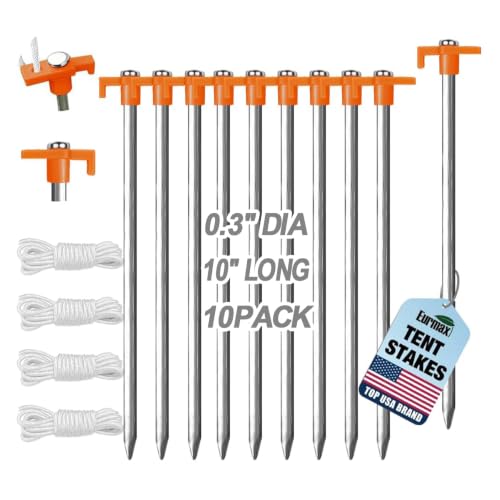
The Eurmax 10-Pack Secure Protection Galvanized Tent Stakes set is a specialized anchoring accessory designed for campers, canopy owners, and outdoor event setups. Built for securing camping tents, pop-up shelters, and gazebos, this kit targets campers who need more durable ground pegs than the thin wire stakes typically bundled with entry-level tents. With heavy-duty galvanized steel construction, it caters to car campers, backyard gazebo owners, and recreational shelter users seeking reliable tie-down support.
Each stake measures 10 inches in length, 2 inches in width, and 0.1 inches in thickness, providing a deep profile intended to anchor shelters against shifting winds. The listing highlights steel canopy anchors geared toward high winds, offering greater structural rigidity than lightweight aluminum or plastic pegs. Because of their length, these anchors penetrate deep into turf and packed dirt, helping prevent guyline slippage when guyed out properly.
Setup is straightforward thanks to the pre-cut lines and ready-to-drive design. The package provides ten commercial-grade ground pegs alongside four 10-foot ropes, eliminating the need to measure and cut auxiliary guylines at the campsite. Eurmax also includes a single high-visibility orange stopper designed to help campers spot stake placement and minimize foot-traffic tripping hazards around the perimeter of the shelter.
At 10 inches long, these steel stakes fit easily into standard gear totes, duffels, or car-camping bins. While the product listing mentions hiking along with camping and beach use, steel stakes are generally heavier than ultralight alternatives, making them most practical for drive-up campsites and vehicle transport. Routine care involves cleaning off damp soil after use and wiping the stakes dry before storage, maintaining the integrity of the galvanized rust-proof coating over multiple seasons.
Buyers should evaluate a few practical limitations and missing details. The manufacturer does not state the individual or total pack weight, which leaves backpackers uncertain about pack suitability. Additionally, while the listing includes an orange stopper for enhanced visibility, it provides only one stopper for ten stakes, meaning most anchor points will not have the bright marker. Soil compatibility is also not detailed, so shoppers pitching on rocky riverbeds or very loose beach sand may need specialized stakes suited for those surfaces.
For car campers, popup canopy owners, and family campers wanting to reinforce their shelter setup, this Eurmax 10-pack delivers practical durability and helpful accessories at an accessible price point. When evaluating ground anchors, campers should consider whether they have enough tie-down ropes for their shelter configuration and verify that 10-inch steel pegs match the soil conditions of their planned campsite.
The Eurmax anchoring set includes ten 10-inch galvanized steel stakes paired with four pre-cut 10-foot ropes. These steel pegs are engineered with a 2-inch wide hook design and 0.1-inch thickness to firmly hold guy lines under tension. The package also features an orange visibility stopper designed to reduce tripping hazards near tent corners and canopy legs.
Campers should note that securing a tent or gazebo depends heavily on proper stake angle and soil conditions. While these stakes offer rigid steel construction suitable for dirt and grass campgrounds, hardpacked gravel or loose beach sand may require specialized driving tools or sand-specific anchors.
These ground anchors are constructed from solid steel treated with a galvanized finish. This galvanized coating helps prevent rust and corrosion resulting from wet soil, morning dew, and rainfall, extending the service life of the hardware across varying weather conditions.
The rigid steel design resists bending and breaking under pressure when driven into standard campsite turf. To maintain the protective finish, users should clean away dirt and allow the stakes to dry before packing them into gear bags.
The package contains ten galvanized steel stakes, four 10-foot ropes, and one high-visibility orange stopper. The pre-cut ropes provide immediate tie-down capability for four canopy or tent guyout points without requiring additional cordage.
Because the set includes only one orange stopper across ten stakes, campers needing full-perimeter visibility markers may need to supply additional reflective tape or stoppers. A driving mallet and dedicated stake carry bag are not listed as included items.

Pros
- Galvanized carbon-steel construction resists bending under driving pressure and offers moisture resistance.
- Threaded shaft provides mechanical grip in challenging substrates like hard soil, gravel, and packed dirt.
- Includes a dedicated hex driver socket and organized storage case in the package.
- High-visibility orange accents make the stake heads easier to locate and avoid around the campsite.
Cons
- Requires carrying a separate cordless power tool or manual socket tool to drive the hex head efficiently.
- The 8-inch length and heavy carbon-steel build add noticeable weight compared to lightweight backpacking stakes, making them best suited for vehicle-supported camping.
- The listing specifications present an inconsistent thickness measurement, leaving the exact shaft diameter uncertain.
The x-vesolje 8-Inch Heavy Duty Screw-in Tent Stakes set is a specialized anchoring accessory designed to replace or upgrade standard ground pegs for camping tents, canopies, awnings, and rain tarps. Because these metal stakes feature a threaded shaft meant to be driven with a cordless drill or impact driver, they primarily suit car campers, RV travelers, and event setups where packing power tools is convenient. Campers dealing with hard-packed campground soil, gravelly tent pads, or frozen ground often struggle with standard hammer-in stakes bending, making drill-assisted hardware an appealing alternative.
Each stake measures 8 inches long, providing substantial depth for guylines on family cabin tents, dome tents, and pop-up shade shelters. The manufacturer highlights effectiveness across a wide range of surfaces, including grass, dirt, hard soil, gravel, sand, and snow. For large shelters exposed to wind, threaded metal spikes provide strong mechanical grip compared to smooth wire pegs. However, shoppers should keep in mind that while the stakes can grip loose or loose-packed terrain like sand or snow, conditions vary widely and proper guyline tension remains critical for shelter stability.
Pitching a tent with these stakes relies on mechanical leverage rather than swinging a camp mallet. The kit includes a matching hexagonal head socket that chucks directly into a standard power drill or impact driver. Threading the stakes into the earth reduces physical effort and minimizes the shock damage that often deforms conventional pegs when hammering into rocky substrate. The orange molded tops provide connection points for tent guylines and staking loops while increasing ground-level visibility to help campers avoid tripping.
Transporting 12 steel stakes is simplified by the included dedicated storage case, which prevents the threaded metal shafts from scratching other gear inside a vehicle trunk or camp tote. While the portable carrying case keeps all pieces organized alongside the hex driver bit, the carbon-steel construction means this kit carries substantial weight. This makes it an excellent choice for vehicle-based camping, car camping, and festival setups, but impractical for weight-conscious human-powered transport such as backpacking or bikepacking.
A practical limitation is the dependency on auxiliary equipment: campers must remember to pack a charged cordless drill or compatible manual driver to install and extract them easily. In addition, the manufacturer specifications contain a confusing thickness measurement of 0.039 inches alongside a 0.3-inch width figure, creating uncertainty about the exact shaft diameter. While the galvanized coating provides corrosion resistance against moisture and rain, prolonged damp storage should still be avoided to maintain hardware integrity over time.
For campers who regularly pitch large cabin tents, screen rooms, or awnings in tough ground conditions, the x-vesolje screw-in stake kit offers a reliable upgrade over basic bundled wire pegs. Buyers evaluating alternatives should consider whether their camping style allows carrying a cordless drill and whether an 8-inch threaded carbon-steel anchor matches their shelter size. For vehicle-supported campers seeking straightforward anchoring without bent stakes, this 12-pack provides a functional, organized kit.
The package contains 12 heavy-duty carbon-steel screw-in tent stakes designed with threaded shafts for mechanical anchoring.
A dedicated hexagonal head socket is included to allow compatibility with standard cordless drills or impact drivers.
The set also includes a compact storage case designed to keep the stakes and drive bit neatly contained during transport.
These ground anchors are constructed from heavy-duty carbon steel to withstand torsional stress and ground resistance without bending or breaking during installation.
The exterior features a galvanized surface coating engineered to resist rust and corrosion when exposed to outdoor moisture, wet soil, and rain.
Integrated high-visibility orange heads offer attachment points for shelter guylines while helping to minimize tripping hazards around the perimeter of your campsite.


Pros
- Galvanized steel construction resists bending and breaking during ground insertion
- Hot-dip galvanized coating protects against rust and outdoor moisture exposure
- High-visibility orange tops improve perimeter safety and help prevent campsite tripping
- Sharp pointed tip allows driving by hand, foot, or camping mallet into grass and dirt
- Convenient 10-pack quantity provides enough anchors for standard tents and tarps
Cons
- Listing does not provide product weight specifications, leaving total pack weight unclear for weight-sensitive packing
- Manufacturer notes they are not optimized for rocky ground without pre-softening the soil
- Seven-inch length may offer limited holding security in loose sand or deep snow compared to specialized anchors
The FEED GARDEN Heavy Duty Tent Stakes are a dedicated camping accessory pack designed to anchor outdoor shelters, tarps, and canopies. Sold in a 10-pack, these 7-inch ground pegs serve as a practical upgrade or replacement for the thin wire stakes often bundled with entry-level camping tents. They are well-suited for car campers, weekend campground visitors, and backyard canopy setups where reliable ground holding power is necessary to secure guy lines and tent corners against normal breezes.
Constructed from thick galvanized steel, these stakes feature a hot-dip galvanized finish engineered to resist rust and corrosion across wet ground and humid weather conditions. Each stake measures 7 inches long by 1.6 inches wide, with a 0.1-inch profile that tapers into a sharp pointed tip. This design allows campers to drive the pegs into grass, dirt, and packed earth using a standard camping hammer, the heel of a boot, or direct hand pressure when ground conditions allow.
A prominent functional element of these stakes is the molded, high-visibility orange head. In busy campsites, guy lines and ground anchors often create tripping hazards, particularly during dawn, dusk, or nighttime walks around the shelter. The bright orange tops make each peg easier to spot in turf or soil. The head design also creates an effective hook and anchor point for securing tent guy ropes, while offering sufficient surface area to grip and pull the stakes when striking camp.
While versatile for general camping, these stakes have specific terrain considerations noted by the manufacturer. They are designed primarily for turf, standard soil, and packed earth. If you encounter rocky or dense campsite surfaces, the manufacturer advises pre-softening the ground or choosing specialized longer or heavy-duty rock stakes to prevent damage. Furthermore, the listing does not state the exact weight per stake or the total bundle weight, so backpackers tracking base pack weight will need to weigh that missing specification against the durability of solid steel.
For car campers, festival attendees, and backyard organizers needing an affordable set of dependable replacement anchors, this 10-pack delivers practical utility. Ten stakes are typically enough to secure the four base corners and essential guy lines of a standard two- to four-person dome tent. If you pitch large family cabin tents, extensive tarps, or screen houses requiring extensive anchoring, verifying your total stake count before departure will ensure you have enough pegs for a secure pitch.
The FEED GARDEN tent stakes are manufactured from solid galvanized steel to resist bending under moderate mallet impact and lateral guy line tension. The steel core provides structural rigidity compared to lightweight aluminum wire stakes.
To protect against the elements, each stake features a hot-dip galvanized coating that shields the metal from rust and moisture damage during damp ground contact or prolonged rain exposure. The top of each stake is fitted with a durable, high-visibility orange cap designed for rope retention and pulling leverage.
These 7-inch stakes are engineered primarily for common campsite ground surfaces including manicured lawn grass, natural dirt, and moderately packed earth. The sharp point eases ground penetration whether driven by foot or a camping mallet.
Campers pitching in rocky or gravel-heavy pitches should take note of manufacturer guidance to soften the ground beforehand or switch to specialized stakes. The bright orange heads serve a dual role at camp by providing an obvious visual marker to reduce tripping accidents near tent perimeter lines.

Pros
- Noticeably lighter than standard iron stakes at approximately 0.07 pounds each
- High-visibility orange color makes stakes easy to spot in tall grass, dirt, and dim lighting
- Included storage bag keeps dirty or pointed stakes safely contained away from tent fabric
- Crafted from rust-resistant metal for extended outdoor service in damp conditions
- Generous 12-pack quantity provides enough anchors for a complete family tent or multiple tarps
Cons
- The product listing does not state the exact metal alloy or grade used in construction
- At 7.1 inches with a straight profile, these pegs may offer limited hold in loose sand or deep snow compared to specialized anchors
The AVOFOREST 12-pack of 7.1-inch metal tent stakes serves as an anchoring accessory for outdoor camping shelters. It is suited for campers, hikers, festival attendees, and canopy owners looking to replace lost or flimsy stock wire pegs with more visible and durable metal alternatives. Because these are standalone ground stakes, they function as a universal accessory rather than a complete shelter system.
In terms of practical dimensions and weight, each stake measures approximately 7.09 inches in length by roughly 0.39 inches square and weighs 0.07 pounds. The manufacturer emphasizes this low weight compared to heavier iron utility stakes, which often weigh around 0.3 pounds each. This compact profile allows a camper to carry all twelve stakes in a backpack or duffel without adding unnecessary bulk to their gear kit.
Constructed from rust-resistant metal, these pegs are designed to resist bending in typical outdoor ground conditions better than thin plastic or low-grade wire stakes. A key design element is the bright orange coating, which provides strong visual contrast against grass, dirt, and sand. This visibility helps campers avoid tripping over guyout points around camp and makes finding stakes during morning pack-down much easier.
Using these stakes involves driving the 7.1-inch shaft into the ground at an angle to anchor tent base loops, guyline cordage, or tarp corners. The set includes a dedicated storage bag, which keeps pointed tips and residual campsite dirt from puncturing tent fabrics or dirtying other gear in transit. For routine care, wiping away excess dirt and allowing the stakes to dry before packing them into the storage bag is good practice.
While the manufacturer highlights high-strength and anti-rust metal properties, the specific metal alloy (such as an aluminum or steel variant) is not detailed in the product data. Additionally, straight 7.1-inch stakes are best suited for medium-density campground soils. Campers pitching shelters in loose beach sand, powdery snow, or rocky riverbeds will likely require specialized wide snow/sand anchors or heavy-duty steel rock pins instead.
For campers, backpackers, and outdoor enthusiasts seeking an affordable, lightweight backup or upgrade set of high-visibility stakes, this 12-pack provides straightforward utility. Shoppers should assess the typical soil conditions of their planned destinations to verify whether standard 7.1-inch straight metal pegs will provide sufficient anchoring hold for their setup.
The AVOFOREST stake set includes twelve 7.1-inch metal pegs designed to anchor tent corners, vestibule pull-outs, rainfly guylines, tarps, and shade canopies.
With a profile measuring approximately 0.39 by 0.39 inches across and 7.09 inches in length, these stakes are built for standard penetration in common lawn, forest floor, and packed dirt campsite soils. The vibrant orange exterior coating provides clear contrast against soil and turf to aid in campsite safety.
Each package contains twelve individual 7.1-inch orange metal tent pegs.
The set also comes with a dedicated storage bag designed to keep the stakes organized in one place, preventing metal edges from rubbing against delicate shelter fabrics during transport.

Pros
- Generous 24-stake count covers large family tents, multiple canopies, and extra storm tie-outs
- Polypropylene plastic body completely eliminates corrosion and rust issues associated with metal pegs
- Bright yellow finish is easy to spot in tall grass, low light, and sandy surfaces
- Built-in hook holds guy ropes securely while the extraction hole simplifies campsite pack-down
Cons
- Plastic construction can bend or crack when driven into hard-packed clay, rocky substrate, or gravel
- Does not include an accessory carry bag or a driving mallet
The GDLPZM 24-piece plastic tent peg set is an essential camping accessory designed for securing tents, canopies, rainflies, and caravan awnings. Whether pitching a family cabin tent at an established state park or securing a shade canopy on a grassy lawn, having reliable ground stakes is critical for stability. This package is particularly suited for car campers, festival attendees, and casual outdoor enthusiasts who need a large supply of dependable, non-rusting replacement stakes without carrying heavy forged steel.
In terms of physical specifications, each stake measures approximately 9 inches (220 mm) in length and 0.87 inches (22 mm) in width. The entire 24-stake bundle weighs approximately 1.21 pounds, making it easy to store in a camp bin or pack into an existing tent bag. The 9-inch length provides substantial holding depth in softer substrates like garden soil, turf, and beach sand, which often require deeper purchase than standard thin wire pegs provide.
The design centers on functional campsite usability. Each peg features a molded spike tip intended to drive smoothly into workable soil. At the top end, an integrated hook anchors guyline loops and tent corner rings securely, while a molded through-hole allows you to loop a pull cord or hook a stake puller for fast removal. The vibrant yellow finish is a standout practical feature, giving campers high contrast against grass, dirt, and sand to help prevent tripping accidents around the shelter perimeter.
Pitching and care are straightforward with this set. To anchor your shelter effectively, drive each stake into the ground at an angle opposing the pull of the guyline, leaving the hook accessible for tensioning. Because the stakes are molded from polypropylene (PP) plastic, they will not rust, corrode, or degrade from soil moisture like untreated metal pegs. Cleaning simply requires wiping off dirt or rinsing with water before packing them away dry.
While practical for soft to moderate soil, these stakes have clear structural limits based on their plastic composition. Polypropylene can bend or burr if hammered directly against subterranean rocks, hard-packed gravel, or frozen dirt. Campers heading into rocky alpine terrain or compacted roadbeds should consider pairing these with heavy-duty steel or aluminum stakes. Additionally, the listing does not include a mallet or dedicated carrying sack, so you will need to supply your own storage pouch and campsite driving tool.
For campers seeking a generous set of visible, corrosion-free pegs for grass campgrounds, park picnics, beach shades, or seasonal yard decorations, the GDLPZM 24-piece set is a sensible and versatile choice. It delivers plenty of anchors to double up guylines on windy days, provided your campsite offers soil that plastic spikes can penetrate without excessive impact.
These GDLPZM tent pegs are manufactured from molded polypropylene (PP) plastic. This material is chosen for its lightweight profile, structural rigidity, and resistance to environmental moisture, ensuring that the pegs will not rust, pit, or foster mildew even when packed away damp after a rainy trip.
The physical structure incorporates a tapered spike profile that displaces soil as it enters the ground, coupled with an angular top head. The molded head includes both an outward hook for trapping cordage and a central aperture designed for stake-pulling tools or finger loops during campsite pack-down.
On established grass campgrounds, meadow pitches, and sandy shorelines, the 9-inch length of these plastic pegs offers broad surface area contact to resist tension from wind-buffeted canopies and tent rainflies. Their bright yellow color provides immediate visual awareness, helping children and fellow campers avoid tripping over guyline anchor points.
Campers should assess ground conditions before driving these pegs into the earth. While suitable for soft soil and turf, hard ground requires gentle tapping with a rubber mallet rather than heavy strikes with a steel framing hammer to avoid deforming the plastic head.
Complete Guide on Anchoring: Technique, Soil Types, and Equipment
Driving tent stakes into campsite soil requires more than brute force and a heavy mallet. The way an anchor engages the ground directly determines whether a tent stays rigid against sudden wind loads or collapses when fabric panels start to flap. Understanding the interplay between soil resistance, peg shape, and striking technique transforms a frustrating chore into a quick, repeatable step in your pitching routine. Every camper should know how to assess ground density, select an appropriate tool, and place stakes so that guylines maintain constant tension without pulling the anchor loose.
The Fundamental Geometry of Tent Anchors
The standard rule for driving tent stakes centers on creating counter-tension against the pulling force of the shelter. You should always angle the stake at roughly forty-five degrees sloping away from the tent body or guyline attachment point. This orientation forces tension exerted by wind to pull the stake deeper into the ground rather than levering it upward out of its hole. If a stake is driven straight down at a ninety-degree angle, lateral wind pressure acts as a pry bar, gradually widening the entry hole until the peg pulls free under moderate gusts.
Angling a stake inward toward the tent is another frequent pitching error that compromises shelter stability. When a peg leans toward the load, any tug from the guyline pulls directly along the path of insertion, which allows the stake to slide out with minimal resistance. Maintaining a firm forty-five-degree angle away from the tension line creates a mechanical wedge against the surrounding soil column. This backward slope ensures that the buried surface area of the peg pushes against undisturbed earth, creating maximum friction and holding capability throughout your stay.
Selecting and Driving Specific Stake Materials
Lightweight aluminum wire stakes, such as the Tent Pegs – 12Pcs Aluminium Tent Stakes Pegs, require careful alignment during installation. These six-millimeter hexagon rod spikes offer excellent portability for weight-conscious hikers, but their narrow diameter makes them susceptible to bending if struck off-center. When working with slender aluminum stakes, position the driving tool squarely against the top hook to distribute the impact evenly along the shaft. Avoid pounding with heavy steel sledges, which can easily crumple light alloy rods before they penetrate stubborn layers of turf.
Heavy-duty steel stakes provide substantial durability when encountering dense or rocky terrain. Options like the Eurmax USA 10-Pack Secure Protection Galvanized anchors and the FEED GARDEN Heavy Duty Tent Stakes 7 Inch feature hot-dip coatings designed to resist rust and moisture deterioration. Because these carbon and galvanized steel designs have rigid shafts and reinforced heads, they tolerate solid strikes from standard camp mallets without warping. The sharp pointed tip on these commercial-grade metal pegs helps pierce hard-packed earth, allowing campers to seat the shaft firmly without pre-drilling pilot holes.
Drill-in screw stakes represent a modern approach to anchoring that replaces swinging tools with mechanical torque. Fasteners like the 8″ Heavy Duty Screw in Tent Stakes 12 Pack Drill utilize threaded carbon steel shafts that bite directly into the soil when powered by a cordless impact driver or drill. The hexagonal head socket allows campers to sink eight-inch threaded anchors into dense ground within seconds, eliminating hand fatigue and noisy hammering at the campsite. These spiral threads deliver exceptional mechanical grip in wind-exposed locations where smooth pegs might gradually work loose from constant buffeting.
Molded plastic anchors, including the GDLPZM 24pcs 9 inches Plastic Tent Pegs Durable models, function exceptionally well in soft turf, loamy forest floors, and beach sand. Made from tough polypropylene, these wide-flange stakes will never corrode or mold even after extended burial in wet ground. Driving plastic pegs requires a soft-faced rubber mallet or controlled foot pressure rather than a metal hammer, which can fracture the polymer head. Their broad surface area provides superior friction against loose soil particles, creating a reliable hold where thin metal wire stakes would simply slice through the substrate.
Coated steel spikes like the 12 Pack Tent Stakes Heavy Duty Camping set balance robust strength with practical trail weight. Weighing only a fraction of traditional solid iron stakes, these 7.1-inch pegs feature a deep anchor profile that grips compressed dirt firmly. Their durable bright finish provides protection against damp ground moisture while simultaneously keeping the hardware visible against woodland foliage. Driving these spikes with rhythmic, centered blows ensures they penetrate deep into the substrate, locking tent corners securely against wind shifts.
Adjusting Installation to Different Campsite Soils
Hard-packed campsite soil, often found in heavily trafficked state parks and compacted gravel drive-in sites, presents significant driving resistance. Striking a peg forcefully into sunbaked clay or compacted gravel can mushroom the head or snap the shaft instantly. In these dense surfaces, tap the stake gently with controlled strikes to allow the tip to work its way between tightly packed pebbles. If a stake stops progressing after an inch or two, pull it out and inspect the point rather than pounding harder against an immovable subterranean obstacle.
Subterranean rocks require patience and a willingness to adjust your anchoring points by several inches. When your stake contacts a buried rock, continuing to hammer will bend even heavy-duty galvanized steel. Remove the peg, shift its entry location slightly forward or to the side, and test the new trajectory with light taps. In shallow, rocky ground, you can also adjust the angle slightly to slip the tip along the contours of underground stones, provided the top of the stake still points away from the tent corner.
Soft forest loam, damp sod, and open meadows present the opposite challenge: inadequate soil friction to hold smooth pegs. Large family shelters and spacious outdoor tents generate immense wind resistance, requiring anchors that hold firmly even in damp ground. In muddy or porous soil, drive longer stakes completely to ground level so that maximum surface area contacts the earth. If high winds threaten your camp in soft ground, you can double-stake each corner by driving a second peg behind the first at the same angle and connecting them with a short cord loop.
Sandy beaches and snowy environments require specialized anchoring techniques because standard driving methods rarely provide enough holding power. Smooth, narrow pegs pull out of loose sand immediately once moderate tension is applied to the shelter rainfly. In loose sand, use long plastic pegs with wide fins or bury your stakes horizontally as deadman anchors several inches beneath the surface. Covering a buried horizontal stake with compacted sand or wet snow creates a massive resistance block that holds firm against gusty coastal breezes.
Choosing Striking Tools and Perfecting Your Technique
Using the correct tool to drive tent stakes prevents ruined gear and protects your hands from accidental injury. A dedicated rubber camping mallet is the safest and most versatile tool for most campers, as the resilient head absorbs shock while delivering adequate downward momentum. Traditional steel framing hammers tend to strike metal pegs with excessive sharpness, often chipping protective galvanized coatings or denting aluminum hooks. If you must use a campsite stone in an emergency, select a smooth, flat rock and strike with gentle, guided taps rather than reckless swings.
Consistent, square contact between the tool face and the stake head is the secret to clean insertion. Deliver moderate taps from directly above the angled shaft, aligning the path of the blow with the long axis of the peg. Striking the head from the side bends the neck, making it impossible to drive the stake straight and ruining its structural integrity for future trips. Continue tapping until the head sits just above the soil surface, leaving only enough clearance to attach your guyline loop or tension cord securely.
Leaving several inches of the stake shaft sticking out of the ground is a common mistake that drastically reduces stability. An exposed shaft acts as a mechanical lever, allowing wind pressure to tilt the peg and loosen the surrounding soil column. Driving the stake until the collar or hook rests flush against the ground places the lateral load directly at the surface interface, minimizing leverage. Furthermore, fully driven stakes reduce tripping hazards around the perimeter of your campsite, protecting both campers and tent fabric from accidental tears.
Guyline Rigging and Counter-Tensioning Dynamics
Once a stake is driven to the proper depth, connecting and tensioning the guyline correctly ensures optimal wind resistance. The guyline cord should sit beneath the curved hook or through the eyelet at the very base of the exposed head, resting as close to the ground as possible. Keeping the cord low on the peg minimizes rotational torque and prevents the line from slipping off during sudden gusts. When pitching modern shelters, such as tents designed for easy setup, properly tensioned guylines are essential for stabilizing the internal pole structure against wind distortion.
Tension runners, plastic line sliders, and friction knots allow you to fine-tune the tautness of your rainfly without moving your stakes. Pull each line until the tent canopy is smooth and taut, but avoid overtightening to the point of distorting the tent seams or pulling pegs upward. Check the tension on all perimeter lines before nightfall, as damp evening air and nylon fabric stretch can cause lines to slacken. A quick adjustment of the slider restores drum-tight tension, preventing wind flap and keeping ventilation gaps open between the rainfly and tent canopy.
Visibility around your perimeter anchors is a crucial safety consideration for any campsite setup. Stakes equipped with vibrant orange heads or neon yellow plastic bodies stand out against dark soil, green grass, and fallen leaves. This high-contrast coloration helps campers navigate around guyline perimeters after dusk, preventing painful stubbed toes and damaged tent corners. If your stakes are plain silver metal, attaching short loops of reflective cord through the eyelets makes them immediately noticeable under the beam of a headlamp.
Extraction Techniques and Long-Term Peg Care
Pulling stakes out of hard ground at the end of a trip requires proper leverage to avoid bending the metal. Never yank directly on the tent fabric or guyline cord to extract a stubborn peg, as this can easily rip stitching or snap the rope. Instead, hook the claw of your mallet, another tent stake, or a dedicated puller cord under the peg head and pull straight back along the angle of insertion. If the stake resists, tap the head gently from several sides to break the soil seal before applying upward pressure.
Post-trip maintenance preserves the structural integrity and corrosion resistance of your anchoring hardware. Wipe away caked mud, wet sand, and organic debris with a dry rag before packing stakes into their storage pouch. Even galvanized and coated metal pegs can suffer surface discoloration or corrosion if stored damp inside a sealed tent bag for months. Inspecting stakes during cleanup allows you to identify bent shafts or damaged plastic hooks, ensuring your gear kit remains dependable and complete before your next outdoor adventure.
Essential Pitfall Prevention for Tent Anchoring
Stomping on stakes with the heavy heel of a hiking boot is an enticing shortcut that frequently leads to damaged equipment. Foot pressure provides very little directional control, often forcing the stake in at an awkward angle or twisting the head sideways. In firm ground, boot stomping places tremendous bending stress on the center of the shaft, easily ruining aluminum and lightweight steel pegs. Taking thirty seconds to locate a proper camp mallet or smooth flat stone produces better penetration and saves your hardware from destruction.
Ignoring prevailing wind patterns when driving your anchors can leave your tent vulnerable to sudden gusts. Always secure the upwind side of your shelter first, driving those stakes with extra care and maximum depth into undisturbed earth. The windward corners and guylines bear the brunt of incoming weather, transferring force straight to the buried anchors. By inspecting ground density, maintaining proper forty-five-degree angles, and seating stakes fully against the earth, you establish a solid foundation that keeps your campsite comfortable and secure in any weather.


Write Your Review
No reviews yet. Be the first to share your experience!