
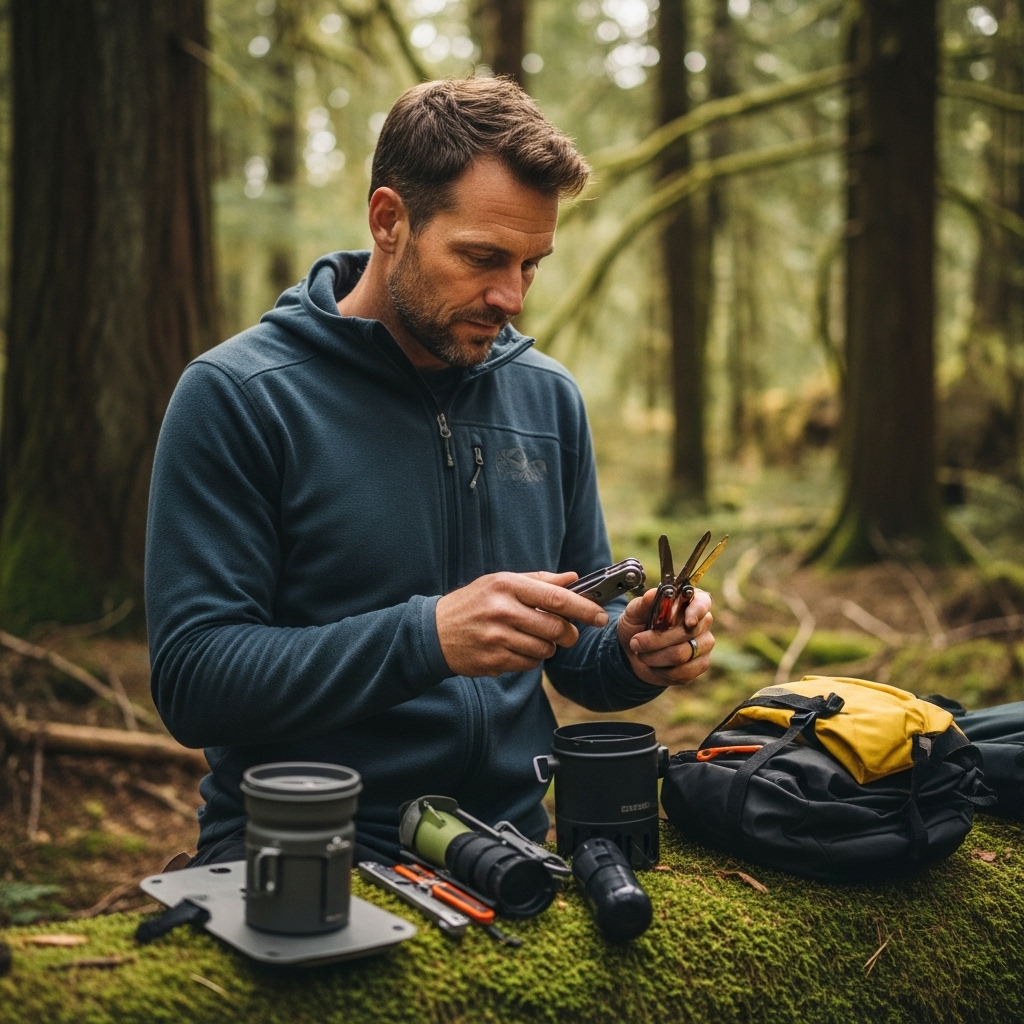

Pitching a shelter securely often comes down to the quality and placement of ground anchors, yet campers occasionally arrive at a campsite only to discover missing or bent pegs. Knowing how to make tent stakes in the field allows you to adapt quickly when gear fails or when unexpected ground conditions require custom peg sizes. Whether you carve simple wooden pegs from fallen deadwood or fashion temporary ground anchors from sturdy wire, basic campcraft skills keep your tent anchored safely against sudden breezes. Understanding the fundamentals of stake geometry, notch cutting, and soil resistance ensures your improvised anchors maintain reliable tension on every guyline.
Improvised stakes are especially helpful when anchoring larger family shelters or securing extra guyout points on weather-resistant camping tents during unpredictable weather. Factory kits often supply lightweight pegs that work in manicured park lawns but bend instantly in rocky dirt or slip loose in damp forest soil. Learning how to make tent stakes provides immediate insurance against lost equipment while deepening your understanding of ground holding power. By matching stake length, tip beveling, and notch depth to local soil conditions, you can stabilize your tent floor and rainfly without compromising fabric tension.
Pros
- Galvanized steel construction offers reliable rigidity and protection against rust in wet ground
- Substantial 10-inch length provides deeper ground penetration than standard wire pegs
- Includes four pre-measured 10-foot ropes ready for immediate guying out
- High-visibility orange stopper helps mark stake placement near high-traffic paths
Cons
- Individual and total pack weight are not specified, making pack-weight calculations difficult for backpackers
- Package includes only one visibility stopper for ten stakes, leaving the remaining nine unmarked
- Listing does not detail holding performance across specific soil conditions such as loose sand or solid rock
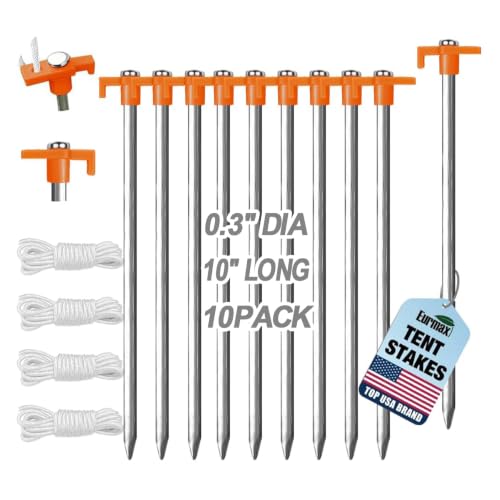
The Eurmax 10-Pack Secure Protection Galvanized Tent Stakes set is a specialized anchoring accessory designed for campers, canopy owners, and outdoor event setups. Built for securing camping tents, pop-up shelters, and gazebos, this kit targets campers who need more durable ground pegs than the thin wire stakes typically bundled with entry-level tents. With heavy-duty galvanized steel construction, it caters to car campers, backyard gazebo owners, and recreational shelter users seeking reliable tie-down support.
Each stake measures 10 inches in length, 2 inches in width, and 0.1 inches in thickness, providing a deep profile intended to anchor shelters against shifting winds. The listing highlights steel canopy anchors geared toward high winds, offering greater structural rigidity than lightweight aluminum or plastic pegs. Because of their length, these anchors penetrate deep into turf and packed dirt, helping prevent guyline slippage when guyed out properly.
Setup is straightforward thanks to the pre-cut lines and ready-to-drive design. The package provides ten commercial-grade ground pegs alongside four 10-foot ropes, eliminating the need to measure and cut auxiliary guylines at the campsite. Eurmax also includes a single high-visibility orange stopper designed to help campers spot stake placement and minimize foot-traffic tripping hazards around the perimeter of the shelter.
At 10 inches long, these steel stakes fit easily into standard gear totes, duffels, or car-camping bins. While the product listing mentions hiking along with camping and beach use, steel stakes are generally heavier than ultralight alternatives, making them most practical for drive-up campsites and vehicle transport. Routine care involves cleaning off damp soil after use and wiping the stakes dry before storage, maintaining the integrity of the galvanized rust-proof coating over multiple seasons.
Buyers should evaluate a few practical limitations and missing details. The manufacturer does not state the individual or total pack weight, which leaves backpackers uncertain about pack suitability. Additionally, while the listing includes an orange stopper for enhanced visibility, it provides only one stopper for ten stakes, meaning most anchor points will not have the bright marker. Soil compatibility is also not detailed, so shoppers pitching on rocky riverbeds or very loose beach sand may need specialized stakes suited for those surfaces.
For car campers, popup canopy owners, and family campers wanting to reinforce their shelter setup, this Eurmax 10-pack delivers practical durability and helpful accessories at an accessible price point. When evaluating ground anchors, campers should consider whether they have enough tie-down ropes for their shelter configuration and verify that 10-inch steel pegs match the soil conditions of their planned campsite.
The Eurmax anchoring set includes ten 10-inch galvanized steel stakes paired with four pre-cut 10-foot ropes. These steel pegs are engineered with a 2-inch wide hook design and 0.1-inch thickness to firmly hold guy lines under tension. The package also features an orange visibility stopper designed to reduce tripping hazards near tent corners and canopy legs.
Campers should note that securing a tent or gazebo depends heavily on proper stake angle and soil conditions. While these stakes offer rigid steel construction suitable for dirt and grass campgrounds, hardpacked gravel or loose beach sand may require specialized driving tools or sand-specific anchors.
These ground anchors are constructed from solid steel treated with a galvanized finish. This galvanized coating helps prevent rust and corrosion resulting from wet soil, morning dew, and rainfall, extending the service life of the hardware across varying weather conditions.
The rigid steel design resists bending and breaking under pressure when driven into standard campsite turf. To maintain the protective finish, users should clean away dirt and allow the stakes to dry before packing them into gear bags.
The package contains ten galvanized steel stakes, four 10-foot ropes, and one high-visibility orange stopper. The pre-cut ropes provide immediate tie-down capability for four canopy or tent guyout points without requiring additional cordage.
Because the set includes only one orange stopper across ten stakes, campers needing full-perimeter visibility markers may need to supply additional reflective tape or stoppers. A driving mallet and dedicated stake carry bag are not listed as included items.

Pros
- Galvanized steel construction resists bending and breaking during ground insertion
- Hot-dip galvanized coating protects against rust and outdoor moisture exposure
- High-visibility orange tops improve perimeter safety and help prevent campsite tripping
- Sharp pointed tip allows driving by hand, foot, or camping mallet into grass and dirt
- Convenient 10-pack quantity provides enough anchors for standard tents and tarps
Cons
- Listing does not provide product weight specifications, leaving total pack weight unclear for weight-sensitive packing
- Manufacturer notes they are not optimized for rocky ground without pre-softening the soil
- Seven-inch length may offer limited holding security in loose sand or deep snow compared to specialized anchors
The FEED GARDEN Heavy Duty Tent Stakes are a dedicated camping accessory pack designed to anchor outdoor shelters, tarps, and canopies. Sold in a 10-pack, these 7-inch ground pegs serve as a practical upgrade or replacement for the thin wire stakes often bundled with entry-level camping tents. They are well-suited for car campers, weekend campground visitors, and backyard canopy setups where reliable ground holding power is necessary to secure guy lines and tent corners against normal breezes.
Constructed from thick galvanized steel, these stakes feature a hot-dip galvanized finish engineered to resist rust and corrosion across wet ground and humid weather conditions. Each stake measures 7 inches long by 1.6 inches wide, with a 0.1-inch profile that tapers into a sharp pointed tip. This design allows campers to drive the pegs into grass, dirt, and packed earth using a standard camping hammer, the heel of a boot, or direct hand pressure when ground conditions allow.
A prominent functional element of these stakes is the molded, high-visibility orange head. In busy campsites, guy lines and ground anchors often create tripping hazards, particularly during dawn, dusk, or nighttime walks around the shelter. The bright orange tops make each peg easier to spot in turf or soil. The head design also creates an effective hook and anchor point for securing tent guy ropes, while offering sufficient surface area to grip and pull the stakes when striking camp.
While versatile for general camping, these stakes have specific terrain considerations noted by the manufacturer. They are designed primarily for turf, standard soil, and packed earth. If you encounter rocky or dense campsite surfaces, the manufacturer advises pre-softening the ground or choosing specialized longer or heavy-duty rock stakes to prevent damage. Furthermore, the listing does not state the exact weight per stake or the total bundle weight, so backpackers tracking base pack weight will need to weigh that missing specification against the durability of solid steel.
For car campers, festival attendees, and backyard organizers needing an affordable set of dependable replacement anchors, this 10-pack delivers practical utility. Ten stakes are typically enough to secure the four base corners and essential guy lines of a standard two- to four-person dome tent. If you pitch large family cabin tents, extensive tarps, or screen houses requiring extensive anchoring, verifying your total stake count before departure will ensure you have enough pegs for a secure pitch.
The FEED GARDEN tent stakes are manufactured from solid galvanized steel to resist bending under moderate mallet impact and lateral guy line tension. The steel core provides structural rigidity compared to lightweight aluminum wire stakes.
To protect against the elements, each stake features a hot-dip galvanized coating that shields the metal from rust and moisture damage during damp ground contact or prolonged rain exposure. The top of each stake is fitted with a durable, high-visibility orange cap designed for rope retention and pulling leverage.
These 7-inch stakes are engineered primarily for common campsite ground surfaces including manicured lawn grass, natural dirt, and moderately packed earth. The sharp point eases ground penetration whether driven by foot or a camping mallet.
Campers pitching in rocky or gravel-heavy pitches should take note of manufacturer guidance to soften the ground beforehand or switch to specialized stakes. The bright orange heads serve a dual role at camp by providing an obvious visual marker to reduce tripping accidents near tent perimeter lines.

Pros
- Supplies 20 stakes in a single pack, offering plenty of tie-down points for tents and guylines
- Rust-resistant metal finish withstands damp ground and wet campsite conditions
- Curved top hooks make it simple to extract pegs using a camp mallet hook or another stake
- Lightweight 0.76-pound total package weight adds negligible heft to your camp gear kit
Cons
- Specific metal alloy composition is not detailed in the manufacturer specifications
- Slender 4mm wire profile can bend if driven forcefully into rocky or heavily compacted ground
- Package does not include a dedicated stake pouch or storage organizer
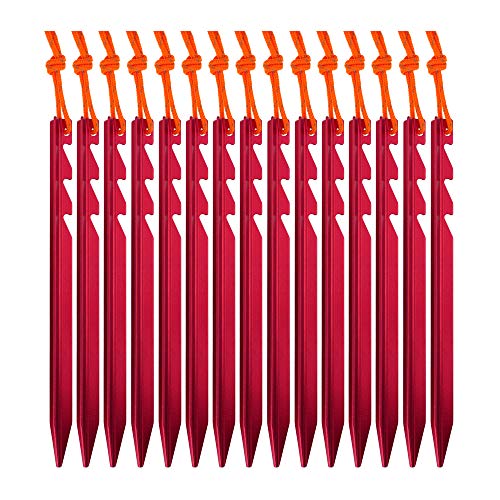
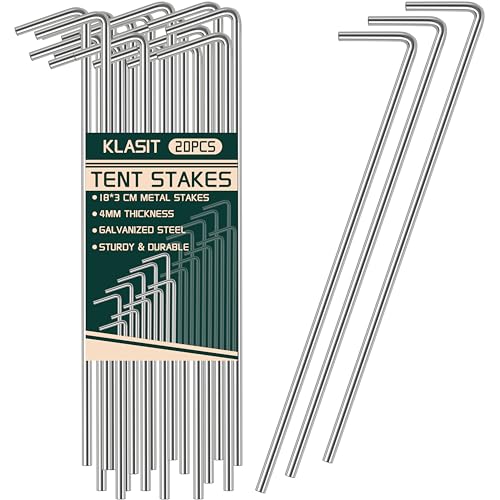
The KLASIT 7.1-Inch Metal Ground Stakes serve as replacement and supplementary anchoring accessories designed for outdoor camping shelters, canopies, and tarps. Supplied in a bundle of 20, these silver pegs suit casual car campers, festival goers, and backyard campers who need dependable replacements for lost factory stakes or require extra tie-down points for rainflies and vestibule guylines.
Each stake in the bundle measures 7.1 inches long, 1.18 inches wide across the hooked top, and features a 4mm (0.1-inch) shaft diameter. The entire 20-pack carries a listed weight of 0.76 pounds, making the set easy to drop into an existing tent duffel or camp storage bin without adding cumbersome bulk. While compact enough to transport easily to walk-in campsites or group picnic areas, campers carrying gear long distances on foot will want to consider whether standard wire pegs fit their target pack weight compared to specialized ultralight alternatives.
Pitching shelters with these stakes follows a straightforward process. The curved hook top holds guyline loops or shelter webbing grommets firmly in place while allowing campers to tap the stake into soil with a rubber mallet. When breaking camp, the hooked neck provides a practical purchase point to catch another stake or mallet notch underneath for levered extraction, reducing the effort needed to clear your pitch.
Although described as heavy-duty and rust-resistant, the manufacturer specifications do not identify the exact metal type or coating process used on the 4mm shaft. The 7.1-inch length provides solid anchoring in regular campsite turf and soft dirt. However, thin wire-style stakes face natural limitations in loose sand, deep snow, or excessively rocky soils, where driving them into hidden stones can bend narrow shafts or where loose ground cannot provide adequate holding friction.
For campers looking to replenish their gear kit with accessible, multi-use replacement stakes, the KLASIT 20-pack offers a practical bundle for securing tents, porch canopies, and temporary tarps. Shoppers planning trips to primitive campgrounds with compacted gravel or rocky ground may want to keep specialized ground anchors or heavy forged steel spikes on hand, while keeping this versatile set ready for standard campground turf.
The KLASIT stakes feature a classic 4mm wire profile with a curved hook top, designed to anchor shelter eyelets, corner webbing, and guyline loops securely to the ground. Measuring 7.1 inches in length, each stake is engineered to penetrate typical campsite loam and grassy soils to maintain tension on tent fabrics and rainfly ties.
Because the set contains 20 individual stakes, campers have sufficient anchors to secure a complete family tent setup, including multiple guylines and vestibule points, with extra pegs remaining as spares. While the rust-resistant metal build handles damp turf, pairing these stakes with proper mallet techniques rather than stepping on the hooks helps prevent bending the shafts in firmer ground.

Pros
- Noticeably lighter than standard iron stakes at approximately 0.07 pounds each
- High-visibility orange color makes stakes easy to spot in tall grass, dirt, and dim lighting
- Included storage bag keeps dirty or pointed stakes safely contained away from tent fabric
- Crafted from rust-resistant metal for extended outdoor service in damp conditions
- Generous 12-pack quantity provides enough anchors for a complete family tent or multiple tarps
Cons
- The product listing does not state the exact metal alloy or grade used in construction
- At 7.1 inches with a straight profile, these pegs may offer limited hold in loose sand or deep snow compared to specialized anchors
The AVOFOREST 12-pack of 7.1-inch metal tent stakes serves as an anchoring accessory for outdoor camping shelters. It is suited for campers, hikers, festival attendees, and canopy owners looking to replace lost or flimsy stock wire pegs with more visible and durable metal alternatives. Because these are standalone ground stakes, they function as a universal accessory rather than a complete shelter system.
In terms of practical dimensions and weight, each stake measures approximately 7.09 inches in length by roughly 0.39 inches square and weighs 0.07 pounds. The manufacturer emphasizes this low weight compared to heavier iron utility stakes, which often weigh around 0.3 pounds each. This compact profile allows a camper to carry all twelve stakes in a backpack or duffel without adding unnecessary bulk to their gear kit.
Constructed from rust-resistant metal, these pegs are designed to resist bending in typical outdoor ground conditions better than thin plastic or low-grade wire stakes. A key design element is the bright orange coating, which provides strong visual contrast against grass, dirt, and sand. This visibility helps campers avoid tripping over guyout points around camp and makes finding stakes during morning pack-down much easier.
Using these stakes involves driving the 7.1-inch shaft into the ground at an angle to anchor tent base loops, guyline cordage, or tarp corners. The set includes a dedicated storage bag, which keeps pointed tips and residual campsite dirt from puncturing tent fabrics or dirtying other gear in transit. For routine care, wiping away excess dirt and allowing the stakes to dry before packing them into the storage bag is good practice.
While the manufacturer highlights high-strength and anti-rust metal properties, the specific metal alloy (such as an aluminum or steel variant) is not detailed in the product data. Additionally, straight 7.1-inch stakes are best suited for medium-density campground soils. Campers pitching shelters in loose beach sand, powdery snow, or rocky riverbeds will likely require specialized wide snow/sand anchors or heavy-duty steel rock pins instead.
For campers, backpackers, and outdoor enthusiasts seeking an affordable, lightweight backup or upgrade set of high-visibility stakes, this 12-pack provides straightforward utility. Shoppers should assess the typical soil conditions of their planned destinations to verify whether standard 7.1-inch straight metal pegs will provide sufficient anchoring hold for their setup.
The AVOFOREST stake set includes twelve 7.1-inch metal pegs designed to anchor tent corners, vestibule pull-outs, rainfly guylines, tarps, and shade canopies.
With a profile measuring approximately 0.39 by 0.39 inches across and 7.09 inches in length, these stakes are built for standard penetration in common lawn, forest floor, and packed dirt campsite soils. The vibrant orange exterior coating provides clear contrast against soil and turf to aid in campsite safety.
Each package contains twelve individual 7.1-inch orange metal tent pegs.
The set also comes with a dedicated storage bag designed to keep the stakes organized in one place, preventing metal edges from rubbing against delicate shelter fabrics during transport.

Pros
- Generous 24-stake count covers large family tents, multiple canopies, and extra storm tie-outs
- Polypropylene plastic body completely eliminates corrosion and rust issues associated with metal pegs
- Bright yellow finish is easy to spot in tall grass, low light, and sandy surfaces
- Built-in hook holds guy ropes securely while the extraction hole simplifies campsite pack-down
Cons
- Plastic construction can bend or crack when driven into hard-packed clay, rocky substrate, or gravel
- Does not include an accessory carry bag or a driving mallet
The GDLPZM 24-piece plastic tent peg set is an essential camping accessory designed for securing tents, canopies, rainflies, and caravan awnings. Whether pitching a family cabin tent at an established state park or securing a shade canopy on a grassy lawn, having reliable ground stakes is critical for stability. This package is particularly suited for car campers, festival attendees, and casual outdoor enthusiasts who need a large supply of dependable, non-rusting replacement stakes without carrying heavy forged steel.
In terms of physical specifications, each stake measures approximately 9 inches (220 mm) in length and 0.87 inches (22 mm) in width. The entire 24-stake bundle weighs approximately 1.21 pounds, making it easy to store in a camp bin or pack into an existing tent bag. The 9-inch length provides substantial holding depth in softer substrates like garden soil, turf, and beach sand, which often require deeper purchase than standard thin wire pegs provide.
The design centers on functional campsite usability. Each peg features a molded spike tip intended to drive smoothly into workable soil. At the top end, an integrated hook anchors guyline loops and tent corner rings securely, while a molded through-hole allows you to loop a pull cord or hook a stake puller for fast removal. The vibrant yellow finish is a standout practical feature, giving campers high contrast against grass, dirt, and sand to help prevent tripping accidents around the shelter perimeter.
Pitching and care are straightforward with this set. To anchor your shelter effectively, drive each stake into the ground at an angle opposing the pull of the guyline, leaving the hook accessible for tensioning. Because the stakes are molded from polypropylene (PP) plastic, they will not rust, corrode, or degrade from soil moisture like untreated metal pegs. Cleaning simply requires wiping off dirt or rinsing with water before packing them away dry.
While practical for soft to moderate soil, these stakes have clear structural limits based on their plastic composition. Polypropylene can bend or burr if hammered directly against subterranean rocks, hard-packed gravel, or frozen dirt. Campers heading into rocky alpine terrain or compacted roadbeds should consider pairing these with heavy-duty steel or aluminum stakes. Additionally, the listing does not include a mallet or dedicated carrying sack, so you will need to supply your own storage pouch and campsite driving tool.
For campers seeking a generous set of visible, corrosion-free pegs for grass campgrounds, park picnics, beach shades, or seasonal yard decorations, the GDLPZM 24-piece set is a sensible and versatile choice. It delivers plenty of anchors to double up guylines on windy days, provided your campsite offers soil that plastic spikes can penetrate without excessive impact.
These GDLPZM tent pegs are manufactured from molded polypropylene (PP) plastic. This material is chosen for its lightweight profile, structural rigidity, and resistance to environmental moisture, ensuring that the pegs will not rust, pit, or foster mildew even when packed away damp after a rainy trip.
The physical structure incorporates a tapered spike profile that displaces soil as it enters the ground, coupled with an angular top head. The molded head includes both an outward hook for trapping cordage and a central aperture designed for stake-pulling tools or finger loops during campsite pack-down.
On established grass campgrounds, meadow pitches, and sandy shorelines, the 9-inch length of these plastic pegs offers broad surface area contact to resist tension from wind-buffeted canopies and tent rainflies. Their bright yellow color provides immediate visual awareness, helping children and fellow campers avoid tripping over guyline anchor points.
Campers should assess ground conditions before driving these pegs into the earth. While suitable for soft soil and turf, hard ground requires gentle tapping with a rubber mallet rather than heavy strikes with a steel framing hammer to avoid deforming the plastic head.
A Complete Guide on How to Make Tent Stakes in the Field and at Home
Ground anchoring is the foundation of any reliable tent pitch, determining whether a shelter stands firm or collapses during a windy night. Learning the exact process of how to make tent stakes gives outdoor travelers complete self-reliance when store-bought pegs bend, pull free, or get left behind on the workbench. Natural timber, workshop metal rods, and even improvised deadman systems all provide effective ways to pin guylines and corners to the earth. Mastering these craft methods ensures that your camp remains secure across varying soil types, from firm forest loam to loose shoreline gravel.
Ground Physics and Stake Holding Dynamics
A tent peg creates holding power through friction and soil displacement as tension pulls against the shaft. When wind hits a tent wall, that energy transfers directly down the guylines to the stake, creating both upward lift and lateral shear forces. Soft loam, compacted clay, and coarse gravel each resist these forces in distinctly different ways. Wider stakes distribute force across a broader surface area, whereas narrow stakes penetrate hard ground more readily but offer less resistance against lateral pull.
The surface texture of the stake material also dictates how securely the earth grips the shaft once it is driven into place. Rough-barked wooden branches generate substantial frictional resistance against surrounding dirt particles compared to smooth metal rods. Metal rods, however, displace less soil during entry, preserving the surrounding earth structure rather than shattering it into loose crumbs. Balancing shaft diameter against ground hardness prevents the peg from wallowing out a loose pocket when gusts shake the rainfly.
Selecting Natural Materials for Wooden Pegs
Carving reliable wooden pegs begins with finding the right source material on the forest floor. Dense hardwoods such as oak, maple, hickory, or ash provide remarkable shear strength and resist splitting under mallet blows. Softwoods like pine or spruce can work in an emergency, but their grain tends to crush easily and snaps under moderate wind loads. Always look for dead, standing branches or freshly fallen limbs that show no signs of rot, insect boring, or sponge-like moisture decay.
Responsible campcraft also requires strict adherence to Leave No Trace ethics when gathering timber for field-made gear. Never chop living branches or strip bark from living trees, as wounds invite disease and damage the local ecosystem. Look for straight wood pieces between one and one and a half inches in diameter among nearby deadfall. Cutting lengths between eight and twelve inches generally provides sufficient depth to reach consolidated earth below loose topsoil.
Carving Technique for Field-Made Wooden Pegs
Carving a functional stake requires only a dependable fixed-blade camp knife or folding pocket tool. Begin by cutting your selected branch to length using a small camp saw or by making a controlled notch around the circumference and snapping the wood cleanly. Clear away any side twigs and rough bark along the middle section to create a clean, uniform cylinder. The top striking surface needs a small chamfer around its outer edge to prevent split lines from peeling the wood fibers downward under mallet strikes.
Shaping the ground tip requires a blunt four-sided wedge rather than a pencil-sharp point. Extremely needle-like points break off against the first hidden rock they encounter in the ground, leaving a blunt, jagged stump. Carve four symmetrical facets leading to a sturdy, pencil-eraser-sized tip that can nudge past pebbles. This four-sided pyramidal profile drives straight down without twisting and holds firm once embedded in compacted dirt.
Designing Secure Guyline Notches and Lash Points
A smooth wooden peg cannot hold a guyline securely on its own, because upward tension will naturally pull the cord right over the top. A carved notch provides a solid mechanical catch that locks cordage in place, even during heavy nighttime squalls. Position your notch approximately one and a half to two inches below the chamfered top head. Placing the notch too close to the top risks breaking off the crown, while placing it too low buries the cord in mud.
The most effective design for wooden pegs is a simple downward-angled 7-notch or V-notch. Make an initial horizontal stop cut straight into the shaft, penetrating roughly one-third of the wood thickness. Next, carve an angled relief cut starting about an inch below the stop cut, slicing upward into the initial incision. Avoid cutting a ring notch all the way around the circumference, as girdling the shaft creates an intentional fracture line right where mechanical bending stress peaks.
Fabricating Metal Tent Stakes from Workshop Rods
Campers who prefer building their own gear at home can easily craft durable steel stakes using simple hardware supplies. Steel concrete reinforcing rod, known as rebar, and galvanized steel round stock make outstanding ground anchors for tough dirt. Three-eighths-inch diameter rod delivers immense bending resistance that shrugs off buried limestone and tree roots. Cutting these rods into ten-inch lengths gives you reliable pegs for extended stays or windy basecamp setups.
Grind a tapered point onto one end of the steel rod to help it penetrate rocky ground without skidding. On the opposite end, bend the top two inches into a sharp hook using a vise and heavy mallet, or weld a steel washer just below the head to trap cordage. Spraying the tops with high-visibility orange enamel makes them easy to spot after dusk, preventing painful tripping incidents. These rugged metal pegs are ideal for anchoring large spacious outdoor tents for family trips, where heavy canopy loads demand substantial holding power.
Building Improvised Deadman Anchors for Sand and Loose Soil
Standard vertical pegs perform poorly in loose sand, dry snow, and unconsolidated pea gravel because the ground simply shifts aside under tension. When conventional driving techniques fail, constructing a buried deadman anchor provides immense holding power by utilizing the weight of the soil itself. A deadman relies on a broad horizontal object buried deeply beneath the surface rather than a vertical pin. The packed earth above the buried object acts as an anchor weight, preventing the guyline from pulling loose.
Creating a natural deadman requires a sturdy log or flat stone roughly twelve to eighteen inches long. Tie your tent guyline securely around the center of the log using a clove hitch or round turn with two half-hitches. Dig a trench at least eight to twelve inches deep, perpendicular to the angle of tension coming from the shelter. Place the log horizontally in the trench, running the cord through a narrow exit slot pointed toward the tent, and pack the displaced dirt firmly with your boots.
Proper Driving Angles and Tensioning Techniques
Driving a stake into the ground requires proper geometry to maximize its resistance against pulling forces. Never drive a tent stake vertically into the ground or tilted toward the tent. The correct angle is roughly sixty degrees relative to the ground surface, leaning the head directly away from the tent body. This slanted orientation turns guyline tension into a downward pulling force that drives the peg deeper into the earth rather than wrenching it outward.
Drive wooden pegs into the ground using a thick branch as an improvised wooden baton rather than a steel hammer. Steel tools quickly crush the crown fibers of carved wood, splitting the stake down its center before it reaches full depth. Drive the stake until only an inch or two remains above the surface, leaving just enough room to expose the carved guyline notch. Securing corners properly is critical when setting up quick-pitch camping tents, where base pinning defines the tension of the entire shelter frame.
Comparing Field-Crafted Stakes to Commercial Metal and Plastic Pegs
While carving wooden stakes in the woods is an invaluable campcraft skill, comparing them to manufactured options helps clarify when each style is most practical. Commercial galvanized steel pegs, such as Eurmax or FEED GARDEN ground anchors, provide unmatched strength in rocky or frozen terrain where carved wood would splinter. Heavy steel pegs drive directly through tough roots and compacted gravel without bending. Their substantial weight makes them best suited for car camping, where pack weight is not a primary concern.
Ultralight aluminum pegs, such as AnyGear 7075 alloy stakes, utilize engineered Y-beam profiles that offer high surface area with negligible pack weight. These three-sided designs provide fantastic holding power in typical forest dirt while resisting bending far better than simple round wire pins. Backpackers rely heavily on these lightweight metal designs because carrying a full set of steel anchors is impractical on long trail days. Wooden pegs, however, require zero carry weight since you craft them from found timber right at your campsite.
Molded plastic stakes, such as GDLPZM wide-blade pegs, excel in soft turf, beach sand, and muddy riverbanks where narrow metal pins pull out easily. The broad plastic fins grab loose earth effectively and resist corrosion completely, though they turn brittle in sub-zero winter temperatures. Field-carved wooden pegs share many advantages with wide plastic stakes, offering broad surface area without synthetic waste. Knowing how to produce your own stakes ensures you always have the right anchor profile, regardless of what gear is in your pack.
Field Maintenance, Safety Precautions, and Pack-Out Ethics
Maintaining your tent anchors throughout a camping trip prevents unexpected middle-of-the-night shelter collapses. Check every peg after prolonged rainstorms, as water-soaked soil softens and loses its frictional grip on both wood and metal shafts. If a stake loosens, drive it into fresh, undisturbed earth a few inches away rather than reusing the widened hole. Placing a heavy, flat rock over the head of an angled peg adds immediate downward pressure to reinforce questionable holding ground.
Campers using natural wooden stakes should deconstruct their anchors responsibly before hiking out. Untie all synthetic cordage from carved pegs and deadman systems so no plastic strands remain in the wilderness. Disperse carved wooden pegs into the surrounding underbrush where they can decompose naturally without cluttering the campsite fire ring. Leaving a clean campsite ensures that the natural environment remains pristine for the next travelers who pitch their tents beneath the trees.
Mastering the art of crafting tent stakes turns an unexpected gear mishap into a routine campcraft exercise. Whether you whittle notched wooden pegs from fallen hardwood or prepare heavy steel anchors in your home workshop, understanding soil resistance and proper driving angles keeps your shelter secure. Take time to inspect your camping gear before each journey, practice carving a peg or two during fair weather, and pitch your tent with confidence knowing you can anchor it in any terrain.


Write Your Review
No reviews yet. Be the first to share your experience!