
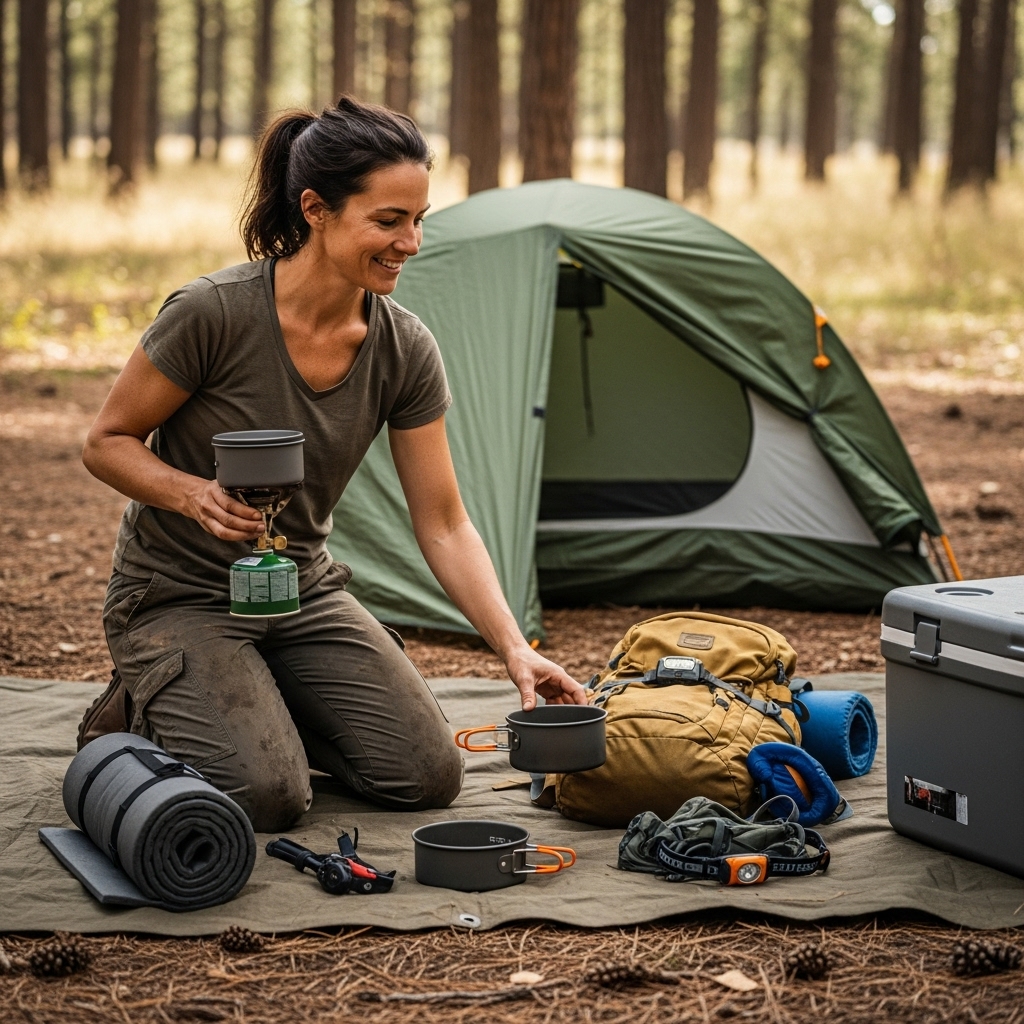

Pitching a shelter on packed dirt, gravel, or sun-baked clay can quickly turn a relaxing wilderness trip into a frustrating test of patience. Standard aluminum hook pegs often bend instantly when they strike underlying shale or dense caliche, leaving your shelter vulnerable to unexpected gusts. Discovering reliable techniques for how to put tent stakes in hard ground ensures your shelter remains anchored firmly without ruining your gear. Solid anchoring protects the tent structure and maintains fly tension during unpredictable mountain storms.
Campers dealing with unforgiving desert terrain or established, heavily compacted campsites need dedicated anchor strategies rather than brute force. Pairing durable steel hardware with proper driving angles keeps your guylines taut and prevents structural sagging. Whether you pitch lightweight setups or larger heavy duty water resistant camping setups, choosing the correct method saves time and energy. Understanding ground conditions before swinging a mallet transforms campsite setup from a struggle into an effortless task.
Pros
- Drill-in threaded design speeds up pitching shelters compared to driving pegs with a mallet.
- Galvanized carbon steel build resists bending in compacted dirt and resists moisture rust.
- Luminous heads aid campsite safety by marking anchor points after dark.
- Comes equipped with 12 stakes, a hex drive bit, and a dedicated zippered storage bag.
Cons
- Total kit packed weight is not specified, making weight evaluation difficult for carried loads.
- Requires bringing an external cordless drill or driver to utilize the hex drive functionality.
- No manual turning handle or crossbar is documented for times when power tools are unavailable.
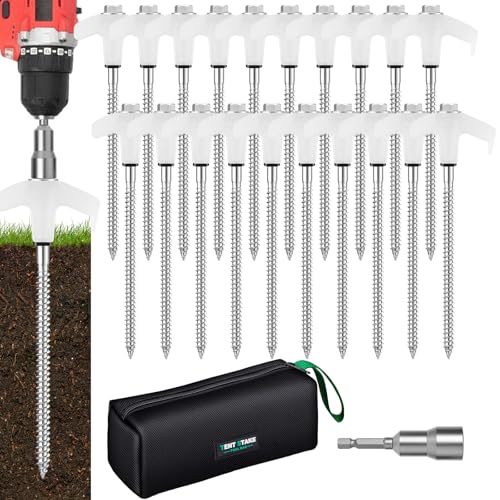
The CHANGX3KB 12-Pack 8-Inch Screw-In Tent Stakes is a specialized shelter anchoring accessory engineered to replace standard smooth tent pegs for camping tents, rainfly guy lines, sun canopies, and gazebos. Packaged with a matching hex head driver bit and a zippered carry pouch, this kit is primarily aimed at car campers, festival attendees, and backyard shelter users looking for dependable ground holding power without the physical strain of hammering stakes into stubborn ground.
Each anchor measures 8 inches in length with a 0.31-inch diameter, using deep threads along the lower shaft to grip grass, compacted soil, and gravel. The 12-stake quantity is practical for anchoring a standard family dome tent with multiple guy lines or a four-corner canopy with auxiliary perimeter lines. Because the manufacturer does not document the overall kit weight, backpackers should consider that heavy-duty carbon steel anchors generally add noticeable pack weight compared to lightweight aluminum stakes, making this kit best suited for vehicle-supported trips.
Setup involves inserting the included hex socket bit into a personal cordless drill or impact driver and driving each stake directly into the ground at the desired angle. This screw-in method allows quick installation into hard-packed campground soil where smooth wire pegs might bend. The top of each stake features a luminous, glow-in-the-dark head designed to remain visible in dim light, helping campers identify guy-out lines and anchor points after sundown to avoid tripping around the campsite.
For transport and long-term care, the included storage bag isolates the threaded metal shafts from the rest of your camping gear, preventing sharp threads from abrading tent fabrics or vehicle upholstery. Routine maintenance requires wiping away excess soil and drying the stakes before packing them away. The galvanized finish provides rust resistance against ground moisture, but keeping the metal clean and dry helps preserve the coating over extended outdoor use.
A practical limitation of this set is its reliance on a power tool for optimal use. The listing documents no manual hand handle or T-wrench, meaning you must provide your own cordless drill or driver to achieve the promised fast setup. If tool batteries deplete at an unpowered campsite, manually turning the hex heads could prove difficult without an appropriate hand socket wrench. In addition, the exact glow duration of the luminous tops is not specified in the manufacturer details.
For car campers, canopy owners, and outdoor event planners who pitch shelters on compacted dirt, rocky turf, or standard campground pads, the CHANGX3KB screw-in stake kit is a useful upgrade over basic wire stakes. Campers who already pack cordless tools in their vehicle will appreciate the combination of threaded holding stability, night visibility, and organized storage.
Installation is designed around a cordless drill or impact driver using the included hex head socket bit. Instead of pounding stakes into hard earth with a mallet, the threaded shafts rotate into turf, packed dirt, or gravel in seconds, establishing solid hold with minimal physical effort.
Take-down is equally straightforward by switching the drill into reverse to back the stakes out of the ground. Because the screw-in action pulls the stakes cleanly out of compacted soil, it reduces the risk of bending shafts or damaging guy-line loops during campsite breakdown.
Manufactured from carbon steel with a galvanized surface treatment, these 8-inch stakes feature a 0.31-inch diameter designed to resist bending under line tension. The threaded profile grips the ground along the shaft, helping to hold tent guy lines securely against moderate wind loads.
The top of each anchor includes a luminous fitting designed to glow in low-light conditions. This provides campers with a clear visual marker around tent corners and guy lines, reducing accidental trips and line snags during nighttime movement around camp.
The package includes 12 threaded 8-inch carbon steel stakes, 1 hex socket driver bit that fits standard drill chucks, and a durable fabric storage bag to keep all pieces organized in your vehicle or gear bin.
A cordless drill, impact driver, guy ropes, and manual turning handles are not included in the kit and must be supplied separately by the user.

Pros
- Galvanized carbon-steel construction resists bending under driving pressure and offers moisture resistance.
- Threaded shaft provides mechanical grip in challenging substrates like hard soil, gravel, and packed dirt.
- Includes a dedicated hex driver socket and organized storage case in the package.
- High-visibility orange accents make the stake heads easier to locate and avoid around the campsite.
Cons
- Requires carrying a separate cordless power tool or manual socket tool to drive the hex head efficiently.
- The 8-inch length and heavy carbon-steel build add noticeable weight compared to lightweight backpacking stakes, making them best suited for vehicle-supported camping.
- The listing specifications present an inconsistent thickness measurement, leaving the exact shaft diameter uncertain.
The x-vesolje 8-Inch Heavy Duty Screw-in Tent Stakes set is a specialized anchoring accessory designed to replace or upgrade standard ground pegs for camping tents, canopies, awnings, and rain tarps. Because these metal stakes feature a threaded shaft meant to be driven with a cordless drill or impact driver, they primarily suit car campers, RV travelers, and event setups where packing power tools is convenient. Campers dealing with hard-packed campground soil, gravelly tent pads, or frozen ground often struggle with standard hammer-in stakes bending, making drill-assisted hardware an appealing alternative.
Each stake measures 8 inches long, providing substantial depth for guylines on family cabin tents, dome tents, and pop-up shade shelters. The manufacturer highlights effectiveness across a wide range of surfaces, including grass, dirt, hard soil, gravel, sand, and snow. For large shelters exposed to wind, threaded metal spikes provide strong mechanical grip compared to smooth wire pegs. However, shoppers should keep in mind that while the stakes can grip loose or loose-packed terrain like sand or snow, conditions vary widely and proper guyline tension remains critical for shelter stability.
Pitching a tent with these stakes relies on mechanical leverage rather than swinging a camp mallet. The kit includes a matching hexagonal head socket that chucks directly into a standard power drill or impact driver. Threading the stakes into the earth reduces physical effort and minimizes the shock damage that often deforms conventional pegs when hammering into rocky substrate. The orange molded tops provide connection points for tent guylines and staking loops while increasing ground-level visibility to help campers avoid tripping.
Transporting 12 steel stakes is simplified by the included dedicated storage case, which prevents the threaded metal shafts from scratching other gear inside a vehicle trunk or camp tote. While the portable carrying case keeps all pieces organized alongside the hex driver bit, the carbon-steel construction means this kit carries substantial weight. This makes it an excellent choice for vehicle-based camping, car camping, and festival setups, but impractical for weight-conscious human-powered transport such as backpacking or bikepacking.
A practical limitation is the dependency on auxiliary equipment: campers must remember to pack a charged cordless drill or compatible manual driver to install and extract them easily. In addition, the manufacturer specifications contain a confusing thickness measurement of 0.039 inches alongside a 0.3-inch width figure, creating uncertainty about the exact shaft diameter. While the galvanized coating provides corrosion resistance against moisture and rain, prolonged damp storage should still be avoided to maintain hardware integrity over time.
For campers who regularly pitch large cabin tents, screen rooms, or awnings in tough ground conditions, the x-vesolje screw-in stake kit offers a reliable upgrade over basic bundled wire pegs. Buyers evaluating alternatives should consider whether their camping style allows carrying a cordless drill and whether an 8-inch threaded carbon-steel anchor matches their shelter size. For vehicle-supported campers seeking straightforward anchoring without bent stakes, this 12-pack provides a functional, organized kit.
The package contains 12 heavy-duty carbon-steel screw-in tent stakes designed with threaded shafts for mechanical anchoring.
A dedicated hexagonal head socket is included to allow compatibility with standard cordless drills or impact drivers.
The set also includes a compact storage case designed to keep the stakes and drive bit neatly contained during transport.
These ground anchors are constructed from heavy-duty carbon steel to withstand torsional stress and ground resistance without bending or breaking during installation.
The exterior features a galvanized surface coating engineered to resist rust and corrosion when exposed to outdoor moisture, wet soil, and rain.
Integrated high-visibility orange heads offer attachment points for shelter guylines while helping to minimize tripping hazards around the perimeter of your campsite.

Pros
- Noticeably lighter than standard iron stakes at approximately 0.07 pounds each
- High-visibility orange color makes stakes easy to spot in tall grass, dirt, and dim lighting
- Included storage bag keeps dirty or pointed stakes safely contained away from tent fabric
- Crafted from rust-resistant metal for extended outdoor service in damp conditions
- Generous 12-pack quantity provides enough anchors for a complete family tent or multiple tarps
Cons
- The product listing does not state the exact metal alloy or grade used in construction
- At 7.1 inches with a straight profile, these pegs may offer limited hold in loose sand or deep snow compared to specialized anchors
The AVOFOREST 12-pack of 7.1-inch metal tent stakes serves as an anchoring accessory for outdoor camping shelters. It is suited for campers, hikers, festival attendees, and canopy owners looking to replace lost or flimsy stock wire pegs with more visible and durable metal alternatives. Because these are standalone ground stakes, they function as a universal accessory rather than a complete shelter system.
In terms of practical dimensions and weight, each stake measures approximately 7.09 inches in length by roughly 0.39 inches square and weighs 0.07 pounds. The manufacturer emphasizes this low weight compared to heavier iron utility stakes, which often weigh around 0.3 pounds each. This compact profile allows a camper to carry all twelve stakes in a backpack or duffel without adding unnecessary bulk to their gear kit.
Constructed from rust-resistant metal, these pegs are designed to resist bending in typical outdoor ground conditions better than thin plastic or low-grade wire stakes. A key design element is the bright orange coating, which provides strong visual contrast against grass, dirt, and sand. This visibility helps campers avoid tripping over guyout points around camp and makes finding stakes during morning pack-down much easier.
Using these stakes involves driving the 7.1-inch shaft into the ground at an angle to anchor tent base loops, guyline cordage, or tarp corners. The set includes a dedicated storage bag, which keeps pointed tips and residual campsite dirt from puncturing tent fabrics or dirtying other gear in transit. For routine care, wiping away excess dirt and allowing the stakes to dry before packing them into the storage bag is good practice.
While the manufacturer highlights high-strength and anti-rust metal properties, the specific metal alloy (such as an aluminum or steel variant) is not detailed in the product data. Additionally, straight 7.1-inch stakes are best suited for medium-density campground soils. Campers pitching shelters in loose beach sand, powdery snow, or rocky riverbeds will likely require specialized wide snow/sand anchors or heavy-duty steel rock pins instead.
For campers, backpackers, and outdoor enthusiasts seeking an affordable, lightweight backup or upgrade set of high-visibility stakes, this 12-pack provides straightforward utility. Shoppers should assess the typical soil conditions of their planned destinations to verify whether standard 7.1-inch straight metal pegs will provide sufficient anchoring hold for their setup.
The AVOFOREST stake set includes twelve 7.1-inch metal pegs designed to anchor tent corners, vestibule pull-outs, rainfly guylines, tarps, and shade canopies.
With a profile measuring approximately 0.39 by 0.39 inches across and 7.09 inches in length, these stakes are built for standard penetration in common lawn, forest floor, and packed dirt campsite soils. The vibrant orange exterior coating provides clear contrast against soil and turf to aid in campsite safety.
Each package contains twelve individual 7.1-inch orange metal tent pegs.
The set also comes with a dedicated storage bag designed to keep the stakes organized in one place, preventing metal edges from rubbing against delicate shelter fabrics during transport.
Pros
- Heavy-duty carbon steel build resists bending in hard-packed dirt and gravel
- Galvanized exterior helps protect the metal from rust caused by ground dampness
- Includes both a 13mm hex driver bit and a manual T-handle removal hook
- Fast installation into resistant soil when paired with a cordless drill or impact driver
Cons
- Requires a cordless drill or impact driver to achieve the quick setup benefit
- At 1.6 pounds for the pack, it is too heavy for ounce-conscious backpacking trips
- Does not include a manual hand-wrench or driver for pitching if your drill battery runs out
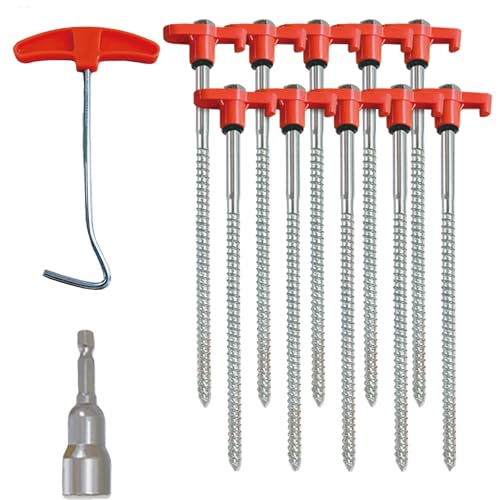
The Hynhsun 8-inch screw-in tent stakes are specialized anchoring accessories designed to secure outdoor shelters, tarps, and guy lines. Rather than driving smooth pegs into the dirt with a mallet, these stakes use a threaded carbon steel shaft engineered to drill directly into the ground. This set suits car campers, canopy users, and festival-goers who frequently pitch shelters on firm ground, packed gravel, or stubborn campsite turf where standard wire stakes tend to bend.
In practical use, each stake measures 8 inches in length with a 0.31-inch diameter, providing substantial bite into the subsoil. At approximately 1.6 pounds for the complete 10-piece kit, the set is best allocated to car camping, overland travel, and backyard setups. Campers preparing for self-supported backpacking will find this total weight substantial compared to standard aluminum needle pegs, making this product firmly oriented toward vehicle-supported transport.
The physical design centers on threaded carbon steel finished with a galvanized coating, intended to resist surface rust and moisture damage from damp turf. Fast setup relies on standard 1/4-inch hex power tools: by attaching the included 13mm hex nut driver bit to your own cordless drill or impact driver, each stake can be spun into the soil in a few seconds. The wide screw threads bite mechanically into grass, dirt, and gravel, creating friction-based hold that helps anchor corner webbing, awning legs, or shelter guy lines securely.
Tear-down and maintenance are straightforward with the provided accessories. While you can reverse your drill to back the stakes out, the kit also includes a manual T-pull hook to pull them from the ground if your battery is spent or if you need extra leverage. To prolong the life of the galvanized coating, wipe away packed mud and allow the metal to dry before returning the stakes to your camp storage box.
A realistic limitation of this system is its reliance on secondary tools. To access the advertised speed and ease of setup, you must carry a charged cordless drill or impact driver into the field. The kit does not provide a manual hand-crank wrench, so if your drill battery dies, driving these stakes by hand becomes difficult. Additionally, while the 8-inch threaded profile excels in dense soil, it is not engineered for deep, loose beach sand or deep snow, which require specialized wide-fluke anchors.
For campers who already carry cordless tools or want to eliminate the frustration of hammering bent stakes into hard-packed dirt, the Hynhsun 10-pack is a functional anchoring upgrade. When comparing alternatives, look closely at included accessories; having both the 13mm driver bit and an extraction hook in one box makes this a ready-to-use option for your vehicle camping kit.
These stakes measure 8 inches long with a 0.31-inch shaft diameter, offering a thicker, more rigid profile than standard smooth-wire stakes. The spiral threading runs along the shaft to create mechanical resistance against upward tension from guylines and wind load on tent corners.
The stakes are documented to hold firmly across varied surfaces, including lawn grass, hard-packed soil, and gravel campsites. They feature an orange head design for visibility, helping reduce trip hazards near guyline anchor points around your campsite perimeter.
Setup utilizes a cordless drill or impact driver fitted with the included 13mm hex nut driver bit. Driving the stakes mechanically requires only a few seconds per anchor point, reducing setup effort compared to hammering traditional stakes into compacted ground.
For take-down, the stakes can be backed out using the reverse function on your drill. The kit also includes a steel T-handle pull hook, allowing you to manually hook and pull the stakes from the ground when clearing camp.
The package contains 10 orange-headed 8-inch threaded carbon steel tent stakes. These stakes feature galvanized surface plating to help resist corrosion caused by rain and damp soil.
The set also includes one 13mm hex socket driver bit designed for power drills, along with one manual T-pull hook for stake extraction. A cordless drill or power tool itself is not included and must be supplied separately.
The Complete Guide to Securing Tent Stakes in Hard and Rocky Soil
Pitching a reliable shelter on compacted dirt or rock-strewn terrain requires a practical combination of mechanical leverage, ground assessment, and appropriate hardware selection. Driving a standard aluminum peg directly into baked caliche or gravel using brute force frequently leads to bent shafts, damaged stake heads, and unstable guylines. By applying deliberate anchoring techniques, campers can establish solid tie-down points that hold firm through heavy gusts without ruining their equipment. Taking the time to understand soil dynamics ensures your shelter stays taut, ventilated, and weather-ready throughout your stay.
Subterranean Geology: Differentiating Hardpan, Caliche, and Rocky Soils
Campers encounter several distinct ground types that resist traditional tent stakes in unique ways. Designated campsites often feature hardpan soil, which forms when constant foot traffic, vehicle weight, and seasonal rainwater strip away organic layers to leave compacted clay and dense loam. In arid or desert regions, caliche forms an almost impenetrable sedimentary layer of calcium carbonate just beneath thin surface dust. High-altitude alpine sites typically present decomposed granite, glacial till, or shallow topsoil covering fractured bedrock shelves.
Each of these geological conditions interacts differently with driven metal anchors and dictates specific pitching tactics. Compacted clay holds stakes tenaciously once penetrated, but initial entry requires narrow, rigid points capable of piercing the hardened crust. Rocky soil requires slender shafts that can navigate narrow gaps between underground stones without shearing or deflecting. Understanding the specific layer beneath your tent floor allows you to select an appropriate driving method before risking damage to your equipment.
Seasonal moisture levels also alter soil density dramatically between spring thaws and late summer droughts. Sun-baked summer clay hardens into a brick-like consistency that deflects blunt pegs, whereas early spring soil may be soft on top but frozen solid several inches down. Planning your stake selection around recent precipitation patterns helps prevent unpleasant surprises when you arrive at camp. Recognizing whether you face dry caliche, rocky gravel, or frozen mud dictates the tools you need in your pack.
Metallurgy and Peg Geometry: Choosing Between Carbon Steel, Iron, and Alloys
Standard shepherd-hook pegs made from soft aluminum alloys deform easily under moderate mallet strikes and should stay home when heading toward rocky terrain. Forged steel nails, hardened carbon steel ground anchors, and heavy-duty metal stakes provide the structural strength necessary to withstand impact. The AVOFOREST 7.1-inch heavy duty pegs illustrate how dense, rust-resistant metal can deliver bending resistance while keeping total pack weight manageable. Thicker shaft diameters prevent buckling along the shank when the tip encounters an underground stone.
Cross-sectional geometry also influences how effectively a peg penetrates compacted dirt while resisting pullout forces. Flanged shapes like Y-beams and V-stakes concentrate kinetic energy at the leading tip, allowing the stake to wedge aside pebbles and dense soil clumps. Straight cylindrical spikes slide past dense gravel clusters more easily than wide, finned anchors. Opting for high-visibility finishes, such as safety orange or glow-in-the-dark accents, ensures you can easily spot your anchoring hardware in low light conditions and avoid leaving gear behind.
Stake length represents another critical balance between holding security and penetration feasibility in dense ground. Shorter seven-inch stakes enter shallow soil more readily than twelve-inch stakes, which frequently strike immovable rock shelves halfway down. However, longer eight-inch anchors provide the necessary depth to hold tall tent vestibules and high-profile rainflies against sustained wind gusts. Carrying a mixed set of heavy-duty steel pegs ensures you have options suited for varying substrate depths across your campsite.
Mechanical Advantage: Utilizing Screw-In Anchors and Cordless Drills
Modern campsite pitching increasingly relies on threaded ground anchors designed for motorized or socket-driven installation. Equipment like the 8-inch heavy duty screw in tent stakes from CHANGX3KB, x-vesolje, and Hynhsun feature wide steel threading along a galvanized carbon steel core. These helical threads grip compacted earth much like heavy structural lag bolts, providing continuous friction against soil walls. By using a standard cordless drill or an impact driver with a matching socket, campers can drive anchors into stubborn ground in seconds without swinging a heavy hammer.
Motorized installation reduces physical fatigue while drastically decreasing setup time during unfavorable weather conditions. A 13mm hex socket or customized drive bit ensures positive engagement that eliminates stripped screw heads and glancing tool slips. These threaded anchors provide immense holding power when pitching a spacious outdoor tent for camping, where large fabric panels create heavy wind drag that tests guylines. Threaded anchors bite into frozen dirt, gravelly paths, and sun-baked desert floors where smooth metal pegs would bounce or deform.
Campers who prefer not to carry power tools can still take advantage of threaded anchors using manual socket wrenches or T-handle drivers. Hand ratchets provide controlled mechanical torque that allows you to feel underlying rocks before applying excessive force. If the threads encounter an impenetrable rock, you can back the anchor out a few turns and redirect the angle slightly. This tactile feedback prevents stripping the soil core while ensuring a solid bite into tough terrain.
Manual Driving Techniques: Mallet Selection, Strike Angles, and Impact Physics
Hammering stakes into unyielding soil requires deliberate tool selection and controlled swing mechanics rather than reckless brute force. Campers should utilize a dedicated steel-headed, brass, or dense rubber mallet instead of grabbing random rocks from around the campsite. Rough stones strike at inconsistent angles, transferring lateral shearing force through the stake collar that rapidly warps the metal. Solid, centered mallet strikes direct energy straight down the length of the shaft, driving the point through dense soil layers cleanly.
The driving angle must balance easy ground entry with reliable holding power against lateral guyline tension. Traditional guidelines suggest inserting stakes at roughly a 45-degree angle pointing away from the tent body to maximize resistance. In concrete-like clay, driving straight down at a 90-degree angle reduces lateral deflection and lowers the likelihood of bending the shaft. If you choose a vertical placement, securing the guyline loop right at the soil line minimizes the upward lever arm exerted on the stake head.
Striking rhythm matters just as much as downward force when tackling stubborn soil strata. Rapid, moderate taps allow the metal tip to seek micro-fissures around subterranean pebbles far better than singular, heavy smashes. If progress stops abruptly after several inches, do not attempt to hammer through the obstruction with maximum force. A sudden stop indicates a solid rock shelf, and excessive hammering will mushroom the stake head or fold the steel shaft completely.
Ground Preparation Strategies: Probing, Moisture Softening, and Pilot Holes
Probing the soil prior to driving your primary anchors saves time and prevents ruined hardware. Pushing a thin steel nail, a long screwdriver, or a metal awl into the ground by hand reveals hidden rocks before you strike. If the probe hits solid stone two inches down, adjusting your stake position slightly inward or outward can clear the obstruction. Shifting a tie-down point by just a few inches often exposes pockets of looser dirt between hidden boulders.
In exceptionally stiff or baked ground, establishing a pilot hole provides a cleared path for larger tent stakes. Driving a long, narrow masonry nail two to three inches into the earth breaks through the dense upper crust. Once you withdraw the pilot nail with a claw tool or pliers, your primary camping stake can follow the existing channel smoothly. For dry clay campsites, pouring a modest amount of water over the chosen spot softens surface tension and facilitates easier penetration.
Environmental awareness should guide your ground preparation to protect both your gear and the surrounding campsite. Avoid forcing stakes into exposed tree roots, as driving steel into root systems harms timber health and risks trapping your hardware permanently. If natural obstacles prevent safe insertion around your tent perimeter, reposition the entire shelter footprint slightly. A minor adjustment of your pitching site often yields softer ground conditions while preserving local flora.
Surface Reinforcement: The Rock-Over-Stake Technique
When bedrock sits shallowly beneath the surface, achieving full stake penetration is rarely realistic. Forcing a stake through solid stone will merely mushroom the head or snap the shank. Drive the stake as deep as it can safely penetrate without warping, leaving the hook or eyelet exposed just above the surface. You can then anchor the remaining exposed length using the classic rock-over-stake method.
Begin by placing a large, relatively flat boulder directly against the front base of the stake where the guyline loops. Next, position a second, significantly heavier boulder directly on top of the first stone to pin the peg against the ground. This dual-rock arrangement stabilizes the exposed shaft against lateral wobble and prevents upward pullout when strong gusts buffet the tent walls. The friction of the stones absorbs line tension, keeping your setup secure even with partial penetration.
Ensuring rock stability prevents accidental line abrasion during gusty weather conditions. Select stones with smooth contact faces where they rest against your cordage to prevent cutting synthetic fibers. If only angular, rough rocks are available, wrap a piece of cloth or a spare sock around the guyline loop for protection. This small buffering step prevents sharp mineral edges from fraying your anchor lines throughout a stormy night.
True Bedrock Solutions: Setting Deadman Anchors and Guyline Cairning
In environments where solid rock shelves completely reject metal stakes, campers must transition toward deadman anchoring systems. A deadman utilizes external weight or buried crossbars to secure tent lines without direct ground penetration. Wrap your guyline securely around the center of a sturdy timber log, a heavy flat boulder, or a durable stuff sack filled with gravel. Set the weighted anchor several feet beyond the standard peg line to establish a broad, stable footprint.
Stacking multiple heavy stones across the anchor line forms a secure rock cairn capable of resisting high winds. This setup proves vital when pitching easy setup camping shelters on exposed granite slabs or hard sandstone shelves where metal pegs cannot penetrate. Inspect the cord where it touches rough rock edges to ensure abrasive friction does not saw through the fibers under wind movement. Using smooth wood buffers or padding prevents premature rope wear during extended camping trips.
Freestanding tents offer a unique advantage on impenetrable surfaces because their pole architecture creates a self-supporting dome. Even so, wind can easily slide an unanchored tent across slick bedrock like a sail. Placing heavy gear, sleeping pads, and duffel bags inside the tent corners provides internal ballast that supplements exterior rock anchors. Combining interior weight with exterior cairns keeps the shelter planted firmly without driving a single metal stake.
Guyline Geometry: Optimizing Tension Angles to Resist Pullout Forces
The angle of your guyline plays a critical role in whether a stake holds firm or loosens from hardened earth. Guylines set too close to the tent body pull upward at a steep angle, working as an unintended stake puller. Extending guyline lengths creates a flatter trajectory that pulls horizontally across the surface rather than vertically. This horizontal vector takes full advantage of the surrounding soil density, holding the stake firmly in place.
Line tension must remain balanced throughout your stay to prevent unnecessary strain on ground anchors. Over-tightening guylines creates constant tension that gradually loosens stakes seated in shallow or crumbly ground. Adjust tension adjusters or taut-line hitches until the tent fabric is smooth and stable without bowing tent poles unnaturally. Always secure the cord loop as close to ground level on the stake as possible to eliminate rotational torque.
Adding inline shock absorbers or elastic bungee loops can further protect your stakes from sudden pullout. Strong wind gusts generate sudden peak loads that jerk violently against rigid cordage, loosening stakes in dry dirt. An elastic buffer absorbs these dynamic impact spikes, spreading tension evenly across the anchor point. This simple addition keeps your tie-down points secure during turbulent nighttime storms.
Safe Stake Extraction: Leverage, Rotation, and Preventing Bent Shafts
Removing stakes from hardened ground requires just as much care as driving them in during initial setup. Pulling upward on delicate tent fabric, corner webbing, or plastic guyline adjusters can easily rip seams and break components. Instead, utilize the claw end of your camping hammer, a specialized stake extractor, or the T-pull hook included in many drill-in stake sets. These tools apply concentrated upward leverage directly to the metal head without damaging your tent fabric.
If a straight stake resists extraction, rotational movement helps break the grip of compacted soil. Lightly tap the exposed metal on all four sides with your mallet to fracture the packed dirt collar surrounding the shaft. For threaded drill-in stakes, reverse your cordless drill or use a hand socket driver to back the threads out cleanly. Never pry sideways against an embedded stake with a long bar, as severe lateral stress bends the shaft permanently.
When a stubborn peg refuses to budge despite rotational tapping, slipping a spare tent stake through the head eyelet creates a convenient T-handle. Gripping both sides of the makeshift handle provides balanced vertical lift while keeping your hands safe from sharp edges. Pouring a splash of water around the base can also soften dried clay that has bonded to the metal. Patience and steady upward force will retrieve your gear intact without destroying the hardware.
Hardware Maintenance: Field Cleaning, Burr Removal, and Anti-Rust Care
Driving anchors into dense ground and gravel exposes metal to severe abrasion, grit, and moisture. Clean residual dirt, clay, and small pebbles from threads, hooks, and shafts with a cloth before storing them in your gear bag. Galvanized coatings and anti-rust finishes protect carbon steel against wet weather, but stowing damp hardware in airtight containers can lead to corrosion over time. Let your metal stakes dry completely in open air before packing them for long-term storage between camping trips.
Periodically inspect your camping stakes for shaft warping, blunt points, and mushroomed metal heads caused by repeated hammer strikes. Smooth down sharp metal burrs around the striking surface with a metal file to prevent cut fingers and frayed guylines. Keep a dedicated roll-up pouch or rugged case for your hard-ground kit, complete with threaded anchors, steel spikes, drivers, and a pulling tool. Well-maintained staking hardware ensures dependable performance and hassle-free campsite pitching wherever your outdoor adventures lead.
Reviewing your tent anchoring system before each departure guarantees you will never be caught unprepared on unyielding terrain. Check that all guyline cords remain free of fraying, and replace bent or compromised pegs before packing your gear. Matching your anchor hardware to the geological realities of your destination keeps your shelter stable, secure, and ready for whatever weather arrives. A thoughtful approach to anchoring turns even the most stubborn campsite into a safe and comfortable outdoor home.


Write Your Review
No reviews yet. Be the first to share your experience!