

Arriving at a remote backcountry campsite after hours on the trail leaves little room for complicated gear adjustments. Mastering how to set up a one person tent quickly ensures that solo campers stay warm, dry, and protected from shifting wind patterns before nightfall. While modern solo shelters range from minimalist trekking-pole bivies to freestanding dome designs, their compact architecture requires precise tensioning to maximize internal headspace. Campers who understand site orientation and peg placement can achieve a taut pitch without fighting stubborn fabric sleeves. Learning these essential pitching principles creates a reliable refuge whether you pack an ultralight ridge structure or look into easy setup camping shelters for quick weekend retreats.
Solo shelters present distinct design trade-offs between packed trail weight, interior shoulder room, and overall weather resistance. Because single-sleeper designs feature steep canopy angles and compact footprints, a minor staking error can cause the rainfly to sag directly against the inner canopy mesh. Managing interior condensation and moisture transfer depends heavily on how firmly the outer vestibule guy lines are anchored into varied ground types. Pairing thoughtful campsite selection with reliable staking methods allows a solo shelter to perform reliably against unexpected mountain squalls. Preparing for damp wilderness environments often involves reviewing heavy-duty water-resistant camping tents to understand how different fabric coatings and sealed seams hold up against steady rainfall.

Pros
- PU 3000mm waterproof coating and factory-taped seams offer dependable rain protection for a single-layer tent.
- Protective pole casing prevents the painful fiberglass splinters common with budget fiberglass poles.
- Simple two-pole cross sleeve design enables rapid, hassle-free solo setup in under two minutes.
- Generous 7-foot interior length provides ample room for taller campers plus interior gear storage.
Cons
- Single-layer design requires adequate airflow to prevent interior condensation during cold or humid nights.
- At 4.34 pounds, it is heavier than dedicated ultralight backcountry shelters.
- The 3.8-foot width realistically accommodates only one adult with gear rather than two full-sized adults.
The Night Cat Backpacking Tent is a compact, single-layer dome shelter engineered for solo adventurers, scouts, weekend hikers, and first-time campers looking for a practical, low-cost outdoor shelter. With interior floor dimensions measuring 7.0 by 3.8 feet and a peak center height of 3.6 feet, this shelter is proportioned to give a single adult sleeper generous elbow room with dedicated space along the perimeter to stash a trail pack, boots, and clothing. While the listing notes capacity for an adult and a small child, practical trail use makes it primarily an efficient one-person backpacking and camp shelter.
For weather management, the tent utilizes polyester fabric treated with a PU 3000mm waterproof coating, complemented by sealed, taped seams along the structural stitching. This level of waterproof protection is designed to withstand passing rainstorms and prevent moisture penetration from the wet ground. Because this is a single-layer tent without a separate full-coverage rainfly, managing air circulation is critical. Night Cat addresses this through a large mesh front entryway and an integrated mesh roof window, which work together to facilitate fresh air exchange and keep flying pests out of the sleeping quarters.
The frame relies on two foldable fiberglass poles equipped with an upgraded protective casing. Traditional single-layer fiberglass poles can develop micro-splinters over time that irritate hands during assembly, but this dual-layer sleeve construction shields campers during handling. Pitching the shelter requires sliding both poles through the diagonal roof sleeves and anchoring the corners, a straightforward routine that takes approximately one to two minutes even when arriving at camp after dusk. Once staked, the freestanding dome structure holds its shape cleanly in moderate winds.
Portability is a strong attribute for youth groups and weekend travelers, with the tent packing down into an included carry bag measuring 16.5 by 4.7 by 4.7 inches. At an overall weight of roughly 4.34 pounds, it sits between heavier car camping options and premium ultralight shelters. While long-distance thru-hikers counting every ounce may prefer a lighter tarp or trekking-pole tent, this weight and compact packed size fit conveniently into scout gear packs, motorcycle saddlebags, and car trunks for spontaneous overnights.
Before planning an extended trip, campers should account for the functional tradeoffs of a single-wall shelter. In damp, chilly environments, warm breath will create condensation along the interior polyester walls if the mesh vents are kept shut. Additionally, because there is no external vestibule, muddy footwear and wet outerwear must be brought inside the main tent floor. For budget-conscious hikers, motorcycle campers, scouts, and festival goers seeking a simple, waterproof, and easy-to-pitch solo shelter, the Night Cat tent provides a balanced, accessible solution.
Setting up the Night Cat tent requires minimal effort thanks to its streamlined two-pole sleeve structure. The fiberglass poles slide directly into diagonal sleeves across the canopy, allowing a single person to erect the freestanding dome in roughly one to two minutes without complex hub mechanisms.
Takedown is equally quick, rolling neatly into an included 16.5 by 4.7-inch carry sack. At approximately 4.34 pounds, the tent packs down compactly enough to strap onto the bottom of a backpack, secure to a bicycle rack, or store in a vehicle trunk for weekend outings.
Constructed with PU 3000mm coated polyester and heat-sealed taped seams, this shelter is built to keep rain from penetrating the interior cabin during unexpected downpours. The aerodynamic dome geometry also assists in deflecting moderate wind gusts when properly staked to the ground.
To mitigate condensation common to single-wall tents, the layout includes a large mesh door and an upper roof mesh vent. Keeping these openings clear allows continuous airflow across the ceiling, helping warm moisture escape while maintaining dependable insect defense.


Pros
- Virtually instant setup makes arriving at camp after dark completely stress-free
- Spacious 51-inch peak height provides ample sitting headroom for changing clothes
- Front vestibule area is a rare and welcome feature on pop-up style tents
- Cross-ventilating mesh screen doors effectively manage morning condensation
- Comes ready to pitch with eight anchor stakes and four stabilizing guy ropes
Cons
- Circular flat disc pack profile is bulky to transport and unsuitable for backpacking treks
- Folding the spring-steel frame back into its circular carry bag requires some practice
- Designed primarily for mild to moderate three-season weather rather than torrential storms or high winds
The Londtren Instant Pop Up Tent is an automatic pitching dome-style shelter engineered for outdoor enthusiasts who dread assembling traditional tent poles. With a generous floor plan measuring roughly 9.2 feet by 6.6 feet and a center peak height of 51 inches, this shelter provides an airy retreat for outdoor getaways. It serves as an accessible basecamp for car campers, festival goers, beachgoers, weekend warriors, and parents camping with kids in the backyard. Instead of wrestling with shock-corded fiberglass segments, you simply unbuckle the carry strap and release the frame, allowing the integrated spring skeleton to expand on its own.
In practical campground environments, the standout advantage is deployment speed. Whether pulling into a state park campsite long after sunset or trying to beat incoming storm clouds, having your primary living quarters erect in seconds transforms the camping routine. Once the structure snaps outward, staking down the perimeter corners and securing the included wind lines creates a stable, freestanding footprint. Packing down requires folding the spring coils into progressive figure-eight loops, which takes a few trial runs in the backyard to master but becomes second nature with practice.
Living space inside the tent easily supports two adults on wide sleeping pads with plenty of extra room for duffel bags and dog beds, or up to four campers resting shoulder-to-shoulder in sleeping bags. A notable design touch is the integrated front vestibule overhang. Most instant pop-up tents leave entry doorways completely flush with the ground, inviting damp leaves directly onto the sleeping surface. The vestibule creates a dedicated transition threshold where you can peel off muddy hiking shoes and stow outer rain gear before climbing inside.
Comfort and climate control are maintained through dual opposing doors. Both the front and rear entries feature a breathable fine mesh screen layer behind a solid 190T polyester exterior zipper panel. This layout lets you generate strong cross breezes on humid summer evenings while keeping mosquitoes and gnats outside. If a sudden rain shower starts, you can easily pull the privacy panels shut from the interior without having to scramble outside into the wet weather.
Material construction relies on a 190T polyester canopy matched to a heavy-duty 110G PE tarp-style floor. While the fabric sheds morning dew and standard rain showers effectively, campers heading into prolonged heavy downpours or gusty mountain bluffs may want to add an auxiliary tarp overhead for extra protection. Additionally, because the packed frame collapses into a wide circular disc, it requires dedicated trunk or cargo space and is not built for multi-day backcountry trails. For casual weekend road trips, sunny music festivals, and relaxing campsite escapes, it delivers undeniable convenience at an approachable price.
Pitching this pop-up tent is as effortless as unclasping the transit band and giving the tent gentle clearance to spring outward. Within moments, the pre-strung flexible frame expands completely on its own, eliminating the frustration of aligning pole sleeves or securing grommets in the dirt. Simply stake out the perimeter corners using the eight included metal pegs and attach the four guy lines for structural stability against shifting campground breezes.
Packing up requires learning the circular folding technique rather than rolling traditional fabric bundles. By bringing the opposite frame arches together, standing the bundle vertically, and curling the frame inward into concentric circles, the tent slips neatly back into its round zippered carry bag. Practicing this collapsing technique once or twice at home ensures swift, confident pack-ups when departing the campsite on Sunday morning.
Condensation management is a common challenge in compact tents, but the dual door configuration on this model helps keep air flowing smoothly. With large mesh screen panels on both the front and rear openings, fresh breezes move through the interior to keep stagnant, humid air from building up overnight. Campers can leave the mesh zipped tight to preserve bug-free ventilation while gazing out at the campfire.
Interior living convenience is bolstered by practical details including built-in wall organizer pockets for stashing your phone, headlamp, and pocket knife off the floor. A sturdy center ceiling hook is positioned right overhead, offering the perfect spot to hang a portable camp lantern for evening card games or reading before bed.

Pros
- Hydraulic hub frame allows complete solo setup in approximately one minute.
- Specialized blackout treatment effectively blocks early morning light and enhances sleeping privacy.
- Strong waterproof ratings with a PU 3000mm fly and a reinforced PU 4000mm composite floor.
- Five mesh openings and a removable fly promote steady cross-breezes while excluding insects.
- Spacious 110 by 94.5-inch interior easily fits two to three adults with gear or a queen air mattress.
Cons
- Packed weight of 12 pounds and a 37.5-inch carrying length make it unsuitable for backpacking.
- A 56-inch peak height requires most adults to crouch rather than stand upright.
- Hydraulic joint mechanisms require careful handling during folding to ensure long-term durability.
The LANGWILL 4-Person Blackout Instant Pop-Up Tent is a car-camping dome shelter built around an integrated hydraulic frame and light-blocking fabric. Designed to eliminate the hassle of threading traditional shock-corded poles, this shelter targets car campers, festival attendees, weekend warriors, and casual family campers who want camp pitched within minutes of arrival. Because the packed bundle weighs 12 pounds and measures 37.5 inches long in its carry bag, it is specifically intended for trunk transport and established vehicle-accessible campsites rather than human-powered backcountry treks.
Sleep quality remains a frequent challenge at summer campgrounds, and the blackout construction directly targets early morning light. The specialized high-density fabric coating blocks over 90 percent of sunlight, allowing campers to sleep past dawn while helping to moderate interior heat during warm afternoons. Inside, the floor spans 110 inches by 94.5 inches with a peak center height of 56 inches. While listed for up to four people, this footprint most comfortably sleeps two or three adults alongside personal bags, or a couple using a queen-size air mattress with room left over for duffels.
Weather protection relies on 210D Oxford fabric treated with a PU 3000mm waterproof coating, paired with a fully seam-taped rainfly to keep driving rain outside. Underneath, a tough 120-gram PE composite floor carries a PU 4000mm rating, acting as a sturdy barrier against wet ground and damp morning grass. For breezy conditions, the kit includes 12 ground stakes and 6 tensioning guylines that secure the structural joints into the dirt. Campers should still exercise caution in severe storm fronts, as hub-style pop-up tents present a broader wind profile than low-slung geodesic shelters.
Ventilation is handled via four perimeter windows and an upper roof vent, all lined with fine B3 insect mesh. This configuration facilitates cross-ventilation, mitigating condensation against the coated interior walls while excluding gnats and mosquitoes. When fair weather permits, removing the rainfly exposes the broad ceiling mesh for open-air stargazing, providing clear night sky visibility and rapid cooling directly from your sleeping pad.
Packing the tent involves releasing the hydraulic corner joints before folding the fabric around the center hub, slipping easily into the provided 37.5 by 7 by 7-inch zippered carry bag. Routine maintenance is straightforward: wipe the coated fabric with a damp cloth, brush out ground debris, and allow the shelter to dry completely before long-term storage to prevent fabric degradation. For vehicle campers, festival goers, and outdoor enthusiasts seeking quick camp deployment without waking up to sunrise glare, this LANGWILL model offers dependable weather shielding and restful shelter.
Pitching this tent utilizes a pre-assembled hydraulic mechanism that erects the entire frame in roughly 60 seconds without requiring loose poles or tools. The camper simply lifts the top of the hub, pushes the center mechanism downward, and snaps the lower leg joints into place until the frame locks rigid. Securing the base with the included ground stakes and guylines completes the setup for stability against shifting breezes.
Takedown follows an equally swift process by unlocking tension at the leg joints and collapsing the hub toward the center. Once rolled, the entire shelter slips into the included carry bag alongside the accessories, making packing up and heading home simple after a weekend outdoors.
The outer shell features 210D Oxford cloth treated with a PU 3000mm waterproof coating alongside taped rainfly seams to stop rainwater penetration. Beneath your sleeping pad, the 120g PE composite floor features a PU 4000mm rating to prevent damp grass or ground moisture from seeping into your gear.
Structural support in windy conditions is reinforced by 12 included ground stakes and 6 guyout lines attached to the upper frame joints. While well suited for standard three-season campground weather, users should ensure all guylines are taut during heavy downpours or open lakeside winds.
With an interior footprint of 110 by 94.5 inches, this shelter provides practical living room for two or three campers with duffel bags, or four individuals resting closely on sleeping pads. The 56-inch center height allows comfortable seated headroom for changing clothing, reading, or sorting camp supplies.
The high-density blackout coating keeps the cabin noticeably darker than standard nylon tents, aiding light sleepers and young children who struggle to sleep in bright morning conditions. Five B3 mesh panels maintain airflow across the floor, helping regulate temperature while keeping insects outside.
Pros
- Generous solo floor space easily accommodates one tall adult with indoor gear storage.
- Protective casing over fiberglass poles prevents painful splintering during assembly.
- Solid PU 3000mm rainproof rating provides peace of mind during surprise rainstorms.
- Fast and straightforward two-pole sleeve setup takes under two minutes.
- Compact 16.5-inch pack length stows neatly onto bike racks or hiking bags.
Cons
- At 4.4 pounds, it is slightly heavy for ultralight long-distance thru-hiking.
- Fiberglass poles are heavier and less flexible than premium aluminum alternatives.
- Tight fit for two full-grown adults, serving best as a roomy solo shelter or for an adult with a young child.
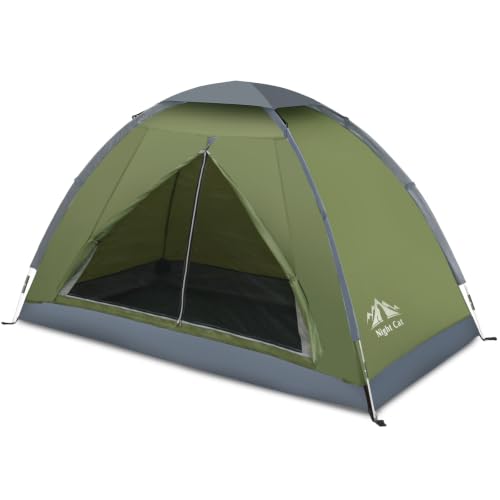
The Night Cat Backpacking Tent is a lightweight, single-to-two-person dome shelter designed to give outdoor adventurers reliable weather protection without complicated assembly. Built with a compact footprint, this shelter caters to solo backpackers, scout troops, motorcycle campers, festival attendees, and first-time campers seeking an approachable shelter for the trail. While marketed for up to two occupants, its interior dimensions of 7.0 by 3.8 feet make it shine brightest as an exceptionally roomy solo shelter with ample room for your sleeping pad, clothing layers, and trail pack.
Campers heading into unpredictable conditions will appreciate the heavy-duty PU 3000mm waterproof coating on the polyester fabric. Factory seam-taped stitching lines the floor and body to stop rainwater from seeping through during extended downpours. Good ventilation is crucial in a compact shelter to prevent stuffiness and internal condensation buildup, and this tent addresses that with a high-mesh roof window and a large zippered mesh entry door. The fine netting keeps pesky mosquitoes and gnats at bay while inviting gentle summer breezes through the cabin on balmy nights.
A distinctive feature of this design is the covered fiberglass pole system. Traditional budget fiberglass poles can splinter over time and leave microscopic shards in your palms, but Night Cat encloses these poles in a smooth protective outer sleeve. The diagonal sleeve channels make sliding the poles across the dome quick and snag-free. You also get a durable bathtub floor that shields against ground moisture and damp campsite mud when you need to pitch on saturated turf after dark.
Ease of use is a highlight for anyone arriving at camp late or trying to beat incoming weather. Pitching the structure takes only one to two minutes by feeding the two flexible poles through the continuous diagonal roof sleeves and anchoring the corners. Pack-down is just as swift, rolling into an included zippered carry pouch measuring just 16.5 by 4.7 inches. At roughly 4.4 pounds, the bundle carries comfortably on motorcycle racks, strapped to the bottom of a hiking pack, or stowed in the trunk of a compact car for spontaneous weekend trips.
There are some natural trade-offs to keep in mind. At 4.4 pounds, dedicated ultralight thru-hikers may find it slightly heavy compared to high-end silnylon trekking pole shelters. The fiberglass frame, while well-protected, lacks the extreme bend strength and ultra-low weight of anodized aircraft aluminum poles. Furthermore, while an adult and small child can sleep side by side comfortably, two grown adults will find shoulder space quite tight.
For weekend trail warriors, boy scout troop outings, motorcycle touring, and budget-conscious hikers, this tent delivers impressive value and dependable shelter. It strikes an effective balance between durable weatherproofing, simple single-person pitching, and compact portability for your next outdoor excursion.
Pitching this dome tent is designed to be straightforward enough for a single camper to handle in two minutes or less. The two-pole continuous sleeve setup eliminates confusing clip patterns. You simply unfold the tent body onto your ground tarp, slip the protected fiberglass poles diagonally through the heavy-duty fabric sleeves, and flex them into the corner grommets to pop the dome into place.
Takedown requires very little effort when breaking camp at dawn. Disconnecting the corner pins allows the frame to collapse smoothly without catching on internal mesh. The fabric folds cleanly along the pole lines, sliding into the compact zippered carry bag alongside the stakes and guylines without excessive squeezing or wrestling.
Equipped with a PU 3000mm polyurethane coating, the polyester canopy handles moderate to severe rainstorms with ease. Reinforced waterproof tape seals every structural seam, preventing moisture penetration around stress points and corner stitching. This barrier keeps your sleeping bag dry even when wet mountain squalls blow in unexpectedly overnight.
The aerodynamic dome profile naturally deflects gusty winds when properly anchored with the included ground stakes and guylines. To manage internal moisture from breathing, the elevated roof vent works alongside the breathable mesh entryway to sustain air circulation, keeping damp condensation from collecting against the inner walls.

Pros
- Compact dimensions provide a manageable footprint for solo campers.
- Constructed from 180D Oxford fabric.
- Lightweight build listed at 2 to 3 pounds for convenient transport.
- Comes with essential setup components including two poles, four pegs, and a carry bag.
Cons
- Weight is inconsistently listed as both 2 pounds and 3 pounds in the product data.
- Interior peak height of 33.5 inches does not allow most adults to sit fully upright.
- No documented waterproof rating, hydrostatic head figure, or seam-sealing information.
The Sutekus Single Tent is a compact, one-person ground shelter featuring a camouflage pattern, designed for solo outdoor activities such as casual camping and hiking. With its modest proportions and straightforward layout, it primarily targets individual campers seeking a simple, budget-conscious sleeping shelter for fair-weather use where basic coverage is required without significant bulk.
Regarding interior space and practical fit, the manufacturer lists this shelter with dimensions of 78.7 inches long, 39.4 inches wide, and 33.5 inches high (200 cm by 100 cm by 85 cm). While the nearly 79-inch length and 39-inch width provide sufficient floor space for an individual sleeping mat and personal gear, the peak height is distinctly low. Campers should recognize that stated capacity does not equal generous living space; at under three feet of vertical clearance, the tent will not permit most adults to sit upright comfortably.
The tent body is made from 180D Oxford fabric and incorporates a single entrance for entry and exit. Setup relies on two included poles along with four ground pegs to anchor the corners. The product listing does not state the pole composition, whether the poles use shock-corded construction, or if pole sleeves or clips are used. Furthermore, details regarding windows, mesh panels, vents, or rainfly coverage are absent from the product documentation, leaving airflow and weather resistance unverified.
Portability is an important factor for solo gear, and this shelter lists a weight of 3 pounds in the feature bullets alongside a 2-pound entry in the product specifications. While this discrepancy creates uncertainty about the exact trail weight, both figures represent a light overall load that packs into the provided storage bag. Pitching the shelter involves securing the four corners with the included pegs and inserting the two poles. When breaking camp, routine care includes wiping down the 180D Oxford fabric and ensuring the tent is fully dry before packing it away in its storage bag.
Prospective buyers should take note of several important unknowns. The manufacturer does not provide a hydrostatic head rating, waterproof coating specification, or wind-stability rating, nor does the listing mention an included rainfly. Because weatherproofing specifications are not established, the shelter should not be relied upon for heavy rain or severe weather. Anchoring is also limited to four corner pegs, without documented guylines for rough ground or high winds.
For solo campers needing a lightweight, enclosed shelter for backyard sleepouts, festival grounds, or dry-weather overnight trips, the Sutekus Single Tent offers basic utility at a minimal weight. However, if your camping trips involve potential rainfall, high humidity, or extended time spent inside the tent, comparing this model with tents that document rainfly coverage, waterproof ratings, and built-in ventilation will help ensure your gear matches the conditions you anticipate.
The Sutekus Single Tent is built for one person, with floor dimensions measuring 78.7 inches long by 39.4 inches wide. This layout provides enough room for a single sleeping pad with a small amount of floor space remaining along the sides for personal accessories.
The interior peak height measures 33.5 inches (85 cm), creating a low-profile sleeping shelter rather than a sit-up tent. Taller campers or those who prioritize head room should note that this height limits vertical movement, making it primarily suited for sleeping rather than lounging.
This shelter is constructed from 180D Oxford fabric, finished with an outdoor camouflage pattern. The package includes two poles to support the tent body and four ground pegs to secure the base.
The manufacturer does not provide details regarding pole materials, fabric coatings, seam sealing, or hydrostatic head ratings. As a result, the materials are best viewed as intended for basic fair-weather protection rather than heavy downpours or harsh weather conditions.
The package contents documented by the manufacturer include one tent body with two poles, four ground pegs, and one storage bag for transport and organization.
Accessories such as a ground footprint, additional guy lines, or a separate rainfly are not listed as included. The manufacturer states that customer service is available to address quality issues directly if they arise.
The Complete Guide to Pitching and Securing a Solo Camping Tent
Pitching a solo shelter demands careful attention because a single camper handles every corner, pole, and guyline without assistance. Taking a methodical approach ensures the structure stands firm against gusts and prevents water from pooling on low canopy angles. When executed correctly, pitching your shelter takes only a few minutes and provides reliable protection throughout the night.
Choosing and Preparing the Campsite for a Solo Pitch
Ground selection is the first critical decision when pitching a solo shelter. Choose level ground elevated slightly above surrounding depressions to avoid rainwater pooling underneath. Check overhead branches for dead wood or pinecones that could fall during high winds. Clearing away sharp stones, twigs, and roots protects thin floor fabrics from punctures.
Wind direction heavily influences how a solo tent behaves overnight. Orient the narrowest, lowest end into the prevailing wind to reduce drag and pole flex. Face the entryway downwind to keep driving rain out when stepping in or out. Natural windbreaks like brush or boulders also help reduce strain on the frame.
A ground cloth creates an extra barrier between damp soil and the tent floor. Lay the ground cloth flat so its edges stay two inches inside the tent floor perimeter. A footprint extending past the canopy catches rain and channels it directly underneath your floor. Staking the footprint loosely keeps it centered while unpacking the shelter.
Unpacking and Inspecting Solo Shelter Components
Organizing gear systematically prevents small stakes or pole sections from getting lost in tall grass. Empty the stuff sack onto the footprint and separate the inner canopy, rainfly, poles, and stake bag. Verify that shock-corded pole joints seat cleanly without dirt clogging the ferrules. Check the stakes to ensure none are bent from previous trips.
Spread the inner tent over the footprint with the door facing your preferred exit direction. Align the corners with the footprint below to ensure everything sits squarely. Stake down windward corners first at a forty-five-degree angle away from the tent. Securing these corners prevents sudden wind gusts from blowing the lightweight fabric away.
Assembling Poles and Securing the Inner Canopy
Handle tent poles gently to prevent cracking fiberglass sleeves or bending aluminum tubes. Slide shock-corded sections together smoothly rather than letting them snap under spring tension. Snapping joints together can chip ferrule edges and weaken the structure in high winds. Lay the fully assembled poles across the flattened tent canopy.
Solo dome tents usually feature crossing poles that insert into corner grommets or webbing pockets. Single ridge models like the camppal 1 Person Tent use an arching spine that requires end tensioning before clipping. Insert pole tips into corner grommets on one side first, then bend the poles to seat opposite ends. Work smoothly so tension distributes evenly without straining corner seams.
Fastening the inner tent clips to the raised frame turns the flat fabric into a rigid shelter. Clip from the bottom corners upward to the apex to spread tension evenly across the frame. If the shelter uses fabric pole sleeves, push the poles gently rather than pulling them through. Pulling a pole separates joints and jams the fabric sleeve.
Draping and Anchoring the Rainfly
A properly installed rainfly provides primary defense against rain and cold wind. Drape the fly over the frame, aligning door zippers with the inner tent entryway. Most rainflies feature underside hook-and-loop wraps that attach directly around the poles. Securing these internal wraps fastens the fly to the skeleton, preventing fabric billowing during storms.
Fasten the corner buckles connecting the rainfly to the base of the tent floor. Adjust tension straps evenly so the outer canopy stays centered over the inner body. Avoid over-tightening one corner, which can distort frame geometry and cause slack on opposite sides. A balanced rainfly maintains an essential air gap that keeps condensation away from inner mesh.
Solo campers focused on temperature control and restful mornings often explore specialized fabric coatings. Looking at designs like dark room blackout camping tents shows how specific materials block sunlight and limit internal heat buildup. Keeping the outer fly taut ensures rainfall runs cleanly off the sides without seeping through door seams.
Guyline Strategy for Wind Resistance and Stability
Securing a solo shelter effectively requires using guy lines alongside corner stakes. Strong winds exert lateral pressure against compact shelters, which can bend unsupported poles inward. Attach cordage to the reinforced guyout loops positioned along pole seams. Angle each guyline outward in line with the pole seams to transfer wind force directly to the ground.
Push guyline stakes into firm ground at a sixty-degree angle tilted away from the tent. Slide cord tensioners until the line hums with moderate tension. Make sure guyouts pull outward rather than downward to avoid flattening the frame against the ground. On rocky soil, weigh stakes down with heavy stones or use buried deadman anchors.
Tensioning requires balancing structural stiffness with fabric safety. Over-tightening lines stresses taped seams, zippers, and pole joints. The fabric should feel taut like a drum skin while maintaining enough give to handle sudden gusts. Recheck tension after thirty minutes, as damp evening air causes nylon fibers to stretch naturally.
Managing Condensation and Airflow in Compact Shelters
Solo tents accumulate condensation quickly because warm exhaled breath concentrates in a tight interior space. Moisture settles against cold fly fabric overnight and drips inside if airflow is blocked. Open integrated roof vents and position kickstand struts as soon as you finish pitching. Continuous cross-ventilation lets humid air vent out before striking cold outer panels.
Vestibule adjustments also help control airflow without letting rain inside the sleeping area. Stake out vestibule points so bottom hems hover slightly above the ground to promote drafting. When camping under dry skies, roll back outer door flaps to increase air circulation. Even during rain, keeping top vents open significantly reduces morning dampness.
Solo campers comparing compact bivies to larger gear often notice different airflow dynamics. Reviewing how spacious group camping tents manage large interior air volumes shows why small shelters need active airflow. Keeping sleeping bags away from exterior walls prevents moisture transfer from damp fly fabric.
Pitching Variations for Instant Pop Up and Ridge Pole Models
Different solo tent styles require distinct setup approaches beyond standard two-pole dome shelters. Instant pop up tents with pre-assembled frames open in seconds by expanding central hubs. While instant deployment saves time, driving base stakes and guylines remains necessary to anchor the shelter against unexpected winds.
Single ridge shelters like the camppal solo model feature a longer profile that demands firm end tension. Pitching this style requires anchoring the foot and head corners before raising the center aluminum pole. Guying out the ends pulls fabric taut along the central ridge seam. Insufficient end tension causes fabric sag and reduces usable interior headroom.
Single-layer models like the Sutekus single camouflage tent combine the canopy and rain barrier into one piece. These shelters rely entirely on corner staking because there is no separate rainfly to adjust later. Drive corner pegs squarely to create balanced floor tension without fabric wrinkles. Because single-layer walls lack a mesh gap, leaving door vents cracked helps manage interior moisture.
Common Solo Pitching Mistakes and Field Fixes
Pitching into loose sand, mud, or brittle shale is a frequent source of solo camping trouble. When wire stakes pull free easily, use natural anchors around the campsite. Tie guylines around thick branches or medium stones and bury them under soil as deadman anchors. Wrapping cord around heavy boulders with a secure knot also provides dependable holding power.
Forcing stuck zippers when vestibule fabric is stretched too tightly causes unnecessary gear damage. If a zipper slider binds, loosen adjacent corner stakes before trying to pull it again. Yanking a tight zipper can separate the teeth or tear the storm flap stitching. Balanced canopy tension keeps zippers running smoothly while maintaining weather protection.
Forcing pole tips into tight grommets can tear webbing or splinter pole ends. Ensure fiberglass pole sections seat completely into ferrules before bending the frame into an arch. If a pole splinters in the field, slide an aluminum repair sleeve over the break and tape it securely. Packing a small repair splint ensures a cracked pole will not ruin your trip.
Packing Down and Preserving Tent Fabric Between Trips
Breaking down a solo tent carefully protects waterproof coatings and structural seams over many seasons. Shake out dirt, sand, and dried leaves from the floor before pulling corner stakes. Unclip the rainfly and air it out over brush for several minutes to dry morning condensation. Packing damp fabric into a tight stuff sack causes mildew and breaks down waterproof coatings.
Fold the tent body and fly to match the exact length of your pole bag. Roll the fabric tightly around the pole sack to prevent sharp creases along sealed seams. Slide the rolled bundle into the storage sack without forcing the fabric. Hang the tent in a well-ventilated room once you return home until every strap and seam is completely dry.
Final Campsite Verification and Bedding Setup
Walk around the shelter perimeter to check every stake and guyline before turning in for the night. Make sure guylines stay clear of camp walkways to avoid tripping in the dark. Check that the rainfly stays separated from the inner mesh along all sides and roof panels. Arrange your sleeping pad and bag away from outer fabric edges to stay dry until morning.
Taking time to pitch and secure your solo shelter properly guarantees reliable weather protection and restful sleep. A taut, well-ventilated tent handles changing winds and morning moisture with ease. You can enjoy your time outdoors knowing your compact camp is stable, dry, and secure.


Write Your Review
No reviews yet. Be the first to share your experience!