

Pitching a shelter on an unpaved gravel pad or rocky tent pad presents distinct challenges compared to driving stakes into soft loam. Standard lightweight aluminum or plastic pegs often bend instantly against buried aggregate, leaving shelters unstable when unexpected gusts arrive. Understanding how to stake a tent in gravel requires the right hardware, proper angles, and smart anchoring techniques that keep your campsite secure. Whether setting up high-profile family shelters or durable water-resistant camping shelters, stabilizing your foundation preserves structural integrity throughout the night.
Campers frequently encounter prepared gravel pads in state parks, high-altitude alpine zones, and established drive-in campgrounds because gravel drains rain efficiently. However, loose surface pebbles resting over hard-packed sub-base make standard peg placement tricky without bending gear or ripping guyout loops. Using thick steel ground spikes, positioning pegs at deliberate angles, and augmenting hold with surface rocks transforms a frustrating pitch into a rock-solid shelter. Preparing your gear before heading out ensures that rough, unforgiving ground never compromises tent stability or night-time comfort.
Pros
- Galvanized steel construction offers reliable rigidity and protection against rust in wet ground
- Substantial 10-inch length provides deeper ground penetration than standard wire pegs
- Includes four pre-measured 10-foot ropes ready for immediate guying out
- High-visibility orange stopper helps mark stake placement near high-traffic paths
Cons
- Individual and total pack weight are not specified, making pack-weight calculations difficult for backpackers
- Package includes only one visibility stopper for ten stakes, leaving the remaining nine unmarked
- Listing does not detail holding performance across specific soil conditions such as loose sand or solid rock
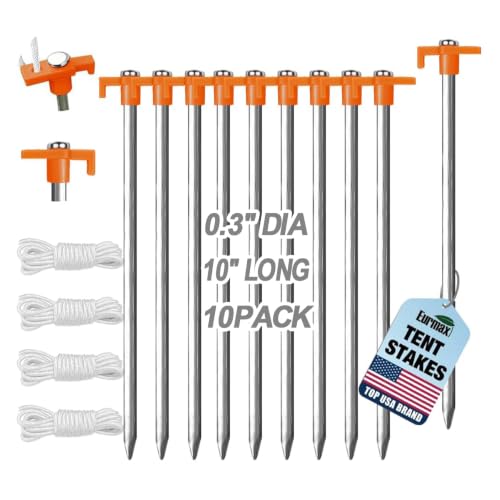
The Eurmax 10-Pack Secure Protection Galvanized Tent Stakes set is a specialized anchoring accessory designed for campers, canopy owners, and outdoor event setups. Built for securing camping tents, pop-up shelters, and gazebos, this kit targets campers who need more durable ground pegs than the thin wire stakes typically bundled with entry-level tents. With heavy-duty galvanized steel construction, it caters to car campers, backyard gazebo owners, and recreational shelter users seeking reliable tie-down support.
Each stake measures 10 inches in length, 2 inches in width, and 0.1 inches in thickness, providing a deep profile intended to anchor shelters against shifting winds. The listing highlights steel canopy anchors geared toward high winds, offering greater structural rigidity than lightweight aluminum or plastic pegs. Because of their length, these anchors penetrate deep into turf and packed dirt, helping prevent guyline slippage when guyed out properly.
Setup is straightforward thanks to the pre-cut lines and ready-to-drive design. The package provides ten commercial-grade ground pegs alongside four 10-foot ropes, eliminating the need to measure and cut auxiliary guylines at the campsite. Eurmax also includes a single high-visibility orange stopper designed to help campers spot stake placement and minimize foot-traffic tripping hazards around the perimeter of the shelter.
At 10 inches long, these steel stakes fit easily into standard gear totes, duffels, or car-camping bins. While the product listing mentions hiking along with camping and beach use, steel stakes are generally heavier than ultralight alternatives, making them most practical for drive-up campsites and vehicle transport. Routine care involves cleaning off damp soil after use and wiping the stakes dry before storage, maintaining the integrity of the galvanized rust-proof coating over multiple seasons.
Buyers should evaluate a few practical limitations and missing details. The manufacturer does not state the individual or total pack weight, which leaves backpackers uncertain about pack suitability. Additionally, while the listing includes an orange stopper for enhanced visibility, it provides only one stopper for ten stakes, meaning most anchor points will not have the bright marker. Soil compatibility is also not detailed, so shoppers pitching on rocky riverbeds or very loose beach sand may need specialized stakes suited for those surfaces.
For car campers, popup canopy owners, and family campers wanting to reinforce their shelter setup, this Eurmax 10-pack delivers practical durability and helpful accessories at an accessible price point. When evaluating ground anchors, campers should consider whether they have enough tie-down ropes for their shelter configuration and verify that 10-inch steel pegs match the soil conditions of their planned campsite.
The Eurmax anchoring set includes ten 10-inch galvanized steel stakes paired with four pre-cut 10-foot ropes. These steel pegs are engineered with a 2-inch wide hook design and 0.1-inch thickness to firmly hold guy lines under tension. The package also features an orange visibility stopper designed to reduce tripping hazards near tent corners and canopy legs.
Campers should note that securing a tent or gazebo depends heavily on proper stake angle and soil conditions. While these stakes offer rigid steel construction suitable for dirt and grass campgrounds, hardpacked gravel or loose beach sand may require specialized driving tools or sand-specific anchors.
These ground anchors are constructed from solid steel treated with a galvanized finish. This galvanized coating helps prevent rust and corrosion resulting from wet soil, morning dew, and rainfall, extending the service life of the hardware across varying weather conditions.
The rigid steel design resists bending and breaking under pressure when driven into standard campsite turf. To maintain the protective finish, users should clean away dirt and allow the stakes to dry before packing them into gear bags.
The package contains ten galvanized steel stakes, four 10-foot ropes, and one high-visibility orange stopper. The pre-cut ropes provide immediate tie-down capability for four canopy or tent guyout points without requiring additional cordage.
Because the set includes only one orange stopper across ten stakes, campers needing full-perimeter visibility markers may need to supply additional reflective tape or stoppers. A driving mallet and dedicated stake carry bag are not listed as included items.


Pros
- Ample 18-piece bundle provides full tent pitching plus spare anchors for guylines and tarps
- Hot-dip galvanized coating helps prevent rust from wet soil, morning dew, and rainy weather
- Hooked top retains cords cleanly and aids in quick pull-out during campsite take-down
- Versatile design installs via hand, foot, or camping mallet depending on campsite ground conditions
Cons
- Slender 4mm wire profile can bend if hammered forcefully into rocky ground or hidden roots
- Total weight of roughly 0.88 pounds is better suited for car camping than ultralight backpacking
- Listing does not indicate an included carry pouch or storage bag for keeping the stakes together
The FEED GARDEN 18-pack of 7-inch steel stakes is a dedicated tent accessory engineered to anchor camping tents, tarps, sunshades, and outdoor canopies. Campers frequently misplace factory tent pegs or bend lightweight aluminum wire during setup, making a complete replacement pack a helpful addition to any camping kit. While these metal hooks are also marketed for garden netting and holiday inflatables, their physical profile directly serves car campers seeking straightforward, reliable replacement stakes for standard campground pitches.
Regarding dimensions and physical specifications, each stake measures 7.1 inches in length with a 4mm wire diameter. The documented total weight for the 18-piece set is approximately 0.88 pounds. For car campers, festival attendees, and casual outdoor enthusiasts, carrying this bundle in a gear tote or vehicle trunk is simple and space-efficient. However, backpackers aiming for minimal base weight should note that 18 steel stakes carry more mass than specialized ultralight titanium or aluminum stakes. The 7.1-inch length strikes a practical balance, penetrating deep enough to hold firm in typical loam and turf without becoming cumbersome to transport.
Construction centers on all-steel durability treated with a protective hot-dip galvanized coating. This finish is specifically designed to resist rust and corrosion when exposed to wet soil, rain, and outdoor moisture. At the top of each peg, a curved hook design serves two practical functions: it prevents guyline loops and tent corner grommets from slipping off, and it offers an accessible point of leverage when pulling the stake from the ground. According to the manufacturer, campers can push the stakes in by hand, press them down with a sturdy boot, or tap them with a hammer depending on how firm the ground is.
At the campsite, having 18 stakes on hand ensures you have enough anchors to secure a dome tent, guy out rainfly vents, and pitch an extra utility tarp over a picnic table. Securing your tent perimeter properly assists with structural stability during windy spells and keeps the rainfly separated from the inner tent fabric. When breaking camp, the hooked ends allow you to slide another stake or puller underneath to extract each peg smoothly. Wiping off clinging dirt before stowing the stakes helps preserve the galvanized surface across multiple seasons.
Buyers should remain aware of clear limitations associated with slender wire stakes. With a 4mm steel shaft, these stakes perform well in typical grass, forest loam, and soft campground dirt, but they can bend if driven hard against rocks, gravel, or thick tree roots. Campers pitching shelters in rocky terrain or frozen earth may require heavier forged-steel spikes. Additionally, the product listing does not document an included carry bag, so campers will want to supply a small pouch or band to keep the metal pegs organized inside their tent bag.
Overall, the FEED GARDEN 18-pack delivers dependable, budget-conscious utility for campers who need extra or replacement anchors for standard campgrounds. While ultralight hikers will look elsewhere for weight savings, car campers and outdoor shelter owners will appreciate having a generous supply of rust-resistant steel stakes ready for their next weekend getaway.
The FEED GARDEN stakes measure 7.1 inches long, offering solid ground hold for standard camping tents, tarp ridgelines, and canopy corners. Their curved hook top provides an effective catch for guylines, shock cords, and webbing loops, preventing slippage while the shelter is under tension.
With 18 stakes in the package, users have enough hardware to secure a 4-person or 6-person family tent along with multiple perimeter guyout points. The hook also serves as a convenient handle during take-down, allowing campers to pull the peg using another stake, a cord loop, or a tent mallet puller.
Each stake is built from solid steel wire with a 4mm thickness, offering structural firmness for standard campsite soils. The all-steel core provides greater resistance to bending than basic budget wire pegs, provided they are not forced into solid rock.
To withstand outdoor moisture, the stakes undergo hot-dip galvanization. This surface treatment provides documented rust and corrosion resistance, helping them hold up across wet campsite grass, rainy weekends, and damp ground conditions season after season.
Essential Strategies for Anchoring Tents in Gravel and Rocky Ground
Gravel tent pads present a unique anchoring puzzle because they combine a shifting surface layer with an exceptionally dense, compacted base beneath. Traditional pegging methods designed for soft forest soil quickly break down when your hardware strikes impenetrable crushed rock. Securing your shelter properly requires understanding how aggregate soil behaves under tension and matching your technique to ground resistance. With the right combination of heavy-duty steel anchors and tensioning strategies, pitching on gravel becomes predictable and dependable.
The Anatomy of Gravel Tent Pads and Rocky Ground
Most managed campsites construct gravel tent pads by laying several inches of crushed stone over compacted clay or road base to facilitate rapid water drainage. While this setup prevents puddles from collecting beneath your shelter during storms, it creates a challenging two-tier soil profile for standard tent stakes. The top two to three inches consist of loose stones that offer almost zero lateral resistance or holding friction. Beneath that loose layer lies tightly packed aggregate that rejects blunt or flimsy tent pegs with immediate resistance.
When campers attempt to pitch on these pads using standard wire hooks or hollow aluminum stakes, the tips quickly deflect off buried rocks. Continued pounding with a camp hammer merely twists or snaps lightweight aluminum shafts long before they achieve sufficient depth. Without adequate penetration into the compacted subgrade, wind gusts can easily dislodge the stakes, compromising your shelter’s stability. Understanding this two-layer composition is the foundation for selecting suitable hardware and securing firm anchor points.
Natural backcountry gravel, such as riverbed gravel or glacial moraine scree, behaves somewhat differently than engineered campground pads. River gravel often consists of smooth, rounded stones of varying sizes that shift freely under lateral pressure without a compacted lower base. Glacial scree, by contrast, contains angular fragments tightly wedged together over shallow bedrock. In both backcountry scenarios, standard stakes struggle to bite, making specialized anchoring techniques essential for shelter safety.
Choosing the Best Stakes for Compacted Gravel and Aggregate
Standard tent pegs supplied with most consumer shelters prioritize low pack weight over brute strength, making them unsuitable for rocky pads. For unyielding gravel ground, solid steel construction is essential to withstand forceful impacts without buckling or bending. Heavy-duty nail-style pegs, such as the 10-inch galvanized steel spikes manufactured by Eurmax, provide the structural integrity required to penetrate dense aggregate. The 3/8-inch shaft diameter on these commercial-grade anchors resists bending even when driven past buried river rocks or compacted clay.
The design of the stake head also plays a critical role when driving metal into hard ground. Flat, wide striking heads absorb direct blows from heavy mallets without deforming, ensuring efficient energy transfer straight down the shaft. Many heavy-duty anchors also incorporate welded side hooks or integrated puller holes below the striking surface to keep guyout cords secure. In contrast, hooked steel utility pegs, such as the 7-inch models from FEED GARDEN, work effectively for secondary guyouts where moderate penetration into smaller gravel suffices.
Protective coatings represent another vital specification for stakes frequently hammered into abrasive gravel. Driving bare metal into rough aggregate quickly strips away cheap paint, exposing the underlying steel to moisture and accelerated oxidation. Hot-dip galvanized coatings offer reliable corrosion resistance, keeping the steel sound across multiple seasons of outdoor exposure. Investing in a set of dedicated steel stakes ensures you have reliable anchors ready whenever a campground assigns you an aggregate site.
Step-by-Step Technique for Driving Stakes into Gravel
Successful staking begins with clearing loose surface pebbles from the immediate footprint and stake locations before placing your shelter. Scooping away the top inch of loose stones creates a stable starting point directly against the denser substrate below. This preparation prevents your stake tip from skittering across round stones when you begin striking it with your hammer. It also ensures that the collar or hook of the stake sits as close to firm ground as possible once driven home.
Position the stake at approximately a 60-degree angle angling away from the tent body rather than driving it straight down. An angled peg uses the surrounding soil and rock density to resist the upward and inward pull generated by guyout tension. Driving stakes vertically into loose gravel often results in them pivoting loose under moderate wind loads. Maintaining this deliberate angle ensures maximum mechanical advantage against shifting aggregate.
Use controlled, rhythmic hammer taps rather than heavy, wild swings when driving steel pegs into rocky terrain. A heavy rubber mallet or steel camping hammer provides sufficient mass to guide the stake past small buried obstructions without jarring impacts. If the stake encounters hard resistance, stop hammering immediately to assess the blockage rather than forcing the shaft. Forcing a stake directly against solid ledge bedrock will either mushroom the tip or bend even high-strength steel.
When a buried boulder halts progress, gently pull the stake back out and shift its entry point by two or three inches. Buried aggregate naturally creates small gaps between larger stones where a pointed spike can slip through into the compacted dirt below. Leaving roughly one to two inches of the stake exposed provides adequate room to attach guylines without sacrificing anchoring depth. Once seated firmly, tug the stake outward to confirm that the substrate holds firmly under lateral tension.
The Big Rock, Little Rock Method for Unyielding Ground
In situations where bedrock sits directly beneath a thin layer of gravel, driving stakes into the ground becomes practically impossible. Campers facing impenetrable rock surfaces must rely on surface ballast to anchor tent corners and guylines securely. The proven “big rock, little rock” technique uses local stones to create an immovable anchor point without driving metal into the dirt. This technique works exceptionally well for securing spacious family camping tents on exposed gravel terrain where stakes cannot bite.
To execute this technique, begin by looping your guyline or tent corner webbing around a smaller, sturdy stone that acts as a chock. Next, place a significantly heavier rock, weighing at least twenty to thirty pounds, directly on top of the guyline directly behind the smaller stone. The tension from the tent pulls the small stone firmly against the heavy base boulder, preventing the cord from slipping out. Ensure that the stones selected have smooth edges to avoid cutting or fraying synthetic cordage under sustained friction.
In windy environments, you can reinforce this ballast anchor by stacking several additional boulders around the primary stone. Building a cairn-style anchor creates multidirectional resistance that effectively matches the holding power of a deeply driven steel spike. When using rocks, make sure to inspect your tensioners periodically, as shifting wind loads can cause minor rope movement across stone surfaces. Always return all rocks to their natural resting locations when breaking camp to minimize environmental disturbance.
Deadman Anchors in Loose Backcountry Scree and Riverbeds
When pitching on deep river gravel or loose scree where surface stones shift constantly, vertical stakes have little holding power. In these conditions, deadman anchors distribute tension across a wide horizontal surface beneath the aggregate. A deadman anchor involves tying your guyout line around a horizontally buried object, such as a sturdy stick, a flat rock, or a heavy peg. Buried horizontally, the object resists pull using the collective weight of the gravel piled above it.
Excavate a trench six to ten inches deep perpendicular to the direction of guyline pull using a trowel or flat rock. Tie your cord securely around the center of your anchor object using a girth hitch or clove hitch to keep it balanced. Lay the anchor flat in the bottom of the trench, guiding the guyline outward along an angled slope toward your tent. Shovel the excavated gravel back into the trench, tamping it down firmly with your boots to compact the aggregate over the anchor.
Deadman anchors provide exceptional resistance against wind forces because the entire gravel column must shift before the anchor can fail. This method requires extra time during setup and takedown, but it prevents sudden shelter collapse on loose terrain. For fast setup options like pop up camping tent setups, deadman anchors provide crucial stabilization when wind picks up on unconsolidated gravel bars. Always take care to recover all buried cords and pegs before departing your campsite.
Optimizing Guyline Tension and Geometry on Gravel
Staking tent corners is only the first part of establishing a secure shelter on rough, unyielding ground. External guylines stabilize the upper tent frame, preventing wind gusts from flexing poles and generating upward lift on ground stakes. On gravel pads, extend your guylines out as far as campsite boundaries permit to create low, shallow pulling angles. Shallow rope angles exert horizontal shear force on ground anchors, which stakes and rocks resist far better than vertical pulling forces.
Adjust your tensioners so that each line shares equal structural tension without distorting the symmetry of the tent poles. Over-tightening one corner can pull opposing stakes loose from the gravel or place undue stress on tent seams and zippers. In gusty conditions, adding elastic shock cords or bungees between the guylines and stakes can dampen sudden peak wind loads. This dampening effect prevents sharp wind snaps from jarring stakes loose from their seated positions in the gravel.
High-visibility guyout cords and reflective stakes become especially important on gravel sites to avoid tripping hazards. Because steel stakes often protrude slightly higher on rocky ground than in soft grass, campers can easily kick them in the dark. Utilizing bright orange cordage, reflective tracers, or high-visibility stoppers helps delineate anchor points clearly. Marking your anchor lines preserves tent stability and protects campers walking around the perimeter of the shelter.
Protecting Your Tent Floor Against Sharp Gravel Punctures
While anchoring keeps the tent upright, gravel terrain poses a continuous physical threat to the underside of your shelter. Crushed angular gravel, commonly used in state park pads, features sharp edges that can wear through polyurethane floor coatings under foot pressure. A puncture or abrasion in your tent floor compromises weather resistance, allowing groundwater to seep inside during prolonged rainfall. Protecting your tent floor requires deliberate barrier layers between the aggregate pad and the tent fabric.
Always place a durable footprint or heavy-duty polyethylene groundsheet directly over the cleared gravel before unfolding your tent body. Ensure the groundsheet is sized slightly smaller than the tent floor perimeter so rainwater running down the rainfly does not pool on top of it. Inside the tent, using closed-cell foam pads or heavy blankets under sleeping cots diffuses point pressure from occupants. Distributing weight evenly across the floor prevents individual gravel stones from pressing sharply into the fabric.
Before laying down your groundsheet, conduct a thorough ground sweep using your boots or a camp broom to remove sharp shards. Shifting larger jagged stones to the side creates a smoother, more uniform gravel bed that supports your floor without excessive wear. If the campsite consists of particularly coarse stone, consider doubling up on ground tarps for added puncture resistance. Taking these precautions safeguards expensive tent materials and ensures a comfortable, dry night of camping.
Extracting Stakes and Maintaining Gear After Camping on Gravel
Removing heavy steel stakes from tightly compacted gravel requires as much patience and care as driving them in. Yanking directly on the tent’s fabric webbing or guyline loops to pull a stuck stake can rip seams and ruin tension adjusters. Instead, use an extraction tool, the curved hook of another stake, or the claw of a camp hammer through the stake puller hole. Apply straight upward leverage along the angle of entry to slide the shaft cleanly out of the compacted ground.
If a stake remains firmly wedged between buried stones, tap the head gently sideways in multiple directions with your mallet. This small lateral movement loosens the binding friction of surrounding gravel particles, breaking the grip of the compacted subgrade. Once the surrounding stones loosen, the anchor should slide out smoothly without bending or straining your back. Never use excessive levering force against rocks, as bending the steel shaft makes future insertion far more difficult.
Inspect each stake carefully during takedown for structural straightness and signs of abrasive coating wear. Wipe away damp stone dust and mud with a camp rag to keep moisture from inducing corrosion inside your gear bag. Storing heavy steel stakes in a separate reinforced canvas roll prevents their pointed tips from puncturing tent fabrics during transit. Proper cleaning and storage keep your anchoring kit ready for whatever rugged terrain your future trips present.
Securing a camping tent in gravel demands preparation, proper hardware, and a willingness to adapt your technique to unique ground conditions. By deploying heavy-duty steel stakes, anchoring at deliberate angles, and employing rock ballasts when necessary, you can achieve a dependable pitch on even the most stubborn aggregate pads. Respecting the physical demands of rocky terrain ensures your shelter remains secure, your tent fabric stays protected, and your outdoor adventure stays safe and comfortable.


Write Your Review
No reviews yet. Be the first to share your experience!