
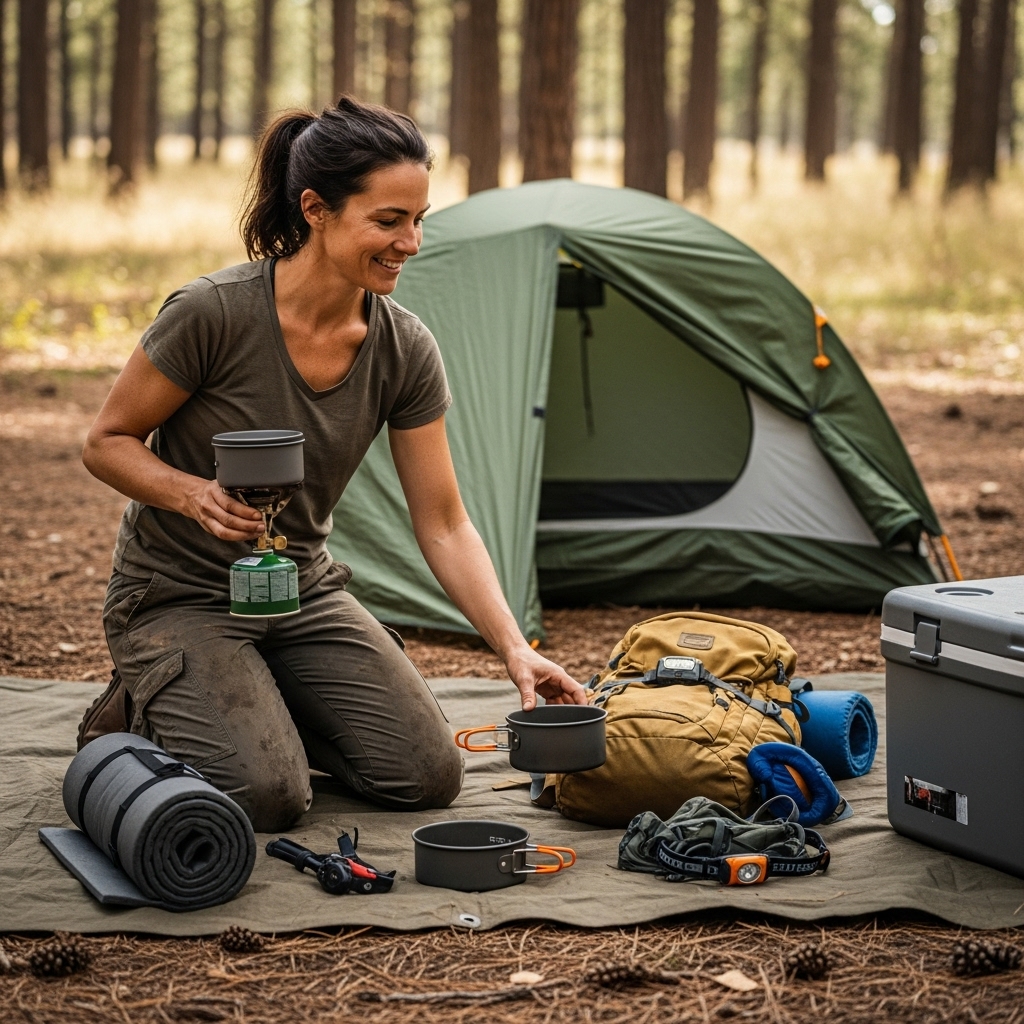

Campers exploring shelter designs often encounter various structural configurations, from traditional A-frames and freestanding domes to minimalist tarps. When evaluating different shelter layouts, people frequently ask is a tent a pyramid or simply a variation of geometric camping structures. While some specialized camping shelters are genuine pyramid tents built around a single center pole, most standard recreational models feature freestanding curved dome frames or tunnel configurations. Understanding how these geometric profiles distribute interior space and handle bad weather helps you choose the right shelter for your trips, whether you prioritize lightweight packability or generous headroom found in spacious camping tents.
Classic pyramid shelters rely on steep, sloping fabric walls anchored to ground stakes to establish structural tension without heavy pole systems. In contrast, modern recreational tents like the Forceatt model listed below utilize crossed aluminum pole structures that create a freestanding dome rather than a true geometric pyramid. Each structural style brings distinct trade-offs regarding usable floor area, peak height, ventilation, and stability in rough conditions. Looking closely at structural geometry, fabric tension, and vestibule space clarifies how these shelter categories perform across diverse outdoor environments.

Understanding Tent Architecture: Pyramid Shelters Versus Modern Camping Tents
The direct answer to whether a tent is a pyramid depends on the specific shelter design you pitch in the outdoors. In pure geometry, a standard camping tent is not automatically a pyramid, even though an entire historical and modern category of shelters known as pyramid tents adheres strictly to that geometric shape. Most recreational models found in campgrounds today belong to dome, tunnel, or cabin classifications rather than pyramid families. Exploring how structural geometry influences interior space, storm protection, and anchoring requirements helps campers determine whether a traditional pyramid design or a modern curved frame best serves their wilderness plans.
The Geometric Definition: When a Camping Tent Qualifies as a Pyramid
A geometric pyramid consists of a flat polygon base paired with triangular outer faces that meet at a single elevated apex point. In outdoor shelter architecture, a tent qualifies as a genuine pyramid when its footprint forms a square, rectangle, or hexagon and its fabric panels converge directly at a central peak. A single vertical center pole positioned beneath that apex typically supports the canopy without secondary framing. Historical bell tents, traditional tipis, and modern ultralight pyramid tarps all function as authentic pyramid structures under this mathematical definition.
Because these shelters narrow continuously from the ground upward, every exterior fabric wall slopes steeply toward the central support pole. This sharp inward angle produces flat triangular walls that directly match mathematical pyramid geometry. Modern outdoor manufacturers frequently refer to these designs as mids or pyramid tarps, tailoring them specifically toward backpackers seeking simple geometry and high strength. Without curved structural poles or vertical side walls, the structure remains squarely within the pyramid category.
Core Characteristics of True Pyramid Shelters
Authentic pyramid shelters stand out because of their minimalist mechanical framework and exceptional strength-to-weight ratios. Rather than relying on rigid metal arches, a pyramid tent uses tension between the perimeter ground stakes and the upright center pole to remain rigid. Pitching a pyramid requires staking out the corners firmly before extending the center pole upward from inside to push the peak into position. Because the structure depends entirely on tension, high-quality stakes and solid ground conditions are mandatory for stability.
Many traditional pyramid shelters feature a single-wall design that saves significant pack weight by omitting separate inner linings. Campers often pitch them directly over bare earth, adding a modular groundsheet or an optional mesh inner tent when insects become an issue. While this modularity gives experienced wilderness travelers incredible flexibility, single-wall pyramid shelters require attentive moisture management. Warm breath and ambient humidity naturally condense on the cold underside of the sloping canopy, requiring intentional airflow to prevent moisture from dripping onto gear.
How Dome and Tunnel Structures Differ from Pyramids
Modern camping gear evolved toward curved pole structures that depart substantially from classic pyramid shapes. Dome tents, which represent the most common shelter style today, utilize two or more flexible poles that crisscross diagonally across the floor plan. When flexed into arched sleeves or pole clips, these poles create a semi-spherical or parabolic canopy. The resulting shape is rounded rather than angular, meaning the tent does not possess the flat triangular faces or sharp apex of a geometric pyramid.
A clear demonstration of curved geometry appears in the Forceatt 2-person tent, which uses 7001 series aluminum poles bent into an arch over a rectangular floor. This arched framework allows the tent to remain freestanding, meaning it holds its three-dimensional shape without needing immediate ground stakes. Tunnel tents take another non-pyramid approach by running several parallel arched poles in a row, forming an elongated half-cylinder. Both dome and tunnel geometries aim to solve the primary spatial limitation inherent to pyramid designs: steep, sloping walls that cut into usable elbow room.
Usable Living Space and Interior Volume Dynamics
The interior livability of any camping shelter relates directly to wall angles and overhead volume. A pyramid tent often boasts an impressive peak height right at the center pole, giving campers plenty of vertical clearance to sit upright or change clothes near the apex. However, because the triangular walls slope sharply downward toward the perimeter, usable floor area drops significantly along the edges. Sleeping pads and gear bags positioned near the corners frequently touch the low-slung fabric, creating friction points where condensation can soak into equipment.
Dome designs distribute interior volume much more evenly across the sleeping footprint. By bending poles outward into arches, a dome tent pushes its fabric walls outward before curving toward the ceiling, creating significantly more shoulder room. For instance, the Forceatt two-person tent features an interior height of 43.3 inches paired with vertical wall clearance, allowing two people to sit side by side comfortably. Campers planning extended trips often compare these dimensions alongside spacious camping tents to ensure that interior volume accommodates both sleeping pads and bulky gear.
Vestibule arrangements also function differently between these geometric shapes. A traditional pyramid shelter incorporates gear storage directly inside the main perimeter or beneath an extended front flap supported by the center pole. Dome tents typically rely on an external rainfly to create dedicated, covered vestibule wings on either side of the sleeping compartment. Having two separate D-shaped doors and two exterior vestibules keeps wet boots and packs outside the inner sleeping quarters, preserving precious clean space inside the tent body.
Weather Resistance and Wind Stability Across Profiles
A shelter’s exterior profile dictates how effectively it sheds aggressive wind, heavy rain, and accumulating snow. True pyramid shelters excel at shedding high winds because their angled triangular panels present no flat vertical surfaces for gusts to catch. Wind hitting a taut pyramid wall gets directed smoothly up and over the apex, provided the perimeter stakes hold firm. Furthermore, the steep pitch prevents snow and pooling water from gathering on top of the canopy, allowing precipitation to slide harmlessly toward the ground.
Dome tents handle chaotic weather through flexible frame dynamics and full-coverage rainflies. High-grade aluminum poles flex under heavy gusts and bounce back into place, distributing wind pressure throughout the interlocking pole structure. For severe rainstorms, having a factory-taped rainfly with a high waterproof rating is critical for keeping occupants dry. Exploring options among heavy duty water resistant camping tents illustrates how integrated welded bathtub floors and 3000mm water ratings prevent groundwater pooling from penetrating sleeping areas.
Both designs encounter specific structural vulnerabilities when weather turns extreme. A pyramid tent relies entirely on ground anchoring; if a single corner stake pulls out of loose soil during a gale, the entire structure can collapse inward. A dome tent can technically stand without stakes, but high winds can roll or deform an unanchored dome unless proper reflective guylines are pinned securely into the terrain. Understanding these distinct mechanical trade-offs helps campers pitch their chosen shelter appropriately based on expected weather forecasts.
Pitching and Anchoring Mechanics in the Field
The setup procedure highlights the physical divergence between pyramids and modern camping shelters. Erecting a pyramid tent is fundamentally a geometric anchoring exercise that begins with pinning down the perimeter corners. Campers must stake out the floor at precise right angles to ensure balanced tension across all four triangular panels. Once the perimeter is pinned, you crawl inside, insert the center pole into the reinforced peak cone, and extend the pole vertically until the fabric becomes drum-tight.
If the initial corner stakes are misaligned or loose, the pyramid walls will sag unevenly, fluttering loudly in the breeze and reducing stability. In rocky or sandy terrain, securing a pyramid requires specialized stakes, snow anchors, or heavy deadman rocks because tension cannot exist without firm anchor points. Pitching a freestanding dome shelter like the Forceatt model requires a very different physical sequence. You lay out the inner tent body, assemble the shock-corded aluminum pole sections, insert the pole tips into corner grommets, and attach the body clips to create an instant three-dimensional skeleton.
Because freestanding domes hold their own shape, campers can pick up the entire assembled tent and rotate it to find the smoothest, most level ground. Staking remains essential for securing the floor against wind and tensioning the rainfly vestibules, but the basic structure does not rely on soil resistance to stay upright. This flexibility makes dome structures far more forgiving on rocky ledges, hard-packed forest service pads, and established campground gravel where driving deep stakes proves difficult.
Ventilation, Airflow, and Condensation Control
Condensation management represents one of the most critical operational differences between shelter geometries. Warm air produced by breathing bodies naturally rises toward the highest point inside any enclosed tent. In a single-wall pyramid shelter, this moisture collects directly on the sloping ceiling fabric and trickles downward toward the perimeter. Without open peak vents or adequate cross-ventilation along the base, campers risk waking up to damp sleeping bags and interior condensation dripping onto gear.
Double-wall dome tents combat moisture buildup through layered material construction. The inner canopy typically combines durable polyester or nylon with expansive micro-mesh panels that allow humid air to escape into the air gap beneath the rainfly. In the Forceatt two-person tent, large mesh window sections paired with two ceiling vents promote steady chimney airflow, venting moist warm air out before it condenses on interior surfaces. Campers interested in temperature regulation and morning light control often examine models like dark room camping tents, which integrate specialized light-blocking fly fabrics while maintaining dedicated ventilation openings.
Managing airflow requires deliberate adjustments depending on temperature shifts and weather conditions. When rain forces you to zip the outer doors shut, keeping dedicated rainfly vents propped open prevents suffocating stuffiness inside the shelter. High-end pyramid shelters incorporate mesh skirts or internal mesh netting inserts to mimic the dual-wall moisture defense of a standard dome. Regardless of geometry, maintaining an active air exchange remains the primary defense against internal moisture buildup during cold camping nights.
Weight, Packed Dimensions, and Trail Portability
Backpackers often favor pyramid shelters because they deliver an outstanding space-to-weight ratio when stripping base weight down to the minimum. Because many hikers already carry adjustable trekking poles, a pyramid tarp can often be pitched using those existing walking sticks, eliminating the need to pack dedicated tent poles. Fabric-only pyramid tarps fold down into compact stuff sacks that take up minimal volume in a backpack, making them favorites for fast-and-light mountain traverses.
Modern dome tents carry slightly more bulk due to their multi-section aluminum pole sets, separate rainflies, and integrated bathtub floors. However, lightweight backpacking domes have closed this gap significantly in recent seasons. The Forceatt two-person tent, for example, lists an overall weight of 5.5 pounds (2.5 kilograms), bundling the full-coverage fly, 7001 series aluminum poles, welded floor, and reflective guylines into a manageable package for weekend hikes. Campers must weigh whether saving a single pound justifies the extra staking effort and single-wall condensation challenges of a minimalist pyramid tarp.
Durability also factors into the packability equation over multiple seasons of trail use. Modern synthetic fabrics used in dome canopies resist abrasion from frequent packing and unfolding, while welded floor designs protect against rough ground debris. Pyramid tarps often use ultralight silnylon or composite fabrics that require careful site selection to avoid sharp thorns, roots, or abrasive granite. Balancing durability with pack weight ensures your shelter lasts for dozens of wilderness outings without developing premature pinhole leaks.
Practical Framework for Choosing the Right Shelter Shape
Determining whether a pyramid shelter or a conventional dome tent fits your style comes down to camping objectives and environmental demands. If you are an experienced backpacker who thrives on ultralight modularity, camps in open terrain with dependable staking ground, and prefers using trekking poles for structural support, a pyramid shelter is an exceptional tool. Its steep angular walls shed heavy snow loads and slice through predictable winds with minimal structural mass.
For car campers, casual backpackers, and couples who value straightforward setup and generous shoulder room, a freestanding dome tent remains the most practical choice. Domes provide predictable livable volume, dual doors for easy midnight exits, and simple assembly on varied campground surfaces where driving stakes can be frustrating. Having dedicated vestibules keeps damp gear organized without crowding the sleeping pad area, while double-wall construction minimizes interior condensation drips during stormy nights.
Ultimately, a camping tent is not automatically a pyramid, but understanding the architectural principles behind both designs empowers you to pick the right tool for your next trip. Always check your tent’s specifications, practice pitching your shelter at home before departing for the trailhead, and inspect your poles, stakes, and guylines regularly. Matching structural geometry to your preferred camping style ensures every night under the stars remains dry, comfortable, and secure.


Write Your Review
No reviews yet. Be the first to share your experience!