

Choosing between a compact shelter and a slightly roomier alternative often comes down to how much gear sits beside your sleeping bag. Solo hikers frequently debate should i get a 1 or 2 person tent when planning their first wilderness trip or upgrading an older shelter. A true solo shelter cuts carried weight, but it provides little elbow room for wet boots, a loaded backpack, or unexpected bad weather. Looking at floor dimensions and vestibule layouts helps clarify whether saving a pound on your back is worth giving up personal interior space.
Campers who value extra livability often lean toward slightly larger models or check out spacious outdoor tent options before locking in their trail gear. Stated manufacturer capacity ratings simply count how many sleeping pads can fit side by side across the tent floor. Because of this tight measurement standard, a two-person shelter often serves as an ideal palace for a solo traveler with bulky gear. Understanding the balance between trail weight, interior width, and pitching footprint will help you select the exact shelter size that matches your outdoor habits.

Pros
- PU 3000mm waterproof coating and factory-taped seams offer dependable rain protection for a single-layer tent.
- Protective pole casing prevents the painful fiberglass splinters common with budget fiberglass poles.
- Simple two-pole cross sleeve design enables rapid, hassle-free solo setup in under two minutes.
- Generous 7-foot interior length provides ample room for taller campers plus interior gear storage.
Cons
- Single-layer design requires adequate airflow to prevent interior condensation during cold or humid nights.
- At 4.34 pounds, it is heavier than dedicated ultralight backcountry shelters.
- The 3.8-foot width realistically accommodates only one adult with gear rather than two full-sized adults.
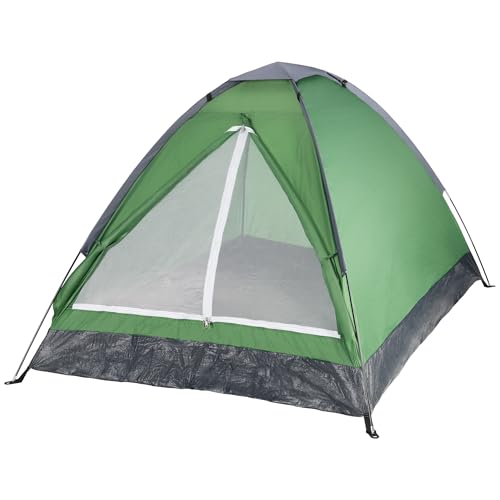
The Night Cat Backpacking Tent is a compact, single-layer dome shelter engineered for solo adventurers, scouts, weekend hikers, and first-time campers looking for a practical, low-cost outdoor shelter. With interior floor dimensions measuring 7.0 by 3.8 feet and a peak center height of 3.6 feet, this shelter is proportioned to give a single adult sleeper generous elbow room with dedicated space along the perimeter to stash a trail pack, boots, and clothing. While the listing notes capacity for an adult and a small child, practical trail use makes it primarily an efficient one-person backpacking and camp shelter.
For weather management, the tent utilizes polyester fabric treated with a PU 3000mm waterproof coating, complemented by sealed, taped seams along the structural stitching. This level of waterproof protection is designed to withstand passing rainstorms and prevent moisture penetration from the wet ground. Because this is a single-layer tent without a separate full-coverage rainfly, managing air circulation is critical. Night Cat addresses this through a large mesh front entryway and an integrated mesh roof window, which work together to facilitate fresh air exchange and keep flying pests out of the sleeping quarters.
The frame relies on two foldable fiberglass poles equipped with an upgraded protective casing. Traditional single-layer fiberglass poles can develop micro-splinters over time that irritate hands during assembly, but this dual-layer sleeve construction shields campers during handling. Pitching the shelter requires sliding both poles through the diagonal roof sleeves and anchoring the corners, a straightforward routine that takes approximately one to two minutes even when arriving at camp after dusk. Once staked, the freestanding dome structure holds its shape cleanly in moderate winds.
Portability is a strong attribute for youth groups and weekend travelers, with the tent packing down into an included carry bag measuring 16.5 by 4.7 by 4.7 inches. At an overall weight of roughly 4.34 pounds, it sits between heavier car camping options and premium ultralight shelters. While long-distance thru-hikers counting every ounce may prefer a lighter tarp or trekking-pole tent, this weight and compact packed size fit conveniently into scout gear packs, motorcycle saddlebags, and car trunks for spontaneous overnights.
Before planning an extended trip, campers should account for the functional tradeoffs of a single-wall shelter. In damp, chilly environments, warm breath will create condensation along the interior polyester walls if the mesh vents are kept shut. Additionally, because there is no external vestibule, muddy footwear and wet outerwear must be brought inside the main tent floor. For budget-conscious hikers, motorcycle campers, scouts, and festival goers seeking a simple, waterproof, and easy-to-pitch solo shelter, the Night Cat tent provides a balanced, accessible solution.
Setting up the Night Cat tent requires minimal effort thanks to its streamlined two-pole sleeve structure. The fiberglass poles slide directly into diagonal sleeves across the canopy, allowing a single person to erect the freestanding dome in roughly one to two minutes without complex hub mechanisms.
Takedown is equally quick, rolling neatly into an included 16.5 by 4.7-inch carry sack. At approximately 4.34 pounds, the tent packs down compactly enough to strap onto the bottom of a backpack, secure to a bicycle rack, or store in a vehicle trunk for weekend outings.
Constructed with PU 3000mm coated polyester and heat-sealed taped seams, this shelter is built to keep rain from penetrating the interior cabin during unexpected downpours. The aerodynamic dome geometry also assists in deflecting moderate wind gusts when properly staked to the ground.
To mitigate condensation common to single-wall tents, the layout includes a large mesh door and an upper roof mesh vent. Keeping these openings clear allows continuous airflow across the ceiling, helping warm moisture escape while maintaining dependable insect defense.

Pros
- Straightforward pole-clip attachment eliminates fabric snagging during assembly
- True PU 3000mm waterproof coating on both the tent body and the rugged 150D Oxford floor
- Compact 16.5-inch packed length makes transport effortless for solo journeys and bike packing
- Roomy interior height of 45 inches allows comfortable seated movement inside
Cons
- At 4.4 pounds, it is heavier than dedicated ultralight solo shelters
- Fiberglass poles do not provide the weight savings or long-term rigidity of high-end aluminum
- Usable interior space is designed strictly for one adult and trail gear, offering minimal room for anyone else
The Night Cat 1-Person Backpacking Tent is a lightweight, freestanding solo dome shelter built for budget-minded backpackers, scout troops, motorcycle campers, and weekend hikers. Designed to eliminate the frustration of threading slender poles through long, snagging fabric sleeves, this shelter relies on quick-attach pole clips. Solo campers can establish a secure camp quickly, even when arriving at a remote campsite after dusk or pitching during sudden weather changes.
Inside the tent, the floor measures 83 by 45 inches with a center peak height of 45 inches. This generous footprint provides ample space for a full-length camping sleeping pad alongside a multi-day backpack, while the 45-inch peak height allows most adults to sit fully upright without rubbing their head against the canopy. The exterior door configuration forms a compact shoe vestibule, providing a dedicated space to keep muddy boots out of the main sleeping compartment.
Weather protection relies on a 210T polyester taffeta canopy paired with a heavy-duty 150D Oxford bathtub-style floor. Both fabrics are backed by a PU 3000mm waterproof coating, and every structural seam features factory waterproof tape to prevent moisture seepage during prolonged rainstorms. To combat interior condensation, the tent incorporates a wide micro-mesh front door and an elevated roof mesh window, allowing natural airflow to vent warm air while keeping insects out.
The structural frame is constructed from foldable fiberglass sections anchored by included metal stakes and adjustable guylines. While fiberglass poles add a bit more trail weight compared to premium aluminum sets, they keep the shelter accessible and allow the entire kit to pack down to a travel-friendly 16.5 by 4.7 by 4.7 inches. At an overall weight of 4.4 pounds (2 kg), the shelter easily packs inside a hiking pack or straps across motorcycle panniers.
Campers planning multi-week treks should note the inherent balance between cost and weight. While 4.4 pounds is manageable for overnight and weekend hikes, it exceeds the weight threshold preferred by strict ultralight thru-hikers. Additionally, while the product listing notes that an adult could squeeze in with a small child in an emergency, the interior is realistically sized for one camper and their gear.
For solo adventurers, scouts, car campers, and weekend hikers seeking a dependable, budget-friendly three-season shelter, the Night Cat solo tent offers solid value. Its proven PU 3000mm waterproofing, rapid clip assembly, and comfortable interior headroom make it a dependable shelter for exploring state parks, trailheads, and outdoor festivals.
The Night Cat solo tent is engineered with genuine PU 3000mm waterproof coatings applied across both the 210T polyester taffeta upper fabric and the rugged 150D Oxford ground sheet. Factory-applied waterproof seam tape covers all structural stitching to block driving rain and prevent damp ground moisture from soaking through the floor.
In blustery weather, the classic dome profile sheds wind effectively when staked down with the included metal ground stakes and tensioned guylines. The permanently tethered rainfly cap covers the roof mesh vent against straight-down downpours without blowing loose in shifting gusts.
Setting up the Night Cat tent takes only a couple of minutes thanks to its clip-attachment system. Instead of fighting with full-length fabric pole sleeves, you simply assemble the two foldable fiberglass poles, cross them into the corner grommets, and snap the external tent clips directly over the frame.
Packed portability is a standout highlight, collapsing down to 16.5 by 4.7 by 4.7 inches in its included storage sack. At 4.4 pounds, it stows easily inside standard 40-liter to 65-liter backpacking packs, fits across motorcycle racks, and tucks neatly into compact vehicle trunks for spontaneous weekend escapes.

Pros
- Compact dimensions provide a manageable footprint for solo campers.
- Constructed from 180D Oxford fabric.
- Lightweight build listed at 2 to 3 pounds for convenient transport.
- Comes with essential setup components including two poles, four pegs, and a carry bag.
Cons
- Weight is inconsistently listed as both 2 pounds and 3 pounds in the product data.
- Interior peak height of 33.5 inches does not allow most adults to sit fully upright.
- No documented waterproof rating, hydrostatic head figure, or seam-sealing information.
The Sutekus Single Tent is a compact, one-person ground shelter featuring a camouflage pattern, designed for solo outdoor activities such as casual camping and hiking. With its modest proportions and straightforward layout, it primarily targets individual campers seeking a simple, budget-conscious sleeping shelter for fair-weather use where basic coverage is required without significant bulk.
Regarding interior space and practical fit, the manufacturer lists this shelter with dimensions of 78.7 inches long, 39.4 inches wide, and 33.5 inches high (200 cm by 100 cm by 85 cm). While the nearly 79-inch length and 39-inch width provide sufficient floor space for an individual sleeping mat and personal gear, the peak height is distinctly low. Campers should recognize that stated capacity does not equal generous living space; at under three feet of vertical clearance, the tent will not permit most adults to sit upright comfortably.
The tent body is made from 180D Oxford fabric and incorporates a single entrance for entry and exit. Setup relies on two included poles along with four ground pegs to anchor the corners. The product listing does not state the pole composition, whether the poles use shock-corded construction, or if pole sleeves or clips are used. Furthermore, details regarding windows, mesh panels, vents, or rainfly coverage are absent from the product documentation, leaving airflow and weather resistance unverified.
Portability is an important factor for solo gear, and this shelter lists a weight of 3 pounds in the feature bullets alongside a 2-pound entry in the product specifications. While this discrepancy creates uncertainty about the exact trail weight, both figures represent a light overall load that packs into the provided storage bag. Pitching the shelter involves securing the four corners with the included pegs and inserting the two poles. When breaking camp, routine care includes wiping down the 180D Oxford fabric and ensuring the tent is fully dry before packing it away in its storage bag.
Prospective buyers should take note of several important unknowns. The manufacturer does not provide a hydrostatic head rating, waterproof coating specification, or wind-stability rating, nor does the listing mention an included rainfly. Because weatherproofing specifications are not established, the shelter should not be relied upon for heavy rain or severe weather. Anchoring is also limited to four corner pegs, without documented guylines for rough ground or high winds.
For solo campers needing a lightweight, enclosed shelter for backyard sleepouts, festival grounds, or dry-weather overnight trips, the Sutekus Single Tent offers basic utility at a minimal weight. However, if your camping trips involve potential rainfall, high humidity, or extended time spent inside the tent, comparing this model with tents that document rainfly coverage, waterproof ratings, and built-in ventilation will help ensure your gear matches the conditions you anticipate.
The Sutekus Single Tent is built for one person, with floor dimensions measuring 78.7 inches long by 39.4 inches wide. This layout provides enough room for a single sleeping pad with a small amount of floor space remaining along the sides for personal accessories.
The interior peak height measures 33.5 inches (85 cm), creating a low-profile sleeping shelter rather than a sit-up tent. Taller campers or those who prioritize head room should note that this height limits vertical movement, making it primarily suited for sleeping rather than lounging.
This shelter is constructed from 180D Oxford fabric, finished with an outdoor camouflage pattern. The package includes two poles to support the tent body and four ground pegs to secure the base.
The manufacturer does not provide details regarding pole materials, fabric coatings, seam sealing, or hydrostatic head ratings. As a result, the materials are best viewed as intended for basic fair-weather protection rather than heavy downpours or harsh weather conditions.
The package contents documented by the manufacturer include one tent body with two poles, four ground pegs, and one storage bag for transport and organization.
Accessories such as a ground footprint, additional guy lines, or a separate rainfly are not listed as included. The manufacturer states that customer service is available to address quality issues directly if they arise.
Space, Weight, and Livability: Choosing the Right Tent Capacity
Choosing the right shelter size depends primarily on how you balance physical packed weight against everyday living comfort inside the shelter. If you prioritize absolute trail efficiency and plan only to sleep inside your shelter, a true one-person model keeps your pack light and compact. Campers who expect to spend evening hours waiting out storms, changing clothes indoors, or stashing their backpack out of the dirt almost always benefit from the extra floor space of a two-person design.
How Tent Manufacturers Define Stated Capacity
Outdoor brands calculate tent capacity based on the maximum number of standard sleeping pads that can sit directly against each other on the floor. A standard mummy pad measures roughly twenty inches wide, which means a one-person tent often leaves zero extra room along the perimeter. Manufacturers assume occupants will lie flat without shifting, tossing, or needing space for extra accessories beside them.
Because these baseline figures rely strictly on pad dimensions, stated capacity rarely accounts for real human elbows, broad shoulders, or internal gear storage. A two-person rating generally means two adults can sleep shoulder to shoulder with their heads and feet touching opposite walls. If you camp solo in a two-person shelter, that second sleeping space becomes a dedicated interior shelf for your dry bags, jacket, and boots.
Floor geometry also changes how spacious a capacity rating feels in practical field conditions. Rectangular floor plans maintain consistent width from head to toe, giving you predictable storage along the entire side of your pad. Tapered designs save trail weight by narrowing toward the footbox, which can make a one-person shelter feel remarkably snug if your sleeping pad is wide.
Floor Dimensions and Real Interior Livability
Checking exact floor dimensions provides a much clearer picture of daily comfort than relying solely on the capacity label. The Sutekus single tent, for example, measures 78.7 inches long by 39.4 inches wide, offering a narrow profile built strictly for solo use. With an interior width near forty inches, a solo camper has just enough room for a sleeping pad and a small dry bag tucked alongside the wall.
Moving up to a wider design, models like the Night Cat backpacking tent feature dimensions measuring seven feet long by 3.8 feet wide. That extra width expands the usable floor area to roughly forty-five inches across, allowing a solo hiker to bring a full multi-day backpack inside without crowding the sleeping bag. Some lightweight models can even accommodate an adult and a small child in a pinch, though personal space remains snug.
Peak height plays an equally vital role in livability when you need to change your clothes or sit upright during bad weather. The Sutekus shelter offers a low profile of 33.5 inches, requiring campers to crawl inside and stay reclined. Tents with peak heights reaching 3.6 to 3.8 feet, such as the Night Cat options, provide the vertical clearance needed to sit upright on your sleeping pad without brushing your head against wet fabric.
Weight and Packed Size Trade-Offs on the Trail
The physical burden on your back is the primary reason why backpackers consider tight one-person shelters in the first place. The Sutekus solo shelter weighs roughly three pounds, keeping total pack weight remarkably low for strenuous backcountry climbs or bike excursions. Shaving a pound or more from your base weight helps reduce joint fatigue over long mileage days on rocky trails.
Stepping up to a roomy solo shelter or a compact two-person model increases carried weight to roughly 4.4 pounds, as seen with both Night Cat designs. While that extra pound requires more effort on steep ascents, many campers find the trade-off worthwhile for the dramatic increase in floor area. Car campers and festival attendees rarely need to worry about this modest weight variance since vehicle trunks carry the bulk.
Packed dimensions also dictate how easily a tent fits into your backpack or attaches to motorcycle racks. Foldable fiberglass poles allow compact shelters to collapse into bundles around 16.5 inches long by 4.7 inches wide. If your backpack has limited internal volume, choosing a shelter with short pole segments prevents the stuff sack from protruding awkwardly above your pack frame.
Managing Gear Inside Versus Under the Vestibule
Gear storage is often the deciding factor between solo and two-person shelters for experienced outdoor travelers. In a minimalist one-person design without a vestibule, your muddy trail runners, wet raincoat, and bulky backpack must either crowd your sleeping area or sit outside exposed to the weather. Waking up to damp footwear or dirt inside your sleeping bag quickly ruins an otherwise peaceful backcountry trip.
A well-designed rainfly with an integrated vestibule creates sheltered exterior ground space right outside the tent door. The Night Cat upgraded tent includes a dedicated front vestibule area where you can drop dirty hiking shoes before stepping inside. This separation keeps the inner sleeping floor clean while shielding your essentials from rain and morning dew.
In severe weather, having the interior floor space of a two-person shelter allows you to unpack your gear completely inside four walls. You can organize food bags, read a map, and sort clothing without letting rain blow through an open vestibule zipper. That security provides peace of mind when foul weather keeps you tent-bound for several hours.
Weather Protection, Seams, and Material Differences
Shelter fabrics must balance water resistance, breathability, and physical abrasion resistance across varied terrain. The Night Cat shelters use 210T polyester taffeta with a PU 3000mm water-resistance coating, paired with sealed seams along every stitch line. Campers who regularly explore damp climates often study heavy duty water resistant camping shelters to understand how floor tub fabrics hold up against saturated ground.
Floor fabric thickness matters just as much as rainfly coatings when pitching on rough gravel or stick-littered forest floors. A 150D or 180D Oxford fabric floor, used in the Night Cat and Sutekus models, offers substantial resistance against pinhole punctures. Thinner fabrics reduce trail weight but demand a protective groundsheet to prevent dampness from seeping upward under body weight.
Rainfly coverage also dictates how well a shelter performs when winds drive rain sideways against the walls. The Wakeman two-person tent incorporates a nylon body with a separate rain fly and a ventilation window to balance airflow and light moisture protection. Minimalist cap-style flies keep pack weight down, but full-coverage flies provide significantly better security during extended downpours.
Pitching Footprint, Pole Assemblies, and Setup Ease
A smaller tent footprint offers substantial advantages when you camp in dense forests or rocky alpine terrain where flat ground is scarce. A narrow one-person tent slips easily between boulders, roots, and narrow tree clearings where a wider two-person shelter simply cannot fit. Solo wild campers often prefer tiny footprints because they expand your campsite selection in primitive areas.
Pole attachment styles directly influence how quickly you can erect your shelter when rain starts falling at camp. Traditional pole sleeves require pushing long segmented poles through fabric tunnels, which can snag on corners. Clip-based systems, such as the mechanism on the Night Cat upgraded tent, snap directly onto the frame, letting you pitch the shelter in roughly a minute. Hikers looking for swift pitches often research easy setup camping tents to compare various pole designs.
Pole construction materials also determine durability and handling safety during setup and takedown. Fiberglass poles remain a budget-friendly staple for general outdoor shelters like the Wakeman and Night Cat models. Designs with protective outer cases over the fiberglass poles help shield your hands from tiny fiber splinters during assembly and disassembly.
Condensation Control and Ventilation Dynamics
Internal moisture management becomes dramatically more challenging inside small shelters with limited interior air volume. Every breath releases warm water vapor into the air, which quickly condenses against cold tent walls during chilly nights. Because a one-person tent places your face and sleeping bag inches from the fabric, brushing against wet walls is a common frustration.
Two-person tents offer more airspace, allowing vapor to disperse more evenly before striking cold exterior panels. Mesh panels, large zippered doors, and roof vents promote passive cross-ventilation that pulls moist air out while drawing fresh air inside. Both Night Cat models incorporate large mesh doors and roof mesh windows to keep airflow moving smoothly while blocking insects.
Pitching your tent to face prevailing evening breezes helps maximize airflow through these integrated mesh panels. Leaving a small vestibule gap cracked open during calm rains further reduces moisture buildup on the ceiling. Managing condensation properly ensures that your sleeping bag insulation stays dry and warm throughout cold wilderness overnights.
Matching Tent Capacity to Your Camping Style
Backpackers logging twenty miles a day on rugged trails generally lean toward dedicated one-person tents to minimize their physical toll. When you arrive at camp exhausted, your only goal is sleeping, making extra floor space largely irrelevant. The weight savings of a compact solo shelter compound over hundreds of trail miles, keeping your endurance high.
Weekend backpackers, bike tourers, and scout campers usually find that a one-to-two person tent provides the ideal compromise. Carrying four pounds of shelter allows you to keep gear dry inside, sit upright comfortably, and change clothes without contorting your body. That extra flexibility turns bad weather from an endurance test into a relaxing camp evening.
Car campers, beachgoers, and festival attendees have almost no reason to restrict themselves to a tiny one-person shelter. Traditional two-person dome tents, like the Wakeman nylon shelter with fiberglass poles, provide generous room for wide sleeping cots or thick foam mattresses. When vehicle transportation eliminates pack weight concerns, extra space always translates to better sleep.
Practical Decision Checklist for Solo Campers
Start by measuring your current sleeping pad width to see how much floor room you realistically require. Standard pads measure twenty inches wide, but long and wide pads expand to twenty-five or thirty inches. If you sleep on a wide pad, a narrow solo shelter under forty inches wide leaves virtually no room for personal belongings.
Consider your typical trip duration and the climate where you spend most of your outdoor nights. If you frequently camp in rainy regions, spending hours trapped inside a narrow solo bivouac can feel claustrophobic and damp. A two-person shelter gives you space to read, cook under a sheltered vestibule porch, and stretch out without feeling confined.
Assess your packing priorities honestly to determine whether trail ounces or camp comfort matter more to your style. For pure ultralight hiking, choose a dedicated one-person shelter and keep your pack light. For virtually every other camping scenario, picking a two-person tent delivers the livability, storage, and long-term comfort that makes wilderness travel enjoyable.


Write Your Review
No reviews yet. Be the first to share your experience!