

Sharing a backcountry tent requires physical coordination, emotional patience, and reliable equipment that will not buckle in the middle of the night. Camping as a couple quickly highlights how physical gear and interpersonal communication mirror each other when setting up a temporary home in the wilderness. Readers exploring what are tent poles in a relationship often encounter both a psychological metaphor for core support pillars and a literal reminder of how structural gear dictates campsite peace.
A sturdy frame creates the usable interior volume, headspace, and stability needed to weather severe conditions together. Choosing spacious outdoor tents with reliable pole geometry ensures both partners have enough room for sleeping pads, gear storage, and comfortable movement. Understanding how tent pole mechanics, proper tensioning, and durable materials work protects your shelter while keeping campsite teamwork smooth and enjoyable.


Pros
- Lightweight 0.54-pound total weight makes it practical for backpacking and bike touring repairs
- Durable 7001 T6 aluminum construction avoids the splintering and cracking common to aging fiberglass poles
- Pre-assembled shock-corded structure allows immediate setup without threading elastic from scratch
- Compact 17.48-inch collapsed length fits easily inside pack side pockets or panniers
- Can be cut down and re-knotted to match custom shelter dimensions
Cons
- Sold as an individual single pole, requiring multiple purchases for multi-pole tent designs
- End tip style and grommet compatibility are not specifically detailed in the product specifications
- Shortening the pole requires DIY tools to cut aluminum tubing and adjust the internal shock cord
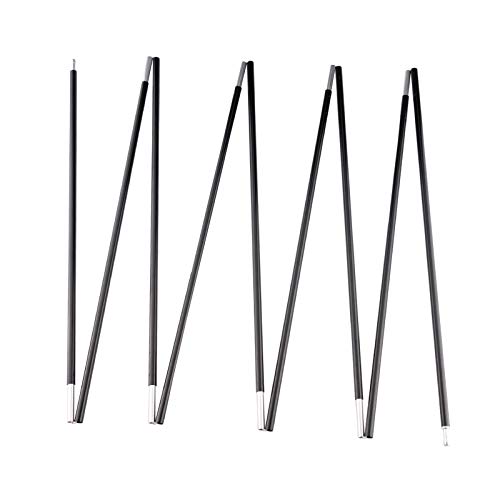
The BRILLIANCE4U Replacement Aluminum Tent Pole is a specialized tent repair accessory designed for campers who want to restore an existing shelter rather than invest in an entirely new tent. Frame failures can happen due to high winds, rough handling, or material fatigue, particularly with original fiberglass poles that crack and splinter over time. This aftermarket single pole provides a direct replacement option for solo campers, couples, and families looking for a durable metal frame component.
In terms of physical measurements, the fully assembled pole spans 12 feet 1.4 inches (369.3 cm) with an outer diameter of 0.33 inches (8.5 mm). It breaks down into linked segments measuring 17.48 inches each, resulting in a compact folded profile that slides easily into backpack sleeves, bicycle panniers, or camp storage totes. With a total weight of 0.54 pounds per pole, it adds very little bulk to a gear kit, making it suitable for both car campers and weight-conscious backpackers who carry repair gear into the field.
The pole is manufactured from heat-treated 7001 T6 series aluminum alloy. This material is widely used in outdoor shelters because it offers a favorable strength-to-weight ratio and can handle the continuous arc required by dome and tunnel designs without cracking. The sections come pre-strung on an internal elastic shock cord, allowing quick assembly out of the box. According to the manufacturer, sections can also be cut down or removed to achieve a custom span if your specific tent requires a shorter rod.
When assessing fit, buyers should keep in mind that this listing includes only a single pole. Most standard dome or tunnel tents require two or three poles to erect the canopy, so campers needing to replace an entire pole set will need to purchase multiple units. It is essential to measure your broken pole's exact total length, outer diameter, and end tips, as attachment systems such as corner grommets, eyelets, and pole sleeves vary significantly across tent manufacturers.
Important limitations include the lack of detailed end-tip specifications in the listing, leaving some uncertainty about whether the tips match every proprietary grommet style. Additionally, shortening the pole requires basic DIY capability to cut aluminum tubing cleanly and retie the shock cord. For campers who have confirmed their tent dimensions and want an affordable, lightweight aluminum replacement pole, this BRILLIANCE4U rod is a practical and durable repair option.
This replacement pole uses 7001 T6 heat-treated aluminum alloy, which provides dependable flexibility and resilience under typical tent pitch tension. Unlike fiberglass rods that tend to fray, crack, or leave sharp splinters when overloaded, aluminum alloy holds its shape and bends cleanly without shattering.
The outer diameter is machined to 0.33 inches (8.5 mm), matching the standard diameter of many lightweight two-person to four-person camping tents. The titanium gray finish offers a subtle look that blends in well with most modern tent designs while helping protect the bare metal from outdoor elements.
The pole arrives pre-assembled with elastic shock cord running through all sections, eliminating the tedious task of routing and tensioning fresh cord by hand. The sections align and snap together quickly, speeding up pitch time at the campsite.
For tents with pole paths shorter than 12 feet 1.4 inches, the manufacturer notes that the pole can be customized. Campers can remove an entire section or cut a tube to length using a mini tubing cutter, untying and retying the shock cord knot to secure the new length.
The Structural Anatomy of Camp Shelters and Partnership Dynamics
Every freestanding camping shelter relies on a continuous balance of tension, flexibility, and load transfer to remain upright against environmental pressures. When partners ask about the concept of tent poles in their relationship, the conversation bridges metaphorical relationship dynamics with the concrete realities of campsite shelter management. Exploring both perspectives clarifies how emotional support pillars function alongside the physical aluminum or fiberglass rods that keep your camping shelter secure. Understanding this balance helps couples work as a unified team when facing unpredictable weather or challenging backcountry conditions.
Defining Tent Poles in a Relationship: Metaphor Meets Practical Reality
In relationship discussions, a tent pole represents a core structural foundation that sustains a shared life. Just as a physical camping tent collapses without its curved framework, a relationship cannot stand without foundational qualities such as honesty, mutual respect, emotional vulnerability, and equitable effort. These load-bearing values absorb daily stress, define interpersonal boundaries, and establish a safe psychological haven where both partners can thrive. When an essential emotional pillar buckles under unacknowledged strain, the entire structure sags, leaving both individuals exposed to interpersonal friction.
In the outdoors, tent poles are literally the skeleton holding fabric walls against wind, rain, and gravity. Pitching a tent together provides an immediate physical demonstration of how emotional communication translates into tangible action. When partners arrive at a campsite exhausted from a long trail day, assembling the shelter demands coordinated effort and patience. A breakdown in patience during this task often mirrors deeper miscommunications in daily life, illustrating why the tent pole metaphor resonates so powerfully with campers.
Recognizing the dual nature of this concept allows couples to improve both their relational teamwork and their technical camping skills. Viewing shelter assembly as a shared practice helps partners cultivate patience, proactive verbal check-ins, and mutual support under pressure. Whether discussing life goals or threading aluminum poles through rainfly channels, strong structural framing provides stability when unpredictable storms arise.
Why Pitching a Tent Tests Couple Communication
Setting up camp late in the afternoon frequently brings physical fatigue, hunger, and fading daylight into direct contact with intricate gear instructions. Tent poles require coordinated handling, as one person typically secures pole tips into corner grommets while the other feeds curved segments through tight fabric sleeves. A sudden jerk or misplaced tug can jam a ferrule inside a sleeve or bend an aluminum rod past its elastic limit. Approaching this assembly sequence as an active collaboration transforms a potential argument into a synchronized routine.
Couples who struggle during setup often benefit from exploring tents designed for quick setup to minimize frustration when arriving at camp after dark. Simplified pole hubs or pre-attached framing reduce the number of individual decisions required during pitching. Even with user-friendly systems, clear verbal cues remain critical for success. Agreeing on who anchors the base, who guides the ridge poles, and who secures the rainfly clips keeps the campsite calm and organized.
Establishing defined roles before unrolling the tent body eliminates guesswork and prevents duplicated effort. One partner can organize stakes and lay out the footprint while the other connects pole sections smoothly without snapping them together. Communicating intentions clearly before applying tension to pole arches prevents accidental injuries and protects the tent from fabric tears. When both individuals understand their specific contributions, pitching becomes an enjoyable ritual rather than a stressful chore.
The Engineering Skeleton: How Tent Poles Carry Structural Loads
Tent poles operate under continuous bend stress, transforming straight alloy or composite rods into flexible arches that support heavy fabric panels. This curved tension gives a tent its three-dimensional shape, distributing atmospheric loads from wind, falling rain, and morning dew across the perimeter stakes. Without proper pole geometry, the fabric would flap uncontrollably, pooling water along the roof and compromising internal living space. The poles act as the literal skeleton, holding the living space open against atmospheric gravity.
Modern dome and tunnel tents utilize cross-pole designs that intersect at central hubs to maximize interior volume. This intersection distributes lateral wind forces down through multiple corner grommets rather than concentrating force on a single weak point. When camping as a pair, interior headspace and steep sidewall angles determine whether two adults can sit upright without crowding each other. High-quality pole architecture ensures that usable floor space matches the stated occupant capacity of the shelter.
Different pole geometries also determine how effectively a tent ventilates condensation generated by two sleepers overnight. Ridge poles create steep side canopies that hold rainflies away from inner mesh walls, allowing air to circulate freely from lower perimeter vents up to roof exhausts. If poles sag or lose tension, the rainfly sags against the tent canopy, transferring moisture directly onto sleeping bags. Reliable pole tension is therefore essential for maintaining a dry, comfortable interior climate throughout the night.
Material Integrity: Aluminum Versus Fiberglass Rods Under Stress
Pole materials directly influence shelter longevity, weight, and how a tent reacts to sudden wind gusts. Traditional entry-level tents frequently include fiberglass poles, which consist of drawn glass fibers bonded with resin. While fiberglass offers low initial manufacturing costs, it tends to splinter under heavy lateral loads or extreme cold. Splintered fiberglass poles can puncture rainfly fabric, cause painful splinters during handling, and fail abruptly during windstorms.
High-grade aluminum alloy, such as 7001 series aircraft-grade aluminum with T6 heat treatment, offers significant structural advantages for outdoor shelters. Aluminum rods flex smoothly through tight radii, absorbing wind energy by bending elastically before returning to their original shape. Replacement kits such as the BRILLIANCE4U aluminum tent poles utilize 7001 series alloy to provide lightweight durability for backpacking and car camping setups. Upgrading from brittle fiberglass to resilient aluminum reduces the risk of sudden structural failure when camping far from trailhead support.
Weight and packed dimensions also play a major role when choosing between materials for couples who backpack. Aluminum poles deliver a significantly higher strength-to-weight ratio than fiberglass, reducing pack weight for long trail days. Lighter packs reduce physical exhaustion, which directly contributes to better moods and smoother communication at the campsite. Investing in durable aluminum framing supports both shelter safety and overall trip comfort.
Field Repairs and Handling Unexpected Pole Fractures
Unexpected structural failures happen outdoors when sudden wind gusts twist a tent frame or a camper accidentally trips over a guyline. A cracked pole segment or disconnected ferrule can quickly threaten shelter safety if left unaddressed. Having a dedicated repair sleeve in your pack prevents a broken pole from ending a backcountry trip prematurely. Prepared campers carry specialized splints designed to bridge cracked sections until permanent replacements can be installed.
A lightweight repair accessory like the GEAR AID Tent Pole Splint slides directly over a fractured section to restore load-bearing capacity in minutes. Made of anodized aluminum, this splint accommodates pole diameters up to seventeen thirty-seconds of an inch, covering typical outdoor tent frame sizes. Sliding the splint over the break and securing both ends with durable duct tape or repair tape stabilizes the bend radius. Handling gear emergencies calmly together reinforces partnership trust and ensures your shelter remains weather-tight throughout the night.
Experiencing a gear failure in the wilderness offers an opportunity to practice shared problem-solving under pressure. Instead of assigning blame for an accidental slip or gust-damaged pole, constructive partners focus immediately on practical remediation. Keeping emergency repair sleeves accessible in your shelter stuff sack ensures quick deployment when storms threaten your camp. Once the splint is firmly positioned, checking guyline tension around the repaired arch prevents localized stress from causing secondary failures.
Measuring and Sizing Replacement Tent Poles
Replacing a damaged or aging tent pole requires careful measurement of both the total assembled length and the outer diameter. Pole diameters vary widely, commonly ranging from seven point nine millimeters for lightweight shelters to nine point five millimeters or wider for family-sized tents. Using a caliper or precision ruler to verify outer diameter ensures the replacement pole fits through existing tent fabric sleeves and grommet eyelets. Selecting an incorrect diameter can lead to excessive frame stiffness or inadequate wind resistance.
Preassembled replacement kits, such as those from BRILLIANCE4U, often allow campers to remove individual segments to match custom shelter dimensions. If a replacement rod measures longer than your original frame, you can untie the interior shock cord, cut the aluminum tube carefully with a tubing cutter, deburr the edge, and re-knot the cord. Confirming male tip compatibility or insert plug styles prior to installation guarantees a secure fit into the tent base grommets. Taking time to adjust pole length accurately restores proper fabric tension across the entire shelter.
Shock-cord tension inside replacement poles must also be calibrated carefully during customization. An overly tight cord makes assembly difficult and pulls segments together with excessive force, potentially flaring tube ends. Conversely, a loose cord allows segments to slip apart inside pole sleeves during setup, causing fabric snags and frustrating delays. Testing the assembled pole before taking it into the backcountry ensures smooth operation and reliable framing during your next trip.
Reinforcing Shelter Stability with Guyouts and Weather Protection
Tent poles cannot withstand strong winds on their own without proper tensioning from guylines and heavy-duty stakes. Guylines anchor directly to reinforced attachment points along the pole sleeves, pulling the frame outward to counteract lateral wind deflection. When camping in exposed environments, pairing your framing with weather-resistant camping shelters ensures the rainfly sheds water while maintaining structural rigidity. Setting guyline angles at roughly forty-five degrees transfers gale-force loads down to solid ground anchors.
Even tensioning between opposite sides of the shelter prevents pole segments from bowing unevenly under pressure. Uneven tension puts excessive torque on individual aluminum joints, leading to micro-fractures over extended camping trips. Partners can divide tasks during stormy setups, with one person adjusting line tensioners while the other verifies that the rainfly seams align with the underlying pole skeleton. Coordinated anchoring stabilizes the entire shelter and keeps internal living quarters dry and secure.
Staking technique also directly influences how much stress reaches the tent poles. Driving stakes into the ground at a seventy-degree angle facing away from the tent provides maximum holding resistance against uplifting winds. In rocky or sandy soils where stakes pull out easily, weighting stakes with flat rocks or utilizing deadman anchors preserves frame stability. Protecting the pole skeleton through sound anchoring principles ensures your shared camp withstands challenging weather without incident.
Preventative Care, Storage, and Long-Term Durability
Maintaining tent poles between trips preserves internal elastic shock cords and prevents metal corrosion. When collapsing pole sections, always begin from the center and work outward toward the ends. Collapsing poles starting from one end places disproportionate tension on the remaining shock-cord elastic, causing it to lose elasticity prematurely. Folding sections gently rather than letting them snap together protects tube ends from flaring or cracking.
Wiping down pole sections with a clean, dry cloth removes abrasive grit, sand, and moisture before long-term storage. Storing poles in a cool, dry environment prevents oxidation and ensures the internal elastic cord retains its recovery strength. Inspecting pole ferrules, end tips, and shock cords ahead of your camping season guarantees that your shelter will perform reliably when you reach the campsite. Just as deliberate care preserves relationship bonds, thoughtful gear maintenance ensures your outdoor home stands strong for years of shared adventures.
Never store tent poles inside a damp tent bag where trapped humidity can corrode aluminum ferrules or promote mildew growth on shock-cord covers. If poles were exposed to saltwater spray or coastal fog, rinsing them in clean fresh water and drying them completely prevents galvanic corrosion. Taking regular care of your gear extends its functional lifespan and gives you peace of mind whenever you plan an outdoor excursion with your partner.
Shelter Teamwork as a Foundation for Outdoor Adventures
Mastering the mechanics of camping shelter framing ultimately fosters deeper trust, shared confidence, and mutual reliance between partners in the outdoors. When both individuals understand how structural poles, proper guying, and basic repairs function, unexpected weather challenges become rewarding team achievements rather than stressful conflicts. The shared effort of pitching, maintaining, and taking down a tent creates a collaborative rhythm that enhances every outdoor journey.
Approaching both emotional pillars and physical gear with intentionality ensures that your campsite remains a source of comfort, protection, and connection. Investing in reliable equipment, carrying essential repair accessories, and communicating clearly during every setup stage guarantees that your shelter will hold firm against whatever conditions the backcountry brings.


Write Your Review
No reviews yet. Be the first to share your experience!