

Planning an overnight wilderness trip or a weekend getaway at a state park requires dependable shelter from rain, wind, and insects. A clear understanding of what is a camping tent clarifies how portable outdoor shelters function and why specific designs fit different outdoor activities. Unlike temporary sunshades or open canopies, a dedicated camping shelter creates an enclosed microclimate that balances exterior weather resistance with interior airflow. Campers looking for reliable overnight protection often explore Clostnature Waterproof Camping Tent for 2 Person or specialized water-resistant camping tents to stay dry and comfortable through unexpected storms.
Modern outdoor shelters range from ultralight backpacking models to sprawling multi-room cabin structures designed for family road trips. Choosing the appropriate layout depends heavily on gear volume, travel distance, group size, and anticipated weather conditions. Beginners often gravitate toward intuitive options like easy-pitch outdoor shelters or spacious dome models that assemble in minutes. Reviewing essential components, structural fabrics, and foundational camping terms ensures that your temporary home in nature provides both comfort and safety throughout your journey.

Pros
- Instant frame mechanism with pre-attached carbon steel poles simplifies pitching for beginner campers
- Spacious 168 x 120-inch interior with a tall 76-inch center height lets most adults stand comfortably
- Generous floor layout accommodates two queen air mattresses or five campers with camping equipment
- Comprehensive ventilation layout with mesh panels on all four sides, floor vents, and an open mesh roof
- Practical utility features including durable SBS zippers, a power cord access port, and internal storage pockets
Cons
- At 27.5 pounds, the total weight and long frame dimensions restrict this shelter strictly to vehicle-based car camping
- The inner roof is made entirely of non-waterproof mesh fabric, requiring proper rainfly setup and guy line tension to prevent water pooling in wet weather
- Packing the large instant frame back into the carry bag requires careful folding to prevent the storage bag zipper from jamming
The FanttikOutdoor Zeta C10 Pro is a large, instant-pitch cabin tent engineered specifically for family camping and vehicle-supported outdoor trips. Designed to eliminate the chore of feeding long poles through narrow fabric sleeves, this shelter features a pre-attached carbon steel frame that allows campers to unfold and raise the main structure in roughly 60 seconds. Its tall cabin silhouette and wide rectangular base make it an appealing option for car campers, parents with children, or groups who prioritize full standing room and rapid campsite setup over compact packability.
Regarding interior volume, the tent measures 168 inches long by 120 inches wide (14 feet by 10 feet), with a generous peak center height of 76 inches. The manufacturer lists the maximum sleeping capacity at ten people based on standard sleeping-bag arrangements. For practical camping comfort, the documented specs note it comfortably fits five people when accounting for duffel bags and gear, or up to two standard queen-sized air mattresses. The vertical cabin-style wall geometry maximizes floor-to-ceiling space, letting campers move around, change clothes, and set up cots without crouching.
Ventilation is a core design element of the Zeta C10 Pro. The shelter incorporates fine B3 mesh on windows across all four walls, low-profile vents at the floor to pull in cooler air, and a full mesh ceiling screen for warm-weather stargazing and continuous airflow. The hardware setup includes durable SBS zippers on the access doors and protective sleeves covering the carbon steel pole joints to guard against fabric abrasion. Campers will also find a dedicated power cord entrance port for running an electrical extension lead inside, as well as interior wall pockets to keep flashlights, phones, and small essentials organized.
Weather management relies on a combination of water-resistant body fabric, a door zipper drainage channel, and a tub-style drainage base designed to resist ground moisture and keep insects out. According to the manufacturer, the tent is capable of handling winds up to 35 mph when fully anchored using the included ground stakes and adjustable guy lines. However, buyers should take note of the ceiling construction: the inner roof is made of breathable mesh fabric and provides no water resistance on its own. Using the outer rainfly and properly tensioning the guy lines is essential during rain to prevent water from pooling on the overhead fabric and causing leaks.
Transport and teardown are typical for an instant-frame cabin tent of this scale. Weighing 27.5 pounds, the unit is intended to be carried directly from a vehicle trunk to the campsite rather than hauled over long distances. Packing requires folding the tent fabric neatly around the collapsed carbon steel skeleton before sliding it into the provided storage bag. Overall, the FanttikOutdoor Zeta C10 Pro represents a capable choice for group car campers who want generous vertical clearance, dependable airflow, and a hassle-free setup, provided campers remember to secure the rainfly before stormy weather rolls in.
Pitching the Zeta C10 Pro relies on an integrated frame system where the carbon steel poles remain permanently attached to the tent fabric. Campers unfold the structure and extend the telescoping legs outward until they lock into position, a process the manufacturer states can be completed in under 60 seconds. This pre-assembled design removes the guesswork of matching poles and feeding them through fabric sleeves, making it particularly accessible for first-time campers or late-evening campground arrivals.
Packing the tent back into its carry bag requires methodical folding. Because the instant steel skeleton creates a bulky bundle, the fabric must be smoothed and wrapped neatly around the frame sections before sliding it into the bag. The manufacturer specifically highlights that the carry bag zipper pull must face forward and be operated smoothly; forcing the zipper if fabric gets caught can lead to jams. Staking the base and tensioning all included guy lines remains necessary to achieve stability and prevent sagging.
With a floor footprint of 14 feet by 10 feet (168 by 120 inches), the Zeta C10 Pro provides 140 square feet of total floor space. The manufacturer provides two capacity benchmarks: an industry-standard limit of ten people for sleeping side-by-side without gear, and a comfortable baseline of five campers when factoring in luggage, backpacks, and personal walking space. For couples or small families utilizing elevated bedding, the interior dimensions easily accommodate two queen air mattresses with room left over for central pathways.
The straight-wall cabin design yields a 76-inch center height that allows most adults to stand fully upright throughout the central area of the tent. This standing clearance significantly improves daily comfort during extended weekend stays, providing ample room for changing clothes or arranging camp chairs inside during bad weather. Built-in mesh organizer pockets keep everyday items off the floor to preserve usable foot space.
The Zeta C10 Pro combines water-resistant shell fabric with a tub-style floor base to help shield occupants from surface runoff and damp campsite turf. To protect door openings, a specialized drainage channel is positioned at the bottom zipper line to redirect trickling water away from entry seams. The manufacturer specifies that the tent can withstand wind gusts up to 35 mph, provided the full complement of included ground stakes and adjustable guy lines are firmly anchored.
A critical consideration for wet-weather camping is the ceiling configuration. Because the inner canopy is composed of breathable B3 mesh, it offers no rain barrier by itself. In rainy conditions, the outer tent fly must be installed and guyed out with proper tension. Adequate guy line tension prevents rainwater from pooling on slack areas of the fabric, ensuring water drains off the sides rather than soaking through the mesh ceiling.

Pros
- Tailored specifically for tent campers looking to avoid noisy RV generator loops and concrete pads
- Lightweight 0.8-pound build slips effortlessly into a vehicle console or camping gear bin
- Offline usability ensures campsite directions and details remain accessible in remote dead zones
- Covers key scenic regions and car-camping escapes across Wisconsin for efficient trip planning
Cons
- Paperback paper pages require protection from rain, spills, and damp campsite conditions
- Printed guidebook format cannot provide real-time updates on seasonal campsite closures, fees, or reservation availability
- Scope is strictly limited to Wisconsin car camping and will not suit campers planning trips across other states
Best Tent Camping: Wisconsin by Menasha Ridge Press is a regional camping guidebook designed specifically for tent campers, car campers, and weekend road trippers seeking scenic campsites across the Badger State. Unlike generic road atlases or crowded campground directories that cater primarily to heavy recreational vehicles, this volume focuses on tent-friendly environments characterized by quiet surroundings and natural beauty. It serves as a practical navigation and scouting resource for solo adventurers, family campers, weekend warriors, and first-time campers who want reliable campsite recommendations without sorting through hundreds of commercial RV parks.
In real-world camping scenarios, having a dedicated physical directory helps eliminate the frustration of arriving at a crowded campground or searching for a spot after dark. When driving into remote state forests or national forest areas where cellular service often drops out, this paperback guide provides immediate access to essential location details, layout expectations, and nearby outdoor attractions. Campers planning multi-day car camping loops or quick weekend escapes can evaluate sites beforehand, helping avoid noisy generator loops and securing locations with better tree cover, privacy, and outdoor appeal.
Weighing approximately 0.8 pounds and measuring 6 by 0.25 by 9 inches, the book maintains a trim physical footprint that packs cleanly into vehicle door pockets, center consoles, camp kitchen bins, or daypack sleeves. The flexible paperback binding keeps the guide lightweight and manageable during transit, allowing campers to reference it easily while resting on a tailgate, sitting around a campfire, or cooking breakfast at a picnic table. While it is compact enough to slide alongside trail maps, the standard paper pages require sensible care around damp gear, sudden rainstorms, or morning dew.
Despite its useful regional curation, campers should recognize the inherent limitations of any printed outdoor resource. Published physical guides cannot reflect dynamic changes such as seasonal road washouts, campground closures, fluctuating permit fees, or live online reservation schedules. Additionally, the standard paper construction does not offer waterproof protection, meaning campers will want to store the book inside a sealed zip-top bag, dry bag, or glove compartment to prevent water damage during inclement weather.
For Midwest road trippers, car camping families, and tent enthusiasts planning trips through Wisconsin, Best Tent Camping: Wisconsin serves as a dependable scouting companion. It offers curated insights that simplify route planning and campsite selection before pitching a tent. As long as travelers verify current park regulations and campsite reservation requirements online before hitting the road, this book remains a worthwhile planning investment for anyone seeking tranquil, tent-focused outdoor retreats.
Measuring 6 by 0.25 by 9 inches with a total weight of roughly 0.8 pounds, this paperback book easily integrates into existing car camping kits and road trip setups. It fits comfortably inside glove compartments, vehicle seatback pockets, and standard dry bags without taking up valuable gear space.
Car campers and weekend travelers can readily pack this guide alongside camp stoves, coolers, and storage totes. Keeping it stored inside a sealable plastic pouch or dry box ensures the paper pages stay dry and legible through changing camp conditions and unexpected rainstorms.
This guide specifically targets tent campers and car campers who prioritize quiet, scenic sites over crowded RV hookups. It assists outdoor travelers in identifying campgrounds with pleasant natural surroundings, suitable tent pads, and access to hiking trails or waterways throughout Wisconsin.
Using a dedicated book alongside state park reservation websites gives campers a clear picture of campground layout, shade, and seclusion prior to booking. This dual approach helps outdoor enthusiasts pick the most scenic campsites while steering clear of noisy generator loops and asphalt pads.

Pros
- Pops open in seconds without any loose poles, clips, or complicated assembly
- Lightweight 5.7-pound build and included carry bag make vehicle packing effortless
- Galvanized steel frame paired with 8 stakes and 4 guylines provides reliable wind stability
- Open-base layout ensures fast drainage during outdoor showers and easy floor maintenance
- Thick 190T polyester fabric delivers UPF30+ sun protection and reliable privacy
Cons
- Folding the spring-steel frame back into the circular carry bag requires practice
- Compact 39.4-inch square footprint provides limited space for bulky gear inside
- Lightweight pop-up structure requires full staking and guylines in breezy conditions
The WolfWise Pop Up Shower Tent is a portable outdoor privacy shelter engineered for family campers, car campers, overlanders, RV travelers, festival goers, and beachgoers who need an instant private stall in remote outdoor environments. Measuring 39.4 inches wide by 39.4 inches deep with an interior height of 6 feet 3 inches (74.8 inches), this freestanding enclosure creates a clean, dedicated space for campsite showers, portable toilet setups, or quick clothing changes without taking up valuable vehicle cargo room.
Based on the product specifications, the shelter utilizes a pre-assembled galvanized steel spring frame that springs into shape immediately upon release from its storage bag, completely eliminating loose poles and tool assembly. For stability in breezy campground settings, the package includes 8 ground stakes and 4 wind ropes that anchor the corners firmly against shifting winds. The galvanized finish helps guard the steel frame against rust and corrosion from wet shower spray and outdoor humidity.
The shelter is crafted from thick 190T polyester fabric with precision binding, providing UPF30+ ultraviolet protection under bright sunlight along with reliable water resistance. To balance privacy with proper breathability, the design incorporates zippered ventilation windows that facilitate steady air circulation and prevent interior heat buildup during warm-weather outings. The mesh-free exterior paneling ensures solid opacity, keeping users concealed during beach outings, public campgrounds, or roadside rest stops.
Practical campsite utility is enhanced by the open-base configuration, which allows shower water to drain directly away without pooling around the user's feet, while also keeping portable chemical toilets clean and dry. Weighing just 5.7 pounds, the entire shelter compresses down into a compact round carry bag with handles, making it easy to slide behind car seats, stow inside an overland drawer system, or stash in an RV exterior storage bay.
While the 39.4-inch footprint provides ample room for standing showers and changing, users with extensive gear may find the interior space somewhat snug, and mastering the circular folding motion can take a few practice attempts before packing up. Overall, the WolfWise Pop Up Privacy Tent represents a dependable, budget-friendly campsite utility for outdoor enthusiasts seeking rapid setup, easy packability, and reliable privacy on family road trips, beach excursions, and backcountry adventures.
Setting up the WolfWise shelter takes only moments, as the integrated steel frame expands automatically once removed from the travel case. Staking out the four corners and securing the four wind ropes ensures the structure remains stable even on breezy lakefront campsites and coastal beaches.
Packing down requires twisting the flexible steel rings into overlapping circles before zipping the shelter back into its circular tote bag. Once the folding technique is practiced, takedown can be completed in under two minutes for rapid camp departures.
Constructed from opaque 190T polyester, the shelter blocks outside visibility completely, providing peace of mind in crowded campgrounds, tailgating lots, and festival sites. The fabric offers UPF30+ sun protection to shield users from intense midday sun.
Zippered windows allow campers to regulate interior temperature and airflow as needed. Opening the top and side vents lets steam escape during warm solar showers while maintaining personal privacy from ground level.
Pros
- Freestanding dome framework allows the pitched tent to be shifted without complete take-down.
- Documented PU 2000 coating and taped seams assist with managing rain and surface moisture.
- Double-layer door and roof mesh panels aid in airflow to help limit condensation buildup.
- Complete package includes all necessary poles, stakes, guylines, and a compact carry bag.
- Weighs 5.29 pounds, making it manageable for car camping, festivals, or short walk-in campsites.
Cons
- Interior width of 4 feet 11 inches leaves very little floor area for bulky gear when occupied by two adults.
- The specific material of the tent poles is not detailed in the product specifications.
- Manufacturer notes all-season use, but lightweight PU 2000 dome shelters are typically better aligned with mild to moderate three-season outings.
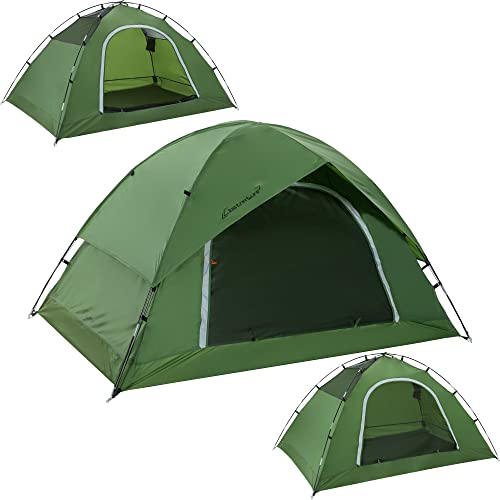
The Clostnature 2-Person Camping Tent is a classic freestanding dome shelter designed for casual campers, weekend festival attendees, and beginners looking for an uncomplicated setup. Built with standard crossing poles and a fitted rainfly, it aims to deliver simple weather protection and convenient portability without unnecessary bulk. While marketed for two people, understanding its specific dimensions and design features is essential for evaluating whether it matches your camping style and campsite expectations.
Regarding interior capacity, the floor measures 7 feet 3 inches in length by 4 feet 11 inches in width, accompanied by a peak height of 3 feet 10 inches (approximately 86.6 by 59.1 by 45.3 inches). For two adults using standard sleeping pads, this width creates close sleeping arrangements with minimal floor space remaining for large packs. Solo campers, however, will enjoy generous interior room to keep clothing, backpacks, and personal items protected indoors. The peak height permits comfortable sitting up for changing or reading, but does not support standing upright.
The structural layout relies on an X-pole dome configuration that makes pitching relatively quick, often completed in under five minutes by one or two people. Because the main tent body is freestanding, you can reposition the shelter around the campsite to avoid rocks or roots before staking it down. Ventilation is addressed through top-side mesh netting and an N-shaped double-layer door that combines solid fabric with breathable mesh, allowing campers to adjust airflow depending on temperature and breeze.
In terms of weather-related design, the tent utilizes polyester with a PU 2000 coating, supported by factory-sealed seams and dual-layer fabric reinforcement at the corners. The included rainfly uses an additional dedicated pole to extend coverage. Transport is straightforward thanks to an included storage sack measuring 16.5 by 6 by 6 inches, with the complete package weighing 5.29 pounds. Routine maintenance requires standard tent care: setting up on cleared ground, securing all eight stakes and four guylines, and ensuring the fabric is completely dry before long-term storage to prevent odor or mildew.
Buyers should account for certain practical trade-offs and missing details. The product data does not list the specific pole material, such as fiberglass or aluminum, which affects long-term resilience. While the manufacturer states all-season and all-weather capability, a compact PU 2000 dome tent is realistic for mild to moderate three-season conditions rather than heavy snow loads or high-wind exposure. Additionally, vestibule square footage is not specified, meaning gear organization mostly depends on available interior space.
For couples embarking on casual weekend car camping trips or solo campers seeking an inexpensive, portable shelter with plenty of elbow room, the Clostnature 2-Person Tent provides solid basic functionality. It balances a light 5.29-pound packed weight with documented seam sealing and dual-layer entry. Those planning extended wilderness trips in unpredictable mountain climates or groups requiring expansive interior living space should evaluate larger multi-person or heavy-duty specialized shelters instead.
The Clostnature tent incorporates a freestanding X-pole dome design, utilizing two main crossing poles to suspend the inner tent body. A third smaller pole is provided to support the rainfly configuration. Because the structure does not rely solely on stake tension to maintain its shape, it can be lifted and moved to adjust orientation before driving stakes into the ground.
The complete package comes with eight stakes and four guylines to anchor the tent against moderate wind. The manufacturer notes that setup can be completed in less than five minutes by one to two people, providing a straightforward pitching process that avoids complex mechanical hubs or automatic spring mechanisms.
Weather-related specifications center on polyester fabric treated with a PU 2000 coating, paired with factory-sealed seams to mitigate water entry along needle holes. The tent base features dual-layer fabric reinforcement at the corners for added durability at high-stress points.
Ventilation is supported by mesh panels located along the upper sides of the tent body, alongside an N-shaped double-layer door. This configuration allows campers to zip open the outer fabric panel while leaving the mesh layer closed, encouraging airflow to help manage condensation during warm or humid evenings.
The interior living area offers floor measurements of 7 feet 3 inches by 4 feet 11 inches, with a center height of 3 feet 10 inches. In metric measurements, this translates to roughly 220 centimeters long, 150 centimeters wide, and 115 centimeters high, providing a functional footprint for up to two sleeping pads.
For packing and transport, the tent compresses into an included storage sack measuring 16.5 by 6 by 6 inches. With an overall listed weight of 5.29 pounds, the shelter is simple to stow in a vehicle trunk or transport on shorter walk-in approaches to a campsite.

Pros
- Noticeably lighter than standard iron stakes at approximately 0.07 pounds each
- High-visibility orange color makes stakes easy to spot in tall grass, dirt, and dim lighting
- Included storage bag keeps dirty or pointed stakes safely contained away from tent fabric
- Crafted from rust-resistant metal for extended outdoor service in damp conditions
- Generous 12-pack quantity provides enough anchors for a complete family tent or multiple tarps
Cons
- The product listing does not state the exact metal alloy or grade used in construction
- At 7.1 inches with a straight profile, these pegs may offer limited hold in loose sand or deep snow compared to specialized anchors
The AVOFOREST 12-pack of 7.1-inch metal tent stakes serves as an anchoring accessory for outdoor camping shelters. It is suited for campers, hikers, festival attendees, and canopy owners looking to replace lost or flimsy stock wire pegs with more visible and durable metal alternatives. Because these are standalone ground stakes, they function as a universal accessory rather than a complete shelter system.
In terms of practical dimensions and weight, each stake measures approximately 7.09 inches in length by roughly 0.39 inches square and weighs 0.07 pounds. The manufacturer emphasizes this low weight compared to heavier iron utility stakes, which often weigh around 0.3 pounds each. This compact profile allows a camper to carry all twelve stakes in a backpack or duffel without adding unnecessary bulk to their gear kit.
Constructed from rust-resistant metal, these pegs are designed to resist bending in typical outdoor ground conditions better than thin plastic or low-grade wire stakes. A key design element is the bright orange coating, which provides strong visual contrast against grass, dirt, and sand. This visibility helps campers avoid tripping over guyout points around camp and makes finding stakes during morning pack-down much easier.
Using these stakes involves driving the 7.1-inch shaft into the ground at an angle to anchor tent base loops, guyline cordage, or tarp corners. The set includes a dedicated storage bag, which keeps pointed tips and residual campsite dirt from puncturing tent fabrics or dirtying other gear in transit. For routine care, wiping away excess dirt and allowing the stakes to dry before packing them into the storage bag is good practice.
While the manufacturer highlights high-strength and anti-rust metal properties, the specific metal alloy (such as an aluminum or steel variant) is not detailed in the product data. Additionally, straight 7.1-inch stakes are best suited for medium-density campground soils. Campers pitching shelters in loose beach sand, powdery snow, or rocky riverbeds will likely require specialized wide snow/sand anchors or heavy-duty steel rock pins instead.
For campers, backpackers, and outdoor enthusiasts seeking an affordable, lightweight backup or upgrade set of high-visibility stakes, this 12-pack provides straightforward utility. Shoppers should assess the typical soil conditions of their planned destinations to verify whether standard 7.1-inch straight metal pegs will provide sufficient anchoring hold for their setup.
The AVOFOREST stake set includes twelve 7.1-inch metal pegs designed to anchor tent corners, vestibule pull-outs, rainfly guylines, tarps, and shade canopies.
With a profile measuring approximately 0.39 by 0.39 inches across and 7.09 inches in length, these stakes are built for standard penetration in common lawn, forest floor, and packed dirt campsite soils. The vibrant orange exterior coating provides clear contrast against soil and turf to aid in campsite safety.
Each package contains twelve individual 7.1-inch orange metal tent pegs.
The set also comes with a dedicated storage bag designed to keep the stakes organized in one place, preventing metal edges from rubbing against delicate shelter fabrics during transport.

Pros
- Intuitive dome design sets up in roughly 10 minutes without complicated pole configurations
- Ground vent paired with large windows promotes active airflow to minimize stuffiness and moisture
- Convenient E-Port provides exterior electrical cord access without leaving doors unzipped
- Frame integrity is rated to withstand winds exceeding 35 mph when properly guyed out
- Backed by Coleman with a 1-year limited warranty for manufacturer protection
Cons
- Peak center height of 4 feet 11 inches requires stooping and does not allow standing upright
- Floor plan is tight for four full-sized adults, making it better suited for 2 to 3 people with gear
- At 9.1 pounds, the packed weight is too heavy for lightweight backcountry backpacking trips
The Coleman Sundome 4-Person Camping Tent is a classic freestanding dome shelter designed specifically for car campers, weekend warriors, festival attendees, and first-time outdoor enthusiasts. With floor dimensions measuring 9 by 7 feet and a center peak height of 4 feet 11 inches, this shelter provides a practical footprint for state park campgrounds, backyard campouts, and road trip stopovers. While cataloged for four people, practical camping experience indicates it functions best as a roomy retreat for two to three adults, or a couple utilizing a single queen-size air mattress with spare space for duffels.
Setup efficiency is one of the standout advantages highlighted by the manufacturer, allowing campers to pitch the structure in roughly 10 minutes. The simple sleeve-and-clip pole system enables quick assembly even when arriving at camp after sunset. Supported by the included rainfly, the dome profile sheds passing downpours, while the underlying frame is engineered to hold strong in winds exceeding 35 mph when fully staked out with guy ropes.
Airflow management is essential in moderate-weather camping, and the Sundome addresses condensation buildup through a combination of large mesh windows and an integrated ground vent. This ventilation setup draws cooler air in along the base and exhausts warm, humid breath out through the upper mesh, helping keep the interior dry during muggy summer nights. Modern campsite convenience is further enhanced by an integrated E-Port, which lets you feed an electrical cord inside to power phones, fans, or lanterns without keeping the entry zipper cracked open to bugs.
Weighing in at 9.1 pounds and packing down to a manageable 6 by 6 by 23 inches, the shelter travels easily in vehicle trunks without demanding excessive cargo room. The durable fabric shell, factory-taped seams, and classic tub-style floor work in unison to form a protective weather barrier against ground moisture. For additional peace of mind, Coleman covers the tent with a 1-year limited warranty against material and manufacturing defects.
Potential buyers should consider a few natural physical constraints before purchasing. With a maximum ceiling height under 5 feet, taller campers must kneel or sit while changing clothes, as full standing clearance is not possible. Additionally, carrying 9.1 pounds over steep hiking trails makes this model impractical for backcountry backpacking, anchoring its best use squarely in the drive-up car camping and campground category.
For budget-conscious campers, scouting groups, and families seeking a dependable, easy-to-pitch shelter for fair-weather weekend outings, the Coleman Sundome 4-Person Tent remains a reliable outdoor staple. It balances simple assembly, proven wind resistance, and reliable ventilation in an affordable package ready for spontaneous outdoor getaways.
The interior layout of the Coleman Sundome spans 63 square feet across a 9 by 7 foot base, offering ample room for a variety of sleeping arrangements. It easily accommodates one standard queen-size air bed with perimeter clearance remaining for small gear bags, flashlights, and shoes.
When utilized with individual sleeping pads, the tent can house up to four campers shoulder-to-shoulder, though groups desiring dedicated space for larger packs will find two to three occupants optimal. The 4-foot-11-inch center height provides comfortable sitting and lounging headroom for playing cards or escaping rain showers.
The Sundome utilizes Coleman weather-resistant engineering, including an included rainfly that shields the ceiling mesh from seasonal downpours while directing runoff away from seam lines. The frame geometry is specifically designed to remain stable in wind conditions up to 35 mph when securely anchored.
Ventilation is handled via an intelligent dual-zone system featuring a low ground vent and wide side windows. This structure promotes continuous convective airflow, drawing cool air across the tent floor while preventing muggy condensation from settling along interior walls.
Pros
- Dedicated focus on scenic tent-camping destinations rather than large commercial RV parks
- Zero reliance on cell phone batteries, power stations, or network coverage when exploring off-grid public lands
- Compact 6 x 9-inch dimensions make it quick to grab from a seatback organizer or center console
- Practical layout helps campers organize weekend getaways and multi-day Southwestern itineraries efficiently
Cons
- Paperback construction requires safe storage in a ziplock bag or dry box to prevent water damage around camp
- Print editions cannot reflect sudden seasonal campground closures, recent fee adjustments, or active fire restrictions
- Coverage is strictly limited to New Mexico, requiring alternative guides for neighboring Southwestern states
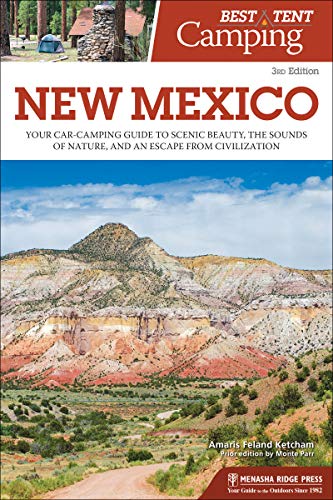
Best Tent Camping: New Mexico by Menasha Ridge Press is a dedicated regional guidebook designed for car campers, tent campers, overlanders, and road trippers looking to explore the diverse public lands of the Southwest. Unlike broad travel directories that lump massive commercial RV resorts together with primitive trailheads, this volume zeroes in on tent-friendly environments where scenic beauty, relative quiet, and proximity to nature take priority. It serves as an accessible resource for first-time visitors planning a Southwestern desert road trip as well as seasoned regional outdoorsmen searching for lesser-known national forest spots.
In real-world trip planning, a physical regional guide solves one of the most common obstacles encountered in remote New Mexico terrain: the complete loss of mobile service. While digital mapping apps and campsite locator websites are convenient in suburban hubs, cellular reception regularly disappears in deep canyons, mountain passes, and broad desert basins. Having a physical reference book on your passenger seat or camp table allows you to browse alternative campgrounds, confirm access expectations, and plan day excursions without depleting your phone battery or portable power bank.
From a storage and packing standpoint, the volume measures 6 by 0.5 by 9 inches and weighs just under 0.6 pounds (approximately 9.6 ounces). These proportions allow it to slide neatly into a vehicle glove compartment, door pocket, seatback pouch, or standard plastic camp storage tub alongside your headlamps and maps. Because it adds negligible weight, you can easily slip it into a daypack or day-hike sling when taking an afternoon scouting walk around a lake basin or national monument recreation area.
Regarding build quality and outdoor handling, the book features standard paperback binding and clean, readable typography. Because it is printed on traditional paper rather than waterproof synthetic stock, campers must exercise reasonable care around outdoor hazards. Keeping the guide sealed in a simple zip-top freezer bag or protective dry sack will prevent damage from unexpected mountain rain showers, morning dew on picnic tables, or melted ice from an open camp cooler.
Every printed field guide carries inherent practical limitations, primarily regarding dynamic operational details. A physical book cannot reflect real-time campground closures, localized fire bans, seasonal road maintenance, or campground fee adjustments implemented after publication. Campers should view the guide as a strong foundational planning tool while remembering to verify local ranger district regulations whenever an internet connection or visitor center is accessible.
For outdoor enthusiasts preparing to explore the Land of Enchantment by vehicle, Best Tent Camping: New Mexico provides a practical, self-contained overview of scenic places to pitch a tent. Whether you are assembling a weekend car-camping getaway from Albuquerque, planning an extended road trip across Carson and Gila National Forests, or seeking a thoughtful gift for a Southwestern adventurer, this paperback delivers reliable planning utility at an accessible entry point.
Measuring 6 inches wide, 9 inches tall, and half an inch thick, this guidebook occupies minimal space within your camp storage system. It fits conveniently into standard dashboard glove compartments, vehicle door pockets, center consoles, and car seat organizers, keeping regional navigation within arm's reach during long highway drives.
At approximately 0.6 pounds, the book adds almost no noticeable weight to your overall payload, making it easy to store in a camp kitchen tote, plastic gear bin, or carry-on travel bag. While backpackers will typically leave guidebooks at the trailhead vehicle to minimize pack weight, car campers and overlanders will find it easy to integrate into their everyday vehicle camping setup.
Using a printed campsite guide streamlines the trip-planning process by eliminating the endless scrolling and conflicting reviews typical of digital travel apps. The curated focus on tent-centric locations helps campers avoid noisy generator-heavy recreation parks in favor of quieter natural scenery.
Around the campsite, the book serves as an excellent evening reference under a lantern or around the picnic table. It lets you discuss the next day's driving route, nearby hiking trails, and potential camp spots with travel companions without needing to pass around a small smartphone screen or worry about spotty wireless service.
Understanding Camping Tents: Anatomy, Styles, and Essential Functions
A camping tent serves as your personal base camp, creating a dry and stable living environment in natural surroundings. Before exploring specific models, understanding the underlying mechanics of modern tent construction helps you select the right shelter for your outdoor trips. From fabric ratings to frame dynamics, each element contributes directly to your comfort and security in the wilderness.
Defining the Camping Tent and Its Primary Role
At its core, a camping tent is a collapsible, portable shelter designed to provide temporary protection, privacy, and living quarters in outdoor environments. Unlike permanent structures, it relies on flexible or segmented structural supports, durable woven textiles, and specialized tensioning systems to stand independently or anchor firmly to the ground. The fundamental goal of any camping shelter is to shield occupants from precipitation, wind, ground moisture, biting insects, and temperature shifts. It creates an enclosed microclimate where outdoor travelers can sleep safely while maintaining a necessary degree of personal comfort.
A true camping tent differs fundamentally from open beach shades, event canopies, or commercial pop-up booths. Sunshades primarily block overhead ultraviolet radiation and lack full perimeter enclosures, while a dedicated camping shelter creates an envelope with sealed flooring and insect-proof entryways. This sealed barrier keeps crawling pests, blowing dust, and rain squalls from invading your sleeping area. For anyone venturing into state parks or backcountry trails, learning what is a camping tent establishes the baseline knowledge required for comfortable, self-reliant outdoor trips.
Structural Anatomy: Rainflies, Inners, Poles, and Bathtub Floors
Most contemporary camping shelters employ a double-wall architecture consisting of an inner breathable canopy and a protective outer rainfly. The inner tent body combines tightly woven fabric panels with fine mesh screening to promote continuous ventilation while blocking insects. Suspended above or draped over this inner shell, the waterproof rainfly acts as an impermeable barrier that deflects rain, sleet, and heavy morning dew away from the living quarters. Models like the Clostnature Waterproof Camping Tent for 2 Person illustrate this approach, using a dedicated polyester rainfly with factory-sealed seams over an airy inner mesh body.
Beneath the sleeping area rests the tent floor, which requires heavier materials and specialized geometry to resist groundwater intrusion. Tent makers frequently build this section with a tub-style or bathtub design, where the waterproof floor fabric wraps several inches up the lower sidewalls before meeting the breathable upper mesh. This elevated seam placement prevents standing puddles and ground runoff from seeping into bedding during sustained downpours. Sturdy skeletal poles made of fiberglass, aluminum alloys, or steel shock-corded sections provide the rigid framework that supports fabric tension and creates interior volume.
Specialized Enclosures: Distinguishing Sleeping Tents from Utility Shelters
While most discussions about outdoor shelters focus on overnight sleeping quarters, the broader camping tent category includes specialized utility enclosures engineered for hygiene and privacy. A common example is a tall pop-up privacy pod, such as the WolfWise Pop Up Shower Tent for Camping, which creates a vertical enclosed space for changing clothes, showering, or housing a portable camp toilet. These structures prioritize rapid deployment, standing clearance, and open-base drainage rather than sleeping comfort or floor waterproofing.
Recognizing the difference between these styles prevents frustrating gear mix-ups at the campsite. A privacy shelter features vertical walls and an open floor to allow soapy water or soil runoff to drain away, making it completely unsuitable for overnight sleeping. Conversely, an overnight sleeping shelter emphasizes a sealed bathtub floor, wind stability, and aerodynamic profiles to handle foul weather while campers rest. Both styles serve valuable functions on extended group camping trips, but their structural designs fulfill entirely distinct tasks.
Major Tent Silhouettes and Architectural Profiles
Tent designers engineer several structural silhouettes to balance usable interior volume, structural rigidity, weight, and assembly speed. The classic dome tent remains the most common design for casual car campers and weekend backpackers, using two flexible poles that cross diagonally over the center. This geometry creates an inherently stable freestanding dome that sheds light winds and allows easy repositioning before driving stakes into the turf. Designs like the Coleman Sundome Camping Tent with Rainfly exemplify this traditional dome layout, delivering dependable overhead room and quick pitching.
For larger families and extended group trips, cabin-style shelters offer near-vertical sidewalls and generous ceiling heights that allow tall adults to walk upright comfortably. These shelters often feature pre-attached or telescoping frames that transform into instant setups, drastically shortening the time required to establish camp after a long drive. The FanttikOutdoor Zeta C10 Pro 10 Person Tent highlights this instant cabin approach, employing pre-assembled structural poles and protective frame sleeves that erect in sixty seconds. Tunnel tents and geodesic shelters offer alternative geometric profiles optimized for strong alpine winds or maximum interior floor efficiency.
Stated Capacity Ratings Versus Usable Interior Space
Manufacturer capacity ratings often confuse new campers because they quantify maximum packed sleeping capacity rather than comfortable living space. An industry-standard two-person or four-person tent rating assumes that occupants will sleep shoulder-to-shoulder on narrow sleeping pads with minimal separation. This measurement rarely leaves room for duffel bags, bulky clothing packs, pet beds, or space to sit upright without brushing against wet fabric walls.
Experienced campers generally adopt a buffer strategy by selecting a tent rated for one or two people beyond their party count. A couple traveling together on a weekend drive often prefers a three-person or four-person shelter to leave ample space for wide air mattresses and personal storage bins. When organizing trips for larger groups or family outings, researching spacious outdoor shelters provides clear guidance on how floor dimensions, vestibules, and center heights affect everyday comfort.
Weather Protection: Fabrics, Polyurethane Coatings, and Sealed Seams
A camping tent achieves reliable weather resistance through an engineered mix of synthetic textiles, waterproof coatings, and sealed construction methods. The primary fabrics used in modern shelters include nylon and polyester weaves, rated by denier numbers that reflect thread thickness and overall strength. Polyester remains popular for family camping shelters because it resists sun damage and retains its tension without sagging when soaked by prolonged rainfall.
Fabric water resistance is officially measured using hydrostatic head ratings, which indicate the millimeter depth of a water column that the coated fabric can withstand before leaking. Polyurethane coatings, abbreviated as PU coatings, are spread across rainflies and floor fabrics to create a moisture barrier, often rated between one thousand and three thousand millimeters. Even high-grade waterproof fabric will admit moisture along needle punctures, making factory-applied seam tape over every structural stitch essential for staying completely dry during severe downpours.
Managing Internal Moisture and Condensation Dynamics
Campers often wake up to damp bedding and assume their rainfly leaked, when the real cause is overnight condensation collecting on the inside walls. Every breathing adult expels moisture through normal respiration and body heat during the night, filling the tent with warm water vapor. When that warm, humid air contacts the cooler, waterproof rainfly fabric, it condenses into liquid water droplets that run down the walls or drip from the ceiling.
Controlling condensation requires consistent passive airflow through mesh ceiling panels, rainfly peak vents, and ground-level intake openings. Keeping upper vents unzipped allows warm humid air to escape while drawing cooler, drier outdoor air across the floor. Modern fabric developments also include specialized light-blocking and temperature-moderating materials, like dark-room tent fabrics, which help moderate internal temperatures so moisture stays vaporized and campers can rest comfortably well past sunrise.
Ground Anchoring Systems, Pegs, and Wind Aerodynamics
A pitching tent acts like a large sail in gusty winds, making proper ground anchoring essential for structural safety and peace of mind. Even freestanding models that hold their shape on grass can blow away across an open campsite or buckle under heavy gusts if they are not staked down securely. Ground anchoring relies on durable metal pins, such as the 12 Pack Tent Stakes Heavy Duty Camping, which penetrate tough soil to hold frame corners flat against the earth.
In addition to basic corner stakes, external guylines provide crucial triangulated bracing that stabilizes the upper frame and rainfly against strong wind loads. Pitching guylines at roughly a forty-five degree angle from the tent walls prevents turbulent gusts from compressing the rainfly against the inner canopy. Keeping this fabric separation intact prevents capillary water leakage and preserves the air gap necessary for effective passive ventilation.
Site Selection and Safe Pitching Practices
Selecting an appropriate campsite is just as important as choosing a dependable shelter. Before unrolling your tent fabric, scan the immediate area for overhead hazards like dead tree limbs, bee nests, or unstable rock formations. Avoid pitching in natural ground hollows, dry creek channels, or base depressions where heavy rain can collect into standing puddles beneath your floor.
Look for level, elevated ground that offers natural wind protection behind bushes or gentle terrain rises. Laying down a durable groundsheet or fitted footprint slightly smaller than the tent base shields the waterproof floor fabric from sharp rocks, gravel, and pine cones. Once your footprint is positioned, stake down the base corners before erecting the main frame poles so sudden wind gusts cannot pick up the tent while you assemble it.
Tent Care, Cleaning, and Off-Season Storage
Maintaining your camping tent requires consistent cleaning routines and thorough drying after every outdoor excursion. Packing away a tent while it holds moisture encourages mold, mildew, and microbial rot that can permanently ruin polyurethane waterproof coatings and create persistent odors. If wet weather forces you to pack up camp during a rainfall, pitch or drape the tent inside a garage or dry room immediately after returning home until every seam is completely dry.
When dirt accumulates on fabric panels, clean the material using lukewarm water, a soft sponge, and mild non-detergent soap. Never put a camping tent in a household washing machine or dryer, as spinning agitation and mechanical heat will destroy waterproof films and tear fine mesh screens. Store your clean, dry tent in a loose, breathable cotton sack or storage tote in a climate-controlled room rather than a damp basement or sweltering garage.
Matching Tent Features to Your Camping Style
Choosing the ideal camping shelter involves weighing interior living room against packed trail weight, overall bulk, and assembly difficulty. Backcountry hikers venturing deep into wild trails need lightweight materials, compact folding poles, and minimal pack weights that fit neatly into an expedition backpack. On the other hand, vehicle campers who drive directly to their site can prioritize tall standing height, multiple rooms, heavy steel frames, and large gear vestibules for maximum comfort.
Reviewing your expected camping seasons, typical party size, and transport methods ensures you pick a shelter that meets your practical needs. A well-engineered camping tent acts as a dependable sanctuary in nature, allowing you to rest comfortably and recharge between days of exploration. With sensible handling, regular maintenance, and proper pitching habits, a quality shelter will support countless outdoor journeys for years to come.


Write Your Review
No reviews yet. Be the first to share your experience!