


Pitching a shelter securely in fluctuating outdoor conditions requires more than just assembling poles and securing fabric sleeves. Ground tension keeps the canopy taut, supports the frame against unexpected wind gusts, and prevents water from pooling along the roofline. Campers learning the basics of campsite setup often wonder what is a tent stake and why such modest hardware dictates shelter performance. Anchoring each corner and guyline into the ground creates the structural stability necessary for a comfortable trip, especially when pitching a heavy-duty water-resistant camping tent in exposed terrain.
A tent stake, frequently called a peg or ground anchor, is a rigid spike driven into the earth to hold tent corners, vestibules, and guylines firmly in place. These anchoring tools transfer the aerodynamic lifting forces on the tent fabric into the soil below. Without reliable ground pegs, wind can easily distort the frame, cause walls to sag, or lift lightweight shelters completely off the ground. Selecting the right pin style, driving it at the correct angle, and matching materials to the terrain are fundamental skills for every outdoor traveler.
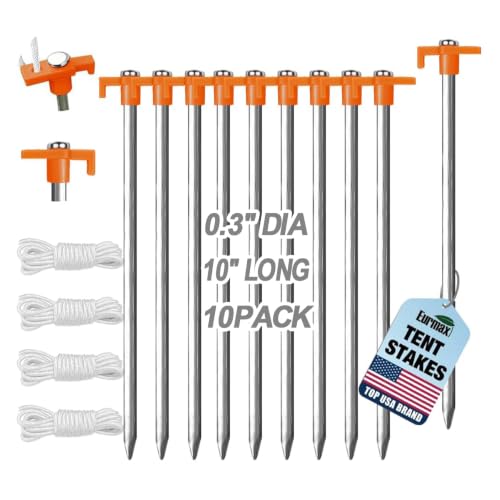
Pros
- Galvanized steel construction offers reliable rigidity and protection against rust in wet ground
- Substantial 10-inch length provides deeper ground penetration than standard wire pegs
- Includes four pre-measured 10-foot ropes ready for immediate guying out
- High-visibility orange stopper helps mark stake placement near high-traffic paths
Cons
- Individual and total pack weight are not specified, making pack-weight calculations difficult for backpackers
- Package includes only one visibility stopper for ten stakes, leaving the remaining nine unmarked
- Listing does not detail holding performance across specific soil conditions such as loose sand or solid rock
The Eurmax 10-Pack Secure Protection Galvanized Tent Stakes set is a specialized anchoring accessory designed for campers, canopy owners, and outdoor event setups. Built for securing camping tents, pop-up shelters, and gazebos, this kit targets campers who need more durable ground pegs than the thin wire stakes typically bundled with entry-level tents. With heavy-duty galvanized steel construction, it caters to car campers, backyard gazebo owners, and recreational shelter users seeking reliable tie-down support.
Each stake measures 10 inches in length, 2 inches in width, and 0.1 inches in thickness, providing a deep profile intended to anchor shelters against shifting winds. The listing highlights steel canopy anchors geared toward high winds, offering greater structural rigidity than lightweight aluminum or plastic pegs. Because of their length, these anchors penetrate deep into turf and packed dirt, helping prevent guyline slippage when guyed out properly.
Setup is straightforward thanks to the pre-cut lines and ready-to-drive design. The package provides ten commercial-grade ground pegs alongside four 10-foot ropes, eliminating the need to measure and cut auxiliary guylines at the campsite. Eurmax also includes a single high-visibility orange stopper designed to help campers spot stake placement and minimize foot-traffic tripping hazards around the perimeter of the shelter.
At 10 inches long, these steel stakes fit easily into standard gear totes, duffels, or car-camping bins. While the product listing mentions hiking along with camping and beach use, steel stakes are generally heavier than ultralight alternatives, making them most practical for drive-up campsites and vehicle transport. Routine care involves cleaning off damp soil after use and wiping the stakes dry before storage, maintaining the integrity of the galvanized rust-proof coating over multiple seasons.
Buyers should evaluate a few practical limitations and missing details. The manufacturer does not state the individual or total pack weight, which leaves backpackers uncertain about pack suitability. Additionally, while the listing includes an orange stopper for enhanced visibility, it provides only one stopper for ten stakes, meaning most anchor points will not have the bright marker. Soil compatibility is also not detailed, so shoppers pitching on rocky riverbeds or very loose beach sand may need specialized stakes suited for those surfaces.
For car campers, popup canopy owners, and family campers wanting to reinforce their shelter setup, this Eurmax 10-pack delivers practical durability and helpful accessories at an accessible price point. When evaluating ground anchors, campers should consider whether they have enough tie-down ropes for their shelter configuration and verify that 10-inch steel pegs match the soil conditions of their planned campsite.
The Eurmax anchoring set includes ten 10-inch galvanized steel stakes paired with four pre-cut 10-foot ropes. These steel pegs are engineered with a 2-inch wide hook design and 0.1-inch thickness to firmly hold guy lines under tension. The package also features an orange visibility stopper designed to reduce tripping hazards near tent corners and canopy legs.
Campers should note that securing a tent or gazebo depends heavily on proper stake angle and soil conditions. While these stakes offer rigid steel construction suitable for dirt and grass campgrounds, hardpacked gravel or loose beach sand may require specialized driving tools or sand-specific anchors.
These ground anchors are constructed from solid steel treated with a galvanized finish. This galvanized coating helps prevent rust and corrosion resulting from wet soil, morning dew, and rainfall, extending the service life of the hardware across varying weather conditions.
The rigid steel design resists bending and breaking under pressure when driven into standard campsite turf. To maintain the protective finish, users should clean away dirt and allow the stakes to dry before packing them into gear bags.
The package contains ten galvanized steel stakes, four 10-foot ropes, and one high-visibility orange stopper. The pre-cut ropes provide immediate tie-down capability for four canopy or tent guyout points without requiring additional cordage.
Because the set includes only one orange stopper across ten stakes, campers needing full-perimeter visibility markers may need to supply additional reflective tape or stoppers. A driving mallet and dedicated stake carry bag are not listed as included items.

Pros
- Sturdy 7 mm diameter galvanized iron build resists bending and corrosion
- Generous 9.75-inch length improves holding grip in typical campground turf
- T-top design with built-in hook and extraction hole simplifies pitching and pulling
- Bright orange head increases visibility around tent perimeter and guy lines
- Complete 20-piece pack covers all corners, vestibules, and extra guyout points
Cons
- Total pack weight is not documented, though solid iron makes them heavier than aluminum backpacking stakes
- Straight milled peg profile is not specialized for loose beach sand or deep snow
- Does not include an accessory carry bag or stake removal tool
The Cheardia 20-pack heavy-duty tent stakes are ground-anchoring accessories designed to replace flimsy wire pegs or supply extra tie-down points for camping shelters. Built to handle everything from solo backpacking tents to large multi-person family tents, canopies, and tarps, these stakes cater to campers who want a more reliable hold in standard campsite turf. With twenty stakes in the bundle, this set provides enough anchoring hardware to secure the base perimeter of a tent alongside multiple rainfly guy lines and vestibule points.
In terms of physical specifications, each stake measures 9.75 inches in length with a 7 mm diameter rod. The body is manufactured from galvanized iron, offering structural resistance against bending under hammer strikes and protection against corrosion from wet earth. The 9.75-inch depth provides substantial contact in natural soil, which can help prevent tent corners or windward guyouts from pulling loose during breezy weather conditions.
The design balances straightforward ground entry with practical extraction features. A round milled tip allows each stake to pierce turf smoothly, while the broad T-shaped top offers a stable surface for striking with a mallet or camping hammer. A molded hook under the head prevents the stake from sinking past the strap or guy line, and an integrated hole through the top makes removal simple with a standard tent stake puller or claw hammer hook. The bright orange coloring on top also increases ground visibility, helping reduce the risk of tripping over stakes around the campsite.
From a transport perspective, solid galvanized iron construction offers ruggedness at the expense of ultralight packability. While the manufacturer does not specify an exact per-stake weight, solid metal stakes of this thickness are heavier than specialized aluminum or titanium stakes. As a result, they are exceptionally well suited for car campers, vehicle-supported base camps, and backyard canopies where pack weight is not a primary concern. Care is straightforward: wiping away damp soil and allowing the pegs to dry before stowing them helps preserve the galvanized finish.
Shoppers should consider their typical campsite terrain before purchasing. While these straight milled pegs excel in typical grassland, dirt, and packed turf, they are not specialized snow stakes or sand anchors, which require wide flukes or spiral profiles for loose media. Additionally, the set does not include a carry pouch or extraction tool, meaning campers will need to provide their own storage roll or gear bag to keep the pegs organized alongside their tent poles.
For campers frustrated with thin stock pegs that bend on the first strike, this Cheardia 20-pack delivers a functional hardware upgrade. The combination of durable galvanized iron, a 7 mm thickness, and high-visibility orange extraction heads makes them a dependable choice for securing tents, screen houses, and shade canopies in everyday campground ground conditions.
These stakes are fabricated from solid galvanized iron, giving them the rigidity required to withstand mallet strikes without bowing easily. The galvanization process adds a protective barrier against moisture and damp soil to resist rust during outdoor use.
The top assembly features a sturdy T-hook finished in high-visibility orange. This design keeps tensioned cordage and webbing loops anchored securely while providing a distinct visual contrast against grass, dirt, and forest floor litter.
With a 9.75-inch length and milled point, these stakes are optimized for grassland, dirt campsites, backyards, and firm turf. The round tip assists in starting the stake into compacted soil, while the 7 mm shaft provides holding friction against windward tension.
For optimal pitching, drive each stake into the ground at an angle opposing the pull of your tent strap or guyline. The integrated hole in the T-top accommodates stake pullers, carabiners, or hammer claws, making breakdown quick and effortless when it is time to pack up camp.


Pros
- Galvanized steel construction resists bending and breaking during ground insertion
- Hot-dip galvanized coating protects against rust and outdoor moisture exposure
- High-visibility orange tops improve perimeter safety and help prevent campsite tripping
- Sharp pointed tip allows driving by hand, foot, or camping mallet into grass and dirt
- Convenient 10-pack quantity provides enough anchors for standard tents and tarps
Cons
- Listing does not provide product weight specifications, leaving total pack weight unclear for weight-sensitive packing
- Manufacturer notes they are not optimized for rocky ground without pre-softening the soil
- Seven-inch length may offer limited holding security in loose sand or deep snow compared to specialized anchors
The FEED GARDEN Heavy Duty Tent Stakes are a dedicated camping accessory pack designed to anchor outdoor shelters, tarps, and canopies. Sold in a 10-pack, these 7-inch ground pegs serve as a practical upgrade or replacement for the thin wire stakes often bundled with entry-level camping tents. They are well-suited for car campers, weekend campground visitors, and backyard canopy setups where reliable ground holding power is necessary to secure guy lines and tent corners against normal breezes.
Constructed from thick galvanized steel, these stakes feature a hot-dip galvanized finish engineered to resist rust and corrosion across wet ground and humid weather conditions. Each stake measures 7 inches long by 1.6 inches wide, with a 0.1-inch profile that tapers into a sharp pointed tip. This design allows campers to drive the pegs into grass, dirt, and packed earth using a standard camping hammer, the heel of a boot, or direct hand pressure when ground conditions allow.
A prominent functional element of these stakes is the molded, high-visibility orange head. In busy campsites, guy lines and ground anchors often create tripping hazards, particularly during dawn, dusk, or nighttime walks around the shelter. The bright orange tops make each peg easier to spot in turf or soil. The head design also creates an effective hook and anchor point for securing tent guy ropes, while offering sufficient surface area to grip and pull the stakes when striking camp.
While versatile for general camping, these stakes have specific terrain considerations noted by the manufacturer. They are designed primarily for turf, standard soil, and packed earth. If you encounter rocky or dense campsite surfaces, the manufacturer advises pre-softening the ground or choosing specialized longer or heavy-duty rock stakes to prevent damage. Furthermore, the listing does not state the exact weight per stake or the total bundle weight, so backpackers tracking base pack weight will need to weigh that missing specification against the durability of solid steel.
For car campers, festival attendees, and backyard organizers needing an affordable set of dependable replacement anchors, this 10-pack delivers practical utility. Ten stakes are typically enough to secure the four base corners and essential guy lines of a standard two- to four-person dome tent. If you pitch large family cabin tents, extensive tarps, or screen houses requiring extensive anchoring, verifying your total stake count before departure will ensure you have enough pegs for a secure pitch.
The FEED GARDEN tent stakes are manufactured from solid galvanized steel to resist bending under moderate mallet impact and lateral guy line tension. The steel core provides structural rigidity compared to lightweight aluminum wire stakes.
To protect against the elements, each stake features a hot-dip galvanized coating that shields the metal from rust and moisture damage during damp ground contact or prolonged rain exposure. The top of each stake is fitted with a durable, high-visibility orange cap designed for rope retention and pulling leverage.
These 7-inch stakes are engineered primarily for common campsite ground surfaces including manicured lawn grass, natural dirt, and moderately packed earth. The sharp point eases ground penetration whether driven by foot or a camping mallet.
Campers pitching in rocky or gravel-heavy pitches should take note of manufacturer guidance to soften the ground beforehand or switch to specialized stakes. The bright orange heads serve a dual role at camp by providing an obvious visual marker to reduce tripping accidents near tent perimeter lines.
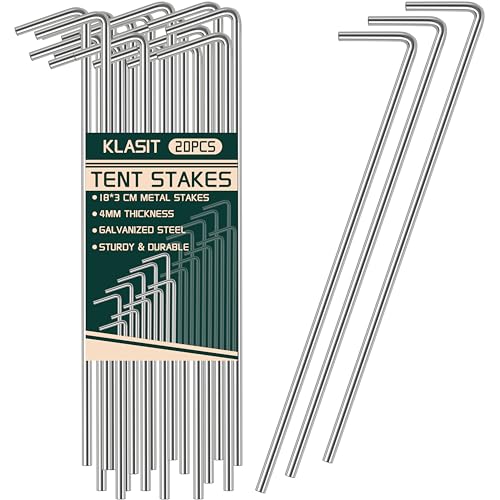
Pros
- Supplies 20 stakes in a single pack, offering plenty of tie-down points for tents and guylines
- Rust-resistant metal finish withstands damp ground and wet campsite conditions
- Curved top hooks make it simple to extract pegs using a camp mallet hook or another stake
- Lightweight 0.76-pound total package weight adds negligible heft to your camp gear kit
Cons
- Specific metal alloy composition is not detailed in the manufacturer specifications
- Slender 4mm wire profile can bend if driven forcefully into rocky or heavily compacted ground
- Package does not include a dedicated stake pouch or storage organizer
The KLASIT 7.1-Inch Metal Ground Stakes serve as replacement and supplementary anchoring accessories designed for outdoor camping shelters, canopies, and tarps. Supplied in a bundle of 20, these silver pegs suit casual car campers, festival goers, and backyard campers who need dependable replacements for lost factory stakes or require extra tie-down points for rainflies and vestibule guylines.
Each stake in the bundle measures 7.1 inches long, 1.18 inches wide across the hooked top, and features a 4mm (0.1-inch) shaft diameter. The entire 20-pack carries a listed weight of 0.76 pounds, making the set easy to drop into an existing tent duffel or camp storage bin without adding cumbersome bulk. While compact enough to transport easily to walk-in campsites or group picnic areas, campers carrying gear long distances on foot will want to consider whether standard wire pegs fit their target pack weight compared to specialized ultralight alternatives.
Pitching shelters with these stakes follows a straightforward process. The curved hook top holds guyline loops or shelter webbing grommets firmly in place while allowing campers to tap the stake into soil with a rubber mallet. When breaking camp, the hooked neck provides a practical purchase point to catch another stake or mallet notch underneath for levered extraction, reducing the effort needed to clear your pitch.
Although described as heavy-duty and rust-resistant, the manufacturer specifications do not identify the exact metal type or coating process used on the 4mm shaft. The 7.1-inch length provides solid anchoring in regular campsite turf and soft dirt. However, thin wire-style stakes face natural limitations in loose sand, deep snow, or excessively rocky soils, where driving them into hidden stones can bend narrow shafts or where loose ground cannot provide adequate holding friction.
For campers looking to replenish their gear kit with accessible, multi-use replacement stakes, the KLASIT 20-pack offers a practical bundle for securing tents, porch canopies, and temporary tarps. Shoppers planning trips to primitive campgrounds with compacted gravel or rocky ground may want to keep specialized ground anchors or heavy forged steel spikes on hand, while keeping this versatile set ready for standard campground turf.
The KLASIT stakes feature a classic 4mm wire profile with a curved hook top, designed to anchor shelter eyelets, corner webbing, and guyline loops securely to the ground. Measuring 7.1 inches in length, each stake is engineered to penetrate typical campsite loam and grassy soils to maintain tension on tent fabrics and rainfly ties.
Because the set contains 20 individual stakes, campers have sufficient anchors to secure a complete family tent setup, including multiple guylines and vestibule points, with extra pegs remaining as spares. While the rust-resistant metal build handles damp turf, pairing these stakes with proper mallet techniques rather than stepping on the hooks helps prevent bending the shafts in firmer ground.

Pros
- Noticeably lighter than standard iron stakes at approximately 0.07 pounds each
- High-visibility orange color makes stakes easy to spot in tall grass, dirt, and dim lighting
- Included storage bag keeps dirty or pointed stakes safely contained away from tent fabric
- Crafted from rust-resistant metal for extended outdoor service in damp conditions
- Generous 12-pack quantity provides enough anchors for a complete family tent or multiple tarps
Cons
- The product listing does not state the exact metal alloy or grade used in construction
- At 7.1 inches with a straight profile, these pegs may offer limited hold in loose sand or deep snow compared to specialized anchors
The AVOFOREST 12-pack of 7.1-inch metal tent stakes serves as an anchoring accessory for outdoor camping shelters. It is suited for campers, hikers, festival attendees, and canopy owners looking to replace lost or flimsy stock wire pegs with more visible and durable metal alternatives. Because these are standalone ground stakes, they function as a universal accessory rather than a complete shelter system.
In terms of practical dimensions and weight, each stake measures approximately 7.09 inches in length by roughly 0.39 inches square and weighs 0.07 pounds. The manufacturer emphasizes this low weight compared to heavier iron utility stakes, which often weigh around 0.3 pounds each. This compact profile allows a camper to carry all twelve stakes in a backpack or duffel without adding unnecessary bulk to their gear kit.
Constructed from rust-resistant metal, these pegs are designed to resist bending in typical outdoor ground conditions better than thin plastic or low-grade wire stakes. A key design element is the bright orange coating, which provides strong visual contrast against grass, dirt, and sand. This visibility helps campers avoid tripping over guyout points around camp and makes finding stakes during morning pack-down much easier.
Using these stakes involves driving the 7.1-inch shaft into the ground at an angle to anchor tent base loops, guyline cordage, or tarp corners. The set includes a dedicated storage bag, which keeps pointed tips and residual campsite dirt from puncturing tent fabrics or dirtying other gear in transit. For routine care, wiping away excess dirt and allowing the stakes to dry before packing them into the storage bag is good practice.
While the manufacturer highlights high-strength and anti-rust metal properties, the specific metal alloy (such as an aluminum or steel variant) is not detailed in the product data. Additionally, straight 7.1-inch stakes are best suited for medium-density campground soils. Campers pitching shelters in loose beach sand, powdery snow, or rocky riverbeds will likely require specialized wide snow/sand anchors or heavy-duty steel rock pins instead.
For campers, backpackers, and outdoor enthusiasts seeking an affordable, lightweight backup or upgrade set of high-visibility stakes, this 12-pack provides straightforward utility. Shoppers should assess the typical soil conditions of their planned destinations to verify whether standard 7.1-inch straight metal pegs will provide sufficient anchoring hold for their setup.
The AVOFOREST stake set includes twelve 7.1-inch metal pegs designed to anchor tent corners, vestibule pull-outs, rainfly guylines, tarps, and shade canopies.
With a profile measuring approximately 0.39 by 0.39 inches across and 7.09 inches in length, these stakes are built for standard penetration in common lawn, forest floor, and packed dirt campsite soils. The vibrant orange exterior coating provides clear contrast against soil and turf to aid in campsite safety.
Each package contains twelve individual 7.1-inch orange metal tent pegs.
The set also comes with a dedicated storage bag designed to keep the stakes organized in one place, preventing metal edges from rubbing against delicate shelter fabrics during transport.
The Anatomy, Purpose, and Mechanics of Tent Stakes
A tent stake serves as the physical anchor connecting an outdoor shelter to the earth. This essential piece of hardware transforms flexible fabric, poles, and guylines into a rigid, wind-resistant structure. Without solid ground anchors, even high-end shelters lose architectural stability and weather resistance. Understanding how these anchors function, which materials provide durability, and how to drive them properly makes every campsite setup secure and dependable.
Defining the Tent Stake and Its Core Functions
A tent stake is a slender, pointed shaft designed to penetrate soil, sand, gravel, or snow to provide a fixed anchor point. Tents rely on outward tension across their floor webbing to maintain proper geometric floor dimensions. Stakes hold these perimeter loops taut, ensuring the floor remains flat and preventing uncomfortable fabric bunching beneath sleeping gear. They also keep the footprint from shifting when occupants move around inside the shelter.
Guylines attached to the outer rainfly depend entirely on secure stake placement to resist lateral wind loads. When breezes strike the shelter, tension travels down the cords and pulls directly against the anchored stake heads. An effective anchor resists extraction through soil friction and compaction. This mechanical grip preserves internal volume by preventing the rainfly from pressing against breathable inner walls, which stops condensation transfer.
Primary Materials Used in Tent Stake Construction
Steel and galvanized iron represent the strongest materials for general camping stakes and canopy anchors. Heavy steel spikes, including seven-millimeter thick galvanized iron designs, offer exceptional resistance to bending when struck with a mallet. A hot-dip galvanized coating prevents surface rust caused by damp soil and wet weather. The solid weight of steel makes it ideal for car campers prioritizing durability over ultralight packing.
Aluminum alloy stakes offer a lightweight alternative favored by backpackers and trail hikers. A typical seven-inch aluminum rod peg can weigh around sixteen grams, significantly trimming pack weight across a full set. Quality aluminum naturally resists rust and provides ample rigidity in standard forest turf. However, thin aluminum shafts can bend if hammered aggressively into rocky ground, requiring gentler installation or careful site selection.
Specialty stakes also utilize materials such as titanium, carbon fiber, and molded plastics. Titanium pairs the high tensile strength of steel with weight figures close to aluminum, making it popular for rugged expeditions. Molded plastic stakes provide wide surface areas that grip loose sand or snow, though plastic becomes brittle in sub-freezing temperatures. Selecting a material depends directly on transport style and expected campsite ground conditions.
Common Stake Shapes and Profiles
Shepherd hook stakes feature a cylindrical wire shaft with a curved top resembling a crook. Many lightweight four-millimeter metal ground stakes use this profile because it slips easily through small grommets and penetrates soft earth quickly. The curved top prevents cordage from slipping off under moderate tension. However, smooth round shafts can rotate in loose soil, which can occasionally release tie-down loops if lines slacken.
Nail-style and T-top stakes feature a straight, reinforced shaft topped with a flat striking surface or crossbar. Heavy-duty models often incorporate milled or pointed tips that cut cleanly through hard clay and compacted gravel. The T-shaped head provides a broad surface for hammer strikes while locking guylines securely in place. Many designs also feature an integrated extraction hole, allowing campers to pull stakes rapidly using a hook or cord loop.
Flanged profiles, including hexagonal rods, Y-beams, and V-channels, dramatically increase surface friction against surrounding dirt. A hexagon rod stake resists multidirectional bending forces far better than a simple round wire of equivalent thickness. Flanged stakes pack soil into their internal angles as they enter the earth, creating superior lateral holding strength. These profiles perform reliably across mixed soils where ground density varies between topsoil and firm subsoil.
Soil Types and Ground Holding Dynamics
Forest loam and standard turf offer consistent conditions for standard seven-inch to ten-inch pegs. These soils pack firmly around the shaft, generating balanced holding power through surface friction. Campers pitching on grass can often push stakes into the ground by hand or with firm foot pressure. In these standard conditions, basic round pegs or light hexagonal spikes anchor corners securely without slipping.
Rocky soil and compacted gravel demand rigid metal spikes capable of penetrating hard earth without buckling. Thin wire stakes frequently bend when striking subterranean rocks. Heavy-duty galvanized steel stakes with sharp points penetrate compacted ground by displacing small pebbles rather than deflecting. If a stake encounters an immovable rock, pulling it out and adjusting the driving angle slightly avoids damaging the shaft.
Loose sand and deep snow provide minimal shear resistance for narrow metal pins. A standard peg pulled under tension easily slices through loose ground, failing as an anchor. Wide, curved sand stakes or deadman anchoring techniques, which involve burying stakes horizontally under rocks or packed snow, solve this issue. Understanding ground composition ensures campers bring stakes that physically hold in the local terrain.
Driving Angle and Proper Pitching Mechanics
Driving angle directly determines how much pulling force a ground anchor can withstand before pulling free. The recommended angle is roughly forty-five degrees, pointed away from the shelter. Driving a stake straight down at ninety degrees allows guyline tension to pull perpendicular to the shaft, gradually loosening the hole. Angling the top away forces pulling loads to act against the full length of the buried stake.
Insertion depth plays an essential role in mechanical stability and campsite safety. Stakes should be driven until only the head or attachment hook remains slightly above ground level. Leaving several inches of shaft exposed creates leverage that magnifies wind forces and bends the metal. Fully seated stakes maintain structural stability and reduce the hazard of tripping over exposed metal around the shelter.
Guyline tension should be adjusted evenly after all perimeter stakes are positioned in the ground. Campers utilizing an easy setup camping tent will appreciate that balanced cord tension keeps the framework square and stable. Adjusting cord sliders gradually prevents excessive strain on any individual corner peg. Inspecting lines before dark ensures the tent can withstand evening wind shifts without issues.
Visibility and Tripping Hazard Prevention
Campers frequently walk around tent perimeters in low-light conditions, turning low-profile pegs into tripping hazards. Bright orange heads, colored polymer caps, or vivid coatings drastically improve visual awareness around camp. Many heavy-duty metal anchors incorporate bright orange stoppers directly onto the top collar. These bright markers help campers avoid stepping on lines or kicking stakes during routine camp activities.
High-visibility finishes also simplify gear recovery when breaking camp. Dull metal pegs easily disappear in tall grass, leaf litter, and dark forest loam. Bright orange coatings stand out clearly against natural ground cover, helping campers spot every stake before departure. Taking a quick inventory prevents leaving valuable hardware behind in remote wilderness areas.
Reflective cords and glow-in-the-dark pull tabs provide an extra layer of nighttime perimeter safety. Threading short loops of reflective paracord through stake extraction holes allows headlamps to spot anchors from across camp. This simple visual cue guides hikers safely toward the tent entrance without tangling in low guylines. Minor additions to stake heads improve camp safety without adding noticeable weight.
Extraction Techniques and Removal Tools
Extracting firmly anchored stakes from dense clay or cold ground requires proper leverage rather than raw force. Pulling directly on tent corner webbing is a common error that can tear stitched seams. Campers should grip the stake head directly or use a dedicated stake puller hook on a mallet. Applying steady vertical leverage frees the anchor while protecting tent fabric.
Stakes equipped with removal holes or notched heads offer practical attachment points for extraction tools. Slipping a spare metal peg through the hole of a buried stake creates an effective handle for two-handed pulling. Wiggling the stake gently along its entry path breaks the soil suction before pulling upward. This controlled motion prevents bent metal and frees stubborn pins smoothly.
Clearing surface dirt from around the stake collar before pulling reduces resistance against the hook. In freezing weather, ground moisture can freeze around metal shafts, cementing them firmly in place. Pouring a small amount of warm water around the base loosens ice bonds without damaging equipment. Taking care during removal keeps stakes straight and ready for future use.
Pairing Stakes with Different Shelter Configurations
Freestanding tents maintain their structure using rigid pole frames, allowing them to stand without stakes in calm air. Even so, stakes remain necessary to anchor the shelter against wind and to pull vestibule fabric outward. Vestibules provide essential dry gear storage outside the main sleeping area that requires staked tension. Anchoring a freestanding design prevents frame shifting and keeps the floor completely flat.
Non-freestanding shelters, including trekking-pole tents and tarps, rely entirely on ground tension to remain upright. If a primary corner stake pulls free, the supporting pole can fall and collapse the canopy. Pitching these shelters safely requires dependable stakes suited to the specific soil at the site. Choosing longer, flanged pegs ensures reliable holding power when shelter geometry depends on ground resistance.
Family cabin shelters and large group domes generate substantial wind resistance due to their upright walls. Pitching a spacious outdoor family tent requires sturdy nine-inch to ten-inch steel stakes to handle these loads safely. Taller tents catch passing breezes like sails, transferring substantial force to every perimeter anchor. Equipping family shelters with heavy-duty ground pegs ensures the living space remains quiet and stable through stormy weather.
Maintenance, Cleaning, and Storage Considerations
Cleaning tent stakes after each outing extends their useful life and protects packed shelter fabrics. Removing damp dirt and organic matter prevents moisture from causing corrosion over time. Galvanized steel and coated aluminum resist rust well, but prolonged storage in damp sacks can degrade finishes. Letting metal dry completely in open air preserves protective coatings across many camping seasons.
Inspecting stakes periodically for bends or damaged hooks helps campers identify weakened gear before leaving home. Slight bends in aluminum or steel shafts can often be corrected by tapping the high spot gently on a flat wooden surface. However, stakes with visible metal fatigue or cracked welds should be replaced promptly. Using damaged anchors risks sudden failure during stormy nights when ground tension peaks.
Storing ground pegs in a durable organizer pouch shields tent fabrics from accidental punctures. Loose metal spikes packed beside a shelter can easily rip silicone coatings or snag fine inner mesh. Keeping the stake sack tied securely inside a dedicated pack pocket keeps equipment organized and accessible. Proper storage habits ensure reliable anchoring gear is ready for every outdoor adventure.
Mastering tent stake selection and pitching technique turns basic campsite setup into a reliable routine. Matching stake materials, lengths, and profiles to expected ground conditions ensures that guylines stay taut and frames remain stable. Simple habits like maintaining a forty-five-degree driving angle, driving stakes flush, and cleaning hardware protect both gear and occupants. With the right ground anchors in place, campers can enjoy dependable shelter performance in diverse outdoor environments.


Write Your Review
No reviews yet. Be the first to share your experience!