

Winter camping introduces severe wind, freezing temperatures, and heavy snow loads that standard shelters cannot handle safely. Determining what is the best 4 season tent requires understanding how structural frame geometry, fabric coatings, and snow skirts work together in cold environments. While three-season shelters focus heavily on maximum airflow through wide mesh panels, true cold-weather shelters prioritize heat retention and structural stability against harsh alpine gusts. Exploring dedicated heavy-duty water-resistant camping tents illustrates how fabric coatings and sealed seams protect gear during freezing rain and winter storms.
Campers often encounter confusion when evaluating whether they need a lightweight mountaineering shelter or a spacious cold-weather family shelter. The ideal tent must balance adequate interior space, functional gear storage in vestibules, and manageable pack weight for the intended trip style. In addition, managing internal condensation through adjustable vents proves essential when temperatures drop below freezing and frost begins coating tent walls. Taking time to examine pole strength, rainfly coverage, and fabric thickness helps campers select a shelter that delivers dependable winter protection without unnecessary bulk.

Pros
- Roll-up snow skirt offers genuine multi-season flexibility for both winter conditions and warm-weather trips
- Heavy-duty PU5000mm waterproof rating provides peace of mind during sustained rainfall
- Stout aluminum pole architecture is much more reliable in strong winds than cheap fiberglass frames
- Roomy interior footprint comfortably accommodates two regular sleeping pads with room to spare
Cons
- Total weight of 5.73 pounds is somewhat heavy for ultralight solo thru-hikers
- Vestibule storage is modest, requiring organized gear staging when shared by two adults
- Included ground stakes may need an upgrade for frozen ground or deep powdery snow
The Underwood Aggregator 2-Person 4-Season Tent is an adaptable all-weather shelter engineered for campers who refuse to let dropping temperatures end their outdoor adventures. Designed specifically for backpackers, cold-weather hikers, weekend warriors, and budget-conscious outdoor enthusiasts, this shelter aims to provide reliable four-season shelter without the steep investment typically associated with mountaineering gear. Whether you are trekking into crisp autumn woods, pitching near an alpine lake, or car camping during an early winter cold front, this tent provides practical protection across changing seasons.
Weather protection stands out as the primary advantage of this shelter. Featuring an impressive PU5000mm waterproof coating on its full-coverage rainfly, it easily sheds sustained rainstorms and wet snow flurries. The integrated perimeter snow skirt is a standout feature for sub-freezing outings, effectively blocking drafty gusts and drifting snow when extended. When camping in warmer spring and summer conditions, the snow skirt rolls up neatly to expose mesh panels that encourage airflow, helping manage condensation and maintain interior comfort through muggy nights.
Structural strength comes from aircraft-grade aluminum poles coupled with Duraflex hardware and double-layered corner reinforcements. This rigid framework holds firm against shifting winds on exposed ridges where standard fiberglass poles often bend or split. Inside, the tent offers a generous 59.1 by 86.6-inch floor plan and a 45.3-inch peak height, allowing two campers to sit up comfortably without brushing against the ceiling fabric. Practical touches like a centered lantern loop, internal storage pockets for phones and headlamps, and snag-resistant two-way zippers enhance overall camp livability.
Setting up camp after a long hike or in fading evening light is straightforward thanks to the freestanding pole structure and clip-on canopy design. Once packed into its included carry sack, the tent measures a compact 16.54 by 5.9 inches. At 5.73 pounds, it is manageable for short backcountry trips, split between two hikers, or stashed effortlessly into an overland rig or car trunk for weekend escapes. Cleaning and maintenance are simple, requiring only a gentle wipe-down with fresh water and complete air drying before long-term storage to preserve the polyurethane waterproof coating.
While the tent handles varied weather remarkably well, prospective buyers should recognize realistic trade-offs. Ultralight thru-hikers covering massive daily mileage might find the total trail weight slightly hefty for solo trekking. Additionally, the standard ground stakes work adequately in typical soil but may require sturdier snow stakes for deep winter drifts. For budget-minded adventurers, couples tackling three-to-four-season trips, and car campers seeking dependable storm protection, this shelter delivers a balanced mix of durability, wet-weather defense, and affordable multi-season value.
An aggressive PU5000mm waterproof coating shields the full-coverage fly against driving rain, sleet, and wet snow, keeping the living quarters dry through prolonged storms.
The adaptable snow skirt seals the base against biting cold drafts and blowing powder in sub-freezing temperatures, yet fastens upward when mild weather calls for maximum cross-ventilation.
The freestanding aluminum pole structure allows for fast, intuitive assembly, making it easy to pitch shelter quickly even if you arrive at your campsite after dark.
Duraflex buckles and swift-clipping hooks streamline both setup and breakdown, allowing the entire system to pack neatly back into its compact 16.5-inch carry sack.
Pros
- Extended 9.02-foot floor length accommodates taller campers and extra gear at the foot of sleeping pads.
- Two full-size doors allow occupants to enter and exit without crawling over fellow campers.
- Dual mesh windows promote consistent airflow to help manage overnight condensation.
- Matching door mat provides a dedicated space to take off muddy camping shoes before stepping inside.
- Budget-friendly dome architecture designed for straightforward two-person setup.
Cons
- At 10.8 pounds, the tent is too heavy for extended backpacking trips despite marketing references to hiking.
- Fiberglass poles require deliberate handling during setup to prevent splintering under tension.
- The manufacturer does not provide a specific millimeter hydrostatic head rating or details on included stakes and guylines.
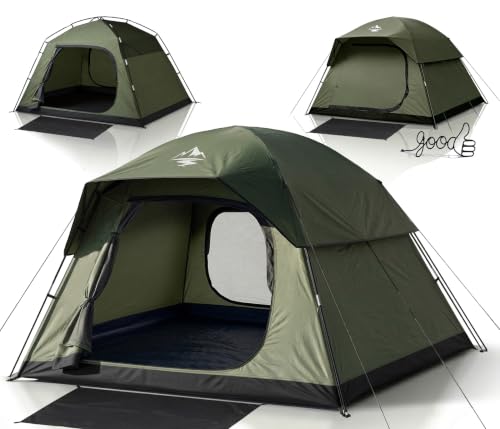
The Purebox 4-Person Camping Tent is an extended dome-style shelter designed for weekend outdoor recreation, campground stays, and road trips. Built with a traditional cross-pole dome layout, it targets budget-minded campers, pairs, and small families who want an accessible shelter with easy entry and exit. The green fabric shell combines with an exterior rainfly and an extended footprint to offer a relaxed campground basecamp.
In terms of interior space, the manufacturer lists open dimensions of 9.02 feet long by 7.05 feet wide, with a peak center height of 4.92 feet (approximately 59 inches). While marketed for three to four adults, fitting four full-size adults will place sleeping pads shoulder-to-shoulder with minimal leftover floor area. Campers will find the most comfortable balance using this shelter for two adults with gear, or two adults and a child. The 59-inch center clearance offers ample headroom for sitting upright and changing clothes, though standing up fully is limited by the sloping dome walls.
Pitching relies on a classic sleeve-pole system utilizing flexible fiberglass poles. The setup process is most efficiently handled by two people threading the poles through the exterior fabric channels to tension the dome upright. A high-density PU-coated rainfly fits over the canopy to shield against rainfall, supported by factory-taped seams designed to resist moisture seepage during typical three-season conditions. The inclusion of two large doors makes getting in and out seamless, while dual mesh windows facilitate cross-breeze airflow across the sleeping quarters.
For transport and storage, the tent packs down into a carry bag measuring 16 by 9 by 7 inches with a total weight of 10.8 pounds. While listing materials reference hiking, carrying a 10.8-pound package is generally impractical for self-supported backcountry backpacking. It is far better suited for car camping, trunk storage, or short walks to an established walk-in site. Purebox also bundles a matching exterior door mat, which serves as a practical barrier to prevent tracking dirt, pine needles, and mud onto the tent floor.
Campers should keep a few limitations and uncertainties in mind. The product specifications do not disclose the specific fabric denier, floor material thickness, or exact hydrostatic head waterproof rating in millimeters. Furthermore, fiberglass poles are heavier and less resistant to sudden stress than aluminum alternatives, meaning careful handling is required in high winds. The listing does not clarify the exact quantity or quality of included ground stakes, so inspecting or supplementing the stakes prior to a trip is sensible for rocky terrain.
Overall, the Purebox 4-Person Tent serves as a viable, value-conscious shelter for mild three-season getaways, roadside camping, and first-time buyers. Shoppers who prioritize dual-door access, extra legroom, and simple car transport will appreciate the layout, while those seeking rugged foul-weather resilience or trail-weight efficiency will want to compare dedicated backpacking models.
The tent features a footprint measuring 9.02 feet by 7.05 feet, providing more floor length than standard rectangular 4-person dome shelters. This extra length is particularly useful for taller campers who often find their sleeping bags pressing against tent walls in compact models.
Although the manufacturer rates the tent for three to four adults, usable sleeping comfort depends heavily on personal gear and mattress choices. Laying down four standard sleeping pads covers nearly the entire floor, leaving little clearance for duffel bags or backpacks. For optimal comfort, treating this tent as a spacious two-person or three-person shelter allows occupants to keep luggage inside without crowding.
The center peak height reaches 4.92 feet, giving seated campers generous overhead clearance. Because the dome walls curve inward toward the apex, usable standing room is restricted, making this model best suited for sleeping, relaxing, and sitting upright rather than moving around on foot.
The structure utilizes a continuous sleeve-pole design paired with durable fiberglass frame poles. Pitching is straightforward when two campers work together to guide the pole sections through the sleeves and anchor them at the corner grommets.
Weather protection is centered on a high-density PU-coated rainfly and factory-taped seams, intended to protect against moisture during three-season rain showers. While the rainfly adds crucial overhead coverage, the manufacturer does not specify a millimeter hydrostatic head rating, making it advisable to test setup and seam coverage prior to severe weather.
Condensation management is supported by dual mesh windows and two opposing entry doors. When breezes blow through the campsite, opening the solid fabric panels while leaving the inner mesh zipped maintains airflow while helping to keep flying insects outside.

Pros
- Manageable 4.8-pound total weight fits backpacking, canoe camping, and trunk storage
- Documented 3000mm waterproof rating on silicone-finished nylon provides reliable rain protection
- Dual-pole crossing dome layout offers an intuitive, uncomplicated pitch for solo setup
- Inner mesh walls facilitate air circulation to help reduce internal condensation in humid weather
- Comes with essential pitching accessories including 10 stakes, 4 guy-lines, and a carry sack
Cons
- Floor width of 49.2 inches creates tight sleeping quarters for two adults using wide sleeping pads
- Listing does not document exterior vestibule dimensions or covered outdoor gear storage
- Inner mesh design provides good ventilation but may offer limited thermal retention in severe winter freezes despite the 4-season label
The OneTigris Stella is a freestanding dome-style shelter built for two occupants, designed specifically for backpackers, bushcrafters, and campers seeking a balance between packability and weather coverage. Structured around a traditional two-pole dome frame, the system combines an inner mesh-accented tent body with a full-coverage, removable blackout rainfly. With a listed total package weight of 4.8 pounds (2.2 kg), it appeals to hikers planning multi-day trail excursions as well as car campers looking for a streamlined, low-bulk sleep system.
Regarding interior dimensions, the Stella provides a floor footprint measuring 82.7 inches long by 49.2 inches wide (approximately 6.9 by 4.1 feet), with an interior peak ceiling height of 45.2 inches (3.7 feet). While officially designated as a two-person shelter, a floor width just over four feet means two standard 20- to 25-inch sleeping pads will occupy virtually the entire floor width edge to edge. Solo adventurers will find plenty of room to spread out alongside their pack and apparel, whereas pairs should anticipate snug sleeping quarters with limited interior staging room for bulky bags.
The tent uses a straightforward pitch design relying on flexible poles that cross diagonally over the top of the canopy and anchor securely into corner floor points. The inner tent body incorporates 20D nylon combined with ventilated mesh panels to promote consistent airflow and reduce interior humidity. Over the frame, the removable 20D nylon fly features a single-layer silicone coating designed to deliver a 3000mm waterproof barrier against driving rain, while the floor uses a more durable 40D nylon construction to resist ground moisture and rough campsite debris.
Portability is a central focus of the Stella, with the complete kit collapsing into an included storage bag measuring 21.7 inches long by 6.3 inches in diameter. Alongside the tent body, outer fly, and poles, the manufacturer bundles ten ground stakes and four 8.2-foot (2.5-meter) guylines to tension the shelter against winds. At under five pounds, the packed package can easily lash to an external backpack strap or stow inside most trekking packs, making it practical for weekend hike-ins, bike touring, or keeping in a vehicle for spontaneous overnight trips.
Campers evaluating the Stella should consider a few functional trade-offs inherent to its compact footprint. Although labeled by the manufacturer as a 4-season tent, the extensive mesh inner construction is primarily geared toward ventilation and moisture control rather than insulating against freezing winds or supporting heavy snow loads. Furthermore, the product documentation does not detail vestibule floor space or exterior covered porches, meaning muddy boots and oversized trekking packs may need to sit inside the sleeping compartment or under separate outdoor cover.
Ultimately, the OneTigris Stella is best suited for solo hikers wanting extra personal space or weight-conscious camping duos who prioritize straightforward assembly and moderate pack weight. When comparing this model to alternative two-person shelters, buyers should weigh the reliable 3000mm silicone-coated waterproof rating and bundled rigging hardware against the narrow floor width. For three-season backpacking, light bushcraft outings, and minimalist weekend trips, it stands as a capable and compact shelter option.
The OneTigris Stella features a setup floor measuring 82.7 inches in length and 49.2 inches in width, accompanied by an interior peak height of 45.2 inches. These dimensions yield roughly 28 square feet of sleeping area, which comfortably accommodates two standard 20-inch sleeping pads side by side.
While rated for two occupants, campers using wider 25-inch pads will find that the gear covers the entire floor width without leftover margins. For solo travelers, the tent functions as a very spacious single-person shelter with ample dry floor area to organize packs, electronics, and clothing away from the elements.
Moisture protection on the Stella centers around a 20D nylon outer fly treated with a single-layer silicone coating that delivers a manufacturer-stated 3000mm waterproof rating. This level of hydrostatic head is designed to shed moderate-to-heavy rainfall when properly pitched and guyed out.
Underneath, the floor is fabricated from a heavier 40D nylon to guard against damp ground conditions. The fly also incorporates blackout properties to minimize morning glare, while the inner mesh walls assist in circulating air and mitigating interior condensation buildup during humid nights.
Weighing in at 4.8 pounds (2.2 kg) complete with its poles, stakes, and storage sack, the Stella sits in an accessible weight class for short backpacking trips, kayak camping, and light trail use. The total packed package measures 21.7 inches long by 6.3 inches in diameter.
The package includes ten aluminum-style ground stakes and four pre-cut 8.2-foot guylines, ensuring campers have the necessary hardware out of the box to pitch the tent securely on turf, soil, or maintained campground tent pads.

Pros
- Automatic frame with pre-attached poles allows fast setup without assembling separate pole sections
- Tall 74.8-inch peak height offers substantially more vertical clearance than traditional dome tents
- High-performance 150D blackout fabric blocks 99.9% of incoming light and harmful UV rays
- Double-wall configuration with snow skirts provides seasonal versatility for year-round campground outings
- Front awning and vestibule expand usable exterior living space for gear storage and shade
Cons
- Packed weight and packed bag dimensions are not stated in the official product specifications
- Specific millimeter waterproof rating (hydrostatic head) is omitted from the listing data
- Floor dimensions will feel tight if four adult campers use large cots or bulky sleeping systems
The Naturehike Village Instant Tent (Size: 4 Person) is a cabin-style camping shelter designed primarily for car campers, couples, and small family groups who prioritize quick camp setup and upright interior clearance. Built around an integrated automatic hub mechanism with pre-attached poles, the shelter eliminates the traditional task of sorting and threading pole segments through fabric sleeves. This mechanism makes the tent accessible for beginners while saving valuable time at the campsite for experienced campers arriving late in the day.
Regarding interior dimensions, the tent features a rectangular footprint measuring 102.3 inches long by 90.55 inches wide, coupled with an interior center height of 74.8 inches (approximately 6 feet 2 inches). While the manufacturer lists the sleeping capacity at four people, comfortable space depends heavily on pad selection and gear volume. Couples using a wide air mattress will have plenty of clearance for luggage, and three campers on standard pads can fit comfortably. Fitting four full-sized adults will leave minimal room for interior equipment, though the vertical cabin walls prevent the claustrophobic feel common to low-slung dome structures.
The structural layout utilizes a double-wall design where the inner tent body can function independently during fair conditions or be paired with the full rainfly when weather strikes. Outdoor living space is expanded by an integrated front vestibule and canopy configuration that creates a covered porch area for camp chairs and muddy footwear. For airflow, the tent incorporates two large mesh windows and a dedicated top screen window, which help facilitate cross-ventilation and manage the condensation typical of multi-person enclosed spaces.
Fabric construction centers on 150D material treated with proprietary blackout technology. With a listed UPF 12500+ rating and 99.9% visible and infrared light reflection, the shell helps keep the interior dark for sleeping past sunrise while moderating interior cabin temperatures. Naturehike also incorporates a perimeter snow skirt to seal against drafts and drifting precipitation, giving the shelter multi-season utility for cooler weather. However, the listing does not publish a specific hydrostatic head waterproof rating in millimeters, nor does it disclose packed weight or transport bag dimensions.
For maintenance, the automatic joint hinges and coated fabrics should be thoroughly air-dried and brushed clean of sand before long-term storage to prevent mildew or mechanical jamming. Backed by a 2-year limited warranty when purchased through the brand store, this shelter is an appealing choice for drive-up campsites, family weekends, and festival camping. Backpackers will need to look elsewhere due to the rigid nature of instant frames, but car campers seeking rapid assembly and true stand-up headroom will find strong functional value here.
The Naturehike Village 4-Person model features a measured floor layout of 102.3 inches in length and 90.55 inches in width, creating a footprint of approximately 64 square feet. The vertical cabin architecture allows campers to sit upright along the perimeter without contacting the walls, maximizing the usable floor space compared to tapered dome designs.
With a center peak height of 74.8 inches, most adult campers can stand comfortably inside the center of the shelter. While technically sized to accommodate four standard sleeping pads shoulder to shoulder, the interior layout is most practical for two or three occupants who wish to keep duffel bags, clothing bins, or camp cots inside the primary sleeping chamber.
Pitching this cabin tent relies on an automatic frame system with pre-attached structural poles that extend into position in approximately 60 seconds. This pre-assembled design eliminates pole-matching confusion, allowing a single person to erect the primary inner cabin structure quickly and securely.
The double-wall setup includes a detachable inner body with extensive mesh panels that can stand alone in clear weather for stargazing. When adverse weather is anticipated, the full-coverage rainfly installs over the frame and includes tie-outs to support the extended front canopy and entry vestibule area.
The shell is manufactured from 150D fabric using specialized blackout technology engineered to block 99.9% of UV rays, visible light, and infrared radiation. This dense weave helps maintain a cooler interior in bright sun while preventing early morning light from disturbing sleep.
For multi-season use, the tent includes integrated snow skirts around the base to deflect cold wind gusts and blowing snow during winter car-camping outings. Two oversized mesh windows and an upper screen panel provide cross-ventilation to help reduce moisture accumulation inside the cabin.

Pros
- Intuitive dome design sets up in roughly 10 minutes without complicated pole configurations
- Ground vent paired with large windows promotes active airflow to minimize stuffiness and moisture
- Convenient E-Port provides exterior electrical cord access without leaving doors unzipped
- Frame integrity is rated to withstand winds exceeding 35 mph when properly guyed out
- Backed by Coleman with a 1-year limited warranty for manufacturer protection
Cons
- Peak center height of 4 feet 11 inches requires stooping and does not allow standing upright
- Floor plan is tight for four full-sized adults, making it better suited for 2 to 3 people with gear
- At 9.1 pounds, the packed weight is too heavy for lightweight backcountry backpacking trips
The Coleman Sundome 4-Person Camping Tent is a classic freestanding dome shelter designed specifically for car campers, weekend warriors, festival attendees, and first-time outdoor enthusiasts. With floor dimensions measuring 9 by 7 feet and a center peak height of 4 feet 11 inches, this shelter provides a practical footprint for state park campgrounds, backyard campouts, and road trip stopovers. While cataloged for four people, practical camping experience indicates it functions best as a roomy retreat for two to three adults, or a couple utilizing a single queen-size air mattress with spare space for duffels.
Setup efficiency is one of the standout advantages highlighted by the manufacturer, allowing campers to pitch the structure in roughly 10 minutes. The simple sleeve-and-clip pole system enables quick assembly even when arriving at camp after sunset. Supported by the included rainfly, the dome profile sheds passing downpours, while the underlying frame is engineered to hold strong in winds exceeding 35 mph when fully staked out with guy ropes.
Airflow management is essential in moderate-weather camping, and the Sundome addresses condensation buildup through a combination of large mesh windows and an integrated ground vent. This ventilation setup draws cooler air in along the base and exhausts warm, humid breath out through the upper mesh, helping keep the interior dry during muggy summer nights. Modern campsite convenience is further enhanced by an integrated E-Port, which lets you feed an electrical cord inside to power phones, fans, or lanterns without keeping the entry zipper cracked open to bugs.
Weighing in at 9.1 pounds and packing down to a manageable 6 by 6 by 23 inches, the shelter travels easily in vehicle trunks without demanding excessive cargo room. The durable fabric shell, factory-taped seams, and classic tub-style floor work in unison to form a protective weather barrier against ground moisture. For additional peace of mind, Coleman covers the tent with a 1-year limited warranty against material and manufacturing defects.
Potential buyers should consider a few natural physical constraints before purchasing. With a maximum ceiling height under 5 feet, taller campers must kneel or sit while changing clothes, as full standing clearance is not possible. Additionally, carrying 9.1 pounds over steep hiking trails makes this model impractical for backcountry backpacking, anchoring its best use squarely in the drive-up car camping and campground category.
For budget-conscious campers, scouting groups, and families seeking a dependable, easy-to-pitch shelter for fair-weather weekend outings, the Coleman Sundome 4-Person Tent remains a reliable outdoor staple. It balances simple assembly, proven wind resistance, and reliable ventilation in an affordable package ready for spontaneous outdoor getaways.
The interior layout of the Coleman Sundome spans 63 square feet across a 9 by 7 foot base, offering ample room for a variety of sleeping arrangements. It easily accommodates one standard queen-size air bed with perimeter clearance remaining for small gear bags, flashlights, and shoes.
When utilized with individual sleeping pads, the tent can house up to four campers shoulder-to-shoulder, though groups desiring dedicated space for larger packs will find two to three occupants optimal. The 4-foot-11-inch center height provides comfortable sitting and lounging headroom for playing cards or escaping rain showers.
The Sundome utilizes Coleman weather-resistant engineering, including an included rainfly that shields the ceiling mesh from seasonal downpours while directing runoff away from seam lines. The frame geometry is specifically designed to remain stable in wind conditions up to 35 mph when securely anchored.
Ventilation is handled via an intelligent dual-zone system featuring a low ground vent and wide side windows. This structure promotes continuous convective airflow, drawing cool air across the tent floor while preventing muggy condensation from settling along interior walls.
Understanding Four-Season Shelter Performance and Design
A true four-season shelter functions less like a lightweight summer tent and more like a portable fortress built to endure punishing winter weather. While many campers assume the label simply means warmth, tents do not generate heat on their own. Instead, answering what is the best 4 season tent requires examining how a structure resists snow accumulation, deflects high winds, and manages internal condensation during sub-freezing nights. Selecting the right model means aligning structural strength and protective features with the specific conditions you anticipate facing in the backcountry.
Core Characteristics That Define a Four-Season Shelter
The fundamental distinction between three-season and four-season tents centers on canopy materials, pole configurations, and fabric density. Three-season shelters utilize expansive mesh panels across the inner body to encourage cooling cross-breezes during humid summer nights. In contrast, a four-season tent replaces open mesh panels with solid, breathable nylon or polyester ripstop walls. These solid canopy panels prevent freezing spindrift from blowing into your sleeping quarters while trapping a modest microclimate of body warmth inside.
Ventilation remains essential even when the canopy features solid panels, so quality winter shelters incorporate closable fabric zippered panels over smaller mesh windows. This construction allows campers to seal out icy drafts during blizzards and open upper vents when mild afternoon conditions produce heavy interior moisture. Furthermore, cold-weather shelters employ burly rainflies that extend entirely to the ground. A full-coverage rainfly creates a comprehensive barrier that shields the inner tent body from freezing rain, blowing sleet, and driving mountain winds.
Structural support also diverges sharply between seasonal categories. Winter tents utilize heavier pole diameters, reinforced intersection points, and geometry designed to distribute external weight evenly. Where a summer tent might flex and flatten under a sudden wind gust, a cold-weather design relies on rigid geometric tension to hold its shape. Understanding these fundamental design choices helps campers distinguish between genuine winter shelters and standard recreational models that claim cold-weather capability.
Managing Snow Loads and Freezing Precipitation
Accumulating snow presents a structural hazard that can quickly crush an inadequately engineered shelter during an overnight storm. Wet snow exerts tremendous downward and lateral pressure on tent poles and seams, requiring canopy profiles that encourage snow shedding. Dome and steep-walled geodesic architectures perform exceptionally well because their curved surfaces prevent snow from gathering along flat roof sections. Geodesic structures use crossing pole layouts that create multiple rigid triangles, giving the tent canopy superior load-bearing strength.
Snow skirts represent another specialized feature found on dedicated cold-weather models such as the Underwood Aggregator backpacking tent. These fabric flaps extend from the bottom edge of the rainfly directly onto the ground surface. Campers can pile snow or rocks along the skirt to create an airtight seal against the terrain. This perimeter barrier stops freezing winds from driving underneath the fly, while simultaneously stabilizing the shelter against shifting snowdrifts.
However, snow skirts require thoughtful management because sealing the tent perimeter completely cuts off ground-level airflow. Many shelters feature roll-able snow skirts so campers can tuck them away during mild trips or humid shoulder-season conditions. Failing to ventilate a sealed shelter can cause severe interior condensation that dampens sleeping bags and insulative gear. Balancing perimeter weather protection with controlled overhead venting remains one of the most critical aspects of winter camp management.
Frame Geometry, Guyline Anchoring, and High-Wind Stability
Wind management in winter environments requires far more robust structural engineering than fair-weather camping demands. Winter gales often strike without natural windbreaks like leafy tree canopies, subjecting shelters to sustained gusts and turbulent buffeting. High-performance winter tents, including the OneTigris Stella, rely on multiple intersecting aluminum pole sections that create a rigid freestanding frame. Aircraft-grade aluminum offers high strength-to-weight ratios and flexes under sudden impact without cracking in freezing temperatures, unlike standard fiberglass which can become brittle.
Equally critical is the tent anchoring system, which transfers aerodynamic wind loads directly into the ground. Cold-weather shelters feature reinforced guyline attachment points sewn directly into primary structural seams. Multiple guyline points allow campers to secure the tent frame from several angles, preventing the poles from bowing inward under lateral pressure. Attaching guylines directly to the pole skeleton beneath the rainfly via internal hook-and-loop tabs creates an exceptionally rigid structure.
Anchoring a shelter in snow or frozen ground requires specialized staking techniques that differ from summer camping routines. Standard thin aluminum or steel ground stakes pull free easily from soft snowpack and can bend when hammered into permafrost. Winter campers frequently use wide aluminum snow stakes, canvas sand-and-snow anchors, or deadman anchors created from buried sticks, skis, or stuff sacks. Securing these anchors properly ensures that your shelter remains firmly planted when exposed to fierce winter gusts.
Breathability and Condensation Control in Sub-Freezing Air
Moisture control inside a winter tent presents a unique physical challenge that catches many inexperienced campers off guard. Every human occupant exhales approximately one pint of moisture into the shelter air overnight. In sub-freezing weather, that warm, humid air rises toward the cold fabric walls and instantly condenses into liquid droplets or fine frost crystals. Without adequate convective airflow, knocking against the tent wall can cause a miniature indoor snowfall that soaks down clothing and down sleeping bags.
Double-wall construction remains the gold standard for managing winter moisture across diverse weather profiles. In a double-wall system, warm vapor passes effortlessly through the breathable, non-waterproof inner canopy fabric before condensing on the cold underside of the waterproof outer fly. The moisture then runs down the fly toward the ground rather than dripping directly onto the campers. A generous airspace between the inner canopy and the outer rainfly ensures that fabric panels do not touch, preventing moisture transfer.
Upper ventilation ports located near the peak of the rainfly create a chimney effect that pulls humid air out of the shelter. These vents typically incorporate stiffened kickstands and protective hoods to keep blowing snow out while air moves freely. Keeping roof vents open even during brutally cold nights prevents excessive frost buildup from compromising the thermal efficiency of your sleeping insulation. Proper ventilation remains non-negotiable for maintaining a dry, habitable interior throughout multi-day winter expeditions.
Fabric Coatings, Tear Strength, and Cold-Crack Resistance
Tent fabrics designed for cold environments face harsh physical stresses from sharp ice crystals, high wind sheer, and intense alpine ultraviolet radiation. Manufacturers specify fabric durability using denier ratings, which measure individual thread weight and overall weave density. Outer flysheets on backpacking models like the OneTigris Stella utilize lightweight 20D ripstop nylon, whereas heavy-duty cabin models like the Naturehike Village employ robust 150D fabrics. Higher denier fabrics deliver impressive puncture resistance and tear strength, though they naturally add weight to the packed shelter.
Waterproof performance is measured by hydrostatic head ratings, which indicate how much water pressure a fabric withstands before leaking. For instance, the Underwood Aggregator tent features an impressive PU5000mm coating that easily repels driving freezing rain and wet spring sleet. Silicone coatings, often called silnylon, provide superior elasticity and tear strength because the silicone permeates the nylon fibers completely. High-grade polyurethane and silicone coatings also remain pliable in freezing temperatures, preventing the microscopic cracking that can cause older or cheap coatings to flake off.
Modern tent designs also integrate specialized materials such as titanium-black coatings that block external light and enhance thermal regulation. Exploring advanced dark-room tent fabric designs demonstrates how specialized treatments reduce temperature swings and shield campers from early morning sunlight. When selecting winter fabrics, verifying fully taped seams and waterproof bathtub floor designs ensures that ground moisture and melting perimeter snow do not seep into your sleeping area.
Balancing Pack Weight and Usable Interior Floor Space
Campers evaluating winter tents must carefully weigh the trade-offs between carrying comfort and living space. Winter camping requires bulky equipment, including thick insulated sleeping pads, high-loft winter sleeping bags, heavy outerwear, and mountaineering boots. Stated manufacturer capacities generally describe the maximum number of sleeping pads that fit shoulder-to-shoulder across the tent floor. In winter, an interior floor that fits two adults snugly in summer will leave almost no room for cold-weather layers or interior gear staging.
For human-powered winter backpacking, lightweight two-person models that weigh under six pounds provide the necessary weather defense without overwhelming your trail pack. Compact floor plans conserve body heat within a smaller air volume and offer a smaller physical footprint that is easier to pitch on narrow snow ledges. However, occupying a tight shelter during a multi-day blizzard can feel restrictive, highlighting the value of generous vestibules that create protected exterior gear storage.
Conversely, vehicle-supported winter campers often prioritize comfort and vertical headroom by choosing larger family shelters. Reviewing spacious outdoor camping tents reveals how tall cabin geometries and extended awnings accommodate cots, camp chairs, and bulky winter gear piles. While a large cabin tent like the Naturehike Village offers luxurious living space and convenient standing height, its broader surface area demands vigilant monitoring during heavy snowfalls to avoid structural strain.
Pitching, Guying, and Caring for Shelters in Sub-Freezing Conditions
Pitching a shelter in sub-freezing conditions requires deliberate preparation before setting up a single pole section. In snow-covered terrain, campers must pack down the snow base using snowshoes or skis to create a firm, consolidated tent platform. Pitching directly onto loose, powdery snow allows body heat and pressure to melt hollows beneath your sleeping pad, leaving the tent floor uneven and cold. Giving the packed snow platform roughly thirty minutes to freeze solid creates a sturdy foundation for the entire shelter.
During setup, handle aluminum shock-corded poles with care to prevent icy grit from entering the ferrule joints. Snapping pole sections together aggressively can dent metal ends or crack aluminum ferrules in freezing temperatures. Once the frame is assembled, secure the tent corners and immediately stake out the primary windward guylines to keep the canopy from catching wind. Aligning the narrowest, most aerodynamic profile of your tent into the prevailing wind reduces structural drag and prevents the rainfly from flapping loudly throughout the night.
After returning from a winter trip, proper tent care and storage practices determine the long-term lifespan of your investment. Never leave a shelter packed away while damp, as trapped moisture promotes mildew growth and causes polyurethane coatings to break down through chemical hydrolysis. Hang the tent body and rainfly in a warm, well-ventilated indoor space until every seam, guyline, and corner pocket is completely dry. Storing the clean, dry tent loosely in a breathable storage sack preserves fabric elasticity and prevents zipper corrosion between cold-weather adventures.
Evaluating Four-Season Options for Your Camping Style
Choosing the right shelter ultimately depends on matching engineering specifications to your primary camping environment. A backpacker exploring alpine ridges demands rigid aluminum poles, a high hydrostatic head rating, and a compact packed size that slips easily into a mountain rucksack. Meanwhile, winter car campers enjoying cold-weather state parks benefit from instant-pitch cabin structures featuring thick blackout fabrics and integrated vestibule canopies. Recreational summer tents such as the Coleman Sundome offer excellent three-season cross-ventilation, but they lack the heavy-duty snow skirts and reinforced frames required for true winter blizzards.
Take time to assess the typical wind speeds, anticipated snow depths, and expected nighttime low temperatures of your planned destinations. Inspecting seam sealing, fabric coatings, pole materials, and ventilation port placements ensures your shelter can handle sudden weather shifts. Investing in an appropriately rated cold-weather tent provides the structural reliability and environmental protection you need to camp comfortably across all twelve months of the year.


Write Your Review
No reviews yet. Be the first to share your experience!