
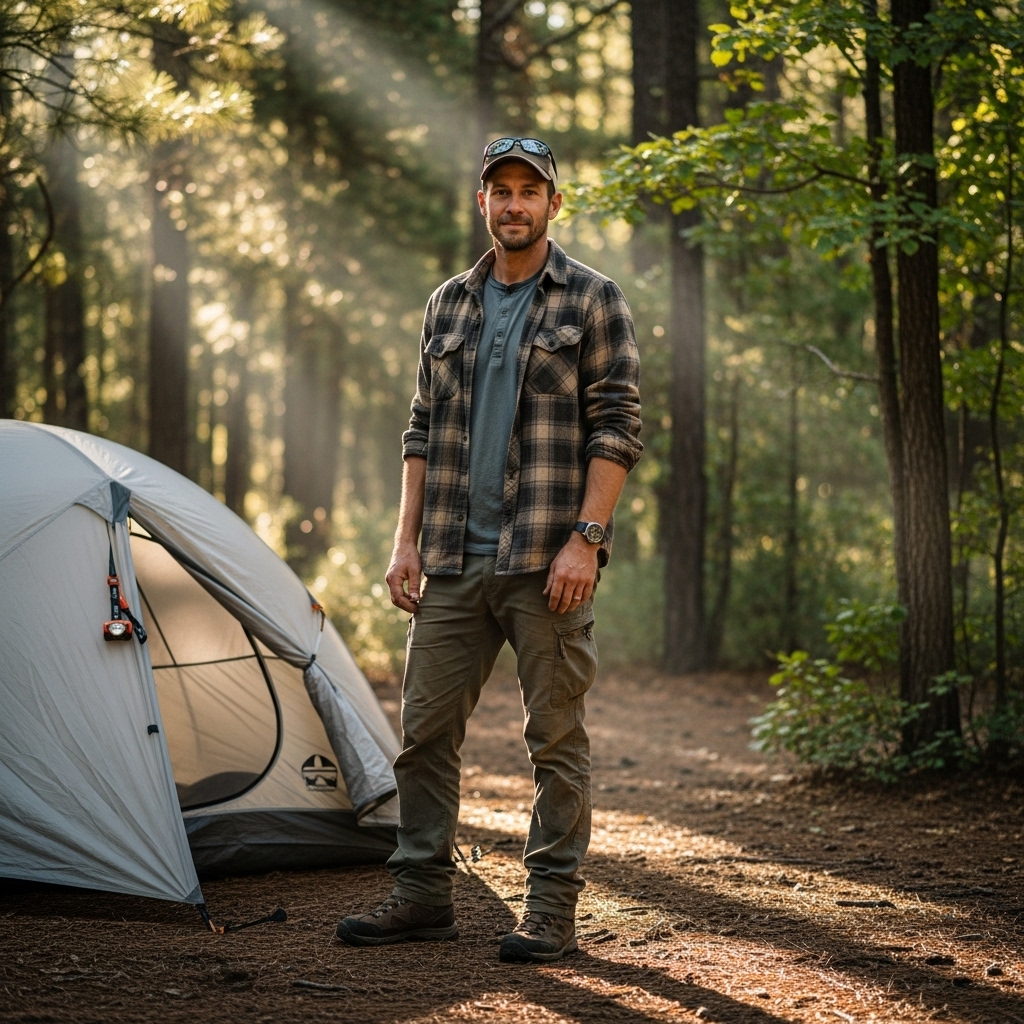

Finding a campsite that balances outdoor seclusion with manageable access often leads outdoor enthusiasts to explore specialized campground layouts. Understanding what is walk in tent camping helps you prepare for a distinct outdoor experience that bridges the gap between vehicle-based car camping and backcountry backpacking. At a walk-in campsite, you park your vehicle in a designated lot and transport your camping gear on foot over a short trail to your tent site. This layout keeps parking lots separate from the living areas, creating a quieter environment free from idling engines and glaring headlights.
Because you must carry everything from your car to your pitched tent, equipment choices require a bit more planning than standard drive-up camping. While you do not need ultralight trekking gear, hauling heavy shelter canvas or multi-room family structures across uneven dirt paths can quickly become exhausting. Pairing dependable gear with heavy duty water resistant camping shelters gives you weather protection without requiring complex backcountry logistics. Planning ahead ensures that the walk to your campsite remains an easy warm-up rather than a frustrating chore.

Pros
- Integrated hub-frame system allows quick 60-second setup and hassle-free takedown
- Full 80-inch peak height and vertical walls allow most adults to stand completely upright
- Heavy-duty 300D bottom fabric offers enhanced durability against ground moisture and punctures
- Double-paned windows and B3 mesh deliver ample airflow while keeping insects out
- PFAS-free material composition provides a more eco-conscious camping space
Cons
- At 27.5 pounds, the heavy packed weight restricts usage exclusively to car camping and vehicle travel
- Fitting four adult campers leaves minimal leftover floor space for bags, coolers, or gear storage
- Specific pole material and fabric millimeter hydrostatic head ratings are not stated in the product specifications
The FanttikOutdoor Alpha C4 Ultra is an instant cabin-style camping tent engineered for car camping, road trips, and vehicle-supported overlanding. Built around a pre-assembled hub structure with an X-frame layout, this shelter eliminates the frustration of threading poles through fabric sleeves. It is ideally matched to drive-up campers, weekend road trippers, and couples or small families who prioritize standing room and rapid camp setup over lightweight packability.
In terms of layout and interior volume, the tent features a square 94 by 94-inch footprint with nearly vertical sidewalls that maximize internal usable space. Its 80-inch center height provides 6 feet 8 inches of clearance, allowing most adults to walk upright without hunching. The manufacturer lists a four-person sleeping capacity based on standard industry dimensions. In practical camping conditions, four sleeping pads placed side-by-side will cover the entire floor, leaving little room for gear. For couples, however, the floor comfortably accommodates a single queen-sized air mattress while preserving perimeter space for duffels, packs, and personal items.
The central structural highlight is the integrated pop-up mechanism and eave poles, designed for pitch-out in roughly 60 seconds without extra tools. For weather protection, the shelter includes a removable waterproof rainfly, factory-sealed seams around the doors and windows, and ground stakes to anchor the base. The tent floor uses a rugged 300D fabric engineered to resist ground wear and tear. Because tall, boxy cabin walls naturally catch more breeze than low-profile dome designs, properly securing all corner stakes and guy lines is essential during windy or rainy weather.
Ventilation is well considered throughout the canopy. The tent features three double-paned windows on each side, rollable eaves, and fine B3 insect mesh that allows air and light to circulate while keeping pests out. In addition, the fabric is manufactured without PFAS, offering an eco-friendly shelter option that helps campers avoid persistent chemical coatings during outdoor stays.
With a total weight of 27.5 pounds and a collapsed length of 57.8 inches, this shelter is explicitly built for vehicle transport. It is completely unsuitable for backpacking or hike-in campsites where gear must be carried over distance. While the 57.8-inch packed length is compact compared to many full-size hub tents, campers should still check their vehicle trunk or cargo bed measurements to ensure a proper fit. Buyers should also note that the manufacturer does not specify the exact pole alloy or the specific waterproof hydrostatic head rating in millimeters.
For car campers and overlanders seeking a spacious walk-in shelter that minimizes setup time, the Alpha C4 Ultra delivers a solid blend of headroom and everyday convenience. Shoppers should balance its 27.5-pound weight and folded dimensions against their vehicle cargo space, while considering whether the four-person floor rating matches their group's gear-storage preferences.
The Alpha C4 Ultra uses a pre-assembled pop-up X-frame design with integrated eave poles that remain permanently fastened to the canopy. This mechanism removes the need to sort, assemble, or thread poles through sleeves at the campsite.
Setting up involves unfolding the structure, pulling the hub mechanisms outward until the frame locks in place, and securing the integrated eaves. The manufacturer states this process takes around 60 seconds. Once upright, campers can attach the removable rainfly and drive the included stakes into the ground for anchoring.
Take-down follows the reverse process by releasing the hub joints, collapsing the framework inward, and wrapping the fabric neatly around the poles. The tent packs into a 57.8-inch carry bag, allowing it to stow away quickly when breaking down camp.
Measuring 94 by 94 inches, the square floor plan encompasses roughly 61 square feet of ground space. The vertical cabin wall geometry prevents the interior slope typical of dome tents, maximizing shoulder room throughout the interior.
The 80-inch center height allows adult campers up to 6 feet 8 inches tall to stand completely upright, making changing clothes and organizing gear inside the tent far more convenient.
While built to the four-person industry standard, fitting four sleeping adults will leave practically zero open floor for storage. For typical weekend car camping, the interior best suits two adults using a queen-sized air mattress with surrounding space for bags and personal gear.
Weighing 27.5 pounds, this tent is specifically tailored for drive-up campsites, overland vehicle rigs, and basecamp setups rather than human-powered transport.
The 57.8-inch packed length is shorter than many comparable hub-style shelters, making it easier to store across standard pickup truck beds, trunk spaces, or alongside rear seats in larger SUVs.
Its heavy 300D bottom fabric and PFAS-free materials provide rugged ground durability against rough terrain, ensuring a reliable basecamp setup directly adjacent to your vehicle.
Pros
- Generous 82.7-inch peak height provides genuine walk-around standing headroom for adults.
- Massive 18 x 9-foot floor dimensions easily fit large families or multiple sleeping pads and gear bins.
- Oversized mesh windows deliver excellent ventilation and wide outdoor views while keeping bugs out.
- Weighs just under 18 pounds, which is relatively portable for an extended 10-person family tent.
- Double-layer design with an included rainfly adds overhead weather coverage.
Cons
- The 18-foot overall length requires an extra-large campsite footprint and will not fit on small tent pads.
- Product specifications do not list a specific millimeter hydrostatic head rating for heavy rainstorms.
- At roughly 18 pounds, this tent is designed strictly for car camping and is unsuitable for backpacking.
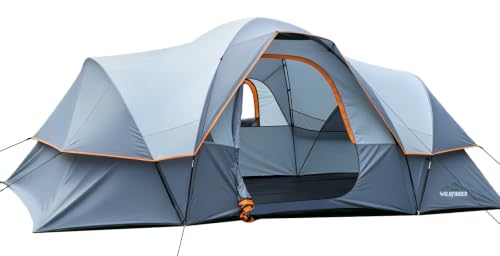
The WildFinder 10-Person Camping Tent is an extra-large, multi-room-capable family shelter designed specifically for car campers, weekend warriors, and extended outdoor groups seeking maximum interior volume. Measuring 18 by 9 feet with an impressive center peak height of 82.7 inches, this cabin-style shelter is engineered to eliminate the cramped feeling common in standard low-profile tents. For parents managing kids and gear or groups heading out to state park campgrounds, the vertical clearance to walk upright transforms the shelter from a simple sleeping spot into a functional outdoor basecamp.
Usable interior living space is the primary strength of this model. The 18 x 9-foot floor plan yields substantial square footage, giving campers ample room to arrange multiple queen air beds, camping cots, or an array of sleeping pads. Beyond sheer sleeping capacity, the nearly seven-foot center height allows adults to change clothes without hunching over, reducing physical strain during multiday stays. Campers who keep duffel bags, camp chairs, and plastic storage totes inside the tent will find that the open perimeter easily accommodates gear without crowding the central walkway.
Airflow and temperature management are addressed through the tent's double-layer design and extensive mesh window layout. Multiple large mesh windows wrap around the perimeter, drawing in fresh breezes to circulate warm air outward during humid summer afternoons. This continuous cross-breeze helps manage overnight condensation buildup along the interior walls. The included rainfly installs overhead to shield occupants from unexpected rain showers and wind. While the double-layer design offers functional shelter for standard campground conditions, campers anticipating prolonged heavy deluges should note that a specific waterproof millimeter rating is not detailed in the manufacturer specifications, so applying extra seam sealer or carrying an auxiliary tarp is a sensible precaution for wet climates.
Transporting and handling a shelter of this size is straightforward for vehicle-based adventures, thanks to its listed weight of approximately 18 pounds. While far too heavy for backpacking, this weight is relatively lightweight for a 10-person capacity structure and fits comfortably into car trunks, truck beds, and SUV cargo areas. Setting up an 18-foot tent is most efficient as a two-person job, ensuring pole sleeves and clips are tensioned evenly before anchoring the stakes and guylines. Once properly staked, the tent forms a stable, spacious dome structure ready for weekend gatherings, backyard campouts, or festival camping.
The WildFinder 10-Person Tent is an attractive choice for car camping families and budget-conscious outdoor groups who prioritize vertical standing headroom and expansive floor space. Backpackers and solo trekkers will need a far lighter, more compact system, and mountaineers heading into extreme four-season weather will require specialized gear. However, for relaxed campground weekends, summer road trips, and group outings where comfort, airflow, and camaraderie are the top priorities, this tent delivers generous livability backed by a 1-year warranty.
The standout attribute of the WildFinder 10-Person Tent is its expansive interior layout, measuring roughly 18 feet long by 9 feet wide. With a peak center height of 82.7 inches, nearly all campers can walk upright comfortably without crouching, which makes changing clothes and moving around inside effortless.
This large floor area accommodates multiple cots or inflatable mattresses with room left over for duffels, dry bags, and camp organizers. For families spending extended hours inside during afternoon rain or hot sun, the cabin-like space provides a comfortable, uncrowded retreat.
Effective ventilation is critical in any large group shelter, and the WildFinder tent utilizes multiple oversized mesh windows to promote steady airflow. These breathable mesh panels allow fresh air to enter from multiple sides, helping hot, stale air escape during warm summer getaways.
In addition to keeping the interior comfortable, the consistent air movement plays an important role in reducing overnight condensation on the tent walls. The fine mesh also acts as a dependable barrier against mosquitoes, gnats, and outdoor debris while maintaining wide outdoor views.
WildFinder includes a 1-year manufacturer warranty with this 10-person camping tent, offering coverage against defects in materials and craftsmanship under normal camping use. Having direct manufacturer backing gives peace of mind when planning summer family vacations and group trips.
The brand also provides 24/7 customer support to assist campers with setup guidance, replacement inquiries, or product questions, helping ensure a smooth and dependable outdoor experience.

Pros
- PU 3000mm waterproof coating and factory-taped seams offer dependable rain protection for a single-layer tent.
- Protective pole casing prevents the painful fiberglass splinters common with budget fiberglass poles.
- Simple two-pole cross sleeve design enables rapid, hassle-free solo setup in under two minutes.
- Generous 7-foot interior length provides ample room for taller campers plus interior gear storage.
Cons
- Single-layer design requires adequate airflow to prevent interior condensation during cold or humid nights.
- At 4.34 pounds, it is heavier than dedicated ultralight backcountry shelters.
- The 3.8-foot width realistically accommodates only one adult with gear rather than two full-sized adults.
The Night Cat Backpacking Tent is a compact, single-layer dome shelter engineered for solo adventurers, scouts, weekend hikers, and first-time campers looking for a practical, low-cost outdoor shelter. With interior floor dimensions measuring 7.0 by 3.8 feet and a peak center height of 3.6 feet, this shelter is proportioned to give a single adult sleeper generous elbow room with dedicated space along the perimeter to stash a trail pack, boots, and clothing. While the listing notes capacity for an adult and a small child, practical trail use makes it primarily an efficient one-person backpacking and camp shelter.
For weather management, the tent utilizes polyester fabric treated with a PU 3000mm waterproof coating, complemented by sealed, taped seams along the structural stitching. This level of waterproof protection is designed to withstand passing rainstorms and prevent moisture penetration from the wet ground. Because this is a single-layer tent without a separate full-coverage rainfly, managing air circulation is critical. Night Cat addresses this through a large mesh front entryway and an integrated mesh roof window, which work together to facilitate fresh air exchange and keep flying pests out of the sleeping quarters.
The frame relies on two foldable fiberglass poles equipped with an upgraded protective casing. Traditional single-layer fiberglass poles can develop micro-splinters over time that irritate hands during assembly, but this dual-layer sleeve construction shields campers during handling. Pitching the shelter requires sliding both poles through the diagonal roof sleeves and anchoring the corners, a straightforward routine that takes approximately one to two minutes even when arriving at camp after dusk. Once staked, the freestanding dome structure holds its shape cleanly in moderate winds.
Portability is a strong attribute for youth groups and weekend travelers, with the tent packing down into an included carry bag measuring 16.5 by 4.7 by 4.7 inches. At an overall weight of roughly 4.34 pounds, it sits between heavier car camping options and premium ultralight shelters. While long-distance thru-hikers counting every ounce may prefer a lighter tarp or trekking-pole tent, this weight and compact packed size fit conveniently into scout gear packs, motorcycle saddlebags, and car trunks for spontaneous overnights.
Before planning an extended trip, campers should account for the functional tradeoffs of a single-wall shelter. In damp, chilly environments, warm breath will create condensation along the interior polyester walls if the mesh vents are kept shut. Additionally, because there is no external vestibule, muddy footwear and wet outerwear must be brought inside the main tent floor. For budget-conscious hikers, motorcycle campers, scouts, and festival goers seeking a simple, waterproof, and easy-to-pitch solo shelter, the Night Cat tent provides a balanced, accessible solution.
Setting up the Night Cat tent requires minimal effort thanks to its streamlined two-pole sleeve structure. The fiberglass poles slide directly into diagonal sleeves across the canopy, allowing a single person to erect the freestanding dome in roughly one to two minutes without complex hub mechanisms.
Takedown is equally quick, rolling neatly into an included 16.5 by 4.7-inch carry sack. At approximately 4.34 pounds, the tent packs down compactly enough to strap onto the bottom of a backpack, secure to a bicycle rack, or store in a vehicle trunk for weekend outings.
Constructed with PU 3000mm coated polyester and heat-sealed taped seams, this shelter is built to keep rain from penetrating the interior cabin during unexpected downpours. The aerodynamic dome geometry also assists in deflecting moderate wind gusts when properly staked to the ground.
To mitigate condensation common to single-wall tents, the layout includes a large mesh door and an upper roof mesh vent. Keeping these openings clear allows continuous airflow across the ceiling, helping warm moisture escape while maintaining dependable insect defense.

Pros
- Freestanding dome framework allows the pitched tent to be shifted without complete take-down.
- Documented PU 2000 coating and taped seams assist with managing rain and surface moisture.
- Double-layer door and roof mesh panels aid in airflow to help limit condensation buildup.
- Complete package includes all necessary poles, stakes, guylines, and a compact carry bag.
- Weighs 5.29 pounds, making it manageable for car camping, festivals, or short walk-in campsites.
Cons
- Interior width of 4 feet 11 inches leaves very little floor area for bulky gear when occupied by two adults.
- The specific material of the tent poles is not detailed in the product specifications.
- Manufacturer notes all-season use, but lightweight PU 2000 dome shelters are typically better aligned with mild to moderate three-season outings.
The Clostnature 2-Person Camping Tent is a classic freestanding dome shelter designed for casual campers, weekend festival attendees, and beginners looking for an uncomplicated setup. Built with standard crossing poles and a fitted rainfly, it aims to deliver simple weather protection and convenient portability without unnecessary bulk. While marketed for two people, understanding its specific dimensions and design features is essential for evaluating whether it matches your camping style and campsite expectations.
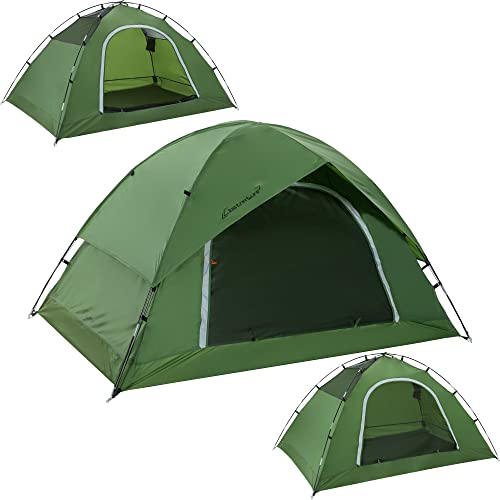
Regarding interior capacity, the floor measures 7 feet 3 inches in length by 4 feet 11 inches in width, accompanied by a peak height of 3 feet 10 inches (approximately 86.6 by 59.1 by 45.3 inches). For two adults using standard sleeping pads, this width creates close sleeping arrangements with minimal floor space remaining for large packs. Solo campers, however, will enjoy generous interior room to keep clothing, backpacks, and personal items protected indoors. The peak height permits comfortable sitting up for changing or reading, but does not support standing upright.
The structural layout relies on an X-pole dome configuration that makes pitching relatively quick, often completed in under five minutes by one or two people. Because the main tent body is freestanding, you can reposition the shelter around the campsite to avoid rocks or roots before staking it down. Ventilation is addressed through top-side mesh netting and an N-shaped double-layer door that combines solid fabric with breathable mesh, allowing campers to adjust airflow depending on temperature and breeze.
In terms of weather-related design, the tent utilizes polyester with a PU 2000 coating, supported by factory-sealed seams and dual-layer fabric reinforcement at the corners. The included rainfly uses an additional dedicated pole to extend coverage. Transport is straightforward thanks to an included storage sack measuring 16.5 by 6 by 6 inches, with the complete package weighing 5.29 pounds. Routine maintenance requires standard tent care: setting up on cleared ground, securing all eight stakes and four guylines, and ensuring the fabric is completely dry before long-term storage to prevent odor or mildew.
Buyers should account for certain practical trade-offs and missing details. The product data does not list the specific pole material, such as fiberglass or aluminum, which affects long-term resilience. While the manufacturer states all-season and all-weather capability, a compact PU 2000 dome tent is realistic for mild to moderate three-season conditions rather than heavy snow loads or high-wind exposure. Additionally, vestibule square footage is not specified, meaning gear organization mostly depends on available interior space.
For couples embarking on casual weekend car camping trips or solo campers seeking an inexpensive, portable shelter with plenty of elbow room, the Clostnature 2-Person Tent provides solid basic functionality. It balances a light 5.29-pound packed weight with documented seam sealing and dual-layer entry. Those planning extended wilderness trips in unpredictable mountain climates or groups requiring expansive interior living space should evaluate larger multi-person or heavy-duty specialized shelters instead.
The Clostnature tent incorporates a freestanding X-pole dome design, utilizing two main crossing poles to suspend the inner tent body. A third smaller pole is provided to support the rainfly configuration. Because the structure does not rely solely on stake tension to maintain its shape, it can be lifted and moved to adjust orientation before driving stakes into the ground.
The complete package comes with eight stakes and four guylines to anchor the tent against moderate wind. The manufacturer notes that setup can be completed in less than five minutes by one to two people, providing a straightforward pitching process that avoids complex mechanical hubs or automatic spring mechanisms.
Weather-related specifications center on polyester fabric treated with a PU 2000 coating, paired with factory-sealed seams to mitigate water entry along needle holes. The tent base features dual-layer fabric reinforcement at the corners for added durability at high-stress points.
Ventilation is supported by mesh panels located along the upper sides of the tent body, alongside an N-shaped double-layer door. This configuration allows campers to zip open the outer fabric panel while leaving the mesh layer closed, encouraging airflow to help manage condensation during warm or humid evenings.
The interior living area offers floor measurements of 7 feet 3 inches by 4 feet 11 inches, with a center height of 3 feet 10 inches. In metric measurements, this translates to roughly 220 centimeters long, 150 centimeters wide, and 115 centimeters high, providing a functional footprint for up to two sleeping pads.
For packing and transport, the tent compresses into an included storage sack measuring 16.5 by 6 by 6 inches. With an overall listed weight of 5.29 pounds, the shelter is simple to stow in a vehicle trunk or transport on shorter walk-in approaches to a campsite.

Pros
- Exceptional 6-foot-3-inch standing headroom prevents back strain during extended campground stays
- 3000mm PU waterproof rating on the rainfly delivers strong protection during unexpected downpours
- Removable rainfly reveals a full mesh ceiling for clear stargazing and cross-breeze ventilation
- Built-in electrical cord access port brings modern convenience to standard campground hookups
Cons
- Total weight and steel pole build make it strictly suited for car camping rather than trail backpacking
- Cabin tent profile catches more crosswinds than low-profile dome tents in exposed areas
- Comfortably fits two adults with gear or a family with small kids rather than four full-sized adults
The Happy Travel 4-Person Tall Cabin Tent is an upright, family-friendly shelter designed to bring home-style comfort to the great outdoors. Rather than forcing you to crawl on hands and knees like standard low-profile dome shelters, this cabin design emphasizes vertical space. It serves as an excellent option for car campers, state park explorers, festival goers, first-time campers, and weekend warriors looking for an uncomplicated shelter that simplifies changing clothes and moving around inside camp.
Standing space is the headline feature here. Boasting a peak height of 75 inches (6 feet 3 inches), the tent allows the vast majority of campers to stand completely upright. The 8x7-foot footprint yields ample space to lay down a standard queen-size air mattress while leaving perimeter clearance for duffel bags, coolers, and footwear. While labeled for four individuals sleeping side-by-side on slim pads, it functions at its best as a roomy retreat for couples or parents camping with one or two small children.
Weather protection is centered around a 190T polyester taffeta shell paired with a polyurethane coating rated to 3000mm hydrostatic head. That is a substantial waterproof barrier for a recreational campground tent, helping shed steady rains and prevent moisture from seeping through the roof. The bathtub-style floor uses thickened polyethylene to stop ground dampness from soaking your sleeping gear. For support, the structure relies on 19mm metal upright poles anchored by four exterior guylines, which provide rigid stability against breezy conditions when properly staked out.
Ventilation is well managed through four large mesh windows and an expansive B3 fine-mesh ceiling. This setup facilitates steady cross-breezes during muggy summer afternoons while successfully keeping no-see-ums and mosquitoes outside. On dry, clear evenings, leaving off the removable rainfly transforms the shelter into a panoramic stargazing room. Practical interior touches include convenient stash pockets for keeping phones and headlamps off the floor, smooth double-ended zippers, and a dedicated zippered electrical port for running power cords to campsite pedestals.
Assembling the tent is straightforward, making it very approachable for camping novices. Two people can easily pitch the frame and secure the rainfly in just a few minutes, avoiding the headaches of complicated sleeve systems. With that said, the tall, boxy silhouette presents a flat surface area to heavy winds, so staking down all guylines firmly is essential in open clearings. Due to its rigid metal poles and packed profile, this tent belongs in the trunk of a car or back of an SUV rather than on a hiking pack.
For outdoor enthusiasts focused on casual campground getaways, summer music festivals, and relaxed family weekends, this cabin tent provides a generous balance of vertical comfort, smart airflow, and reliable rain coverage. It removes the claustrophobia common to budget tents and offers an inviting basecamp for hassle-free outdoor living.
Vertical cabin walls make an enormous difference in usable interior space compared to sloping dome walls. With a center height of 6 feet 3 inches, campers can easily walk inside, dress without contorting, and arrange cots or a queen air bed with total convenience.
The generous footprint easily accommodates camping luggage, pet beds, or a small folding camp table. Having room to maneuver without constantly brushing against wet tent fabric significantly enhances comfort during extended weekend trips.
A 3000mm PU waterproof rating on the 190T polyester fabric ensures that passing summer rain showers and morning dew roll right off the outer canopy. The removable rainfly covers the mesh roof entirely to deflect precipitation while guiding runoff away from the windows.
The heavy-gauge 19mm metal frame poles and heavy-duty guylines maintain structure against moderate campground wind. Campers heading into blustery weather should always ensure all included corner stakes and tension lines are fastened securely into solid ground.

Pros
- 72-inch center height and near-vertical straight walls maximize usable headroom across the 14-foot by 9-foot floor plan
- Included room divider curtain provides instant privacy between sleeping quarters or serves as an indoor projector screen
- Color-coded pole system streamlines setup for first-time campers and quick late-day arrivals at the campsite
- Expansive mesh ceiling panels promote strong airflow to help mitigate overnight interior condensation buildup
- At roughly 17.64 pounds, it is relatively lightweight for a multi-room 8-person car camping shelter
Cons
- Water-resistant coating and partial rainfly are built for fair-to-moderate rain rather than severe windstorms or heavy downpours
- Stated 8-person capacity leaves minimal space for luggage, making it best suited for 4 to 6 campers with gear
- Packed weight and dimensions are strictly built for car camping rather than foot-travel or backpacking trips
The CAMPROS CP 8 Person Camping Tent is a spacious cabin-style car camping shelter engineered for family campers, weekend warriors, and small groups who prioritize interior livability at established campgrounds. Built around an expansive 168-inch long by 108-inch wide footprint, this tent delivers a generous 72-inch center height that allows most adult campers to stand upright while changing clothes or moving about the shelter. Car campers, festival goers, and first-time outdoor enthusiasts will appreciate the freestanding cabin profile, which maximizes vertical volume compared to traditional sloping dome tents.
Usable interior room is where this design shines, thanks to near-vertical straight walls that keep the perimeter functional for gear storage and sleeping setups. The manufacturer includes a detachable divider curtain that partitions the interior into two distinct rooms, offering welcome privacy for parents and kids or separate sleeping quarters for two couples. Additionally, the interior divider can double as a projector screen for evening campsite entertainment. While the technical sleeping capacity accommodates up to eight sleeping pads laid side-by-side on the floor, practical camping comfort typically favors four to six people when accounting for air mattresses, duffel bags, and personal gear.
Weather management relies on water-resistant coated fabric paired with factory-sealed seams and dedicated waterproof strips along vulnerable stitching points. The included rainfly shields the mesh roof during passing showers, while the vast mesh ceiling and large mesh door panels maintain active airflow across the interior. This high-volume ventilation is essential for warm summer outings and helps minimize overnight condensation buildup when multiple campers share the enclosed space. However, because the design emphasizes open airflow and partial rainfly coverage rather than a full storm cocoon, it is best suited for fair-weather summer and mild three-season camping rather than freezing winds or torrential multi-day downpours.
Setup efficiency is aided by a color-coded pole system that takes the guesswork out of structural assembly. According to product specifications, two people can assemble the tent in approximately 5 minutes without needing specialized tools or prior outdoor skills. Tipping the scales at roughly 17.64 pounds, the shelter maintains a manageable transport weight that fits neatly into a standard car trunk alongside coolers, camp chairs, and cooking bins. Campers should inspect and firmly stake out all guy lines to stabilize the tall 6-foot profile against gusty conditions, and ensure the fabric is completely dry before repacking into the carry bag to prevent mildew during home storage.
For budget-conscious families and casual campers seeking reliable campground accommodations, the CAMPROS CP 8 Person Tent represents a practical balance of headroom, multi-room flexibility, and straightforward assembly. It is not designed for backcountry backpacking treks or extreme alpine environments where ultra-low pack weight and storm-rated frames are non-negotiable. Instead, it serves as a dependable car camping basecamp for sunny state park weekends, festival tailgating, and relaxed family road trips across the country.
Measuring 14 feet by 9 feet with a 72-inch peak height, the CAMPROS CP 8 Person Camping Tent provides abundant livable volume for family car camping. The straight-wall structure prevents the walls from sloping inward aggressively, preserving full standing height through the middle of the shelter and creating ample clearance for camp cots or queen-sized air mattresses.
A removable fabric room divider allows campers to customize the layout into a two-room suite for privacy or leave it open as a single expansive hall. The divider fabric is also finished to serve as an impromptu movie projection screen, giving families and festival groups an enjoyable entertainment option inside the tent once the campfire dies down.
Assembly is streamlined through color-coded poles that match corresponding sleeves, allowing two campers to pitch the structure in roughly 5 minutes based on manufacturer guidelines. Freestanding construction makes it easy to position the tent on flat ground before driving in the stakes and tensioning the guylines to brace the 6-foot tall frame.
For weather protection, the tent utilizes a water-resistant coating combined with sealed seams and waterproof strips to resist light-to-moderate rain. The rainfly covers the expansive mesh ceiling to block rainfall while leaving open mesh doors and roof zones beneath to ensure steady cross-ventilation, helping prevent moisture and condensation from gathering inside on humid nights.
Understanding Walk In Tent Camping Logistics and Shelter Selection
Defining Walk In Campsites and Key Distinctions
Campground reservation systems frequently list sites as drive-in, walk-in, or walk-to, which can confuse campers accustomed to parking right beside their fire pit. A walk-in campsite requires campers to park in a central or peripheral parking lot and walk a short distance along a cleared trail to their allocated tent pitch. This distance commonly ranges from twenty yards to a quarter of a mile, depending on the state park, national forest, or private campground rules. Because motor vehicles cannot pull directly up to the tent pad, these areas maintain a natural wilderness feel while retaining developed amenities nearby.
In comparison to traditional car camping, walk-in sites eliminate the constant disturbance of closing car doors, vehicle headlights sweeping across tent walls, and rumbling engines. Campers enjoy greater personal privacy and tree cover, which creates an experience closer to genuine wilderness camping. Unlike deep backcountry backpacking, however, walk-in camping does not require carrying a forty-pound backpack over mountain passes for hours. Most locations provide shared communal water spigots, established fire rings, picnic tables, and nearby vault toilets or flush restrooms within a brief walking distance.
Campers should recognize that campsite layouts vary widely between municipal recreation parks and national parks. Some parks provide dedicated rolling carts or wheelbarrows at the trailhead to assist with moving gear, while others expect campers to pack everything by hand. Knowing the exact walking distance from the parking stall to the pitch allows you to decide whether bulky coolers and multi-room shelters are practical. Checking trail conditions beforehand also prevents surprises when navigating loose gravel, dirt switchbacks, or wooden stairs with armfuls of camping equipment.
The Physical Logistics of Moving Gear on Foot
Transporting camping equipment over a dirt trail alters how you organize and pack your gear before leaving home. When drive-up car camping, you can toss loose sleeping bags, heavy storage totes, and oversized steel cots directly into the trunk without considering individual item weights. Walk-in camping requires dividing equipment into balanced, easily manageable loads that one or two people can haul comfortably. Organizing items into duffel bags, internal-frame packs, or heavy-duty tote bags with comfortable handles dramatically reduces the number of trips back and forth to your vehicle.
Collapsible camping wagons with wide all-terrain wheels offer a practical way to transport bulky items across crushed gravel or hard-packed dirt. A durable wagon handles heavy objects such as water jugs, ice chests, and multi-person tents without straining your back. However, campers should always check trail terrain before counting solely on rolling carts. Narrow dirt trails with exposed tree roots, rocky outcrops, or steep staircases can render wagons unusable, forcing you to carry everything in your hands or strapped to your shoulders.
Staging your packing process makes arrival at the site smooth and efficient. It is wise to place your tent, ground tarp, and pitching stakes in an easily accessible spot so they come out of the car first. Setting up your shelter before hauling non-essential comfort items ensures that your living space is secure if sudden rain or twilight arrives. Leaving luxury gear or heavy cooking equipment in the vehicle until the primary sleeping structure stands pitched saves substantial energy.
Balancing Interior Space with Carry Weight
Choosing the right tent for a walk-in camping trip requires finding a practical middle ground between palatial comfort and physical portability. Campers who enjoy family trips often gravitate toward spacious outdoor tents for family trips that offer standing center height and multiple room dividers. Large family shelters, such as eight-person or ten-person cabin designs, provide incredible living space once assembled. Yet their packed weight can exceed twenty or thirty pounds, turning a long walk into a physically demanding workout.
Compact two-person or four-person dome tents offer an appealing alternative for campers who prioritize swift transport and effortless hauling. Lightweight dome tents often pack into slender carry sacks weighing between five and twelve pounds, making them simple to carry with one hand while holding a duffel bag with the other. Models like the Clostnature two-person tent or the Night Cat single-to-two-person shelter demonstrate how compact trail shelters reduce carry fatigue without sacrificing essential waterproof protection. Campers must assess whether standing headroom is worth the extra carry weight over the specific distance they plan to walk.
Usable floor space inside a tent should accommodate both your sleeping pads and any sensitive gear you prefer not to leave outdoors. While drive-in campers can leave extra duffels and clothing bags in the car trunk, walk-in campers generally prefer keeping dry clothing and personal belongings inside the tent. Choosing a four-person shelter for two adult campers offers ample floor area for sleeping mats while leaving plenty of perimeter floor room for backpacks. This strategic capacity buffer prevents your sleeping bag from pressing against tent walls, which helps avoid moisture transfer during damp nights.
Evaluating Tent Architecture: Cabin Styles versus Compact Domes
Tent architecture directly dictates how easy a shelter is to transport, pitch, and live in over several days. Cabin-style tents, such as the UNP portable cabin tent or Happy Travel four-person cabin, utilize near-vertical sidewalls that maximize internal volume and headroom. Center heights reaching six feet or higher allow campers to stand fully upright, which makes changing clothes and moving around comfortable. The trade-off lies in the frame materials, as steel leg poles and complex joint assemblies add noticeable weight and length to the packed storage bag.
Dome tents utilize intersecting flexible poles made of fiberglass or aluminum that bend into curved arches. This design creates a stable, wind-shedding profile that naturally deflects gusty breezes while keeping the overall package compact and lightweight. While dome tents feature sloping walls that reduce overhead standing space, their freestanding frames can be assembled rapidly and moved easily if you need to reposition your site. Instant pop-up shelters, like the FanttikOutdoor Alpha C4 Ultra, offer rapid setup mechanisms with hub frames that deploy in seconds, providing a balance between quick pitching and generous cabin dimensions.
Campers seeking restful sleep in sunny or high-exposure campgrounds also benefit from specialized fabrics such as dark room tent designs that block out early morning light. These fabric treatments help keep the tent interior cooler during hot afternoons while encouraging sound sleep past dawn. When picking a tent frame style for a walk-in site, consider whether your priority is standing convenience, rapid setup after carrying gear, or streamlined packing that fits into a compact vehicle trunk.
Tent Pad Preparation and Anchoring on Established Ground
Walk-in campsites at established campgrounds generally feature designated tent pads constructed with leveled sand, crushed pea gravel, or timber framing. Pitching your shelter strictly within these prepared boundaries prevents soil erosion and protects delicate native vegetation surrounding the campsite. Before unrolling your tent, inspect the designated pad surface carefully for sharp stones, stray pinecones, and jagged twigs that could puncture the tent floor. Laying down a durable footprint or groundsheet protects the waterproof polyurethane coating on the tent bottom and extends shelter longevity.
Securing tent stakes in established pad materials often requires sturdier hardware than standard thin wire pegs. Crushed gravel pads and heavily compacted dirt can bend flimsy aluminum stakes, preventing secure guyline tensioning. Carrying forged steel stakes or heavy-duty Y-beam stakes ensures that you can drive anchors firmly into dense substrate without damaging them. If your tent features a freestanding pole system, you can erect the main canopy structure before placing corner stakes, giving you flexibility to align the doorway toward the best view or windbreak.
Guylines provide vital structural stability that keeps your tent rigid and secure during sudden weather changes. Fastening guyout lines to external rainfly loops pulls the fabric taut, preventing it from flapping noisily in gusty conditions. Taut guylines also keep the outer rainfly separated from the inner mesh walls, which prevents rain from transferring through the fabric layers. Take time to flag low-hanging guylines with reflective ribbons or glow markers so campmates do not trip over tension cords when walking around the site after sunset.
Weather Protection, Rainfly Coverage, and Condensation Control
Weather protection remains a cornerstone of comfortable camping, especially when your car is not parked immediately outside for quick retreat. Reliable tents feature rainflies with factory-sealed seams and waterproof polyurethane coatings rated between 1,500 and 3,000 millimeters of hydrostatic head. Double-layer tent designs incorporate an inner breathable mesh canopy covered by a separate, waterproof rainfly that channels rainwater away from the sleeping area. Models equipped with extended vestibules create covered exterior storage zones where muddy hiking boots and damp daypacks can sit safely protected from falling rain.
Ventilation plays an equally vital role in keeping tent occupants dry throughout cool evenings. Human respiration releases substantial water vapor inside a sealed tent, which can condense on cold wall fabric if airflow is restricted. Choosing a tent with large mesh windows, adjustable ground vents, and ceiling mesh panels promotes steady air circulation that carries warm moisture away before it condenses. Tents like the CAMPROS CP eight-person model integrate extensive mesh roof paneling that provides generous cross-ventilation while allowing stargazing when the rainfly is removed under clear skies.
Managing internal moisture also requires smart habits inside the shelter. Never bring damp rainwear or wet dogs directly onto sleeping bags, as wet materials quickly saturate the enclosed airspace. Keeping tent doors zipped closed against blowing mist while cracking top eave vents strikes the proper balance between rain exclusion and moisture escape. If heavy morning dew coats the exterior rainfly, wiping it down with an absorbent microfiber towel before packing reduces the water weight you must carry back to the vehicle.
Food Storage and Gear Management Away from Your Vehicle
Because your car is located down the trail, wildlife management and food storage require strict discipline at a walk-in campsite. In traditional car camping, many people casually stash coolers and snack bins in their locked trunk overnight. At walk-in sites, leaving food inside a tent or out on a picnic table can attract raccoons, rodents, and bears, creating serious safety hazards. Most developed walk-in campgrounds provide metal bear-resistant food lockers at each site to store all scented items, including coolers, cookware, toiletries, and trash.
If your chosen campsite does not provide metal food lockers, you must plan an approved wildlife-resistant food storage method before arriving. Certified bear-resistant canisters or scent-proof storage sacks keep food secure while preventing nocturnal animals from raiding your rations. Never store snacks, aromatic toothpaste, or scented lip balm inside your sleeping tent, even for a few minutes. Storing trash inside heavy-duty sealable plastic bags and disposing of it promptly in campground bear-proof dumpsters keeps wild animals from associating tent sites with human food.
Organizing your campsite into distinct zones helps maintain safety and cleanliness throughout your stay. Establish your sleeping zone upwind from your camp cooking area and food storage locker to keep lingering food aromas away from your tent fabric. Setting up a dedicated wash station with biodegradable soap and a wash basin keeps dirty dishwater away from your living space. Keeping your site orderly makes finding flashlights, warm layers, and rain jackets effortless when darkness falls over the trail.
Smart Pack-Down and Post-Trip Shelter Maintenance
Breaking camp at a walk-in site follows the same reverse logistics as your arrival, demanding a systematic approach to hauling items back to your car. Packing personal sleeping gear, deflation mats, and clothing bags inside the tent before dismantling the poles keeps everything dry if morning mist lingers. Once the shelter is empty, sweep out loose dirt, sand, and leaves from the floor corners before unhooking the rainfly and collapsing the pole frame. Packing the tent into its storage sack carefully avoids stressing zipper tracks and prevents bent pole sections from puncturing fabric.
Hauling your gear back down the trail in grouped loads prevents fatigue and ensures you leave no stray items behind. Take time to perform a thorough sweep of the campsite, checking around the fire pit, picnic table, and tent pad for micro-trash such as bottle caps or twist ties. Adhering to Leave No Trace principles preserves the pristine natural character of walk-in sites for the next arriving campers. Carrying all accumulated waste to the parking lot disposal bins completes a responsible outdoor journey.
Once you arrive home, inspect and care for your tent properly to ensure it remains ready for future adventures. Never store a camping tent compressed inside its stuff sack while damp, as trapped moisture promotes mildew growth and degrades waterproof fabric coatings. Pitch the tent in a garage or hang the fabric over a porch railing until all seams, floors, and rainfly panels are completely bone dry. Wipe down aluminum or fiberglass poles with a clean cloth to remove grit, ensuring smooth joint action for your next walk-in camping getaway.


Write Your Review
No reviews yet. Be the first to share your experience!