

Selecting the right campsite shelter begins with knowing where to buy camping tents and understanding what distinct retail platforms offer. Online marketplaces provide massive inventories and direct delivery, while specialized outfitters allow campers to ask technical questions about fabrics, hydrostatic ratings, and season grades. Car campers seeking large cabin models often prioritize different sellers than backpackers looking for ultralight shelters. Choosing a trustworthy retailer ensures transparent return policies, accurate product specifications, and direct access to warranty support when you need replacement parts.
Before committing to an order, shoppers should examine key shelter metrics including floor dimensions, center peak height, frame style, and weatherproofing treatments. Whether you need compact shelters for solo weekend escapes or spacious outdoor tents for group trips, checking dimensions against your group size is critical. Stated occupancy numbers rarely account for bulky gear or air mattresses, making buyer diligence essential across every sales channel. Evaluating customer service reputations, shipping guarantees, and component availability helps outdoor enthusiasts secure the right equipment without unnecessary friction.

Pros
- Huge interior footprint gives family campers plenty of space for gear, pets, and bedding
- Ground cooling port combined with ceiling mesh creates effective cross-ventilation on hot summer nights
- Snag-free sleeve design makes setup quick and easy even when pitching camp near dusk
- Budget-friendly price point makes large-group car camping accessible without a heavy investment
Cons
- Weighing nearly 19 pounds, it is intended strictly for car camping rather than backpacking treks
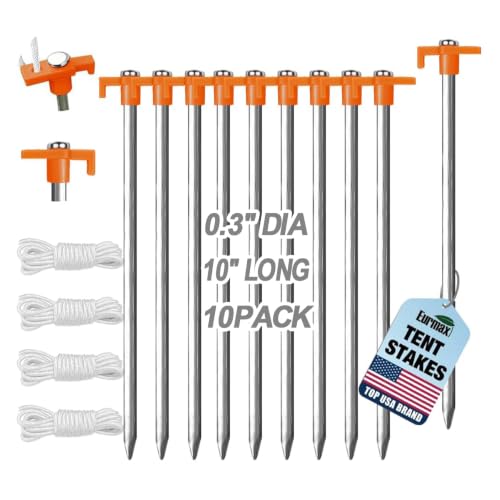
- Included thin steel ground stakes should be upgraded for high-wind conditions or rocky soil
- Like most eight-person tents, it fits four to five adults comfortably once luggage and cots are inside
The Amazon Basics 8-Person Camping Tent is an expansive three-season dome shelter engineered specifically for car campers, family road trips, scout groups, and festival weekends. Boasting a massive 15-foot by 9-foot footprint and a 70-inch center height, this tent provides substantial living area for groups who want to avoid the cramped quarters of technical backpacking shelters. It caters nicely to budget-conscious campers, first-time outdoor adventurers, and weekend warriors seeking a dependable home base at state parks and organized campgrounds.
Weather protection relies on a water-resistant polyester canopy coupled with factory-welded seams designed to keep ground moisture and sudden showers at bay. The removable rainfly covers the upper mesh roof while leaving side clearance for air circulation. To manage interior condensation during humid summer nights, the shelter features a ground-level cool-air port paired with a large zippered back window. This setup draws fresh air from down low and pushes warm air out through the mesh ceiling, keeping the interior feeling fresh even with multiple campers inside.
Structural support comes from durable, shock-corded fiberglass poles that slide easily through continuous, snag-free fabric sleeves. Campers will appreciate the well-placed interior mesh organizer pockets that keep small essentials like car keys, pocket knives, smartphones, and headlamps within arm's reach. While the floor fabric is designed to resist campground wear, pairing the tent with an aftermarket groundsheet or heavy-duty tarp helps extend the lifespan of the base against sharp twigs and gravel.
Pitching this family-sized tent is straightforward thanks to the simple crossover pole design. Two people can complete the assembly process in under eight minutes, which is especially helpful when pulling into a campsite after dark. Takedown is equally quick, packing down into a dedicated carry bag that holds the folded canopy, rainfly, poles, and stakes. At roughly 18.7 pounds, the packed shelter stows neatly into vehicle trunks or SUV cargo areas alongside coolers and camp stoves.
While rated to sleep up to eight people closely side by side in sleeping bags, practical campground use is ideal for four to six campers with luggage, or parents with children and two queen air mattresses. The factory wire stakes work fine in soft campground soil, though campers heading to windy shorelines or desert bluffs should consider sturdier stakes. For casual weekend camping, summer vacations, and backyard sleepovers, this shelter offers dependable comfort, great headroom, and outstanding practical value.
With 135 square feet of usable floor area, this shelter provides an airy interior that easily handles standard camping furniture. Campers can arrange two queen air mattresses side by side with plenty of walking room down the center, or set up multiple camping cots and gear totes along the perimeter.
The generous 70-inch center peak allows most adults to stand upright without crouching, making changing clothes and organizing camp gear significantly easier. Integrated wall pockets keep personal items off the floor, maximizing available sleeping space across the entire layout.
The intuitive shock-corded frame eliminates pole confusion, while the snag-free sleeve channels prevent the poles from catching during threading. Even solo campers with a bit of practice can erect the shelter smoothly by staking down the corners first.
When it is time to break camp, the entire kit packs cleanly into the included carry bag. The package fits conveniently across the back row of an SUV or inside a car trunk, making it a reliable grab-and-go option for impromptu weekend getaways.

Pros
- Pre-attached frame delivers genuinely fast sub-minute assembly for stress-free campsite arrivals.
- Generous 90-square-foot floor area provides ample room for family gear or two full queen airbeds.
- Comprehensive ventilation array across all four walls and the ceiling helps manage interior condensation.
- Convenient power cord E-port and interior organizer pockets support modern family campsite setups.
Cons
- A packed weight of 21.83 pounds restricts this tent exclusively to vehicle and car camping rather than trail backpacking.
- The 1200mm water-resistant rating is built for light to moderate rainfall rather than prolonged severe storm downpours.
- A 66-inch peak center height offers comfortable sitting and moving space but requires taller adults to crouch.
The LEISURE IMPACT Instant 6-Person Tent is a cabin-style family shelter engineered specifically for car camping, state park weekend trips, backyard sleepovers, and music festivals. Built around a pre-attached quick-pitch frame, this tent eliminates the traditional hassle of sorting individual poles and feeding them through snug fabric sleeves. Based on its stated 21.83-pound weight, this shelter is designed strictly for drive-up camping where equipment can be unloaded directly from a vehicle trunk or truck bed, making it an impractical choice for backcountry backpacking or long hiking treks.
Setup speed is the primary functional advantage of this shelter. By expanding the pre-assembled frame and locking the telescoping corner poles into place, campers can achieve a standing shelter in under 60 seconds. This capability proves particularly useful during late-night campsite arrivals after dark or when pitching camp just before approaching rain. Takedown follows a similar reverse-folding pattern, allowing the tent body and frame to collapse down together directly into the included carry bag without disassembling individual pole joints.
Inside the shelter, usable floor space measures 120 inches by 108 inches (10 feet by 9 feet), providing approximately 90 square feet of level living area. While the tent is officially rated for up to six campers using slim ground sleeping bags, practical outdoor comfort is maximized when accommodating three to four people alongside duffel bags and camping bins. Alternatively, the rectangular cabin footprint easily holds two standard queen-size camping air mattresses side by side, leaving a narrow center walkway. The 66-inch center height offers decent vertical clearance for younger campers to stand freely and adults to sit upright in camp chairs, though taller campers will need to bend slightly when moving around.
Weather protection relies on 1200mm water-resistant treated fabric, sealed seams, and an exterior rainfly that caps the roof and forms a small front entry awning. This setup is specified to handle light to moderate rainfall. A tub-style floor elevates seam lines above standing ground water, and drainage channels near the main door zipper help steer droplets away from critical entry points. However, because the rainfly provides top-only coverage rather than a full-length ground storm barrier, this tent is best utilized during fair-weather three-season excursions rather than extreme storm conditions or heavy wind events.
Condensation management and warm-weather airflow are addressed through a 360-degree ventilation design. Mesh window panels on all four cabin walls combine with low-profile ground air vents to draw cooler air upward, while a full mesh ceiling allows warm air to exhaust out the top beneath the rainfly. On clear summer nights, leaving the rainfly off opens up panoramic sky views for stargazing while maintaining a reliable bug barrier. Thoughtful utility touches, such as a zippered E-port for routing shore power cords, mesh storage pouches for personal items, and a center lantern loop, make the LEISURE IMPACT 6-Person Tent a practical, value-oriented pick for recreational family campers prioritizing setup convenience.
The pre-assembled instant frame allows campers to pitch the entire structure in roughly one minute by unfolding the hub mechanism and extending the legs until the locking pins click into place. Staking out the corners and securing the adjustable guy lines adds stability against moderate wind gusts, creating a taut cabin profile with minimal physical effort.
With 120 inches by 108 inches of floor area, the cabin easily accepts varied sleeping arrangements, including two standard queen air mattresses or multiple sleeping pads arranged side by side. The 66-inch peak ceiling height provides comfortable sitting and changing space, while integrated wall pockets keep headlamps, phones, and sunglasses off the floor.
Fabric rated at 1200mm water resistance pairs with taped seams and a protective roof rainfly to shield the tent interior from passing showers and moderate dampness. The bathtub floor design curves upward along the edges to help block moisture seepage from damp campsite grass, supported by protective zipper storm channeling at the entry door.
Air circulation is maintained by four large zippered mesh windows, dedicated ground vents, and a wide mesh roof panel that promotes consistent cross-ventilation. This steady airflow prevents stagnant air pockets on warm afternoons and effectively reduces morning condensation accumulation along the interior tent fabric.
Pros
- Quick-pitch hub design enables fast setup without threading separate pole sections.
- Four-side mesh paneling delivers generous warm-weather ventilation.
- Low listed weight of 4.28 pounds keeps the shelter manageable to transport.
- Interior storage pockets and overhead lantern hook offer convenient gear staging.
- Backed by a 1-year limited manufacturer warranty.
Cons
- Manufacturer explicitly states the tent is intended for sunny weather and advises packing rain gear, indicating minimal rain protection.
- Specification discrepancies exist between the feature text (76.7 x 55.1 x 43.7 inch interior) and the technical specification listing (80.7 x 59 x 41.7 inches).
- Packed bag dimensions and included stake counts are not documented in the manufacturer specifications.
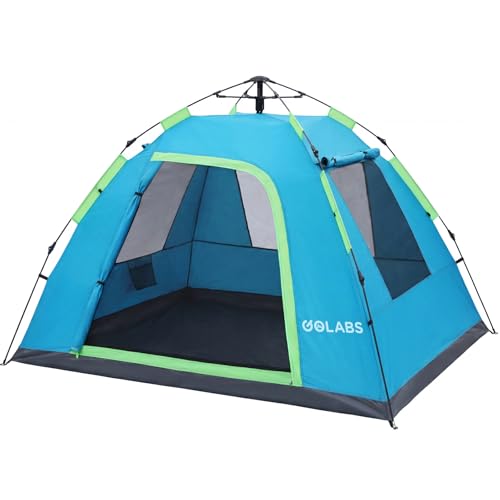
The Golabs CT3 is an instant pop-up camping tent designed for quick, hassle-free pitching during casual outdoor excursions. With its pre-attached fiberglass frame and center hub mechanism, it primarily suits first-time campers, festival-goers, couples, and solo travelers seeking an uncomplicated shelter for warm, sunny days. Rather than spending time assembling multiple shock-corded poles through fabric sleeves, users can pitch the structure rapidly at a campground, backyard, or local park.
Regarding capacity and usable room, the manufacturer lists interior dimensions of 76.7 inches long, 55.1 inches wide, and 43.7 inches high, alongside exterior measurements of 81.8 by 61.8 by 51.1 inches. However, the listing also includes a separate specification line noting 80.7 by 59 by 41.7 inches, introducing some ambiguity regarding the exact floor boundary. At roughly 55 inches in interior width, two adults will occupy virtually the entire floor footprint with standard sleeping pads, leaving little interior space for backpacks. Solo campers, by contrast, will find adequate elbow room to sleep alongside their dry gear.
The tent body features taffeta side walls paired with a woven polyethylene (PE) floor intended to resist dampness from the ground. Its structural framework relies on pre-attached fiberglass poles connected to a central hub. Once erected, the tent provides four-sided mesh panels and door ventilation designed to generate cross-flow breezes and help block common bugs. Inside, the canopy includes built-in storage pockets for personal essentials and an overhead hook for hanging a camp lantern or flashlight.
Transport is aided by a low documented weight of 4.28 pounds, making the shelter practical to carry from a vehicle to a campsite. Setup involves lifting the center pole, pressing downward until locked, and securing the four base corners, with nylon guylines included for light wind security. Specific details regarding packed carry-bag dimensions and the type or quantity of included ground stakes are omitted from the data. Campers should ensure the tent is completely dry before repacking to preserve the taffeta and PE materials.
A critical consideration is the shelter's documented weather limit. The manufacturer explicitly identifies this model as suitable for sunny weather and recommends preparing external rain gear in case of rain. The specifications do not list seam taping, a waterproof hydrostatic head rating, or full rainfly coverage. Consequently, this shelter is not engineered for heavy storms, steady rain, or cold-weather wilderness camping.
For warm-weather weekend getaways, casual beach outings, daytime park shade, or backyard campouts, the Golabs CT3 offers straightforward assembly, low carry weight, and ample ventilation at an accessible entry point. Shoppers who anticipate unpredictable mountain forecasts or wet weather should look toward three-season shelters with verified waterproof coatings and dedicated rainflies instead.
The Golabs CT3 uses a pre-attached pole system with an integrated center hub. Pitching the tent requires lifting the center pole mechanism, pressing down to lock the frame in place, and securing the four corners to the ground. The manufacturer indicates that this process can be completed in about 60 seconds.
Nylon guylines are supplied to provide additional tension against light breezes. Taking down the tent involves unlocking the center hub, folding the fiberglass pole segments inward, and rolling the canopy into its storage carry bag.
According to the product specifications, the Golabs CT3 is constructed specifically for sunny weather. The side walls are made of taffeta fabric, and the bottom uses a woven PE floor designed to guard against damp ground moisture.
The manufacturer includes an explicit advisory to prepare additional rain gear if wet weather occurs, confirming that this shelter is not built for downpours or severe conditions. It lacks a full-coverage rainfly and listed hydrostatic head ratings, making it best suited for fair-weather trips.
The documented interior living space measures approximately 76.7 inches long by 55.1 inches wide, with a center peak height of 43.7 inches. This width accommodates two standard-sized sleeping mats side by side, though internal storage room is limited when two people share the space.
To assist with campsite organization, the tent interior includes integrated storage pockets along the wall for phones, glasses, or small essentials. An overhead hook along the ceiling provides a dedicated spot to hang a battery-powered lantern.
Pros
- Generous 82.7-inch peak height provides genuine walk-around standing headroom for adults.
- Massive 18 x 9-foot floor dimensions easily fit large families or multiple sleeping pads and gear bins.
- Oversized mesh windows deliver excellent ventilation and wide outdoor views while keeping bugs out.
- Weighs just under 18 pounds, which is relatively portable for an extended 10-person family tent.
- Double-layer design with an included rainfly adds overhead weather coverage.
Cons
- The 18-foot overall length requires an extra-large campsite footprint and will not fit on small tent pads.
- Product specifications do not list a specific millimeter hydrostatic head rating for heavy rainstorms.
- At roughly 18 pounds, this tent is designed strictly for car camping and is unsuitable for backpacking.
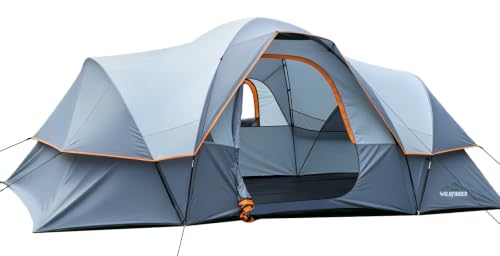
The WildFinder 10-Person Camping Tent is an extra-large, multi-room-capable family shelter designed specifically for car campers, weekend warriors, and extended outdoor groups seeking maximum interior volume. Measuring 18 by 9 feet with an impressive center peak height of 82.7 inches, this cabin-style shelter is engineered to eliminate the cramped feeling common in standard low-profile tents. For parents managing kids and gear or groups heading out to state park campgrounds, the vertical clearance to walk upright transforms the shelter from a simple sleeping spot into a functional outdoor basecamp.
Usable interior living space is the primary strength of this model. The 18 x 9-foot floor plan yields substantial square footage, giving campers ample room to arrange multiple queen air beds, camping cots, or an array of sleeping pads. Beyond sheer sleeping capacity, the nearly seven-foot center height allows adults to change clothes without hunching over, reducing physical strain during multiday stays. Campers who keep duffel bags, camp chairs, and plastic storage totes inside the tent will find that the open perimeter easily accommodates gear without crowding the central walkway.
Airflow and temperature management are addressed through the tent's double-layer design and extensive mesh window layout. Multiple large mesh windows wrap around the perimeter, drawing in fresh breezes to circulate warm air outward during humid summer afternoons. This continuous cross-breeze helps manage overnight condensation buildup along the interior walls. The included rainfly installs overhead to shield occupants from unexpected rain showers and wind. While the double-layer design offers functional shelter for standard campground conditions, campers anticipating prolonged heavy deluges should note that a specific waterproof millimeter rating is not detailed in the manufacturer specifications, so applying extra seam sealer or carrying an auxiliary tarp is a sensible precaution for wet climates.
Transporting and handling a shelter of this size is straightforward for vehicle-based adventures, thanks to its listed weight of approximately 18 pounds. While far too heavy for backpacking, this weight is relatively lightweight for a 10-person capacity structure and fits comfortably into car trunks, truck beds, and SUV cargo areas. Setting up an 18-foot tent is most efficient as a two-person job, ensuring pole sleeves and clips are tensioned evenly before anchoring the stakes and guylines. Once properly staked, the tent forms a stable, spacious dome structure ready for weekend gatherings, backyard campouts, or festival camping.
The WildFinder 10-Person Tent is an attractive choice for car camping families and budget-conscious outdoor groups who prioritize vertical standing headroom and expansive floor space. Backpackers and solo trekkers will need a far lighter, more compact system, and mountaineers heading into extreme four-season weather will require specialized gear. However, for relaxed campground weekends, summer road trips, and group outings where comfort, airflow, and camaraderie are the top priorities, this tent delivers generous livability backed by a 1-year warranty.
The standout attribute of the WildFinder 10-Person Tent is its expansive interior layout, measuring roughly 18 feet long by 9 feet wide. With a peak center height of 82.7 inches, nearly all campers can walk upright comfortably without crouching, which makes changing clothes and moving around inside effortless.
This large floor area accommodates multiple cots or inflatable mattresses with room left over for duffels, dry bags, and camp organizers. For families spending extended hours inside during afternoon rain or hot sun, the cabin-like space provides a comfortable, uncrowded retreat.
Effective ventilation is critical in any large group shelter, and the WildFinder tent utilizes multiple oversized mesh windows to promote steady airflow. These breathable mesh panels allow fresh air to enter from multiple sides, helping hot, stale air escape during warm summer getaways.
In addition to keeping the interior comfortable, the consistent air movement plays an important role in reducing overnight condensation on the tent walls. The fine mesh also acts as a dependable barrier against mosquitoes, gnats, and outdoor debris while maintaining wide outdoor views.
WildFinder includes a 1-year manufacturer warranty with this 10-person camping tent, offering coverage against defects in materials and craftsmanship under normal camping use. Having direct manufacturer backing gives peace of mind when planning summer family vacations and group trips.
The brand also provides 24/7 customer support to assist campers with setup guidance, replacement inquiries, or product questions, helping ensure a smooth and dependable outdoor experience.
Pros
- WeatherTec construction features inverted seams and welded corners for baseline rain protection
- Continuous snag-free pole sleeves and Insta-Clip attachments simplify the setup process
- Large windows and a ground vent work together to encourage active air circulation
- Durable Polyguard fabric and a frame documented to handle winds up to 35+ mph
- Comes equipped with a protective rainfly and an easy-packing carry bag
Cons
- Total weight of 7.5 pounds makes it too heavy for traditional lightweight backpacking
- Provided specifications list packed package dimensions but omit interior floor dimensions and peak height
- Stated two-camper capacity does not leave documented room for large packs or oversized sleeping pads
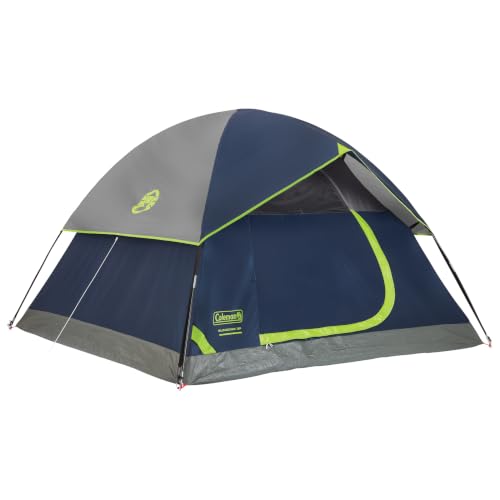
The Coleman Sundome 2-Person Camping Tent is an entry-level dome shelter built for casual weekend camping, music festivals, backyard sleepovers, and car-camping excursions. Designed primarily for solo campers wanting extra gear space or pairs seeking an accessible, straightforward shelter, this tent provides a practical entry point into outdoor recreation. Its classic two-pole dome architecture delivers a balanced profile suited for managed campgrounds and fair-weather weekend getaways.
In terms of practical dimensions and transport, the listing notes a two-person capacity and a total product weight of 7.5 pounds. The provided measurements of 6.22 by 6.14 by 23.89 inches reflect the packed size inside its included carry bag. The manufacturer does not supply exact interior floor dimensions or peak center height in the product data. Campers should recognize that an advertised two-person rating represents maximum sleeping capacity shoulder-to-shoulder, rather than guaranteed room for luggage or thick cots. At 7.5 pounds, this tent is best hauled in a vehicle trunk rather than packed over long trail miles.
Pitching the Sundome is engineered for convenience, with an advertised assembly time of roughly 10 minutes. The design utilizes snag-free, continuous pole sleeves that prevent frame sections from hanging up, paired with Insta-Clip attachments that secure the tent body quickly to the poles. For ventilation, the shelter integrates large side windows alongside a lower ground vent. This opening design allows cooler air to enter near ground level while venting warm air upward, helping limit the condensation that frequently collects on inner tent walls during humid nights.
Weather protection relies on Coleman's WeatherTec system, which uses welded tub-style corners and inverted seams designed to conceal needle holes and minimize water penetration during passing showers. The listing also notes that the frame is built to withstand winds up to 35+ miles per hour when properly anchored. The outer canopy is made of Polyguard fabric, offering everyday abrasion resistance. Staking out every guyline point firmly and selecting a well-drained campsite remain critical steps, as severe downpours or shifting soil can compromise any basic shelter.
Potential buyers should account for a few practical limitations. The absence of published interior square footage makes it important to measure sleeping pads before heading out, and the 7.5-pound packed weight precludes it from serious backcountry use. Furthermore, while the WeatherTec construction and 35+ mph wind rating handle moderate three-season conditions, the tent is not built for winter snow accumulation or severe storms. For budget-conscious campers, first-time buyers, or festival attendees needing a reliable shelter for mild-weather trips, the Sundome offers solid utility and approachable setup mechanics.
The Coleman Sundome incorporates the proprietary WeatherTec system, which features welded corner seams and inverted stitching engineered to prevent water from seeping into critical stress areas during unexpected rain. An included rainfly fits over the canopy to divert precipitation away from the main tent fabric and window panels.
For wind management, the manufacturer states that the frame structure is capable of withstanding winds up to 35+ miles per hour. Achieving this stability requires driving stakes securely and pitching the tent tautly. While capable of managing typical summer showers and breezy conditions, this shelter is optimized for moderate three-season outings rather than heavy winter storms or torrential weather.
Pitching this tent takes approximately 10 minutes according to product specifications. Setup is facilitated by continuous, snag-free pole sleeves that guide poles smoothly through the canopy fabric, while Insta-Clip attachments snap the tent body securely into place without complicated threading.
Airflow is supported by a combination of large windows and an integrated low ground vent. This venting configuration encourages air circulation through the bottom of the tent, helping draw out humid air and reducing condensation buildup on the interior fabric when the rainfly is attached.


Pros
- Intuitive dome design sets up in roughly 10 minutes without complicated pole configurations
- Ground vent paired with large windows promotes active airflow to minimize stuffiness and moisture
- Convenient E-Port provides exterior electrical cord access without leaving doors unzipped
- Frame integrity is rated to withstand winds exceeding 35 mph when properly guyed out
- Backed by Coleman with a 1-year limited warranty for manufacturer protection
Cons
- Peak center height of 4 feet 11 inches requires stooping and does not allow standing upright
- Floor plan is tight for four full-sized adults, making it better suited for 2 to 3 people with gear
- At 9.1 pounds, the packed weight is too heavy for lightweight backcountry backpacking trips
The Coleman Sundome 4-Person Camping Tent is a classic freestanding dome shelter designed specifically for car campers, weekend warriors, festival attendees, and first-time outdoor enthusiasts. With floor dimensions measuring 9 by 7 feet and a center peak height of 4 feet 11 inches, this shelter provides a practical footprint for state park campgrounds, backyard campouts, and road trip stopovers. While cataloged for four people, practical camping experience indicates it functions best as a roomy retreat for two to three adults, or a couple utilizing a single queen-size air mattress with spare space for duffels.
Setup efficiency is one of the standout advantages highlighted by the manufacturer, allowing campers to pitch the structure in roughly 10 minutes. The simple sleeve-and-clip pole system enables quick assembly even when arriving at camp after sunset. Supported by the included rainfly, the dome profile sheds passing downpours, while the underlying frame is engineered to hold strong in winds exceeding 35 mph when fully staked out with guy ropes.
Airflow management is essential in moderate-weather camping, and the Sundome addresses condensation buildup through a combination of large mesh windows and an integrated ground vent. This ventilation setup draws cooler air in along the base and exhausts warm, humid breath out through the upper mesh, helping keep the interior dry during muggy summer nights. Modern campsite convenience is further enhanced by an integrated E-Port, which lets you feed an electrical cord inside to power phones, fans, or lanterns without keeping the entry zipper cracked open to bugs.
Weighing in at 9.1 pounds and packing down to a manageable 6 by 6 by 23 inches, the shelter travels easily in vehicle trunks without demanding excessive cargo room. The durable fabric shell, factory-taped seams, and classic tub-style floor work in unison to form a protective weather barrier against ground moisture. For additional peace of mind, Coleman covers the tent with a 1-year limited warranty against material and manufacturing defects.
Potential buyers should consider a few natural physical constraints before purchasing. With a maximum ceiling height under 5 feet, taller campers must kneel or sit while changing clothes, as full standing clearance is not possible. Additionally, carrying 9.1 pounds over steep hiking trails makes this model impractical for backcountry backpacking, anchoring its best use squarely in the drive-up car camping and campground category.
For budget-conscious campers, scouting groups, and families seeking a dependable, easy-to-pitch shelter for fair-weather weekend outings, the Coleman Sundome 4-Person Tent remains a reliable outdoor staple. It balances simple assembly, proven wind resistance, and reliable ventilation in an affordable package ready for spontaneous outdoor getaways.
The interior layout of the Coleman Sundome spans 63 square feet across a 9 by 7 foot base, offering ample room for a variety of sleeping arrangements. It easily accommodates one standard queen-size air bed with perimeter clearance remaining for small gear bags, flashlights, and shoes.
When utilized with individual sleeping pads, the tent can house up to four campers shoulder-to-shoulder, though groups desiring dedicated space for larger packs will find two to three occupants optimal. The 4-foot-11-inch center height provides comfortable sitting and lounging headroom for playing cards or escaping rain showers.
The Sundome utilizes Coleman weather-resistant engineering, including an included rainfly that shields the ceiling mesh from seasonal downpours while directing runoff away from seam lines. The frame geometry is specifically designed to remain stable in wind conditions up to 35 mph when securely anchored.
Ventilation is handled via an intelligent dual-zone system featuring a low ground vent and wide side windows. This structure promotes continuous convective airflow, drawing cool air across the tent floor while preventing muggy condensation from settling along interior walls.
A Practical Guide to Sourcing and Selecting Camping Tents
Locating the right retailer for camping equipment requires balancing convenience, inventory selection, return policies, and customer support. Reliable vendors provide detailed specification sheets, clear schematics of floor dimensions, and honest explanations of weather ratings. Whether shoppers purchase directly from online storefronts, neighborhood sports outlets, or manufacturer channels, evaluating build quality remains essential. Learning how different retail channels operate empowers campers to invest wisely in gear suited for their specific outdoor pursuits.
Comparing Major Retail Channels and Online Marketplaces
Online mega-marketplaces represent the most common starting point for buyers seeking extensive brand variety and prompt delivery. These platforms host everything from entry-level family shelters to specialized domes, providing immediate access to high-volume user feedback. Sellers often maintain robust stock levels across summer periods when physical shops run out of popular capacities. However, online listings require careful reading because merchants may present vague measurements or omit details regarding structural pole materials.
Brick-and-mortar outdoor specialty outfitters provide the distinct benefit of hands-on evaluation and expert staff guidance. Visiting a physical store allows customers to view pitched display models, inspect zipper fluidity, and judge headroom firsthand. Outfitters typically curate higher-grade product lines with proven track records for weather resistance and durability. The primary trade-off involves higher price points and narrower floor inventory compared to digital marketplaces.
Direct-to-consumer brand storefronts present a third compelling channel for discerning outdoor gear purchasers. Purchasing directly from manufacturers frequently streamlines warranty registration and grants access to genuine replacement parts like rainflies and pole segments. Many brand websites also host helpful pitch videos, downloadable manuals, and customer service desks ready to assist with technical questions. While shipping speeds may vary, purchasing direct ensures buyers receive authentic, current-generation production runs.
Interpreting Stated Capacity Versus Usable Floor Area
Tent manufacturers measure interior capacity based on the maximum number of standard sleeping pads placed side by side. This industry standard does not budget floor space for duffel bags, organizers, or natural elbow room. A practical rule of thumb suggests subtracting two persons from advertised capacity to achieve comfortable conditions on multiday family trips. A four-person shelter comfortably accommodates two adult campers and gear, while an eight-person model fits four to six individuals nicely.
Examining listed floor dimensions reveals the true functional volume of any shelter before placing an order. Large group designs like the Amazon Basics 8-Person Spacious Camping Tent provide a 15-foot by 9-foot footprint with a 70-inch center height, giving occupants ample room to stand and maneuver. Similarly, the WildFinder Camping Tent 10 Person delivers an expansive 18-foot by 9-foot layout with an 82.7-inch peak height designed for large family groups. Compact shelters like the two-person Golabs CT3 Instant Pop Up Tent measure roughly 76.7 inches by 55.1 inches internally, accommodating a solo camper with gear or a cozy pair.
Peak height and wall steepness determine whether campers can stand up completely or must crouch while changing clothes. Cabin-style tents feature nearly vertical walls that maximize headroom across the perimeter floor space. Traditional dome designs, such as the Coleman Sundome Camping Tent with Rainfly, feature sloping walls that shed crosswinds effectively while sacrificing standing room along the outer edges. Comparing these architectural trade-offs against your personal comfort standards prevents frustration after pitch setup.
Evaluating Frame Designs and Pitching Mechanisms
Pitching complexity represents a major point of differentiation across modern camping shelters available through retail outlets. Instant cabin designs utilize telescoping, pre-attached frames that unfold and extend into locked positions without loose pole assembly. The Instant 6 Person Tent for Camping with Rainfly from LEISURE IMPACT features a quick-pitch frame designed for pitch completion in under sixty seconds. These rapid deployment systems eliminate pole confusion, making them ideal for arriving at campsites late in the evening.
Pop-up structures expand spontaneously once packing straps are released. The Golabs CT3 uses pre-attached fiberglass poles with a central lifting hub that sets up quickly for casual sleepovers or sunny park outings. Campers looking for similar rapid-pitch styles can explore quick-pitch easy setup camping tents to evaluate different hub architectures and folding steps. While quick hubs provide setup speed, their interconnected joints introduce extra weight and bulkier packed dimensions during transit.
Traditional manual setups utilize shock-corded fiberglass or aluminum poles threaded through fabric sleeves. The Coleman Sundome utilizes snag-free continuous pole sleeves and Insta-Clip attachments that allow two adults to pitch the shelter in roughly ten minutes. Manual pole systems offer proven mechanical simplicity because individual pole sections lack delicate hinge joints that might fail under stress. They also pack down into significantly tighter storage bags, which suits car campers with limited trunk space.
Scrutinizing Weatherproofing, Seams, and Rainfly Coverage
Weather protection remains the most critical performance criteria when assessing tents on digital storefronts. Buyers should look for water-resistant polyurethane fabric coatings, typically expressed in millimeters of hydrostatic head rating. A 1200mm coating, as listed on the LEISURE IMPACT 6-person cabin model, provides adequate defense against light to moderate rainfall when pitched tautly. Heavy downpours demand robust materials and full-coverage rainflies that channel moisture away from vertical walls and seams.
Seam construction plays an equally vital role in preventing unexpected campsite leaks. Factory-welded tub floors and sealed rainfly seams prevent standing ground moisture and wind-driven rain from penetrating stitch perforations. Coleman incorporates its WeatherTec system into the Sundome series, using welded corner seams and inverted stitching to guard vulnerable seams. For serious rain forecasts, buyers often investigate heavy-duty water-resistant camping tents engineered with reinforced guyline points and thick tub floors. Checking whether a tent includes factory seam tape saves frustration during damp outings.
Rainfly coverage varies widely between fair-weather models and three-season outdoor shelters. Minimalist cap-style rainflies cover only the mesh ceiling to maximize airflow, leaving lower fabric walls exposed to direct precipitation. Full-coverage rainflies extend closer to the ground, creating protective vestibule storage areas outside the main sleeping quarters. Shelters with partial rainflies perform adequately in mild breezes, but campers expecting gusty conditions require secure guyline attachments to prevent wind from catching under the fly.
Condensation Control and Ventilation Architecture
Internal condensation represents one of the most common complaints among new tent owners, often mistaken for fabric leakage. Warm human breath and body moisture rise during sleep, condensing against cooler tent fabrics when exterior temperatures drop overnight. Effective ventilation systems move damp air outward before moisture droplets accumulate and drip onto sleeping bags. Look for shelters engineered with dedicated lower intake ports and generous mesh roof panels to promote convective circulation.
Lower air vents draw cool, dry air from ground level while ceiling mesh exhausts humid air through the rainfly peak. The Amazon Basics 8-Person tent includes a cool-air port and back window specifically engineered to sustain continuous airflow. Coleman addresses moisture management by integrating ground vents into the Sundome body, ensuring fresh air movement even when privacy window flaps remain zipped shut. Large multi-person structures like the WildFinder 10-person model incorporate wide mesh window panels that deliver breezy cross-ventilation during warm summer campouts.
Managing airflow requires adjusting window panels and vents to match prevailing weather conditions. On warm, dry nights, leaving the rainfly off allows campers to sleep under bug-proof mesh ceilings with open night sky views. During rainy periods, securing guylines creates a physical gap between the outer rainfly and inner tent wall. This separation prevents fabric contact and maintains continuous airflow without permitting water infiltration.
Verifying Package Inclusions and Critical Accessories
Product listings frequently omit clear details regarding the quality and quantity of bundled hardware accessories. Entry-level and mid-range tents routinely ship with basic wire stakes that bend easily in rocky campground terrain. Upgrading to sturdy aluminum Y-stakes or heavy-duty steel pegs ensures dependable holding power when anchoring guylines in loose soil or gravel. Packing a dedicated rubber mallet and stake puller makes anchoring and strike-down significantly easier on family outings.
Integrated storage features and utility ports enhance daily organization within the living quarters. Many modern models, including the Coleman Sundome and LEISURE IMPACT cabin tent, feature integrated E-ports that allow campers to route extension cords inside safely. Interior gear lofts, storage pockets, and overhead lantern loops keep flashlights, eyeglasses, and phones off damp floors. Verifying whether the manufacturer includes an expandable duffel bag helps prevent frustration when repacking rolled tent fabrics after a trip.
Protective ground footprints represent another essential accessory rarely bundled inside base retail packages. A fitted footprint protects delicate polyethylene or polyester tub floors from sharp twigs, gravel abrasions, and subsurface moisture seepage. Placing an oversized generic tarp underneath the tent creates a water trap if excess edges catch runoff and funnel water directly beneath the floor. Sizing your ground sheet slightly smaller than the tent perimeter preserves floor fabric and keeps your sleeping space dry.
Assessing Warranties, Return Windows, and Customer Support
Scrutinizing merchant return guidelines before checkout protects your investment if the tent arrives with factory defects. Major online platforms typically offer standard thirty-day return windows, giving buyers sufficient time to conduct a dry test pitch in the backyard. Setting up your new shelter at home allows you to verify that all pole segments, stakes, guy ropes, and rainfly clips are intact. Discovering a missing hub component or broken zipper at an isolated campground leaves you with few practical remedies.
Manufacturer warranties vary significantly across price tiers and retail categories. Brands like Golabs and WildFinder back their camping tents with one-year limited warranties covering structural defects and seam failures. Established brands such as Coleman maintain customer service divisions that supply replacement parts for years following initial purchase. Reviewing warranty documentation clarifies whether manufacturers replace entire tents, ship replacement pole sections, or require customers to pay return shipping fees for repairs.
Customer support responsiveness plays a vital role when outdoor gear sustains accidental campsite damage. Fiberglass poles can splinter under extreme wind loads, and tent mesh can tear if snagged against sharp gear edges. Retailers and manufacturers with responsive service desks make ordering exact replacement pole sections and patch kits straightforward. Keeping your digital purchase receipt and product registration active ensures smooth claim processing if unexpected issues arise during normal seasonal use.
Aligning Retail Selections with Your Camping Destination
Matching your shelter purchase to specific geographic environments and campsite regulations ensures comfortable trips. Established campgrounds across state and national parks often enforce rigid tent pad size restrictions, typically measuring twelve by twelve feet. Purchasing massive ten-person models measuring eighteen feet long may exceed designated pad boundaries in developed campgrounds. Consulting regional travel resources such as Moon California Camping: The Complete Guide published by Workman Publishing helps campers identify site dimensions, utility access, and local climate patterns across various public lands.
Coastal campgrounds and desert parks present distinct atmospheric challenges compared to sheltered forest hollows. High-wind coastal zones demand low-profile dome profiles with sturdy guylines capable of handling sustained gusts. Coleman notes that its Sundome frame is designed to withstand winds up to thirty-five miles per hour when properly staked. Exposed desert environments require heavy UV-resistant fabrics, tight mesh weaves to block blowing sand, and light-colored outer rainflies that reflect intense afternoon heat.
Backcountry destinations require a strict focus on packed dimensions and total trail weight rather than sprawling interior floor space. Car camping allows outdoor lovers to prioritize standing height, thick mattresses, and heavy instant frames without carrying penalties. Backpacking trips, however, require lightweight two-pole designs that divide easily between hiking partners. Determining your primary camping mode before browsing retail options prevents purchasing a shelter that proves either too cumbersome to carry or too cramped for family relaxation.
Selecting where to acquire your next camping tent comes down to balancing retailer return flexibility, product specifications, and your realistic campsite needs. Inspect floor measurements, weatherproofing features, and frame mechanics carefully before making a final commitment online or in store. Conducting a trial setup at home ensures you understand the pitching sequence and confirms that every vital component is ready for the trail. With the right shelter secured from a dependable vendor, you can head into the outdoors confident in your protection and comfort.




Write Your Review
No reviews yet. Be the first to share your experience!