

Anyone preparing for a backcountry hike quickly discovers that trail shelters carry a very different price profile than standard backyard or car-camping gear. Hikers often wonder why are backpacking tents so expensive when they appear smaller and simpler than standard recreational family shelters. The reality comes down to the demanding performance requirements of wilderness travel, where every single ounce must be carried on your back across steep elevation and unpredictable terrain. Traditional recreation shelters rely on heavy, inexpensive components that would quickly exhaust a hiker on a multi-day wilderness route.
Backpacking shelters require an exacting balance of low pack weight, compact volume, and dependable weather defense. While car campers can rely on substantial frames and thick canopies, backcountry hikers need gear that withstands sudden mountain squalls without filling half a backpack. Campers who also spend weekends in developed campgrounds often compare these lightweight models to heavy-duty water-resistant camping tents designed for stationary comfort. Understanding how frame architecture, technical fabrics, and waterproofing coatings influence shelter costs helps every hiker choose the right balance between trail performance and gear investment.

Pros
- Durable 7001 series aluminum poles provide superior wind stability and longevity over standard fiberglass poles.
- Dual doors and twin vestibules eliminate the need to crawl over a camping partner to enter, exit, or access gear.
- A 3000mm waterproof index on the rainfly and a welded floor offer solid defense during unexpected downpours.
- Compact packed footprint makes it practical for car camping, scouting outings, and shorter backcountry treks.
Cons
- A packed weight of roughly 5.5 pounds is slightly heavy for dedicated ultralight solo thru-hikers.
- The 53.1-inch interior floor width provides a snug fit when fitting two wide sleeping pads side by side.
- Extensive micro-mesh construction is optimized for mild to warm weather rather than heavy winter snow loads.
The Forceatt 2-Person Backpacking Tent is a freestanding dome shelter tailored for weekend hikers, car campers, and festival goers seeking reliable weather protection at an approachable price point. Featuring an interior floor measuring 88.6 by 53.1 inches alongside a 43.3-inch peak height, this shelter comfortably accommodates two standard sleeping pads or a solo camper with extra interior gear. The dual D-shaped door layout paired with two dedicated vestibules gives both occupants independent entry and exit points, so you never have to crawl over a tentmate for a midnight gear check.
Weather management is anchored by a full-coverage rainfly boasting a manufacturer-stated 3000mm waterproof index and a welded floor design that elevates floor seams away from wet ground runoff. When weathering a surprise rainstorm at camp, the full-coverage fly shields the inner micro-mesh body from blowing moisture. Condensation management is supported by two upper ceiling vents positioned in the rainfly, facilitating natural airflow that pulls moist air out while helping you stay comfortable on humid summer nights.
Construction quality stands out through the use of 7001 series aluminum poles, providing greater durability and structural resistance against wind gusts than standard fiberglass alternatives. Smooth-gliding #8 zippers operate cleanly along the doors and vestibules, minimizing the risk of zipper snags when entering camp after dark. Reflective guylines enhance safety around the pitch site by catching headlamp beams to prevent accidental tripping over stakes.
Portability sits in a practical middle tier with an overall packed weight of approximately 5.5 pounds and packed dimensions of about 16.5 by 5.5 inches. While dedicated ultralight thru-hikers may prefer a sub-three-pound shelter for multi-week treks, this tent is easy to manage on shorter backcountry overnights, especially when two hikers split the weight of the poles and fabric. It also stashes effortlessly into car trunks, camper vans, or motorcycle panniers for casual weekend outings.
Prospective buyers should keep in mind that the 53.1-inch width requires standard sleeping pads to sit snugly together, leaving bulkier backpacks to be stored under the exterior vestibules. Furthermore, while the manufacturer listing references three to four seasons, the extensive micro-mesh inner tent is best suited for three-season spring, summer, and mild fall camping rather than freezing winter blizzard conditions. For budget-conscious outdoor enthusiasts looking for a durable, aluminum-pole shelter with dual-vestibule convenience, the Forceatt 2-Person Tent provides dependable value for everyday campsite adventures.
The Forceatt tent utilizes a full-coverage rainfly with a documented 3000mm waterproof rating to prevent rain saturation during sustained wet-weather camping. Its welded floor construction lifts bottom seams off wet surfaces, reducing the likelihood of groundwater penetration during prolonged downpours.
Wind stability is reinforced by the inclusion of 7001 series aluminum poles and reflective guyline tie-outs that anchor the shelter against open campsite gusts. Dual roof vents promote constant cross-ventilation, helping mitigate internal condensation buildup without compromising outer weather protection.
Setting up the freestanding frame is straightforward, utilizing a two-pole aluminum hub structure with simple clip attachments that allow fast assembly in just a few minutes. Sturdy #8 zippers glide cleanly along the door tracks to ensure smooth operation when pitching camp under fading daylight.
Weighing approximately 5.5 pounds and packing down to 16.5 inches in length, the tent fits neatly into storage packs or vehicle trunks. For hiking pairs, splitting the tent canopy, fly, and poles between two backpacks creates an easy, balanced carry on moderate trail excursions.

Pros
- Sturdy aluminum poles offer significantly better wind resistance and longevity than standard fiberglass alternatives.
- Impressive 3000mm waterproof rating, welded floor, and factory-taped seams keep ground moisture and downpours out.
- Two-door, two-vestibule architecture eliminates the hassle of climbing over a tent partner during midnight camp exits.
- Generous mesh canopy panels provide clear stargazing views and cool cross-ventilation during warm summer nights.
- Simple freestanding layout allows effortless pitching even when setting up camp solo after dark.
Cons
- Total weight of 4.4 pounds is slightly heavy for dedicated ultralight long-distance thru-hikers.
- Floor width of 55.1 inches creates a snug shoulder-to-shoulder fit when accommodating two wide sleeping pads.
- Ground footprint is not included, requiring careful campsite site clearing or an optional tarp over rocky terrain.
The Night Cat 2-Person Backpacking Tent is a lightweight, freestanding three-season dome shelter engineered specifically for hiking, trail camping, and outdoor exploration. Designed to balance affordability with trail-ready functionality, this shelter serves budget-conscious backpackers, weekend hikers, festival attendees, and scouts who need a dependable outdoor shelter without the steep investment demanded by high-end mountaineering brands. Solo adventurers will also appreciate its spacious interior footprint, which provides ample space for a single camper alongside bulky packs and outdoor gear.
Weather resistance stands out as one of the strongest attributes of this design. The outer rainfly and welded floor feature a 3000mm waterproof polyurethane coating reinforced by fully taped factory seams, preventing rain penetration during sudden mountain downpours. The full-coverage fly shields the inner mesh body completely from wind-driven moisture, while the welded floor barrier prevents wet ground seepage from soaking through sleeping bags. When gusty ridge winds kick up, the included aluminum poles and reinforced guylines provide a rigid, secure frame that flexes under pressure without snapping.
Ventilation and condensation management are handled effectively by the full mesh canopy of the inner tent body. Dual integrated ceiling vents on the rainfly create a steady chimney effect, pulling cool air up through the mesh walls and exhausting humid breath out the top. This airflow is vital during humid summer nights or wet mornings when interior condensation typically collects on non-breathable fabrics. On clear, bug-heavy summer evenings, leaving the rainfly off allows campers to sleep beneath the stars with total mosquito and insect protection.
Inside the tent, the floor plan measures 82.6 inches in length by 55.1 inches in width, complemented by a peak ceiling height of 43.3 inches. This creates enough headroom for two adults to sit upright comfortably without scraping the ceiling mesh. The inclusion of two independent D-shaped doors prevents campers from having to crawl over each other during midnight exits, while matching dual vestibules create protected exterior storage zones for trekking boots, packs, and camp cookware. Built-in interior storage pockets keep headlamps, pocket knives, and phones off the floor and within quick reach.
Setting up the tent is straightforward and typically takes around three minutes thanks to the simple two-pole crossing design. Lightweight aluminum poles slide smoothly into durable corner grommets, allowing lone hikers to pitch the entire structure effortlessly in failing light. Takedown is equally rapid, and the tent packs down neatly into its included travel sack. As with any lightweight camping tent, using an auxiliary footprint or ground tarp is advisable to prolong floor fabric life against sharp stones, prickly desert scrub, or jagged twigs.
While the 4.4-pound trail weight may exceed the strict criteria of ultralight thru-hikers tackling thousand-mile trails, it represents an outstanding sweet spot for general weekend trail excursions, car camping backups, and casual wilderness outings. The combination of aluminum hardware, dual-vestibule convenience, and robust 3000mm waterproofing makes the Night Cat 2-Person Backpacking Tent a high-value choice for any outdoor enthusiast looking to hit the trail with dependable shelter.
Built to handle sudden mountain storms and unpredictable trail weather, the Night Cat 2-Person Tent utilizes a comprehensive 3000mm waterproof coating across the rainfly and floor. Welded floor seams eliminate needle punctures in high-wear pooling areas, while high-temperature seam tape across the rainfly seams ensures that heavy downpours roll off without leaking into the living quarters.
Wind management is enhanced by the structural rigidity of aluminum alloy poles paired with perimeter guyline points. When properly staked out into firm soil, the aerodynamic dome profile deflects strong lateral gusts, maintaining interior volume and preventing the fly from flapping loudly against the mesh body during stormy backcountry nights.
The intuitive two-pole freestanding frame allows single campers to pitch the Night Cat tent in approximately three minutes. Because the inner body clips directly onto the interlocking aluminum poles, securing the structure is fast and intuitive, even when arriving at a remote campsite after dusk with only a headlamp for illumination.
At an overall weight of 4.4 pounds, this tent packs down compactly into a dedicated carry bag that easily fits inside or lashes to the base of standard backpacking packs. The weight can also be split between two trail partners by dividing the rainfly, inner tent, and pole bundle, making it an efficient option for hiking pairs.

Pros
- Durable 7001 aluminum poles provide significantly better wind flex and longevity than entry-level fiberglass frames.
- Dual doors and dual vestibules streamline gear organization and midnight exits for two campers.
- Compact packed dimensions of 16.9 x 5.9 x 5.9 inches fit neatly inside standard hiking backpacks or motorcycle panniers.
- Complete accessory bundle includes 10 aluminum stakes, 2 wind ropes, rainfly, tent body, and a dedicated carry bag.
Cons
- Total weight of 4.72 pounds is slightly hefty for dedicated ultralight thru-hikers tackling long-distance trails.
- Interior floor width of 55 inches fits two standard 20-inch or 25-inch sleeping pads snugly with little leftover floor room.
- PU2000mm coating is designed for standard three-season rain but is not rated for heavy winter snow loads.
The BISINNA 2-Person Camping Tent is an accessible three-season, freestanding shelter designed to balance trail packability with dependable outdoor protection. Tailored for hiking pairs, solo backpackers who appreciate extra room for gear, weekend car campers, and scout troops, this tent delivers a fully featured setup without the premium price tag. Built with a packed weight of 4.72 pounds and a packed footprint of 16.9 by 5.9 by 5.9 inches, the entire kit fits comfortably inside an internal frame backpack, a kayak dry hatch, or a crowded vehicle trunk.
Inside the shelter, the sleeping floor measures 82.7 inches long by 55 inches wide, accompanied by a comfortable peak height of 47.2 inches. This footprint provides ample length for taller campers and accommodates two standard sleeping pads side by side. What elevates its liveability are the two integrated vestibules, extending 23.6 inches out on either side to bring the total footprint width to 102.2 inches. These exterior covered zones keep damp boots, trekking packs, and muddy camp gear protected from the elements while preserving valuable interior floor space.
Weather resistance is anchored by a full-coverage rainfly constructed from 190T polyester taffeta treated to a PU2000mm water-resistant rating. Paired with factory-sealed seams, the fly effectively repels three-season rainstorms and shields against brisk morning winds. The inner canopy combines matching 190T polyester taffeta with generous sections of B3 no-see-um mesh. This dual-layer construction facilitates steady airflow between the mesh canopy and the flysheet, actively venting warm, humid breath to reduce condensation buildup while preventing bugs and midges from entering.
Structural integrity is maintained by two lightweight 7001 space-grade aluminum poles. Unlike brittle fiberglass poles that can splinter under pressure, aluminum offers resilient flex memory and superior wind resistance during sudden gusty conditions. Pitching the tent is straightforward thanks to its intuitive freestanding dome geometry. A single camper can insert the shock-corded aluminum poles into corner grommets, clip the inner tent to the frame, and secure the rainfly in less than ten minutes. The included ten aluminum stakes and two wind ropes provide secure anchor points in soft dirt and gravel.
While the BISINNA 2-Person Tent provides solid utility for general outdoor use, buyers should evaluate a few practical trade-offs. The 4.72-pound weight is reasonable for weekend outings, but ultralight backpackers may find it heavy unless split between two hikers. Furthermore, the 55-inch interior width leaves minimal margin when two wide sleeping pads are placed together. For weekend warriors, festival goers, kayak tourers, and budget-conscious backpackers looking for a dependable, aluminum-poled three-season shelter, this tent represents an exceptionally practical purchase.
Pitching the BISINNA 2-Person Tent is an intuitive process made simple by its freestanding two-pole architecture. Because the inner tent connects to the 7001 aluminum poles using quick-attach clips rather than cumbersome fabric sleeves, one camper can assemble the inner canopy in roughly five minutes. Once the frame is assembled, the rainfly snaps into place over the structure, where adjustable buckles allow you to tension the flysheet quickly against shifting weather.
Takedown is equally streamlined, requiring only the release of the pole clips and corner grommets before rolling the fabric around the folded poles. The compact 16.9 by 5.9 by 5.9-inch carry bag offers sufficient clearance, meaning you do not have to struggle with millimeter-precise folding to pack the tent away after a weekend of camping.
The BISINNA tent is engineered for dependable three-season performance, utilizing a 190T polyester taffeta rainfly with a PU2000mm hydrostatic head rating. This level of water resistance is well-suited for typical spring showers, summer downpours, and fall breezes, keeping interior living areas dry when properly staked out.
Wind resistance is bolstered by the 7001 aluminum frame, which bends to absorb wind pressure rather than snapping. By securing the two included wind guylines and anchoring the ten alloy stakes at the base, the structure remains stable during blustery lakeside or mountain campsite conditions. The combination of high-density B3 no-see-um mesh and double vestibule openings ensures consistent airflow, mitigating condensation accumulation along the inner walls on damp nights.

Pros
- PU 3000mm waterproof coating and factory-taped seams offer dependable rain protection for a single-layer tent.
- Protective pole casing prevents the painful fiberglass splinters common with budget fiberglass poles.
- Simple two-pole cross sleeve design enables rapid, hassle-free solo setup in under two minutes.
- Generous 7-foot interior length provides ample room for taller campers plus interior gear storage.
Cons
- Single-layer design requires adequate airflow to prevent interior condensation during cold or humid nights.
- At 4.34 pounds, it is heavier than dedicated ultralight backcountry shelters.
- The 3.8-foot width realistically accommodates only one adult with gear rather than two full-sized adults.
The Night Cat Backpacking Tent is a compact, single-layer dome shelter engineered for solo adventurers, scouts, weekend hikers, and first-time campers looking for a practical, low-cost outdoor shelter. With interior floor dimensions measuring 7.0 by 3.8 feet and a peak center height of 3.6 feet, this shelter is proportioned to give a single adult sleeper generous elbow room with dedicated space along the perimeter to stash a trail pack, boots, and clothing. While the listing notes capacity for an adult and a small child, practical trail use makes it primarily an efficient one-person backpacking and camp shelter.
For weather management, the tent utilizes polyester fabric treated with a PU 3000mm waterproof coating, complemented by sealed, taped seams along the structural stitching. This level of waterproof protection is designed to withstand passing rainstorms and prevent moisture penetration from the wet ground. Because this is a single-layer tent without a separate full-coverage rainfly, managing air circulation is critical. Night Cat addresses this through a large mesh front entryway and an integrated mesh roof window, which work together to facilitate fresh air exchange and keep flying pests out of the sleeping quarters.
The frame relies on two foldable fiberglass poles equipped with an upgraded protective casing. Traditional single-layer fiberglass poles can develop micro-splinters over time that irritate hands during assembly, but this dual-layer sleeve construction shields campers during handling. Pitching the shelter requires sliding both poles through the diagonal roof sleeves and anchoring the corners, a straightforward routine that takes approximately one to two minutes even when arriving at camp after dusk. Once staked, the freestanding dome structure holds its shape cleanly in moderate winds.
Portability is a strong attribute for youth groups and weekend travelers, with the tent packing down into an included carry bag measuring 16.5 by 4.7 by 4.7 inches. At an overall weight of roughly 4.34 pounds, it sits between heavier car camping options and premium ultralight shelters. While long-distance thru-hikers counting every ounce may prefer a lighter tarp or trekking-pole tent, this weight and compact packed size fit conveniently into scout gear packs, motorcycle saddlebags, and car trunks for spontaneous overnights.
Before planning an extended trip, campers should account for the functional tradeoffs of a single-wall shelter. In damp, chilly environments, warm breath will create condensation along the interior polyester walls if the mesh vents are kept shut. Additionally, because there is no external vestibule, muddy footwear and wet outerwear must be brought inside the main tent floor. For budget-conscious hikers, motorcycle campers, scouts, and festival goers seeking a simple, waterproof, and easy-to-pitch solo shelter, the Night Cat tent provides a balanced, accessible solution.
Setting up the Night Cat tent requires minimal effort thanks to its streamlined two-pole sleeve structure. The fiberglass poles slide directly into diagonal sleeves across the canopy, allowing a single person to erect the freestanding dome in roughly one to two minutes without complex hub mechanisms.
Takedown is equally quick, rolling neatly into an included 16.5 by 4.7-inch carry sack. At approximately 4.34 pounds, the tent packs down compactly enough to strap onto the bottom of a backpack, secure to a bicycle rack, or store in a vehicle trunk for weekend outings.
Constructed with PU 3000mm coated polyester and heat-sealed taped seams, this shelter is built to keep rain from penetrating the interior cabin during unexpected downpours. The aerodynamic dome geometry also assists in deflecting moderate wind gusts when properly staked to the ground.
To mitigate condensation common to single-wall tents, the layout includes a large mesh door and an upper roof mesh vent. Keeping these openings clear allows continuous airflow across the ceiling, helping warm moisture escape while maintaining dependable insect defense.

Pros
- Freestanding dome framework allows the pitched tent to be shifted without complete take-down.
- Documented PU 2000 coating and taped seams assist with managing rain and surface moisture.
- Double-layer door and roof mesh panels aid in airflow to help limit condensation buildup.
- Complete package includes all necessary poles, stakes, guylines, and a compact carry bag.
- Weighs 5.29 pounds, making it manageable for car camping, festivals, or short walk-in campsites.
Cons
- Interior width of 4 feet 11 inches leaves very little floor area for bulky gear when occupied by two adults.
- The specific material of the tent poles is not detailed in the product specifications.
- Manufacturer notes all-season use, but lightweight PU 2000 dome shelters are typically better aligned with mild to moderate three-season outings.
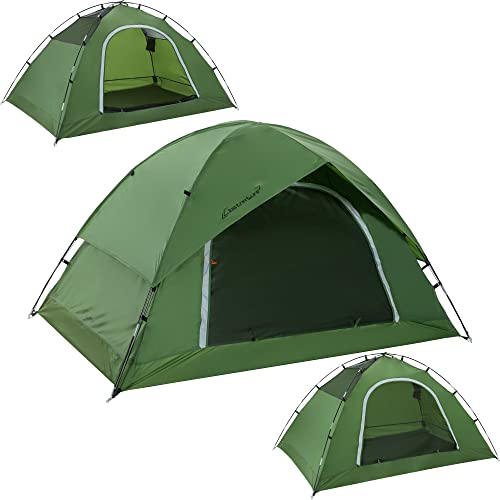
The Clostnature 2-Person Camping Tent is a classic freestanding dome shelter designed for casual campers, weekend festival attendees, and beginners looking for an uncomplicated setup. Built with standard crossing poles and a fitted rainfly, it aims to deliver simple weather protection and convenient portability without unnecessary bulk. While marketed for two people, understanding its specific dimensions and design features is essential for evaluating whether it matches your camping style and campsite expectations.
Regarding interior capacity, the floor measures 7 feet 3 inches in length by 4 feet 11 inches in width, accompanied by a peak height of 3 feet 10 inches (approximately 86.6 by 59.1 by 45.3 inches). For two adults using standard sleeping pads, this width creates close sleeping arrangements with minimal floor space remaining for large packs. Solo campers, however, will enjoy generous interior room to keep clothing, backpacks, and personal items protected indoors. The peak height permits comfortable sitting up for changing or reading, but does not support standing upright.
The structural layout relies on an X-pole dome configuration that makes pitching relatively quick, often completed in under five minutes by one or two people. Because the main tent body is freestanding, you can reposition the shelter around the campsite to avoid rocks or roots before staking it down. Ventilation is addressed through top-side mesh netting and an N-shaped double-layer door that combines solid fabric with breathable mesh, allowing campers to adjust airflow depending on temperature and breeze.
In terms of weather-related design, the tent utilizes polyester with a PU 2000 coating, supported by factory-sealed seams and dual-layer fabric reinforcement at the corners. The included rainfly uses an additional dedicated pole to extend coverage. Transport is straightforward thanks to an included storage sack measuring 16.5 by 6 by 6 inches, with the complete package weighing 5.29 pounds. Routine maintenance requires standard tent care: setting up on cleared ground, securing all eight stakes and four guylines, and ensuring the fabric is completely dry before long-term storage to prevent odor or mildew.
Buyers should account for certain practical trade-offs and missing details. The product data does not list the specific pole material, such as fiberglass or aluminum, which affects long-term resilience. While the manufacturer states all-season and all-weather capability, a compact PU 2000 dome tent is realistic for mild to moderate three-season conditions rather than heavy snow loads or high-wind exposure. Additionally, vestibule square footage is not specified, meaning gear organization mostly depends on available interior space.
For couples embarking on casual weekend car camping trips or solo campers seeking an inexpensive, portable shelter with plenty of elbow room, the Clostnature 2-Person Tent provides solid basic functionality. It balances a light 5.29-pound packed weight with documented seam sealing and dual-layer entry. Those planning extended wilderness trips in unpredictable mountain climates or groups requiring expansive interior living space should evaluate larger multi-person or heavy-duty specialized shelters instead.
The Clostnature tent incorporates a freestanding X-pole dome design, utilizing two main crossing poles to suspend the inner tent body. A third smaller pole is provided to support the rainfly configuration. Because the structure does not rely solely on stake tension to maintain its shape, it can be lifted and moved to adjust orientation before driving stakes into the ground.
The complete package comes with eight stakes and four guylines to anchor the tent against moderate wind. The manufacturer notes that setup can be completed in less than five minutes by one to two people, providing a straightforward pitching process that avoids complex mechanical hubs or automatic spring mechanisms.
Weather-related specifications center on polyester fabric treated with a PU 2000 coating, paired with factory-sealed seams to mitigate water entry along needle holes. The tent base features dual-layer fabric reinforcement at the corners for added durability at high-stress points.
Ventilation is supported by mesh panels located along the upper sides of the tent body, alongside an N-shaped double-layer door. This configuration allows campers to zip open the outer fabric panel while leaving the mesh layer closed, encouraging airflow to help manage condensation during warm or humid evenings.
The interior living area offers floor measurements of 7 feet 3 inches by 4 feet 11 inches, with a center height of 3 feet 10 inches. In metric measurements, this translates to roughly 220 centimeters long, 150 centimeters wide, and 115 centimeters high, providing a functional footprint for up to two sleeping pads.
For packing and transport, the tent compresses into an included storage sack measuring 16.5 by 6 by 6 inches. With an overall listed weight of 5.29 pounds, the shelter is simple to stow in a vehicle trunk or transport on shorter walk-in approaches to a campsite.

Pros
- Extended 8.2-foot floor length comfortably accommodates taller hikers and provides interior gear storage.
- High waterproof coating of 3500mm paired with taped seams delivers reliable wet-weather performance.
- Single-ridge aluminum pole construction ensures quick, hassle-free pitching in deteriorating weather.
- Durable ripstop fabric and wind-shedding design offer dependable stability in exposed outdoor environments.
Cons
- Low peak height of around 3 feet limits seated headroom when changing clothes or sitting upright.
- Listing details show minor weight discrepancies between 2.7 and 3.75 pounds that weight-sensitive hikers should verify.
- Compact solo footprint offers narrow elbow room strictly tailored for one person.
The Camppal 1-Person Tent is a purpose-built solo shelter engineered for hikers, backpackers, hunters, and solo adventurers who prioritize weather defense and rapid deployment in the backcountry. Designed with an extended 8.2-foot sleeping footprint and a streamlined low-profile silhouette, this shelter serves as a roomy alternative to a cramped bivy sack. Whether you are heading out for a weekend backpacking trek in the mountains or establishing a hunting outpost, its compact footprint fits into tight trail clearings where larger multi-person tents cannot go.
Weather resistance stands out as a core design focus, backed by an outer fly rated at 3500mm to 4000mm of water resistance. The construction incorporates comprehensive seam taping across the four bottom corners, zipper lines, and velcro closures with PVC reinforcement to prevent moisture seepage during persistent storms. Its anti-tearing ripstop fabric and sturdy single aluminum ridge pole work together to deflect wind gusts and manage light snow loads, making it a capable companion for three-season and milder shoulder-season conditions.
Interior space balances a compact trail footprint with extra-long usable sleeping room. At 8.2 feet in length and nearly 3 feet in width, the inner tent gives taller campers plenty of stretch-out room without forcing sleeping bags against wet tent walls. The extra floor space easily houses boots, dry bags, and clothes at the foot of your sleeping pad. An additional 1.3-foot vestibule area sheltered by the outer rainfly provides a protected exterior staging zone for damp footwear and packs, keeping dirt and moisture out of your dry sleeping area.
Pitching the tent is straightforward thanks to its single-ridge aluminum pole architecture. Solo campers can secure the frame and stake down the fly in just a few minutes, which proves invaluable when setting up camp after dark or under an approaching rainstorm. With a listed trail weight between 2.7 and 3.75 pounds, the shelter packs down small enough to strap onto a backpack or stow inside a bike pannier, offering dependable portability for fast-moving trekkers.
The low peak height of approximately 3 feet means seated headroom is limited, so changing clothes requires lying down or hunching over. Campers should also monitor ventilation to avoid interior condensation during damp, cool nights. For solo backpackers, scouts, hunters, and minimalist campers seeking dependable storm protection and extra legroom at an accessible price point, the Camppal 1-Person Tent delivers a balanced blend of weatherproofing, durability, and practical backcountry utility.
The Camppal 1-Person Tent utilizes an outer rainfly with a substantial 3500mm to 4000mm waterproof coating, designed to prevent water ingress during prolonged downpours. Factory-taped seams along the floor corners, zipper paths, and PVC-reinforced velcro closures provide critical barrier protection at common leak points.
Its low-slung, aerodynamic profile and durable aluminum ridge pole help the tent shed brisk winds efficiently. Guyline attachment points and reinforced stakes anchor the shelter firmly in exposed backcountry terrain, offering dependable stability against unpredictable mountain weather.
Understanding the Engineering and Cost Factors Behind Backpacking Tents
Backcountry shelters serve as portable life support systems during remote wilderness journeys where shelter failure is never an acceptable outcome. When hikers examine why are backpacking tents so expensive, they often look only at raw floor dimensions rather than the underlying engineering challenges. Every square inch of a trail tent must resist buffeting wind, shed persistent rain, and prevent suffocating condensation while remaining small enough to stow inside a standard rucksack. Achieving this delicate balance requires expensive materials, specialized manufacturing processes, and meticulous design tolerances that drive up production expenses.
The Weight-to-Strength Paradox in Backcountry Shelter Design
Designing outdoor gear involves an unforgiving structural rule where reducing weight almost always increases manufacturing complexity. Car-camping tents can easily afford to use thick steel poles, bulky fiberglass ferrules, and heavy polyethylene tarps because vehicles carry the load. In contrast, backcountry hikers must haul their entire camp on their spine for miles across rough trails. Creating a shelter that weighs just three to five pounds while offering genuine protection against wind gusts requires cutting-edge engineering rather than brute material thickness.
Structural stability becomes much harder to guarantee as fabric gauges and pole diameters decrease. Tent designers must run complex structural modeling to ensure that lighter components maintain structural integrity under lateral wind stress and snow accumulation. Thinner textiles stretch and react differently under tension, demanding precise panel patterning to avoid fabric fluttering or seam tearing during storms. These sophisticated development cycles and tight quality assurance standards add substantial overhead to the final retail product.
Aerospace Aluminum Alloys and Advanced Pole Architecture
Tent poles represent one of the most significant cost drivers in any lightweight backpacking setup. Budget recreational tents frequently use extruded fiberglass rods that are inexpensive to manufacture but notoriously heavy and prone to splintering under cold weather or heavy bending loads. Backpacking shelters replace fiberglass with specialized aluminum alloys, such as 7001 series space-grade aluminum, which deliver remarkable tensile strength and elastic recovery at a fraction of the weight. These alloy poles flex dramatically under severe wind gusts to absorb kinetic energy without taking a permanent bend.
The manufacturing process for aluminum tent frames requires precision machining, multi-stage heat treatment, and protective anodization to resist corrosion. Modern trail tents also incorporate specialized hub systems, swaged joints, and press-fit connectors that allow multiple pole segments to lock together into a cohesive, freestanding skeleton. Brands like Forceatt, BISINNA, and Night Cat utilize these 7001 series aluminum architectures to maintain stability in rough conditions without adding dead weight to a hiker’s pack. Single-ridge configurations, such as those found on camppal solo shelters, further refine this approach by minimizing pole segments while preserving a rigid structural spine.
Technical Fabrics, Denier Ratings, and Tear Resistance
Canopy and rainfly textiles represent another primary reason why trail shelters demand higher investments. Fabric thickness is typically measured in denier, which indicates the linear mass density of the individual yarns. Standard campground shelters often use coarse 68-denier or 75-denier fabrics that are durable and inexpensive to weave. Backpacking shelters, however, turn to tightly woven 190T polyester taffeta or ultra-fine nylon weaves that shed ounces while preserving essential durability.
Weaving fine yarns into durable textiles requires specialized ripstop cross-hatching to stop accidental punctures from propagating into massive tears. A tiny rip caused by an errant twig or sharp pebble could ruin a trip if the base textile lacked reinforced grid reinforcement. Producing these high-density, low-denier ripstop weaves requires high-precision looms running at slower production speeds, which inherently raises raw material costs. When manufacturers use tear-resistant ripstop polyester or nylon, they ensure that thin fabrics can endure prolonged exposure to whipping mountain winds without pulling apart at the seams.
Waterproof Coatings, Hydrostatic Head Ratings, and Sealing
Keeping campers dry in an extended deluge requires far more than just throwing a rainfly over a mesh cabin. Water resistance in tent fabrics is quantified by hydrostatic head ratings, which measure the column height of water a textile can support before droplets seep through. Quality trail shelters, including models from camppal, Forceatt, and Night Cat, often feature waterproof ratings between 2000mm and 4000mm on their outer flysheets and tub floors. Achieving these protective thresholds requires multiple polyurethane coatings or silicone elastomer treatments applied uniformly across large expanses of fabric.
Applying waterproof coatings without making fabrics stiff, brittle, or excessively heavy is a delicate technical procedure. Furthermore, sewing a tent creates thousands of microscopic needle holes along every seam that will leak under heavy downpours if left untreated. Factory seam taping utilizes specialized thermal welding equipment to apply hot-melt waterproof tape over every row of stitching. While family campers might prioritize living room space in spacious outdoor tents, backcountry travelers rely entirely on this factory seam sealing to survive multi-day storms in exposed terrain.
Precision Geometry, Usable Living Space, and Vestibule Utility
Usable interior volume is exceptionally difficult to maximize when tent designers are strictly constrained by total pack weight. Basic A-frame designs or simple domes have sharply sloped walls that force occupants toward the center, creating cramped headroom and wasted perimeter space. High-performance trail shelters utilize pre-bent pole sections, ridge spreader bars, and asymmetrical geometric layouts to pull sidewalls nearly vertical. This geometric refinement allows two adults to sit upright comfortably without bumping their heads against wet rainfly panels.
Vestibule space represents another critical design challenge that requires extra fabric, zipper tracks, and anchoring points. A well-engineered backpacking tent typically includes one or two deep vestibules created by the rainfly overhang to shelter muddy boots and bulky backpacks outside the sleeping chamber. Designs like the Night Cat and BISINNA two-person shelters feature dual D-shaped doors and dual vestibules, allowing trail partners to manage gear and exit the tent without climbing over one another. Adding secondary doors and dedicated gear vestibules increases raw material consumption and sewing labor, contributing to the overall cost.
Ventilation Dynamics and Backcountry Condensation Management
Condensation is one of the most frustrating challenges in backcountry shelter use, as two breathing adults exhale substantial moisture each night. In a single-wall shelter or poorly ventilated tent, that exhaled moisture condenses against cool outer walls and drips directly onto sleeping bags. Modern backpacking tents address this through sophisticated double-wall construction, pairing an inner breathable canopy with a fully separated outer rainfly. The inner tent typically incorporates high-density B3 no-see-um micromesh that promotes cross-ventilation while barring even the smallest biting gnats.
Positioning ceiling vents, kickstand fly flaps, and low-perimeter air intakes requires careful aerodynamic planning so that warm air exhausts upward without admitting driving rain. Just as specialized fabric coatings dictate thermal comfort in dark room camping tents, the tensioned separation between a rainfly and inner mesh wall dictates condensation control on the trail. Sewing intricate mesh panels to woven fabric bases requires delicate tensioning during manufacturing to prevent puckering, adding both time and expense to factory production lines.
Hardware Integrity: Zippers, Guyout Points, and Alloy Stakes
A tent is only as dependable as its smallest mechanical components, and hardware failures in the backcountry can lead to dangerous situations. Heavy recreational shelters frequently use bulky steel stakes and standard coil zippers that can easily jam or pull apart under high tension. High-performance trail shelters employ robust, snag-free zippers, such as smooth #8 coil tracks, that operate reliably even when subjected to wind-blown grit and morning frost. Reliable zippers prevent mid-trip failures that could leave doors flapping open in driving rain.
Anchoring hardware is similarly upgraded to balance minimal weight with maximum ground-holding power. Instead of heavy steel shepherd hooks, trail setups include lightweight aluminum alloy stakes and reflective guylines that illuminate under headlamp beams. Reinforced guyout points, bar-tacked webbing loops, and aluminum tensioners allow campers to pull flysheets taut against sudden gusts. Every reinforced corner, welded floor transition, and specialized guyline cleat adds manufacturing steps that collectively elevate retail pricing.
Balancing Value: Entry-Level Trail Shelters Versus Boutique Ultralight Gear
Prospective backpackers often see high-end boutique shelters retailing for hundreds of dollars, but reliable trail performance does not always require top-tier spending. Boutique ultralight tents use exotic materials like Dyneema Composite Fabric and carbon fiber poles, which are incredibly light but extremely expensive to manufacture. In contrast, value-focused brands like BISINNA, Forceatt, Clostnature, and Night Cat deliver accessible trail functionality by utilizing proven 190T polyester taffeta and 7001 series aluminum alloy frames. These materials offer dependable 2000mm to 3000mm water resistance and manageable trail weights without demanding high specialty investments.
Campers selecting an accessible backpacking shelter should evaluate how their personal trail style matches specific design compromises. A solo hiker prioritizing simplicity might select a single-pole camppal shelter with a 3500mm water-resistance rating and ripstop fabric, accepting a modest increase in packed weight in exchange for rugged wind stability. Meanwhile, hiking duos often lean toward freestanding dome architectures from BISINNA or Clostnature that provide rapid three-minute setups and spacious twin vestibules. Recognizing that budget-friendly backpacking tents leverage established manufacturing efficiencies allows hikers to enjoy the backcountry comfortably without stretching their gear funds beyond reason.
Ownership Realities, Field Maintenance, and Long-Term Value
Understanding shelter cost also means viewing your tent as a multi-year investment in safety and outdoor shelter. High-quality backpacking tents justify their price tag by delivering years of dependable trail service when maintained with appropriate care. Using a fitted ground cloth or protective footprint protects delicate floor coatings from sharp roots and abrasive granite soil. Furthermore, wiping dirt from zipper tracks and avoiding aggressive pulling ensures that door hardware operates smoothly throughout the shelter’s lifespan.
Proper post-trip storage is equally vital in preventing premature fabric degradation and maintaining waterproof barrier performance. Storing any tent while damp invites mold, mildew, and hydrolytic breakdown of polyurethane coatings, creating foul odors and sticky, failing seam tape. Always hang your tent to dry completely in a shaded, well-ventilated space before packing it loosely in a breathable storage sack. By practicing consistent inspection and proper maintenance, hikers preserve the performance capabilities of their shelter and maximize every dollar invested in their backcountry kit.
Backpacking tents carry higher price tags because every component must solve difficult engineering challenges without adding unwanted ounces to your trail pack. From aerospace aluminum pole frames and ripstop fabrics to micro-mesh inner walls and factory-sealed rainflies, these shelters deliver dependable sanctuary in challenging weather. Whether you invest in a premium ultralight shelter or choose an accessible model that balances durable polyester with aluminum support, selecting the right tent ensures safe, comfortable, and memorable adventures across the backcountry.


Write Your Review
No reviews yet. Be the first to share your experience!