

Evaluating Your Trail and Campground Shelter Needs
Setting up camp after miles on a trail or a long highway drive often highlights the difference between cramped quarters and a comfortable shelter. Waking up to damp gear or wrestling with stubborn pole sleeves can sour an otherwise great trip, so interior layout and quick assembly remain critical considerations for any campsite. Striking the right balance between packable weight and livable elbow room leads many hikers to consider a best alps outdoor tent. Whether you need a solo backpacking setup with enough vestibule space for muddy boots or a larger multi-person dome, looking closely at floor dimensions and rainfly coverage ensures your gear won’t let you down.
Ventilation matters just as much as floor dimensions when sudden mountain storms roll through. Without proper cross-breeze vents and mesh walls, internal condensation quickly gathers along the rainfly on cool nights. Pairing a well-ventilated shelter with a portable breeze from the best rechargeable camping fans can keep humid air moving while you rest. For trips requiring additional daytime shade around camp, pairing your sleeping shelter with a best mountain canopy tent provides extra utility. Matching your shelter’s specific pole frame and floor coating to your expected conditions makes every outdoor night far more restful.

Pros
- Thick 210D nylon oxford floor provides substantial puncture and abrasion resistance on rough ground.
- Sturdy 7000 series aluminum poles offer dependable structural integrity over standard fiberglass alternatives.
- Two doors and two vestibules provide independent entry and protected exterior gear storage for multiple campers.
- Oversized #10 zippers significantly reduce the risk of zipper failure and snagging on high-use tracks.
- Includes quality 7075 aluminum stakes and an interior gear loft directly out of the box.
Cons
- A center peak height of 4 feet 4 inches (52 inches) requires crouching and does not permit standing upright.
- The listing includes an erroneous weight entry (0.000625 lbs), leaving verified packed weight and packed dimensions uncertain.
- Fitting four full-sized adults covers the floor completely, leaving minimal interior room for duffels or packs.
The ALPS Mountaineering Taurus 4 Outfitter Tent is a freestanding, dome-style four-person camping shelter built with upgraded materials for rugged outdoor use. Geared toward car campers, scouting groups, outfitters, and small families, this model focuses on structural longevity and tough components rather than ultralight weight savings. The outfitter designation highlights reinforced fabrics and heavy-duty hardware designed to handle frequent pitching, rough campsite terrain, and repeated use across multiple seasons.
Regarding interior dimensions, the tent features a rectangular floor measuring 8 feet 6 inches by 7 feet 6 inches (102 inches by 90 inches), providing approximately 63.75 square feet of floor space. The center peak height reaches 4 feet 4 inches (52 inches), which provides ample room for sitting upright or kneeling, though occupants will need to crouch when moving around. While the manufacturer states a four-person sleeping capacity, laying four standard sleeping pads edge-to-edge covers the majority of the floor. For campers who prefer keeping luggage, dry bags, or extra gear inside the sleeping area, the layout functions most comfortably for two to three campers.
The structural layout uses a classic two-pole crisscross dome configuration supported by durable 7000-series aluminum poles. Entry and gear management are handled by two large doors, each flanked by its own exterior vestibule. The rainfly is constructed from 75D polyester with a 1500mm water-resistant coating and factory-sealed seams. Underneath, the floor uses a heavy-duty 210D 110T nylon oxford material, also sealed with a 1500mm coating, which is roughly twice the thickness of standard recreational tent floors. Heavy-duty, oversized #10 zippers run along the doors and vestibules, offering smooth pulls and greater resistance to strain and dirt buildup over time.
Campsite logistics and transport should take the tent's heavy-duty build into account. The Amazon product data lists an obvious typographical error of 0.000625 pounds, so buyers should look past that number and expect a moderate packed weight consistent with thick 210D fabrics and aluminum poles. This places the tent firmly in the car-camping, base-camping, or canoe-camping category rather than human-powered backpacking. The package includes quality 7075 aluminum stakes, guy ropes, an overhead gear loft, and interior mesh storage pockets. Pitching is straightforward thanks to the freestanding frame, but staking out the vestibules and guy lines is necessary to ensure rain runoff and maintain airflow through the fly vent and door windows.
Campers evaluating the Taurus 4 Outfitter should consider their comfort priorities before buying. If you want a tall cabin tent with walk-around standing height or a lightweight shelter for the trail, this model is not designed for those roles. However, for outdoor enthusiasts who prioritize heavy-duty floor fabrics that resist abrasion, dependable aluminum poles, snag-free oversized zippers, and a weather-ready rainfly, the ALPS Mountaineering Taurus 4 Outfitter offers a well-built, reliable camping package.
The Taurus 4 Outfitter sets itself apart from standard consumer tents through reinforced, heavy-duty material choices. The tent floor is crafted from 210D 110T nylon oxford, a heavy weave that is approximately twice the weight of common 75D tent floors, delivering improved puncture resistance on sticks, gravel, and rough campsite surfaces. The floor is backed by a 1500mm coating to resist ground moisture seepage.
Up top, the rainfly is made from 75D polyester fabric treated with a 1500mm coating and factory-sealed seams to shed rain. Instead of basic fiberglass poles that can splinter under load, the tent uses durable 7000-series aluminum poles that offer flexibility and structural strength. Heavy-duty #10 zippers are installed on all door and vestibule tracks, preventing separation and teeth failure under frequent tension.
A standout layout feature of the ALPS Mountaineering Taurus 4 Outfitter is its dual-door and dual-vestibule design. Having two separate entries means campers do not need to crawl over one another to exit during the night, significantly improving campsite convenience for pairs and groups.
The two exterior vestibules provide dedicated sheltered space outside the main tent body. This allows campers to store muddy hiking boots, backpacks, and bulky gear under rain cover without tracking debris into the sleeping quarters. Each door also features a zippered mesh window, allowing occupants to adjust airflow and bug protection as weather conditions dictate.

Pros
- Durable aluminum two-pole freestanding structure allows setup on various ground surfaces without immediate staking
- Rainfly features factory-sealed seams and a 1500 mm coating paired with a 2000 mm coated floor for weather protection
- Integrated vestibule provides designated outside-the-tent storage for boots and packs
- Includes internal mesh pockets and an overhead gear loft to organize personal essentials
- Half-mesh wall design encourages airflow throughout the interior sleeping area
Cons
- At 4 pounds 1 ounce total weight, it is heavier than many ultralight solo backpacking alternatives
- The 32-inch floor width and 36-inch peak height provide snug interior headroom and limited living space
- The listing does not specify whether ground stakes, guylines, or a protective footprint are included in the package
The ALPS Mountaineering Lynx 1-Person Tent is a compact, freestanding backpacking shelter engineered for solo hikers, bike packers, and minimalist campers. Designed specifically for individual occupancy, it balances durable materials with a manageable pack weight, making it an appealing option for weekend wilderness treks or solo campground trips.
Inside, the tent offers a base footprint measuring 7 feet 6 inches in length by 2 feet 8 inches in width (90 by 32 inches), paired with a center peak height of 36 inches (3 feet). The 90-inch length provides ample lengthwise space for taller campers to stretch out, but the 32-inch width leaves limited room beside a standard sleeping pad. While the manufacturer states a one-person capacity, campers should note that the interior is tailored strictly for sleeping, relying on the outer vestibule to keep larger packs and trail boots covered outside the inner tent.
Pitching the shelter is centered around a freestanding two-pole aluminum frame, which provides structural rigidity and simplifies assembly on rocky or compacted ground. The tent body incorporates half-mesh walls that foster continuous cross-ventilation, helping to reduce interior moisture buildup on humid nights. For organization, the shelter comes equipped with interior mesh storage pockets and a ceiling gear loft to keep headlamps and small essentials off the floor.
Protection from the elements is delivered via a 75D 185T polyester rainfly treated with a 1500 mm waterproof coating and factory-sealed seams to ward off rainfall. Underneath, the floor is constructed from 75D 185T poly taffeta with an elevated 2000 mm coating to resist moisture seepage from wet ground. While these coated fabrics and sealed seams provide solid defense against inclement weather, overall stability in wind and heavy rain still depends on proper staking, site selection, and taut guyline adjustments.
On the trail, the Lynx 1 packs down to a compact 17 inches long by 5 inches in diameter, registering a total weight of 4 pounds 1 ounce and a minimum weight of 3 pounds 5 ounces. Although compact enough for most external or internal backpack compartments, dedicated ultralight hikers may find four pounds slightly heavy for extended thru-hikes. Additionally, the product specifications do not clearly confirm whether stakes, guylines, or a dedicated ground footprint are packaged with the tent, so buyers may need to check the inventory upon arrival or prepare additional anchoring gear.
For solo backpackers and car campers seeking an accessible, sturdy shelter with dependable aluminum poles and a protective rainfly, the ALPS Mountaineering Lynx 1 stands as a dependable entry. When comparing it against rival one-person tents, shoppers should weigh its durable 75D fabrics and budget-friendly freestanding design against lighter, more expensive ultralight models to decide if its four-pound trail footprint matches their packing strategy.
The ALPS Mountaineering Lynx 1 uses a classic freestanding two-pole configuration built from lightweight aluminum. The two poles cross diagonally to support the tent canopy, allowing the inner tent to stand on its own before you attach the rainfly. This freestanding architecture allows campers to easily reposition the pitched tent to find the flattest terrain or optimal orientation before anchoring it.
Because the listing details aluminum poles and a quick-clip system typical of two-pole designs, assembly remains straightforward for solo campers. To maximize structural security and weather resistance in outdoor environments, users should properly stake down the base and secure any external guylines provided with the shelter.
Weather protection for the Lynx 1 centers around its 75D 185T polyester rainfly, which features factory-sealed seams and a 1500 mm polyurethane coating. This coverage helps deflect driving rain while preventing seam leakage across the upper canopy. The tent floor utilizes 75D 185T poly taffeta with a 2000 mm coating to provide enhanced barrier protection against damp campsite soil.
While these documented coatings and sealed seams offer practical protection in typical three-season wet conditions, performance also hinges on campsite selection and proper tensioning. Making sure the rainfly is pulled taut away from the mesh inner body ensures that water sheds efficiently without transferring moisture inside.
For solo hikers evaluating pack volume and trail weight, the ALPS Mountaineering Lynx 1 records a packed size of 17 inches in length by 5 inches in diameter. This compact cylinder slips vertically or horizontally into standard internal-frame backpacks or straps securely to an external pack frame or motorcycle pannier.
The manufacturer lists the total weight at 4 pounds 1 ounce, alongside a stripped-down minimum weight of 3 pounds 5 ounces. While heavier than specialized ultralight non-freestanding shelters, this weight reflects the use of sturdier 75-denier fabrics and resilient aluminum poles that provide balanced durability for recreational backpackers.

Pros
- Freestanding two-pole aluminum construction provides stability and easy repositioning
- Factory-sealed 1500 mm rainfly and 2000 mm floor coatings provide documented wet-weather coverage
- Included vestibule and interior gear loft help maximize usable space in a compact layout
- Half-mesh wall construction supports ventilation on warm-weather camping trips
Cons
- Total weight of 4 pounds 1 ounce is noticeably heavier than dedicated ultralight solo shelters
- Narrow 32-inch floor width and 36-inch center height provide minimal clearance for wide sleeping pads or sitting up
- Listing does not verify whether stakes, guylines, or a ground footprint are included in the package
The ALPS Mountaineering Lynx 1-Person Tent is a freestanding solo backpacking shelter built for individual hikers, bikepackers, and minimalist campers who need a dedicated personal shelter. Based on manufacturer specifications, this compact tent aims to offer a practical middle ground between durable construction and manageable trail carry, making it suitable for weekend treks, scout trips, and solo backcountry overnights.
Regarding interior volume, the base measures 7 feet 6 inches in length by 2 feet 8 inches in width (90 by 32 inches), resulting in a low, streamlined profile with a center height of 3 feet (36 inches). The stated capacity accommodates a single camper, and the dimensions provide enough length for taller individuals to stretch out fully while maintaining a narrow horizontal footprint. To keep the sleeping area uncluttered, the tent includes an external vestibule for stashing boots and a backpack, complemented by built-in mesh storage pockets and an overhead gear loft for small essentials like headlamps and electronics.
The structural layout relies on an aluminum two-pole assembly engineered for a freestanding setup. This design allows campers to pitch the inner tent body quickly, clip the frame in place, and adjust positioning on the campsite before securing it. Weather-focused components include a 75D 185T polyester rainfly treated with a factory-sealed 1500 mm coating, paired with a 75D 185T poly taffeta floor coated to 2000 mm. For climate management, the canopy incorporates half-mesh walls that foster cross-ventilation to help minimize internal condensation.
Transporting the tent is facilitated by a compact packed size measuring 17 inches long by 5 inches in diameter. The manufacturer lists a total weight of 4 pounds 1 ounce and a minimum trail weight of 3 pounds 5 ounces. For routine care, standard practices apply: clearing the ground before pitching helps protect the coated floor, while ensuring the rainfly and tent body dry completely before packing prevents mildew growth during long-term storage.
Buyers should weigh several practical trade-offs before deciding. At over four pounds total weight, this tent is considerably heavier than dedicated ultralight solo options on the market, which may matter to long-distance thru-hikers watching every ounce. Additionally, the 32-inch floor width and 36-inch peak height mean space is strictly utilitarian, with little room for maneuvering or storing bulky bags inside the main compartment. It is also worth noting that the product listing does not state whether a ground footprint, stakes, or guylines are supplied in the package.
Overall, the ALPS Mountaineering Lynx 1-Person Tent offers dependable aluminum hardware, reliable coated fabrics, and smart organizational features at a competitive price point. It represents a practical recommendation for solo explorers prioritizing durability and simple freestanding assembly, provided they are comfortable with standard backpacking weight rather than an ultralight setup.
The Lynx 1 is specifically designed with a single-occupant footprint, providing a floor area measuring 7 feet 6 inches long by 2 feet 8 inches wide. This narrow 32-inch profile is intended to accommodate a standard single sleeping pad while leaving modest room alongside for personal essentials.
With a center peak height of 3 feet (36 inches), the interior allows most campers to sit upright in the center without feeling cramped, though movement remains limited. For gear organization, an integrated vestibule extends outward from the door to keep muddy footwear and larger packs sheltered outside the living area, while interior mesh wall pockets and a gear loft keep lightweight items off the floor.
For moisture protection, the shelter incorporates a 75D 185T polyester rainfly with factory-sealed seams and a 1500 mm waterproof coating. The tent floor uses a matching 75D 185T poly taffeta construction with an upgraded 2000 mm coating designed to withstand damp ground pressure.
Ventilation is addressed through half-mesh wall panels on the tent body, which facilitate airflow between the inner tent and the rainfly to help mitigate condensation buildup. While these materials provide documented protection against typical rain and wind, actual weather performance remains dependent on proper pitching, adequate staking, and campsite selection.
For trail transport, the Lynx 1 rolls into a compact package measuring 17 inches in length by 5 inches in diameter, making it easy to slide horizontally into most multi-day backpacks or strap to an external lash point.
The manufacturer lists the total packed weight at 4 pounds 1 ounce, alongside a minimum trail weight of 3 pounds 5 ounces. While slightly heavier than minimalist ultralight shelters, this weight reflects the inclusion of durable aluminum poles and resilient 75-denier fabrics.

Pros
- Unusually tall 72-inch peak height provides walk-in convenience rare in single-occupant tents.
- Expansive 41-square-foot floor area comfortably accommodates an oversized cot alongside personal equipment.
- Durable 210D ripstop floor fabric with a high 5000mm waterproof coating offers robust ground protection.
- Large mesh panels promote airflow to help manage condensation during warm-weather camping.
- Included heavy steel ground stakes and guy lines enhance structural anchoring for the tall frame.
Cons
- Total weight of 15 pounds makes it far too heavy for backpacking or trail use despite the product title.
- The product listing contains contradictory claims between title details (aluminum poles, full fly) and bullet specifications (steel uprights, partial fly).
- Partial rainfly design leaves side mesh partially exposed compared to full-coverage storm flies.
The ALPS Mountaineering Ranger 1-Person Tent is a tall, cabin-style solo shelter built for campers who prioritize vertical space, cot compatibility, and durability over trail weight. Although the product title mentions backpacking, the listed specifications describe a substantial 15-pound structure equipped with vertical sidewalls and a 6-foot center height. This design makes it a specialized shelter for solo car campers, hunters, or event attendees who prefer sleeping comfortably on an elevated cot rather than resting flat on a sleeping pad.
Regarding interior dimensions and practical fit, the tent provides 41 square feet of usable floor area, measuring 93 inches in length and 64 inches in width. The vertical sidewall layout maximizes shoulder room, allowing ample clearance to set up an oversized cot while leaving dedicated ground space for storage bins, boots, and gear bags. The extra-wide door and high entrance clearance make entry and exit straightforward without requiring awkward crawling.
The structural framework combines steel upright poles for vertical wall rigidity with fiberglass crossing roof poles to create the overhead canopy. Setup relies on an integrated hub system and secure pole clips, designed to speed up assembly at the campsite. For moisture protection, the tent features a 210D polyester oxford ripstop floor with a listed 5000mm waterproof coating and factory-sealed seams. Ventilation is managed through extensive mesh sidewalls and a vented door, covered by an adjustable partial fly that extends forward to form an awning over the entrance.
At a listed weight of 15 pounds, the Ranger is configured for vehicle transport rather than human-powered trail hauling. It packs into a vehicle trunk for drive-up campsites, basecamp operations, or established state park pads. Setting up the tall frame involves securing the hub, raising the steel uprights, and utilizing the included heavy-duty steel stakes and guy lines. Routine care follows standard tent practices, requiring a clean sweep of the ripstop floor and complete air drying before long-term storage to protect the waterproof coatings.
Prospective buyers should note the inconsistencies present in the retail listing details. While the title references 7000-series aluminum poles, a full rainfly, and backpacking use, the documented specifications confirm a 15-pound total weight, steel uprights with fiberglass roof poles, and an adjustable partial fly. Additionally, while the partial rainfly assists with open ventilation, it does not provide the complete ground-level storm coverage found on dedicated mountaineering or four-season shelters.
For vehicle campers seeking a private solo retreat with true standing room and plenty of width for a camping cot, the ALPS Mountaineering Ranger offers a sturdy and comfortable layout. However, backpackers and hikers should look past this model toward genuine lightweight backpacking shelters. Campers planning drive-in weekends who want to step inside without hunching over will find its durable floor and generous height well matched to relaxed solo trips.
Measuring 93 inches long by 64 inches wide, the ALPS Mountaineering Ranger delivers 41 square feet of floor area. This footprint is significantly larger than conventional one-person tents, offering plenty of clearance to place a large camping cot along one side while keeping dry gear organized on the other.
The tent stands 72 inches tall at its peak, providing a full 6 feet of standing room. Combined with near-vertical sidewalls, this high ceiling allows campers to stand straight when changing clothes or arranging equipment, eliminating the cramped feel of traditional low-profile solo shelters.
The frame structure relies on rigid steel uprights that support the tent walls, paired with heavy-duty fiberglass crossing roof poles that form the roof canopy. The system utilizes an innovative central hub and quick-attachment clips to keep frame assembly straightforward.
Because a 6-foot tall shelter catches more wind than a low-profile dome, ALPS Mountaineering includes heavy-duty steel stakes and guy ropes. Properly staking the base and tensioning the guy lines is essential to maintain stability in variable campsite weather.
Despite the backpacking designation in the product title, the Ranger's 15-pound total weight and steel frame components make it strictly a car-camping shelter. It is suited for drive-up campgrounds, festival camping, and basecamp environments where gear is unloaded directly from a vehicle.
Solo vehicle campers who want a dedicated space for an elevated cot will benefit from the generous interior layout, two integrated mesh storage pockets, and four hanging loops for lanterns and accessories.

Pros
- Two full-sized entry doors allow both campers to exit without climbing over one another
- Twin vestibules keep muddy hiking boots, backpacks, and bulky gear out of the main sleeping area
- Freestanding frame makes it easy to reposition the tent on the campsite before driving stakes
- Includes useful organization accessories like interior wall pockets and an overhead gear loft
- Zippered windows directly on the door panels offer adjustable airflow and privacy control
Cons
- A total weight of 7 pounds makes it noticeably heavier than dedicated ultralight backpacking models
- Listing omits specific fabric deniers, seam-sealing details, and packed carry bag dimensions
- Fiberglass poles generally offer less overall flex fatigue resistance compared to premium aluminum poles
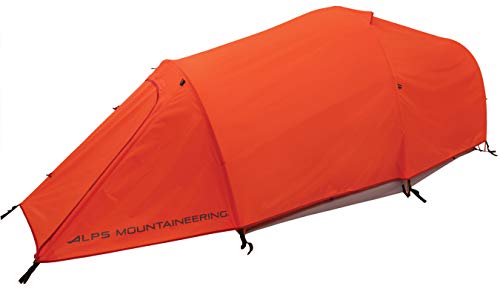
The ALPS Mountaineering Taurus 2-Person Tent is a classic freestanding dome shelter designed for recreational campers seeking dependable shelter without complicated setup routines. With its two-pole architecture, polyester fly, and dual-entry layout, this model provides straightforward utility for weekend getaways, state park camping, music festivals, and casual scouting trips where ultra-low pack weight is not the primary requirement.
In terms of interior space, the Taurus offers a base footprint measuring 5 feet wide by 7 feet 6 inches long (60 by 90 inches), alongside a center peak height of 46 inches. The 60-inch width allows two standard 20- to 25-inch sleeping pads to lie side-by-side, though floor space will be snug with two adults inside. For solo campers, the interior offers ample room to spread out a wider sleep mat alongside duffels or canine companions. The 46-inch center height provides enough vertical clearance for most adults to sit upright comfortably while changing clothes or waiting out a rain shower.
Structural support comes from a freestanding two-pole fiberglass frame that slides into place quickly. The tent body features a mesh roof that assists with venting interior moisture and warm air, complemented by a zippered window on each of the two entry doors. Shielding the canopy is a polyester rainfly that fastens over the structure, resisting moisture and ultraviolet degradation. A major functional strength is the inclusion of two distinct vestibules created by the rainfly, giving each occupant dedicated sheltered ground outside the door to store muddy shoes and bulky packs.
At an official total weight of 7 pounds, the Taurus is well-suited for car camping, canoe trips, and short strolls from a vehicle to a walk-in campsite. While it can technically be shared between two backpackers who split the poles, fly, and body, it sits on the heavier side for extended trail journeys. The tent package includes aluminum stakes, guy ropes, built-in mesh organizer pockets, and an overhead gear loft for keeping small essentials off the floor. As with any outdoor shelter, practicing a test pitch at home and thoroughly drying all fabrics before long-term storage will help protect the materials against mildew and coating breakdown.
When evaluating the Taurus, shoppers should account for several undocumented details. The manufacturer does not publish a specific hydrostatic head millimeter rating for the rainfly or floor, nor does the listing supply packed dimensions or fabric denier counts. Furthermore, while fiberglass poles keep the initial cost accessible, they carry more weight and flex differently under high winds compared to aluminum alloy alternatives. Campers heading into severe storms should ensure guy ropes are firmly anchored to stable ground.
Overall, the ALPS Mountaineering Taurus 2-Person Tent is a sensible, functional choice for car campers, couples, and solo travelers who prioritize dual-door access, vestibule gear coverage, and reliable headroom. Buyers comparing alternative two-person dome tents should weigh the convenience of its two-door layout and included gear loft against its 7-pound carrying weight to determine if it fits their specific transportation plans.
The ALPS Mountaineering Taurus 2-Person Tent features a rectangular floor plan measuring 60 inches wide by 90 inches long. This footprint accommodates two standard sleeping pads touching edge-to-edge, or a single camper who wants excess floor space for clothing bags and camping accessories. The 46-inch peak height gives the dome an airy feel in the middle of the canopy.
Interior storage is enhanced by included mesh side pockets that keep headlamps, phones, and glasses off the floor. An included overhead gear loft clips near the ceiling mesh, providing an elevated shelf for lightweight items. Outside the sleeping quarters, the protective polyester rainfly forms two vestibules, allowing both campers to stow dusty footwear and exterior packs without sacrificing valuable sleeping room.
Pitching the Taurus relies on a traditional freestanding dome geometry supported by two fiberglass poles. Because the frame stands independently, campers can easily pick up and rotate the inner tent body to face morning light or avoid uneven roots before driving stakes into the dirt.
Hardware includes #8 zippers on the doors and windows for reliable opening and closing, alongside aluminum ground stakes and guy ropes. Securing the guy ropes to the rainfly is recommended in breezy conditions to ensure the rainfly maintains proper tension and clearance from the inner tent mesh.
Frequently Asked Questions
How do you decide between a one-person and two-person backpacking tent?
Evaluate your gear storage needs against how much trail weight you want to carry. The ALPS Mountaineering Lynx 1-Person Tent weighs 4 lbs. 1 oz. and features an integrated vestibule for solo packing, but sleeping pads fill most of its 2-foot-8-inch width. Moving up to a two-person model like the Taurus provides extra width and dual vestibules, though total carry weight increases to 7 lbs.
What features make a tent suitable for cold-weather or four-season camping?
A full-coverage rainfly, sturdy aluminum poles, and closable fabric vents are essential for colder climates. The ALPS Mountaineering Tasmanian 3-Person Tent is built as a 4-season shelter with shock-corded aluminum poles, a 5000 mm floor coating, and closable vents that seal out blowing snow. Navigating to remote winter campsites safely is easier when carrying a reliable best handheld gps camping hiking device along your route.
How does an outfitter series tent differ from a standard camping shelter?
Outfitter models prioritize heavy-duty materials to handle frequent use and rougher campground terrain. The ALPS Mountaineering Taurus 4 Outfitter Tent incorporates a heavy-duty 210D nylon oxford floor that is twice the weight of standard fabrics, along with oversized number 10 door zippers. This reinforced floor resists abrasions from cot legs and rocky ground, making outfitter designs ideal for vehicle camping rather than backpacking.
Can you fit a full-sized camping cot inside a solo camping tent?
Yes, but only if the shelter is engineered with vertical sidewalls and high ceiling clearance. The ALPS Mountaineering Ranger 1-Person Tent offers a 6-foot center height and 41 square feet of floor area specifically designed to accommodate a large cot. Its vertical wall design and extra-wide doorway with an awning allow easy entry without crouching, giving solo campers basecamp comfort in an individual shelter.
How do Best Alps Outdoor Tent models prevent interior condensation during rainy nights?
Mesh wall panels paired with elevated rainfly vents promote continuous cross ventilation. Air enters low around the rainfly perimeter and vents out through upper roof openings, carrying moisture outside before it collects on interior walls. If you camp in bug-prone wetlands where doors must remain zipped tight, using best insect protection sprays camping around entry points keeps pests away while mesh panels stay open.
What are the practical advantages of aluminum tent poles over fiberglass?
Aluminum poles provide a higher strength-to-weight ratio and greater durability in strong winds. Series 7000 aluminum poles flex smoothly under sudden gusts and resist splitting, whereas fiberglass poles are heavier and can crack under extreme stress. Choosing aluminum frames is the preferred option for unpredictable weather and extended backcountry use in 2026.




Write Your Review
No reviews yet. Be the first to share your experience!