


Selecting the Right Tent for Your Next Campsite
Cramped sleeping quarters and confusing capacity ratings can quickly spoil a weekend trip outdoors. A shelter labeled for two people might barely fit two narrow sleeping pads, leaving your packs and boots exposed to damp ground outside. Pitching a tent in fading daylight or sudden drizzle also highlights how much frame design, vestibule depth, and rainfly coverage matter at camp. Pairing your setup with a dependable mountain canopy tent can provide extra shade and foul-weather staging space when you need to store bulkier gear outside.
Evaluating the best mc camping tent lineup comes down to balancing packed carry weight against floor dimensions, headroom, and setup convenience. Inflatable air-beam models eliminate traditional aluminum or fiberglass poles, offering rapid inflation for vehicle-based campers who value generous interior volume. Meanwhile, compact nylon shelters prioritize low pack weight and minimal bulk for trail hikers who carry their gear across several miles. Checking fabric coatings, seam construction, and ventilation panels helps you select a shelter that manages interior condensation and keeps your sleeping space comfortable.

Pros
- Air-beam frame simplifies pitching compared to rigid multi-pole family shelters
- Included air pump and built-in pressure relief valve streamline inflation safety
- Multiple climate accommodations with dedicated ports for a wood stove, AC unit, and power cord
- Dual-layer doors and windows allow balanced airflow while keeping flying insects outside
- Two transparent ceiling skylights provide interior natural light and night-sky viewing
Cons
- Awning support poles are explicitly not included and must be sourced separately
- Total weight of 44.5 pounds restricts transport strictly to vehicle camping
- Packed storage dimensions and internal gear pocket layout are not detailed in the specifications
The MC TOMOUNT Inflatable Camping Tent is an air-frame glamping shelter designed for vehicle-based campers seeking an expansive footprint without the hassle of rigid pole assembly. Styled in green Oxford fabric, it caters to car campers, families, and group travelers who want a tall, cabin-style living space equipped for multi-season adventures. With built-in access ports for external heating and cooling units, this shelter is positioned for basecamp setups where comfort and interior headroom take precedence over compact trail portability.
The manufacturer lists a sleeping capacity of 6 to 8 people inside a floor footprint measuring 12.99 feet long by 9.58 feet wide (approximately 155.9 by 115 inches), topped with a 6.4-foot peak ceiling height. While 6 to 8 narrow sleeping pads could theoretically fit edge-to-edge, practical usable space will vary depending on the size of air mattresses, cots, and gear bins. Campers who prioritize room to stand, change clothes, or set up camp chairs will find it most comfortable for smaller family groups or couples seeking an open glamping layout.
Structural support relies on an inflatable air-beam system rather than traditional metal or fiberglass poles. The tent package includes a manual air pump, and the manufacturer lists an estimated inflation time of around 5 minutes once the base is laid out. A built-in pressure relief valve automatically releases surplus air to help prevent over-pressurization during inflation or daytime heat expansion. The tent body is constructed from PU3000+ waterproof-rated Oxford fabric and incorporates two doors, four large windows, and two dedicated ventilation ports, all fitted with dual-layer mesh and fabric panels to manage cross-breezes and reduce interior condensation.
Extending beyond the main cabin, this shelter features an integrated 50-square-foot front awning with a center zipper that allows campers to set up full or half-open coverage for shade and rain protection. However, the manufacturer explicitly notes that upright poles to pitch this awning are not included, meaning buyers must supply their own tarp poles or tie out to surrounding trees. Additional design details include two clear roof skylights for stargazing, an e-port for electrical cords, an integrated stove jack for routed wood-stove heating pipes, and a dedicated duct port designed for portable outdoor air-conditioning units.
Transporting this shelter requires adequate vehicle cargo room, as the product lists an overall weight of 44.5 pounds. This heft clearly designates the shelter for drive-up campsites, flat-ground pitches, or trailer camping rather than walk-in sites. Packed storage dimensions and specific bag inclusions are not provided in the listing specifications. General care for heavy coated Oxford fabric includes pitching on clear ground, allowing the fabric to dry completely before long-term storage to prevent mildew, and keeping valve seals free of sand or dirt. Any fuel-burning stove used with the stove jack must follow strict manufacturer clearance and ventilation guidelines.
When deciding whether this inflatable shelter fits your plans, weigh the fast air-beam setup and specialized climate ports against its 44.5-pound weight and the need to purchase separate awning poles. For campers planning extended vehicle-based trips in variable weather, the PU3000+ fabric, standing height, and climate ports provide substantial living utility. Buyers comparing this against standard pole-frame cabin tents will appreciate the simplified inflation process, provided their vehicle trunk can easily accommodate its weight.
The MC TOMOUNT inflatable tent replaces traditional rigid poles with air-filled support beams designed for straightforward pitching. The package includes a dedicated manual air pump, and the product data notes an estimated inflation setup of roughly 5 minutes once the shelter is laid flat on the ground.
A built-in pressure relief valve automatically discharges excess air to protect the internal bladder structure from over-inflation caused by pumping or temperature increases. While the air beams eliminate pole threading and hub assembly, proper perimeter staking remains essential to establish tension and secure the large shelter against wind shifts.
The tent features a 50-square-foot front awning, but buyers should note that upright poles to pitch this canopy are not included in the package. Setting up the front porch area requires bringing compatible aftermarket tarp poles or anchoring guy lines to nearby sturdy structures.
Designed to support trips across multiple seasons, this tent includes climate-adaptation ports rarely found on standard family tents. It features an integrated stove jack to accommodate a routed wood-stove pipe in cold weather, alongside a dedicated duct port designed specifically for portable outdoor air conditioners in summer heat.
Airflow throughout the cabin is managed via two large doors, four wide windows, and two separate ventilation vents. Every window and door uses a dual-layer design, pairing Oxford fabric storm flaps with fine mesh screening to promote cross-ventilation while blocking insects.
In addition to wall openings, the ceiling features two clear skylight panels that bring in natural light during the day and permit stargazing at night. A built-in cable access port allows campers to pass power cords inside to run electronics or fans without leaving doors unzipped.
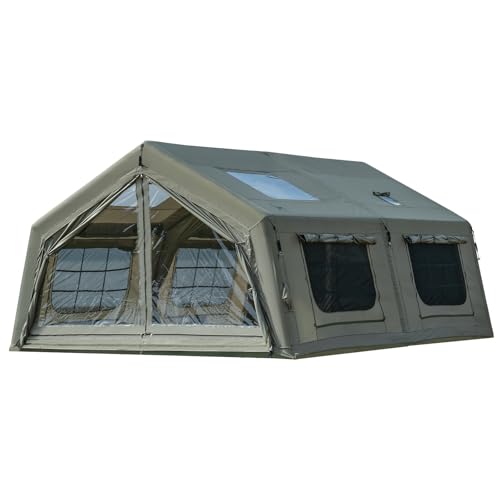
Pros
- Air-beam design inflates quickly with the included manual pump without requiring complex pole assembly
- Tall 7.22-foot center height allows most adults to stand upright throughout the shelter
- Integrated stove jack and AC port accommodate multi-season climate control accessories
- Interchangeable mesh and TPU door panels provide adaptable ventilation or weather blocking
- Dual-room interior allows separation between sleeping quarters and living space
Cons
- Substantial weight of 80.4 pounds limits transport to drive-up campsites and vehicles
- Manufacturer recommends adding a separate rainfly for heavy storms, which is not listed as included
- Packed bag dimensions are not provided in the product specifications, making storage space harder to gauge
The MC TOMOUNT Inflatable Camping Tent is a large-format air-beam shelter engineered for group outings, family glamping, and vehicle-based camping trips. Unlike conventional cabin or tunnel shelters that rely on interlocking metal or fiberglass poles, this model utilizes an integrated pneumatic frame that expands when pressurized with air. Campers seeking an expansive basecamp with generous standing room will find that its design focuses on interior volume and multi-season utility rather than ultra-lightweight portability.
Interior room is a primary highlight of this shelter, offering 186 square feet of floor space across documented dimensions of 15.75 feet in length, 11.81 feet in width, and a peak ceiling height of 7.22 feet. The manufacturer states an occupancy rating of 8 to 12 people arranged across a dual-room interior layout that creates semi-private sleeping quarters alongside a central gathering zone. While the stated occupant capacity reflects maximum sleeping density, real-world comfort will depend heavily on the thickness of sleeping pads, the size of air mattresses, and the volume of stored duffel bags. The generous peak height allows most adults to stand fully upright, which eases clothing changes and interior organization.
Assembly relies on an inflatable air-frame system powered by an included manual hand pump. The product listing states that the structure inflates within approximately 5 minutes and can be pitched in under 10 minutes, eliminating the frustration of assembling and threading rigid metal poles. The tent body incorporates a built-in groundsheet to seal out ground debris, along with large mesh windows situated across all walls and both ends for cross-ventilation. Natural light enters via a translucent TPU roof skylight, while the main entryways feature interchangeable TPU and mesh door panels that can be swapped depending on ambient temperatures and bug presence.
The tent body is constructed from high-density 300D Oxford fabric, offering a robust weave that is lighter than traditional cotton canvas while maintaining a listed 2000mm water-resistance rating. This rating is specified for everyday rain, though the manufacturer explicitly advises adding an external rainfly for protection during severe downpours or sustained storms. For temperature management across different seasons, the shelter is equipped with an integrated stove chimney jack, an air conditioner duct port, and an electrical cord access pass-through to run outdoor power cables safely inside.
Before purchasing, buyers must evaluate the logistical demands of this shelter. At a listed weight of 80.4 pounds, this tent requires car-camping transport and ideally two people to lift, carry, and maneuver into place. The listing does not specify exact packed dimensions, so shoppers should account for significant cargo space in their trunk, SUV, or truck bed. Additionally, buyers planning for foul weather should factor in the need for a separate rainfly, as one is not confirmed to be included in the standard package.
For families and small groups seeking a roomy, cabin-style basecamp with minimal pole assembly, this inflatable tent offers a distinctive balance of headspace, climate versatility, and rapid inflation. It serves drive-in campground visits, outdoor festivals, and multi-day retreats where vehicle transport is guaranteed. Campers who prioritize lightweight packing, solo wilderness transport, or self-contained stormproofing right out of the box will want to consider traditional framed shelters or dedicated expedition setups instead.
With 186 square feet of floor space, the MC TOMOUNT Inflatable Tent provides a sizable footprint measuring 15.75 feet long by 11.81 feet wide. The manufacturer lists the sleeping capacity at 8 to 12 occupants, but practical usable space will depend on the sleeping gear chosen. Groups utilizing cots or thick double air mattresses will have significantly less free floor area than campers sleeping on standard backpacking pads.
A notable feature is the dual-room layout, which partitions the interior into separate areas for privacy or gear staging. The impressive center peak height of 7.22 feet (86.6 inches) runs through the main body, allowing campers to walk around without hunching and simplifying routine tasks like dressing and managing group gear.
The structural support of this shelter is entirely pneumatic, replacing conventional rigid frame poles with high-pressure air beams. Pitching the shelter requires staking out the base and inflating the integrated chambers using the supplied manual air pump. The manufacturer lists inflation at around 5 minutes, with full setup achievable in less than 10 minutes.
Because the air beams lack rigid joint hardware, setup is safer and eliminates the risk of snapping metal or fiberglass poles during wind or assembly. Users should always ensure the groundsheet is positioned over a clear, flat surface before inflation and verify that all guy lines and stakes are firmly anchored to maintain structural stability.
The shelter body uses 300D Oxford fabric, which provides a balance of density and breathability compared to heavy treated canvas. The material features a manufacturer-rated 2000mm water-resistance barrier suited for routine precipitation. For extreme storms, severe weather, or heavy prolonged rainfall, pairing the shelter with an additional rainfly is explicitly recommended by the maker.
Ventilation is supported by multi-sided screened windows, a diffused TPU skylight, and modular door panels that swap between mesh for airflow and solid TPU for wind blocking. Integrated utility ports, including a chimney port for stove venting and an air conditioning interface, allow seasonal climate adjustments when paired with compatible equipment and appropriate outdoor precautions.

Pros
- Includes lightweight 7001 aluminum poles rather than common fiberglass alternatives
- Double-layer rainfly design provides listed PU3000mm water resistance and UV shielding
- Durable 210D reinforced oxford fabric used on the groundsheet
- Freestanding structure allows campers to easily shift or reposition the pitched tent
- Rear window design helps promote cross-ventilation to manage interior condensation
Cons
- Listing presents conflicting capacity information, citing 1-person size in specs and 1-2 person in the title
- Interior floor dimensions and peak height are not clearly provided, leaving usable living space uncertain
- Listing does not specify the number of doors, vestibule coverage, or the count and type of included stakes
The MC TOMOUNT backpacking tent is a compact, double-layer shelter intended for lightweight outdoor pursuits. Marketed for camping, backpacking, mountain climbing, festivals, and travel, this shelter features a freestanding frame designed for straightforward pitching. Its build makes it an appealing option for solo campers who want an accessible, lightweight shelter that utilizes aluminum poles rather than heavier fiberglass options.
Capacity details for this model show some discrepancy in the product documentation. The title indicates a 1-2 person capacity, while the technical specification table specifically lists the size as 1 Person. Furthermore, the provided dimensions of 13.4 x 31.5 x 13.4 inches appear to reflect package or transport sizing rather than interior floor dimensions. Because clear interior length, width, and peak height measurements are not documented, buyers should evaluate this tent primarily as a solo shelter and confirm that their sleeping pad fits before embarking on extended trips.
The tent is structured around high-strength 7001 aluminum poles that assemble into an independent, freestanding frame. This freestanding layout allows the shelter to be pitched and repositioned around a campsite before driving in stakes. The inner canopy uses 190T breathable fabric combined with mesh panels to balance insect protection and airflow. Ventilation is further supported by a built-in rear window designed to allow moisture vapor to escape and reduce interior condensation overnight.
Weather-related specifications are centered around a double-layer design. The outer rainfly is constructed from 210T rip-stop polyester treated to achieve a listed PU3000mm waterproof rating alongside UV protection. Beneath the living area, the groundsheet uses 210D reinforced oxford fabric, which provides a heavier-duty barrier against ground moisture and surface abrasion. While these fabric specifications provide solid theoretical defense against wet weather, actual performance in sustained rains will also depend on a taut pitch and site selection.
For transport, the entire package weighs approximately 4.65 pounds and packs down into an included compact carry bag. This weight makes it manageable for short backpacking trips, walk-in campsites, or bike touring where every pound counts. However, buyers should be aware that the product listing does not clarify whether stakes, guylines, or vestibule storage areas are included in the package. Checking these items upon arrival will help prevent surprises at the campsite.
The MC TOMOUNT tent represents a practical entry-level option for solo adventurers who prioritize aluminum framing and a PU3000mm fly at a low weight threshold. While the ambiguity regarding interior dimensions and capacity requires caution for larger campers, its documented materials provide good value for casual summer and three-season outings. Those planning trips in rough terrain should verify the included anchoring hardware and interior space to ensure it matches their gear setup.
The MC TOMOUNT tent incorporates several notable material choices for its category. The external rainfly is made from 210T rip-stop polyester featuring a listed PU3000mm waterproof coating and UV-resistant treatment. This fabric is designed to resist tearing while shedding rain and blocking excess sun exposure.
For the frame, the manufacturer provides 7001 aluminum poles. Aluminum offers a better strength-to-weight ratio and greater resilience against snapping compared to basic fiberglass poles. The ground sheet is crafted from 210D reinforced oxford fabric, providing robust defense against rough campsite terrain, while the inner tent utilizes 190T breathable fabric paired with mesh netting for insect protection.
Weighing in at approximately 4.65 pounds according to the product specifications, this tent falls into the lightweight category suitable for solo backpacking, bike packing, and car camping. The shelter comes with a dedicated compact storage bag to keep the components organized in a pack or vehicle trunk.
While the overall package weight is documented, the interior floor dimensions are not specified, with the listing listing dimensions of 13.4 x 31.5 x 13.4 inches. Campers who carry full-length or wide sleeping pads should take this into account when organizing their gear layout inside the tent.
The manufacturer includes a one-year warranty covering defects in materials and workmanship. The listing instructs purchasers to contact customer support directly should any issues arise with the tent components.
Having a documented one-year warranty provides helpful peace of mind when evaluating a budget-friendly shelter. As with any outdoor gear, inspecting the tent, poles, and seams before the first camping trip is recommended to confirm quality and functionality.

Pros
- Manageable 4.4-pound carry weight and compact 17.3-inch packed length fit human-powered travel
- Generous 86.6-inch floor length accommodates taller campers without crowding
- Freestanding aluminum pole architecture allows quick pitching and independent inner-tent use
- Two-door configuration with dual storage vestibules simplifies entry and gear organization
- Nylon ceiling on the inner tent helps shield campers from overhead condensation drips
Cons
- The manufacturer explicitly advises pairing the tent with an external tarp during heavy or prolonged rain
- Listing details include conflicting copy, describing the tent as both a 2-person shelter and a solo single-person tent
- Included package components do not explicitly confirm whether ground stakes, guy lines, or a footprint are provided
The MC TOMOUNT Backpacking Tent is an ultralight, two-person shelter built for outdoor activities where trail weight and packed bulk are critical factors. Marketed for backpacking, mountain trekking, bicycle touring, and general walk-in camping, this dome-style shelter targets both solo adventurers who prefer extra interior elbow room and camping duos focused on keeping pack weight low. Built from yellow 20D nylon with a freestanding two-pole aluminum structure, it offers a straightforward alternative to trekking-pole-supported shelters.
Interior living space measures 86.6 inches in length, 53 inches in width, and 45.3 inches at the center peak. The 86.6-inch length is especially practical for taller campers, leaving space above the head and below the feet to avoid touching the tent walls. At 53 inches wide, the floor accommodates two standard sleeping pads placed side by side. Although the manufacturer text contains contradictory descriptions labeling it as both a solo single-person tent and a two-person shelter, the interior floor dimensions align with standard compact two-person backpacking footprints. Dual side doors with extended exterior vestibule sections offer dedicated gear storage for shoes and rucksacks.
Assembly relies on two lightweight aluminum poles that cross in an X-frame configuration to form a self-supporting dome. Campers can erect the inner tent quickly by inserting the pole ends and clipping the body in place, making solo setup straightforward even without detailed instructions. Because the inner body is fully freestanding, it can be pitched alone on warm, bug-prone nights or utilized as an insect-proof sleeping pod inside larger shelter systems. Ventilation is handled by mesh inner walling and dual side windows, while a solid nylon patch at the ceiling helps prevent condensation droplets from falling directly onto occupants.
Weather-related specifications include a 20D nylon fabric treated to a listed PU3000mm waterproof rating. While the maker labels the model versatile across four seasons, the product documentation includes a notable practical disclaimer: campers are advised to rig an external tarp in cases of heavy downpours or continuous rainfall. This recommendation is an important consideration for hikers expecting wet climates, indicating that rainfly coverage or seam thresholds may benefit from supplemental weather defense in severe squalls.
Transport is handled via an included storage bag that compresses the packed tent to 17.32 by 7.48 inches, with a total advertised weight of 4.4 pounds. This compact profile fits neatly across bicycle racks, strapped beneath a backpack, or stored in a small car trunk. One notable uncertainty is the exact list of included accessories; the listing confirms the tent body, aluminum poles, and carry bag, but does not verify whether ground stakes, guy lines, or a groundsheet are included in the box. Campers should inspect their kit prior to departure and supply their own anchoring stakes if needed.
For hikers, bike tourers, and weekend campers seeking a lightweight, double-door nylon shelter on an accessible budget, the MC TOMOUNT 2-Person tent delivers solid core dimensions and easy pitching. Potential buyers should weigh its 4.4-pound trail weight and tall-camper-friendly 86.6-inch length against the maker recommendation to carry a supplemental tarp for extended storms. In moderate three-season conditions, it provides a capable, compact, and easily transported shelter.
The MC TOMOUNT tent features floor dimensions of 86.6 inches long by 53 inches wide, paired with a center peak height of 45.3 inches. The 86.6-inch length is generous for a lightweight shelter, giving taller individuals enough room to sleep without pressing their sleeping bags against damp tent corners.
A width of 53 inches allows two average 20 to 25-inch sleeping pads to sit side by side, leaving little remaining floor room for packs. For solo campers, however, the layout transforms into a spacious shelter with ample interior room for personal gear, clothing, and dogs. Both side doors include extended exterior vestibule room for storing muddy shoes and packs outside the main living quarters.
The tent uses a classic crossing frame made from two lightweight aluminum poles. Setup involves anchoring the pole tips into corner grommets and attaching the inner tent body using simple clips, allowing a single person to erect the shelter without complex steps.
Because the inner tent is self-standing, it maintains its shape before being staked down, making it easy to shift positions on the campsite for optimal ground leveling. The inner tent can also be used independently as an insect shelter during hot, dry weather or pitched inside larger canvas shelters for added draft and bug protection.
Constructed from lightweight 20D nylon, the tent body features a listed PU3000mm polyurethane waterproof coating. To balance airflow and pest protection, the inner tent incorporates fine insect mesh panels alongside integrated side windows.
To combat interior moisture, the peak of the inner tent is lined with solid nylon fabric rather than full mesh, designed to catch falling condensation before it drips into sleeping bags. Even with these features, the manufacturer explicitly recommends deploying an auxiliary tarp overhead during prolonged or heavy downpours, a detail campers should keep in mind when packing for unpredictable weather.
With an overall listed weight of 4.4 pounds and packed dimensions of 17.32 by 7.48 inches, the MC TOMOUNT shelter is built for easy transport across human-powered trips. The compact storage sack fits horizontally into typical multi-day hiking packs or lashes securely to bicycle touring racks and motorcycle panniers.
While traditional ultralight setups can shave off additional ounces, this tent provides a practical balance of lightweight packability, durable aluminum poles, and standalone structure for travelers who prefer not to rely on trekking poles for pitch support.

Pros
- Durable 7001 aluminum poles provide sturdier framing than standard fiberglass alternatives
- Double-layer design allows flexible use, balancing bug netting in warm weather with an outer fly for rain coverage
- Listed PU3000mm external waterproof rating and 210D reinforced oxford floor fabric target wet-weather defense
- Freestanding design simplifies pitching on varied campsite ground surfaces
Cons
- Listing data presents conflicting weight figures between 4.96 pounds and 5.4 pounds
- Interior floor dimensions and peak ceiling height are not clearly specified, creating uncertainty about usable sleeping space
- Carrying weight near 5 pounds is relatively heavy for dedicated ultralight solo backpacking
The MC TOMOUNT 1-2 Person Tent is a double-layer camping shelter built primarily for budget backpacking, car camping, festivals, and weekend outdoor trips. With its compact footprint and two-pole setup, it is aimed at solo campers who want extra internal gear space or camping duos who do not mind close sleeping quarters. By incorporating aluminum hardware at an approachable price point, it provides an accessible entry point for beginners and casual outdoor enthusiasts.
Assessing interior room requires navigating some ambiguous product specifications. The listing labels the tent for one to two people, but the provided dimensions of 13.4 by 31.5 by 13.4 inches appear to represent either a packed package size or irregular exterior measurements rather than true interior floor dimensions. For two adult campers using standard sleeping pads, interior space is likely snug, making it especially well matched for a single occupant carrying a backpack and extra apparel. Campers should keep this dimension uncertainty in mind when planning their sleeping pad configuration.
The structural design centers around 7001 aluminum poles, which provide a noticeable step up in resilience and weight savings compared to traditional fiberglass poles that can splinter under tension. The canopy utilizes a double-layer build: the inner body consists of breathable 190T fabric paired with fine mesh, while the external rainfly uses 210T rip-stop polyester coated to a listed PU3000mm waterproof standard. A durable 210D reinforced oxford fabric lines the floor to resist ground moisture and rough campsite surfaces.
Pitching is straightforward and typically takes 10 to 15 minutes, even for first-time campers. Because the frame uses a freestanding, independent structure, the assembled tent can be shifted and reoriented across the campsite to catch a breeze or avoid ground roots before being secured. Air circulation is supported by the inner mesh panels and a rear window in the rainfly, a combination designed to promote airflow and mitigate condensation buildup during humid nights.
When it comes to transport, the listing states an overall package weight of roughly 5.4 pounds in the description, alongside a 4.96-pound specification figure. While this weight range is slightly heavy for high-mileage ultralight thru-hiking, it remains very manageable for overnight backpacking, paddle touring, bicycle camping, or car trunk storage. The tent packs down into an included storage bag for easy transport to walk-in campsites.
Overall, the MC TOMOUNT 1-2 Person Tent is a practical choice for solo backpackers, scout campers, or couples on short trips who prioritize aluminum poles and waterproof fabric coatings over ultra-minimalist trail weight. Before purchasing, buyers should weigh the roughly five-pound carry weight against their trail mileage and ensure their sleeping gear aligns comfortably with a compact two-person shelter layout.
The MC TOMOUNT tent utilizes a multi-fabric construction tailored for weather resilience and ventilation. The outer rainfly is made from 210T rip-stop polyester treated with a PU3000mm waterproof coating and UV-resistant properties to shed rain and block sunlight. Underneath, the main tent body uses 190T breathable polyester integrated with mesh netting to provide airflow while keeping insects outside.
For the groundsheet, the manufacturer selected reinforced 210D oxford fabric, offering greater puncture and abrasion resistance against sticks, gravel, and wet turf than thin polyester taffeta. The shelter is supported by 7001 aluminum alloy poles, which deliver better structural rigidity and flex resistance in gusty winds than budget fiberglass options.
Setup is designed to be accessible for campers of all experience levels, with the manufacturer noting an assembly time of roughly 10 to 15 minutes. The poles quickly shape the inner tent body, over which the protective rainfly can be secured depending on current weather conditions.
Thanks to its independent freestanding structure, the tent maintains its shape without requiring immediate staking. This allows campers to test different orientations, avoid rocks or tree roots, and optimize entrance angles before driving in stakes. The rear ventilation window helps vent out warm air, working alongside the breathable inner mesh to reduce morning condensation.
Portability data shows minor listing variance: the technical specifications list the weight at 4.96 pounds, while the product description references a total package weight of about 5.4 pounds. This package includes the tent fabric, aluminum poles, and a dedicated storage carry bag.
For car camping, weekend festivals, or short hike-in sites, this weight is easily managed. For multi-day backpacking trips where every ounce counts, carrying around five pounds is on the heavier side for a solo shelter, though splitting the poles and fabrics between two hikers makes the trail burden very reasonable.
The MC TOMOUNT tent includes a one-year manufacturer warranty that covers defects in materials and craftsmanship. The listing advises buyers to contact the brand directly if any manufacturing issues arise upon delivery or during initial use.
As with all camping shelters, proper maintenance is vital to preserve the materials. Campers should ensure the tent is completely dry before long-term storage in its carry bag to safeguard the PU3000mm waterproof coatings against mildew and fabric degradation.
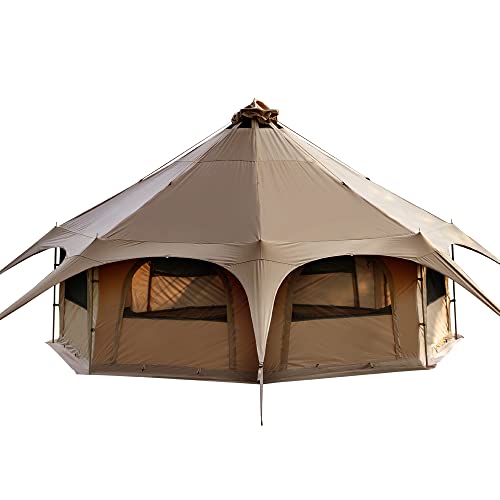
Pros
- Substantially higher 55-inch sidewalls offer far more usable edge space than standard 22.8-inch bell tents.
- Uncoated TC cotton roof promotes natural air permeability, reducing mugginess and condensation.
- Eight distinct doors with mesh windows deliver outstanding access and adjustable multi-directional ventilation.
- Versatile two-in-one design allows the sidewalls to roll up as an open shade shelter.
- Heavy-duty 600D Oxford detachable floor provides a durable, moisture-resistant ground barrier.
Cons
- Manufacturer explicitly cautions not to stay in the tent during overnight rain due to the uncoated roof fabric.
- Heavy 55.11-pound packed weight limits handling strictly to drive-up campsites and festivals.
- Large 16.4-foot circular footprint plus guylines requires a wide, clear pitch site.
The MC TOMOUNT Canvas Bell Tent is a large-format glamping shelter designed with a built-in stove jack, a wide 16.4-foot circular footprint, and high perimeter walls. It is aimed at car campers, glampers, festival attendees, and group outings looking for an expansive basecamp experience rather than a minimalist trail setup. With its upright center height and spacious interior, this tent caters to campers who prioritize walk-in room and open floor space for cots, camp chairs, or tables.
Usable interior space is one of the standout aspects documented for this shelter. The tent measures 16.4 feet in diameter with a center peak height of approximately 9.18 feet, offering full stand-up clearance in the middle. Unlike traditional bell tents that feature steep perimeter slopes with short sidewalls around 22.8 inches, this model uses 55-inch sidewalls supported by eight perimeter poles. This vertical wall clearance expands practical floor space along the edges, making it easier to arrange sleeping pads, camp furniture, and equipment without pressing against sloped fabric.
Construction combines multiple fabrics tailored for airflow and durability. The roof is built from TC cotton canvas, a blend of 65 percent polyester and 35 percent cotton that provides breathability and reduces interior condensation. The sidewalls utilize 210D Oxford cloth, while the removable floor is crafted from heavier 600D Oxford cloth with a PU3000mm waterproof coating. The tent features eight doors, each fitted with mesh windows for insect protection and ventilation. When open airflow is desired, the floor can be unzipped, allowing campers to roll up the sidewalls with integrated straps to convert the tent into an open-air shade canopy.
Transport and campsite setup reflect the heavy-duty nature of canvas glamping gear. With a packaged weight of 55.11 pounds and packed dimensions of 13.4 by 31.5 by 13.4 inches, this tent requires dedicated vehicle space and is not practical for packing over distances. Pitching involves securing eight corners with adjustable straps, staking perimeter pegs, and positioning the side poles. Proper site selection demands a broad, level clearing capable of accommodating both the 16.4-foot diameter and extended guy line perimeters.
Buyers should carefully consider the documented weather limits and structural characteristics before purchasing. The uncoated TC cotton roof is designed for breathability and light to medium rain, but the manufacturer explicitly advises against staying inside during overnight rain. In addition, using an internal wood stove requires vigilant monitoring, fire clearance, and adequate ventilation. Buyers should also know that small plastic rings located near the floor and interior seams are remnant anchor points from an inner tent design rather than manufacturing defects.
For campers planning seasonal dry-weather gatherings, backyard events, music festivals, or mild-weather glamping trips with vehicle access, the MC TOMOUNT Bell Tent delivers massive interior volume and versatile canopy conversion. Those planning camping trips in continuous wet weather or demanding climates should compare this model with fully coated waterproof polyester shelters or heavy-duty all-weather canvas alternatives.
With a 16.4-foot diameter, this bell tent creates an expansive circular footprint that comfortably fits multiple cots, sleeping pads, and freestanding camp furniture. The high center pole reaches 9.18 feet, allowing campers of virtually any height to stand, change clothes, and move around upright.
The structural advantage comes from the 55-inch sidewalls supported by eight side poles. Traditional bell designs slope inward sharply from short 22.8-inch walls, severely restricting head space along the edges. The elevated walls on this model preserve usable perimeter clearance, making room for gear storage, camp tables, or a wood stove without crowding the center.
The tent roof uses a technical cotton canvas blend consisting of 65 percent polyester and 35 percent cotton. This fabric allows moisture vapor to escape naturally, helping to minimize the clammy condensation common in synthetic tents while providing shade against direct sun.
Weather capability requires realistic expectations. While the 600D Oxford floor features a PU3000mm waterproof coating and the roof resists light to moderate rain, the TC canvas does not have a polyurethane coating. The manufacturer specifically notes that users should not camp in sustained overnight rain in this tent.
Pitching this tent relies on anchoring eight corners with adjustable tension straps, securing ground pegs, and inserting the eight side poles to raise the walls. The structure also includes double-stitched seams and reinforced corners to manage pulling tension across the large frame.
Portability is geared purely toward vehicle transit. Weighing 55.11 pounds and measuring 13.4 by 31.5 by 13.4 inches packed, it is meant for drive-up campsites, backyard parties, and festival grounds with nearby vehicle unloading.
Frequently Asked Questions
How do inflatable camping tents compare to traditional pole tents?
Inflatable tents replace rigid metal or fiberglass poles with high-pressure air beams. This design allows for rapid setup using an included air pump, which minimizes pitching time during car camping trips. But the air tubes and heavier canopy fabric add significant packed weight and volume compared to standard pole-supported shelters.
What should you consider regarding stated capacity in a best mc camping tent?
Stated capacity numbers reflect maximum shoulder-to-shoulder sleeping pad layout rather than living space. A two-person backpacking tent typically fits two regular 20-inch pads with little remaining floor room for extra gear. If you plan to camp with a partner and keep backpacks inside the main cabin, stepping up to a three-person floor plan provides far better comfort.
Are ultralight nylon backpacking tents durable enough for rough campsites?
Yes, lightweight nylon fabrics handle trail use well when paired with careful site selection. Manufacturers use ripstop weaving and silicone or polyurethane coatings to protect against light abrasion and rain showers. Using a dedicated ground cloth prevents punctures from sharp gravel, and carrying handheld GPS navigation tools helps you reach designated backcountry clearings safely.
How do you prevent interior condensation inside a best mc camping tent?
Maintaining continuous airflow through roof vents and mesh windows is the best way to reduce moisture buildup. Warm exhaled breath easily condenses against cold fly fabric overnight, creating damp walls by morning. Opening rainfly vents and pairing the shelter with rechargeable camping fans keeps fresh air circulating throughout the cabin.
Can canvas bell tents with stove jacks be used in cold weather during 2026?
Yes, canvas bell tents with built-in stove jacks are specifically suited for shoulder-season and winter camping. Heavy cotton or polycotton fabric breathes well while retaining interior heat better than thin synthetic fly sheets. Campers must use properly fitted stove jacks with spark arrestors, maintain clearance from tent walls, and ensure adequate ventilation to prevent carbon monoxide hazards.
What role does a tent vestibule play during rainy weather?
Vestibules create sheltered storage space outside the inner tent door while remaining under the protective rainfly. This sheltered area keeps muddy hiking boots, wet packs, and cooking pots protected without bringing dirt inside your clean sleeping area. A deeper vestibule also lets you unzip the entry door during light rain without water splashing onto the interior floor.


Write Your Review
No reviews yet. Be the first to share your experience!